
Describing the Community Corrections Population A brief look
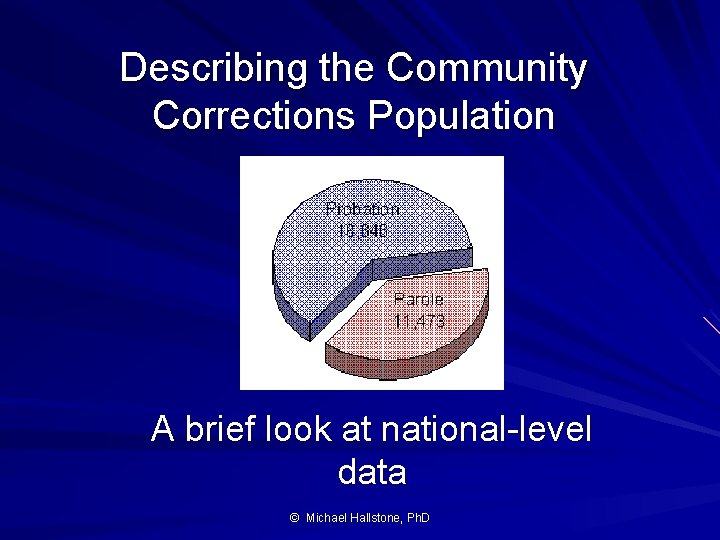
Describing the Community Corrections Population A brief look at national-level data © Michael Hallstone, Ph. D

Introduction Recall 3 parts to Criminal Justice “System” – Police, Courts, & Corrections (Community Corrections = “CC”) Huge growth since 1980 in overall corrections population “per 100, 000” is the best measure and it was 2. 8 times the size it was in 1980 – almost triple! In plain English, “About 3% of the US adult population, or 1 in every 33 adults, were incarcerated or on probation or parole at yearend 2018 “(BJS “Probation and Parole in the US”). © Michael Hallstone, Ph. D

Overall Corrections Population © Michael Hallstone, Ph. D
Proportional Size of Corrections Populations 2 primary types of “community corrections” – Probation=not initially incarcerated & in the community under a set of conditions – Parole = incarcerated in PRISON 1 st, but “let out early” into the community under a set of conditions Since 1980 – Probation=~60% of overall corrections pop. – Prisons =~ 20% – Parole & Jail each about 10% – Thus “community corrections” =~70% © Michael Hallstone, Ph. D

Probation It is conditional release into the community with rules Largest part of corrections system – by far © Michael Hallstone, Ph. D

© Michael Hallstone, Ph. D
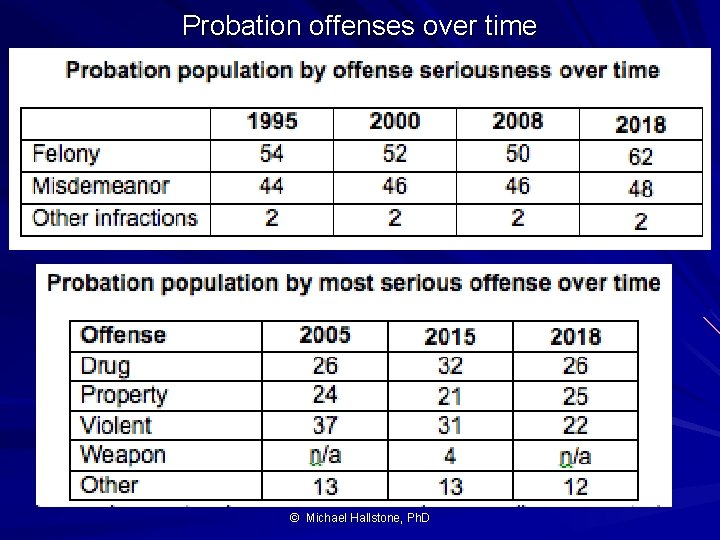
Probation offenses over time © Michael Hallstone, Ph. D
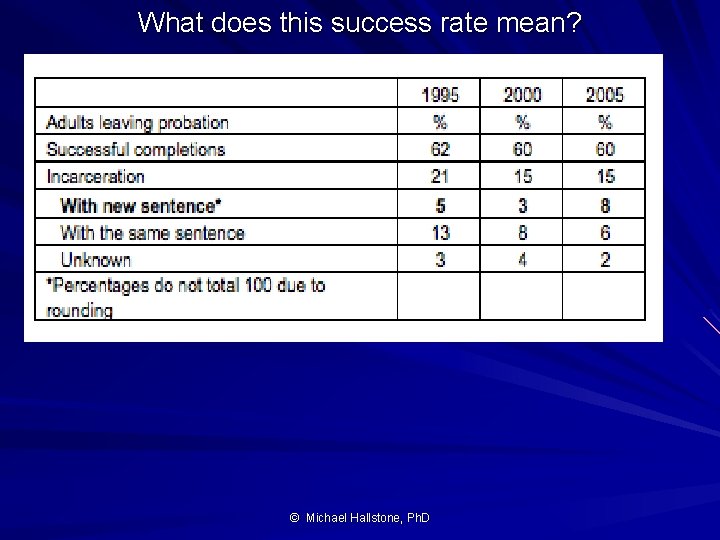
What does this success rate mean? © Michael Hallstone, Ph. D
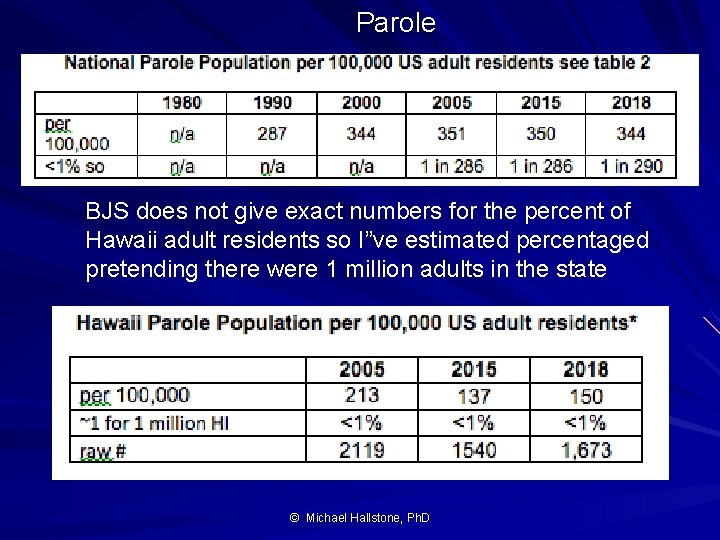
Parole BJS does not give exact numbers for the percent of Hawaii adult residents so I”ve estimated percentaged pretending there were 1 million adults in the state © Michael Hallstone, Ph. D
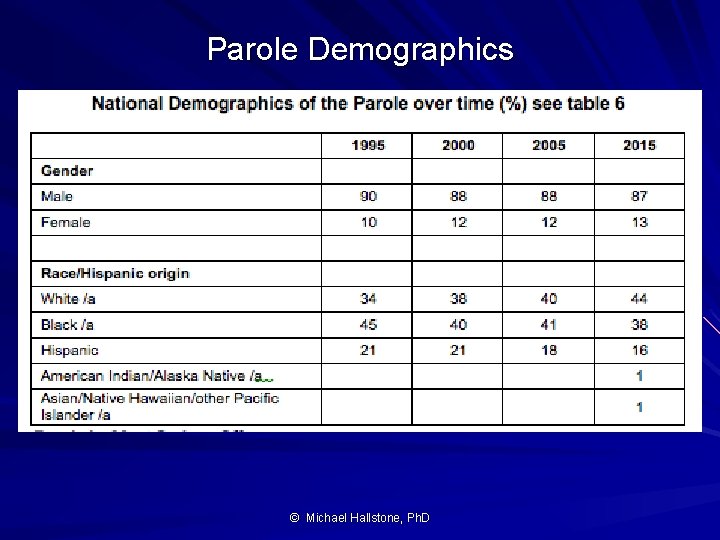
Parole Demographics © Michael Hallstone, Ph. D
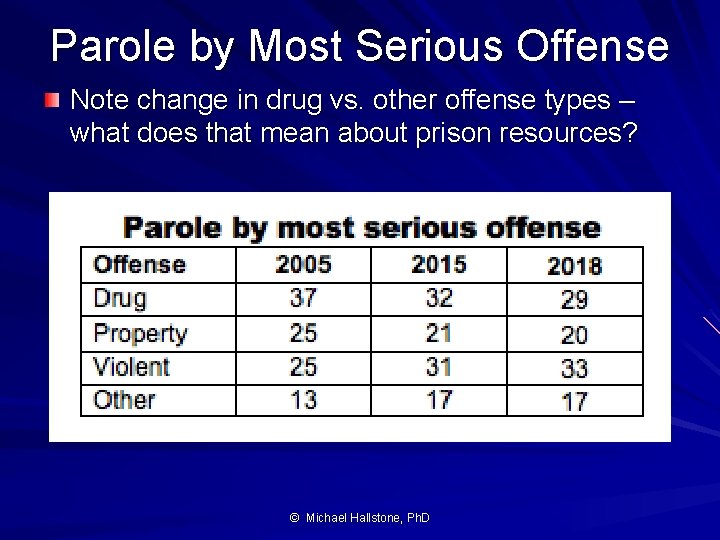
Parole by Most Serious Offense Note change in drug vs. other offense types – what does that mean about prison resources? © Michael Hallstone, Ph. D
For in-person class • Class exercise • Pretend you are a justice administrator and the governor asks you to tell him what “these numbers mean in plain English. ” Take a look at some of those numbers. What story do they tell? © Michael Hallstone, Ph. D
- Slides: 12