
Describing Constant Motion in one dimension Unit 01
Describing Constant Motion (in one dimension) Unit 01 -only write the red-starred slides
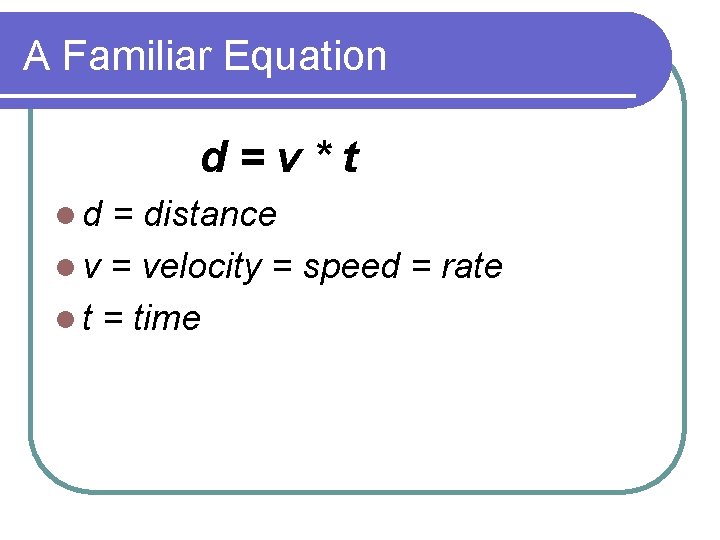
A Familiar Equation d=v*t ld = distance l v = velocity = speed = rate l t = time
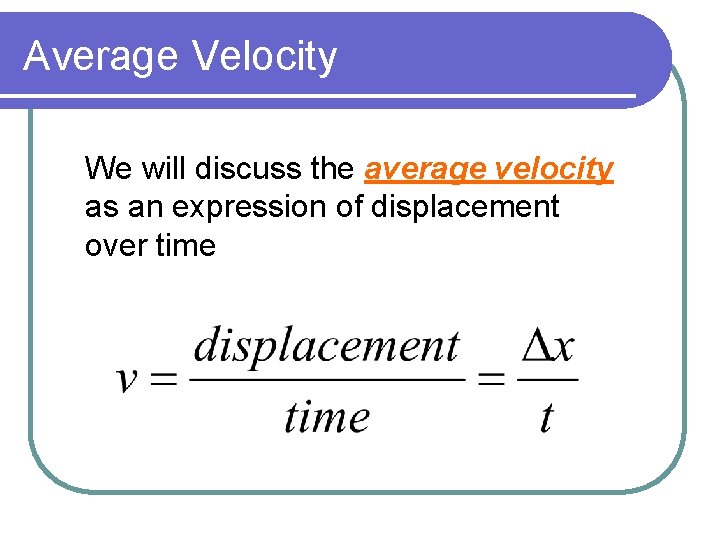
Average Velocity We will discuss the average velocity as an expression of displacement over time
Our First Equation
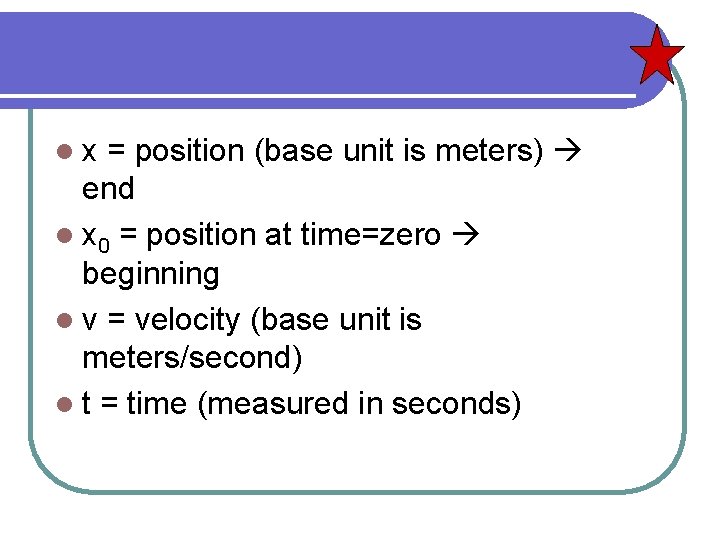
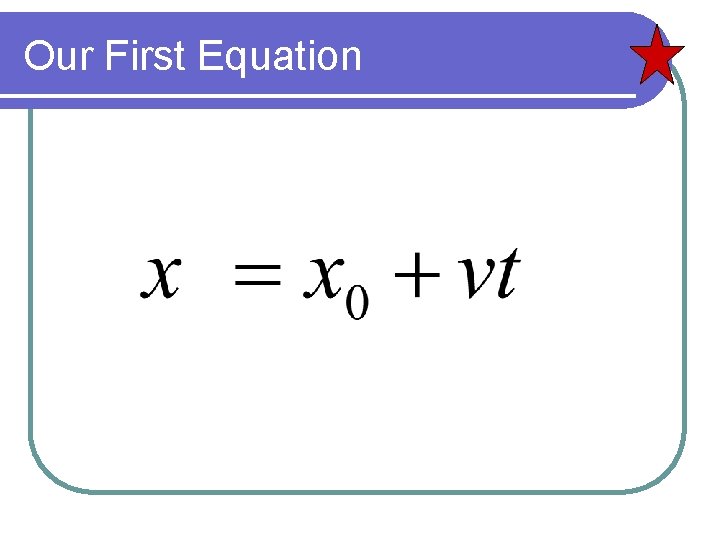
lx = position (base unit is meters) end l x 0 = position at time=zero beginning l v = velocity (base unit is meters/second) l t = time (measured in seconds)
Velocity Units l Velocity is most often measured in meters per second (m/s), a derived unit. l Derived units are determined by the combination of more than one measurement
Velocity Units l Any ratio of distance to time is a valid unit of velocity or speed m/s l ft/year l inches/decade l Miles/sec l
Vector and Scalar Quantities l Vectors have both magnitude and direction. Velocity is a vector. l Displacement is a vector l l Scalars have only a magnitude, not a direction Speed is a scalar. l Distance is a scalar l
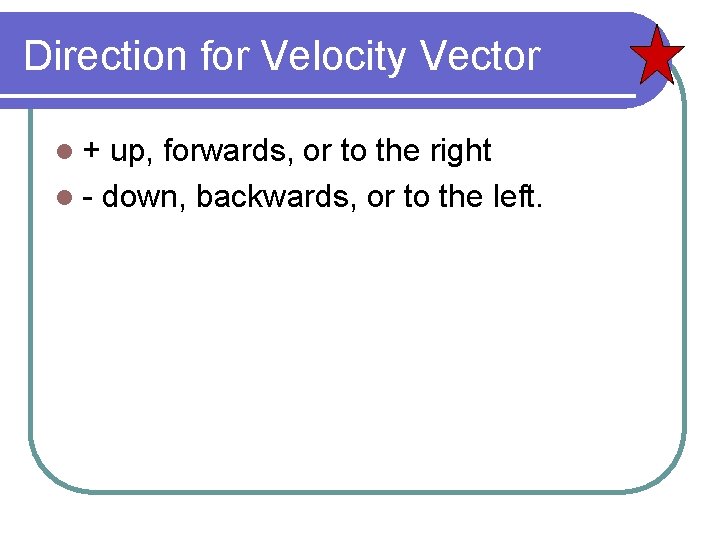
Direction for Velocity Vector l+ up, forwards, or to the right l - down, backwards, or to the left.
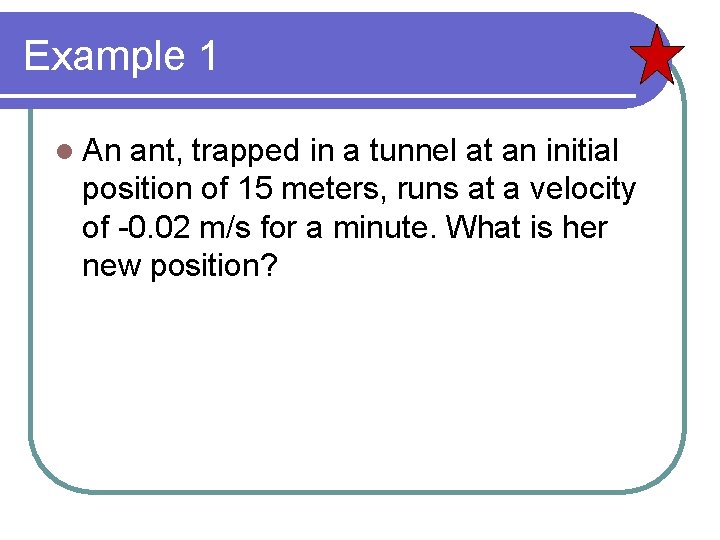
Example 1 l An ant, trapped in a tunnel at an initial position of 15 meters, runs at a velocity of -0. 02 m/s for a minute. What is her new position?
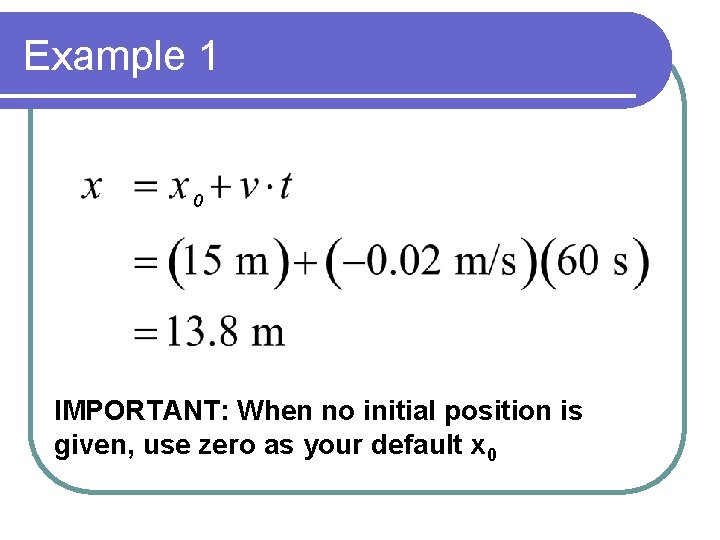
Example 1 0 IMPORTANT: When no initial position is given, use zero as your default x 0
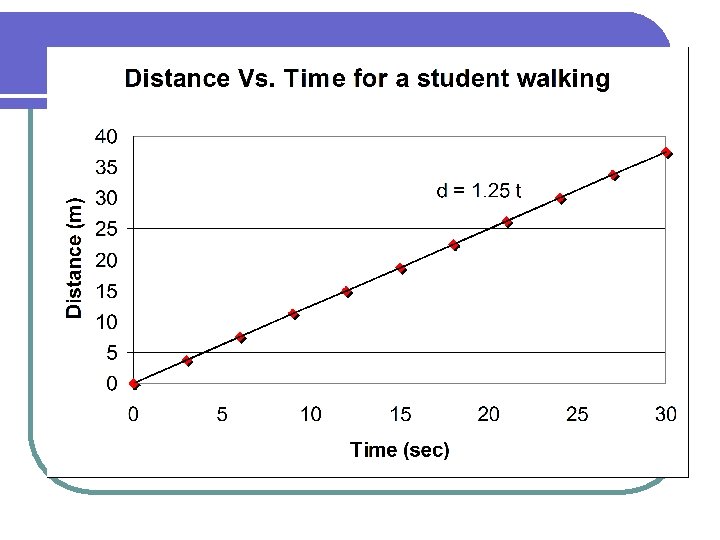
Graphs of Motion l When graphing distance vs. time, the slope of the graph is the velocity
- Slides: 13