
Describing and Measuring Motion Vocabulary MotionThe state in
Describing and Measuring Motion
Vocabulary • Motion-The state in which one object’s distance from another is changing. • Reference Point-A place or object used for comparison to determine if an object is in motion. • Speed-The distance an object travels in one unit of time. • Velocity-Speed in a given direction. • Acceleration-The rate at which velocity changes.
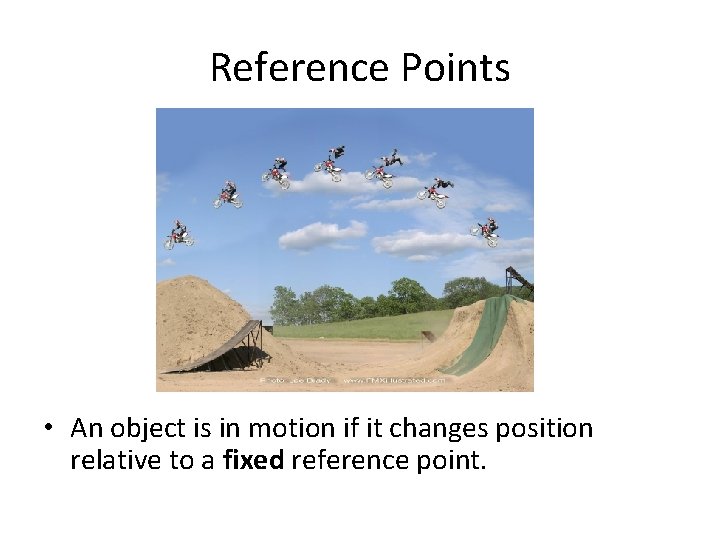
Reference Points • An object is in motion if it changes position relative to a fixed reference point.
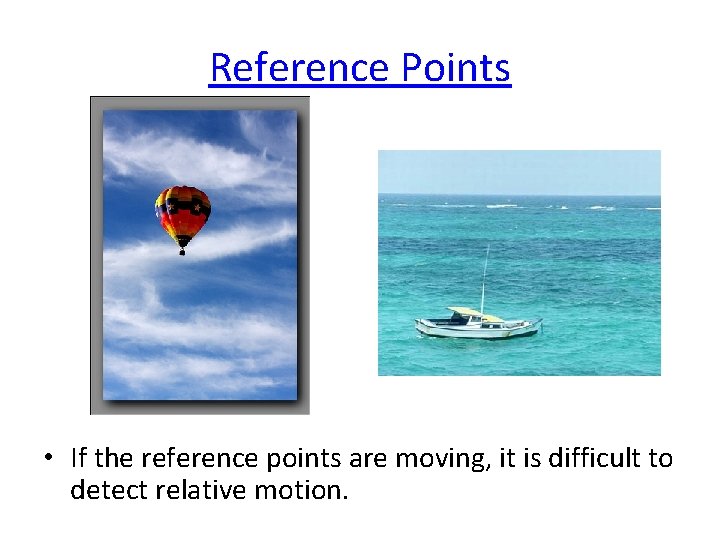
Reference Points • If the reference points are moving, it is difficult to detect relative motion.
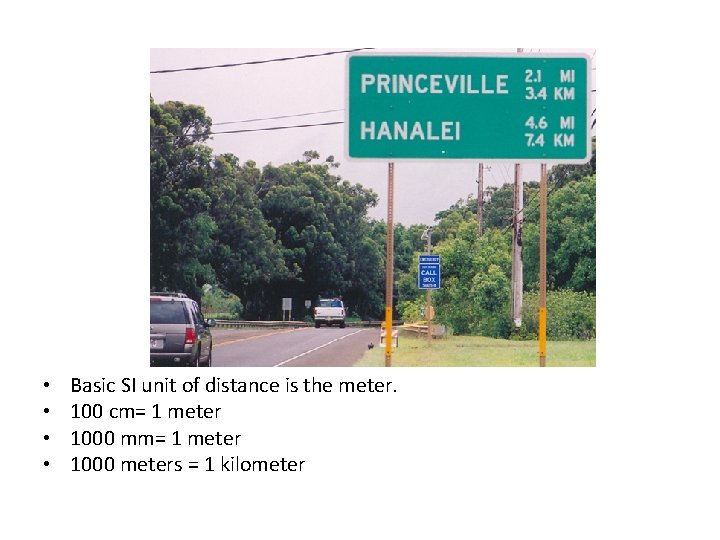
Describing Distance • • Basic SI unit of distance is the meter. 100 cm= 1 meter 1000 meters = 1 kilometer
Describing Distance • 100 cm = _______ 1 meter • 148 cm =_______ 1. 48 meters • 9 cm= ____. 09 meters • 1248 cm = ____ 12. 48 meters • 450 cm =____ 4. 5 meters
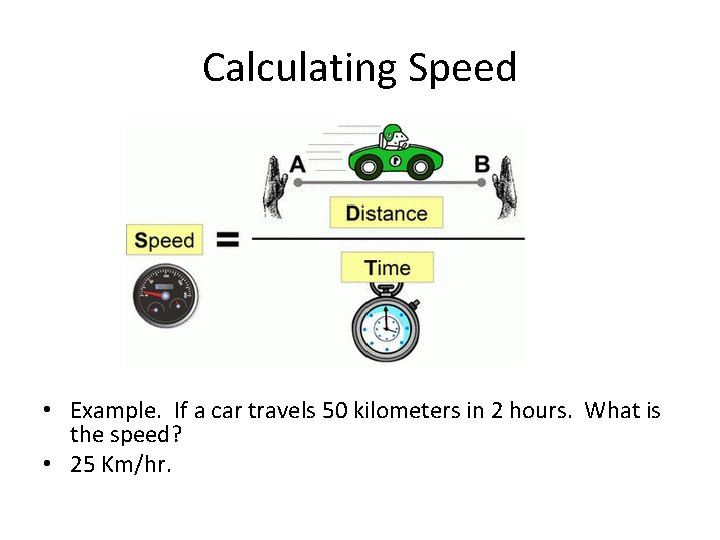
Calculating Speed • Example. If a car travels 50 kilometers in 2 hours. What is the speed? • 25 Km/hr.
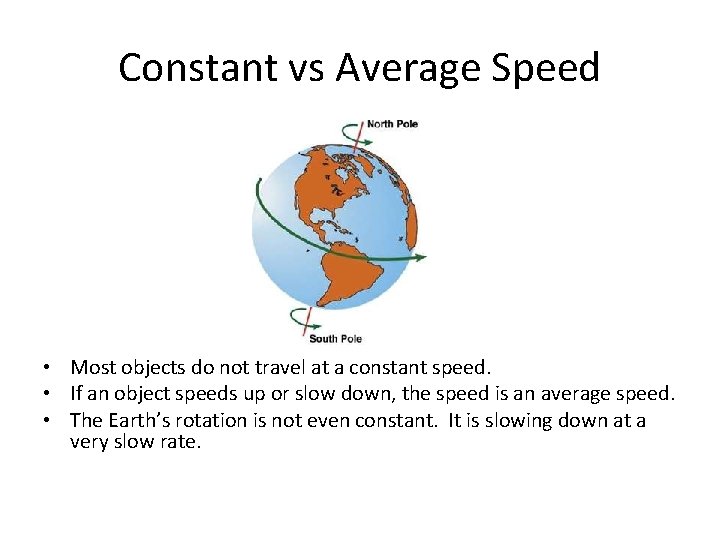
Constant vs Average Speed • Most objects do not travel at a constant speed. • If an object speeds up or slow down, the speed is an average speed. • The Earth’s rotation is not even constant. It is slowing down at a very slow rate.
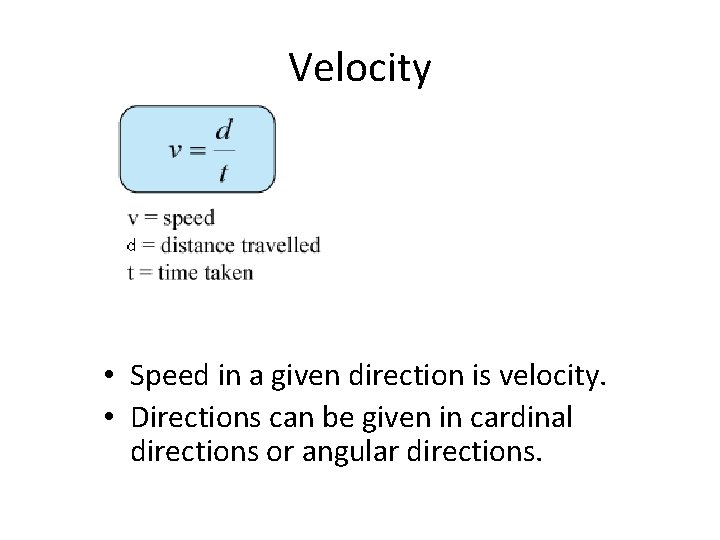
Velocity • Speed in a given direction is velocity. • Directions can be given in cardinal directions or angular directions.
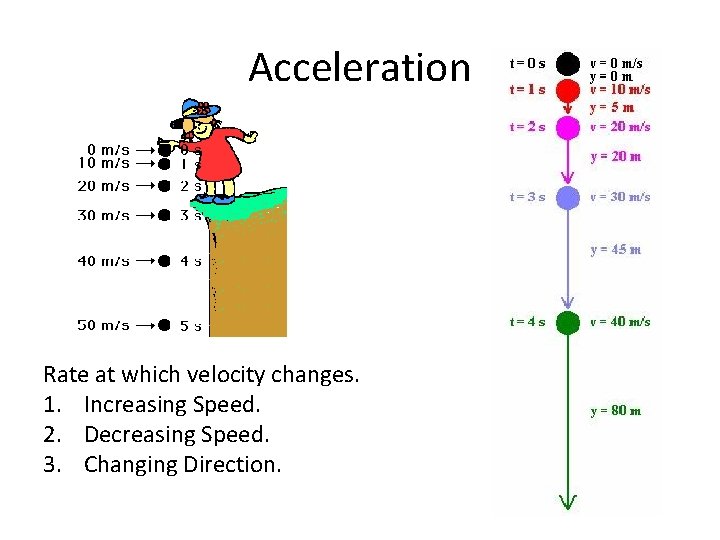
Acceleration Rate at which velocity changes. 1. Increasing Speed. 2. Decreasing Speed. 3. Changing Direction.
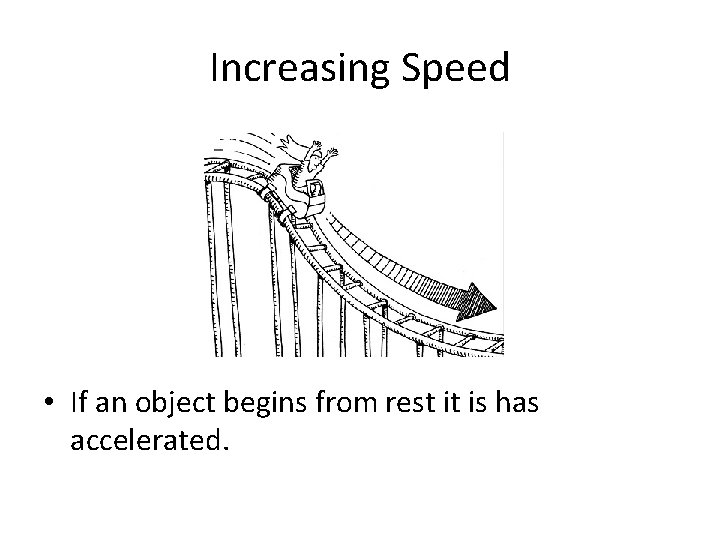
Increasing Speed • If an object begins from rest it is has accelerated.
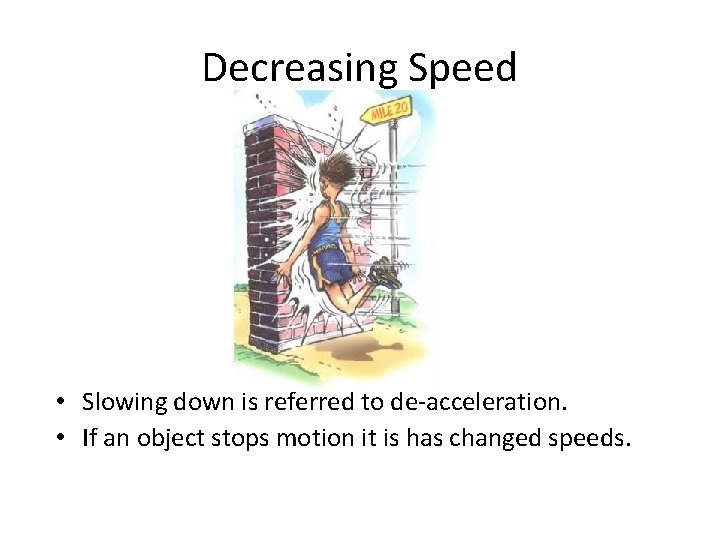
Decreasing Speed • Slowing down is referred to de-acceleration. • If an object stops motion it is has changed speeds.
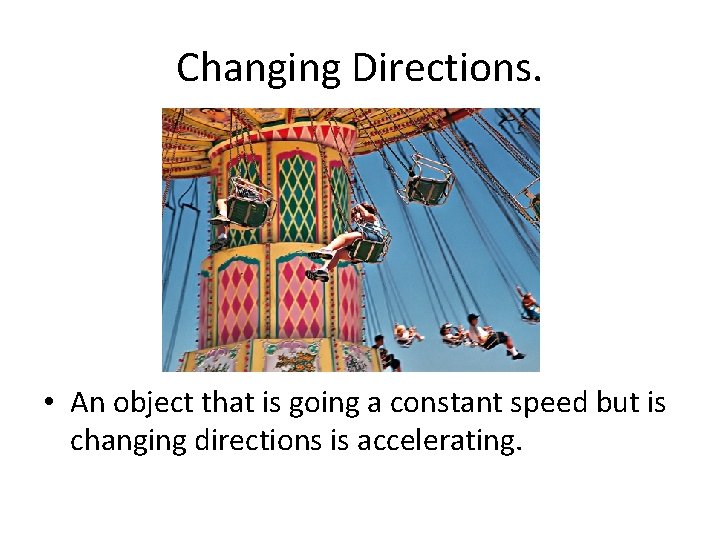
Changing Directions. • An object that is going a constant speed but is changing directions is accelerating.
Calculating Acceleration • Acceleration= (Final Velocity-Initial Velocity)/Time • Example (22 m/s – 4 m/s)/3 s 18 m/s / 3 s 6 m/s/s = Acceleration
- Slides: 14