
Describe evidence of Species variation due to Climate
Describe evidence of Species variation due to : Climate, changing landfiorms, interspecies interaction an genetic mutation.
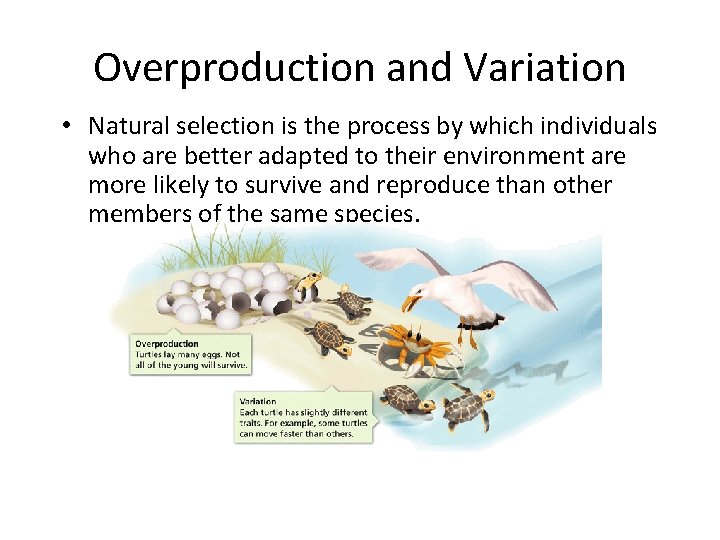
- Darwin’s Theory Overproduction and Variation • Natural selection is the process by which individuals who are better adapted to their environment are more likely to survive and reproduce than other members of the same species.
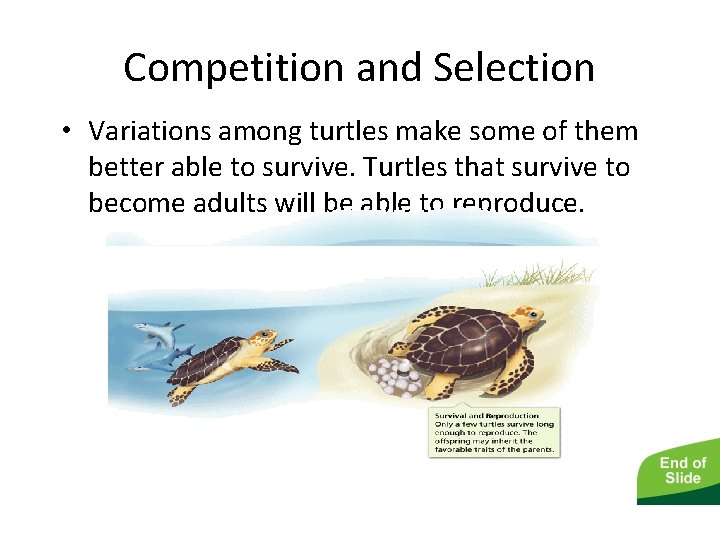
- Darwin’s Theory Competition and Selection • Variations among turtles make some of them better able to survive. Turtles that survive to become adults will be able to reproduce.
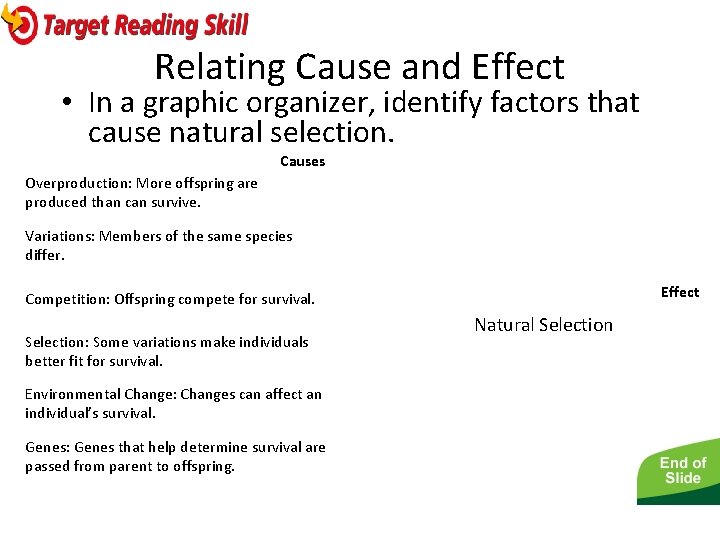
- Darwin’s Theory Relating Cause and Effect • In a graphic organizer, identify factors that cause natural selection. Causes Overproduction: More offspring are produced than can survive. Variations: Members of the same species differ. Effect Competition: Offspring compete for survival. Selection: Some variations make individuals better fit for survival. Environmental Change: Changes can affect an individual’s survival. Genes: Genes that help determine survival are passed from parent to offspring. Natural Selection
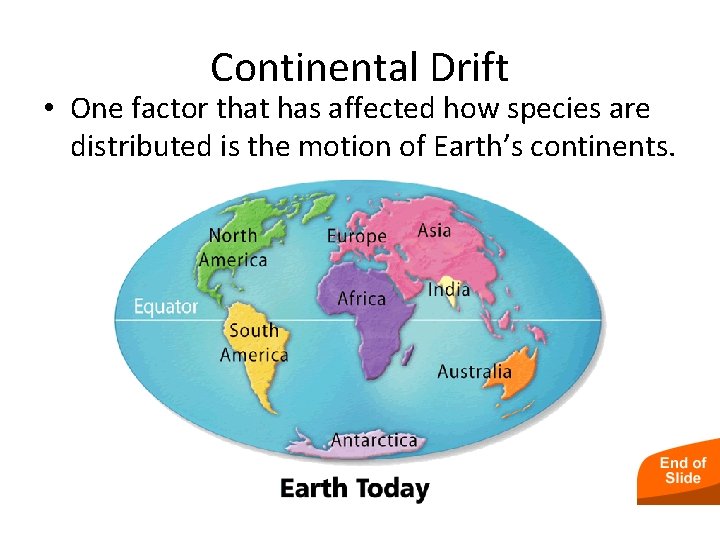
- Biogeography Continental Drift • One factor that has affected how species are distributed is the motion of Earth’s continents.
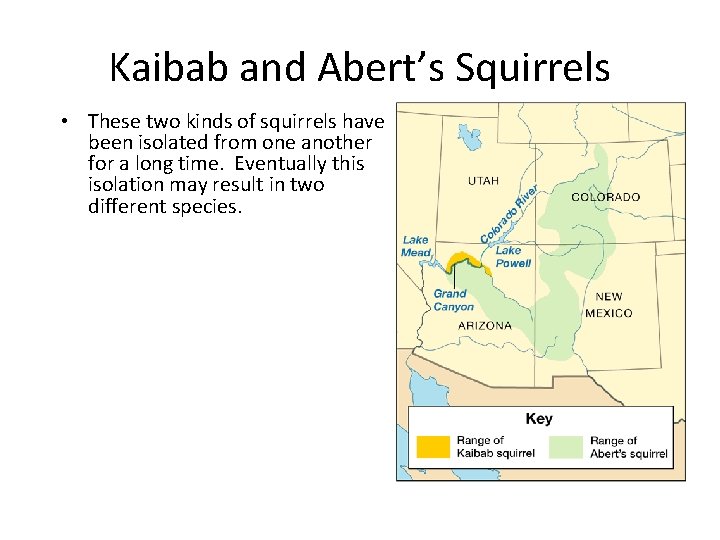
- Evidence of Evolution Kaibab and Abert’s Squirrels • These two kinds of squirrels have been isolated from one another for a long time. Eventually this isolation may result in two different species.
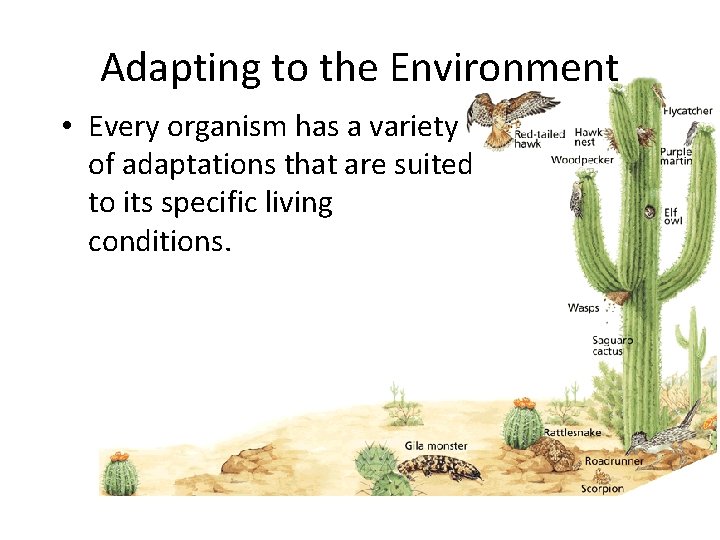
Interactions Among Living Things Adapting to the Environment • Every organism has a variety of adaptations that are suited to its specific living conditions.
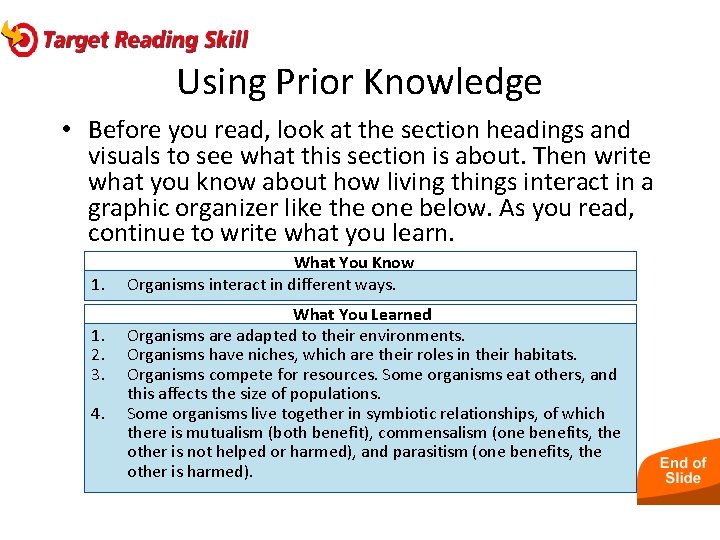
Interactions Among Living Things Using Prior Knowledge • Before you read, look at the section headings and visuals to see what this section is about. Then write what you know about how living things interact in a graphic organizer like the one below. As you read, continue to write what you learn. 1. 1. 2. 3. 4. What You Know Organisms interact in different ways. What You Learned Organisms are adapted to their environments. Organisms have niches, which are their roles in their habitats. Organisms compete for resources. Some organisms eat others, and this affects the size of populations. Some organisms live together in symbiotic relationships, of which there is mutualism (both benefit), commensalism (one benefits, the other is not helped or harmed), and parasitism (one benefits, the other is harmed).
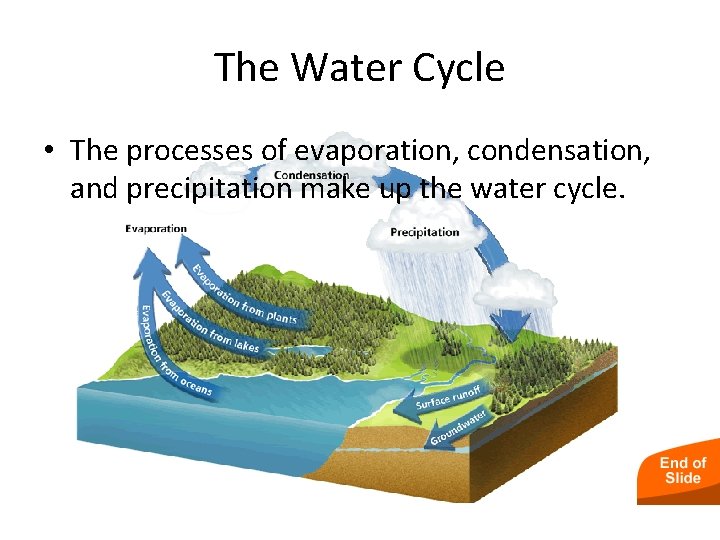
- Cycles of Matter The Water Cycle • The processes of evaporation, condensation, and precipitation make up the water cycle.
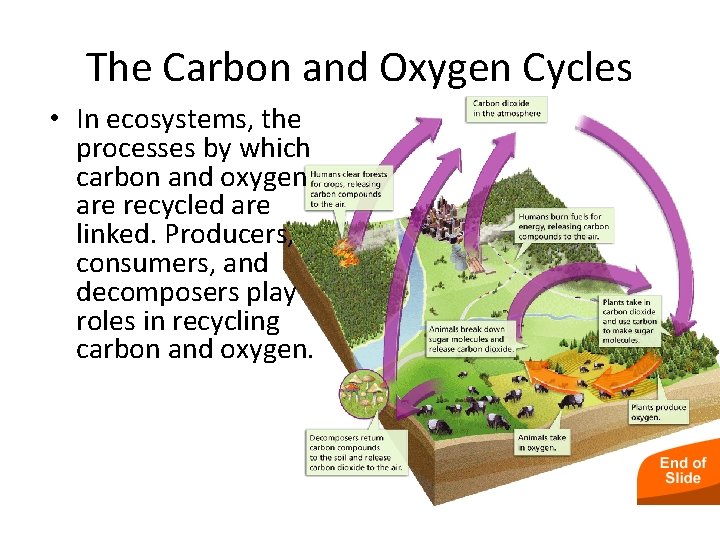
- Cycles of Matter The Carbon and Oxygen Cycles • In ecosystems, the processes by which carbon and oxygen are recycled are linked. Producers, consumers, and decomposers play roles in recycling carbon and oxygen.
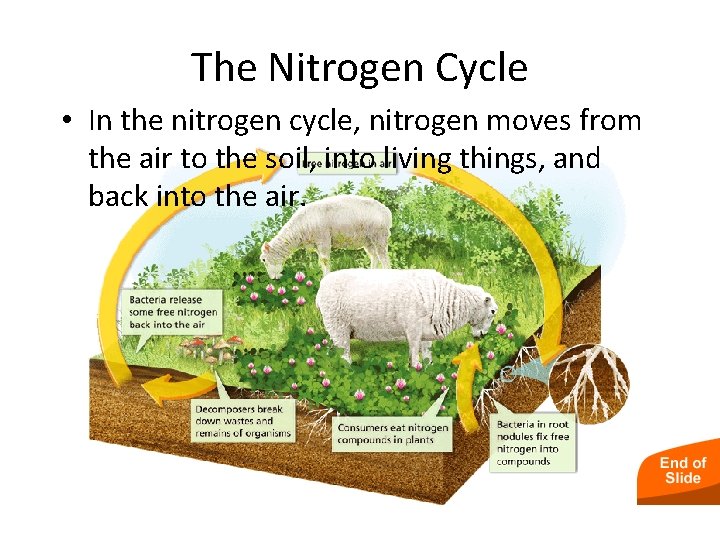
- Cycles of Matter The Nitrogen Cycle • In the nitrogen cycle, nitrogen moves from the air to the soil, into living things, and back into the air.
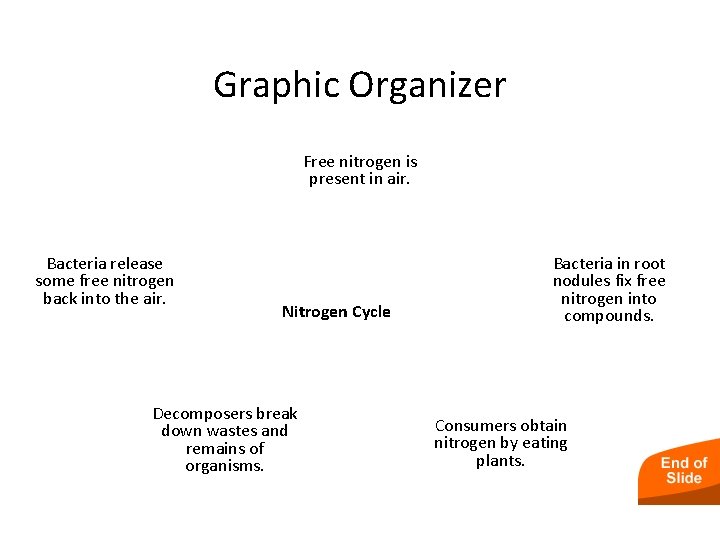
Graphic Organizer Free nitrogen is present in air. Bacteria release some free nitrogen back into the air. Nitrogen Cycle Decomposers break down wastes and remains of organisms. Bacteria in root nodules fix free nitrogen into compounds. Consumers obtain nitrogen by eating plants.
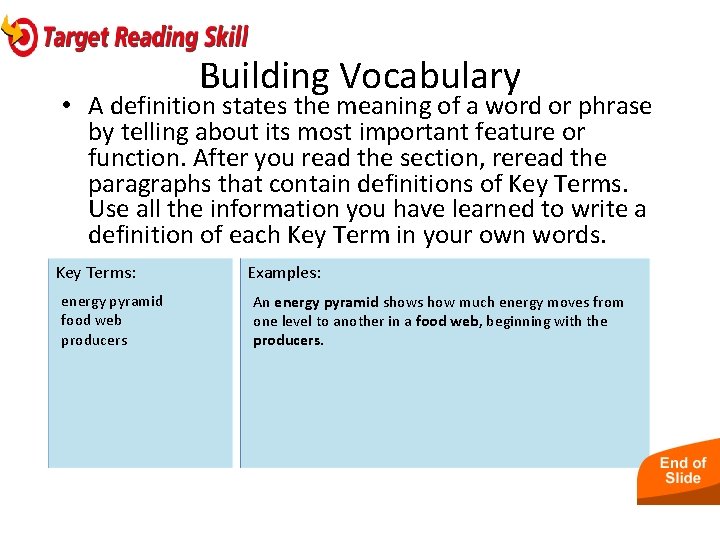
- Energy Flow in Ecosystems Building Vocabulary • A definition states the meaning of a word or phrase by telling about its most important feature or function. After you read the section, reread the paragraphs that contain definitions of Key Terms. Use all the information you have learned to write a definition of each Key Term in your own words. Key Terms: Examples: energy pyramid food chain food web consumer producers herbivore omnivore carnivore scavenger Anaenergy In food chain, pyramid a consumer shows how could much be an energy herbivore, moves an from omnivore, one level tooranother a carnivore, in a food including web, beginning a scavenger. with the producers. decomposer Decomposers are nature’s recyclers.
A few thoughts on pollution:
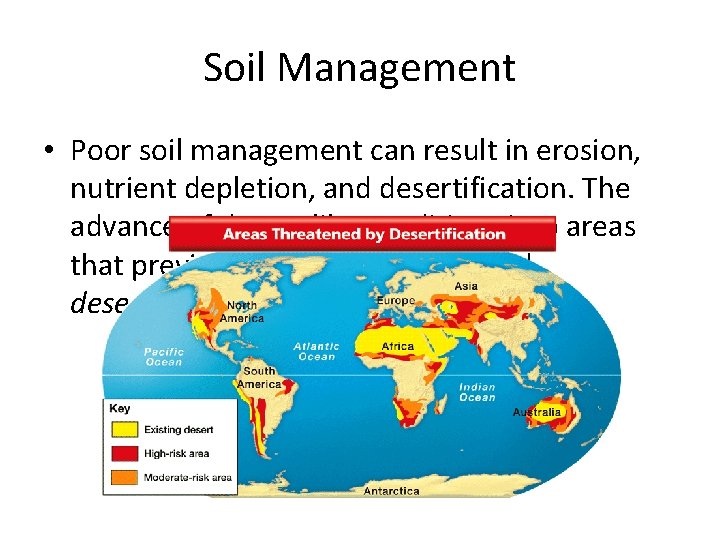
Conserving Land Soil Management • Poor soil management can result in erosion, nutrient depletion, and desertification. The advance of desert-like conditions into areas that previously were fertile is called desertification.
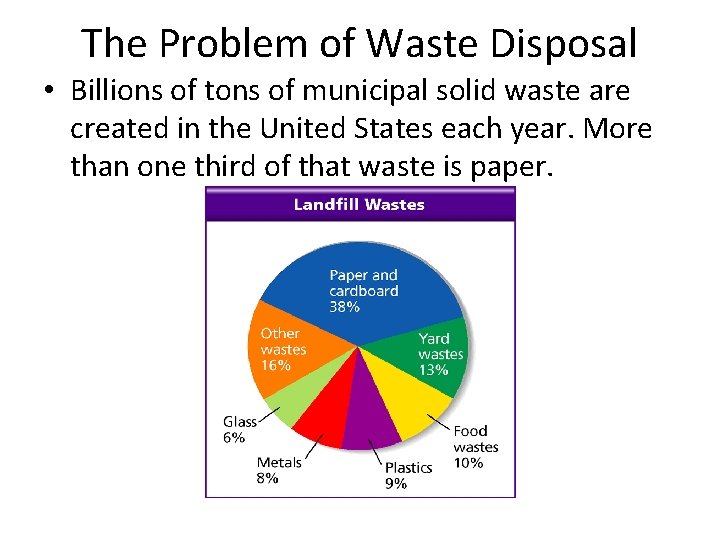
Waste Disposal and Recycling The Problem of Waste Disposal • Billions of tons of municipal solid waste are created in the United States each year. More than one third of that waste is paper.
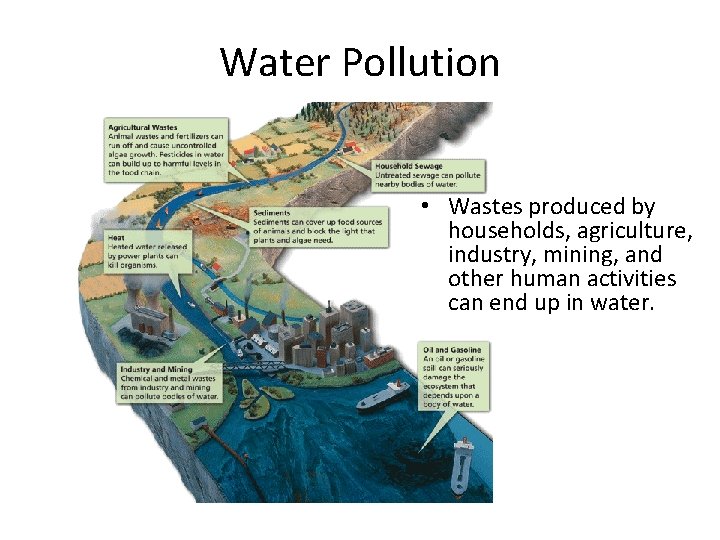
Water Pollution and Solutions Water Pollution • Wastes produced by households, agriculture, industry, mining, and other human activities can end up in water.
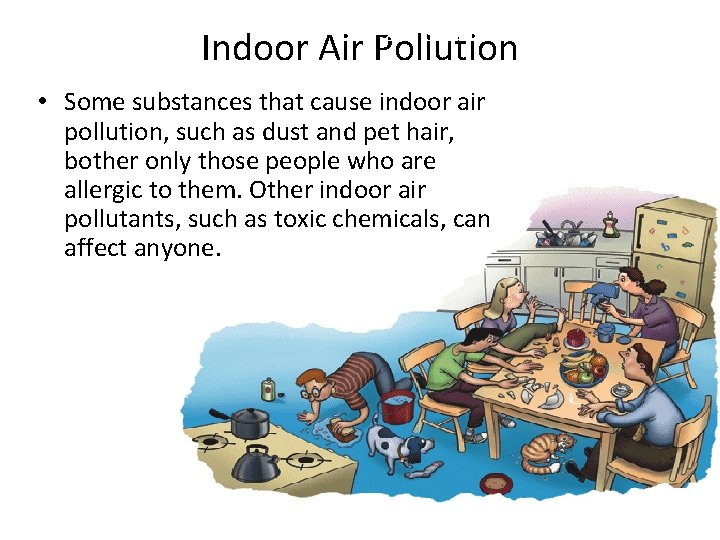
Air Pollution and Solutions Indoor Air Pollution • Some substances that cause indoor air pollution, such as dust and pet hair, bother only those people who are allergic to them. Other indoor air pollutants, such as toxic chemicals, can affect anyone.
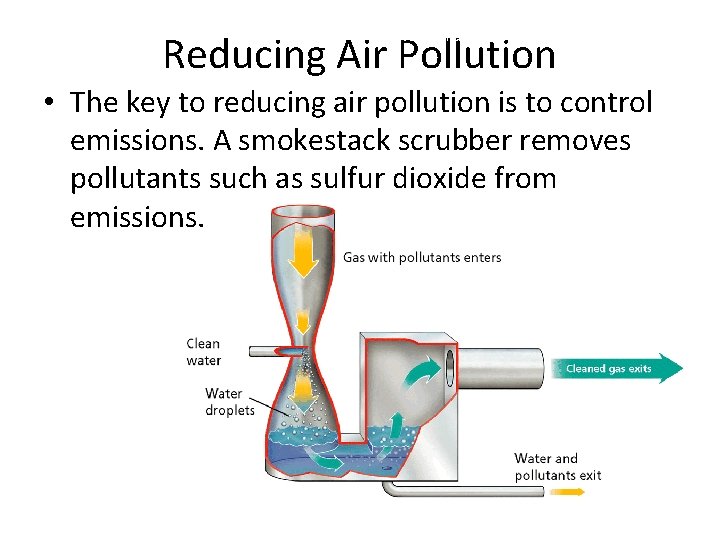
Air Pollution and Solutions Reducing Air Pollution • The key to reducing air pollution is to control emissions. A smokestack scrubber removes pollutants such as sulfur dioxide from emissions.
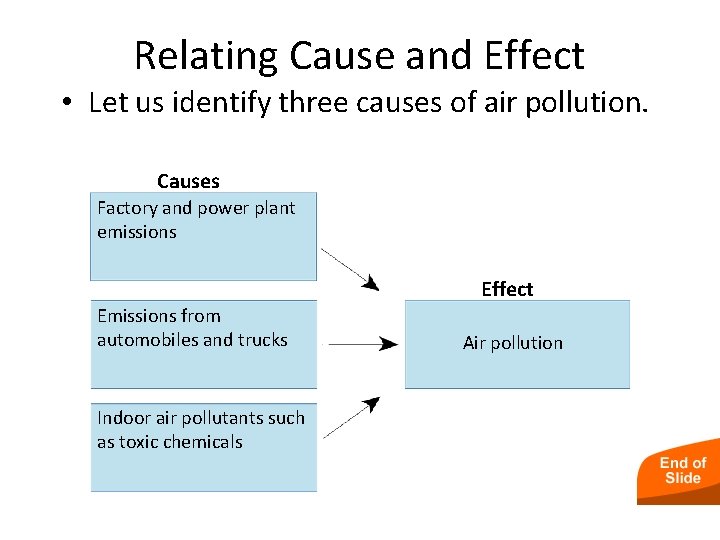
Air Pollution and Solutions Relating Cause and Effect • Let us identify three causes of air pollution. Causes Factory and power plant emissions Effect Emissions from automobiles and trucks Indoor air pollutants such as toxic chemicals Air pollution
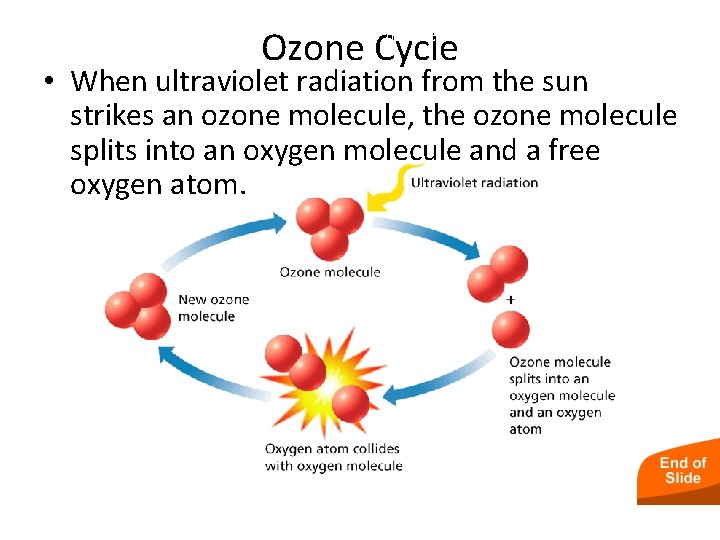
Global Changes in the Atmosphere Ozone Cycle • When ultraviolet radiation from the sun strikes an ozone molecule, the ozone molecule splits into an oxygen molecule and a free oxygen atom.
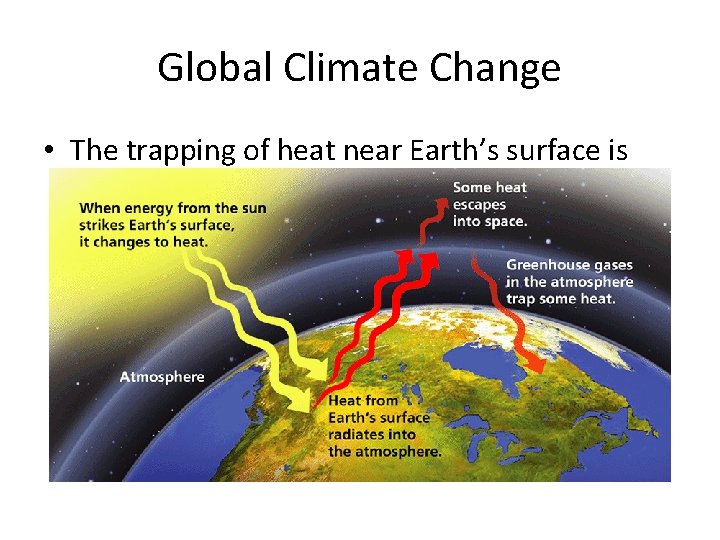
Global Changes in the Atmosphere Global Climate Change • The trapping of heat near Earth’s surface is called the greenhouse effect.
- Slides: 22