
Dermatology Pearls for 2014 American Board of Dermatology
Dermatology Pearls for 2014 American Board of Dermatology certifying exam Michael W. Wangia, M. D. Clinical Assistant Professor Dermatopathology Fellow University of Florida Department of Dermatology
Objectives 30 high-yield pearls What I did to prepare
“For every pearl at the bottom of the ocean, there is a ton of whale shit. ” —Ernest Lee, M. D.
1. Ipilimumab Mechanism of action Blocks CTLA-4 receptor†‡ on cytotoxic T lymphocytes, preventing their inhibition, allowing them to destroy melanoma cells Adverse effects include Facial swelling Colitis †Also known as CD 152 ‡Normally CTLA-4 stimulation inhibits T-cells
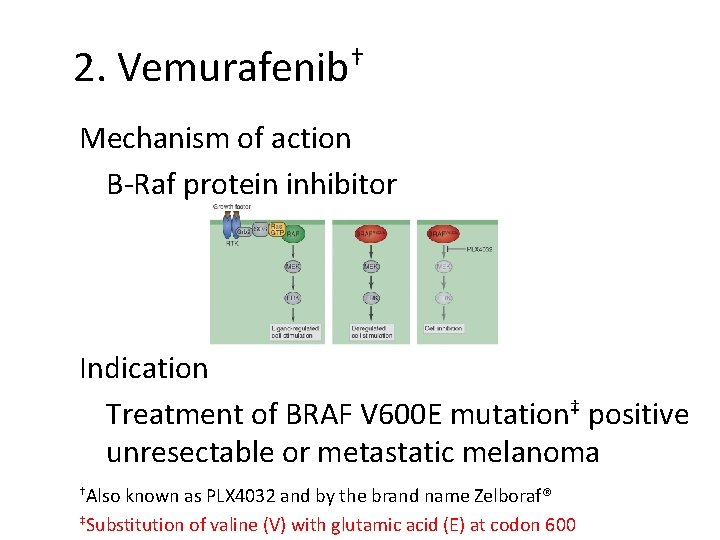
2. Vemurafenib† Mechanism of action B-Raf protein inhibitor Indication Treatment of BRAF V 600 E mutation‡ positive unresectable or metastatic melanoma †Also known as PLX 4032 and by the brand name Zelboraf® ‡Substitution of valine (V) with glutamic acid (E) at codon 600

3. Dimethylaminopropylamine DMAPA is used in the formation of cocamidopropyl betaine Cocamidopropyl betaine is found in liquid soaps and shampoos DMAPA remains in products as contaminant DMAPA is important cause of eyelid dermatitis
4. Angiopoietin receptors Tie-1 and Tie-2 are cell-surface receptors† Angiopoietins bind these receptors and promote angiogenesis There are four angiopoietins Serum Ang 2 levels are elevated in patients with angiosarcoma †Mutations that lead to dysfunction of the Tie-2 receptor are associated with vascular malformations
5. Viral-associated trichodysplasia Closely linked with organ transplantation, immunosuppression†, and pre-B cell leukemia Follicular spiny papules erupt on face Likely due to a polyomavirus‡ Treat with valganciclovir †Cyclosporin often cited ‡A ds. DNA virus and member of papovavirus family
6. Merkel cell carcinoma Merkel cell polyomavirus (MCPy. V) Wide local excision Sentinel lymph node biopsy in all cases Adjuvant radiotherapy for lesions on head and neck with locoregional spread

7. Coding excision size Malignant lesions are excised with margins Diameter of resulting surgical defect (lesion + margins) termed “excised diameter” Excised diameter used to select proper CPT code to bill excision A 6 mm BCC on back excised with 4 mm margins would result in a 1. 4 cm excised diameter (11602)
Modifiers • -25 • -59 • -79 • Review these in the AAD website
8. Disseminated infundibulofolliculitis Young dark-skinned patients Uniform 1— 2 mm papules on neck and upper trunk Figure 33 -31 in Andrews’ 10 th edition on page 776 Treat with topical steroids, PUVA or isotretinoin

9. Syringomas Occur not just on face but also neck, chest, axillae, upper arms, and periumbilically Figure 111. 22 B in Bolongia’s 2 nd edition on page 1704 Figure 29 -36 in Andrews’ 10 th edition on page 664 Associated with Down syndrome, Nicolau–Balus syndrome, and Brooke-Spiegler syndrome
10. Lupus miliaris disseminatus faciei Red-to-yellow papules on central face and around eyelids Histology shows single superficial BB-like nodule Central caseation necrosis http: //img. medscape. com/pi/emed/ckb/dermat ology/1048885 -1070740 -268. jpg
11. Defects in keratin 5†‡ Epidermolysis bullosa simplex§ Dowling–Degos' disease Olmsted syndrome †For list of cutaneous conditions caused by mutations in keratins see: http: //en. wikipedia. org/wiki/List_of_cutaneous_conditions_caused_by_mu tations_in_keratins ‡For more lists (some good, some not so good) of board-related fodder see: http: //en. wikipedia. org/wiki/List_of_cutaneous_conditions#See_also §May be due to mutation in gene encoding keratin 5 and/or 14
12. “Migrating” conditions Creeping eruption (Cutaneous larva migrans) 2 cm/day Larva migrans profundus (Gnathostomiasis) 1 cm/hour Larva currens 10 cm/day Erythema gyratum repens 1 cm/day
13. Schöpf–Schulz–Passarge syndrome Ectodermal dysplasia Diffuse symmetric palmoplantar keratoderma Hypodontia Multiple eyelid apocrine hidrocystomas Syringofibroadenomas on extremities Poromas
14. Erythrodontia Congenital erythropoietic porphyria Hepatoerythropoietic porphyria
15. Paraneoplastic pemphigus Target antigens: desmoglein 1, desmoglein 3, BPAG 1, plectin, desmoplakin 1, desmoplakin 2, envoplakin, periplakin, unknown antigen (170 k. Da) Notably not BPAG 2† †Do not confuse the various BP antigen synonyms due to exam stress: BPAG 1 (BP 230) BPAG 2 (BP 180, type XVII collagen)
16. Eruptive xanthomas Arise on buttocks and extensor surfaces of extremities Hypertriglyceridemia
17. Voriconazole Azole antifungal Prophylaxis against Aspergillus infection Accelerates development of SCC’s† Photosensitivity‡ and premature photodamage †Skin cancer most frequent malignancy in organ transplant recipients (95% NMSC | SCC > BCC) ‡UVA-induced like most medication-related photosensitivity
18. “Trench” conditions Trench fever Bartonella quintana Pediculus humanus corporis Trench mouth Mixed population of bacteria Prevotella intermedia, Fusobacterium, Treponema and Selenomonas spp. , Trench foot
19. Defects in p genes p 53 Li–Fraumeni syndrome Actinic keratoses Squamous cell carcinoma p 57 Beckwith–Wiedemann syndrome p 63 Hay–Wells syndrome (AEC syndrome) EEC syndrome Rapp–Hodgkin syndrome
20. Vismodegib† Mechanism of action Antagonizes membrane bound smoothened receptor leading to less activity of GLI transcription factor and ultimately decreased expression of tumor mediating genes‡ Adverse effects include Muscle spasms Alopecia †Used to treat locally advanced or metastatic BCC’s ‡Inactivating PTCH mutations and activating SMO mutations cause most BCC's. Normal pathway: SSH binds PTCH, together they inhibit SMO leading to less GLI transcription factor going to nucleus (net result: decreased expression of tumor mediating genes).
21. Becker’s nevus Associated with a smooth muscle hamartoma Transient induration/elevation upon rubbing in 80% (pseudo-Darier's sign) May occur on the forehead, cheek, chest, shoulder, forearm, wrist, abdomen, buttock, and shin
22. Cold panniculitis Cheeks of toddlers and young children Results from contact with popsicle or ice bag No treatment necessary
23. Extracellular matrix protein-1 ECM-1 mutated in lipoid proteinosis†‡ Targeted by autoantibodies in lichen sclerosus †Also know as Urbach–Wiethe disease ‡Beaded papules on eyelid margin not the only finding. First clinical sign is weak cry due to deposition of hyaline-like material in laryngeal mucosa. Hoarseness remains throughout life. “Ice-pick”-like acneiform scars occur on face.
24. Collagen types in cartilage II (2)† IX (9)† X (10) XI (11)† XII (12) XX (20) XXVII (27) †Autoantibodies to collagen type 2, as well as 9 and 11, have been reported to cause relapsing polychondritis. This targeting of cartilage results in the red ears (sparing the lobes), arthritis, aortic aneurysms, and tracheal collapse.
25. Clofazimine Mechanism of action Unknown Indication Multibacillary leprosy (>5 lesions) Adverse effects include Orange–pink skin and body fluid discoloration Ichthyosis Fatal enteropathy† †Due to crystal deposition in the small bowel mucosa
26. GNAS 1 gene Encodes G protein α-subunit that regulates adenylate cyclase activity Normal function is to negatively regulate bone formation Mutated in several conditions including Progressive osseous heteroplasia Plate-like osteoma cutis Albright hereditary osteodystrophy Mc. Cune–Albright syndrome
27. WHIM syndrome Warts Hypogammaglobulinemia Infections† Myelokathexis‡ Mutated chemokine receptor CXCR 4 gene§ †Namely recurrent bacterial infections such as sinusitis, cellulitis, periodontitis, and meningitis ‡Chronic peripheral neutropenia due to retention of neutrophils in the bone marrow §Autosomal dominant
28. Paraphenylenediamine (PPD) Common contact allergen found in Black hair dye, scuba gear, henna† Cross-reacts with Para-aminobenzoic acid (PABA), azo dyes, sulfonamides/sulfonylureas, thiazides, ester anesthetics‡ Neutrophilic and eosinophilic dermatitis †Not found in pure henna ‡PPD + PASTE
29. Omalizumab Mechanism of action Humanized monoclonal Ig. G 1 antibody that binds to Ig. E preventing interaction with receptor (FcϵRI) on mast cells and basophils Has been used to treat urticaria, atopic dermatitis, and bullous pemphigoid† †Ig. G not only circulating auto-antibody isotype in bullous pemphigoid, but also Ig. E
30. Oral fibroma Most common “tumor” of the oral cavity Located along bite line of the buccal mucosa Cured by conservative surgical excision
Miscellaneous Randoms Imatinib/Gleevec • Treatment of DFSP with + PDGFR-COL 1 A 1 mutation • Treatment of hypereosinophilic syndrome with mutation in FIP 1 L 1 -PDGFR alpha mutation.
IP • Mutation? NEMO. Affects NF-KB. What is the purpose of NF-KB? - protects against TNFinduced apoptosis
Vascular lesions? • Wiebel palade bodies. These are essentially storage granules of endothelial cells. Contain v. WF and P-selectin. Play dual role in both hemostasis and inflammation • Bier spots are small erythematous blanching macules. Essentially benign physiologic vascular anomaly of no significance clinically. Know both malignant and benign vascular tumors and lesions.
Fibromatosis • Juvenile hyaline fibromatosis – (nodular lesions on hands, scalp and face with gingival hypertrophy and associated joint contractures). Bx shows nodular hyaline fibrosis). Genetic mutation associated? CMG 2 (capillary morphogenesis protein-2). Or ANTXR 2 mutations (anthrax toxin receptor 2).
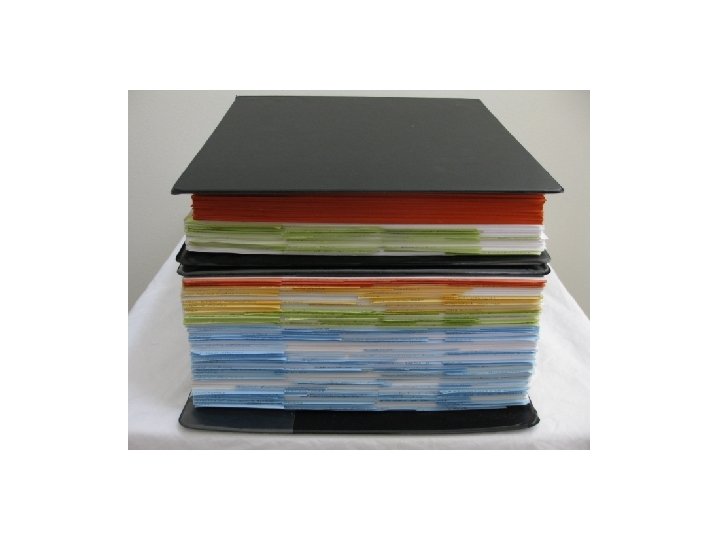

What I did to prepare Note taking and memorization Clinical images Pathology Practice questions

Note taking and memorization (I) Leading up to month prior to exam Read through and took notes from Bolognia’s – put more emphasis on photos and tables entire 2 nd edition (ISBN 1416029990) Read entire Andrews 2 months prior to the boards Spent 2 weeks prior to the test day My goal was to review, re-review, and memorizing above notes every two weeks
Note taking and memorization (II) During one month prior to exam Skimmed Genodermatoses (i. e. "Spitz" | ISBN 0781740886) and added to my notes when needed Reviewed notes from 2013 Florida Dermatology & Dermatopathology Board Review Course Re-reviewed my own notes
Clinical images During one month prior to exam reviewed all images in: Andrews’ 11 th editions Bolognia’s 2 nd edition Color Atlas of Dermatology 1 st and 2 nd editions (i. e. "Callen" | ISBN 0721637566 and 0721682561) Atlas of Clinical dermatology 4 th ed Du Vivier
Dermatopathology During one month prior to exam† Reviewed Elston front to back Watched all the Power. Point lectures by Dr. Elston found on the Dermatopathology: Requisites in Dermatology website‡ Reviewed all the online DLCS study slide sets§ †Note: I also attended two review courses, the Barron Board Review and the Florida Dermatology & Dermatopathology Board Review Course, both of which had slide reviews ‡http: //www. requisitesindermatology. com/dermatopathology_ppt. php §http: //dermpathlab. com/residents/slide-study-set-program
Practice questions During one month prior Reviewed all ETAS practice questions† Reviewed all questions in the ASDS Primer in Dermatologic Surgery: A Study Companion‡ †http: //dermatologyinreview. com/Galderma ‡http: //www. asds. net/primerbook. aspx

What I did NOT do to prepare Galderma Preboard Seminar review course Quizes in Mc. Graw-Hill Specialty Board Review Dermatology: A Pictorial Review (ISBN 0071597271) Journal review
• **** REVIEW SCLEROTHERAPY (slerosing agents, side effects etc); HAIR TRANSPLANTATION; AND FOCUS ON TECHNIQUE AND MAJOR COMPLICATIONS. • - Recommend using Bolognia and Surgery Primer

Questions?
References Books (ISBN): Andrews' Diseases of the Skin: Clinical Dermatology (1437703143) Dermatology (0723435715) Hurwitz Clinical Pediatric Dermatology: A Textbook of Skin Disorders of Childhood and Adolescence (1437704123) Papers (PMID): A review of radiotherapy for merkel cell carcinoma of the head and neck (23213534) Clofazimine: a review of its medical uses and mechanisms of action (7829710) Cutaneous toxic effects associated with vemurafenib and inhibition of the BRAF pathway (22431713) Disseminate and recurrent infundibulofolliculitis: response to isotretinoin (15303788) Eyelid dermatitis: contact allergy to 3 -(dimethylamino)propylamine (9134437) Human papillomavirus typing of verrucae in a patient with WHIM syndrome (20713842) Neutrophilic and eosinophilic dermatitis caused by contact allergic reaction to paraphenylenediamine in hair dye (23165836) Observations on angiopoietin 2 in patients with angiosarcoma (15149523) Routine omission of sentinel lymph node biopsy for merkel cell carcinoma <= 1 cm is not justified (19933899) Schöpf-Schulz-Passarge syndrome: further delineation of the phenotype and genetic considerations (19002348) Skin cancer in solid organ transplant recipients: advances in therapy and management (21763561) Successful treatment of bullous pemphigoid with omalizumab (23165827) The genesis of Zelboraf: Targeting mutant B-Raf in melanoma (23027900) Trichodysplasia of immunosuppression treated with oral valganciclovir (19103376) Viral-associated trichodysplasia in patients who are immunocompromised (14726896) Voriconazole-associated phototoxicity (21382298)
• Thank Dr. Brendan Thomas for his input wangim@dermatology. med. ufl. edu
- Slides: 50