
DERMATOLOGY Anatomy Functions Diagnosis of skin disease SKIN


- Slides: 40
DERMATOLOGY Anatomy Functions Diagnosis of skin disease
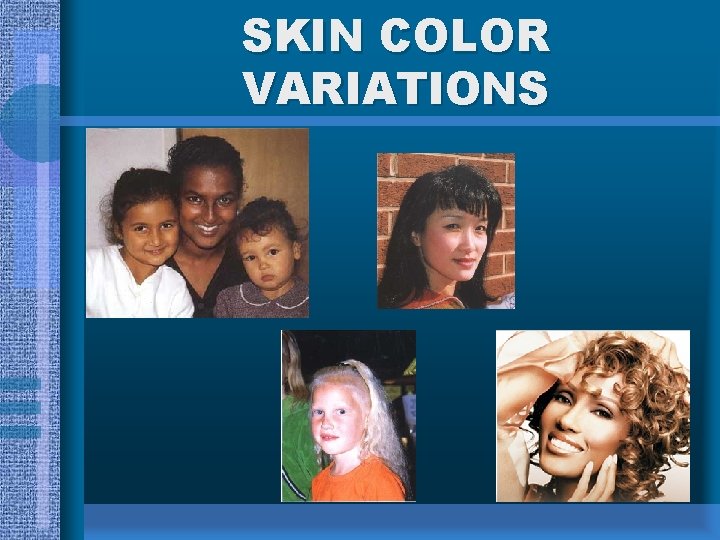
SKIN COLOR VARIATIONS
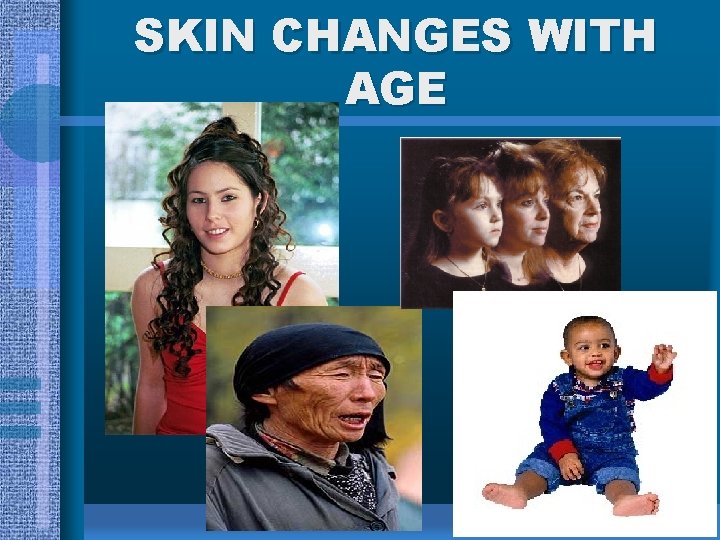
SKIN CHANGES WITH AGE
SKIN FUNCTION • • • to form a protective layer over the body to keep moisture in the body (water retention) to make vitamin D to regulate body temperature to excrete waste to sense pain, itch, light touch, heat, cold, and other sensations • for communication
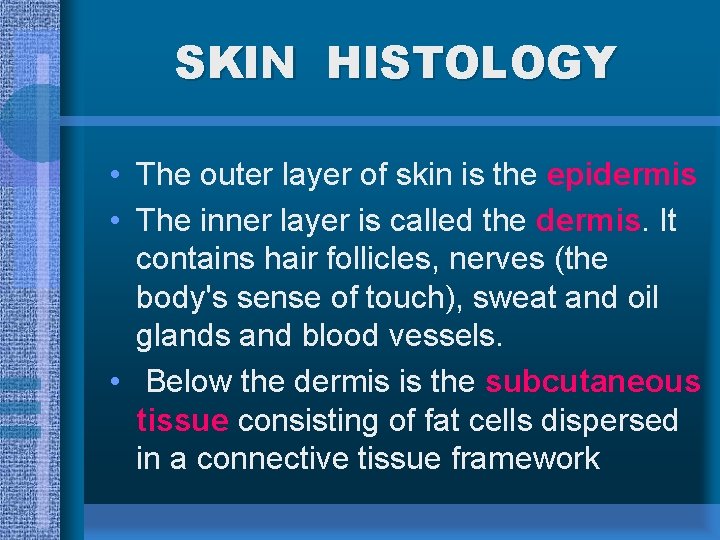
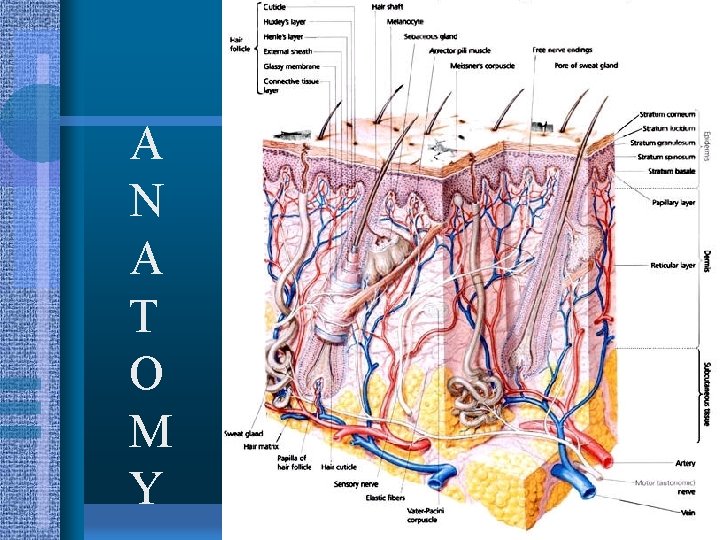
SKIN HISTOLOGY • The outer layer of skin is the epidermis • The inner layer is called the dermis. It contains hair follicles, nerves (the body's sense of touch), sweat and oil glands and blood vessels. • Below the dermis is the subcutaneous tissue consisting of fat cells dispersed in a connective tissue framework
A N A T O M Y
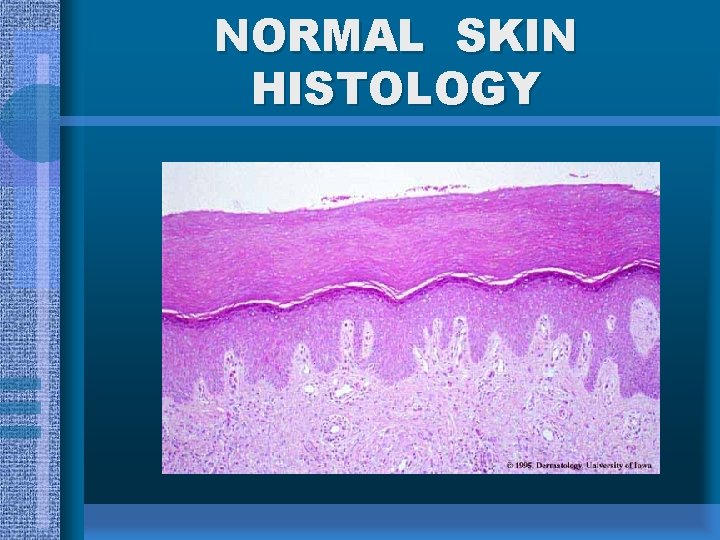
NORMAL SKIN HISTOLOGY
Criteria for Cutaneous Diagnosis • • • Location Number of Lesions Type of lesion Pattern How widespread Complaints
SKIN LESIONS • PRIMARY • SECONDARY
PRIMARY LESIONS • Primary – original lesions • Identification of such lesions is the most important aspect of the dermatologic examination • May continue to full development or be modified by regression
PRIMERY • • Macule Papule Plaque Nodule • • • Pustule Vesicle Bulla Wheal (hive) Ulser
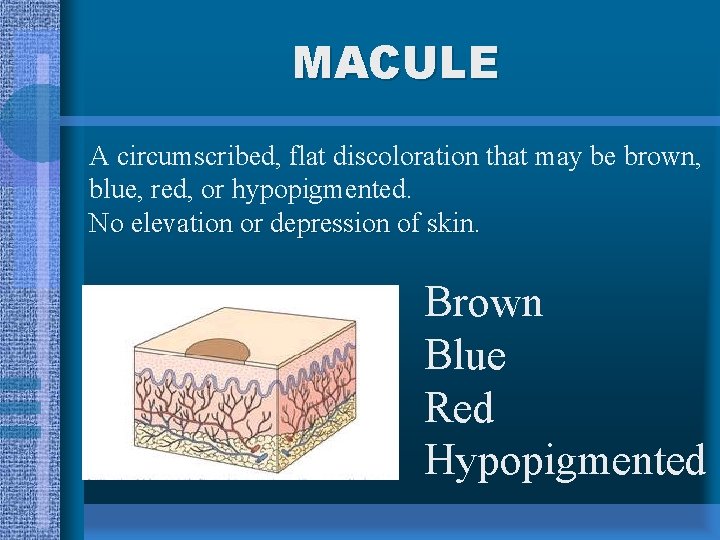
MACULE A circumscribed, flat discoloration that may be brown, blue, red, or hypopigmented. No elevation or depression of skin. Brown Blue Red Hypopigmented
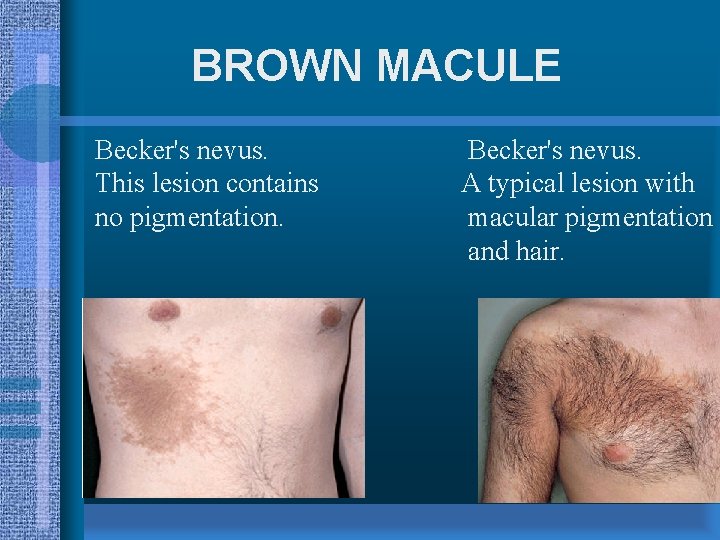
BROWN MACULE Becker's nevus. This lesion contains no pigmentation. Becker's nevus. A typical lesion with macular pigmentation and hair.
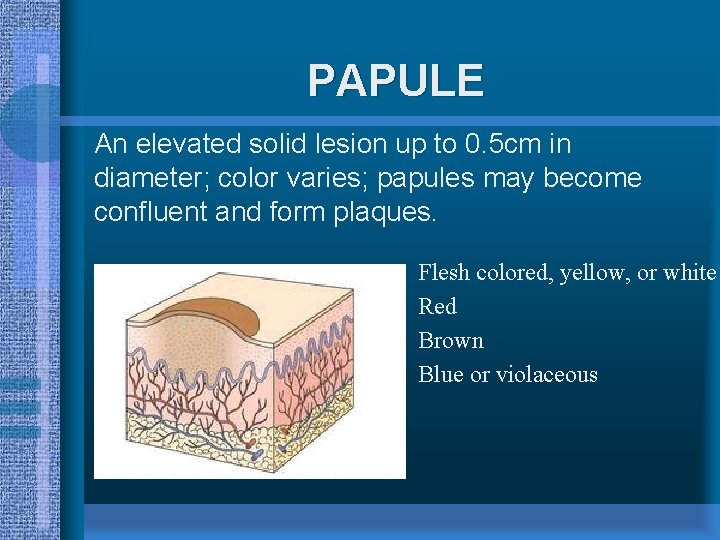
PAPULE An elevated solid lesion up to 0. 5 cm in diameter; color varies; papules may become confluent and form plaques. Flesh colored, yellow, or white Red Brown Blue or violaceous
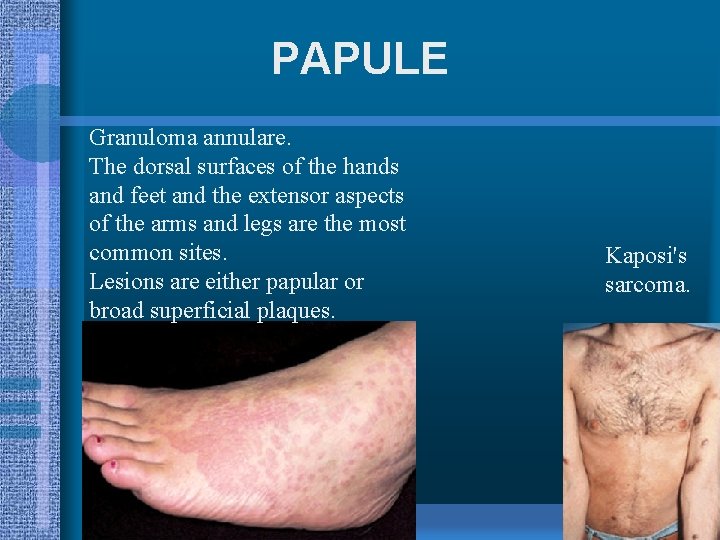
PAPULE Granuloma annulare. The dorsal surfaces of the hands and feet and the extensor aspects of the arms and legs are the most common sites. Lesions are either papular or broad superficial plaques. Kaposi's sarcoma.
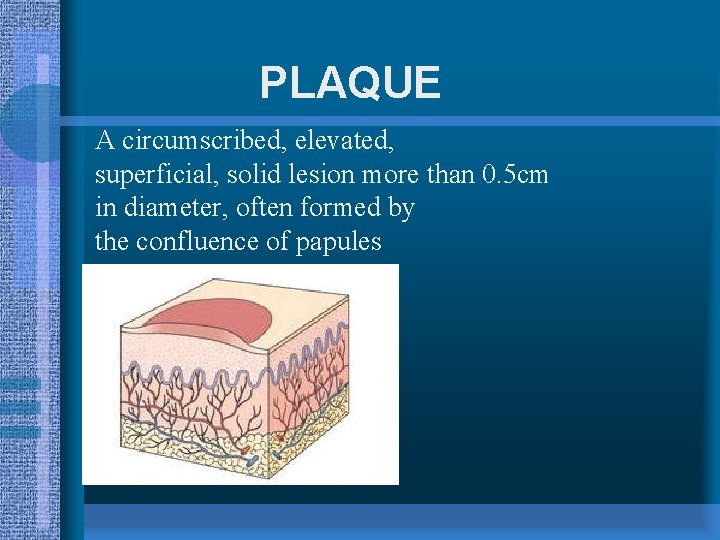
PLAQUE A circumscribed, elevated, superficial, solid lesion more than 0. 5 cm in diameter, often formed by the confluence of papules
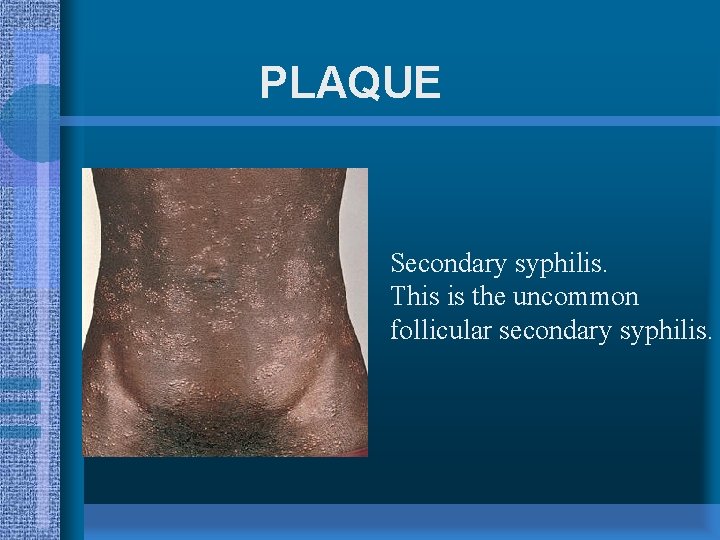
PLAQUE Secondary syphilis. This is the uncommon follicular secondary syphilis.
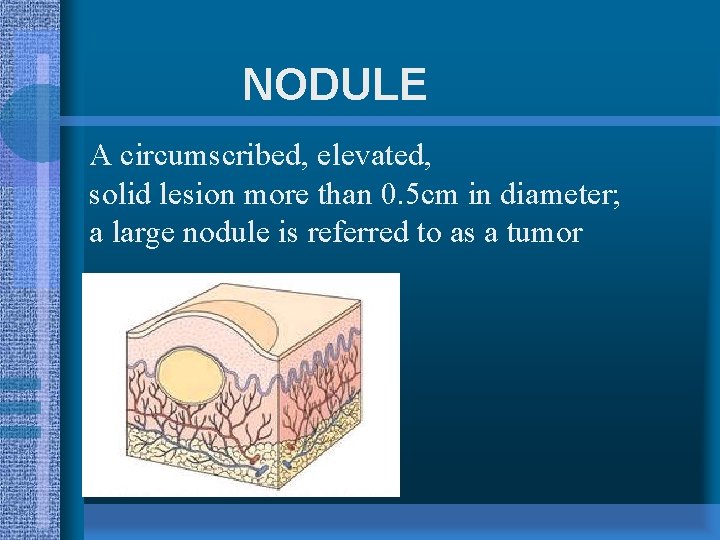
NODULE A circumscribed, elevated, solid lesion more than 0. 5 cm in diameter; a large nodule is referred to as a tumor
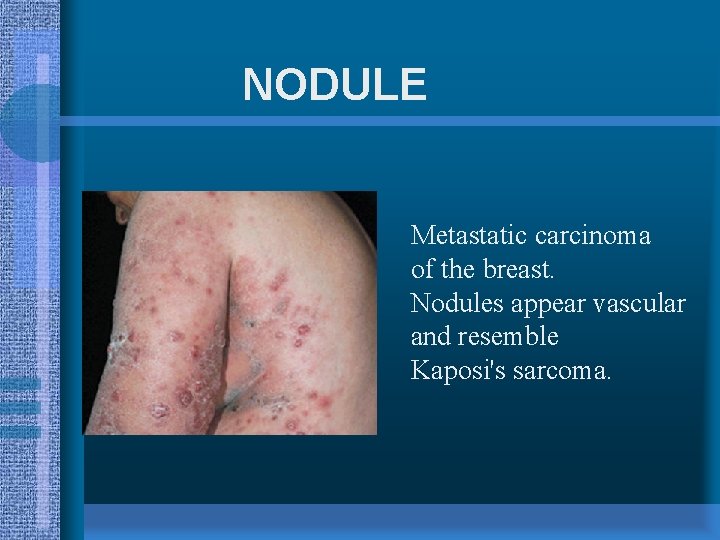
NODULE Metastatic carcinoma of the breast. Nodules appear vascular and resemble Kaposi's sarcoma.
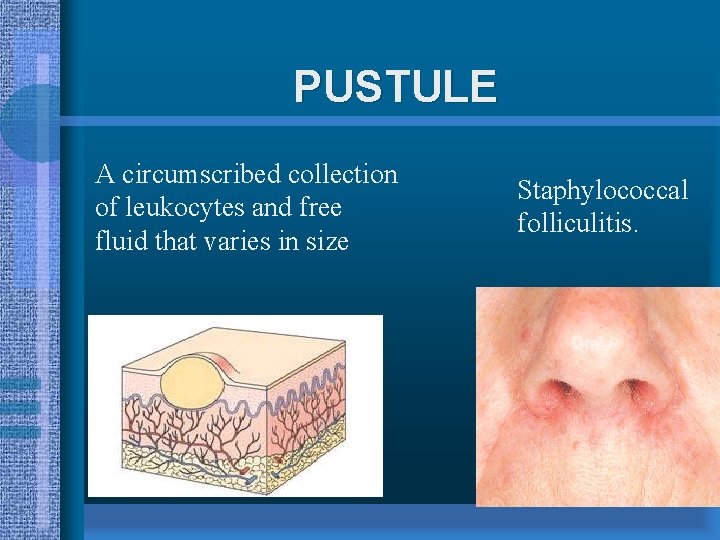
PUSTULE A circumscribed collection of leukocytes and free fluid that varies in size Staphylococcal folliculitis.
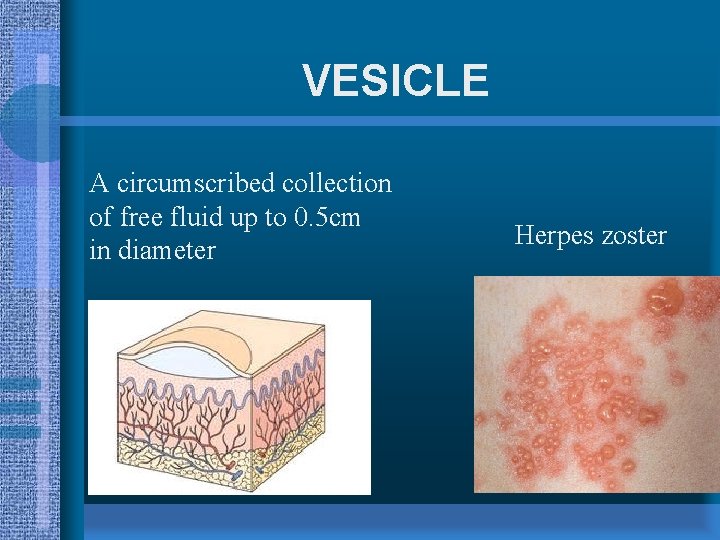
VESICLE A circumscribed collection of free fluid up to 0. 5 cm in diameter Herpes zoster
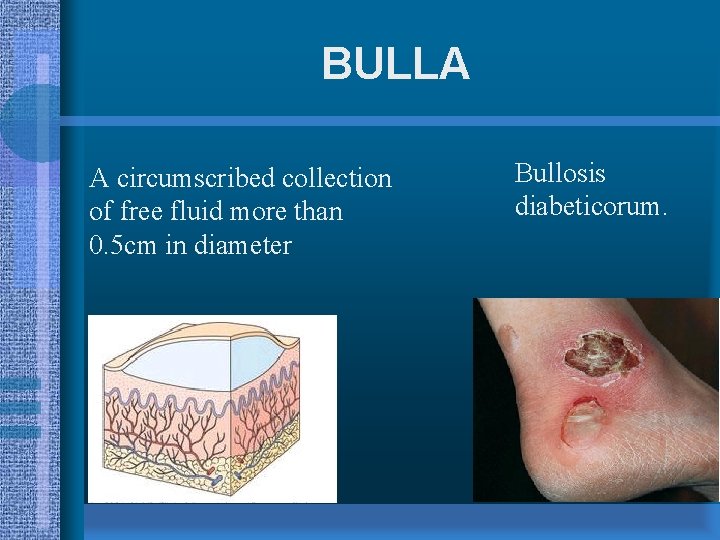
BULLA A circumscribed collection of free fluid more than 0. 5 cm in diameter Bullosis diabeticorum.
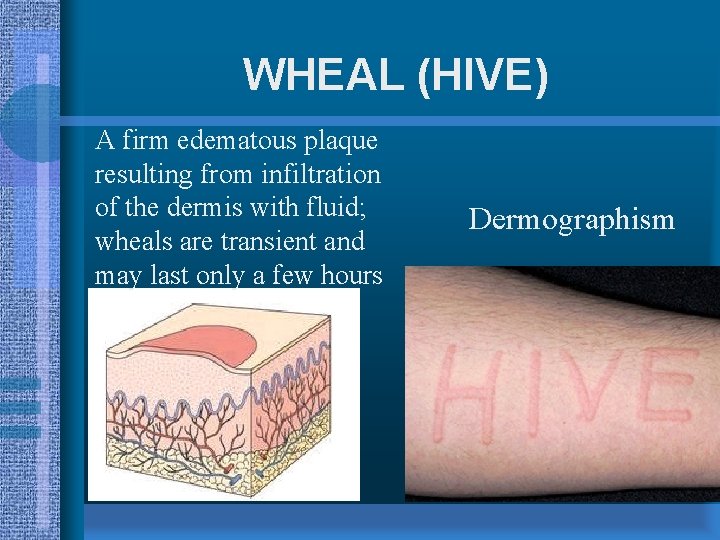
WHEAL (HIVE) A firm edematous plaque resulting from infiltration of the dermis with fluid; wheals are transient and may last only a few hours Dermographism
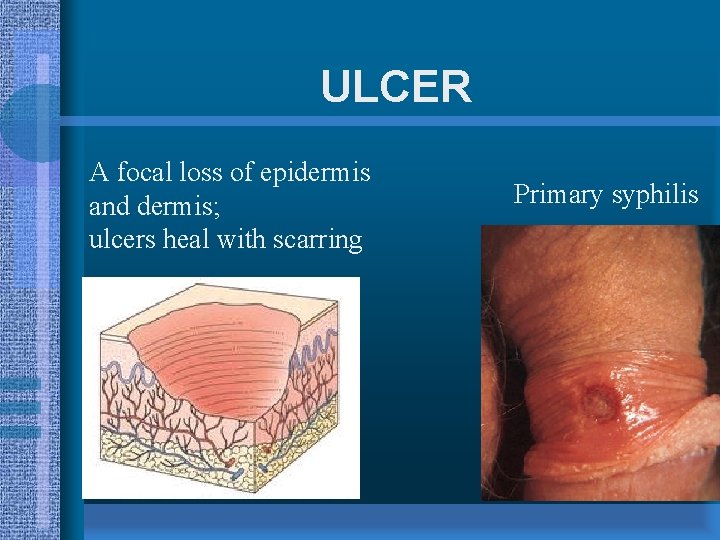
ULCER A focal loss of epidermis and dermis; ulcers heal with scarring Primary syphilis
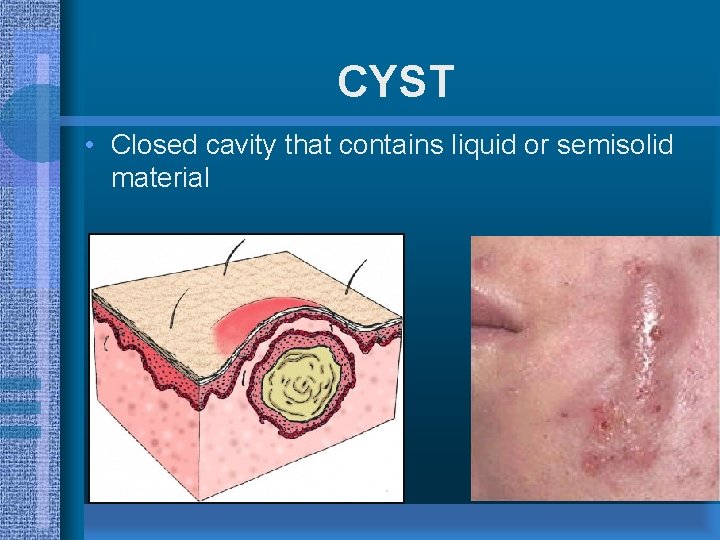
CYST • Closed cavity that contains liquid or semisolid material
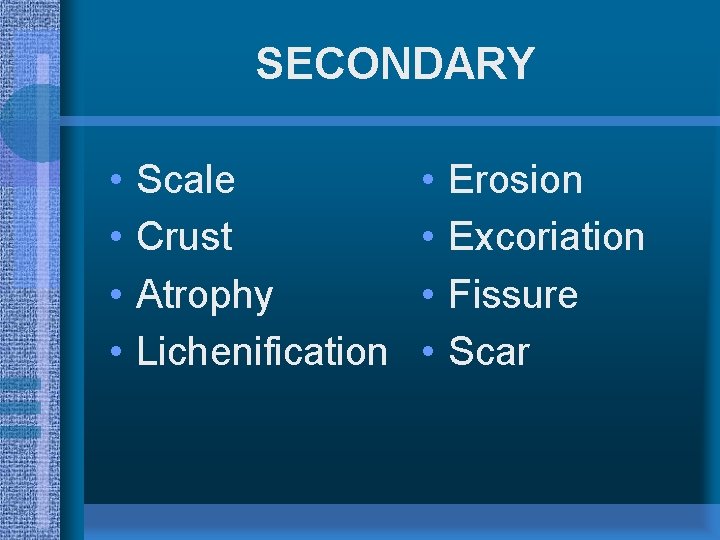
SECONDARY • • Scale Crust Atrophy Lichenification • • Erosion Excoriation Fissure Scar
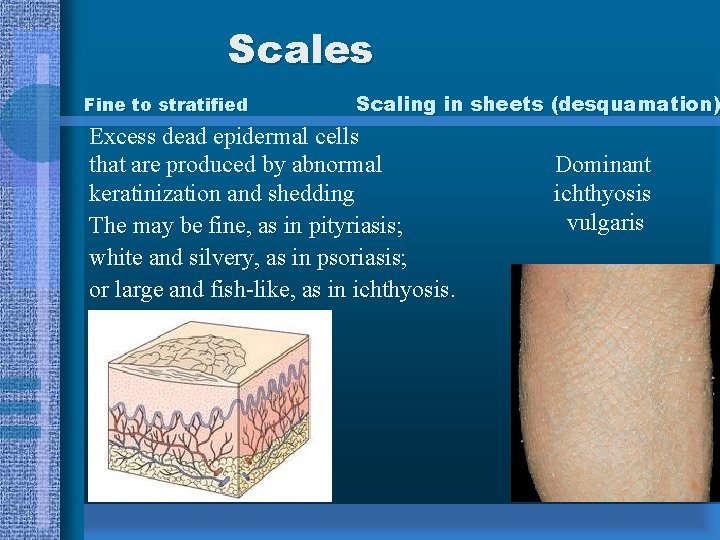
Scales Fine to stratified Scaling in sheets (desquamation) Excess dead epidermal cells that are produced by abnormal keratinization and shedding The may be fine, as in pityriasis; white and silvery, as in psoriasis; or large and fish-like, as in ichthyosis. Dominant ichthyosis vulgaris
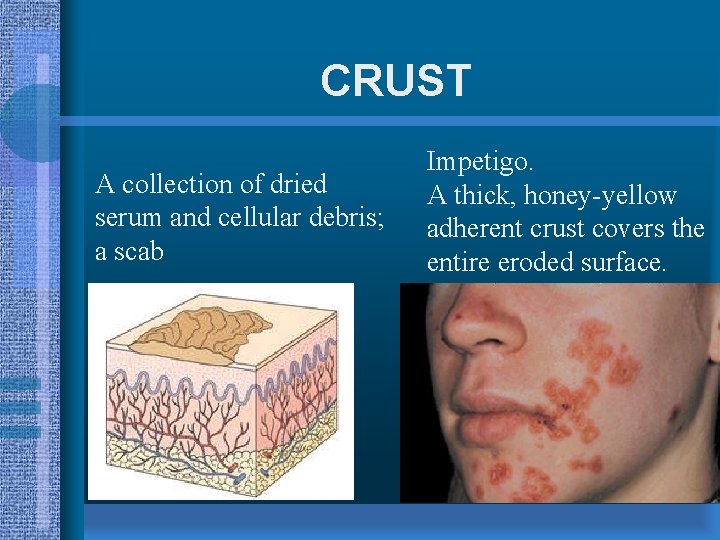
CRUST A collection of dried serum and cellular debris; a scab Impetigo. A thick, honey-yellow adherent crust covers the entire eroded surface.
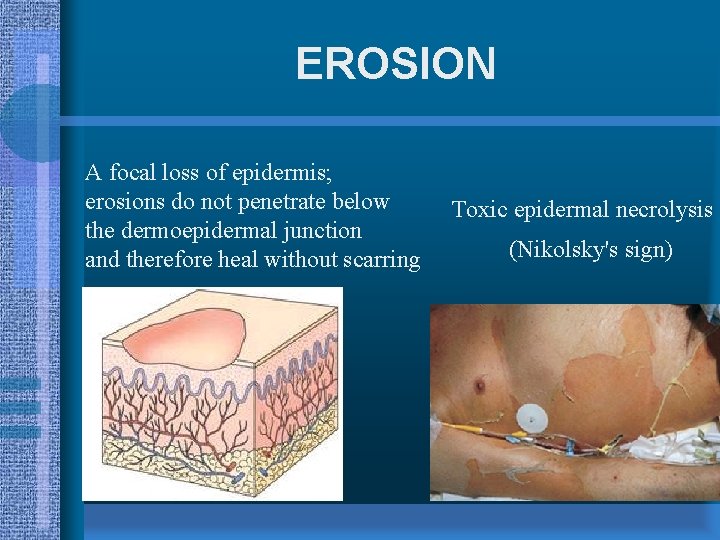
EROSION A focal loss of epidermis; erosions do not penetrate below the dermoepidermal junction and therefore heal without scarring Toxic epidermal necrolysis (Nikolsky's sign)
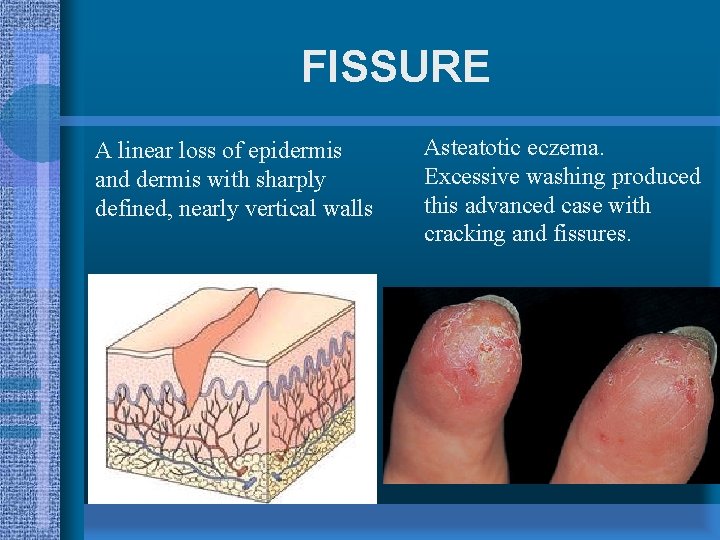
FISSURE A linear loss of epidermis and dermis with sharply defined, nearly vertical walls Asteatotic eczema. Excessive washing produced this advanced case with cracking and fissures.
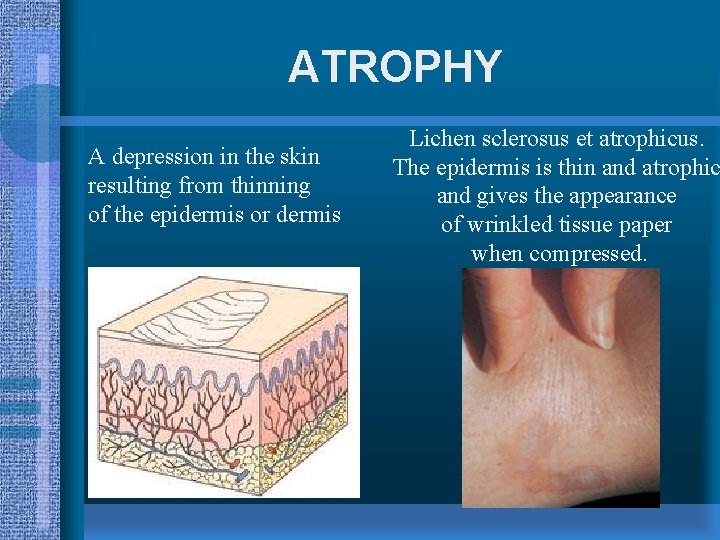
ATROPHY A depression in the skin resulting from thinning of the epidermis or dermis Lichen sclerosus et atrophicus. The epidermis is thin and atrophic and gives the appearance of wrinkled tissue paper when compressed.
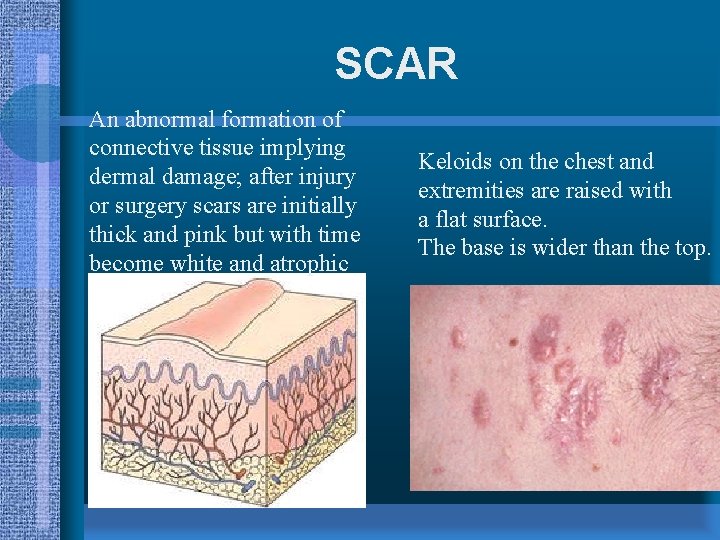
SCAR An abnormal formation of connective tissue implying dermal damage; after injury or surgery scars are initially thick and pink but with time become white and atrophic Keloids on the chest and extremities are raised with a flat surface. The base is wider than the top.
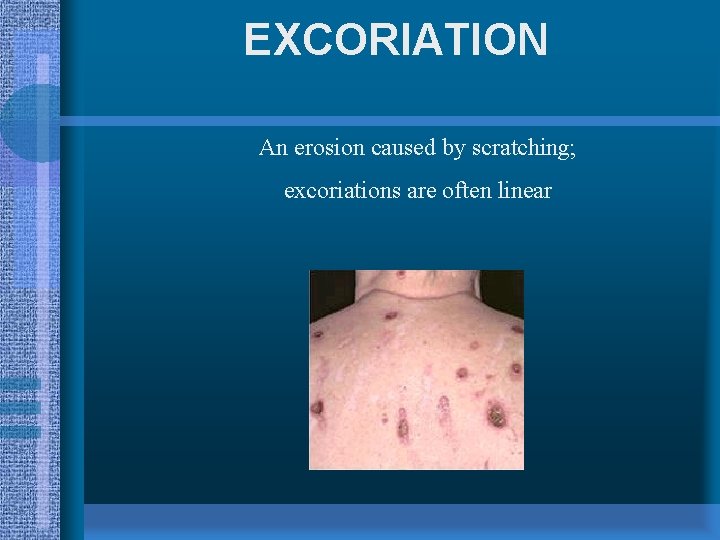
EXCORIATION An erosion caused by scratching; excoriations are often linear
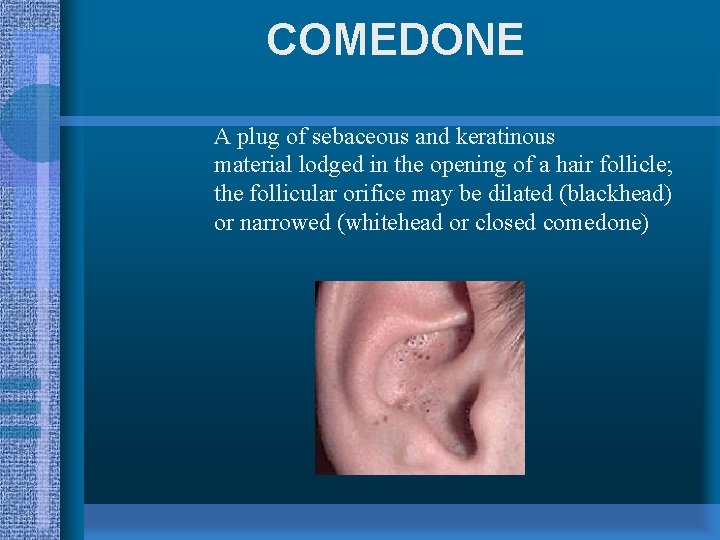
COMEDONE A plug of sebaceous and keratinous material lodged in the opening of a hair follicle; the follicular orifice may be dilated (blackhead) or narrowed (whitehead or closed comedone)
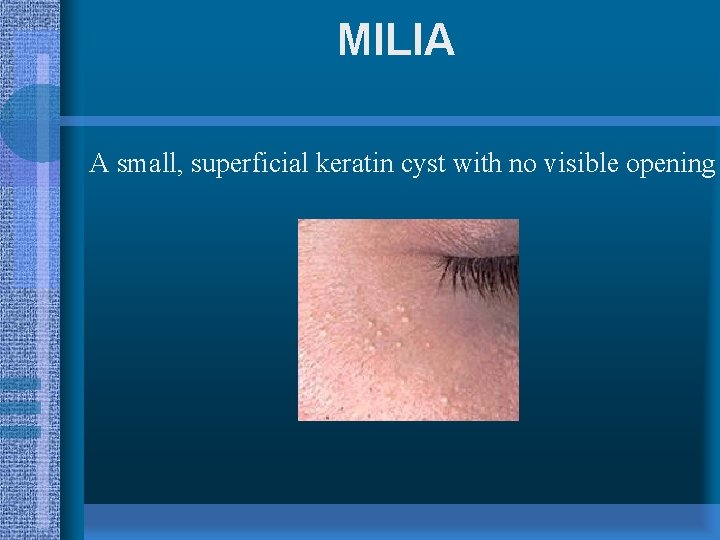
MILIA A small, superficial keratin cyst with no visible opening
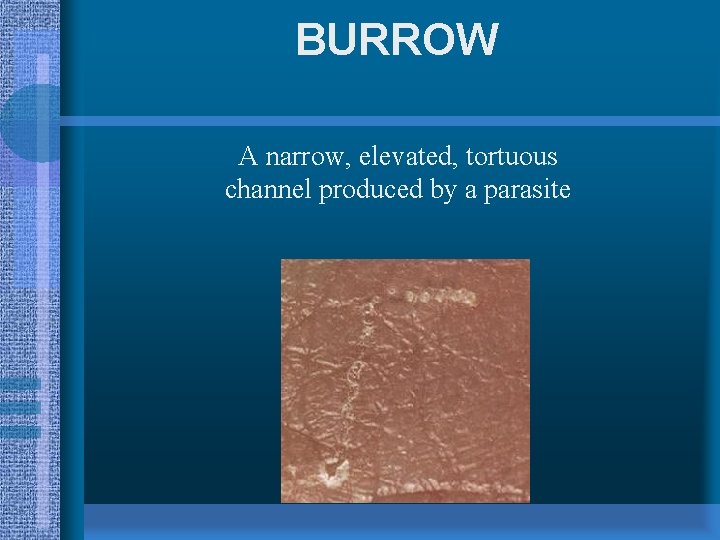
BURROW A narrow, elevated, tortuous channel produced by a parasite
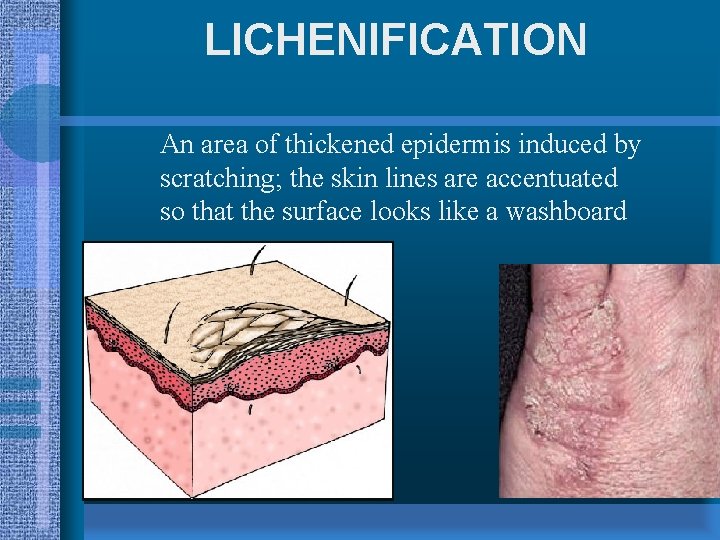
LICHENIFICATION An area of thickened epidermis induced by scratching; the skin lines are accentuated so that the surface looks like a washboard
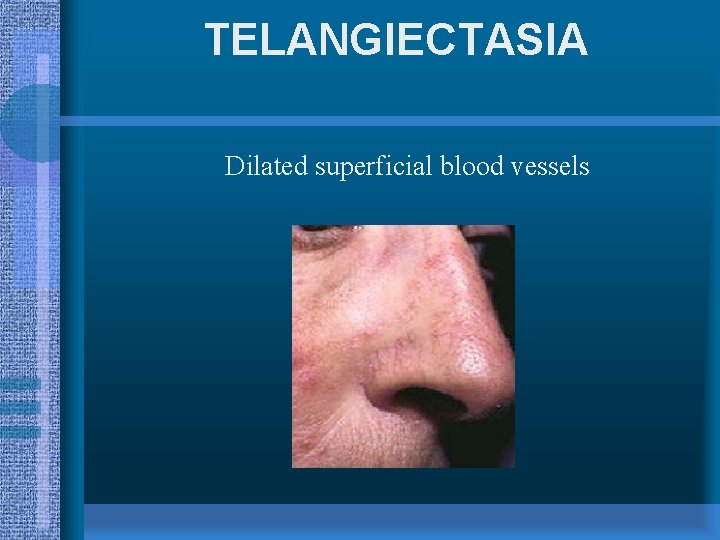
TELANGIECTASIA Dilated superficial blood vessels
PETECHIAE A circumscribed deposit of blood less than 0. 5 cm in diameter PURPURA A circumscribed deposit of blood greater than 0. 5 cm in diameter
• THANK YOU!!!!