
DERMATITIS ECZEMA By DR Eman ALMukhadeb OUTLINE Atopic
DERMATITIS (ECZEMA) By: DR. Eman AL-Mukhadeb
OUTLINE: -Atopic dermatitis -seborrheic dermatitis -contact dermatitis: -allergic - irritant -Nummular dermatitis (discoid eczema) -Dyshidrotic eczema. -Stasis dermatitis. -Neurodermatitis.
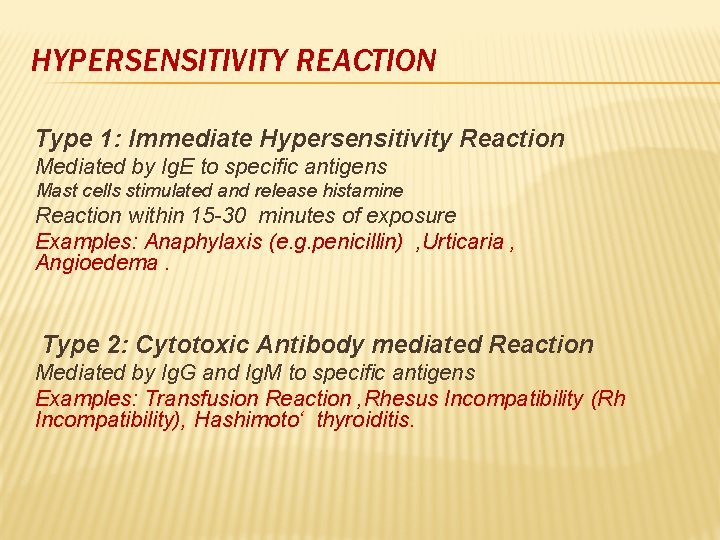
HYPERSENSITIVITY REACTION Type 1: Immediate Hypersensitivity Reaction Mediated by Ig. E to specific antigens Mast cells stimulated and release histamine Reaction within 15 -30 minutes of exposure Examples: Anaphylaxis (e. g. penicillin) , Urticaria , Angioedema. Type 2: Cytotoxic Antibody mediated Reaction Mediated by Ig. G and Ig. M to specific antigens Examples: Transfusion Reaction , Rhesus Incompatibility (Rh Incompatibility), Hashimoto‘ thyroiditis.
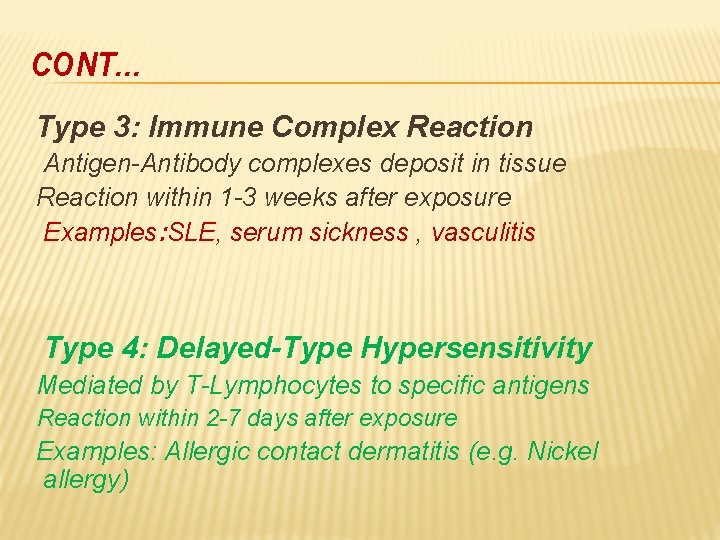
CONT… Type 3: Immune Complex Reaction Antigen-Antibody complexes deposit in tissue Reaction within 1 -3 weeks after exposure Examples: SLE, serum sickness , vasculitis Type 4: Delayed-Type Hypersensitivity Mediated by T-Lymphocytes to specific antigens Reaction within 2 -7 days after exposure Examples: Allergic contact dermatitis (e. g. Nickel allergy)
ATOPY: is familial predisposition to development of bronchial asthma , allergic conjunctivitis , rhinitis & atopic dermatitis.
ATOPIC DERMATITIS Is chronic relapsing eczema associated with intense pruritus
Pathogenesis: -Genetic pedisposition -immune mediated (increase Ig. E) -Impaired skin barrier.
CLINICAL PICTURE: - Acute: -eryhema - papules & vesicles - oozing -Subacute: - scales - Excoriation -Chronic: -lichenificaion & hyperkeratosis
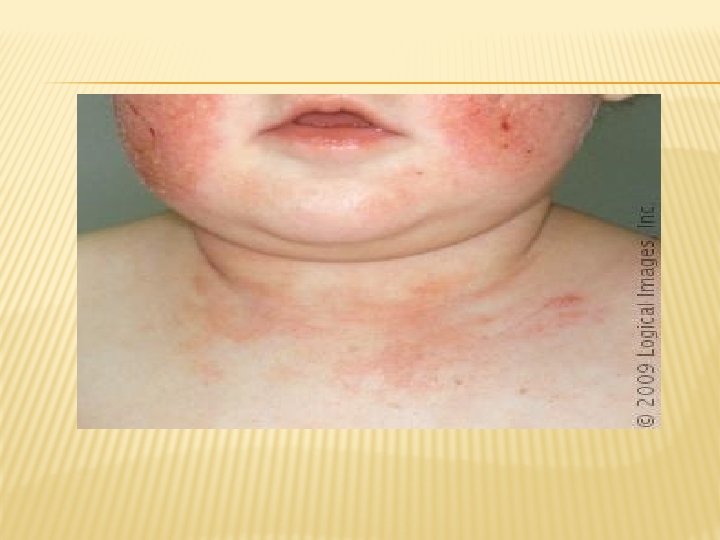
THREE STAGES: -Infantile -Childhood -Adulthood -Acute inflammation & extensor/facial involvement is more common in infant whereas chronic inflammation increase in prevalance with age as does localization to flexures.
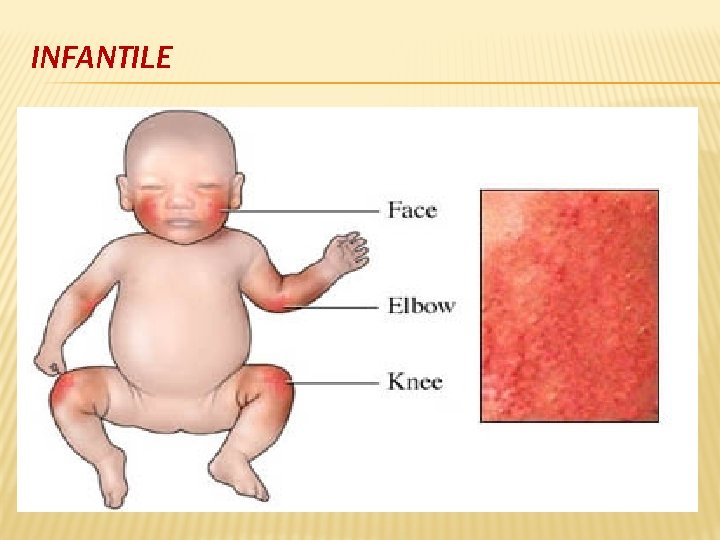
INFANTILE
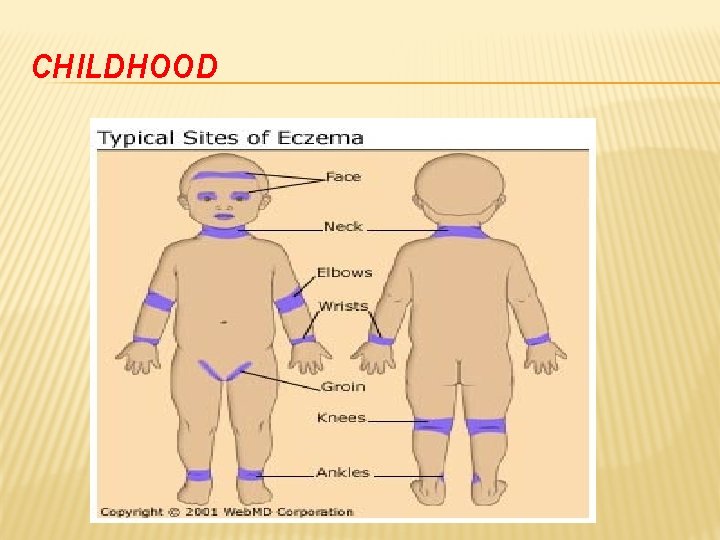
CHILDHOOD
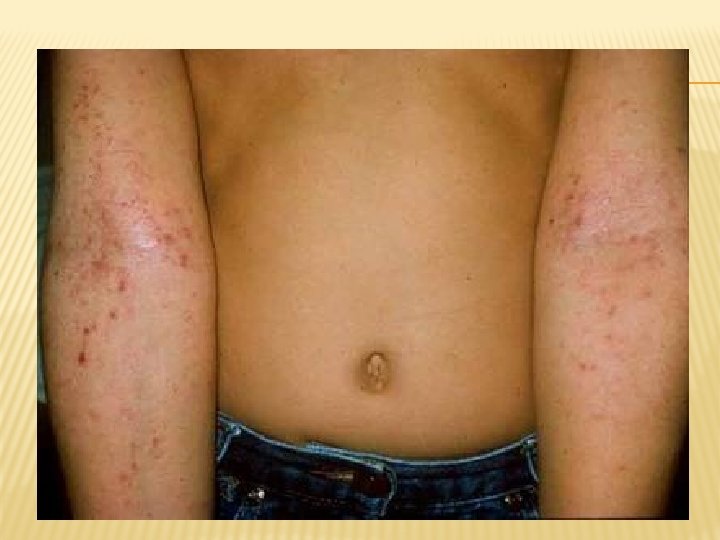

Diagnosis
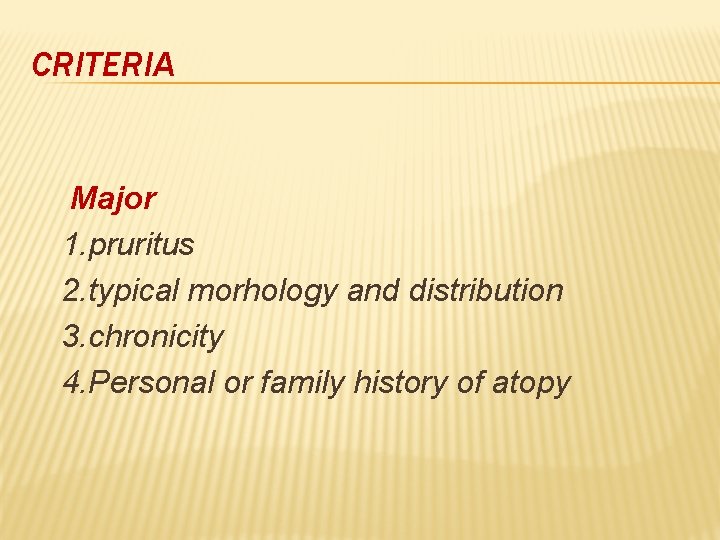
CRITERIA Major 1. pruritus 2. typical morhology and distribution 3. chronicity 4. Personal or family history of atopy
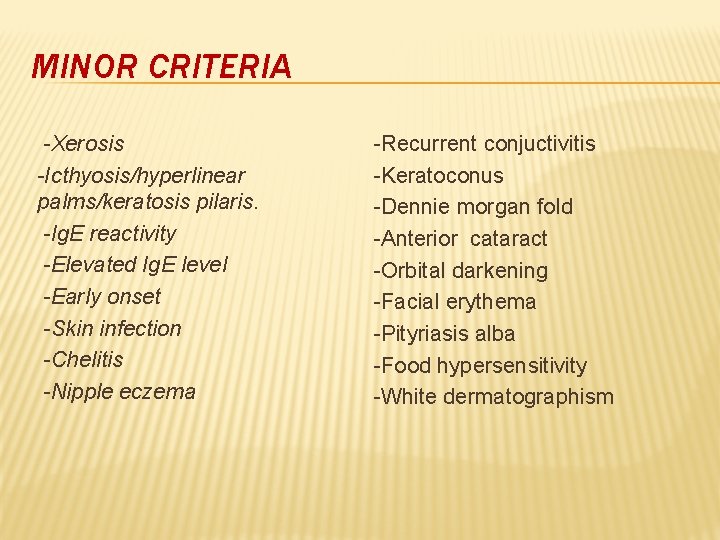
MINOR CRITERIA -Xerosis -Icthyosis/hyperlinear palms/keratosis pilaris. -Ig. E reactivity -Elevated Ig. E level -Early onset -Skin infection -Chelitis -Nipple eczema -Recurrent conjuctivitis -Keratoconus -Dennie morgan fold -Anterior cataract -Orbital darkening -Facial erythema -Pityriasis alba -Food hypersensitivity -White dermatographism

DENNIE MORGAN FOLD
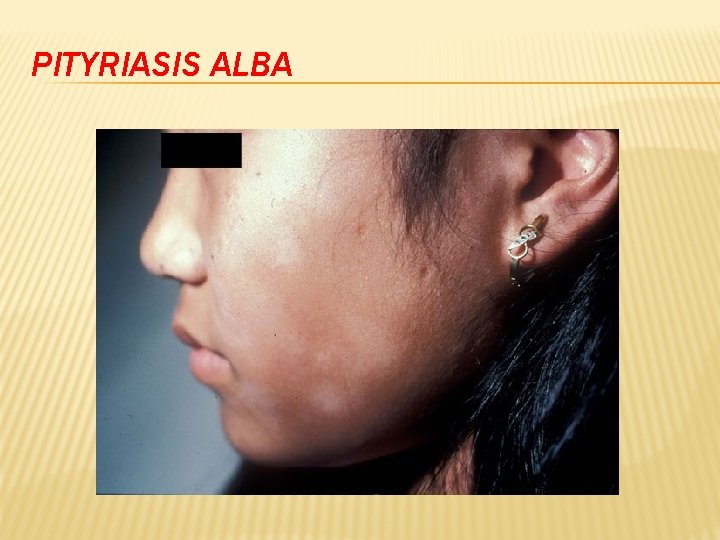
PITYRIASIS ALBA
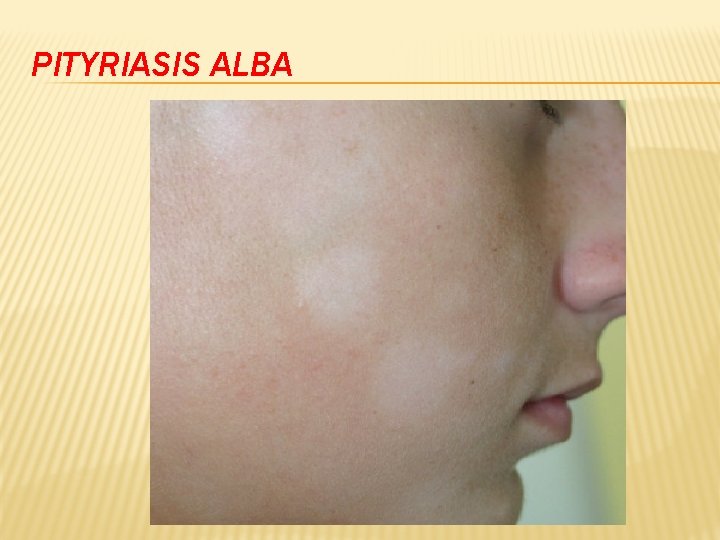
PITYRIASIS ALBA
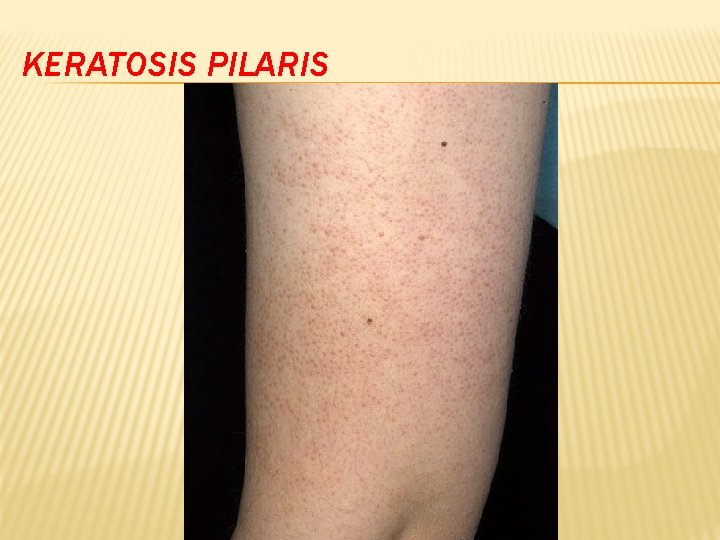
KERATOSIS PILARIS
PATHOLOGY -Depend on the stage -Spongiosis (oedema) -Exocytosis of lymphocytes

COMPLICATION
SKIN INFECTIONS -STAPH AURIOUS: 1. folliculitis 2. impetigo -Herpes Simplex Virus( eczema herpeticum) -TRICHOPHYTON RUBRUM
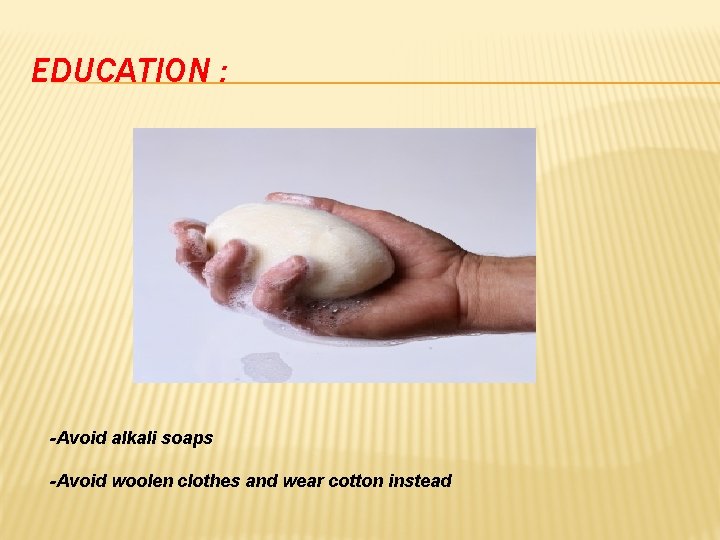
EDUCATION : -Avoid alkali soaps -Avoid woolen clothes and wear cotton instead
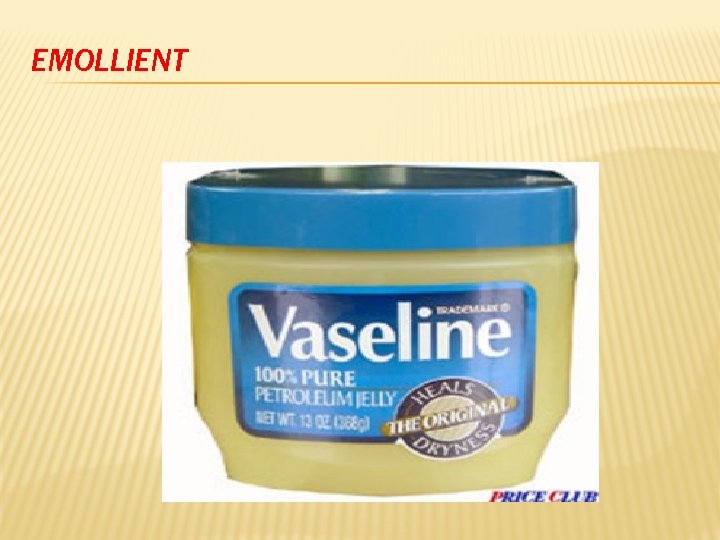
EMOLLIENT
TREATMENT -Education. -Emmolient. -topical steroid -topical immunomodulators (tacrolimus & pimecrolimus) -oral antihistamine -oral Antibiotic (for 2 ry bacterial infection) -ultraviolet light -systemic steroid -others: cyclosporin , methotrexate , azathioprine, IVIG , Biologic

What are the side effects of topical steroid?
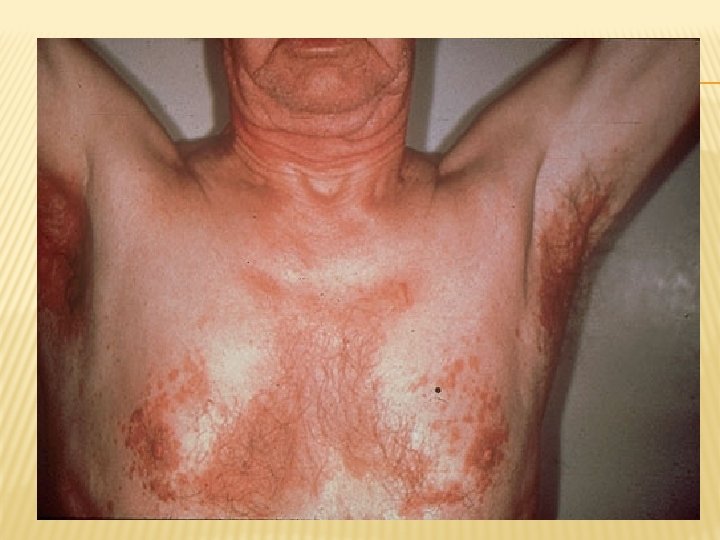
SEBORRHEIC DERMAITIS Is a common mild chronic eczema typically confined to skin regions with high sebum production & the large body folds
PATHOGENESIS -Seborrhea & abnormal sebum production. -Commensal yeast Malassezia furfur (pityrosporum ovale)
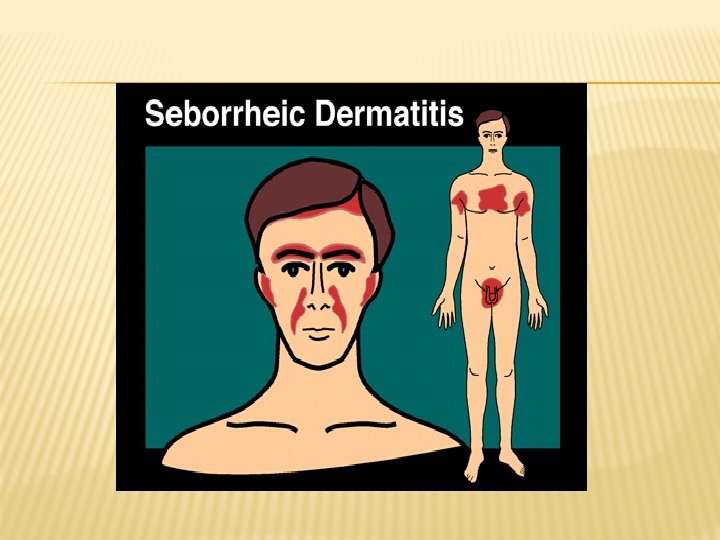
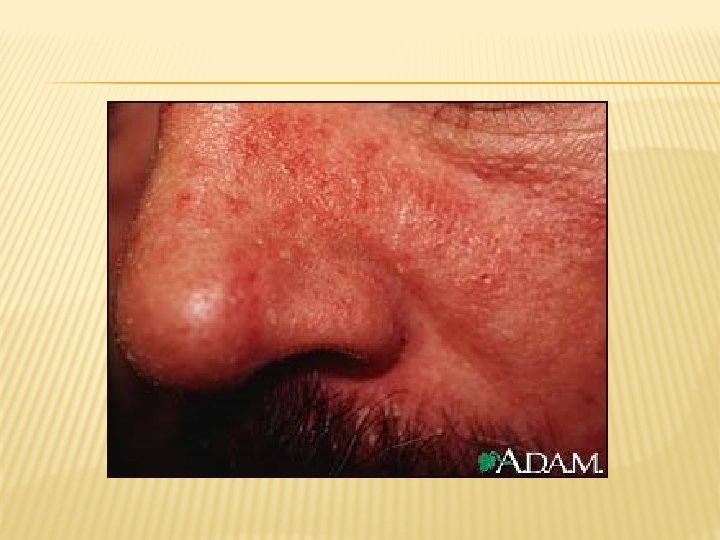
CLINICAL PICTURE: Seborrheic dermatitis is defined by clinical parameters which include: 1 -erythematous red-yellow , poorly circumscribed patches & thin plaques with bran-like to flaky (greasy) scales. 2 -Limitation to those periods of life when sebaceous gland are active i. e. the 1 st few months of life & post puberty (infantile & adult forms).
CONT…. 3 - A predilection for areas rich in sebaceous glands e. g: scalp , face, ears , presternal region & flexural areas (axillae, inguinal & inframammary folds , umbilicus). 4 -A mild course with moderate discomfort.
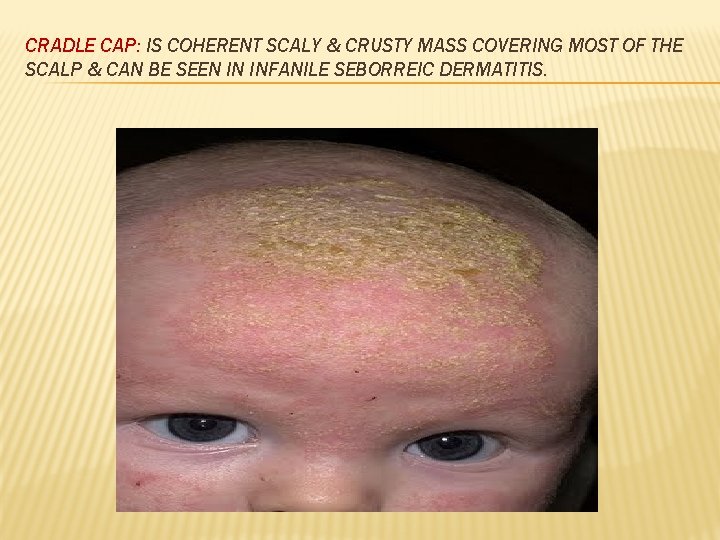
CRADLE CAP: IS COHERENT SCALY & CRUSTY MASS COVERING MOST OF THE SCALP & CAN BE SEEN IN INFANILE SEBORREIC DERMATITIS.
TREATMENT: -Antifungal shampoo (ketoconazole shampoo) -Topical antifungal. -low potency topical steroid.
CONTACT DERMATITIS -Allergic contact dermatitis. -Irritant contact dermatitis.
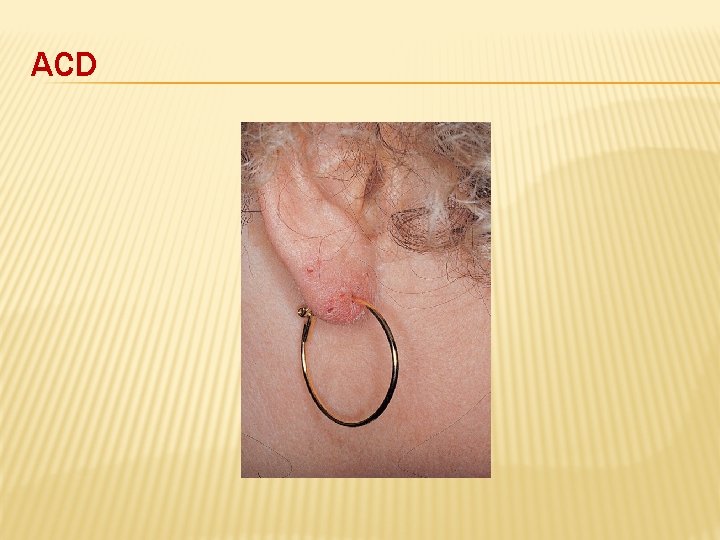
ALLERGIC COTACT DERMATITIS (ACD) Definition: Dermatitis resulting from type 4 reaction following exposure to topical substances in sensitized individuals.
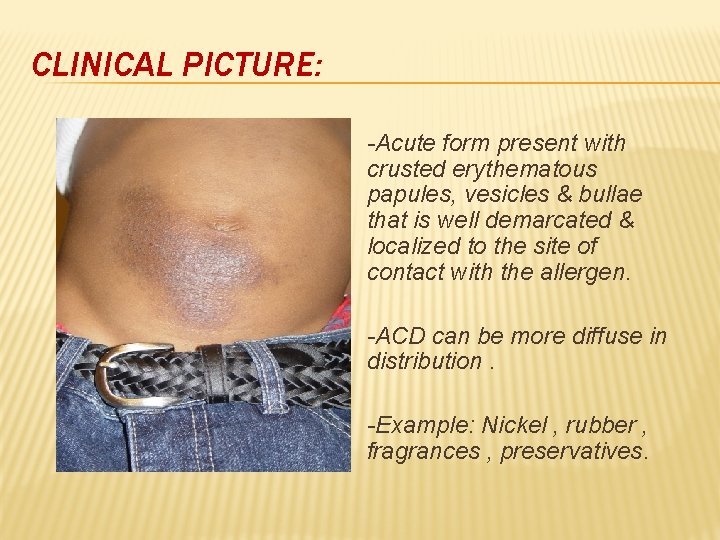
CLINICAL PICTURE: -Acute form present with crusted erythematous papules, vesicles & bullae that is well demarcated & localized to the site of contact with the allergen. -ACD can be more diffuse in distribution. -Example: Nickel , rubber , fragrances , preservatives.
ACD
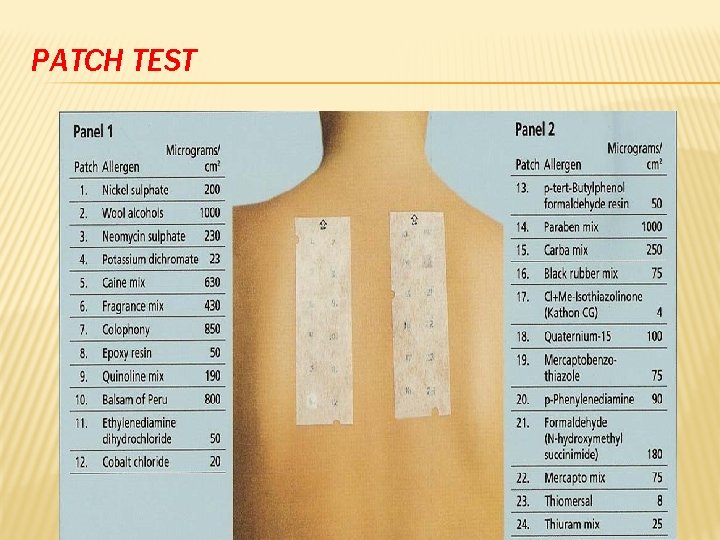
DIAGNOSIS: -Hx. -Examination. -PATCH testing remain the gold standard for accurate diagnosis.
PATCH TEST
TREATMENT OF ACD: -Avoidance. -topical steroid -systemic antihistamine
IRRITANT CONTACT DERMATITIS (ICD) -Is localized non immunologically mediated inflammatory reaction. -ICD results from direct cytotoxic effect d. t single or repeated application of a chemical substance to the skin.
CLINICAL PICTURE: -Similar to ACD but ICD never extend beyond the area of contact. -tend to be painful rather than pruritic. -can occur from the 1 st exposure to the irritant unlike ACD which only occur in previously sensitized individual.
TREATMENT: Same as ACD.
NUMMULAR (DISCOID) DERMATITIS -Sharply circumscribed eczema , nummular means ( coin -shaped) -Pathogenesis: Probably microbial in origin i. e. 2 ry to bacterial colonization or disseminaion of bacterial toxins.
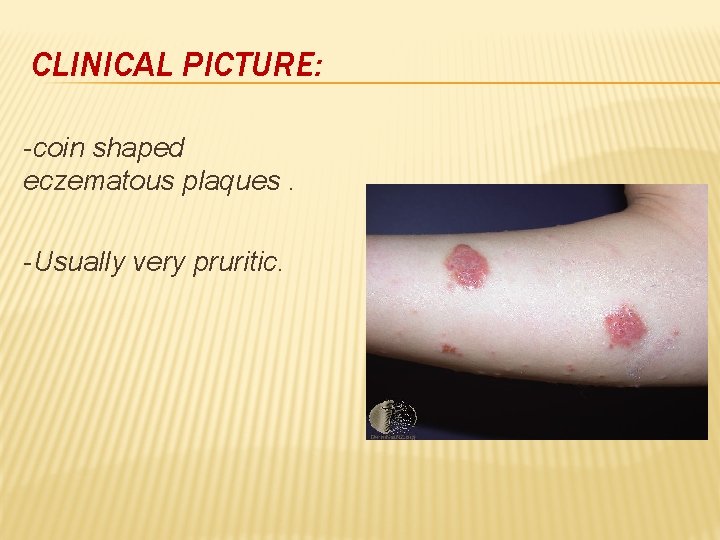
CLINICAL PICTURE: -coin shaped eczematous plaques. -Usually very pruritic.
TREATMENT: -Topical steroid -Topical antibiotic -Oral antibiotic
DYSHIDROTIC DERMATITIS (POMPHOLYX) Acute dermatitis which is often vesicular with tiny deep seated vesicles along the sides of the fingers associated with pruritus
CONT. . -Not considered as a separate disease -Can be associated with atopy of patients with dyshidrosis, 50% have atopic dermatitis. -Exogenous factors (eg, contact dermatitis to nickel, chemicals) also play a role. -Affect hands & feet.
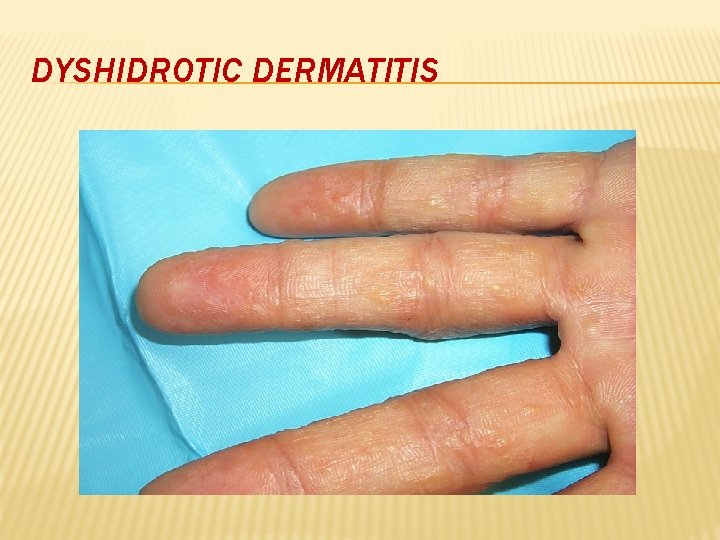
DYSHIDROTIC DERMATITIS
TREATMENT: -Avoidance of triggering factor. -topical seroid.
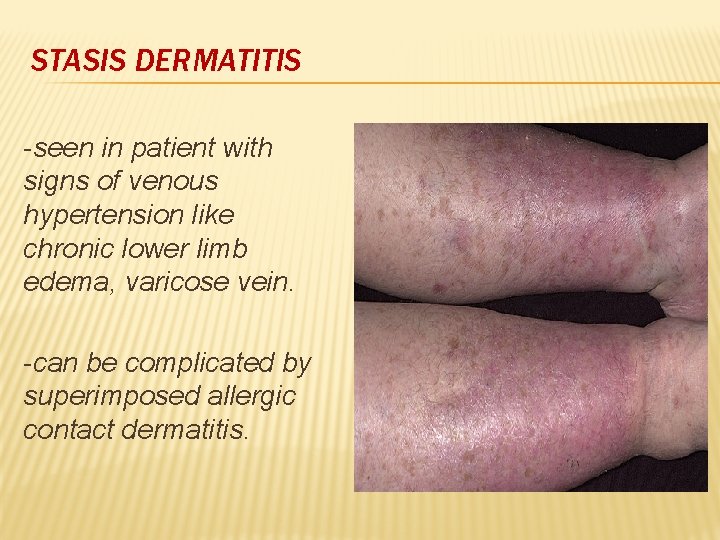
STASIS DERMATITIS -seen in patient with signs of venous hypertension like chronic lower limb edema, varicose vein. -can be complicated by superimposed allergic contact dermatitis.
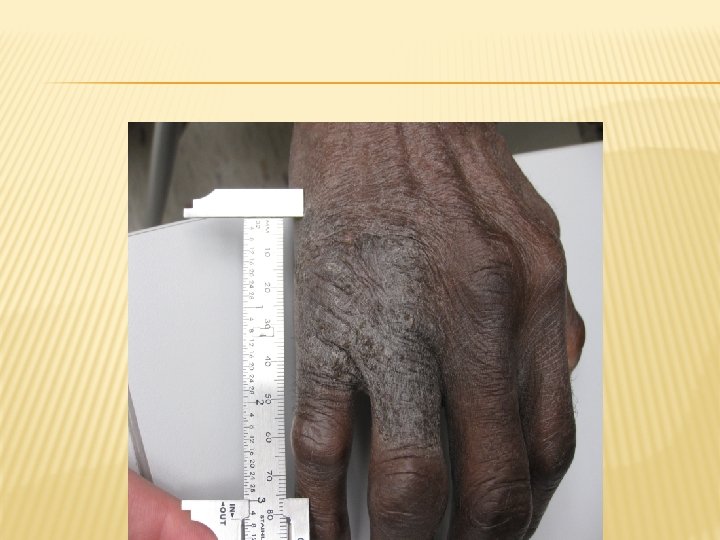
NEURODERMATITIS -Include dermatitis which results from repeated rubbing & scratching of the skin. -Chronic itching and scratching can cause the skin to thicken and have a leather texture with exaggeration of skin marking. -A scratch-itch cycle occurs which is difficult to break.
NEURODERMATITIS -Can be triggered by stress and anxiety. -Occur commonly in atopic patient.
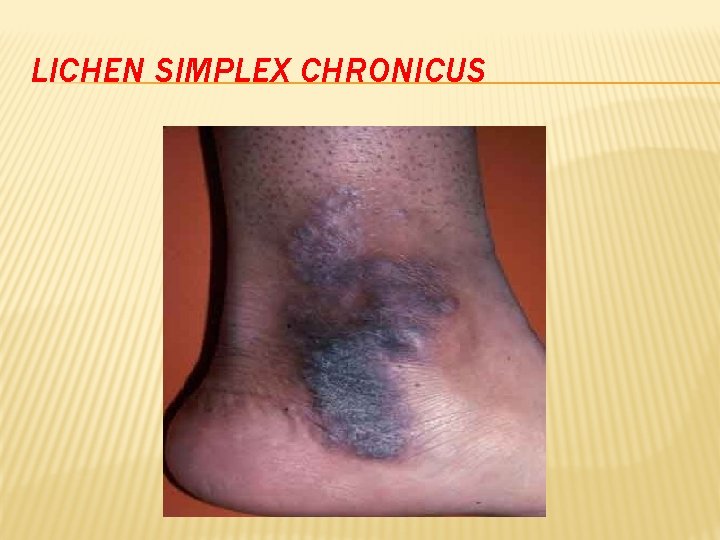
LICHEN SIMPLEX CHRONICUS Present as thick hyperkeratotic plaque with accentuation of skin marking that occurs on any site that the patient can reach, including the following: -Scalp -Nape of neck -Extensor forearms and elbows -Vulva and scrotum -Upper medial thighs, knees, lower legs, and ankles
LICHEN SIMPLEX CHRONICUS
TREATMENT: -control itching (break itch scratch cycle). -topical or intralesional steroid. -oral antihistamine - Oral Anxiolytic

THANK YOU
- Slides: 63