
Deriving Causal Inference from Nature with Experiments Goals
- Slides: 52
Deriving Causal Inference from Nature with Experiments
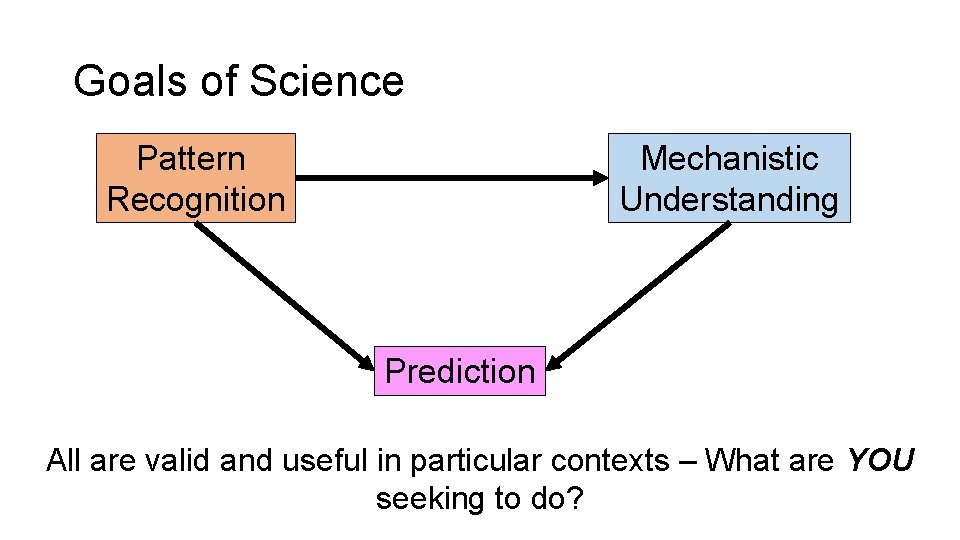
Goals of Science Pattern Recognition Mechanistic Understanding Prediction All are valid and useful in particular contexts – What are YOU seeking to do?
Build an Understanding of Our System to Design Experiments 1. Introduction to Causal Thinking 2. Anatomy of Causal Diagrams 3. Causal Diagrams and Experiments 4. Using Causal Diagrams with a System to Design an Experiment 5. Causal Implications of Experimental Manipulations You Might Not have Thought Of
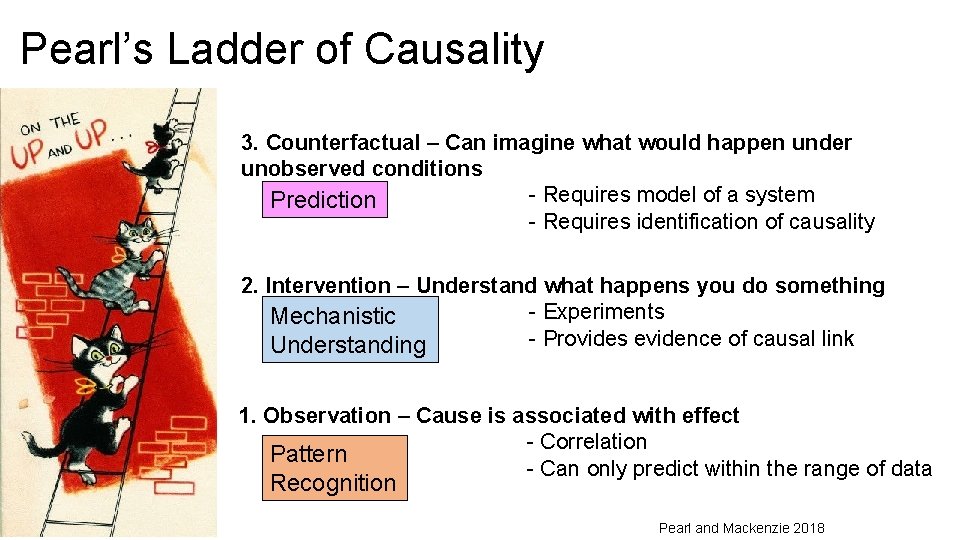
Pearl’s Ladder of Causality 3. Counterfactual – Can imagine what would happen under unobserved conditions - Requires model of a system Prediction - Requires identification of causality 2. Intervention – Understand what happens you do something - Experiments Mechanistic - Provides evidence of causal link Understanding 1. Observation – Cause is associated with effect - Correlation Pattern - Can only predict within the range of data Recognition Pearl and Mackenzie 2018
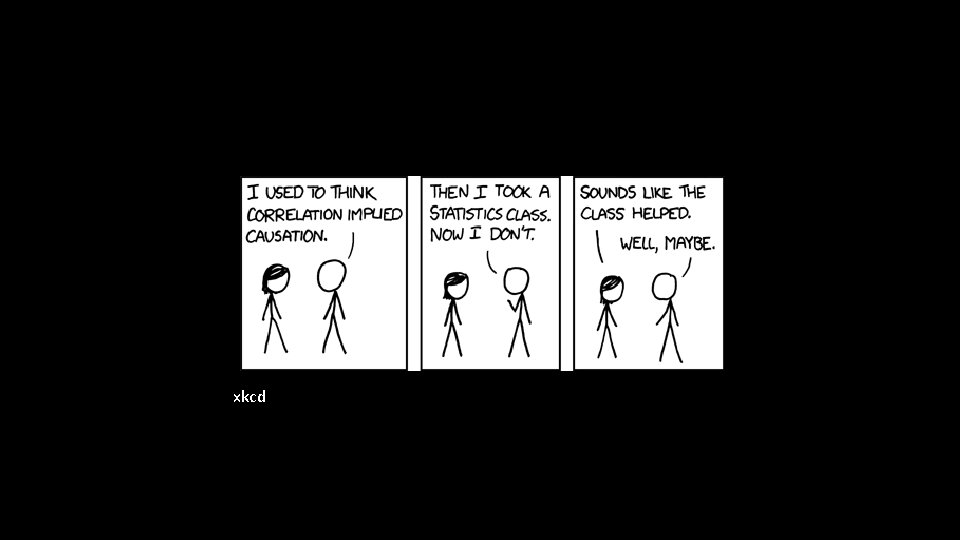
xkcd
Do You Need to be Doing Causal Inference? • No! • Not all studies will provide causal links between different variables of interest • If the study goal is predictive or descriptive rather than causal, this might not be needed • But… • We cannot hope to understand the world without developing an understanding of causal associations • Indeed • Understanding the clockwork machinery of the universe is an end goal of science – one which we can never achieve, but strive for!
What is your question? Is it fundamentally causal? Or not?
Build an Understanding of Our System to Design Experiments 1. Introduction to Causal Thinking 2. Anatomy of Causal Diagrams 3. Causal Diagrams and Experiments 4. Using Causal Diagrams with a System to Design an Experiment 5. Causal Implications of Experimental Manipulations You Might Not have Thought Of
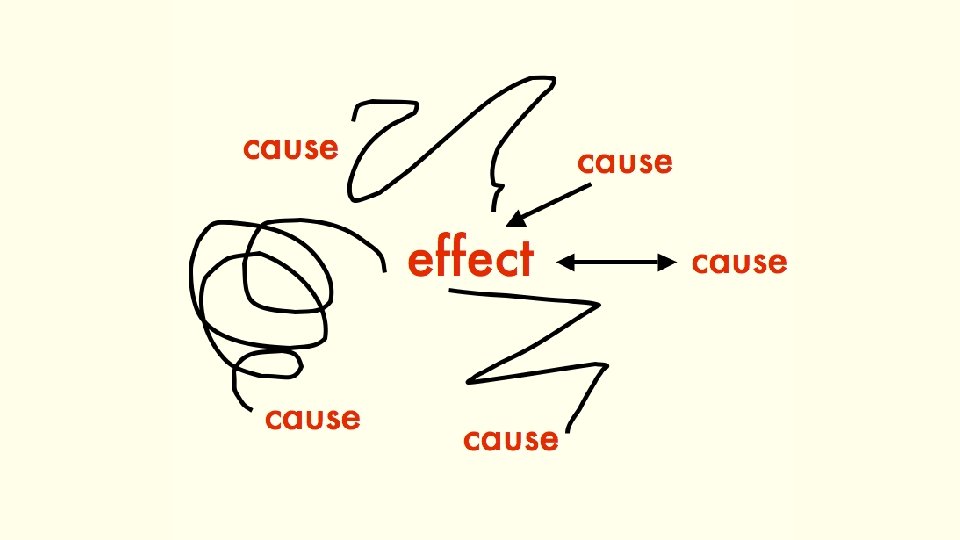
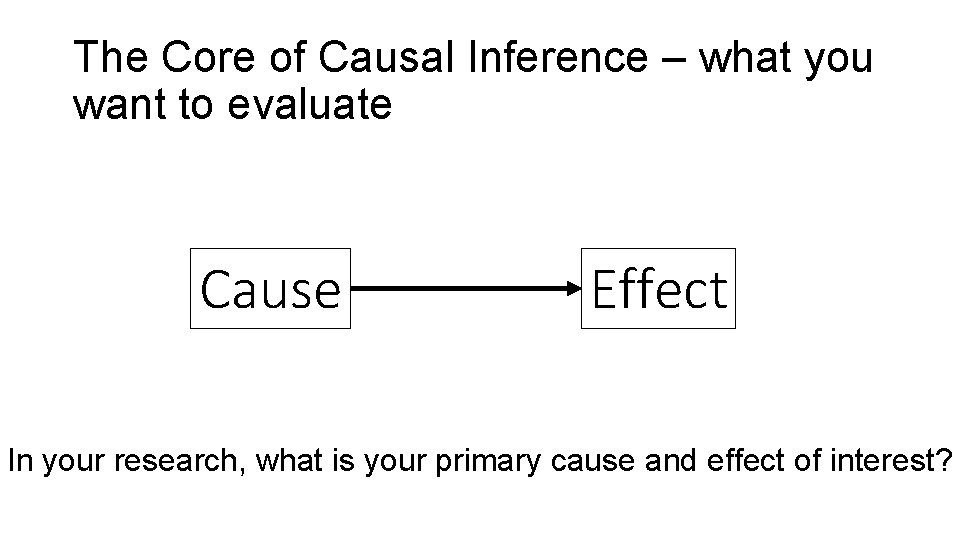
The Core of Causal Inference – what you want to evaluate Cause Effect In your research, what is your primary cause and effect of interest?
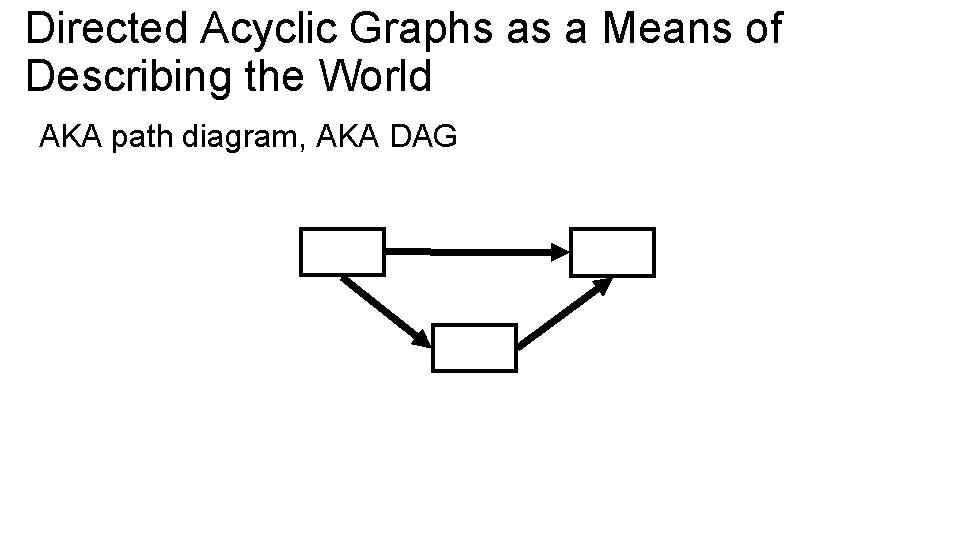
Directed Acyclic Graphs as a Means of Describing the World AKA path diagram, AKA DAG
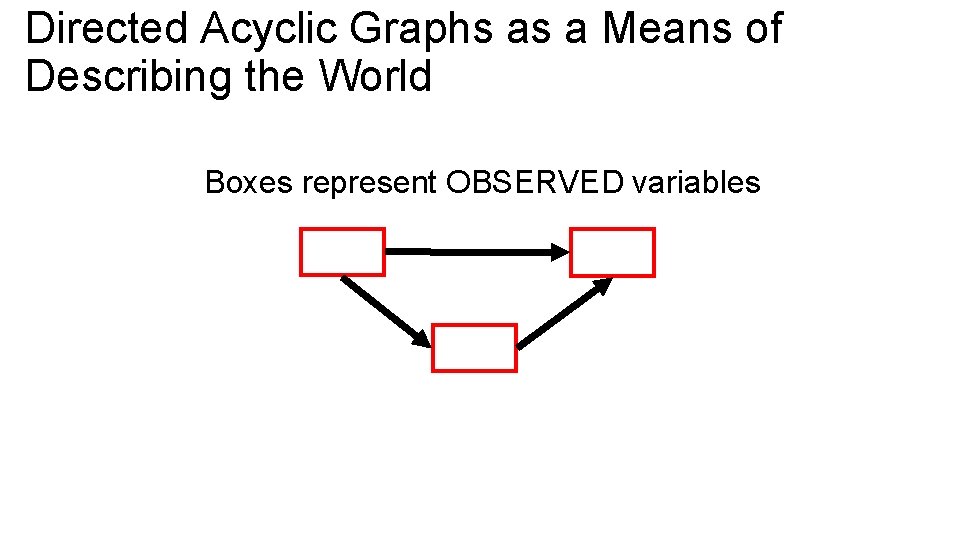
Directed Acyclic Graphs as a Means of Describing the World Boxes represent OBSERVED variables
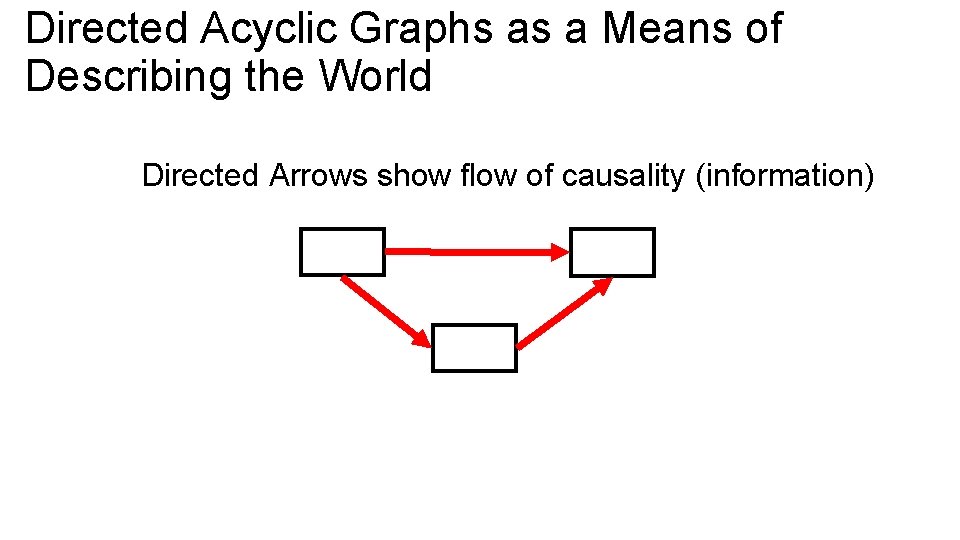
Directed Acyclic Graphs as a Means of Describing the World Directed Arrows show flow of causality (information)
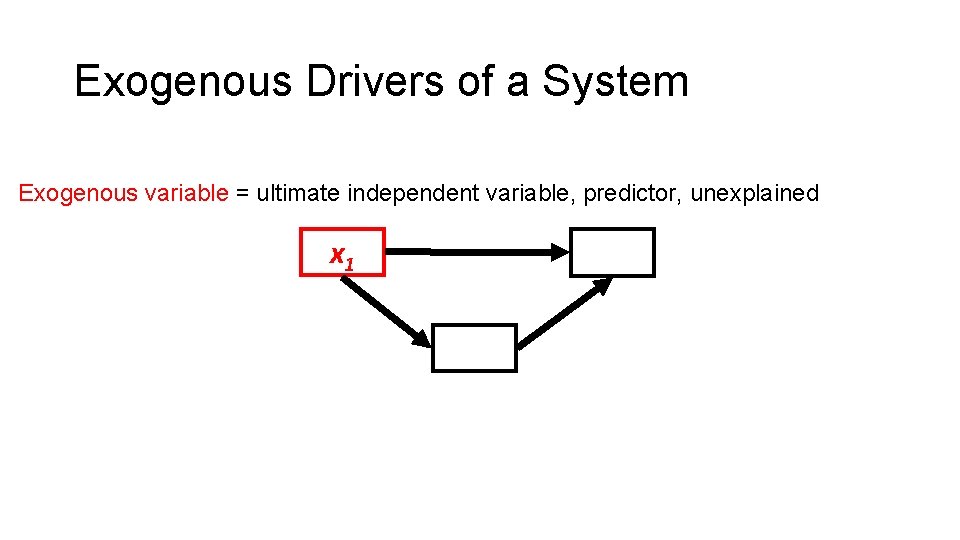
Exogenous Drivers of a System Exogenous variable = ultimate independent variable, predictor, unexplained x 1
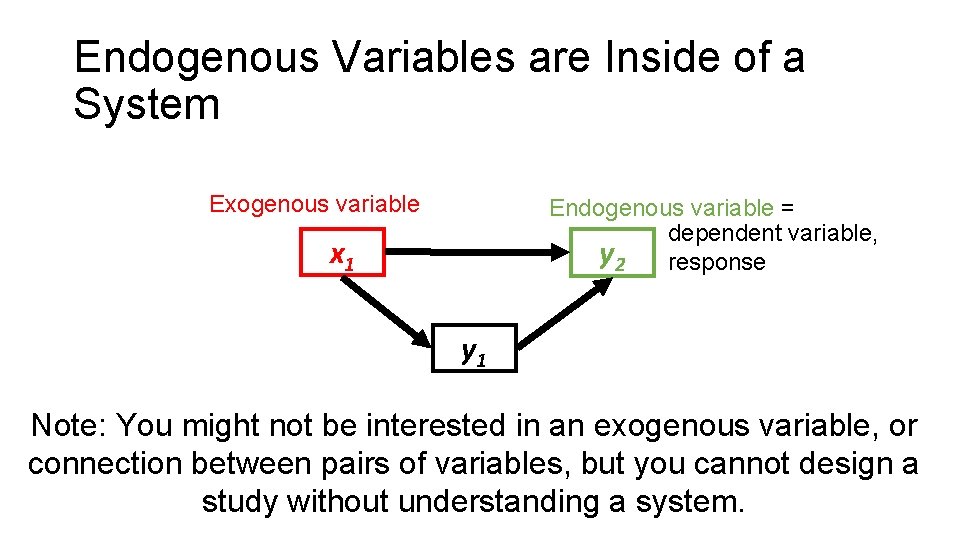
Endogenous Variables are Inside of a System Exogenous variable Endogenous variable = dependent variable, y 2 response x 1 y 1 Note: You might not be interested in an exogenous variable, or connection between pairs of variables, but you cannot design a study without understanding a system.
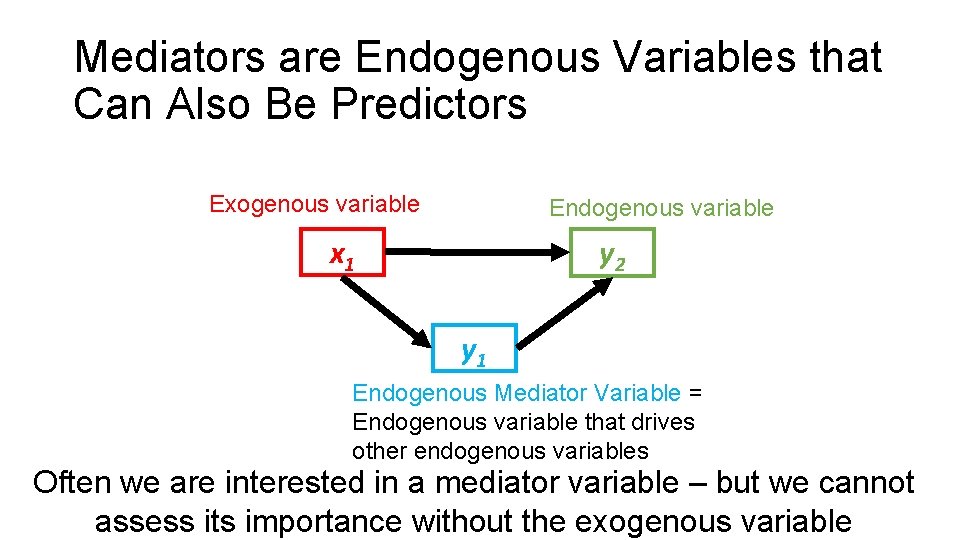
Mediators are Endogenous Variables that Can Also Be Predictors Exogenous variable Endogenous variable x 1 y 2 y 1 Endogenous Mediator Variable = Endogenous variable that drives other endogenous variables Often we are interested in a mediator variable – but we cannot assess its importance without the exogenous variable
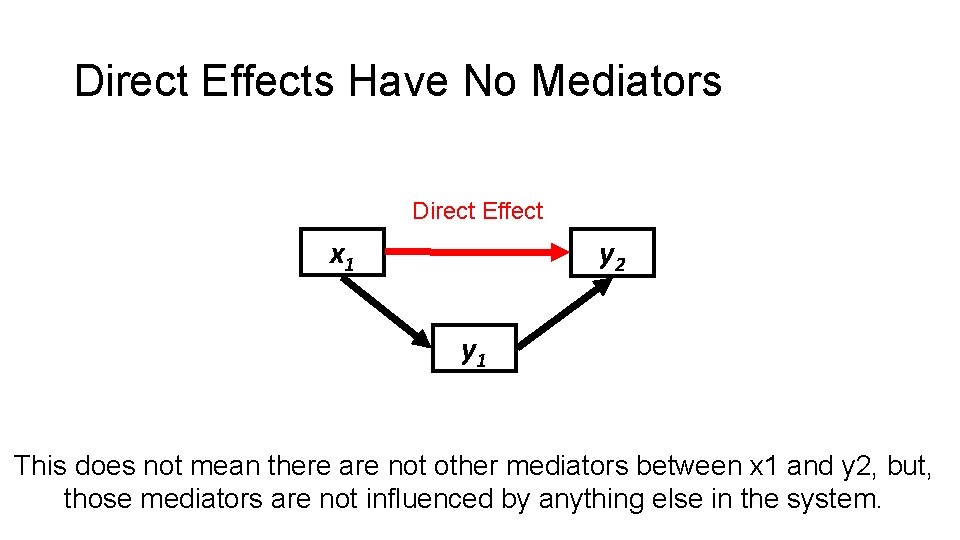
Direct Effects Have No Mediators Direct Effect x 1 y 2 y 1 This does not mean there are not other mediators between x 1 and y 2, but, those mediators are not influenced by anything else in the system.
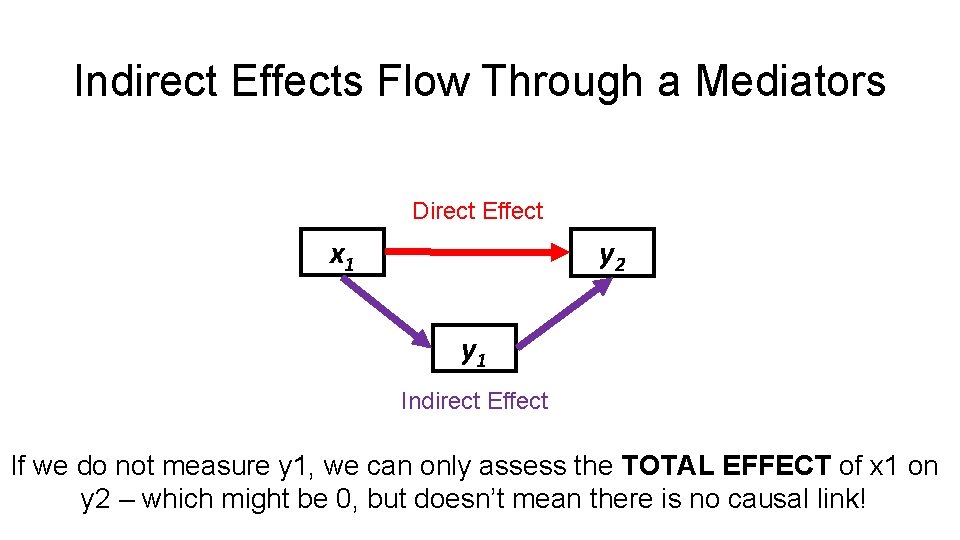
Indirect Effects Flow Through a Mediators Direct Effect x 1 y 2 y 1 Indirect Effect If we do not measure y 1, we can only assess the TOTAL EFFECT of x 1 on y 2 – which might be 0, but doesn’t mean there is no causal link!
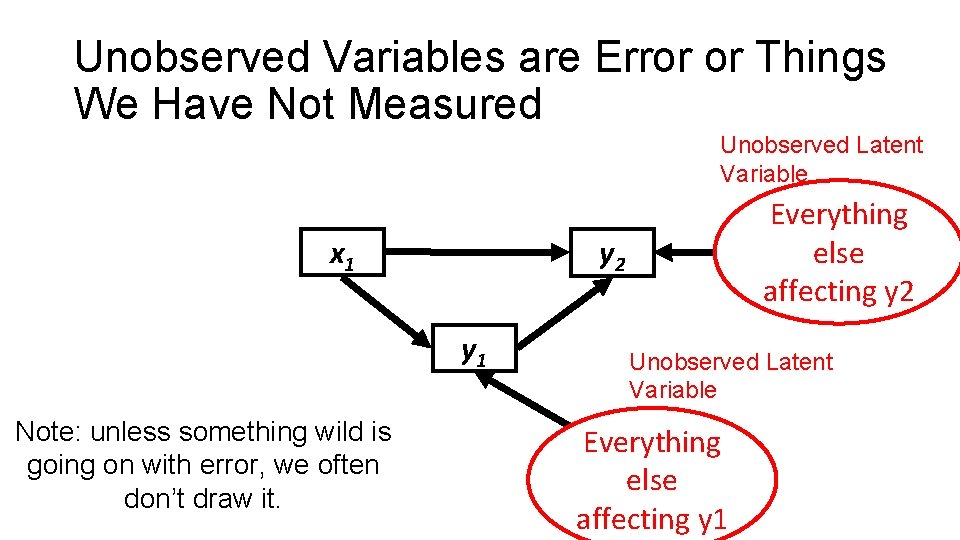
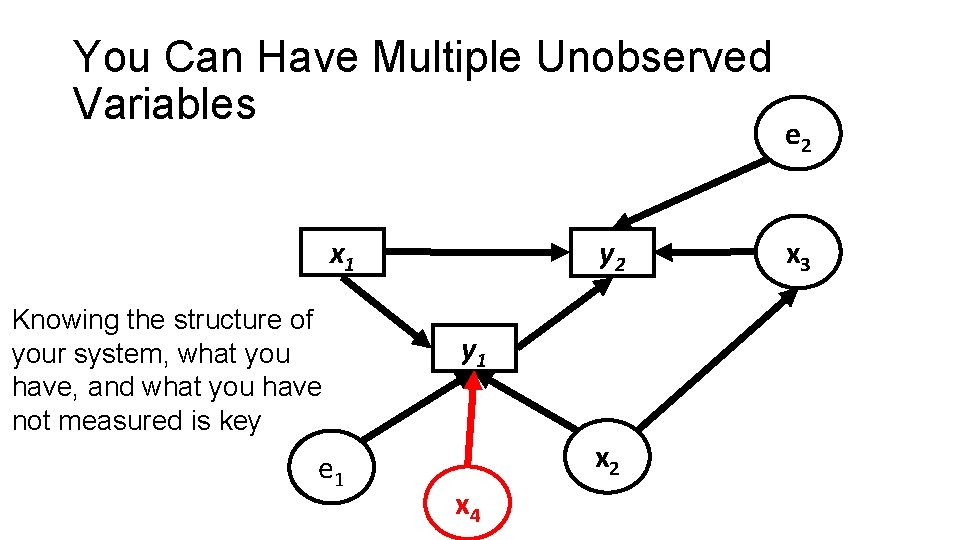
Unobserved Variables are Error or Things We Have Not Measured Unobserved Latent Variable x 1 y 2 y 1 Note: unless something wild is going on with error, we often don’t draw it. Everything e 2 else affecting y 2 Unobserved Latent Variable Everything e 1 else affecting y 1
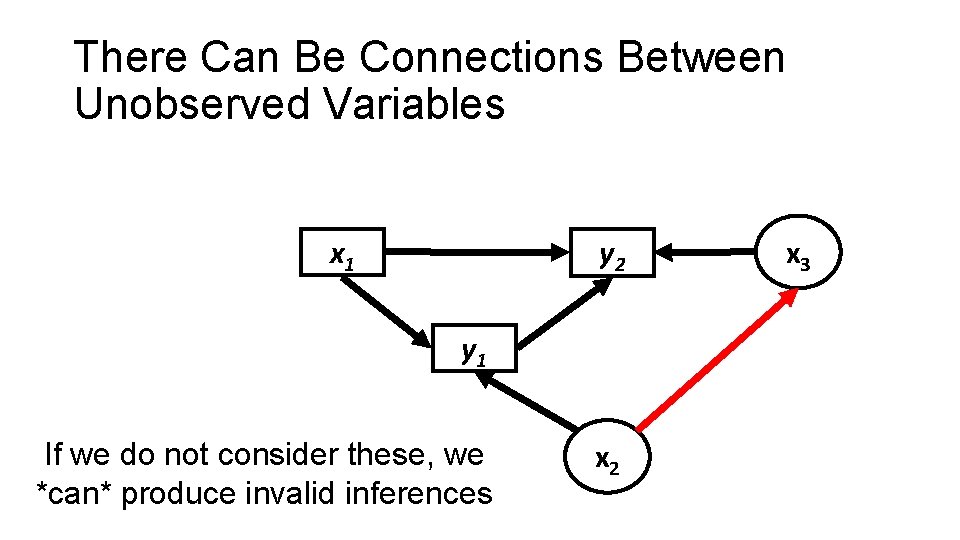
There Can Be Connections Between Unobserved Variables x 1 y 2 y 1 If we do not consider these, we *can* produce invalid inferences x 2 x 3
You Can Have Multiple Unobserved Variables x 1 Knowing the structure of your system, what you have, and what you have not measured is key e 1 y 2 y 1 x 2 x 4 e 2 x 3
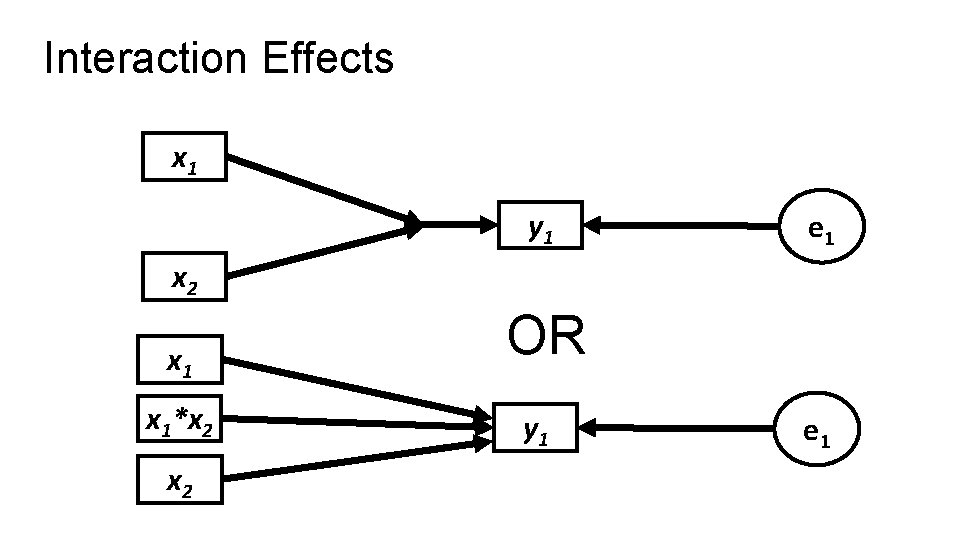
Interaction Effects x 1 y 1 e 1 x 2 x 1*x 2 OR y 1 e 1
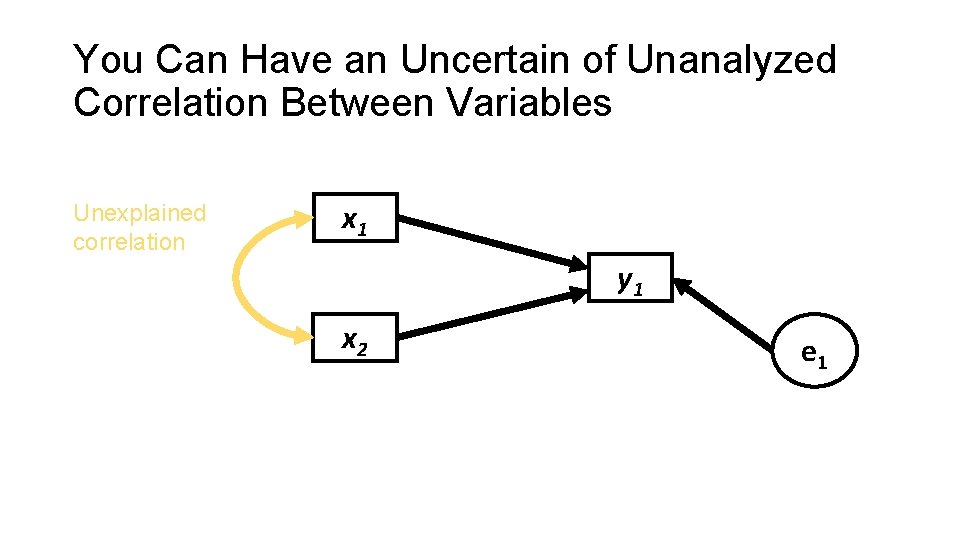
You Can Have an Uncertain of Unanalyzed Correlation Between Variables Unexplained correlation x 1 y 1 x 2 e 1
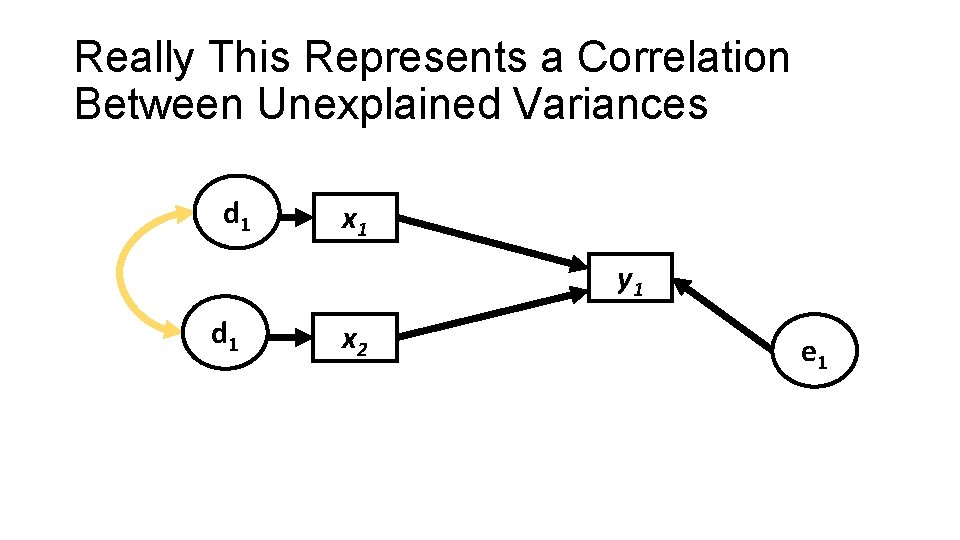
Really This Represents a Correlation Between Unexplained Variances dd 1 1 x 1 y 1 d 21 x 2 e 1
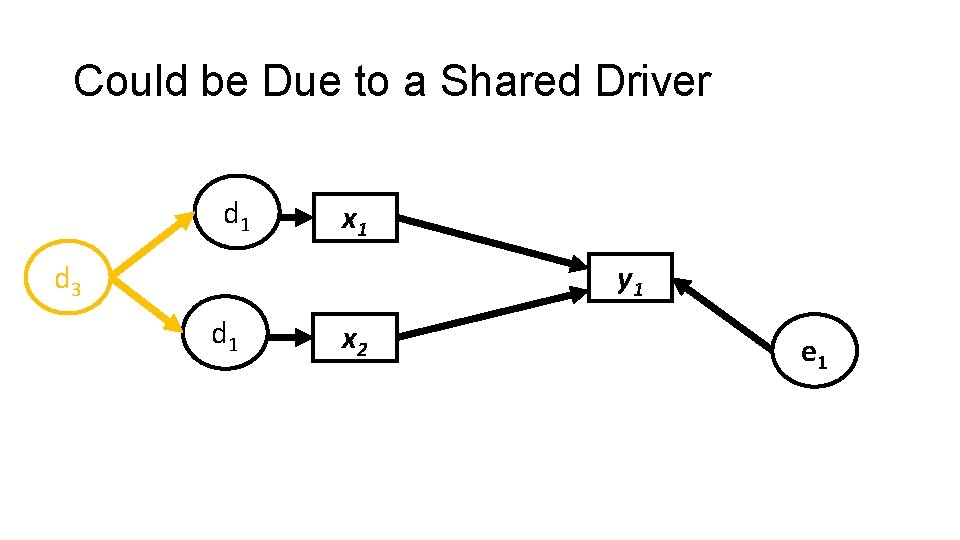
Could be Due to a Shared Driver dd 1 1 x 1 d 3 y 1 d 21 x 2 e 1
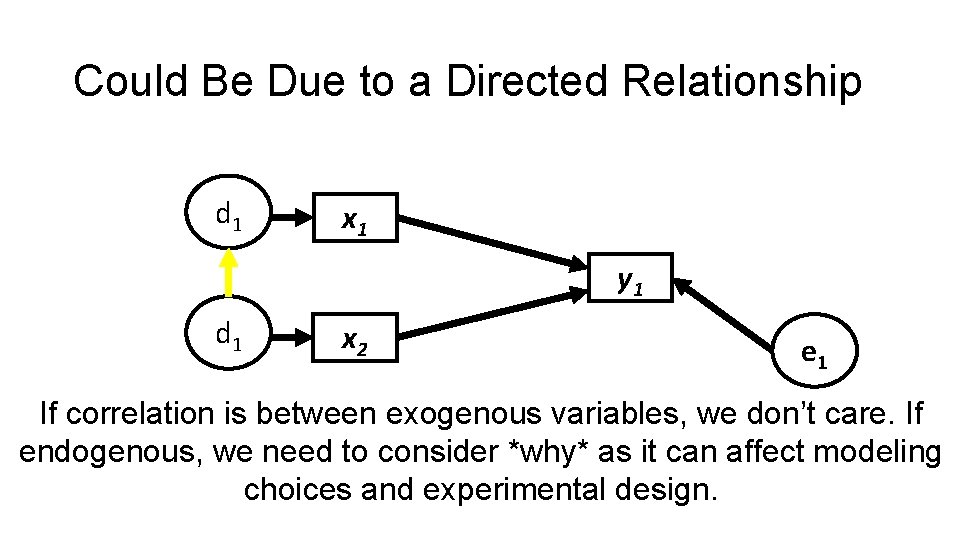
Could Be Due to a Directed Relationship dd 11 x 1 y 1 dd 21 x 2 e 1 If correlation is between exogenous variables, we don’t care. If endogenous, we need to consider *why* as it can affect modeling choices and experimental design.
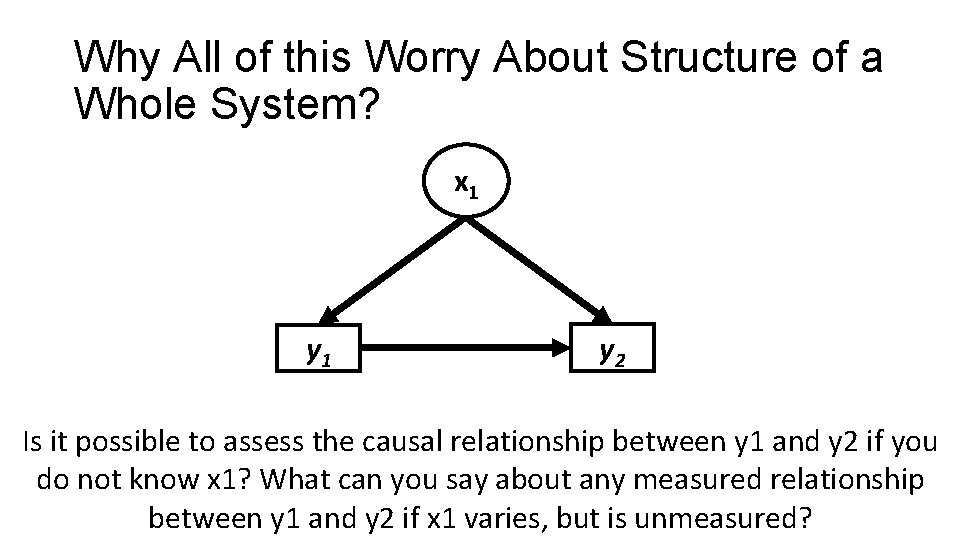
Why All of this Worry About Structure of a Whole System? x 1 y 2 Is it possible to assess the causal relationship between y 1 and y 2 if you do not know x 1? What can you say about any measured relationship between y 1 and y 2 if x 1 varies, but is unmeasured?
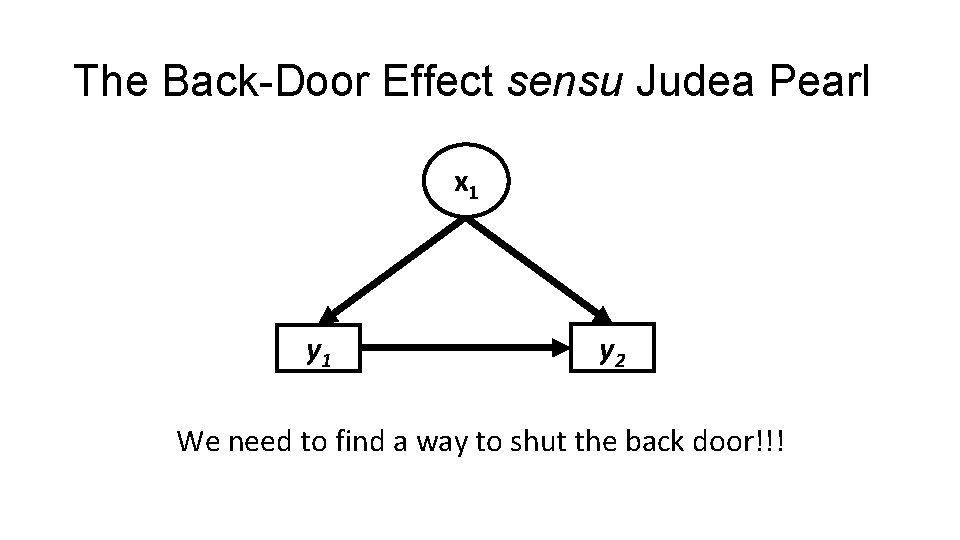
The Back-Door Effect sensu Judea Pearl x 1 y 2 We need to find a way to shut the back door!!!
Boxes and Arrows, Oh My! • Causal Diagrams let you be specific about cause and effect in a system • We can incorporate many aspects of our knowledge into Causal Diagrams • Causal Diagrams illuminate potential confounders to watch out for via Back-Door effects
Build an Understanding of Our System to Design Experiments 1. Introduction to Causal Thinking 2. Anatomy of Causal Diagrams 3. Causal Diagrams and Experiments 4. Using Causal Diagrams with a System to Design an Experiment 5. Causal Implications of Experimental Manipulations You Might Not have Thought Of
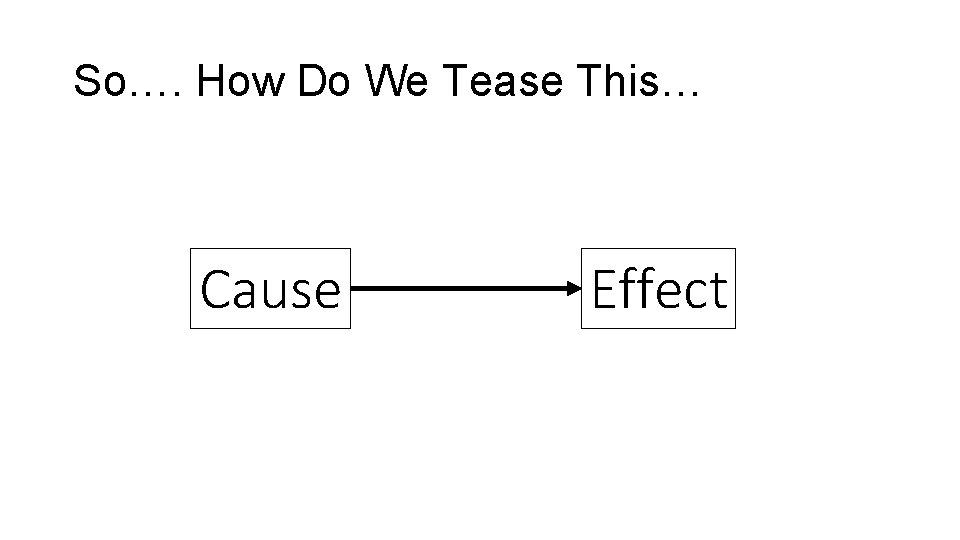
So…. How Do We Tease This… Cause Effect
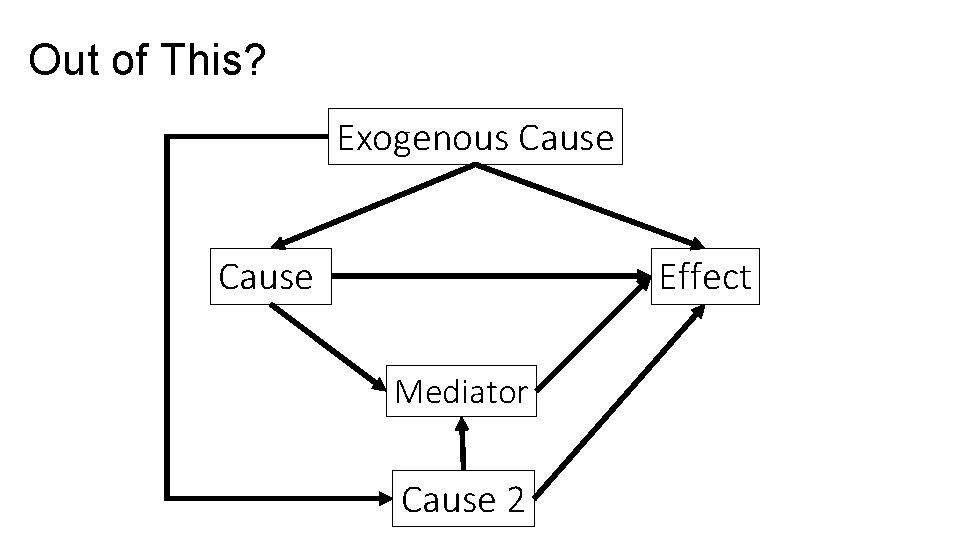
Out of This? Exogenous Cause Effect Mediator Cause 2
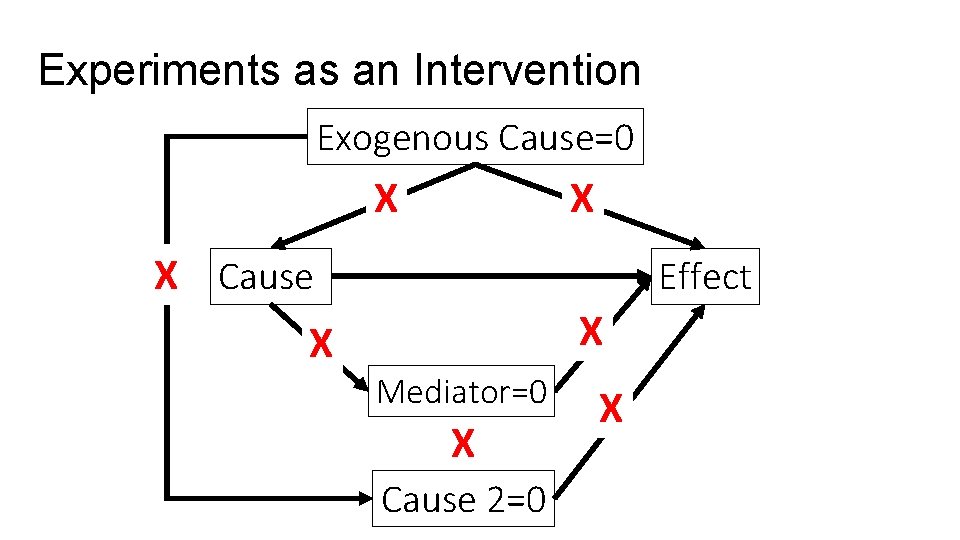
Experiments as an Intervention Exogenous Cause=0 X X X Cause X Effect X Mediator=0 X Cause 2=0 X
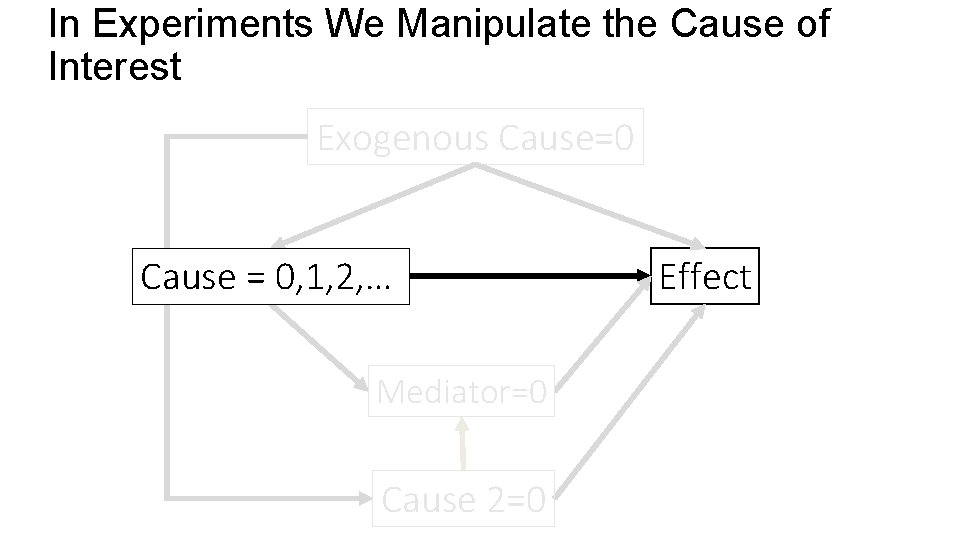
In Experiments We Manipulate the Cause of Interest Exogenous Cause=0 Cause = 0, 1, 2, … Mediator=0 Cause 2=0 Effect
Build an Understanding of Our System to Design Experiments 1. Introduction to Causal Thinking 2. Anatomy of Causal Diagrams 3. Causal Diagrams and Experiments 4. Using Causal Diagrams with a System to Design an Experiment 5. Causal Implications of Experimental Manipulations You Might Not have Thought Of
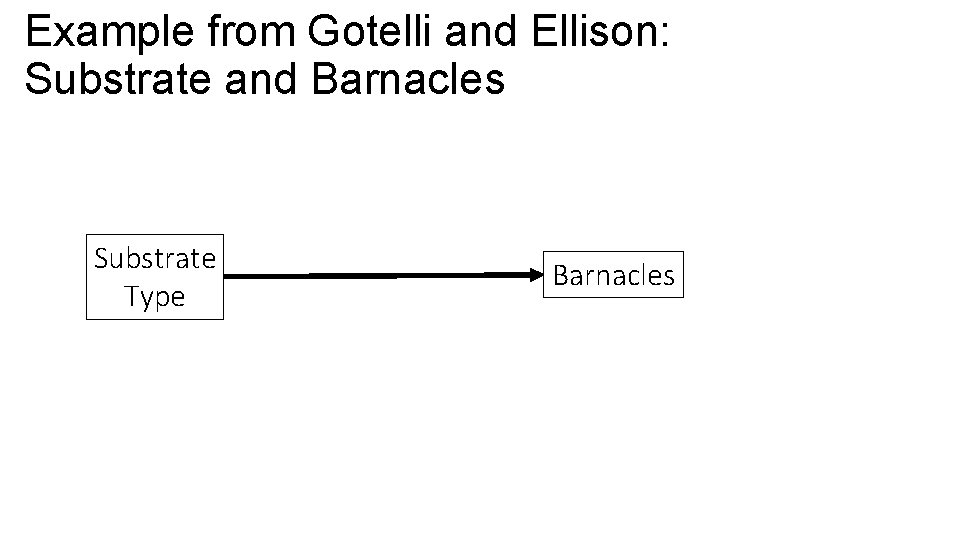
Example from Gotelli and Ellison: Substrate and Barnacles Substrate Type Barnacles
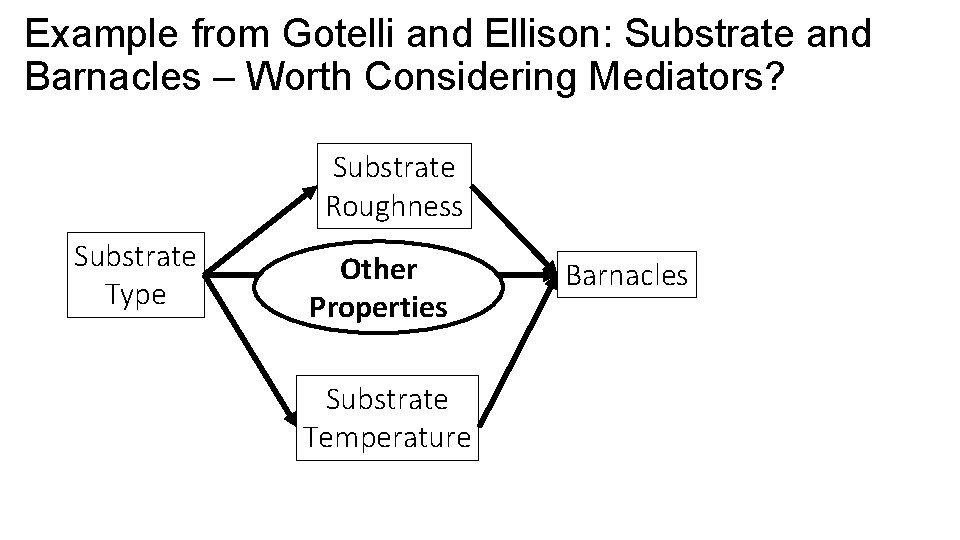
Example from Gotelli and Ellison: Substrate and Barnacles – Worth Considering Mediators? Substrate Roughness Substrate Type Other Properties Substrate Temperature Barnacles
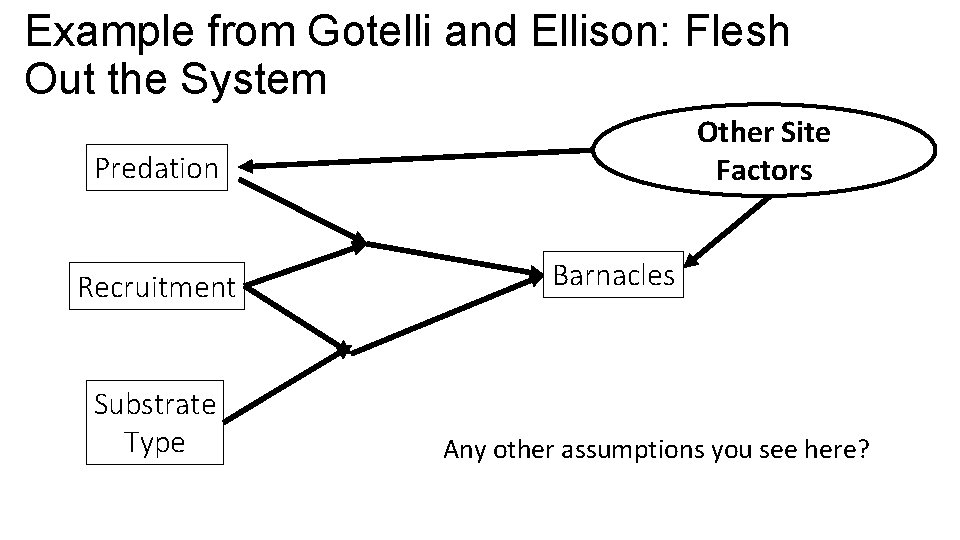
Example from Gotelli and Ellison: Flesh Out the System Other Site Factors Predation Recruitment Substrate Type Barnacles Any other assumptions you see here?
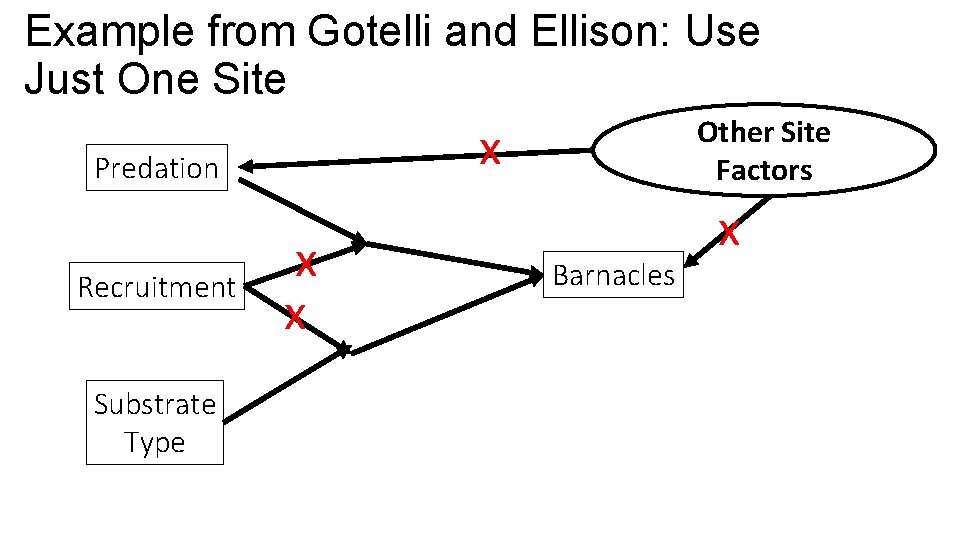
Example from Gotelli and Ellison: Use Just One Site x Predation Recruitment Substrate Type Other Site Factors x x Barnacles x
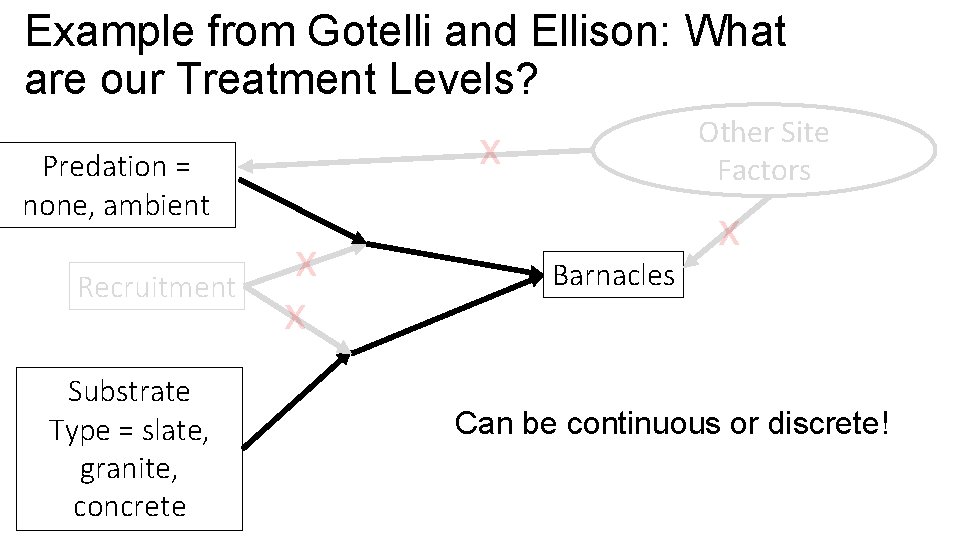
Example from Gotelli and Ellison: What are our Treatment Levels? x Predation = none, ambient Recruitment Substrate Type = slate, granite, concrete Other Site Factors x x Barnacles x Can be continuous or discrete!
Causal Diagrams and Experimental Design • Use your diagram to determine what influences you can cut out • Your choices in experimental design can be charted on your diagram • You can then tell if your resulting design is causally identified or not
Build a simplified causal diagram of your system. Then diagram out how you would turn it into an experiment that answers your question of interest.
Build an Understanding of Our System to Design Experiments 1. Introduction to Causal Thinking 2. Anatomy of Causal Diagrams 3. Causal Diagrams and Experiments 4. Using Causal Diagrams with a System to Design an Experiment 5. Causal Implications of Experimental Manipulations You Might Not have Thought Of
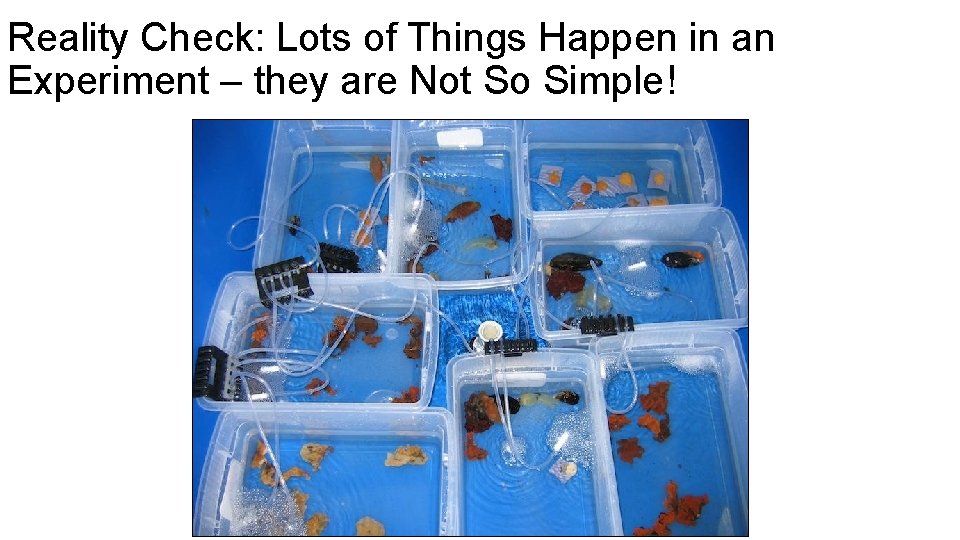
Reality Check: Lots of Things Happen in an Experiment – they are Not So Simple!
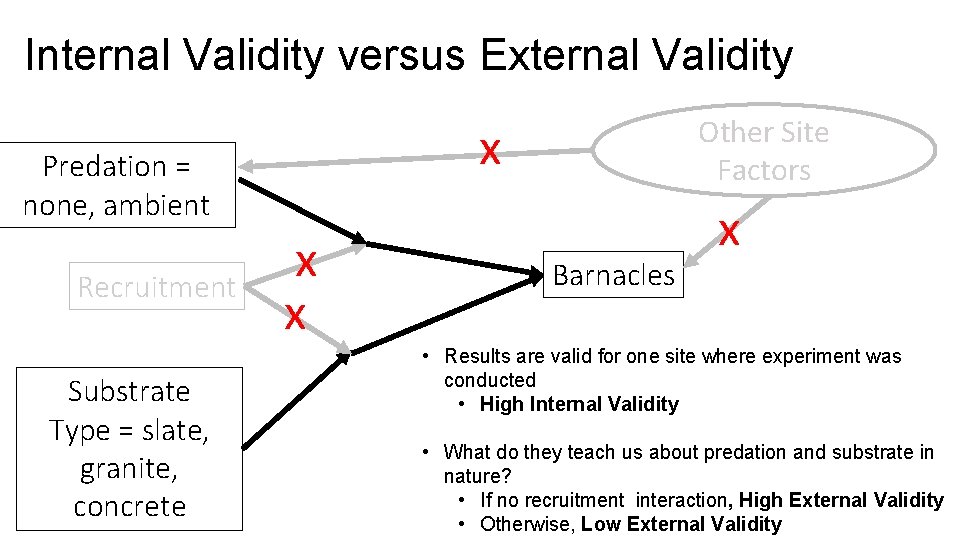
Internal Validity versus External Validity x Predation = none, ambient Recruitment Substrate Type = slate, granite, concrete Other Site Factors x x Barnacles x • Results are valid for one site where experiment was conducted • High Internal Validity • What do they teach us about predation and substrate in nature? • If no recruitment interaction, High External Validity • Otherwise, Low External Validity
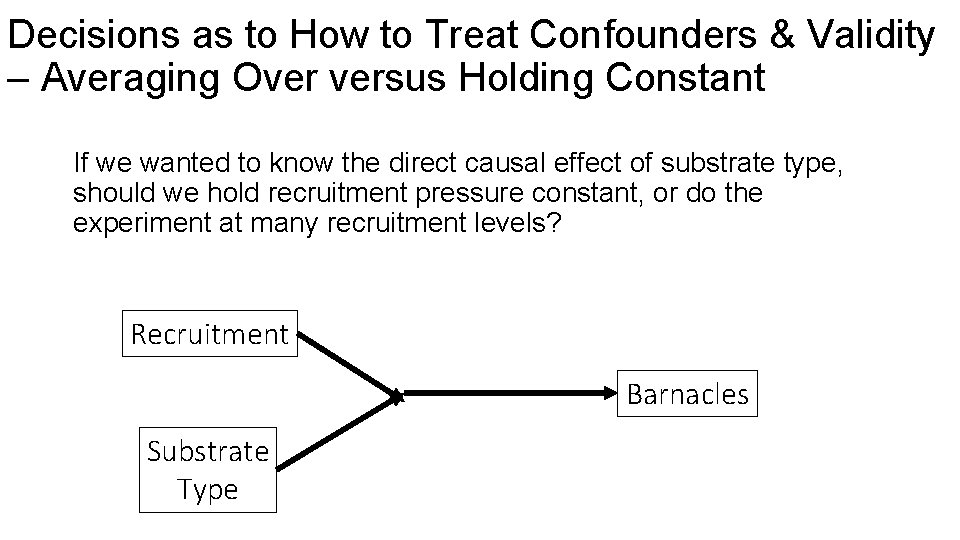
Decisions as to How to Treat Confounders & Validity – Averaging Over versus Holding Constant If we wanted to know the direct causal effect of substrate type, should we hold recruitment pressure constant, or do the experiment at many recruitment levels? Recruitment Barnacles Substrate Type
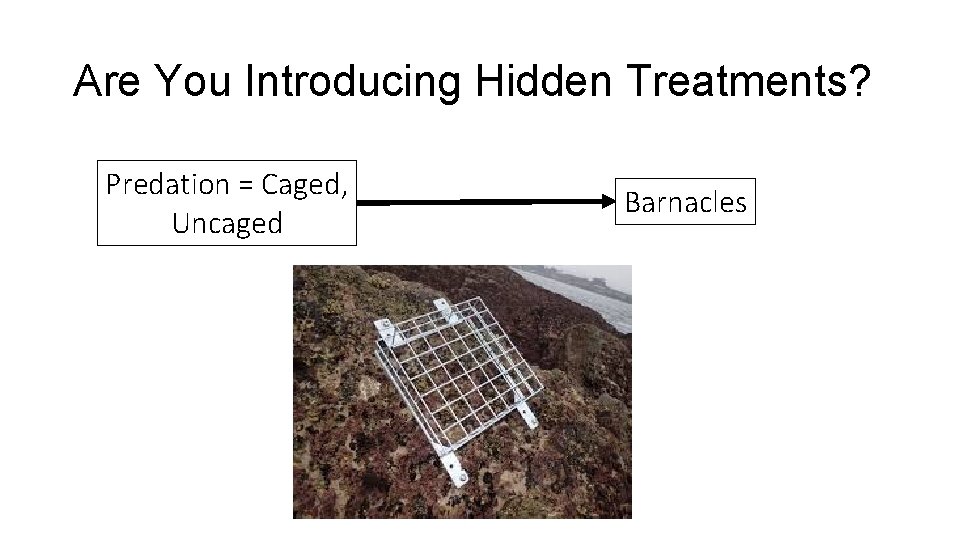
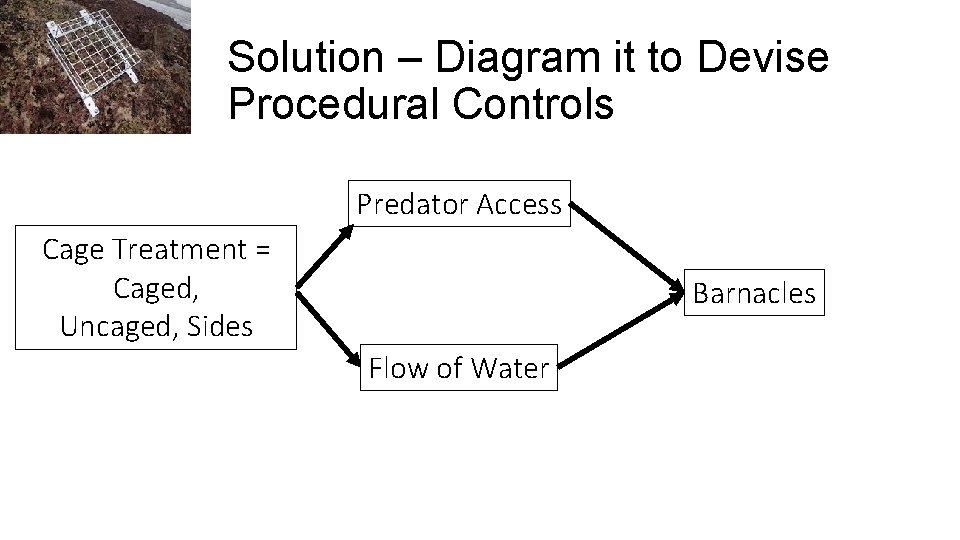
Are You Introducing Hidden Treatments? Predation = Caged, Uncaged Barnacles
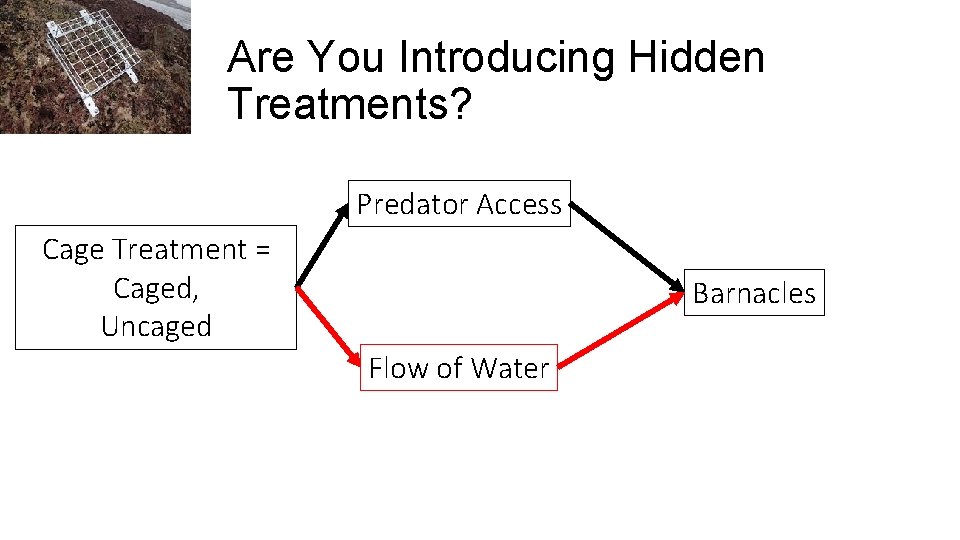
Are You Introducing Hidden Treatments? Predator Access Cage Treatment = Caged, Uncaged Barnacles Flow of Water
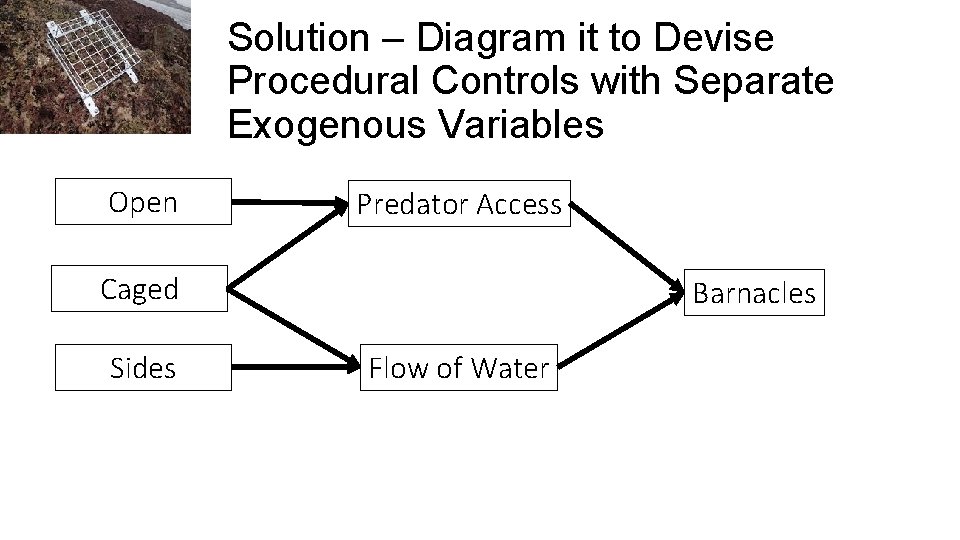
Solution – Diagram it to Devise Procedural Controls Predator Access Cage Treatment = Caged, Uncaged, Sides Barnacles Flow of Water
Solution – Diagram it to Devise Procedural Controls with Separate Exogenous Variables Open Predator Access Caged Sides Barnacles Flow of Water
Causal Diagrams of an Experiment • Re-diagram your system as an experiment • Think carefully about what is added and what is subtracted • What is the scope of your inference when you compare your diagram of an experiment to that of the world? • Did you open any new back doors? How can you close them?
Evaluate your experimental diagram – would you change anything? Why?