
Derivation of the Solar Plage Index using the
- Slides: 16
Derivation of the Solar Plage Index using the Flare Monitoring Telescope at the Hida Observatory Hiroko Watanabe (Kyoto Univ. ) Collaborators: Ayumi Asai, Satoru Ue. No, Reizaburo Kitai (Kyoto Univ. ), Satoshi Morita(NAOJ)
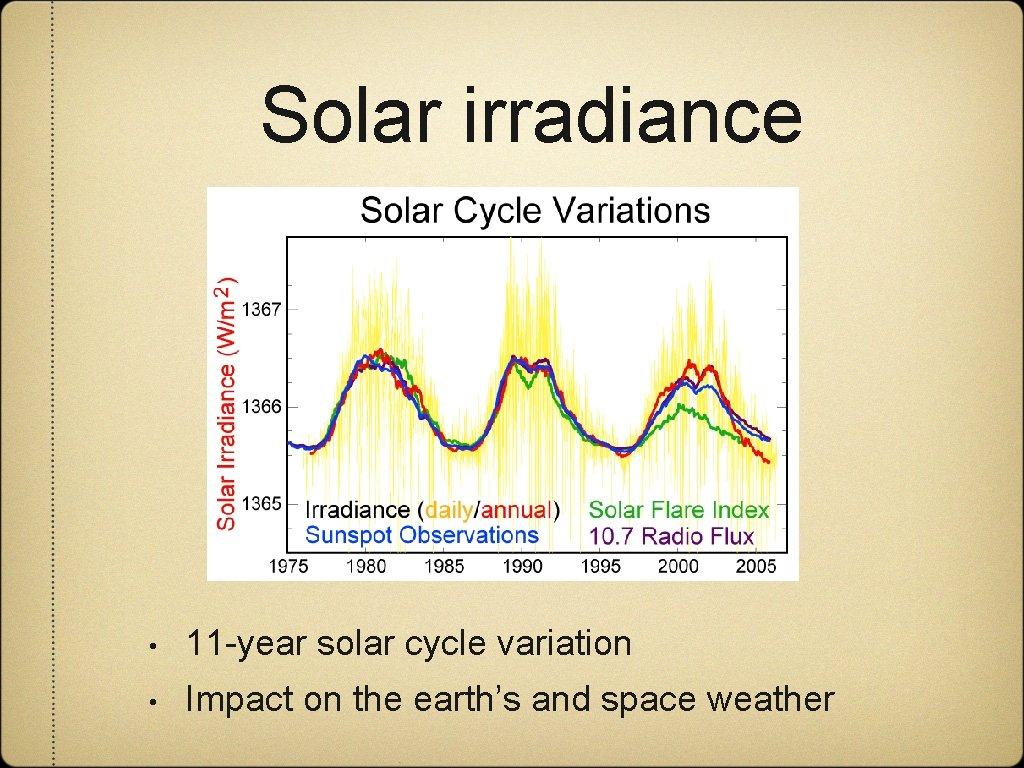
Solar irradiance • 11 -year solar cycle variation • Impact on the earth’s and space weather
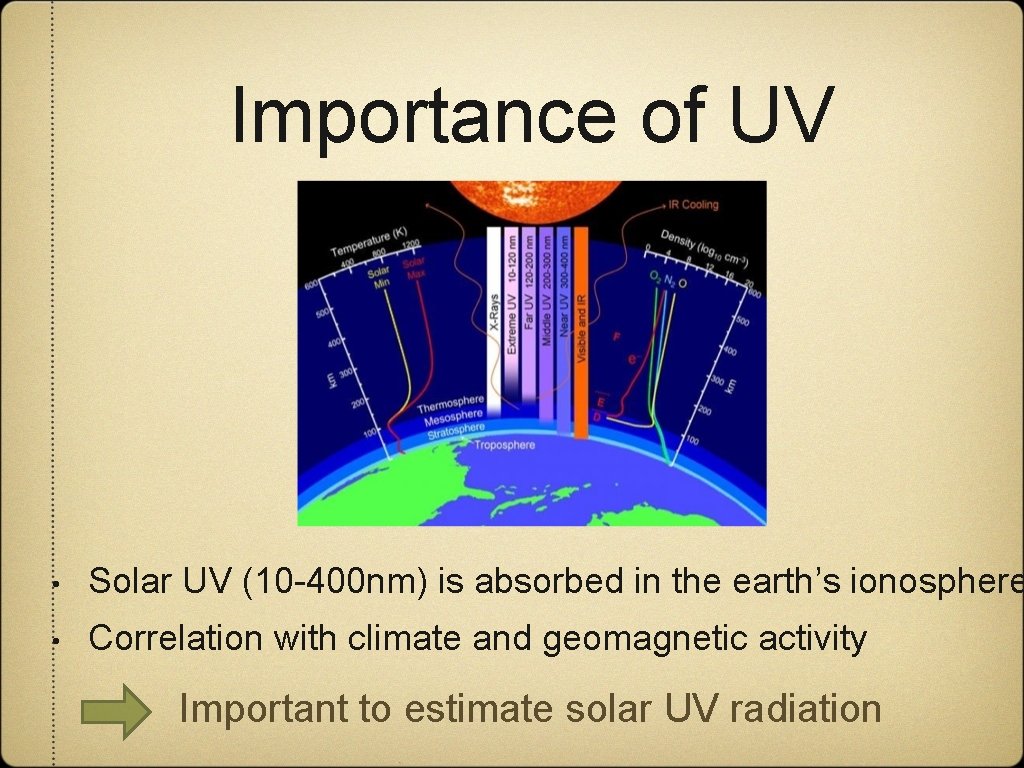
Importance of UV • Solar UV (10 -400 nm) is absorbed in the earth’s ionosphere • Correlation with climate and geomagnetic activity Important to estimate solar UV radiation
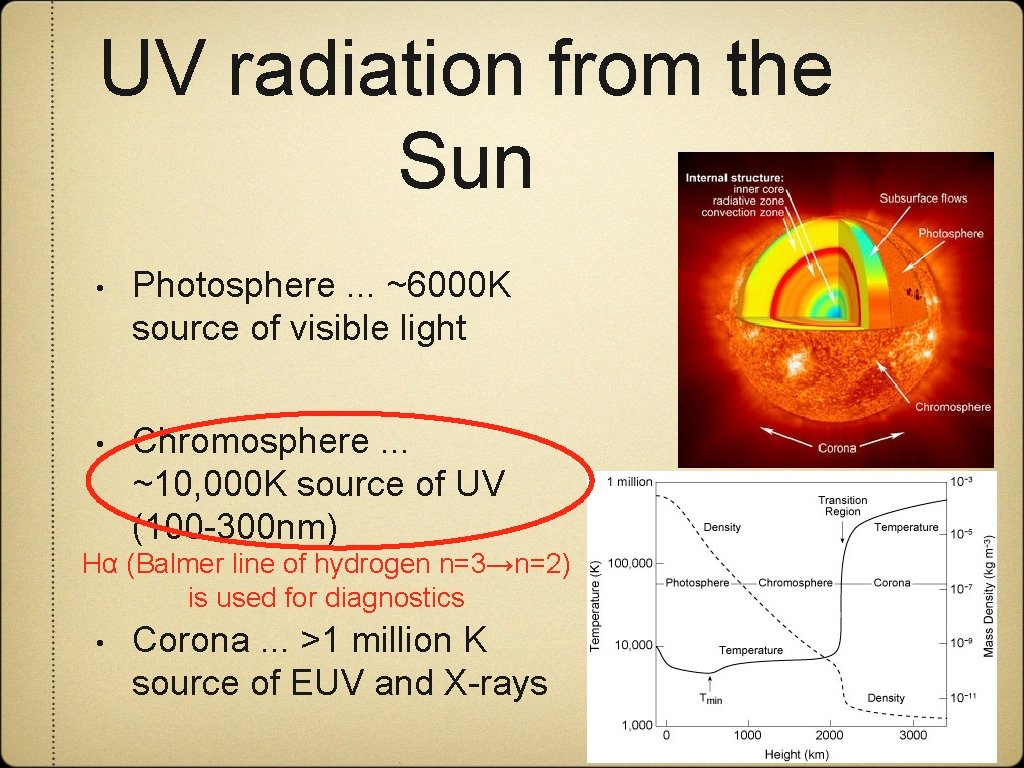
UV radiation from the Sun • Photosphere. . . ~6000 K source of visible light • Chromosphere. . . ~10, 000 K source of UV (100 -300 nm) Hα (Balmer line of hydrogen n=3→n=2) is used for diagnostics • Corona. . . >1 million K source of EUV and X-rays
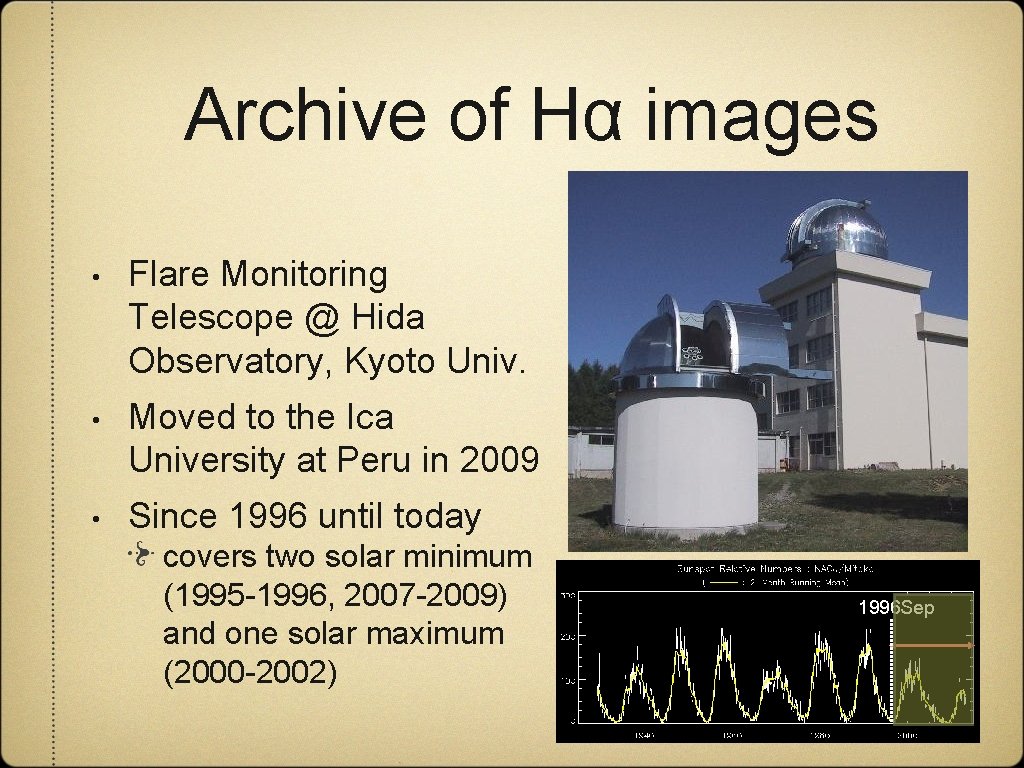
Archive of Hα images • Flare Monitoring Telescope @ Hida Observatory, Kyoto Univ. • Moved to the Ica University at Peru in 2009 • Since 1996 until today covers two solar minimum (1995 -1996, 2007 -2009) and one solar maximum (2000 -2002) 1996 Sep
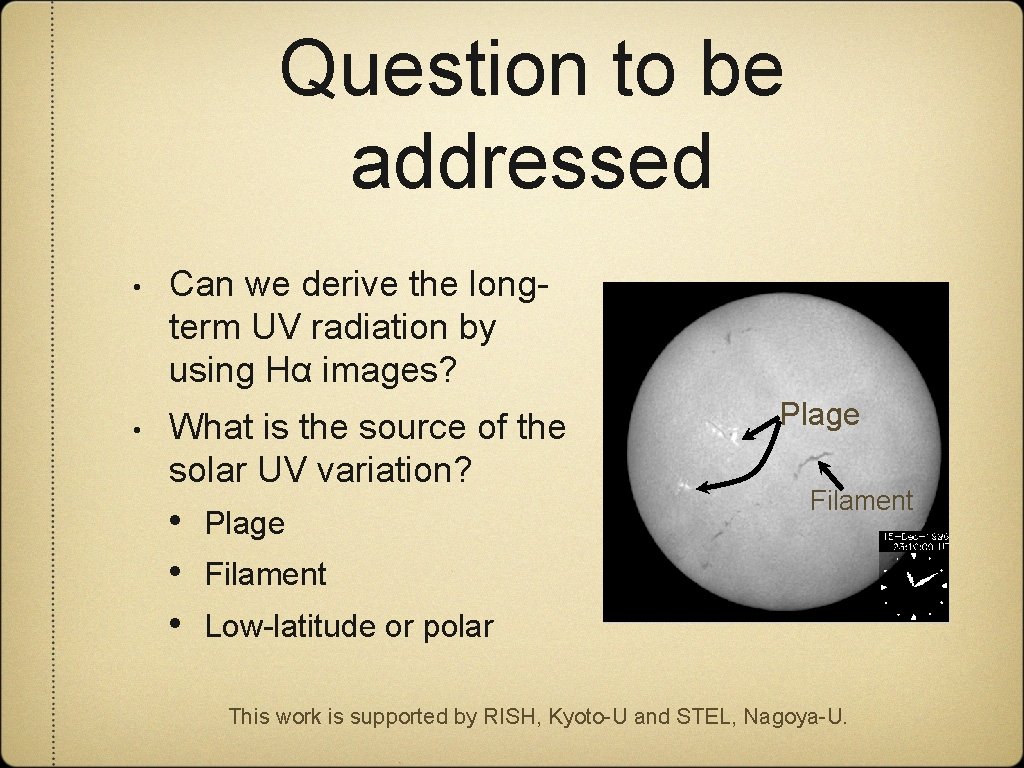
Question to be addressed • Can we derive the longterm UV radiation by using Hα images? • What is the source of the solar UV variation? • • • Plage Filament Low-latitude or polar This work is supported by RISH, Kyoto-U and STEL, Nagoya-U.
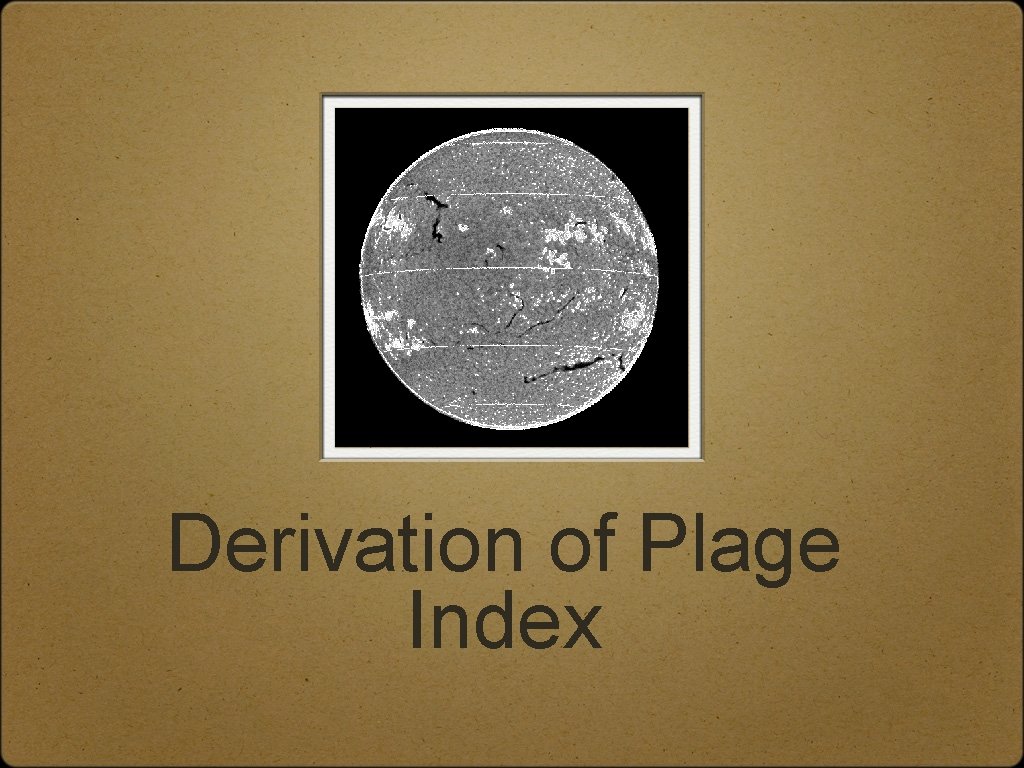
Derivation of Plage Index
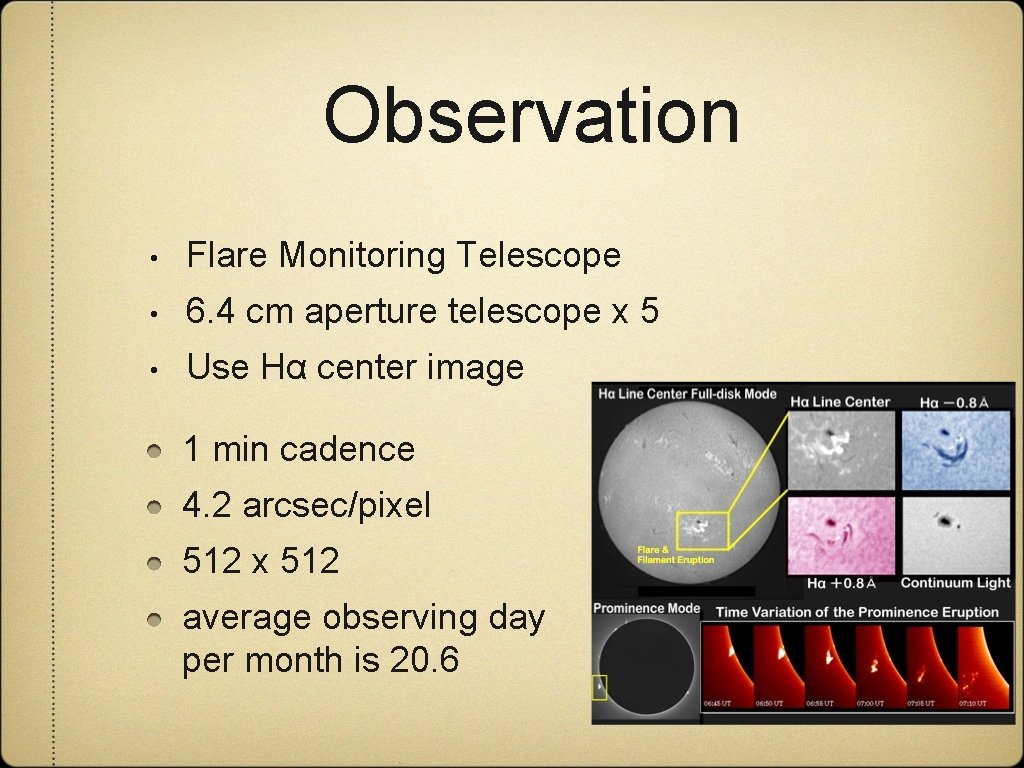
Observation • Flare Monitoring Telescope • 6. 4 cm aperture telescope x 5 • Use Hα center image 1 min cadence 4. 2 arcsec/pixel 512 x 512 average observing day per month is 20. 6
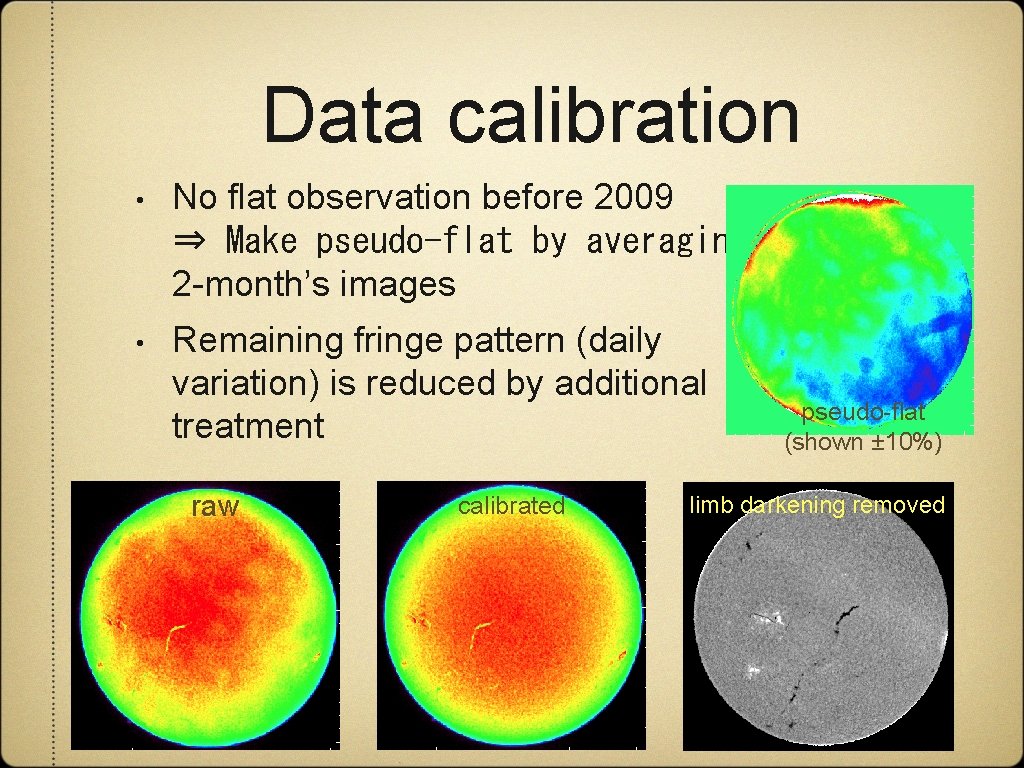
Data calibration • No flat observation before 2009 ⇒ Make pseudo-flat by averaging 2 -month’s images • Remaining fringe pattern (daily variation) is reduced by additional treatment raw calibrated pseudo-flat (shown ± 10%) limb darkening removed
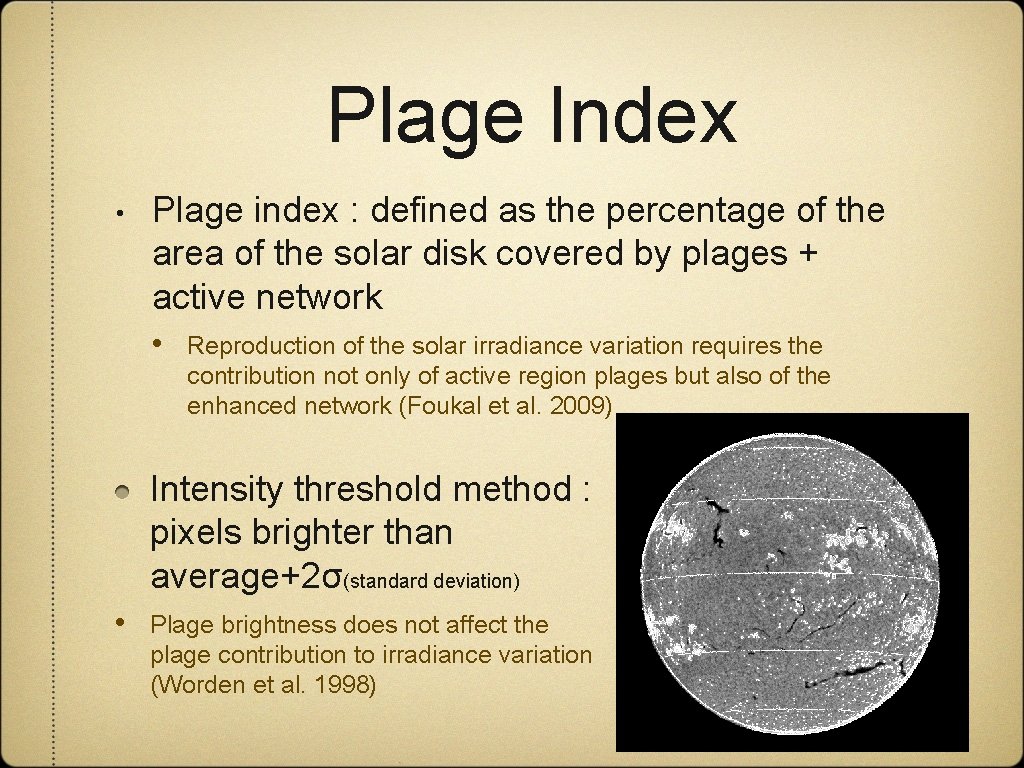
Plage Index • Plage index : defined as the percentage of the area of the solar disk covered by plages + active network • Reproduction of the solar irradiance variation requires the contribution not only of active region plages but also of the enhanced network (Foukal et al. 2009) Intensity threshold method : pixels brighter than average+2σ(standard deviation) • Plage brightness does not affect the plage contribution to irradiance variation (Worden et al. 1998)
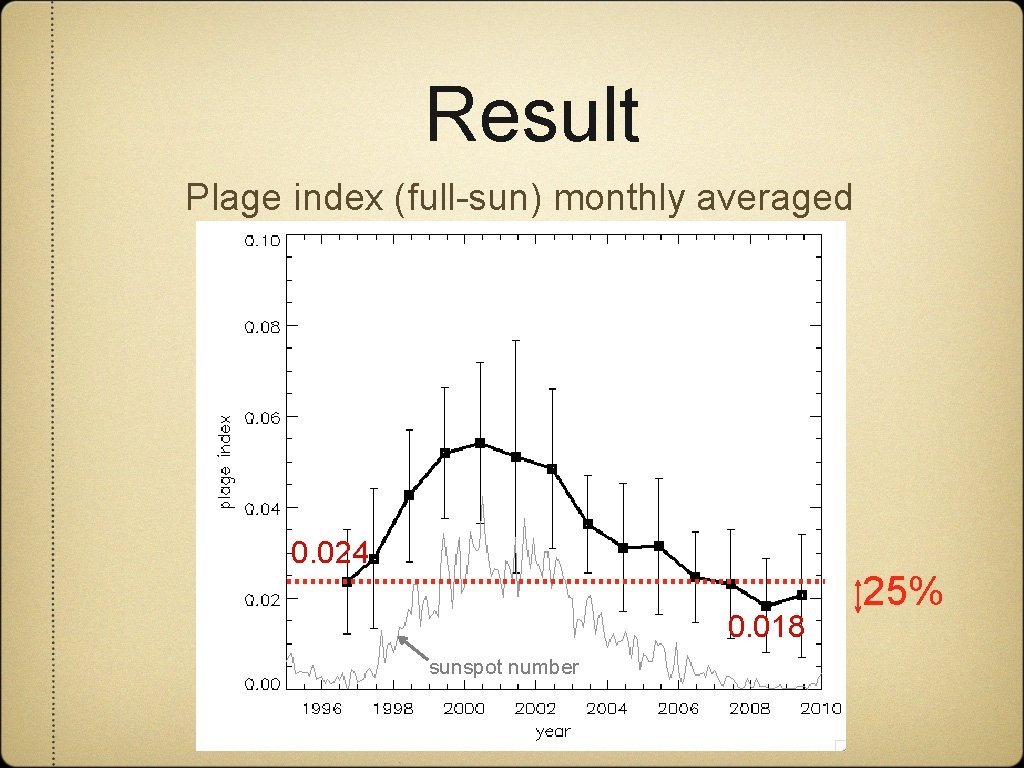
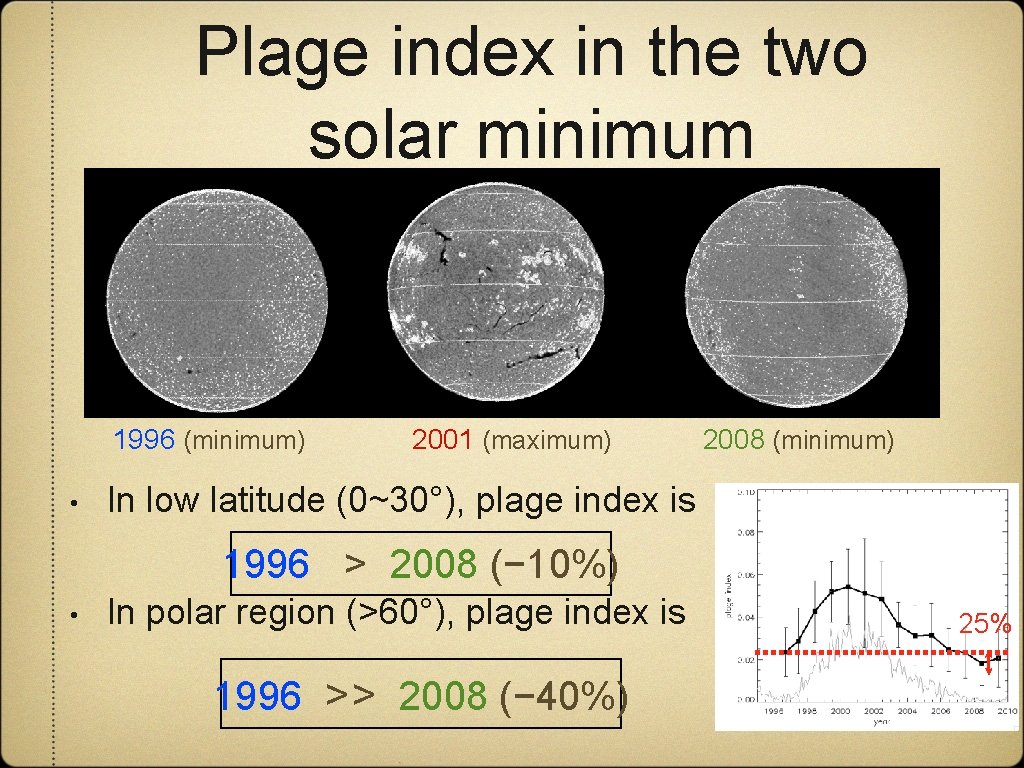
Result Plage index (full-sun) monthly averaged 0. 024 0. 018 sunspot number 25%
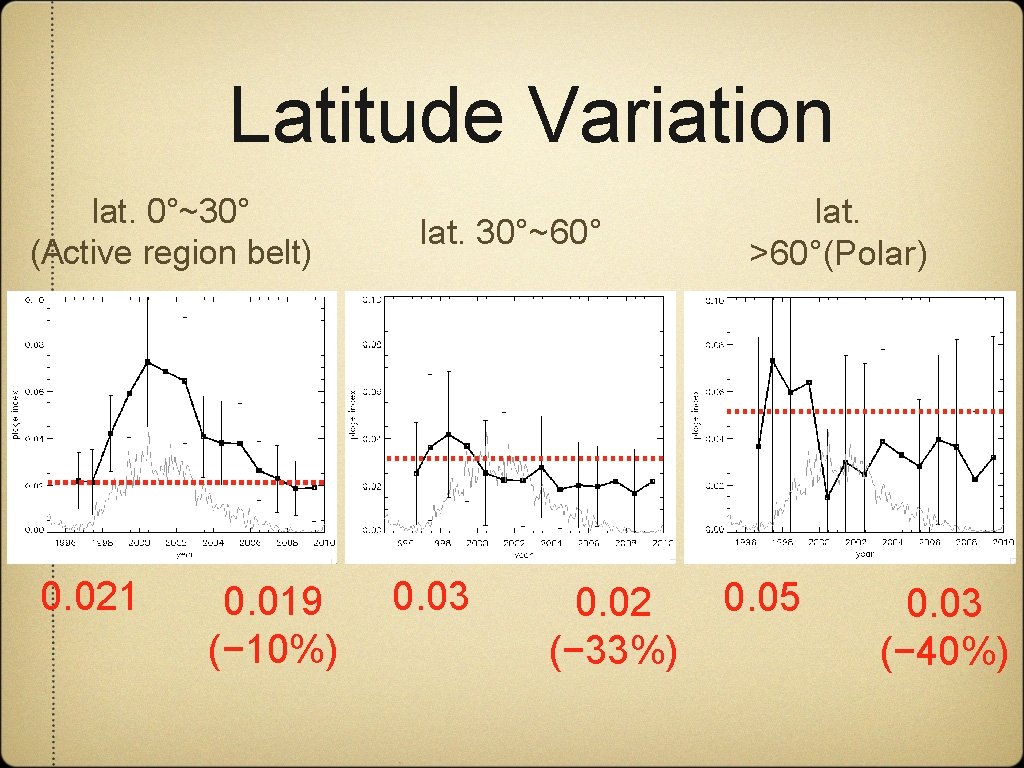
Latitude Variation lat. 0°~30° (Active region belt) 0. 021 0. 019 (− 10%) lat. 30°~60° 0. 03 0. 02 (− 33%) lat. >60°(Polar) 0. 05 0. 03 (− 40%)
Plage index in the two solar minimum 1996 (minimum) • 2001 (maximum) 2008 (minimum) In low latitude (0~30°), plage index is 1996 > 2008 (− 10%) • In polar region (>60°), plage index is 1996 >> 2008 (− 40%) 25%
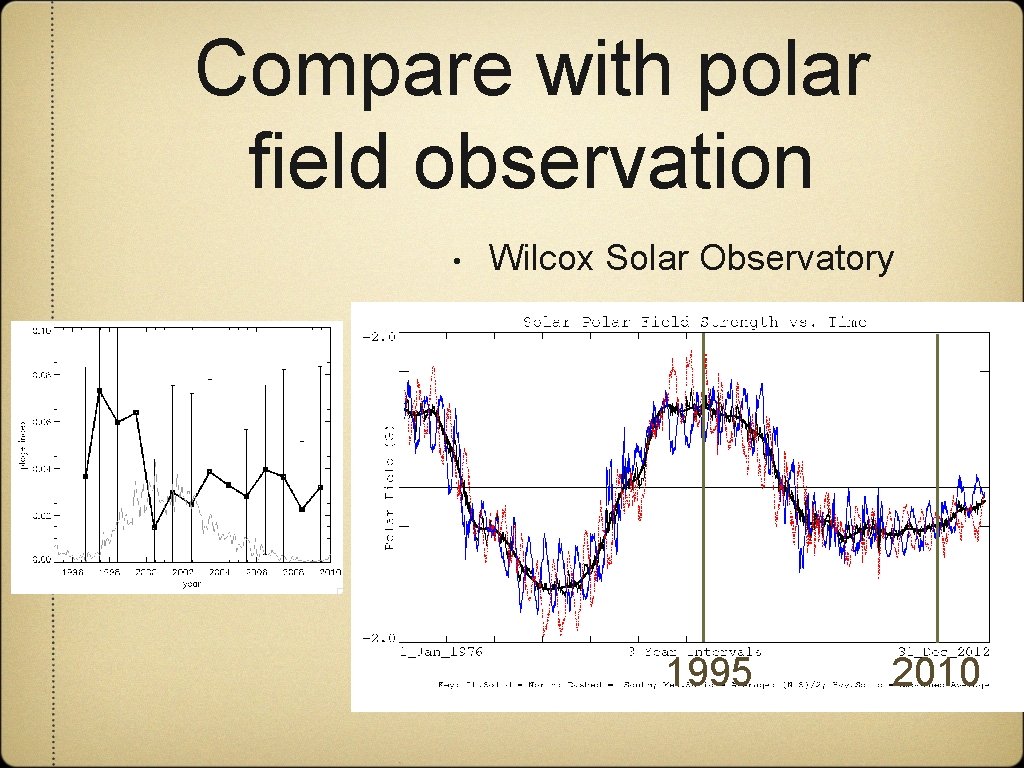
Compare with polar field observation • Wilcox Solar Observatory 1995 2010
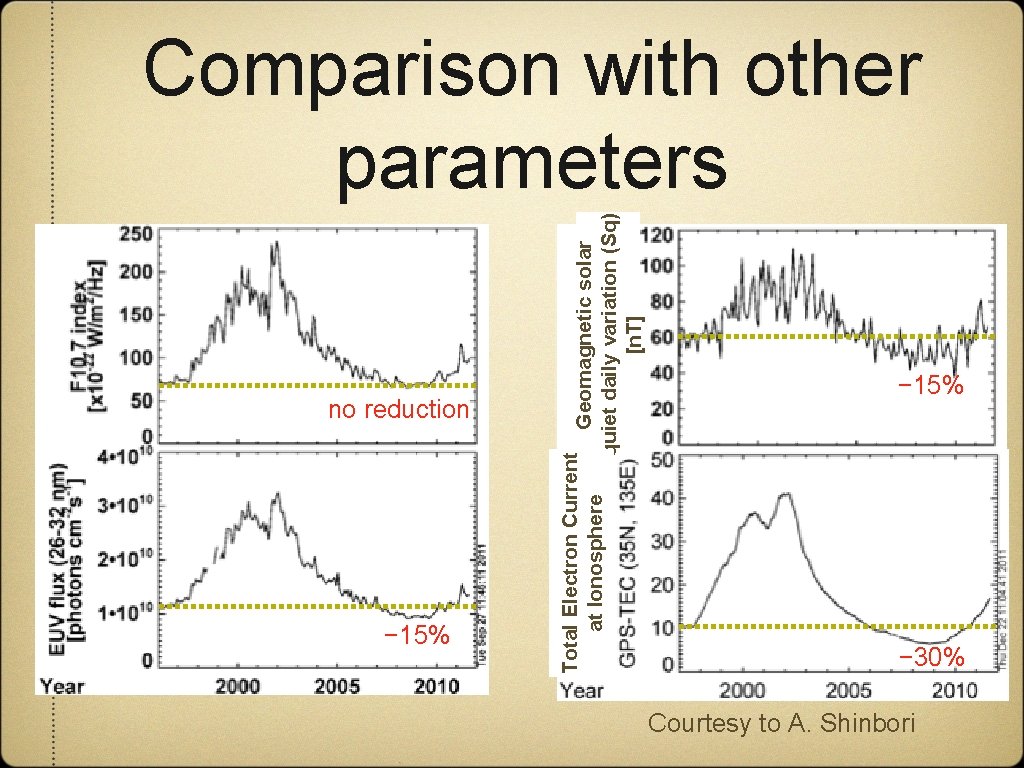
no reduction − 15% Total Electron Current Geomagnetic solar at Ionosphere quiet daily variation (Sq) [n. T] Comparison with other parameters − 15% − 30% Courtesy to A. Shinbori
SUMMARY We attempt to use “plage index” to know the long-term variation of the solar UV radiation. The plage index is lower in minimum around 1996 than in minimum around 2008 ➡ good correlation with geomagnetic indices The source of variation of the plage index may lie in polar region