
Derby and District Organists Association Exploring a Pipe

Derby and District Organists’ Association Exploring a Pipe Organ with CATO Children and the Organ Project
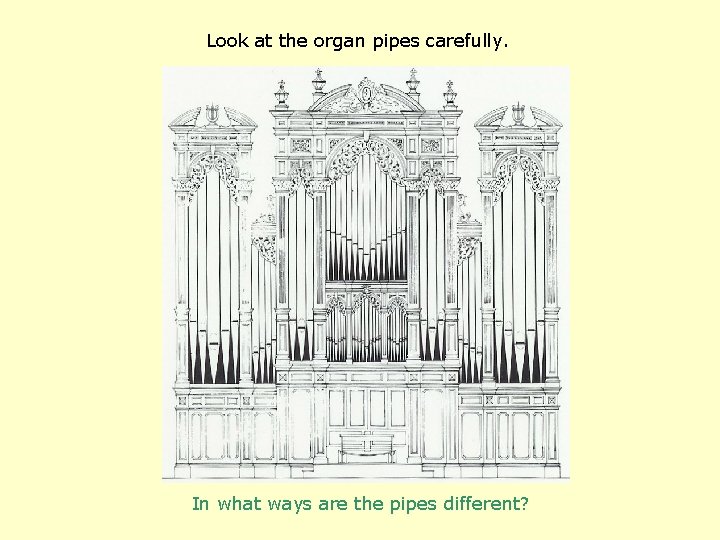
Look at the organ pipes carefully. In what ways are the pipes different?

The pitch of the sound from an organ pipe depends upon its length. Low notes come from long pipes. High notes come from short pipes. ♪ The picture shows just 6 pipes. How many should there be altogether for all the keys?
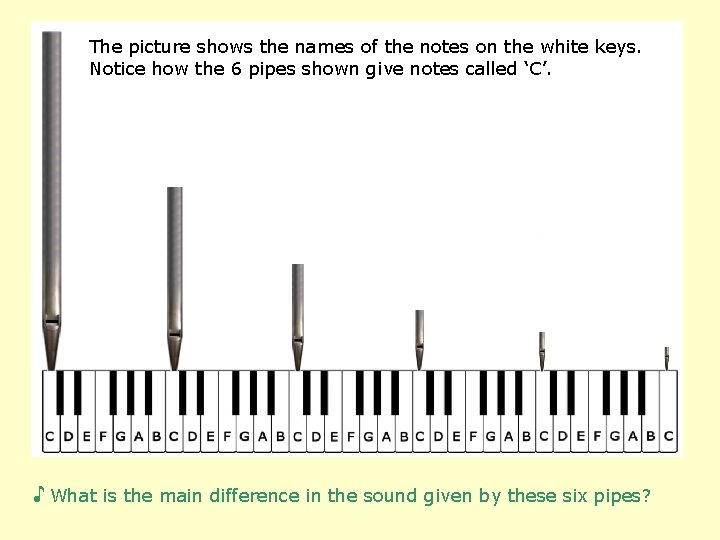
The picture shows the names of the notes on the white keys. Notice how the 6 pipes shown give notes called ‘C’. ♪ What is the main difference in the sound given by these six pipes?
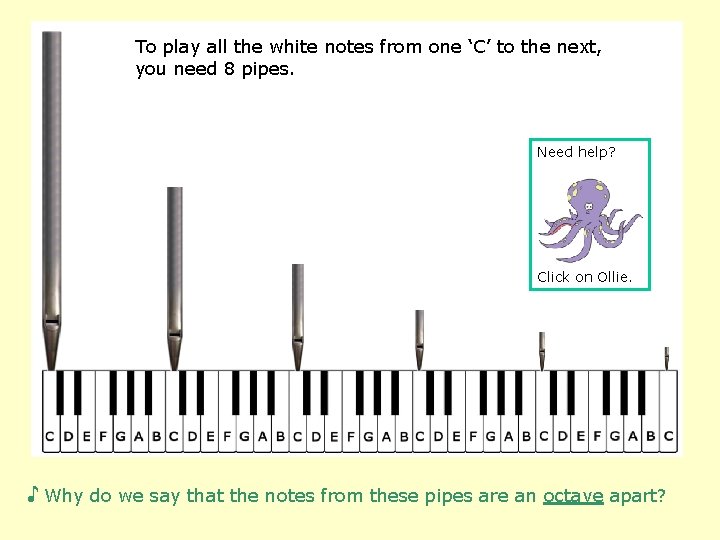
To play all the white notes from one ‘C’ to the next, you need 8 pipes. Need help? Click on Ollie. ♪ Why do we say that the notes from these pipes are an octave apart?
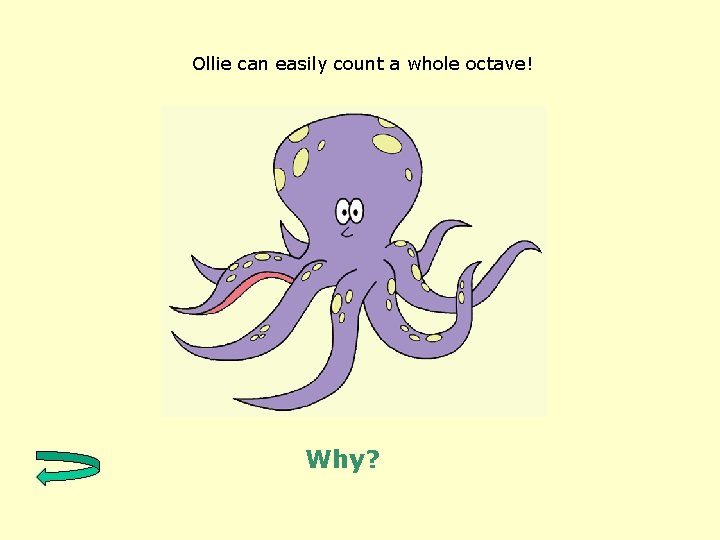
Ollie can easily count a whole octave! Why?
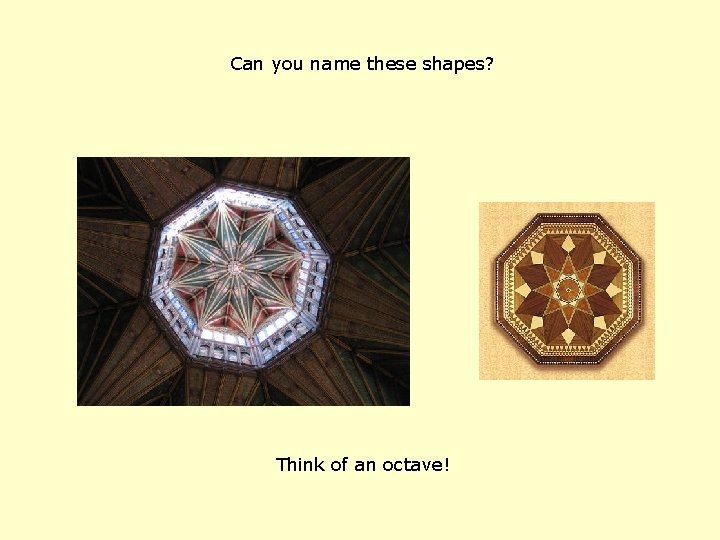
Can you name these shapes? Think of an octave!
♪ Try humming a note. . . . and then another, an octave higher or lower.
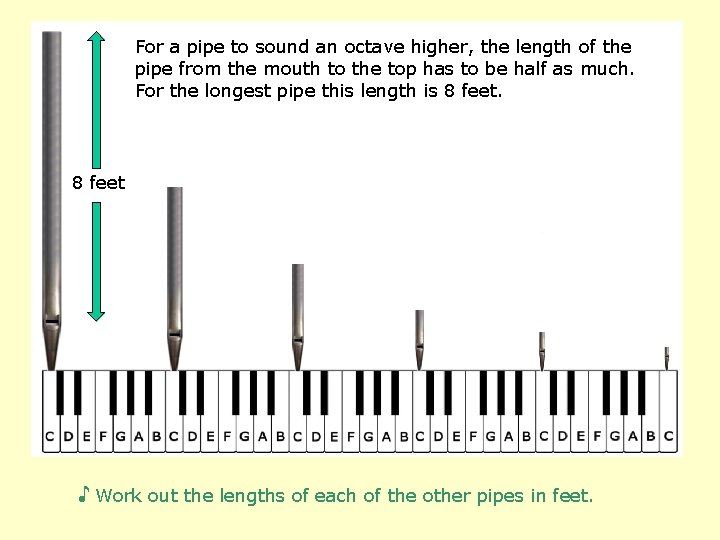
For a pipe to sound an octave higher, the length of the pipe from the mouth to the top has to be half as much. For the longest pipe this length is 8 feet ♪ Work out the lengths of each of the other pipes in feet.
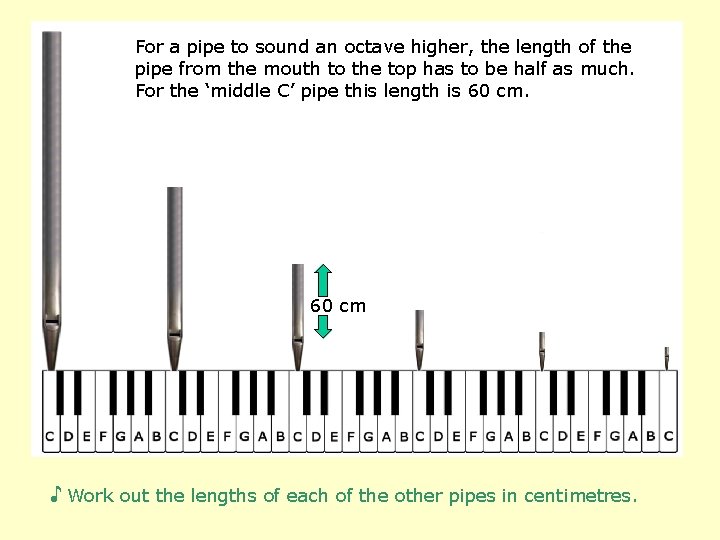
For a pipe to sound an octave higher, the length of the pipe from the mouth to the top has to be half as much. For the ‘middle C’ pipe this length is 60 cm ♪ Work out the lengths of each of the other pipes in centimetres.
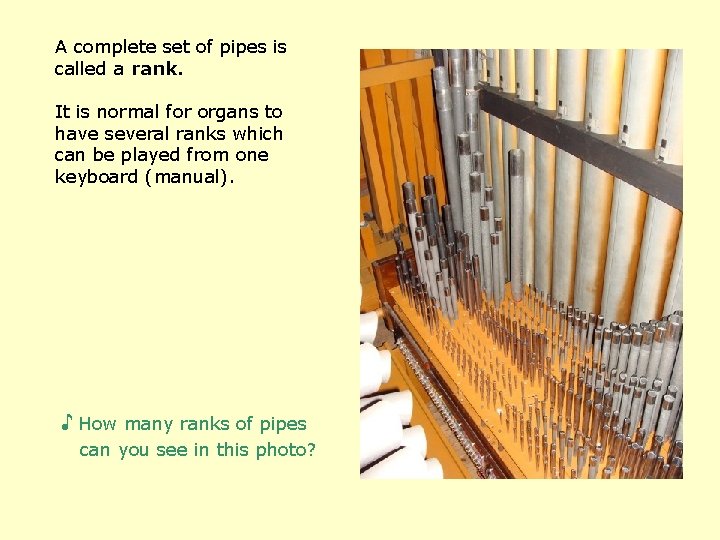
A complete set of pipes is called a rank. It is normal for organs to have several ranks which can be played from one keyboard (manual). ♪ How many ranks of pipes can you see in this photo?
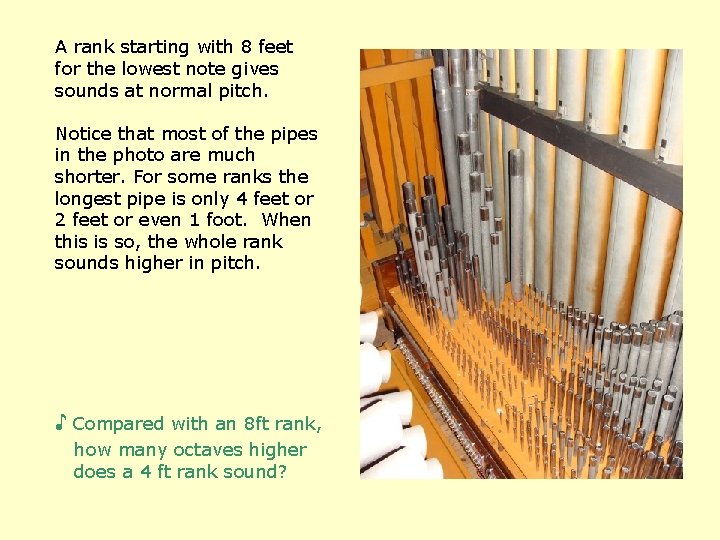
A rank starting with 8 feet for the lowest note gives sounds at normal pitch. Notice that most of the pipes in the photo are much shorter. For some ranks the longest pipe is only 4 feet or 2 feet or even 1 foot. When this is so, the whole rank sounds higher in pitch. ♪ Compared with an 8 ft rank, how many octaves higher does a 4 ft rank sound?
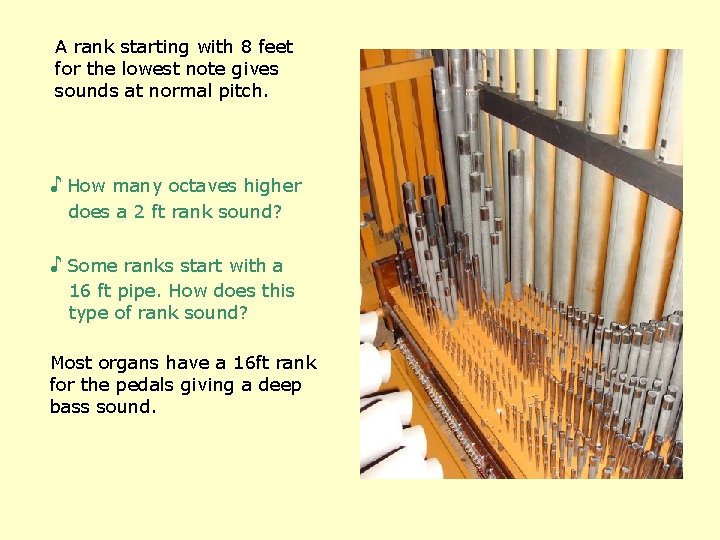
A rank starting with 8 feet for the lowest note gives sounds at normal pitch. ♪ How many octaves higher does a 2 ft rank sound? ♪ Some ranks start with a 16 ft pipe. How does this type of rank sound? Most organs have a 16 ft rank for the pedals giving a deep bass sound.
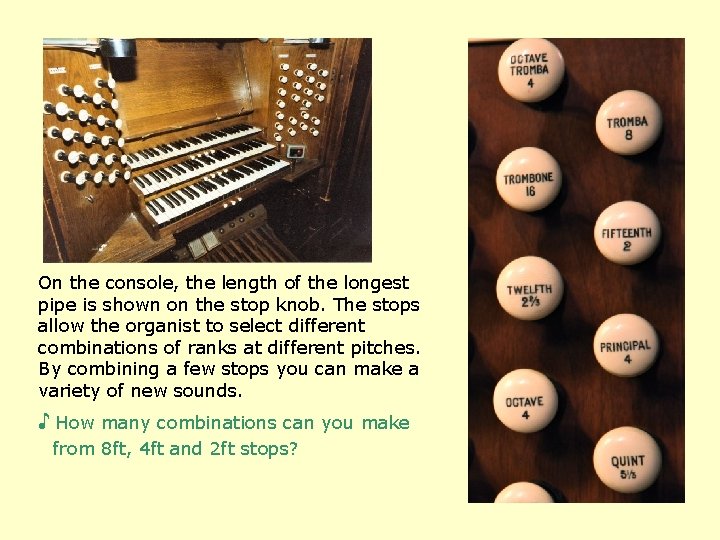
On the console, the length of the longest pipe is shown on the stop knob. The stops allow the organist to select different combinations of ranks at different pitches. By combining a few stops you can make a variety of new sounds. ♪ How many combinations can you make from 8 ft, 4 ft and 2 ft stops?
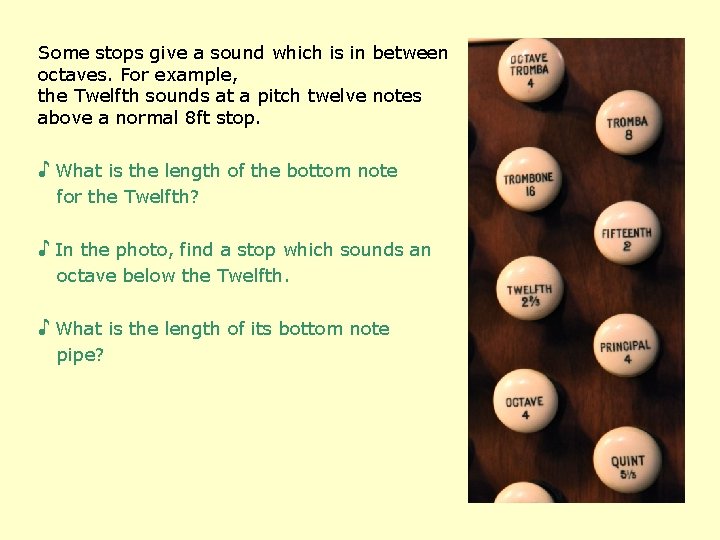
Some stops give a sound which is in between octaves. For example, the Twelfth sounds at a pitch twelve notes above a normal 8 ft stop. ♪ What is the length of the bottom note for the Twelfth? ♪ In the photo, find a stop which sounds an octave below the Twelfth. ♪ What is the length of its bottom note pipe?
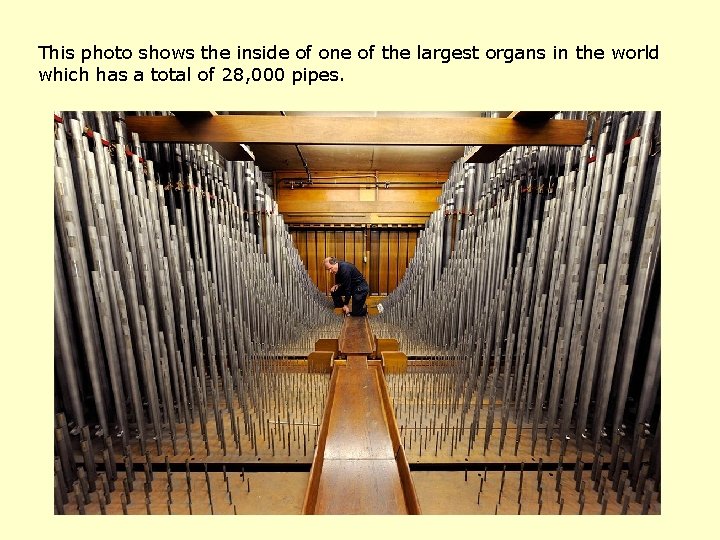
This photo shows the inside of one of the largest organs in the world which has a total of 28, 000 pipes.
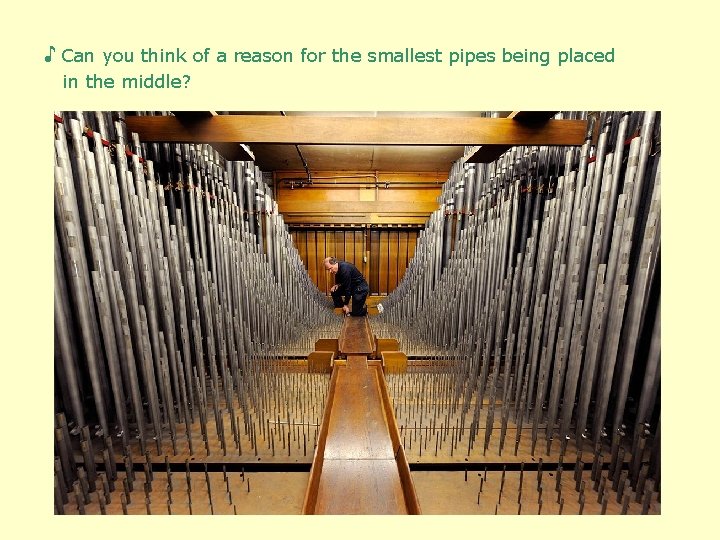
♪ Can you think of a reason for the smallest pipes being placed in the middle?
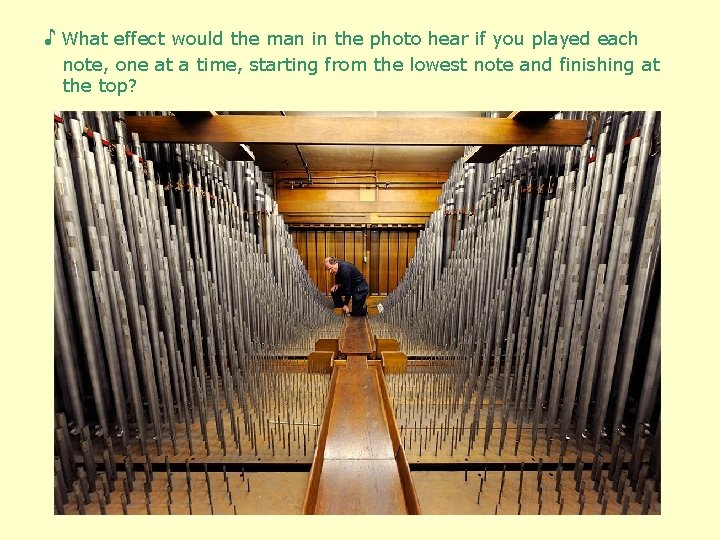
♪ What effect would the man in the photo hear if you played each note, one at a time, starting from the lowest note and finishing at the top?
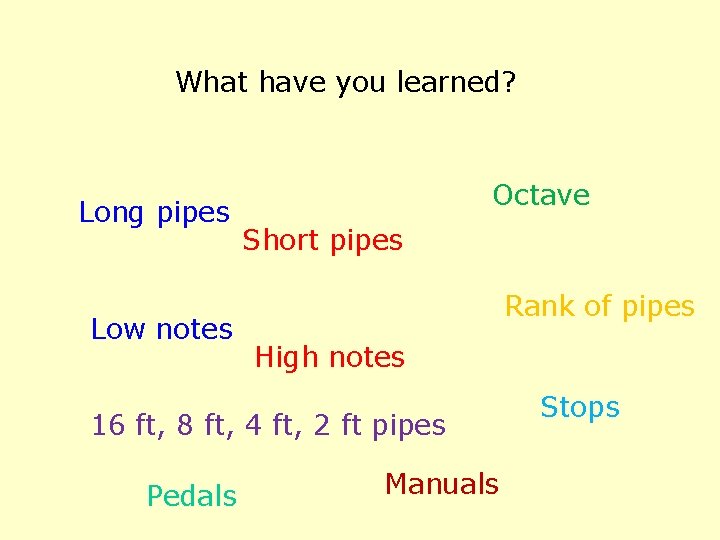
What have you learned? Long pipes Low notes Octave Short pipes Rank of pipes High notes 16 ft, 8 ft, 4 ft, 2 ft pipes Pedals Manuals Stops
Materials prepared by Laurence Rogers for the Children and the Organ Project Team: Stephen Johns James Muckle Richard Brice Gillian Chatto Chris Darrall Margaret Eades John Maxwell-Jones Laurence Rogers Sponsored by Derby and District Organists’ Association

Derby and District Organists’ Association Children and the Organ Project The project aims to introduce young children to the fascinating world of pipe organs through practical workshops and fun activities. The building and playing of organs being such multidisciplinary activities, their study has numerous spin-offs for the school curriculum. For more information, visit our website: www. derbyorganists. co. uk

Copyright notice Copyright owner: Derby & District Organists’ Association This Power. Point presentation and the accompanying worksheets are licensed under the Creative Commons Attribution-Non. Commercial 3. 0 Licence The work may be copied by not-for-profit organisations for educational use, provided due attribution to the copyright owner is given. Commercial use of the materials is prohibited. To view a copy of the licence, visit: http: //creativecommons. org/licenses/by-nc/3. 0/

- Slides: 23