
Depreciation key terms Depreciation the process of systematically
- Slides: 41
Depreciation. . . key terms • Depreciation: the process of systematically allocating the cost of an asset over its useful life. • Salvage value: The estimated value of an asset at the end of its useful life • Depreciable cost: an asset’s acquisition cost less its salvage value • Book value: an asset’s cost less its accumulated depreciation • Three factors to consider when computing depreciation: cost, estimated useful life, and salvage value
Fixed Assets • Fixed assets are those assets: – that have a long life, – are used in the business for future generation of income, – are not bought with the main purpose of resale. – Fixed assets are also called “Depreciable Assets” • No depreciation is charged on land.
Grouping of Fixed Assets • Major groups of Fixed Assets: – Land – Building – Plant and Machinery – Furniture and Fixtures – Office Equipment – Vehicles
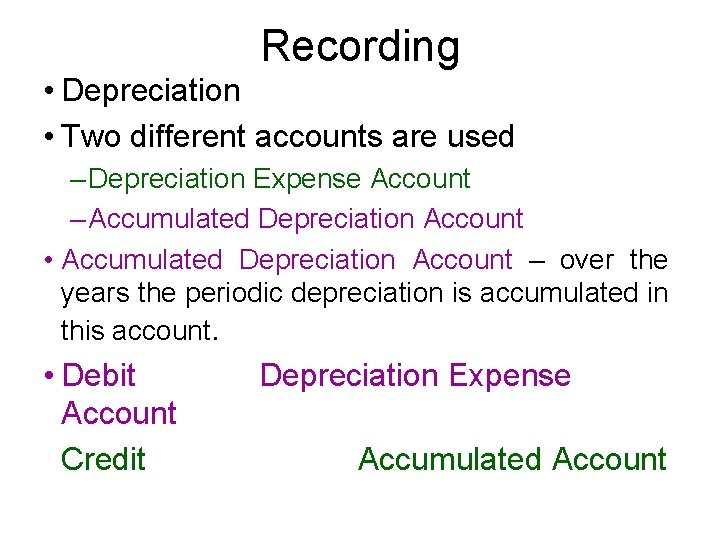
Recording • Depreciation • Two different accounts are used – Depreciation Expense Account – Accumulated Depreciation Account • Accumulated Depreciation Account – over the years the periodic depreciation is accumulated in this account. • Debit Account Credit Depreciation Expense Accumulated Account
Plant Assets Introduction to Long-Lived Assets
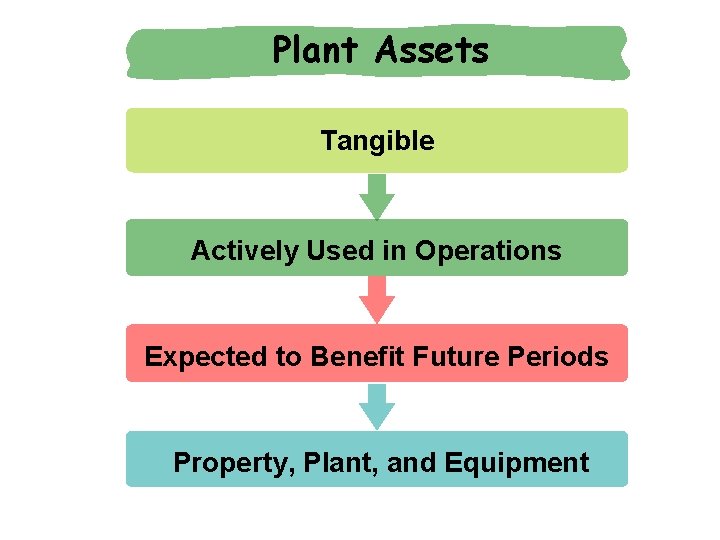
Plant Assets Tangible Actively Used in Operations Expected to Benefit Future Periods Property, Plant, and Equipment
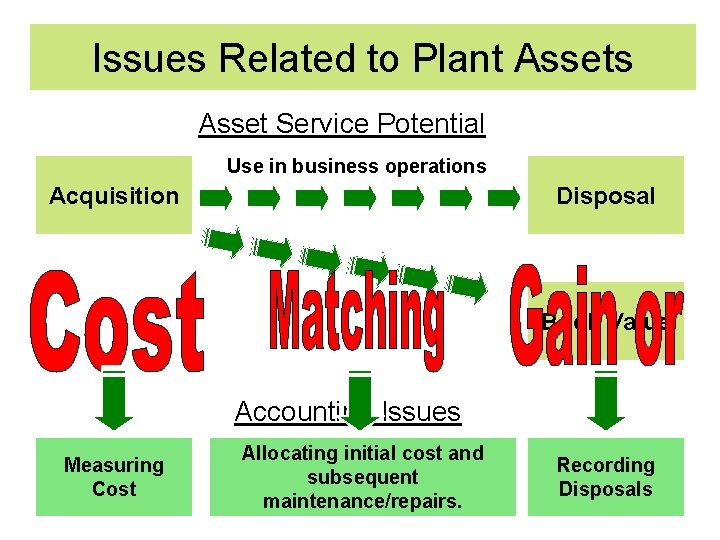
Issues Related to Plant Assets Asset Service Potential Use in business operations Acquisition Disposal Declin e servic in future e ben efits. Book Value Time Accounting Issues Measuring Cost Allocating initial cost and subsequent maintenance/repairs. Recording Disposals
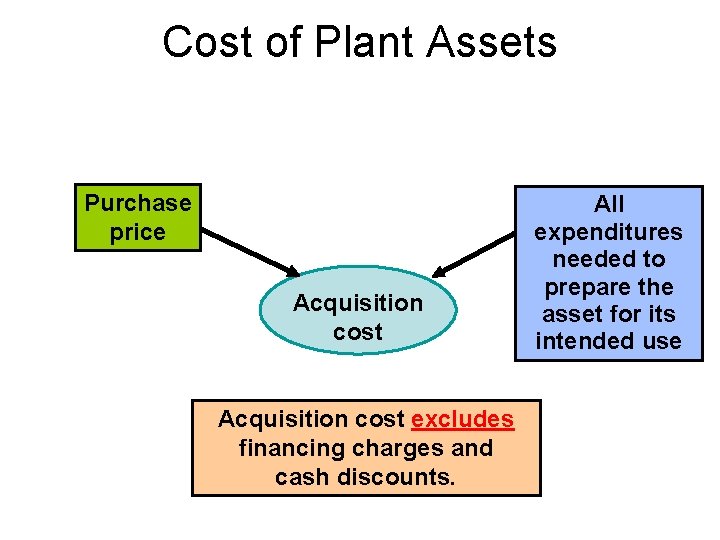
Cost of Plant Assets Purchase price Acquisition cost excludes financing charges and cash discounts. All expenditures needed to prepare the asset for its intended use
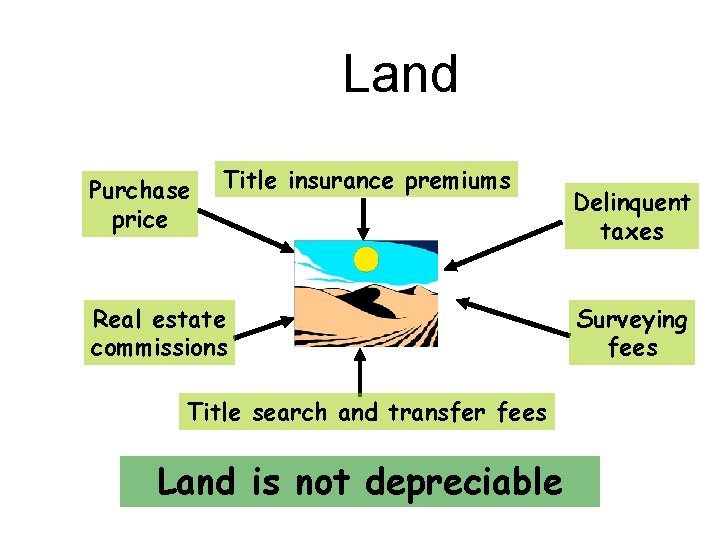
Land Purchase price Title insurance premiums Real estate commissions Title search and transfer fees Land is not depreciable Delinquent taxes Surveying fees
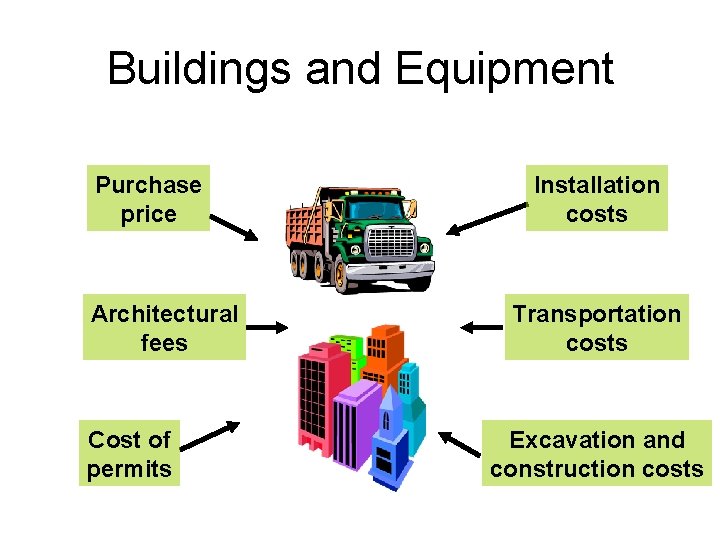
Buildings and Equipment Purchase price Architectural fees Cost of permits Installation costs Transportation costs Excavation and construction costs
Depreciation – The Concept
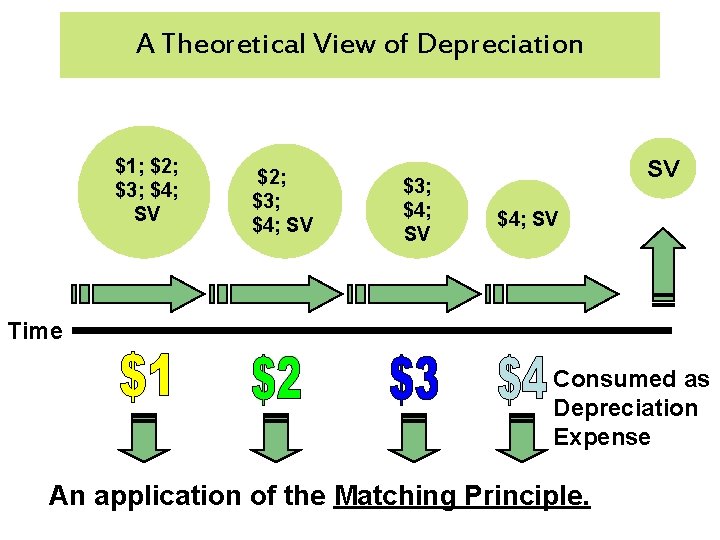
A Theoretical View of Depreciation $1; $2; $3; $4; SV SV $4; SV Time Consumed as Depreciation Expense An application of the Matching Principle.
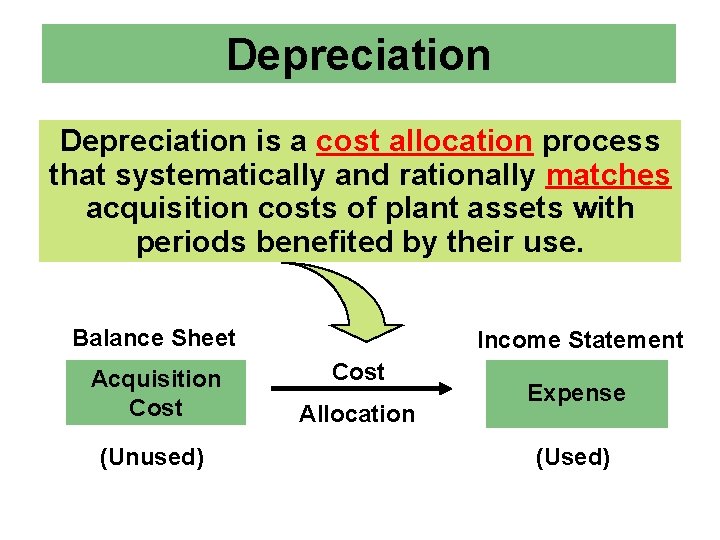
Depreciation is a cost allocation process that systematically and rationally matches acquisition costs of plant assets with periods benefited by their use. Balance Sheet Acquisition Cost (Unused) Income Statement Cost Allocation Expense (Used)
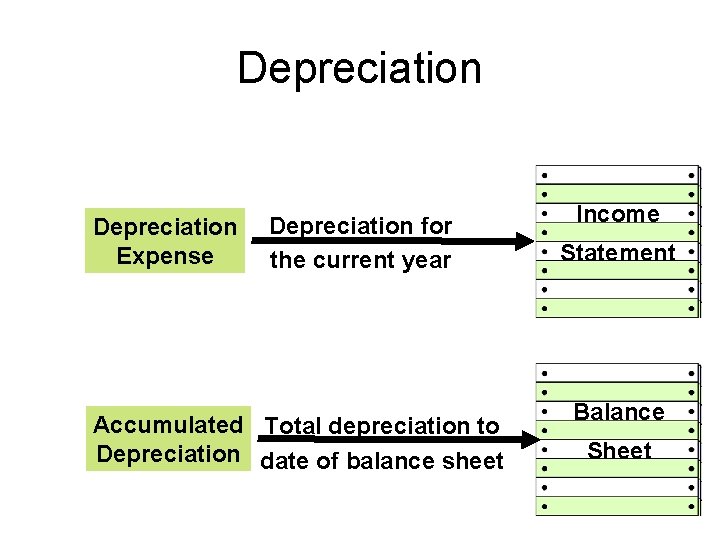
Depreciation Expense Depreciation for the current year Accumulated Total depreciation to Depreciation date of balance sheet Income Statement Balance Sheet
Factors in Computing Depreciation • The calculation of depreciation requires three amounts for each asset: • Cost. • Salvage Value. • Useful Life.
Depreciation Methods • Straight-line • Units-of-production • Declining balance • Sum-of-the-Years’ Digits
Depreciation • If an asset is expected to benefit all periods equally, – a straight-line method of depreciation would be appropriate.
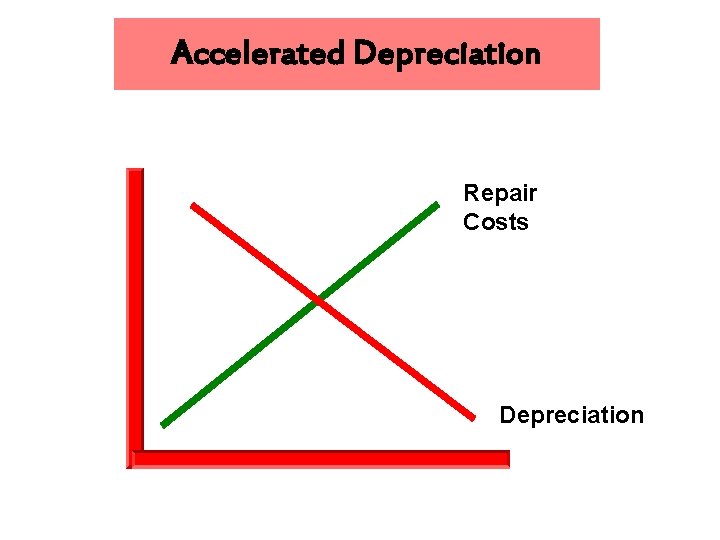
Depreciation • If more benefits are expected early in the life of an asset. . . – an accelerated method of depreciation would be appropriate.
Depreciation • If benefits are related to the output of an asset. . . – the units-of-production method depreciation would be appropriate. of
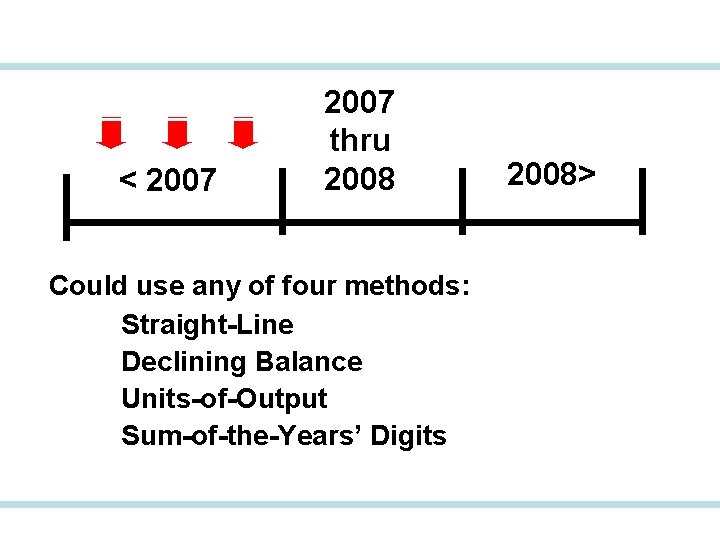
< 2007 thru 2008 Could use any of four methods: Straight-Line Declining Balance Units-of-Output Sum-of-the-Years’ Digits 2008>
Methods of Depreciation Straight-Line Method
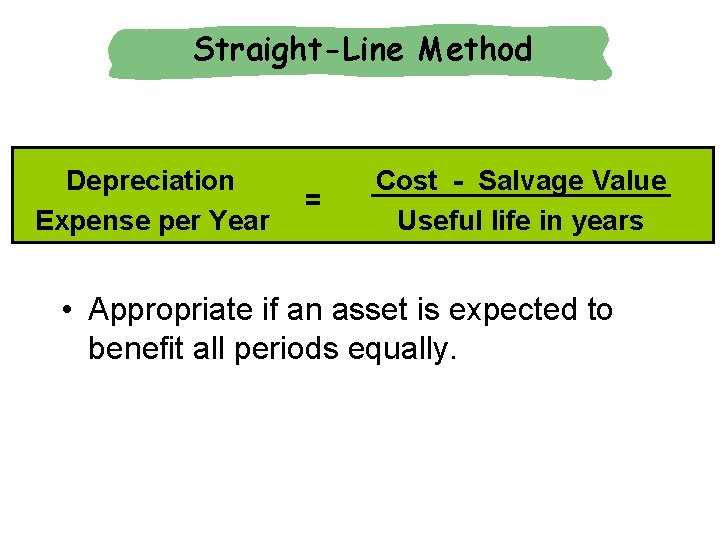
Straight-Line Method Depreciation Expense per Year = Cost - Salvage Value Useful life in years • Appropriate if an asset is expected to benefit all periods equally.
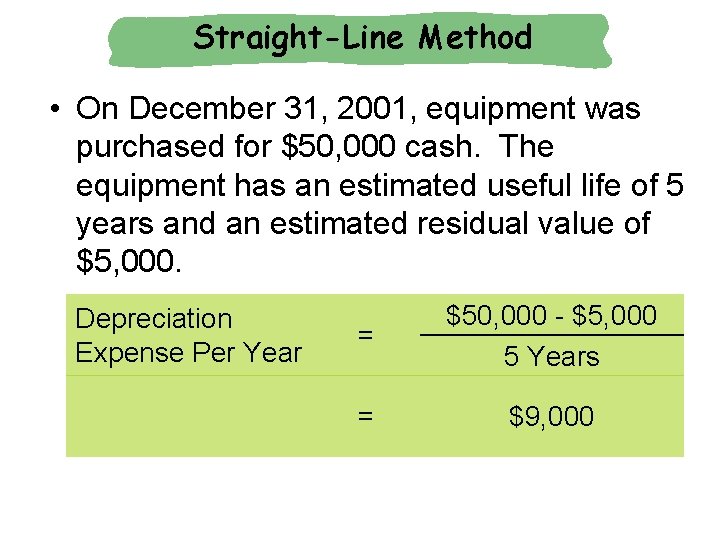
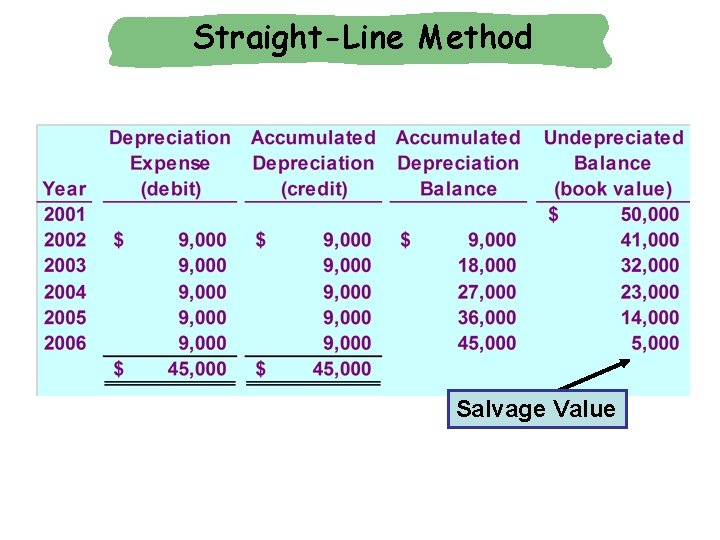
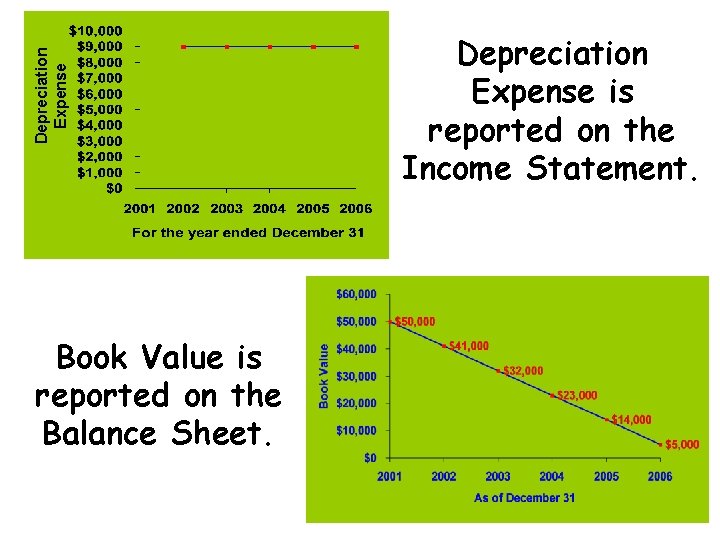
Straight-Line Method • On December 31, 2001, equipment was purchased for $50, 000 cash. The equipment has an estimated useful life of 5 years and an estimated residual value of $5, 000. Depreciation Expense Per Year = $50, 000 - $5, 000 5 Years = $9, 000
Straight-Line Method Salvage Value
Depreciation Expense Book Value is reported on the Balance Sheet. Depreciation Expense is reported on the Income Statement.
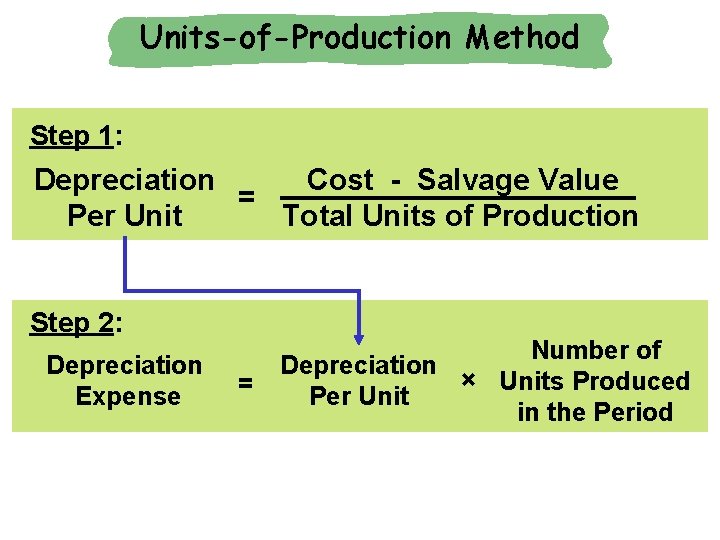
Units-of-Production Method Exh. 8. 9 Step 1: Depreciation Cost - Salvage Value = Per Unit Total Units of Production Step 2: Depreciation Expense = Number of Depreciation × Units Produced Per Unit in the Period
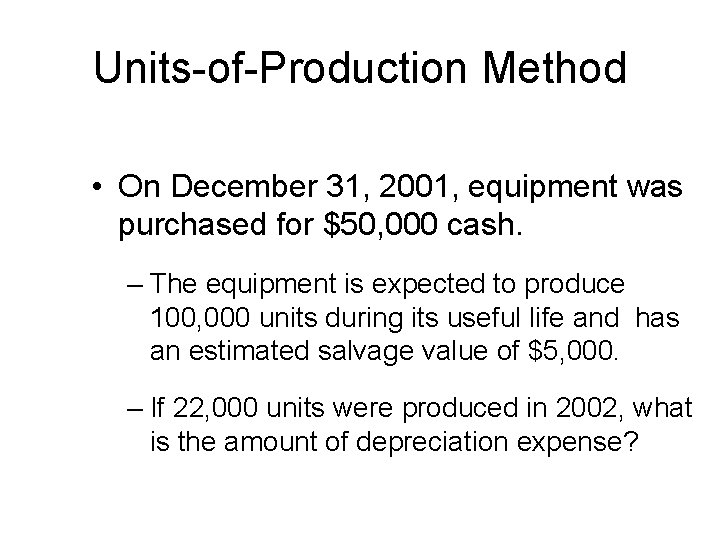
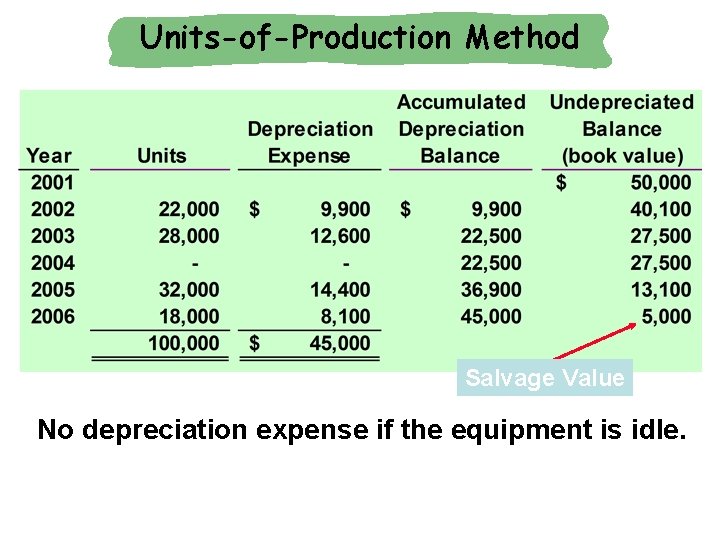
Units-of-Production Method • On December 31, 2001, equipment was purchased for $50, 000 cash. – The equipment is expected to produce 100, 000 units during its useful life and has an estimated salvage value of $5, 000. – If 22, 000 units were produced in 2002, what is the amount of depreciation expense?
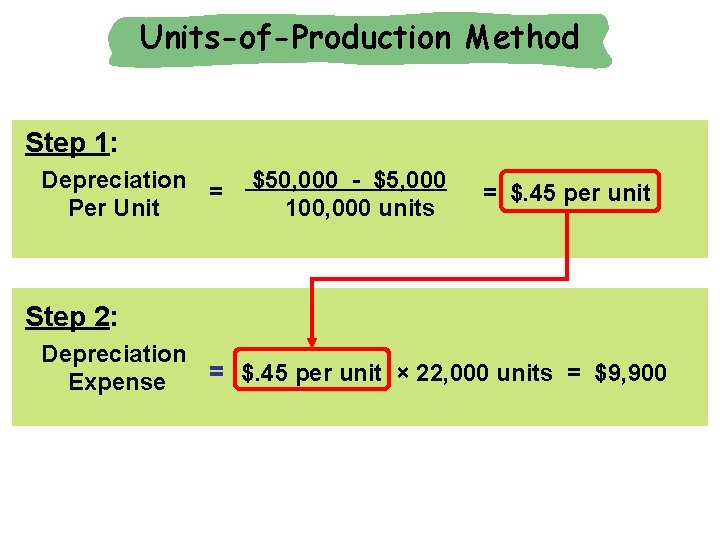
Units-of-Production Method Step 1: Depreciation = Per Unit $50, 000 - $5, 000 100, 000 units = $. 45 per unit Step 2: Depreciation = $. 45 per unit × 22, 000 units = $9, 900 Expense
Units-of-Production Method Salvage Value No depreciation expense if the equipment is idle.
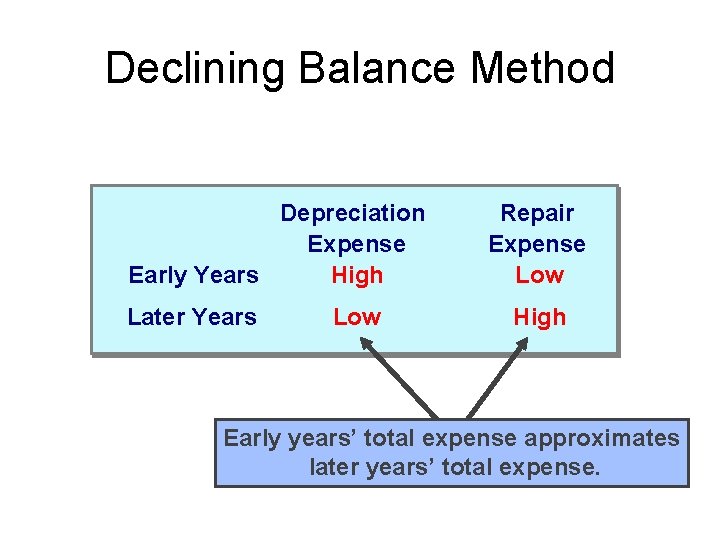
Declining Balance Method Depreciation Expense Early Years High Later Years Low Repair Expense Low High Early years’ total expense approximates later years’ total expense.
Accelerated Depreciation Repair Costs Depreciation
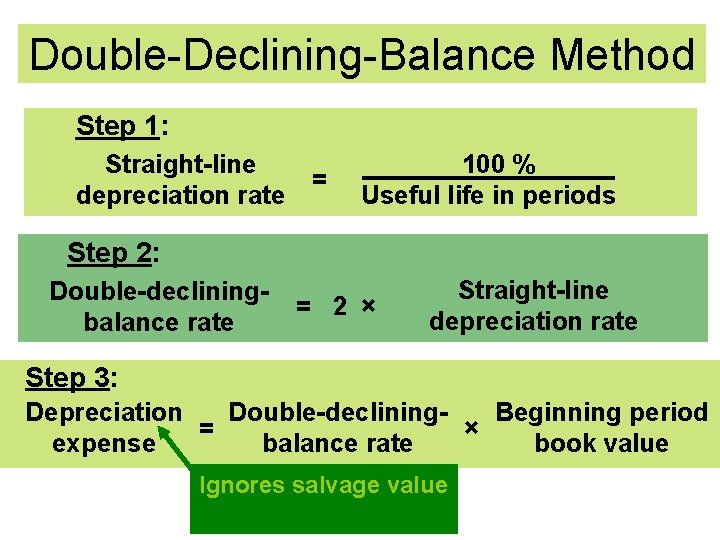
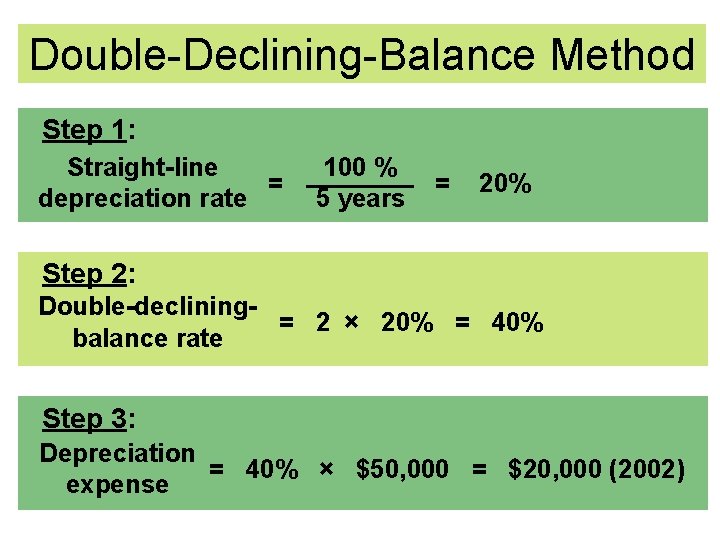
Exh. 8. 11 Double-Declining-Balance Method Step 1: Straight-line depreciation rate = 100 % Useful life in periods Step 2: Double-decliningbalance rate = 2 × Straight-line depreciation rate Step 3: Depreciation Double-declining. Beginning period = × expense balance rate book value Ignores salvage value
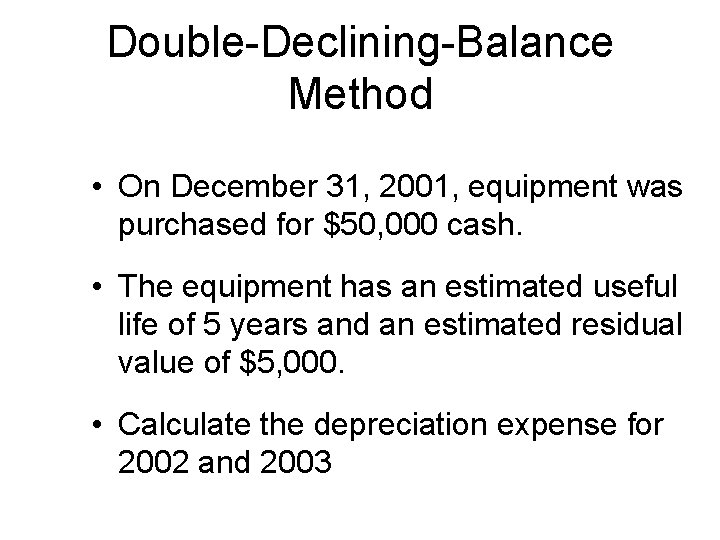
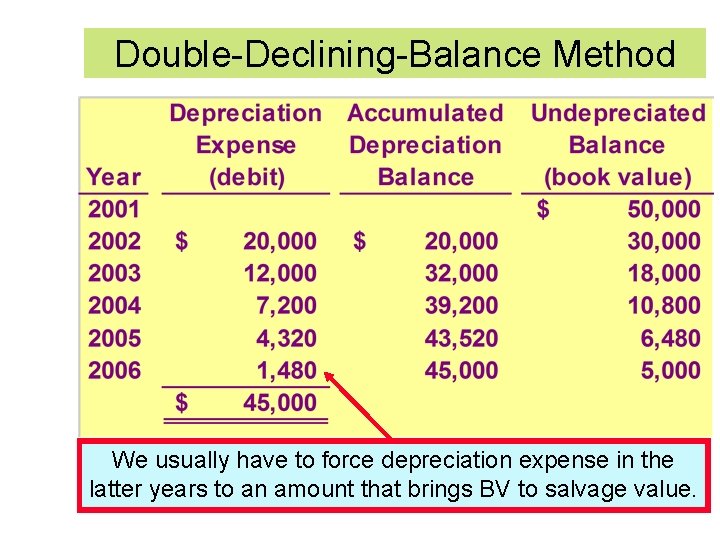
Double-Declining-Balance Method • On December 31, 2001, equipment was purchased for $50, 000 cash. • The equipment has an estimated useful life of 5 years and an estimated residual value of $5, 000. • Calculate the depreciation expense for 2002 and 2003
Double-Declining-Balance Method Step 1: Straight-line = depreciation rate 100 % 5 years = 20% Step 2: Double-declining= 2 × 20% = 40% balance rate Step 3: Depreciation = 40% × $50, 000 = $20, 000 (2002) expense
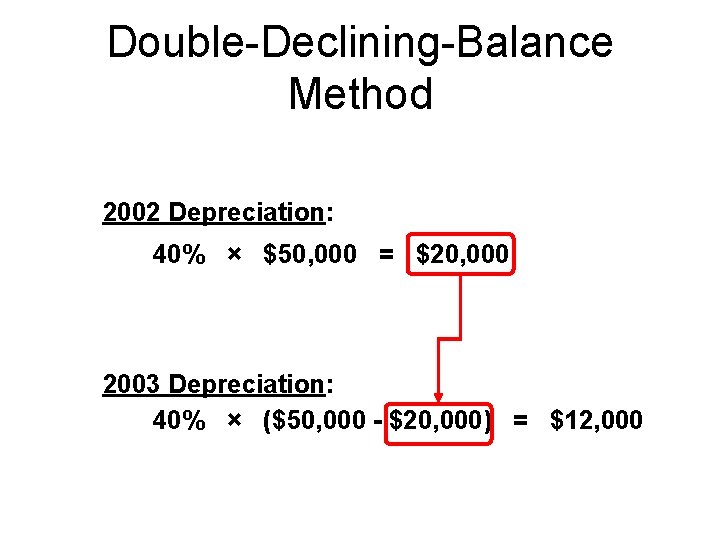
Double-Declining-Balance Method 2002 Depreciation: 40% × $50, 000 = $20, 000 2003 Depreciation: 40% × ($50, 000 - $20, 000) = $12, 000
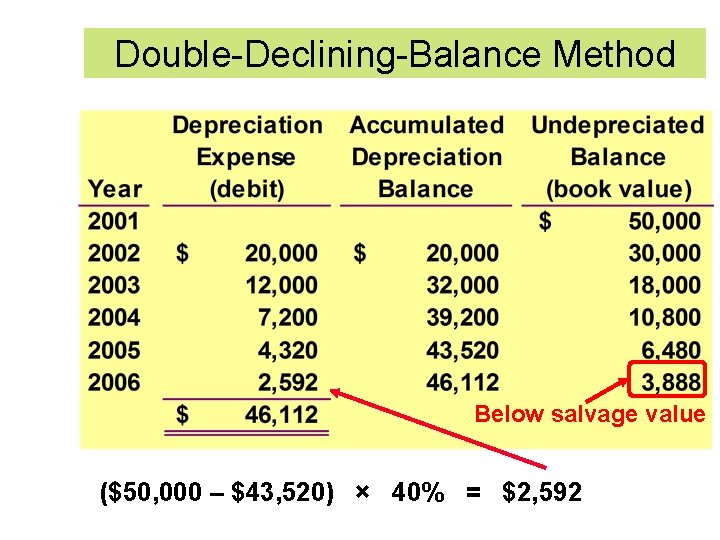
Double-Declining-Balance Method Below salvage value ($50, 000 – $43, 520) × 40% = $2, 592
Double-Declining-Balance Method We usually have to force depreciation expense in the latter years to an amount that brings BV to salvage value.
Partial Year Depreciation When a plant asset is acquired during the year, depreciation is calculated for the fraction of the year the asset is owned. June 30
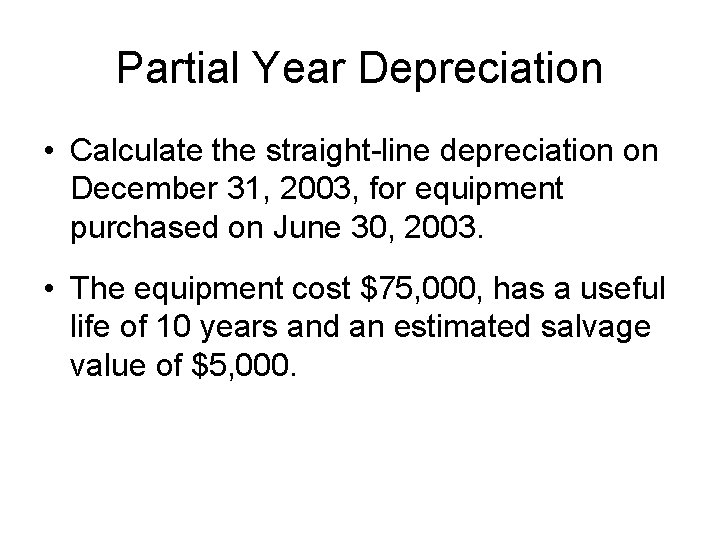
Partial Year Depreciation • Calculate the straight-line depreciation on December 31, 2003, for equipment purchased on June 30, 2003. • The equipment cost $75, 000, has a useful life of 10 years and an estimated salvage value of $5, 000.
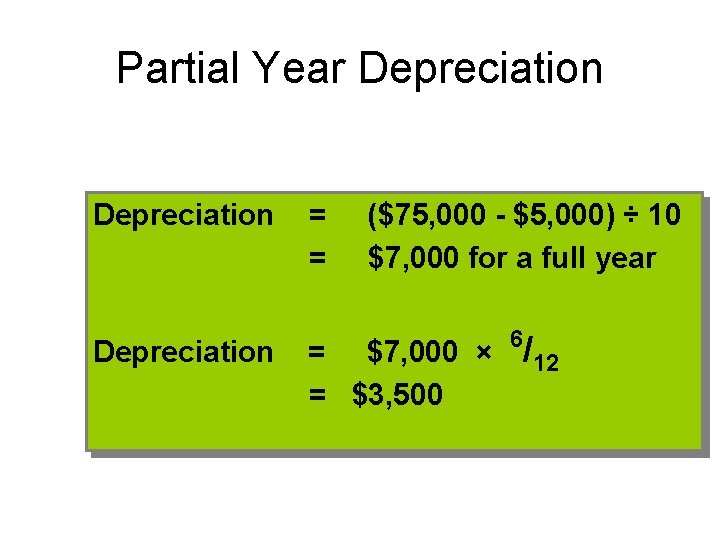
Partial Year Depreciation = = ($75, 000 - $5, 000) ÷ 10 $7, 000 for a full year = $7, 000 × = $3, 500 6 /12
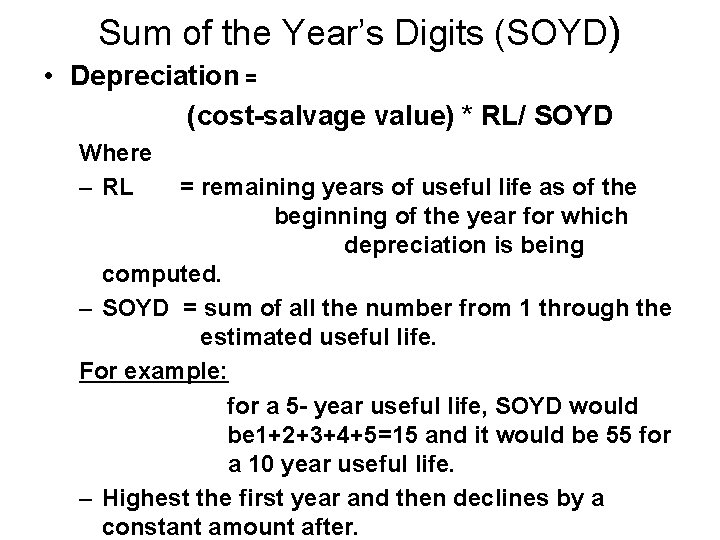
Sum of the Year’s Digits (SOYD) • Depreciation = (cost-salvage value) * RL/ SOYD Where – RL = remaining years of useful life as of the beginning of the year for which depreciation is being computed. – SOYD = sum of all the number from 1 through the estimated useful life. For example: for a 5 - year useful life, SOYD would be 1+2+3+4+5=15 and it would be 55 for a 10 year useful life. – Highest the first year and then declines by a constant amount after.