
DEPOSITORY SYSTEMS Dr Sonia Narula FOR B comCA
DEPOSITORY SYSTEMS � Dr. Sonia Narula � FOR B. com(CA) & TPP(4 th Sem) � SUBJECT: COPRPORATE LAW � UNIT -1
In order to overcome the various problems associated with dealing in physical shares, such as: � Problems of theft , fake and/or forged transfers. � Share transfer delays due to signature mismatches. � Much paperwork. � Time consuming process � Cost of transfer( stamp duty), etc. The govt. of India in 1996, enacted The Depository Act 1996 to start depository services in India.

Introduction �According to the Depositories Act 1996, Depository means: - �A company formed and registered under the Companies Act , 1956 and �Which has been granted a certificate of registration under the SEBI ACT, 1992. �The first depository was set way back in 1947 in Germany.
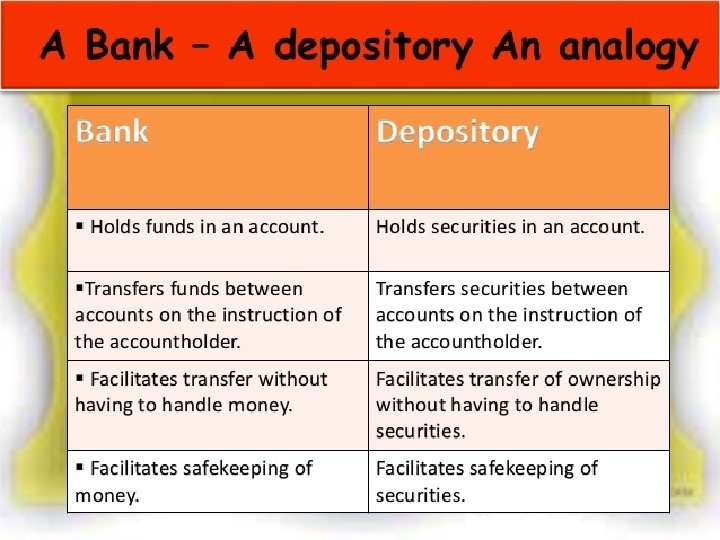
Depository System � Depository system is also known as ‘‘Scripless Trading System’’. � It is an organization which holds the securities of a shareholder in the form of electronic accounts (dematerialized form), in the same way a bank holds the money. � A custodian of its clients’ securities. � Interfaces with its investors through its agents called ‘‘depository participants’’.

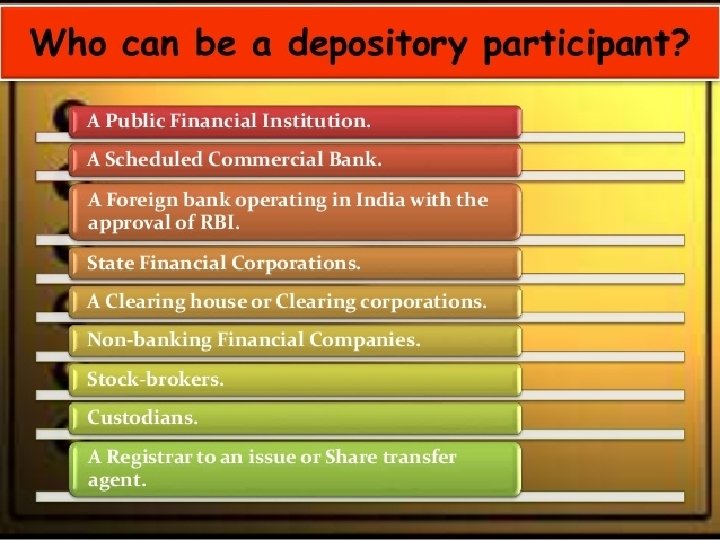
Who is a depository participant? �A depository participant (DP) is an agent of the depository who is authorized to offer depository services to all the investors. �DP is the intermediary between the investor and the depository. �A DP has to be registered with SEBI. �A DP is just like a branch of a bank. �An investor can open an account through the DP only known as demat a/c.




- Slides: 13