
Depositional Environments Lec 5 Lagoonbeach barrier system DSRG
Depositional Environments Lec. 5 Lagoon-beach barrier system DSRG Dr. EHAB M. ASSAL Damietta University
Lagoon-beach barrier system DSRG G 336
Lagoon-beach barrier system • Sediment rich • Rising sea level • Transgressive vs. Regressive systems DSRG G 336
Lagoon-beach barrier system v Morphodynamics of lagoon-beach barrier system DSRG G 336
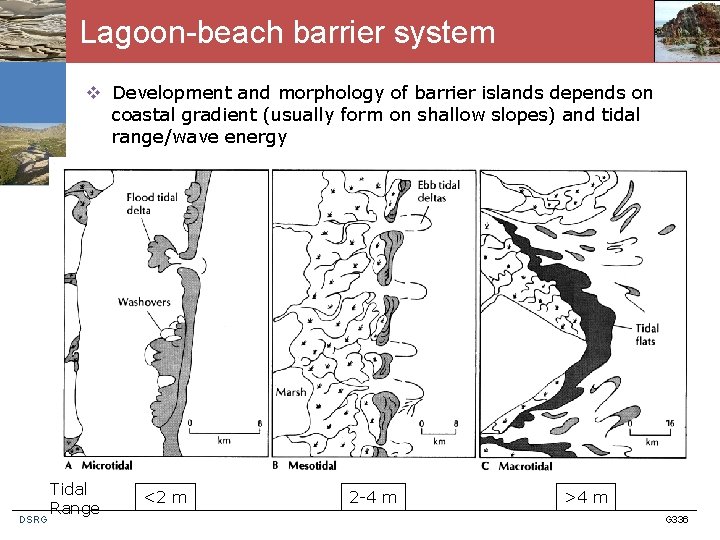
Lagoon-beach barrier system v Development and morphology of barrier islands depends on coastal gradient (usually form on shallow slopes) and tidal range/wave energy DSRG Tidal Range <2 m 2 -4 m >4 m G 336
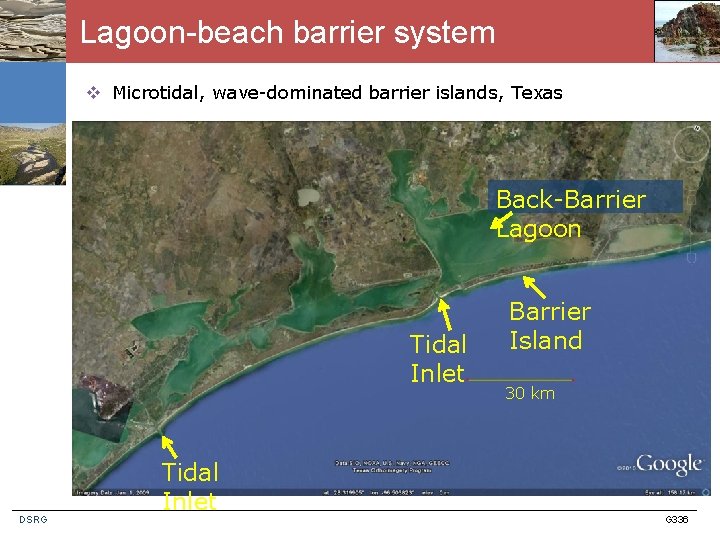
Lagoon-beach barrier system v Microtidal, wave-dominated barrier islands, Texas Back-Barrier Lagoon Tidal Inlet DSRG Tidal Inlet Barrier Island 30 km G 336
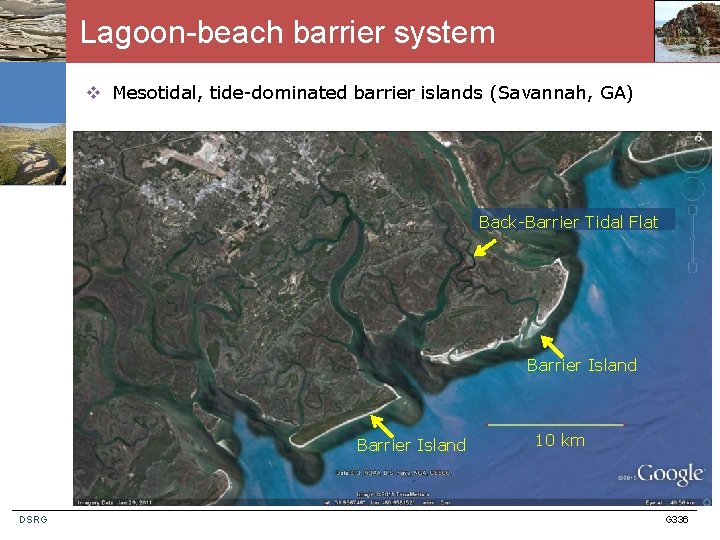
Lagoon-beach barrier system v Mesotidal, tide-dominated barrier islands (Savannah, GA) Back-Barrier Tidal Flat Barrier Island DSRG 10 km G 336

Lagoon- Beach Barrier v Meso- to macrotidal barrier islands (Brazil) Barrier Island 10 km Back-Barrier Mangrove Swamp DSRG G 336
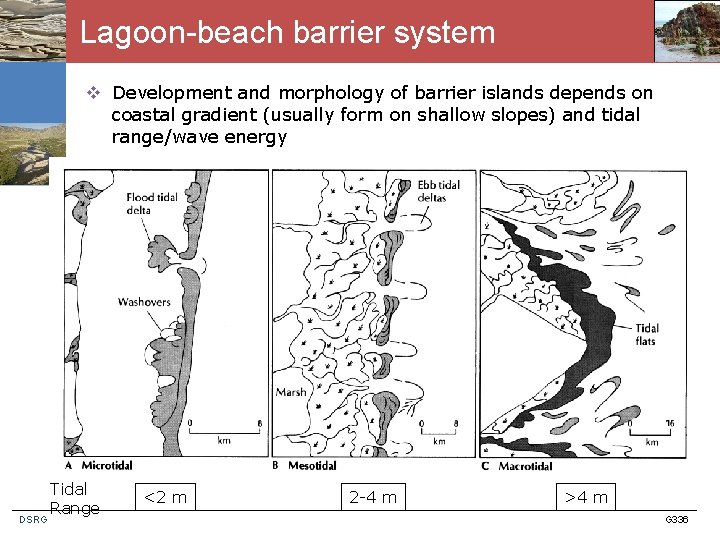
Lagoon-beach barrier system v Development and morphology of barrier islands depends on coastal gradient (usually form on shallow slopes) and tidal range/wave energy DSRG Tidal Range <2 m 2 -4 m >4 m G 336
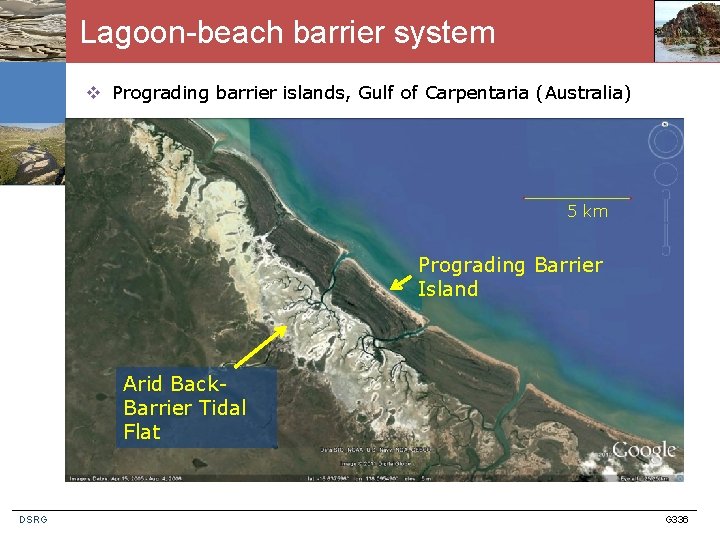
Lagoon-beach barrier system v Prograding barrier islands, Gulf of Carpentaria (Australia) 5 km Prograding Barrier Island Arid Back. Barrier Tidal Flat DSRG G 336
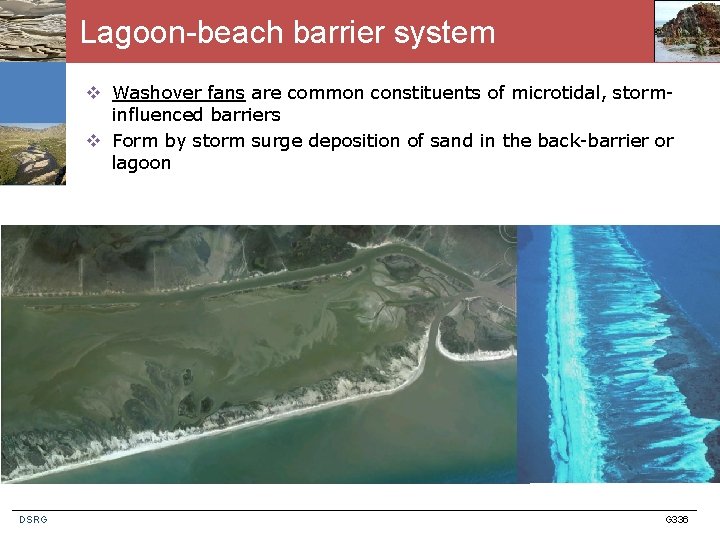
Lagoon-beach barrier system v Washover fans are common constituents of microtidal, storminfluenced barriers v Form by storm surge deposition of sand in the back-barrier or lagoon DSRG G 336
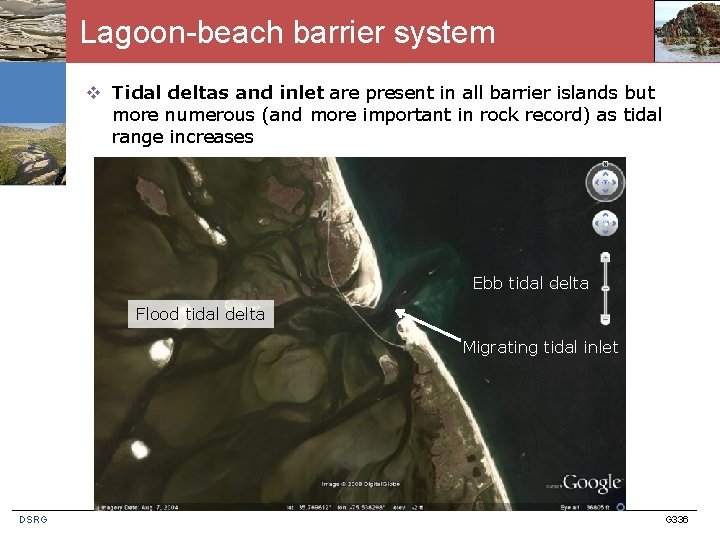
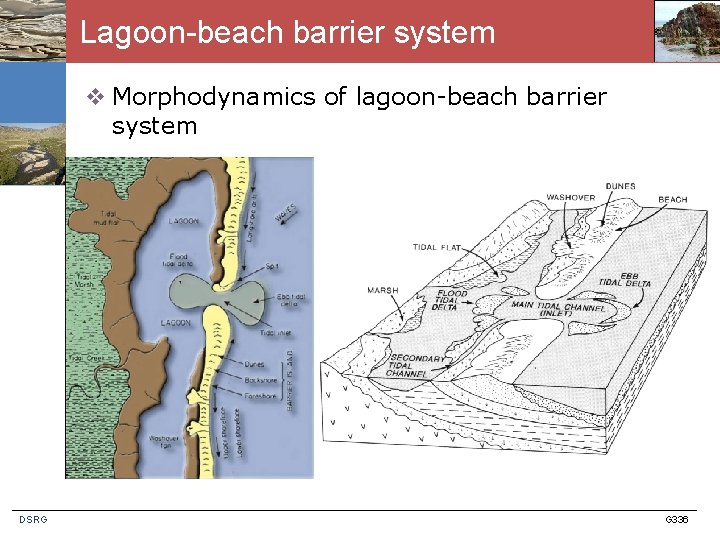
Lagoon-beach barrier system v Tidal deltas and inlet are present in all barrier islands but more numerous (and more important in rock record) as tidal range increases Ebb tidal delta Flood tidal delta Migrating tidal inlet DSRG G 336
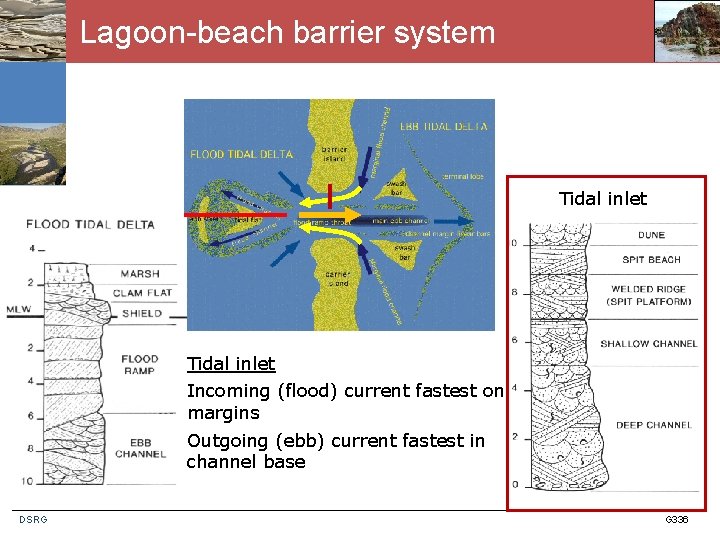
Lagoon-beach barrier system Tidal inlet Incoming (flood) current fastest on margins Outgoing (ebb) current fastest in channel base DSRG G 336
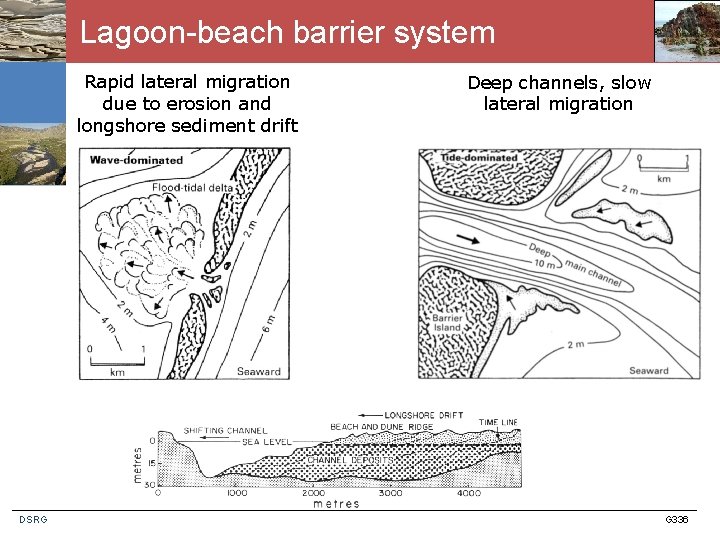
Lagoon-beach barrier system Rapid lateral migration due to erosion and longshore sediment drift DSRG Deep channels, slow lateral migration G 336
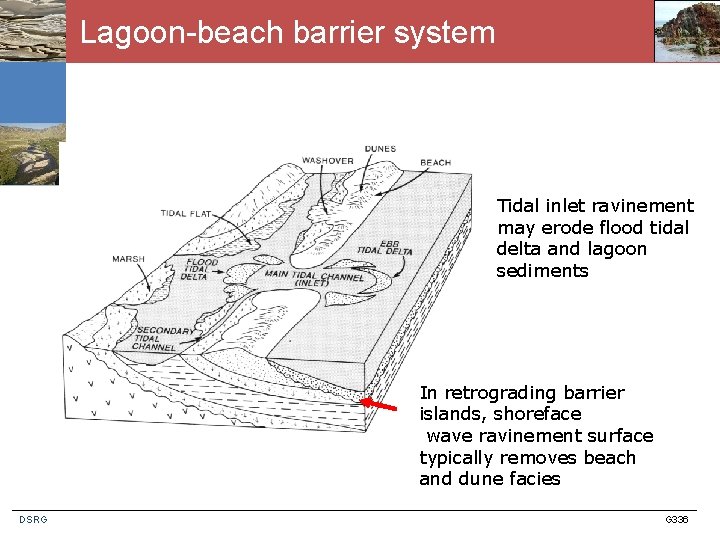
Lagoon-beach barrier system Tidal inlet ravinement may erode flood tidal delta and lagoon sediments In retrograding barrier islands, shoreface wave ravinement surface typically removes beach and dune facies DSRG G 336
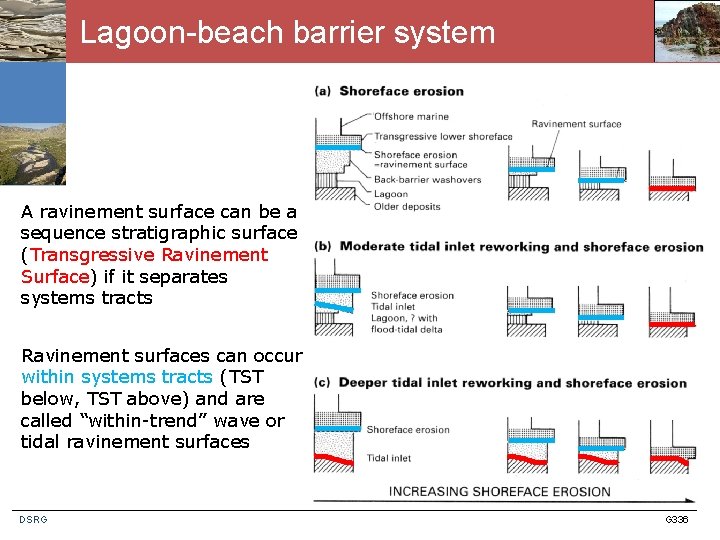
Lagoon-beach barrier system A ravinement surface can be a sequence stratigraphic surface (Transgressive Ravinement Surface) if it separates systems tracts Ravinement surfaces can occur within systems tracts (TST below, TST above) and are called “within-trend” wave or tidal ravinement surfaces DSRG G 336
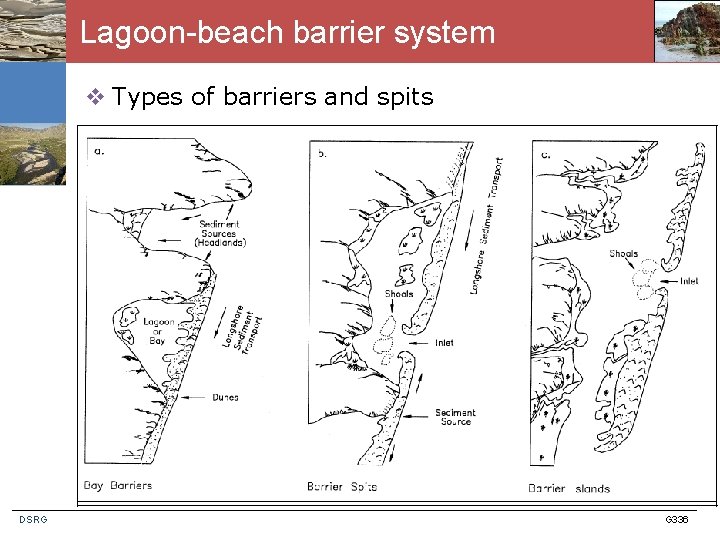
Lagoon-beach barrier system v Types of barriers and spits DSRG G 336
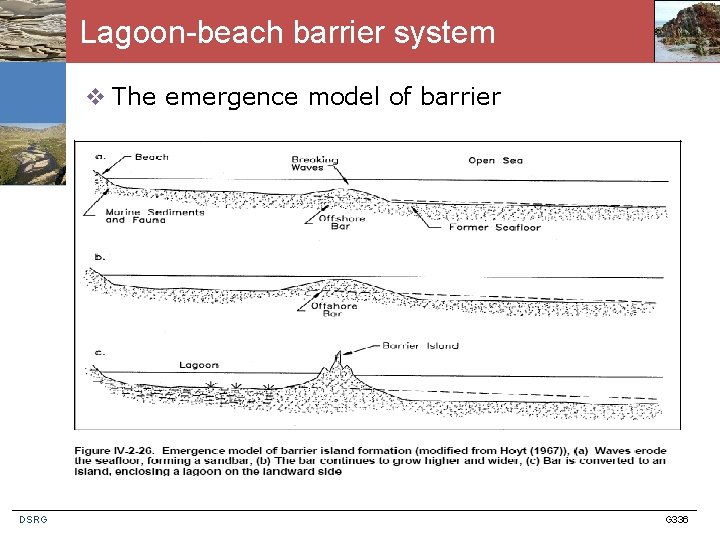
Lagoon-beach barrier system v The emergence model of barrier DSRG G 336
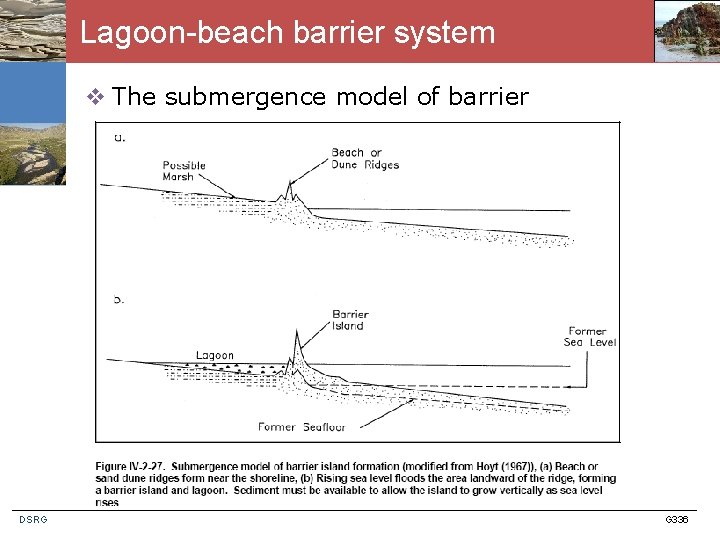
Lagoon-beach barrier system v The submergence model of barrier DSRG G 336
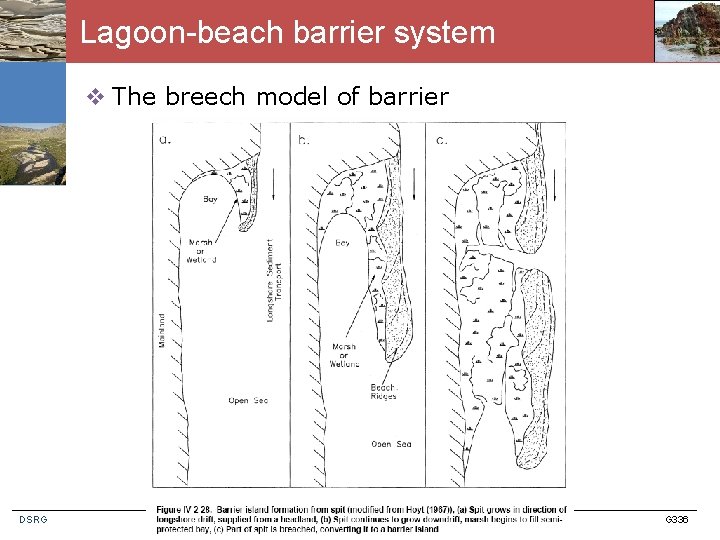
Lagoon-beach barrier system v The breech model of barrier DSRG G 336
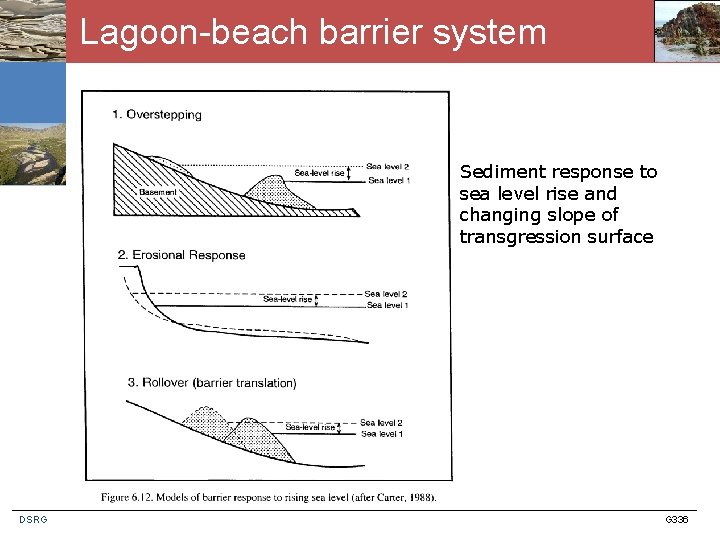
Lagoon-beach barrier system Sediment response to sea level rise and changing slope of transgression surface DSRG G 336
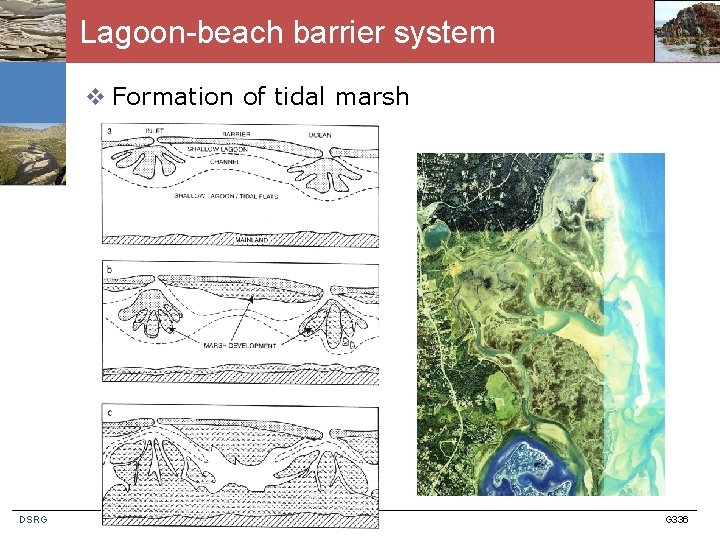
Lagoon-beach barrier system v Formation of tidal marsh DSRG G 336
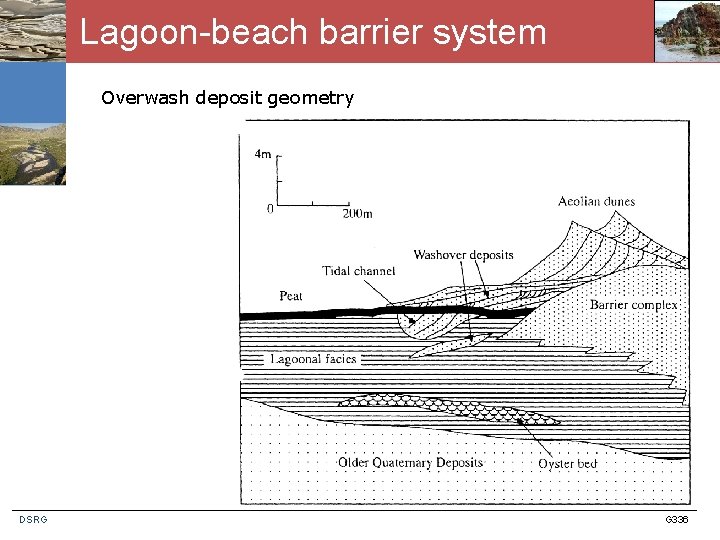
Lagoon-beach barrier system Overwash deposit geometry DSRG G 336
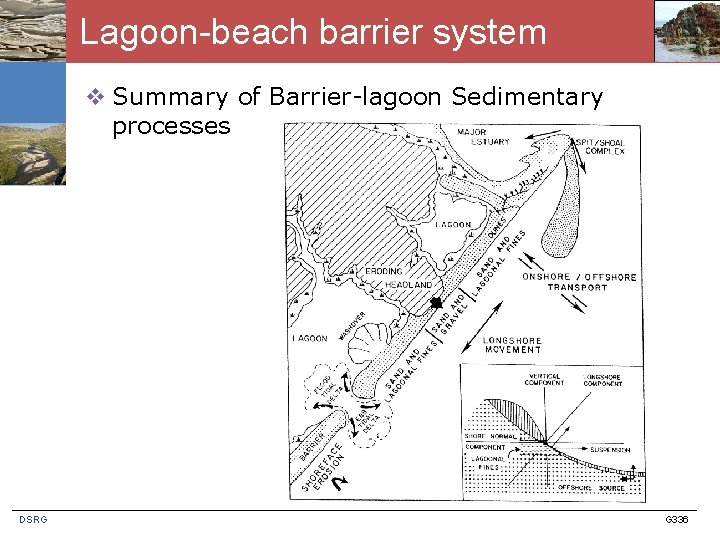
Lagoon-beach barrier system v Summary of Barrier-lagoon Sedimentary processes DSRG G 336
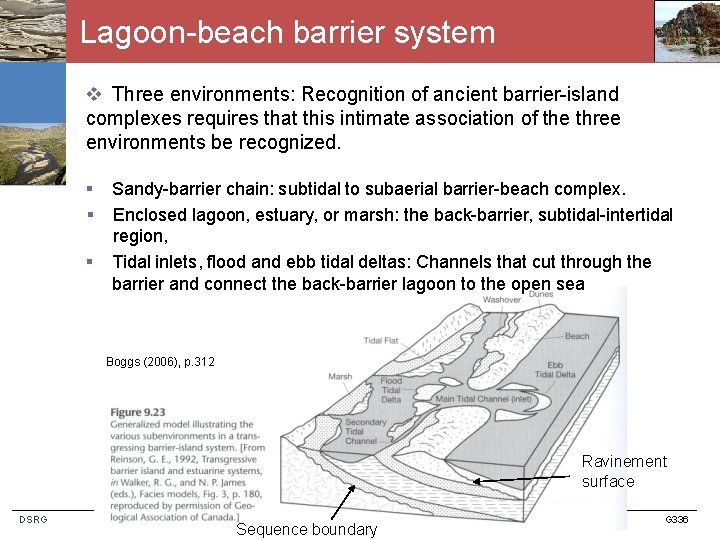
Lagoon-beach barrier system v Three environments: Recognition of ancient barrier-island complexes requires that this intimate association of the three environments be recognized. § Sandy-barrier chain: subtidal to subaerial barrier-beach complex. § Enclosed lagoon, estuary, or marsh: the back-barrier, subtidal-intertidal region, § Tidal inlets, flood and ebb tidal deltas: Channels that cut through the barrier and connect the back-barrier lagoon to the open sea Boggs (2006), p. 312 Ravinement surface DSRG Sequence boundary G 336
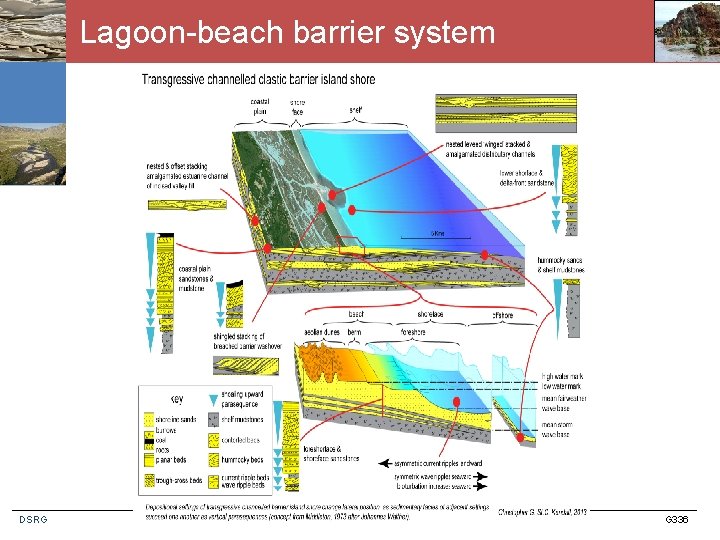
Lagoon-beach barrier system v Washover fan: occur where storm-driven waves cut through and overtop barriers, washing lobes of sandy beach sediment into the back-barrier lagoon. v Sediment: consists dominantly of fine- to medium-scale landward-dipping foreset bedding. v Tidal-channel: occur where tidal currents cut through barriers into inner lagoons. Sediments: dominantly of sand, commonly have an erosional base marked by coarse lag sands and gravels; bidirectional large- to small-scale planar and trough cross-beds that may display a general fining-upward textural trend. v Tidal-delta: form on both the lagoonal side of the barrier (flood-tidal delta) and the seaward side of the barrier (ebb-tidal delta). Sediments: dominantly of sands attaining a vertical thickness of tens of meters; highly varied succession of planar and trough cross beds that may dip in either a landward or a seaward direction. v Tidal-flat: form along the margins of the mainland coast and the back of the barrier. Sediments: grade from fine- to medium-grained ripple-laminated sands in lower areas of the tidal flats through flaser- and lenticular-bedded fine sand mud in midtidal flats to layered muds in higher parts of the flats. DSRG G 336
Lagoon-beach barrier system DSRG G 336
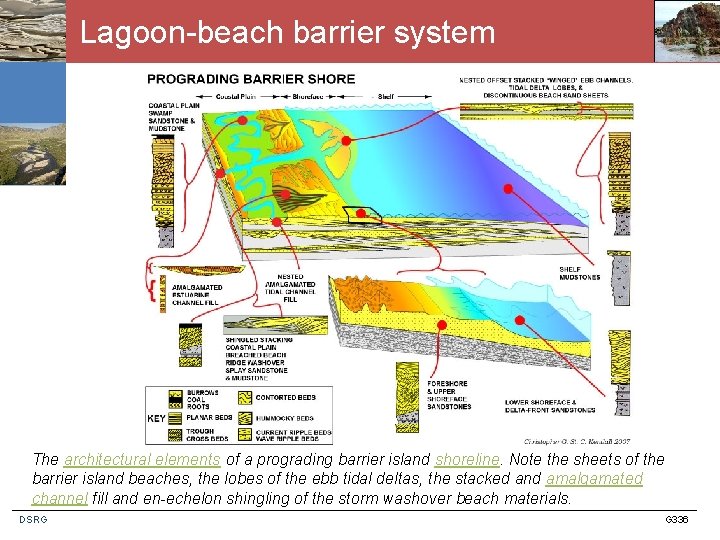
Lagoon-beach barrier system The architectural elements of a prograding barrier island shoreline. Note the sheets of the barrier island beaches, the lobes of the ebb tidal deltas, the stacked and amalgamated channel fill and en-echelon shingling of the storm washover beach materials. DSRG G 336
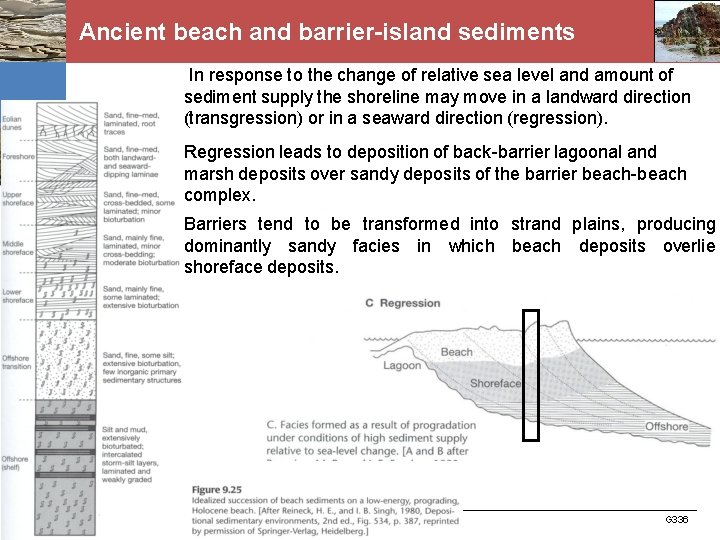
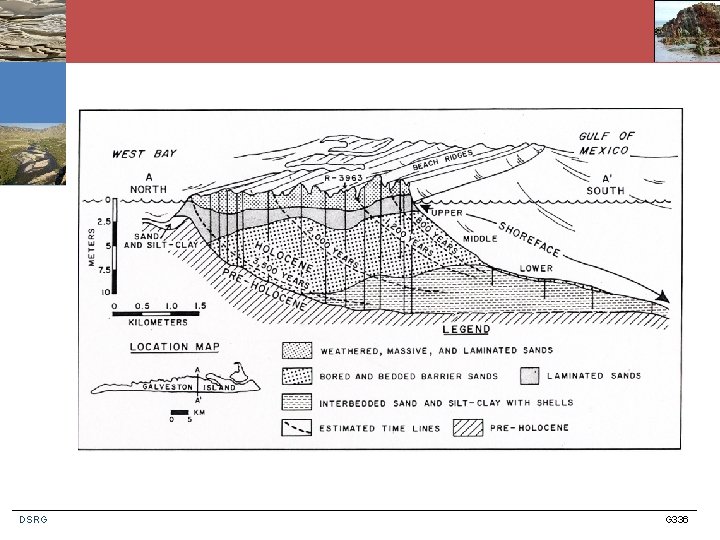
Ancient beach and barrier-island sediments In response to the change of relative sea level and amount of sediment supply the shoreline may move in a landward direction (transgression) or in a seaward direction (regression). Regression leads to deposition of back-barrier lagoonal and marsh deposits over sandy deposits of the barrier beach-beach complex. Barriers tend to be transformed into strand plains, producing dominantly sandy facies in which beach deposits overlie shoreface deposits. DSRG G 336
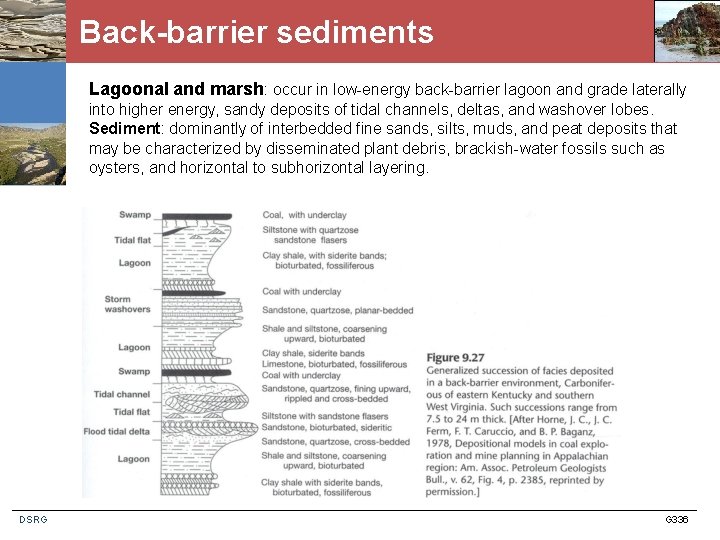
Back-barrier sediments Lagoonal and marsh: occur in low-energy back-barrier lagoon and grade laterally into higher energy, sandy deposits of tidal channels, deltas, and washover lobes. Sediment: dominantly of interbedded fine sands, silts, muds, and peat deposits that may be characterized by disseminated plant debris, brackish-water fossils such as oysters, and horizontal to subhorizontal layering. DSRG G 336
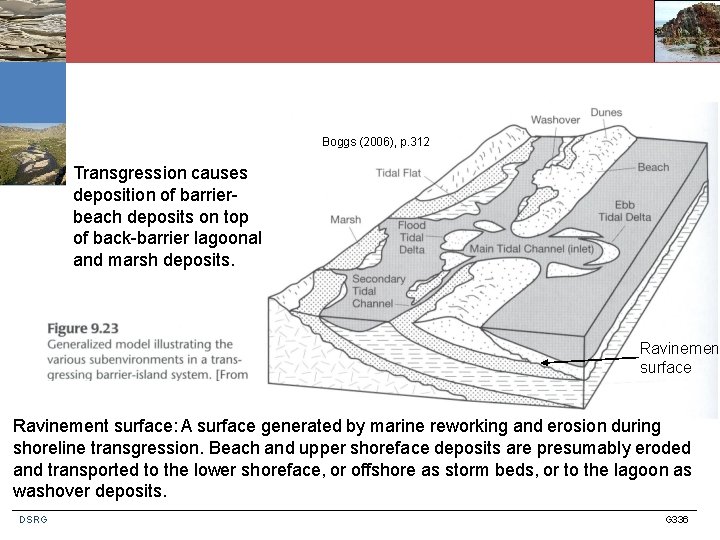
Boggs (2006), p. 312 Transgression causes deposition of barrierbeach deposits on top of back-barrier lagoonal and marsh deposits. Ravinemen surface Ravinement surface: A surface generated by marine reworking and erosion during shoreline transgression. Beach and upper shoreface deposits are presumably eroded and transported to the lower shoreface, or offshore as storm beds, or to the lagoon as washover deposits. DSRG G 336
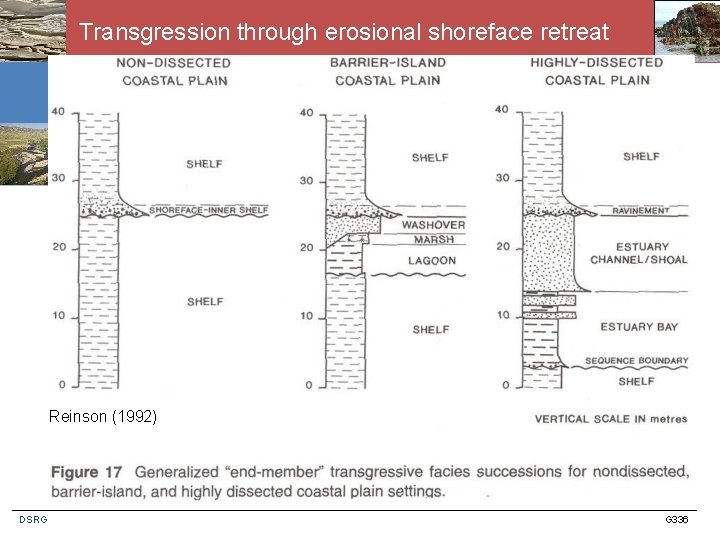
Transgression through erosional shoreface retreat Reinson (1992) DSRG G 336
DSRG G 336
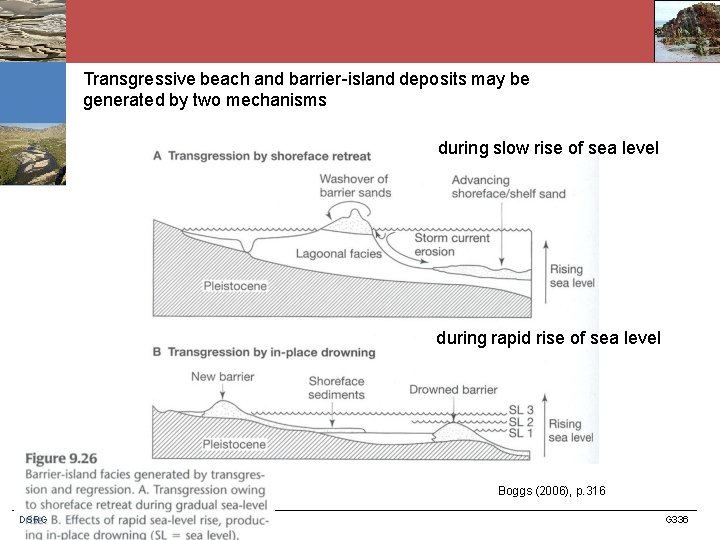
Transgressive beach and barrier-island deposits may be generated by two mechanisms during slow rise of sea level during rapid rise of sea level Boggs (2006), p. 316 DSRG G 336
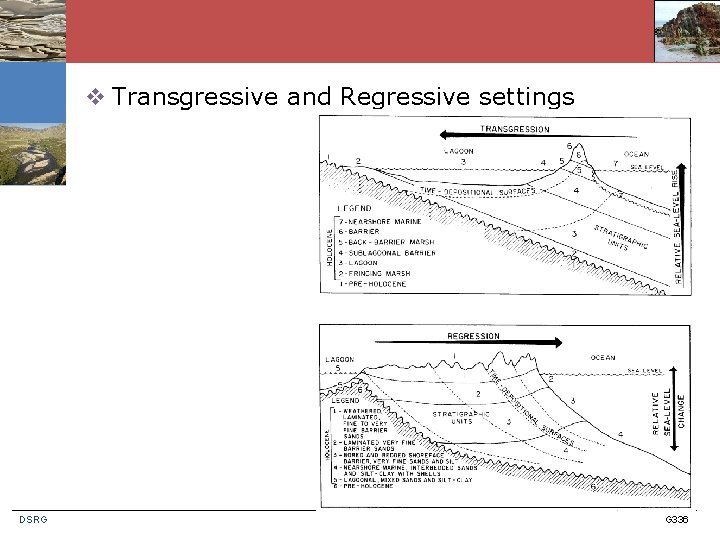
v Transgressive and Regressive settings DSRG G 336
DSRG G 336

DSRG www. du. eg/faculty/sci
- Slides: 37