
Depositional Coasts Deposition of sediments outpaces erosion and
- Slides: 8
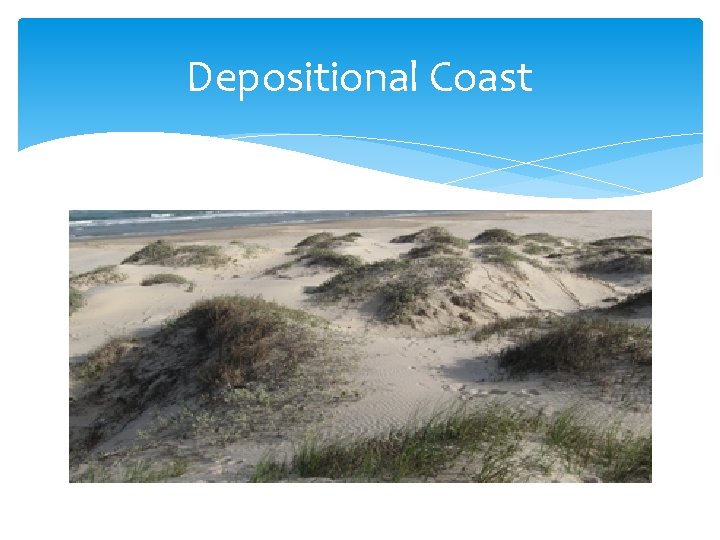
Depositional Coasts Deposition of sediments outpaces erosion and forms sandy beaches. Beach: zone of loose particles that covers part or all of a shore. U. S. has about 11, 000 miles of beaches (30% of shoreline). Beaches form at calm spots between headlands, shores sheltered by barrier islands (Outer Banks/Sandbridge), or places with moderate surf.
Depositional Coast
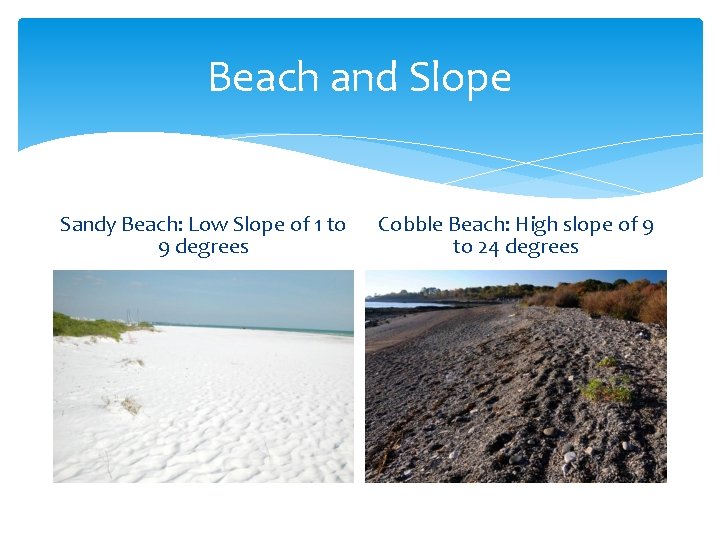
Composition and Slope of Beaches Boulders Cobbles Pebbles Gravel Sand Silt Shells Corals Glass/Trash Flatter the beach, the finer the grains. Due to porosity. Sandy beaches have low porosity so water easily washes in and out bringing equal amounts of sand in and backwashed back to sea. Cobble beaches have high porosity and water sinks as it comes in. This deposits material but makes it difficult to bring material back out.
Beach and Slope Sandy Beach: Low Slope of 1 to 9 degrees Cobble Beach: High slope of 9 to 24 degrees
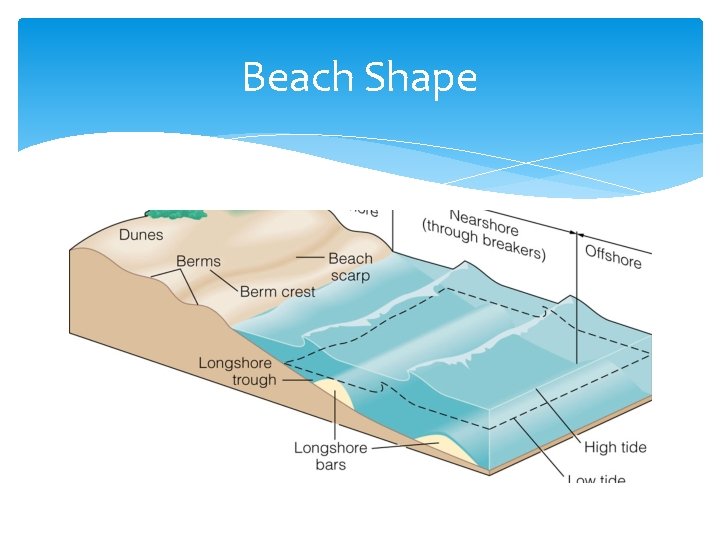
Beach Shape
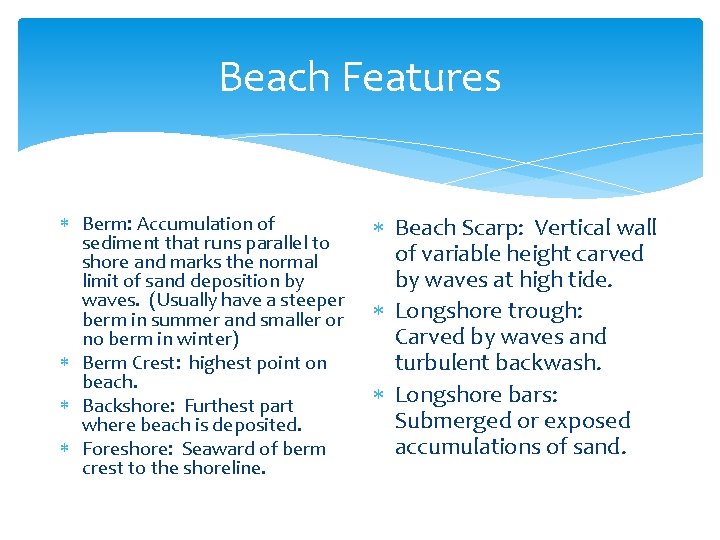
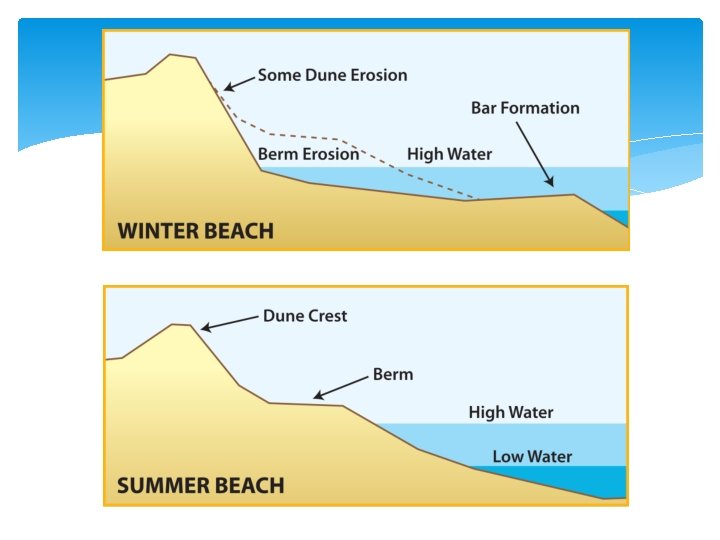
Beach Features Berm: Accumulation of sediment that runs parallel to shore and marks the normal limit of sand deposition by waves. (Usually have a steeper berm in summer and smaller or no berm in winter) Berm Crest: highest point on beach. Backshore: Furthest part where beach is deposited. Foreshore: Seaward of berm crest to the shoreline. Beach Scarp: Vertical wall of variable height carved by waves at high tide. Longshore trough: Carved by waves and turbulent backwash. Longshore bars: Submerged or exposed accumulations of sand.
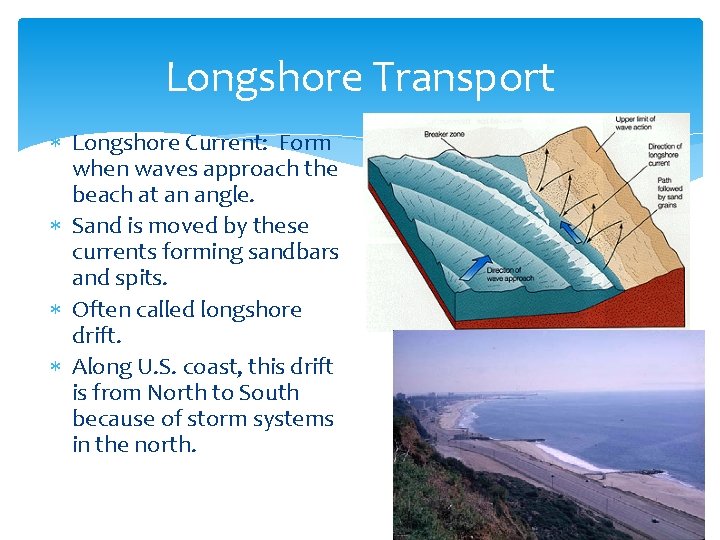
Longshore Transport Longshore Current: Form when waves approach the beach at an angle. Sand is moved by these currents forming sandbars and spits. Often called longshore drift. Along U. S. coast, this drift is from North to South because of storm systems in the north.