
Deposition Weathering and Erosion Weathering What Caused This
- Slides: 52
Deposition, Weathering, and Erosion
Weathering
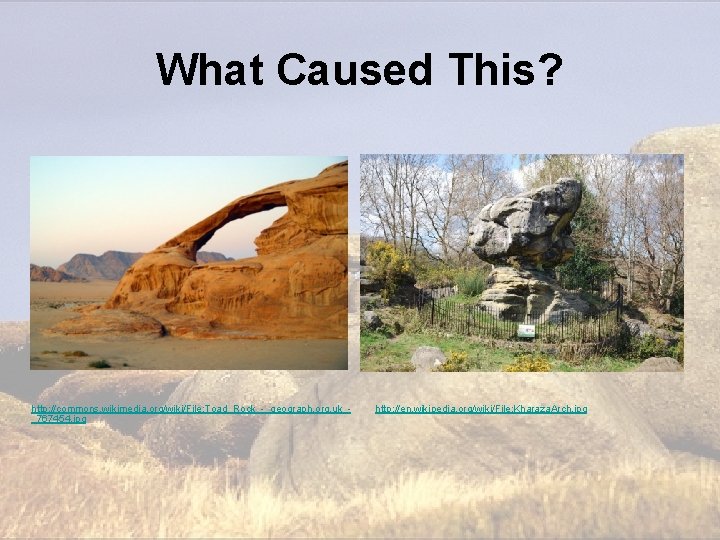
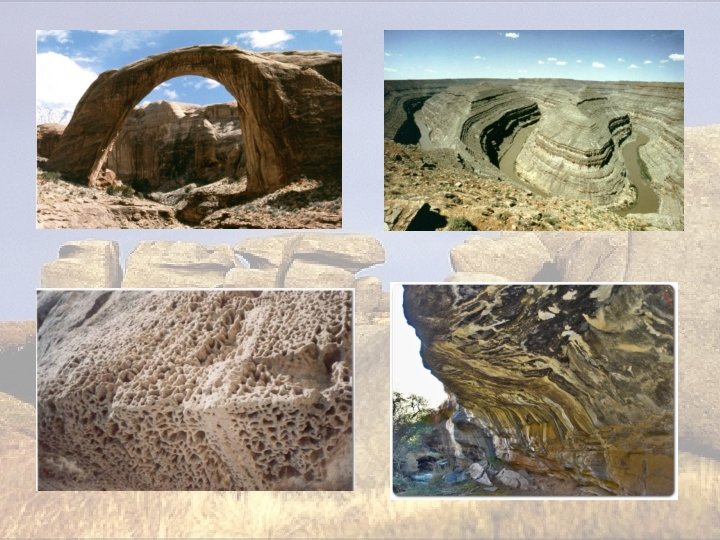
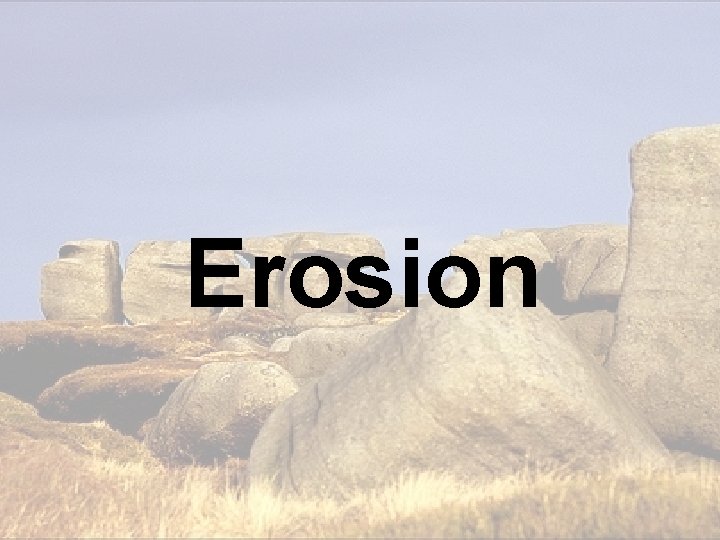
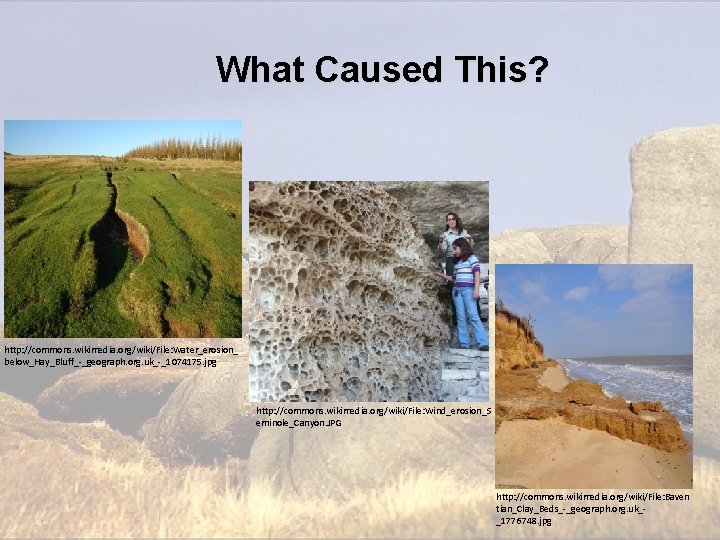
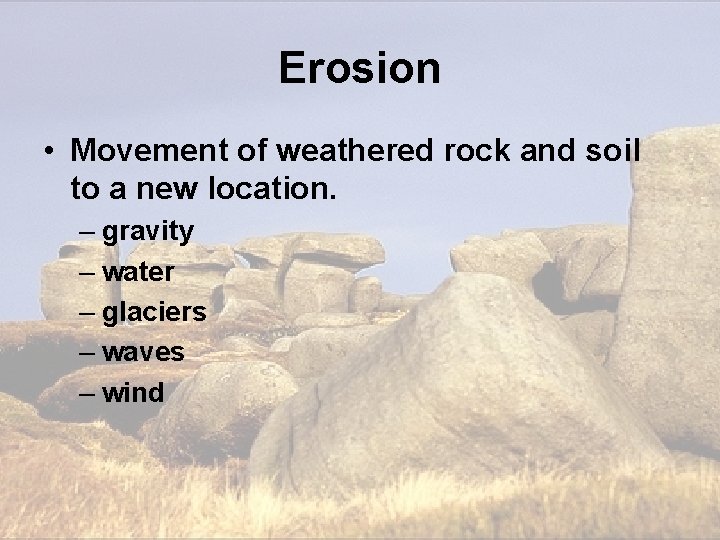
What Caused This? http: //commons. wikimedia. org/wiki/File: Toad_Rock_-_geograph. org. uk__767454. jpg http: //en. wikipedia. org/wiki/File: Kharaza. Arch. jpg
Effects of Weathering • Weathering is a process that breaks down rock and other substances at Earth’s surface – creates soil – softer rock weathers faster – weathering is fastest in hot and wet climates
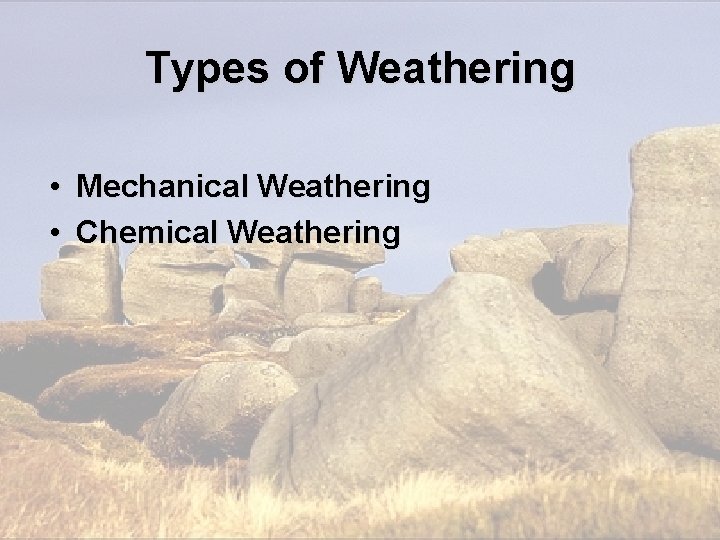
Types of Weathering • Mechanical Weathering • Chemical Weathering
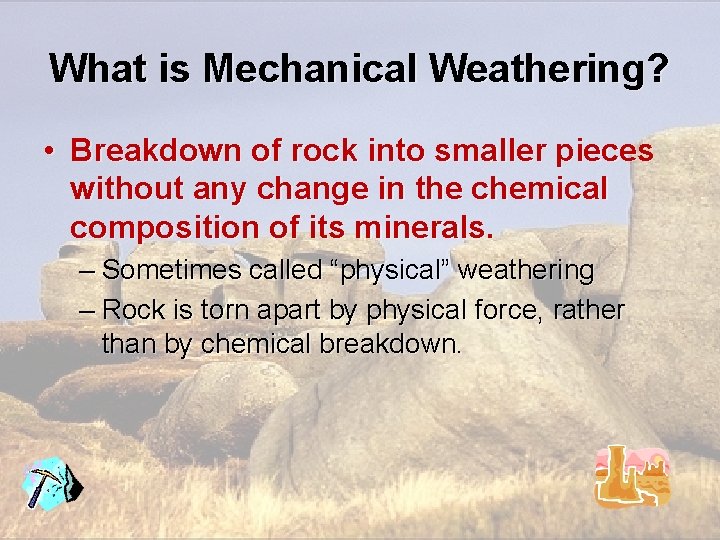
What is Mechanical Weathering? • Breakdown of rock into smaller pieces without any change in the chemical composition of its minerals. – Sometimes called “physical” weathering – Rock is torn apart by physical force, rather than by chemical breakdown.
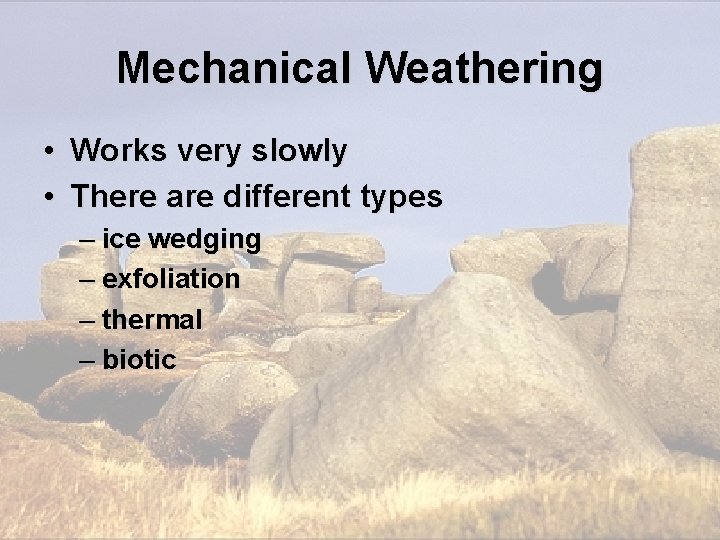
Mechanical Weathering • Works very slowly • There are different types – ice wedging – exfoliation – thermal – biotic
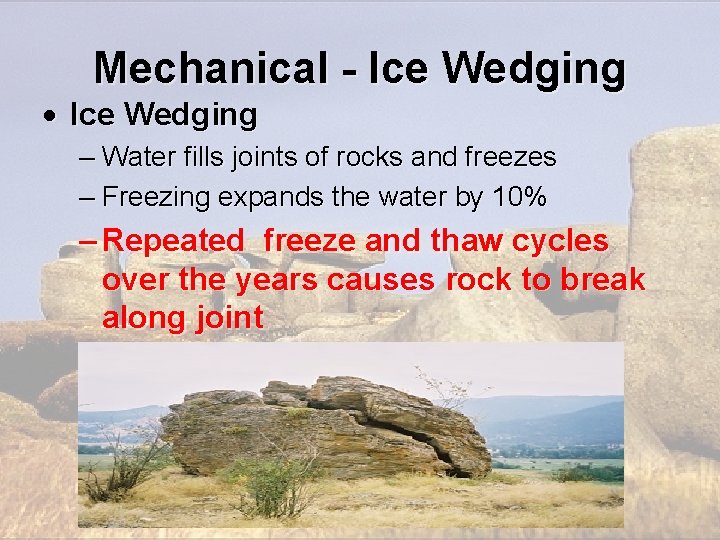
Mechanical - Ice Wedging – Water fills joints of rocks and freezes – Freezing expands the water by 10% – Repeated freeze and thaw cycles over the years causes rock to break along joint
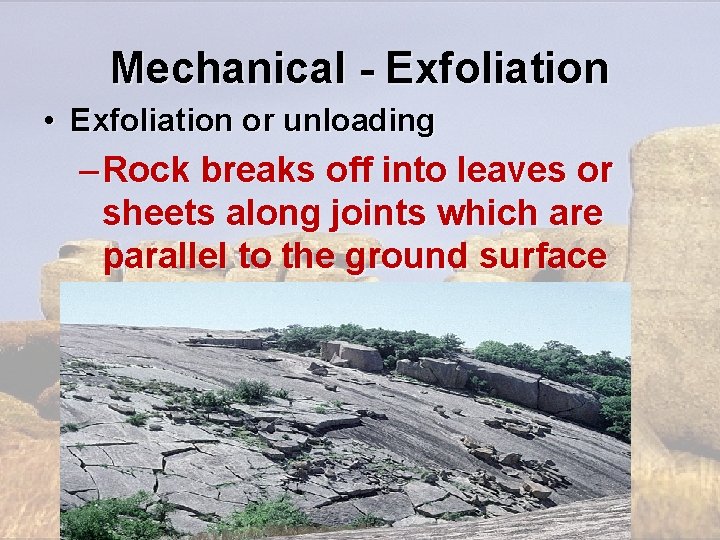
Mechanical - Exfoliation • Exfoliation or unloading – Rock breaks off into leaves or sheets along joints which are parallel to the ground surface
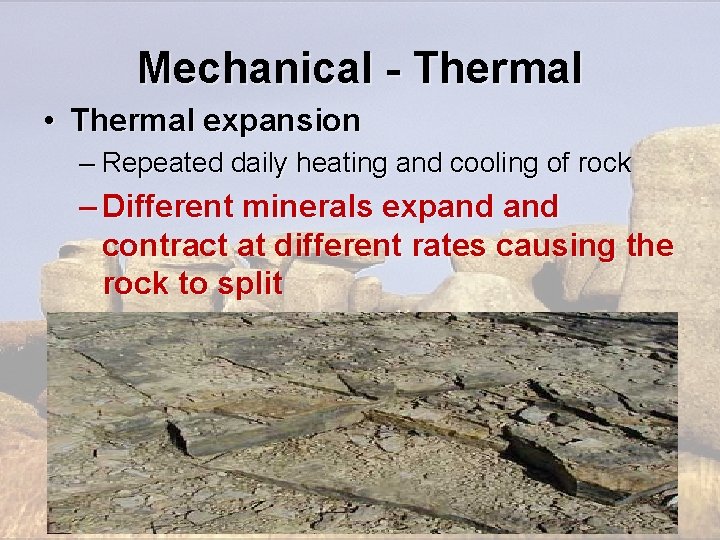
Mechanical - Thermal • Thermal expansion – Repeated daily heating and cooling of rock – Different minerals expand contract at different rates causing the rock to split
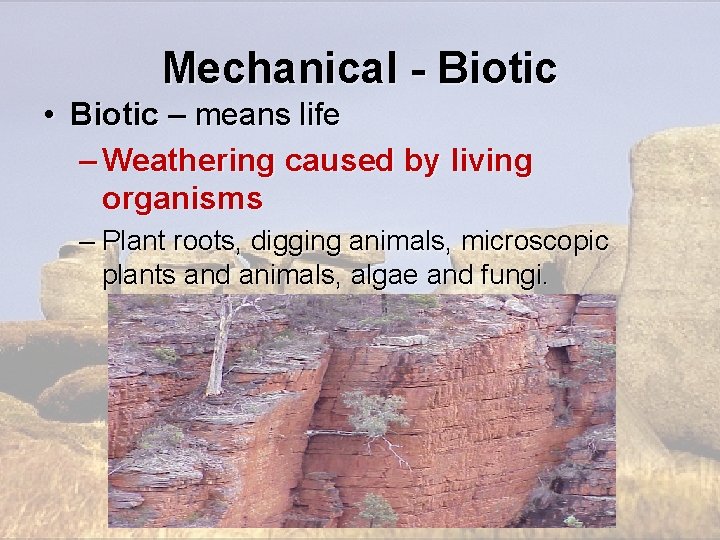
Mechanical - Biotic • Biotic – means life – Weathering caused by living organisms – Plant roots, digging animals, microscopic plants and animals, algae and fungi.
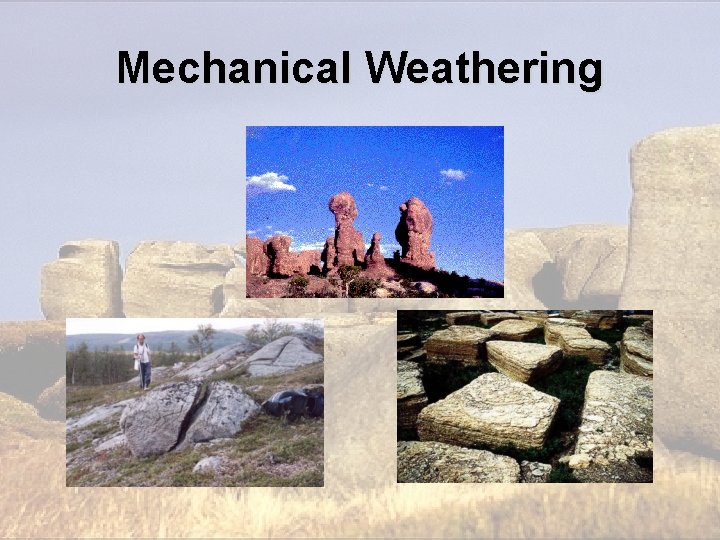
Mechanical Weathering
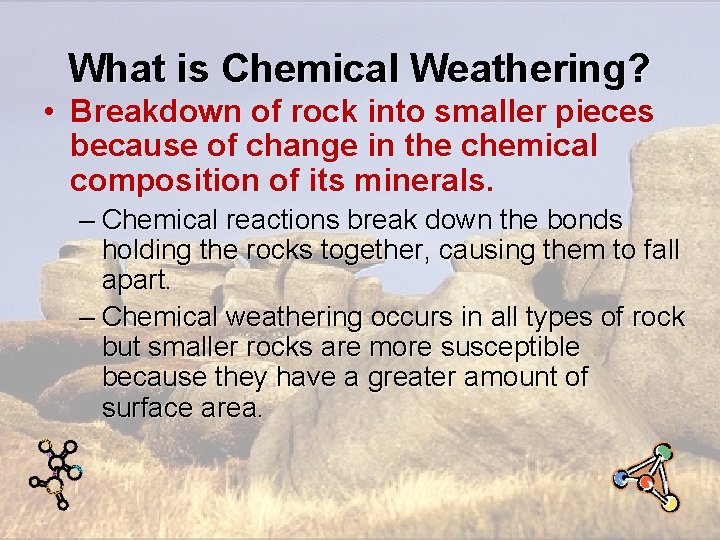
What is Chemical Weathering? • Breakdown of rock into smaller pieces because of change in the chemical composition of its minerals. – Chemical reactions break down the bonds holding the rocks together, causing them to fall apart. – Chemical weathering occurs in all types of rock but smaller rocks are more susceptible because they have a greater amount of surface area.
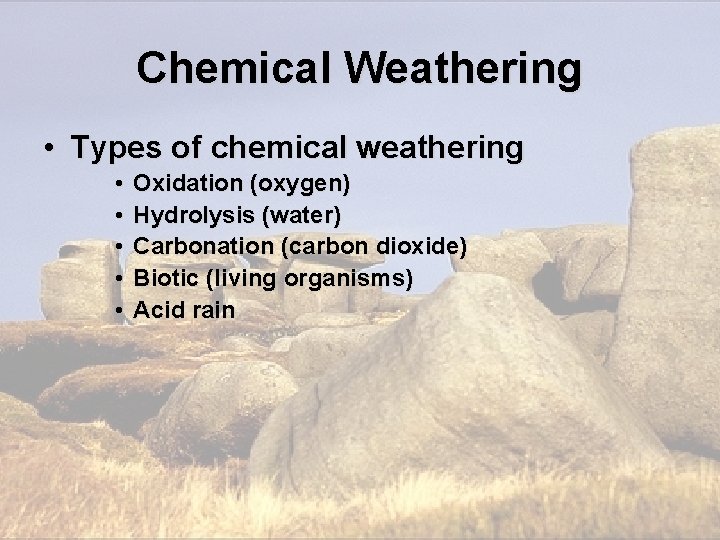
Chemical Weathering • Types of chemical weathering • • • Oxidation (oxygen) Hydrolysis (water) Carbonation (carbon dioxide) Biotic (living organisms) Acid rain
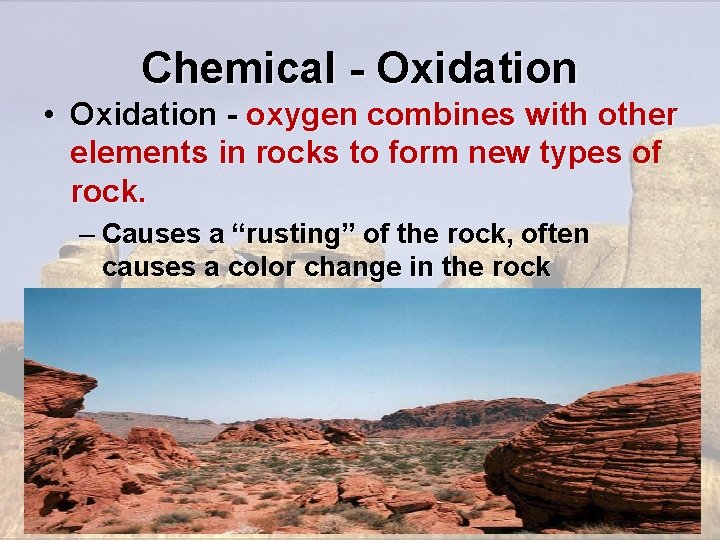
Chemical - Oxidation • Oxidation - oxygen combines with other elements in rocks to form new types of rock. – Causes a “rusting” of the rock, often causes a color change in the rock
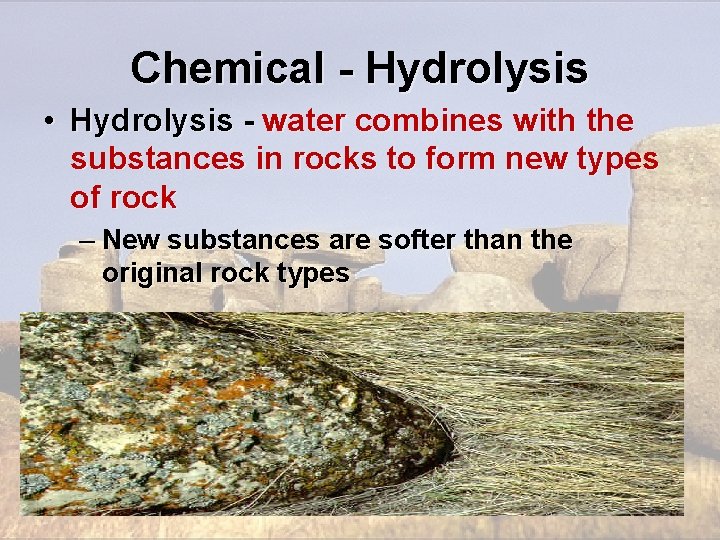
Chemical - Hydrolysis • Hydrolysis - water combines with the substances in rocks to form new types of rock – New substances are softer than the original rock types
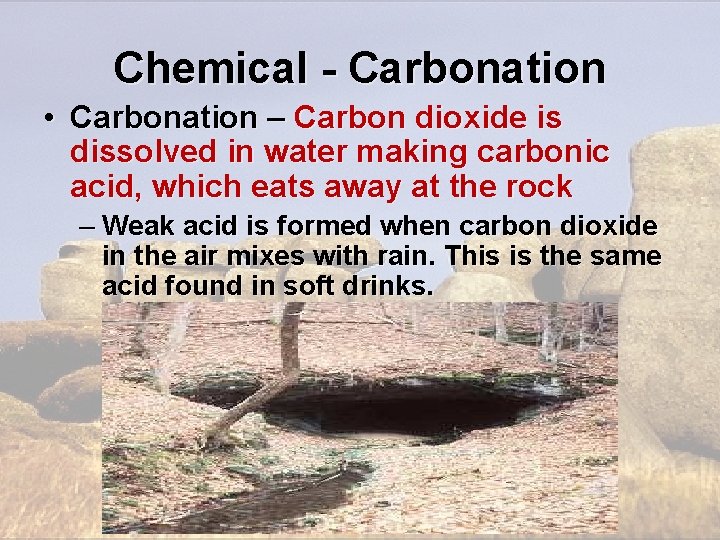
Chemical - Carbonation • Carbonation – Carbon dioxide is dissolved in water making carbonic acid, which eats away at the rock – Weak acid is formed when carbon dioxide in the air mixes with rain. This is the same acid found in soft drinks.
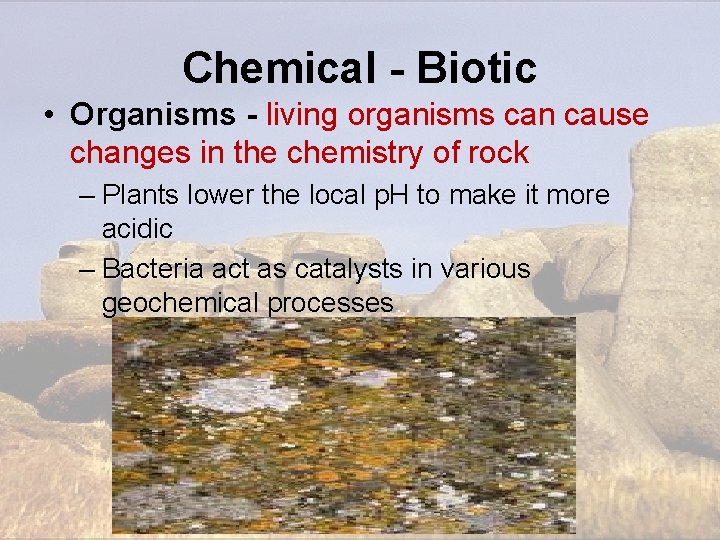
Chemical - Biotic • Organisms - living organisms can cause changes in the chemistry of rock – Plants lower the local p. H to make it more acidic – Bacteria act as catalysts in various geochemical processes
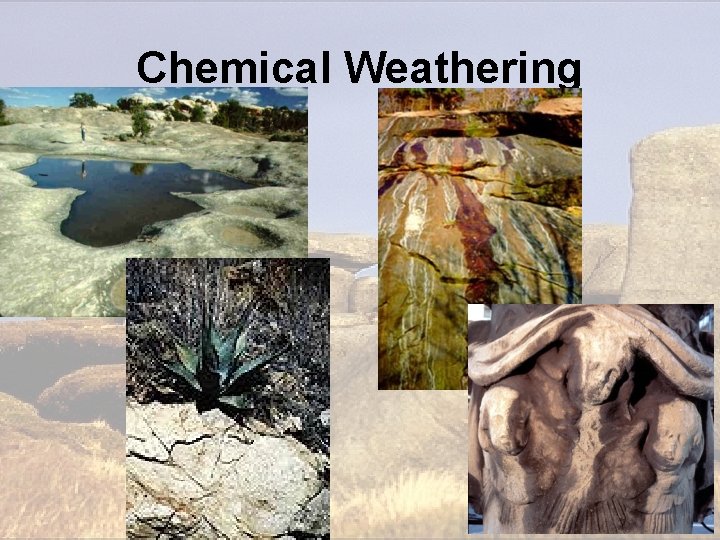
Chemical Weathering
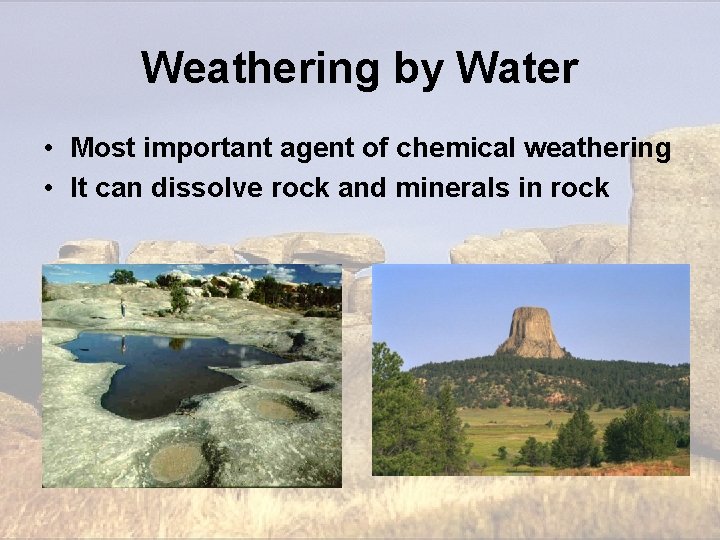
Weathering by Water • Most important agent of chemical weathering • It can dissolve rock and minerals in rock
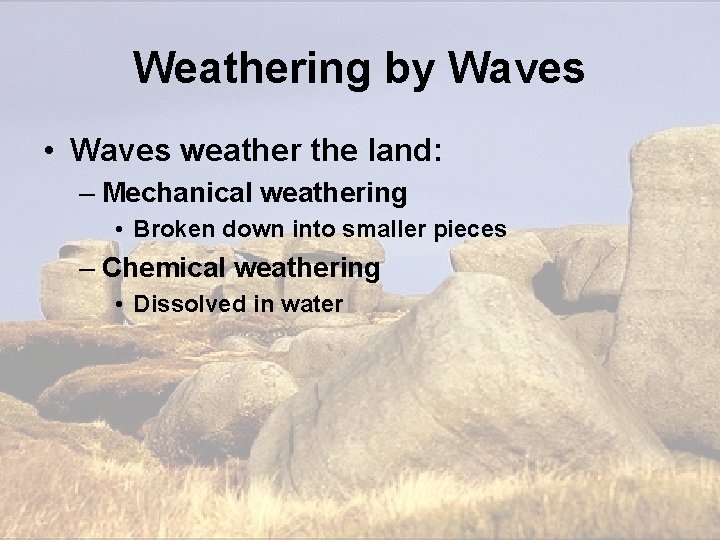
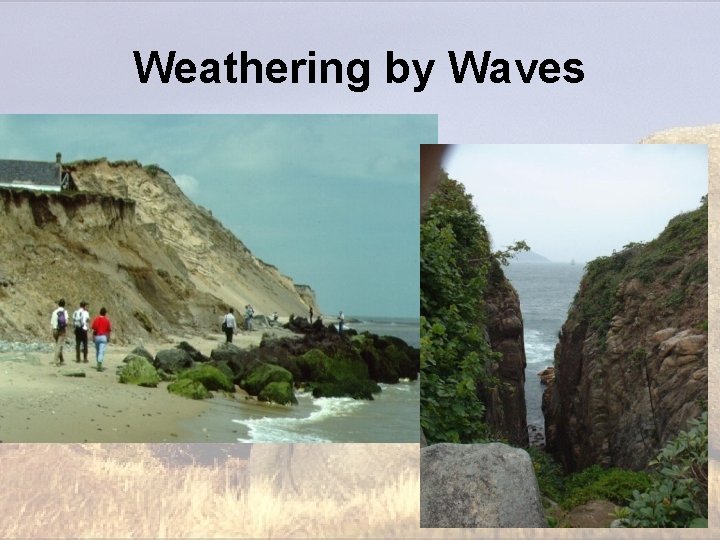
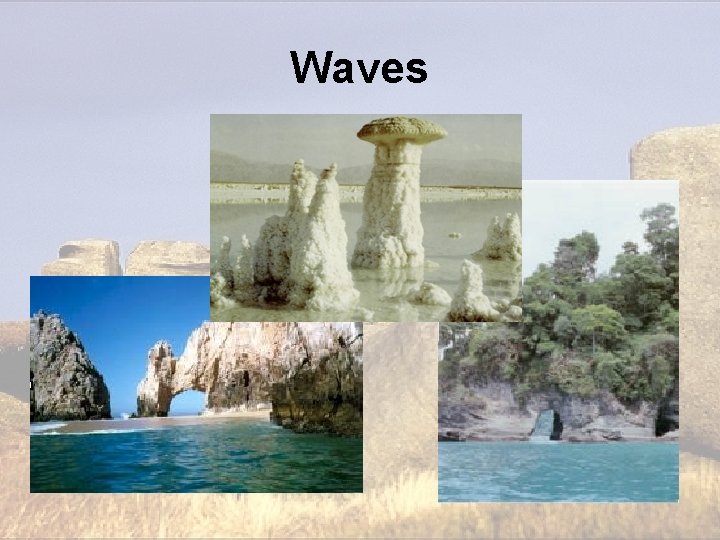
Weathering by Waves • Waves weather the land: – Mechanical weathering • Broken down into smaller pieces – Chemical weathering • Dissolved in water
Weathering by Waves
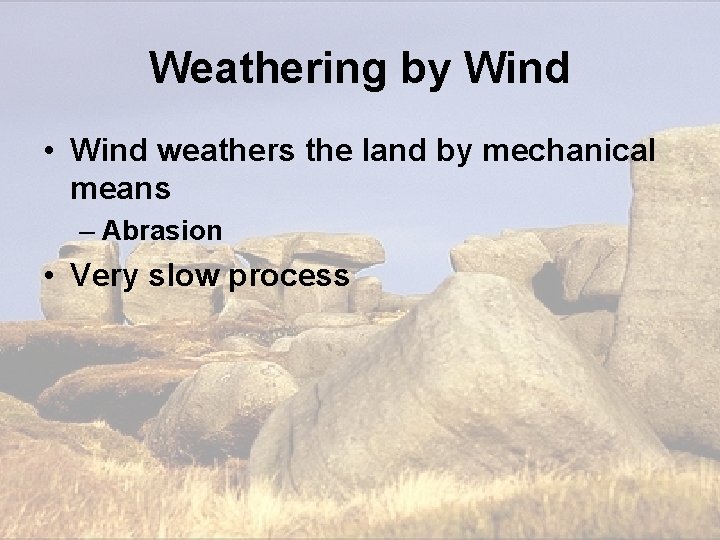
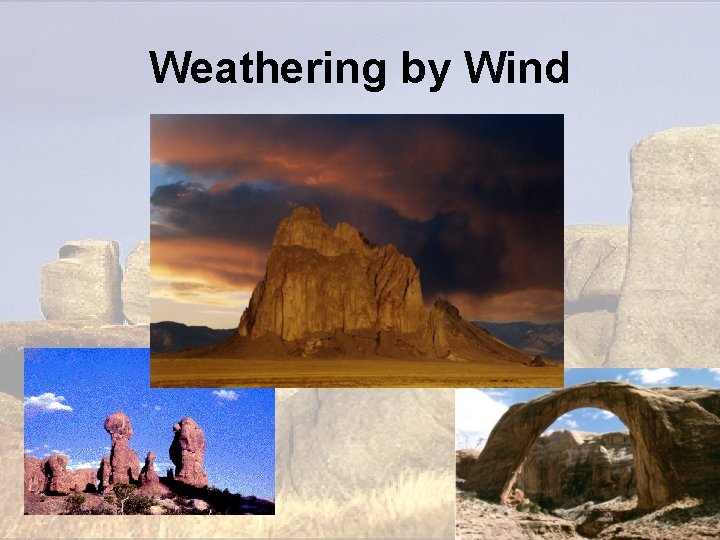
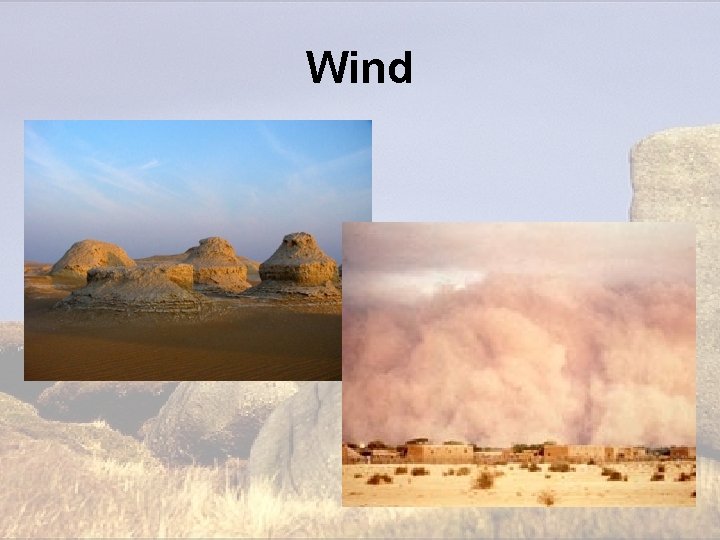
Weathering by Wind • Wind weathers the land by mechanical means – Abrasion • Very slow process
Weathering by Wind
Erosion
What Caused This? http: //commons. wikimedia. org/wiki/File: Water_erosion_ below_Hay_Bluff_-_geograph. org. uk_-_1074175. jpg http: //commons. wikimedia. org/wiki/File: Wind_erosion_S eminole_Canyon. JPG http: //commons. wikimedia. org/wiki/File: Baven tian_Clay_Beds_-_geograph. org. uk__1776748. jpg
Erosion • Movement of weathered rock and soil to a new location. – gravity – water – glaciers – waves – wind
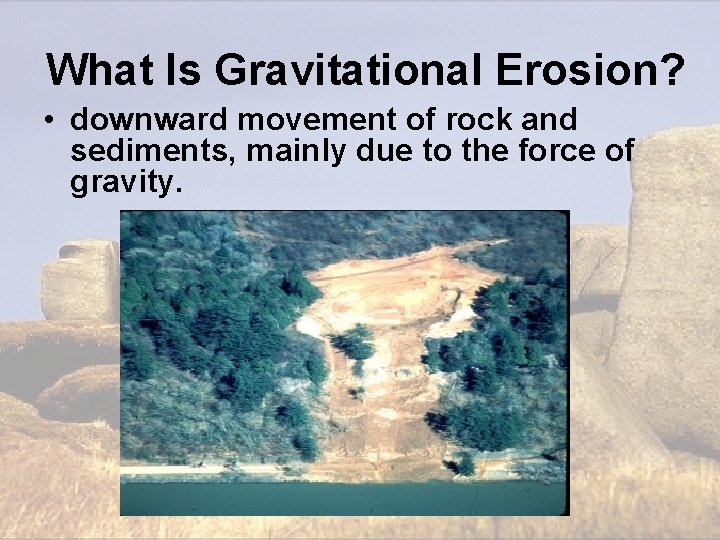
What Is Gravitational Erosion? • downward movement of rock and sediments, mainly due to the force of gravity.
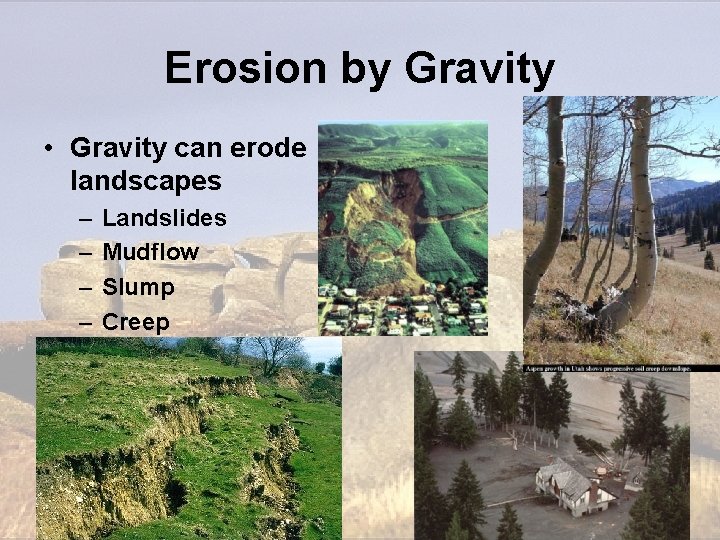
Erosion by Gravity • Gravity can erode landscapes – – Landslides Mudflow Slump Creep
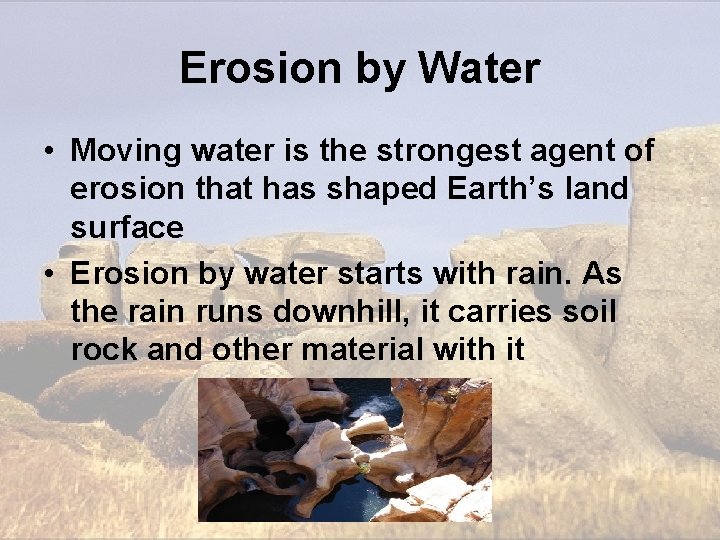
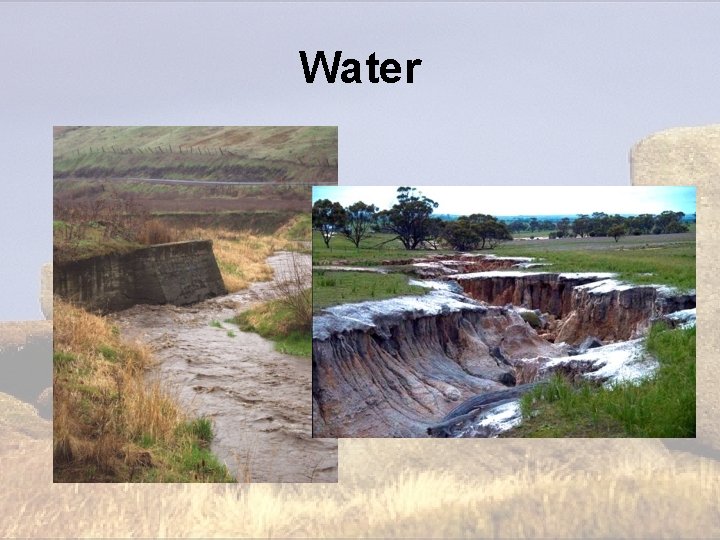
Erosion by Water • Moving water is the strongest agent of erosion that has shaped Earth’s land surface • Erosion by water starts with rain. As the rain runs downhill, it carries soil rock and other material with it
Erosion by Water • The rate depends on amount of rain, vegetation, type of soil, shape of land, and how people use the land • As water moves fast, it picks up sediment • As water slows down, it drops sediment
Water
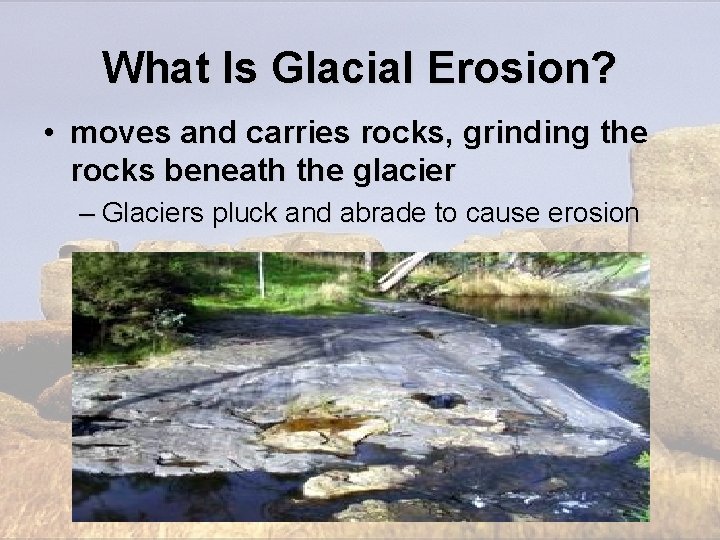
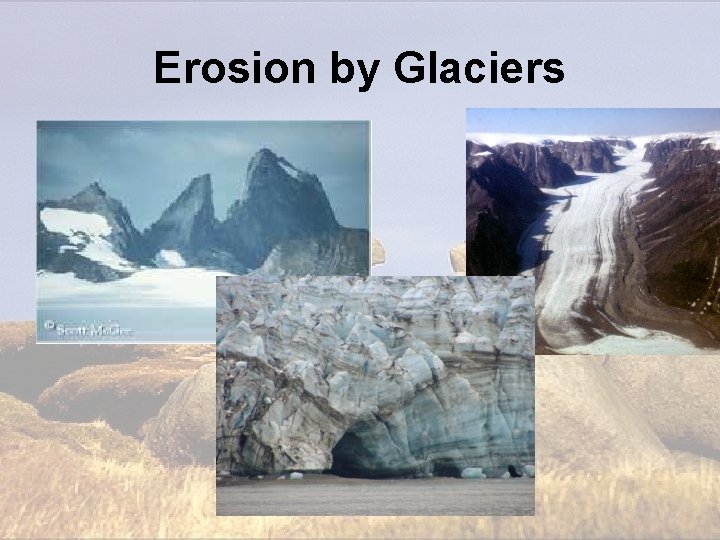
What Is Glacial Erosion? • moves and carries rocks, grinding the rocks beneath the glacier – Glaciers pluck and abrade to cause erosion
Erosion by Glaciers
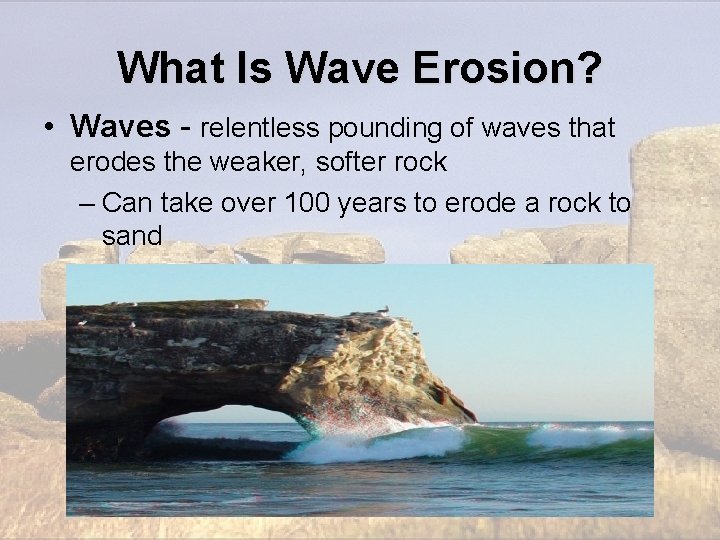
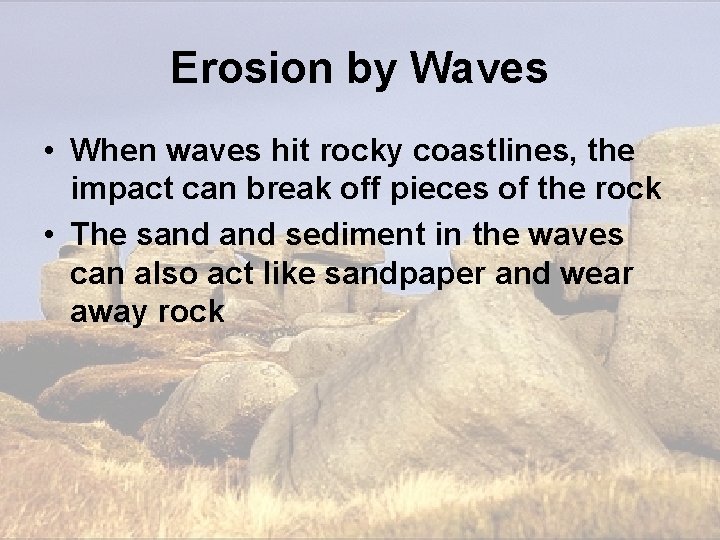
What Is Wave Erosion? • Waves - relentless pounding of waves that erodes the weaker, softer rock – Can take over 100 years to erode a rock to sand
Erosion by Waves • When waves hit rocky coastlines, the impact can break off pieces of the rock • The sand sediment in the waves can also act like sandpaper and wear away rock
Waves
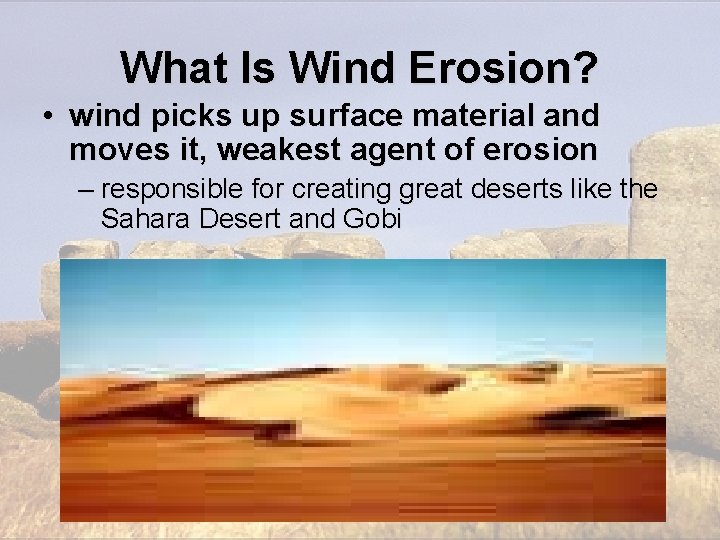
What Is Wind Erosion? • wind picks up surface material and moves it, weakest agent of erosion – responsible for creating great deserts like the Sahara Desert and Gobi
Wind
Deposition
Deposition • laying down (dropping) of sediment carried by wind, water, or ice
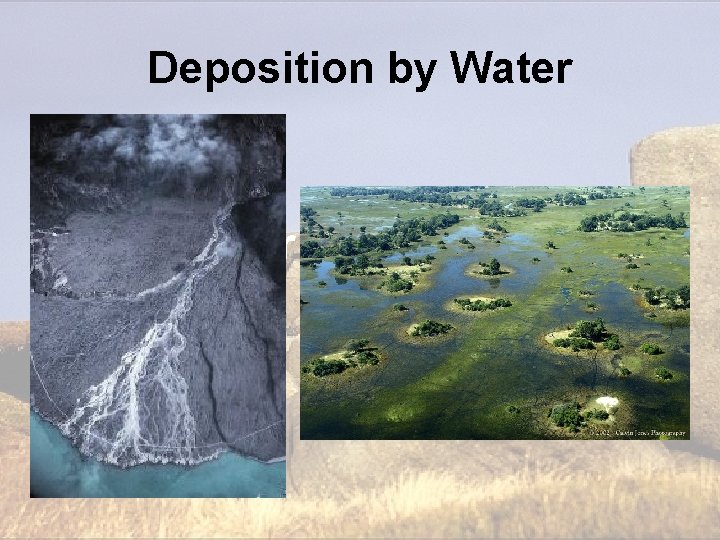
Deposition by Water • Water is the strongest agent of deposition. • Rivers deposit soil and sediment on their flood plains and deltas • Good farmland is usually based on land where sediment was deposited by water
Deposition by Water Deposition
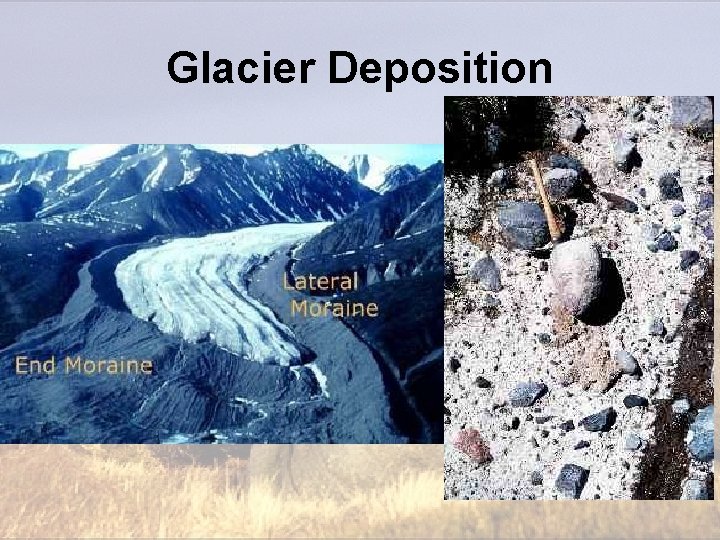
Deposition by Glaciers • When a glacier melts, it deposits the sediment it eroded from the land • This deposition can create new landforms and deposit sediment in new areas – Till – material deposited on the land’s surface – Moraine – ridge at the edge of a glacier
Glacier Deposition
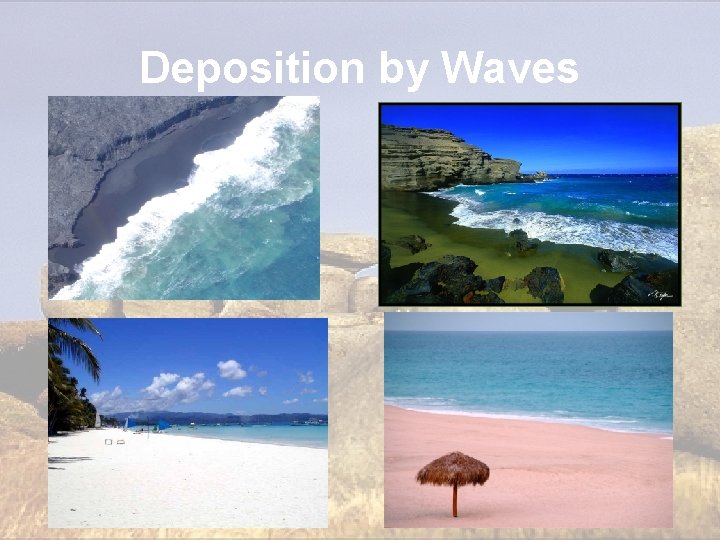
Deposition by Waves • Waves shape coastlines by depositing sand on the beach • The type of sand is determined by the sediment on the ocean floor – White sand – Black sand
Deposition by Waves
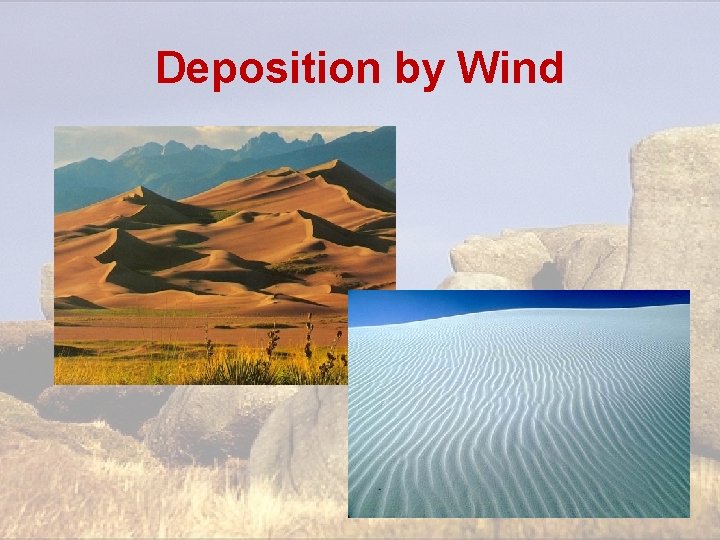
Deposition by Wind • Wind is the weakest agent of deposition • When it drops the sediment it is carrying, it can form dunes or mounds
Deposition by Wind
• Wind, water, and waves work together in the processes of deposition, weathering, and erosion
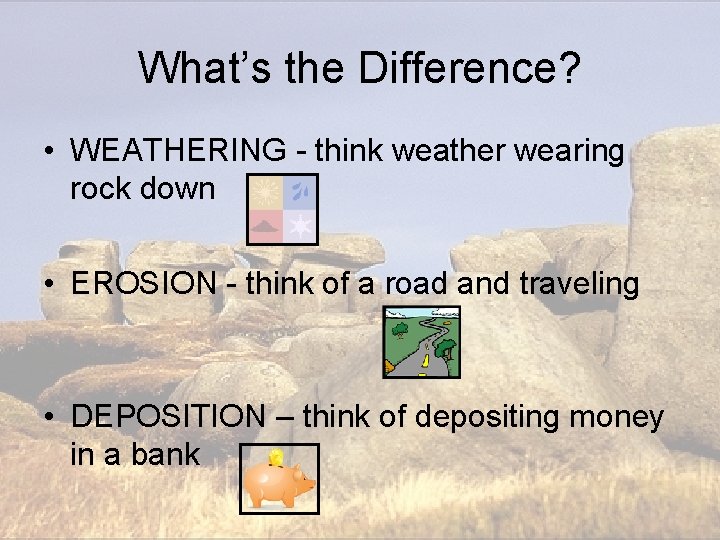
What’s the Difference? • WEATHERING - think weather wearing rock down • EROSION - think of a road and traveling • DEPOSITION – think of depositing money in a bank