
DEPARTMENT OF OBGYN Recent updates in Cervical Cancer
DEPARTMENT OF OB/GYN Recent updates in Cervical Cancer Lameck Chinula MD Obstetrician and Gynecologist Malawi Inaugural Cancer Symposium 1
Outline Introduction Cervical cancer screening and what’s coming? HPV vaccine after LEEP Conservative management of CIN 2+: therapeutic vaccine and Imiquimod Role of sentinel pelvic LNs Cervical cancer activities Conclusion 2
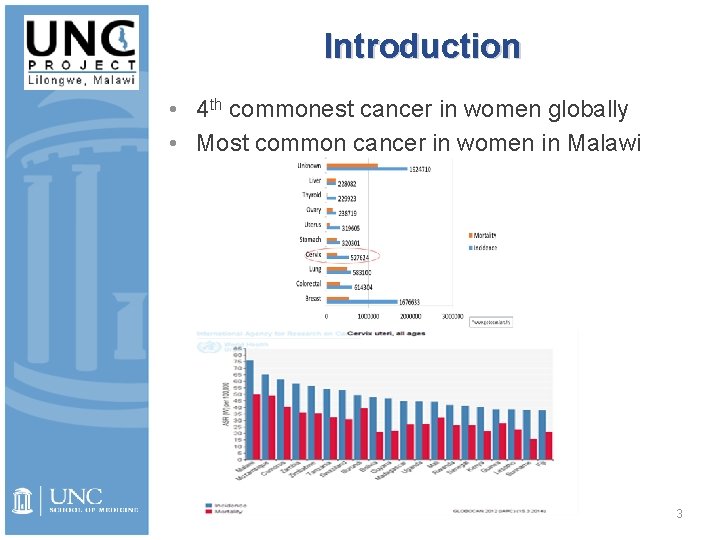
Introduction • 4 th commonest cancer in women globally • Most common cancer in women in Malawi 3
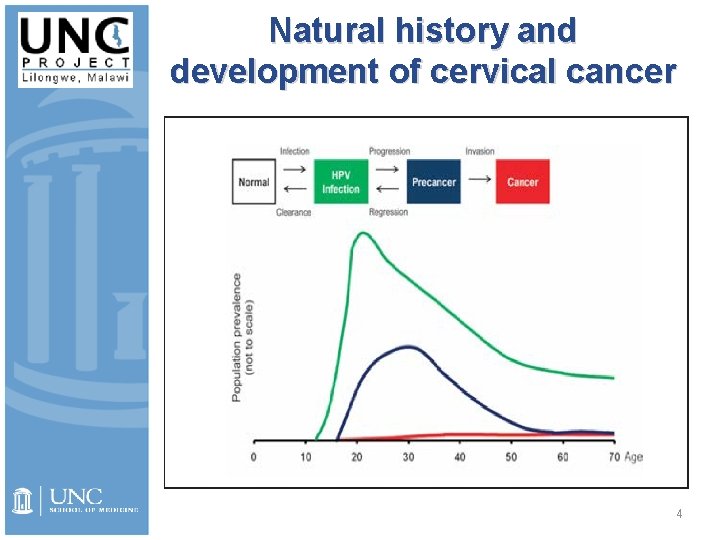
Natural history and development of cervical cancer 4
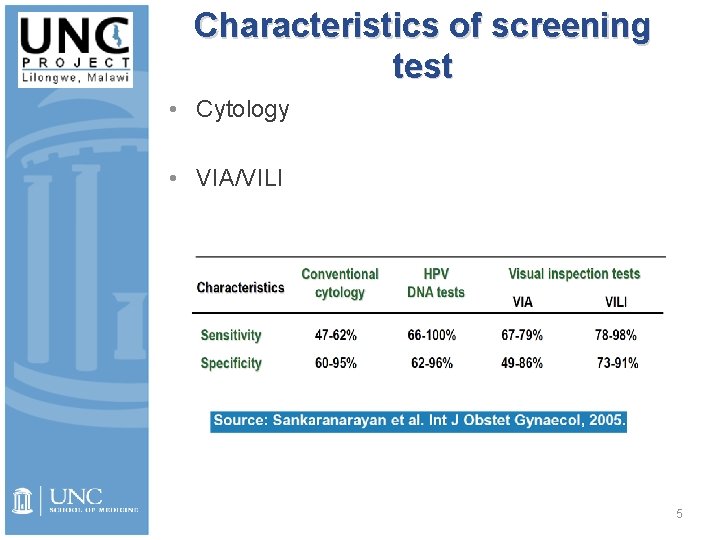
Characteristics of screening test • Cytology • VIA/VILI 5
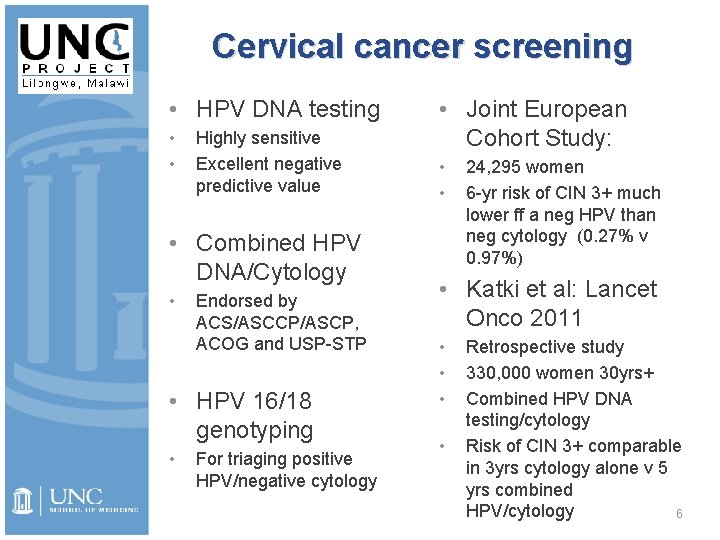
Cervical cancer screening • HPV DNA testing • • Highly sensitive Excellent negative predictive value • Combined HPV DNA/Cytology • Endorsed by ACS/ASCCP/ASCP, ACOG and USP-STP • HPV 16/18 genotyping • For triaging positive HPV/negative cytology • Joint European Cohort Study: • • 24, 295 women 6 -yr risk of CIN 3+ much lower ff a neg HPV than neg cytology (0. 27% v 0. 97%) • Katki et al: Lancet Onco 2011 • • Retrospective study 330, 000 women 30 yrs+ Combined HPV DNA testing/cytology Risk of CIN 3+ comparable in 3 yrs cytology alone v 5 yrs combined HPV/cytology 6
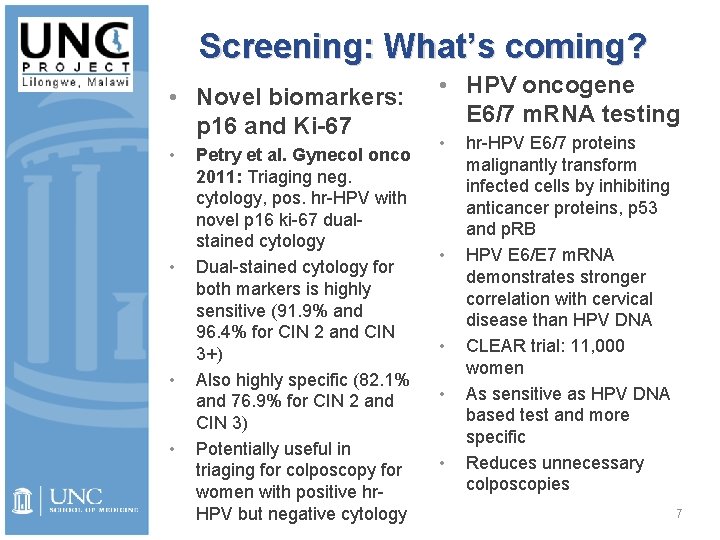
Screening: What’s coming? • Novel biomarkers: p 16 and Ki-67 • • Petry et al. Gynecol onco 2011: Triaging neg. cytology, pos. hr-HPV with novel p 16 ki-67 dualstained cytology Dual-stained cytology for both markers is highly sensitive (91. 9% and 96. 4% for CIN 2 and CIN 3+) Also highly specific (82. 1% and 76. 9% for CIN 2 and CIN 3) Potentially useful in triaging for colposcopy for women with positive hr. HPV but negative cytology • HPV oncogene E 6/7 m. RNA testing • • • hr-HPV E 6/7 proteins malignantly transform infected cells by inhibiting anticancer proteins, p 53 and p. RB HPV E 6/E 7 m. RNA demonstrates stronger correlation with cervical disease than HPV DNA CLEAR trial: 11, 000 women As sensitive as HPV DNA based test and more specific Reduces unnecessary colposcopies 7
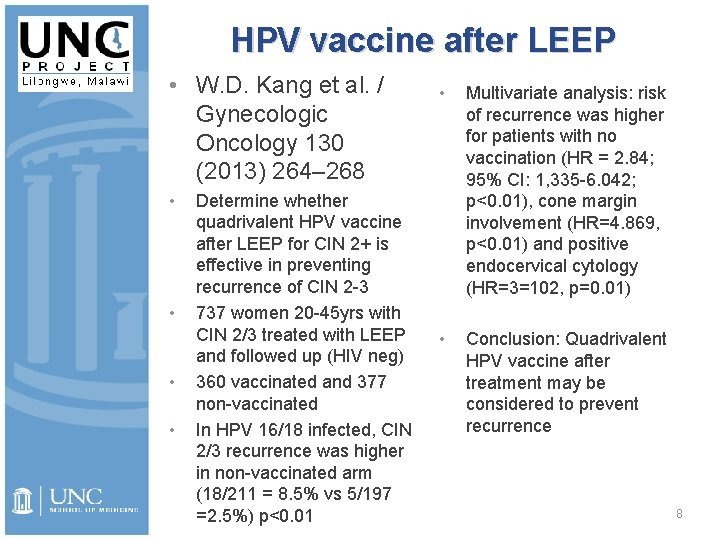
HPV vaccine after LEEP • W. D. Kang et al. / Gynecologic Oncology 130 (2013) 264– 268 • • Determine whether quadrivalent HPV vaccine after LEEP for CIN 2+ is effective in preventing recurrence of CIN 2 -3 737 women 20 -45 yrs with CIN 2/3 treated with LEEP and followed up (HIV neg) 360 vaccinated and 377 non-vaccinated In HPV 16/18 infected, CIN 2/3 recurrence was higher in non-vaccinated arm (18/211 = 8. 5% vs 5/197 =2. 5%) p<0. 01 • Multivariate analysis: risk of recurrence was higher for patients with no vaccination (HR = 2. 84; 95% CI: 1, 335 -6. 042; p<0. 01), cone margin involvement (HR=4. 869, p<0. 01) and positive endocervical cytology (HR=3=102, p=0. 01) • Conclusion: Quadrivalent HPV vaccine after treatment may be considered to prevent recurrence 8
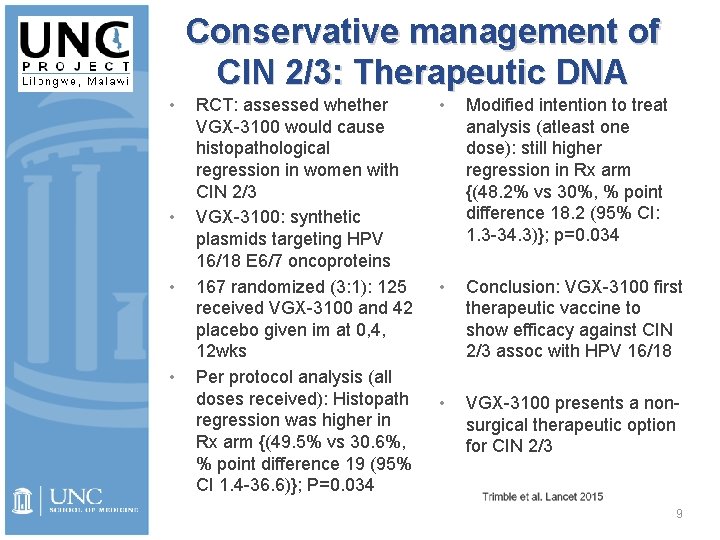
Conservative management of CIN 2/3: Therapeutic DNA • • RCT: assessed whether VGX-3100 would cause histopathological regression in women with CIN 2/3 VGX-3100: synthetic plasmids targeting HPV 16/18 E 6/7 oncoproteins 167 randomized (3: 1): 125 received VGX-3100 and 42 placebo given im at 0, 4, 12 wks Per protocol analysis (all doses received): Histopath regression was higher in Rx arm {(49. 5% vs 30. 6%, % point difference 19 (95% CI 1. 4 -36. 6)}; P=0. 034 • Modified intention to treat analysis (atleast one dose): still higher regression in Rx arm {(48. 2% vs 30%, % point difference 18. 2 (95% CI: 1. 3 -34. 3)}; p=0. 034 • Conclusion: VGX-3100 first therapeutic vaccine to show efficacy against CIN 2/3 assoc with HPV 16/18 • VGX-3100 presents a nonsurgical therapeutic option for CIN 2/3 9
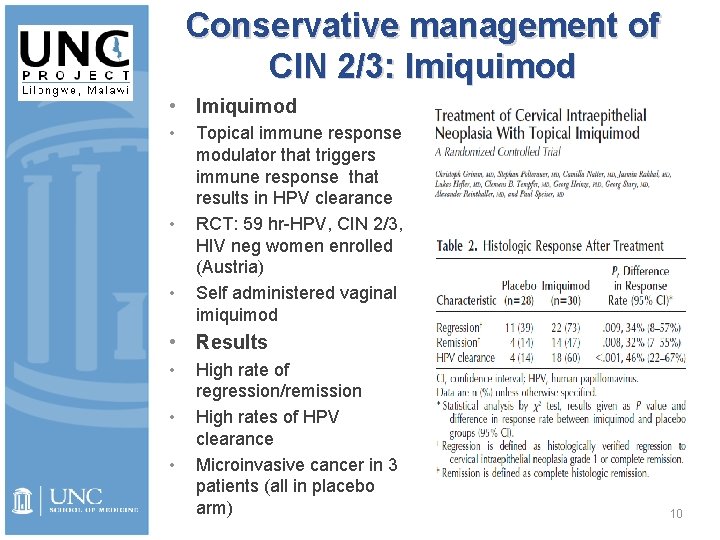
Conservative management of CIN 2/3: Imiquimod • Imiquimod • • • Topical immune response modulator that triggers immune response that results in HPV clearance RCT: 59 hr-HPV, CIN 2/3, HIV neg women enrolled (Austria) Self administered vaginal imiquimod • Results • • • High rate of regression/remission High rates of HPV clearance Microinvasive cancer in 3 patients (all in placebo arm) 10
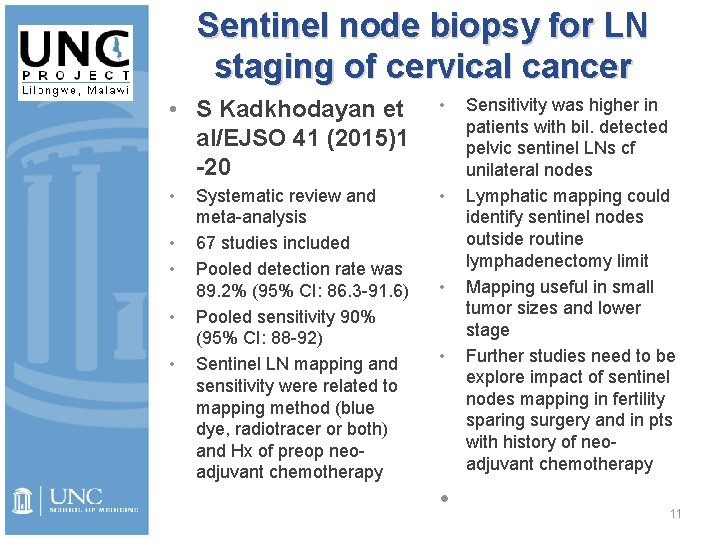
Sentinel node biopsy for LN staging of cervical cancer • S Kadkhodayan et al/EJSO 41 (2015)1 -20 • • Systematic review and meta-analysis 67 studies included Pooled detection rate was 89. 2% (95% CI: 86. 3 -91. 6) Pooled sensitivity 90% (95% CI: 88 -92) Sentinel LN mapping and sensitivity were related to mapping method (blue dye, radiotracer or both) and Hx of preop neoadjuvant chemotherapy • • • Sensitivity was higher in patients with bil. detected pelvic sentinel LNs cf unilateral nodes Lymphatic mapping could identify sentinel nodes outside routine lymphadenectomy limit Mapping useful in small tumor sizes and lower stage Further studies need to be explore impact of sentinel nodes mapping in fertility sparing surgery and in pts with history of neoadjuvant chemotherapy 11
Cervical cancer activities at KCH/Lilongwe • Clinical services : KCH and Nkhoma Hospital • Research activities: UNC • Publications 12
Colposcopy/LEEP clinic KCH Department of Obstetrics and Gynecology Weekly referral colposcopy clinic which provides diagnostic and LEEP services for the entire central region of Malawi Previously hysterectomy with occasional Cold Knife Conization was largely the first line management for CIN 2+ 10 -15 patients seen in a week Also a training base for residents and other interested clinician 13
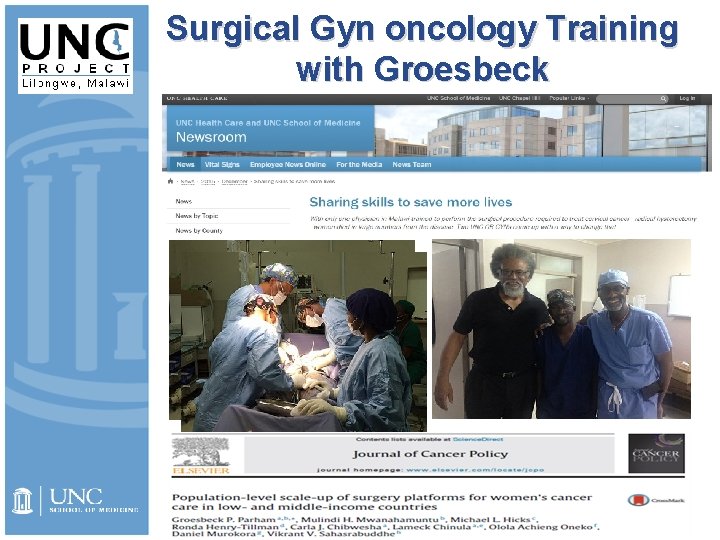
Surgical Gyn oncology Training with Groesbeck 14
A Randomized, Phase II Trial to Compare an HPV Test-and. Treat Strategy to a Cytology-based Strategy for Prevention of CIN 2+ in HIV-infected Women Hypothesis: In HIV-infected women with hr. HPV, immediate cryotherapy results in a lower probability of CIN II+ than a cytology-based strategy Primary Objective: To evaluate the effectiveness of immediate cryotherapy in HIV -infected women with hr-HPV compared to a cytology-based strategy by comparing cumulative CIN II+ rates 15
Retrospective cross-sectional study: Ø Assess the frequency of high-grade dysplasia (CIN 2/3) and cervical cancer among women having diagnostic workup Ø Examine associations between HIV and age with CIN 2+ (CIN 2/3 or cancer) CIN 2+ and cervical cancer were very common especially among HIV-positive women 35% of cervical cancer cases & 25% of CIN+ occurred in women falling outside the currently recommended ages for VIA screening 16
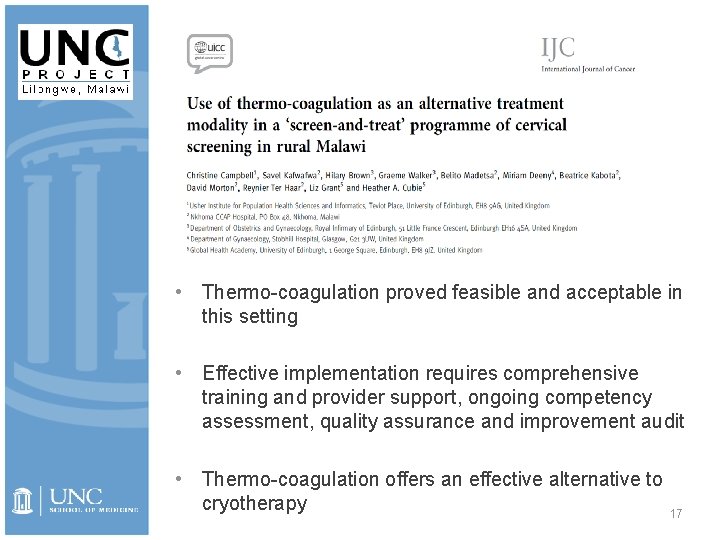
• Thermo-coagulation proved feasible and acceptable in this setting • Effective implementation requires comprehensive training and provider support, ongoing competency assessment, quality assurance and improvement audit • Thermo-coagulation offers an effective alternative to cryotherapy 17
Conclusion • HPV vaccine and cervical cancer screening programmes remain the mainstay for cervical cancer prevention and control • Novel developments presented here are largely from highincome countries and have excluded HIV infected women • Need to think of how best generalizable data can be realized in Africa (Malawi) e. g. cancer consortium? International collaborations with universities? • Need for in-country/regional expertise and infrastructure for cancer research and practice 18
- Slides: 18