
Department of Forensic Medicine Fukuoka University A Comprehensive
- Slides: 27
Department of Forensic Medicine, Fukuoka University A Comprehensive Method for the Screening of Drugs in Severely Decomposed Human Tissues by Fast Gas Chromatography/Tandem Mass Spectroscopy (Fast GC-MS/MS) Brian Waters, Kenji Hara, Natsuki Ikematsu, Mio Takayama, Aya Matsusue, Masayuki Kashiwagi, Shin-ichi Kubo Fukuoka University, Faculty of Medicine, Department of Forensic Medicine 7 -45 -1 Nanakuma, Jonan-ku, Fukuoka, JAPAN Declaration of Interest: The Authors declare that there are no conflicts of interest with regard to this study.
About the Author • Bachelor of Science (B. S. ) – Textile Chemistry, North Carolina State University, Raleigh, NC, USA, 1998 • Masters of Science (M. S. ) – Criminalistics, California State University, Los Angeles, USA, 2002 • Senior Criminalist, County of Los Angeles, Department of Coroner/Medical Examiner, Los Angeles, CA, USA, 2003 -2011 • Assistant Professor, Fukuoka University, Department of Forensic Medicine, Fukuoka, Japan, 2011 -Present. Department of Forensic Medicine, Faculty of Medicine, Fukuoka University
Statement of the Problem • Drug screening is an important reference in forensic autopsy investigations. • In postmortem toxicology, often the samples provided for analysis are in a severe state of putrefaction or decomposition. • The presence of breakdown products such as lipids and amino acids make extraction of the compounds of interest difficult. • Developing an analytical method capable of detecting trace levels of analytes from the interfering substances present in these complex matrices would benefit the toxicology community. Department of Forensic Medicine, Faculty of Medicine, Fukuoka University
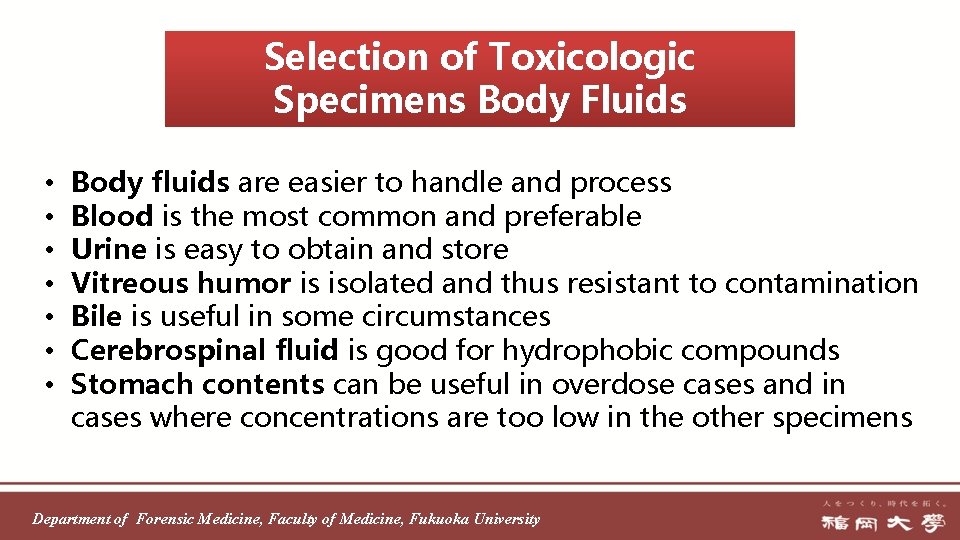
Selection of Toxicologic Specimens Body Fluids • • Body fluids are easier to handle and process Blood is the most common and preferable Urine is easy to obtain and store Vitreous humor is isolated and thus resistant to contamination Bile is useful in some circumstances Cerebrospinal fluid is good for hydrophobic compounds Stomach contents can be useful in overdose cases and in cases where concentrations are too low in the other specimens Department of Forensic Medicine, Faculty of Medicine, Fukuoka University
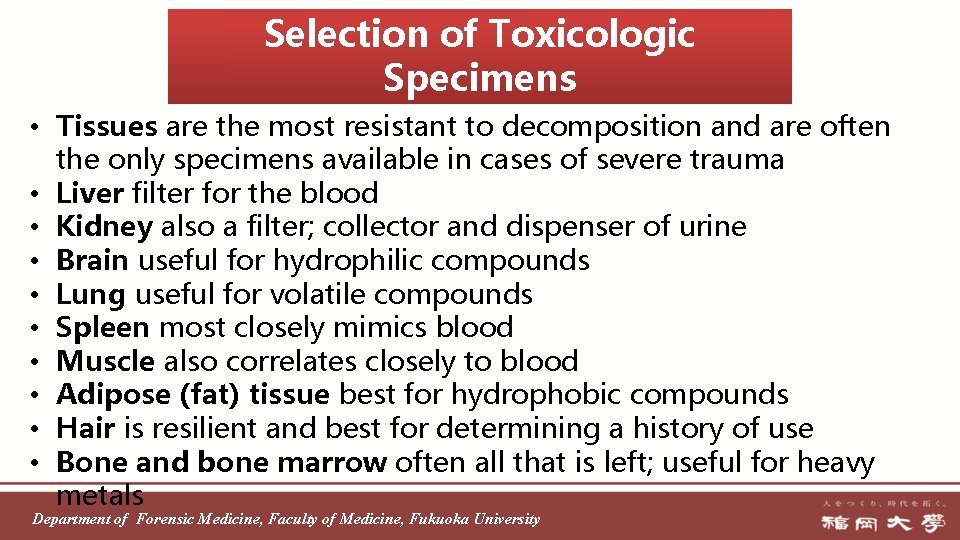
• • • Selection of Toxicologic Specimens Tissues are the most resistant to decomposition and are often the only specimens available in cases of severe trauma Liver filter for the blood Kidney also a filter; collector and dispenser of urine Brain useful for hydrophilic compounds Lung useful for volatile compounds Spleen most closely mimics blood Muscle also correlates closely to blood Adipose (fat) tissue best for hydrophobic compounds Hair is resilient and best for determining a history of use Bone and bone marrow often all that is left; useful for heavy metals Department of Forensic Medicine, Faculty of Medicine, Fukuoka University
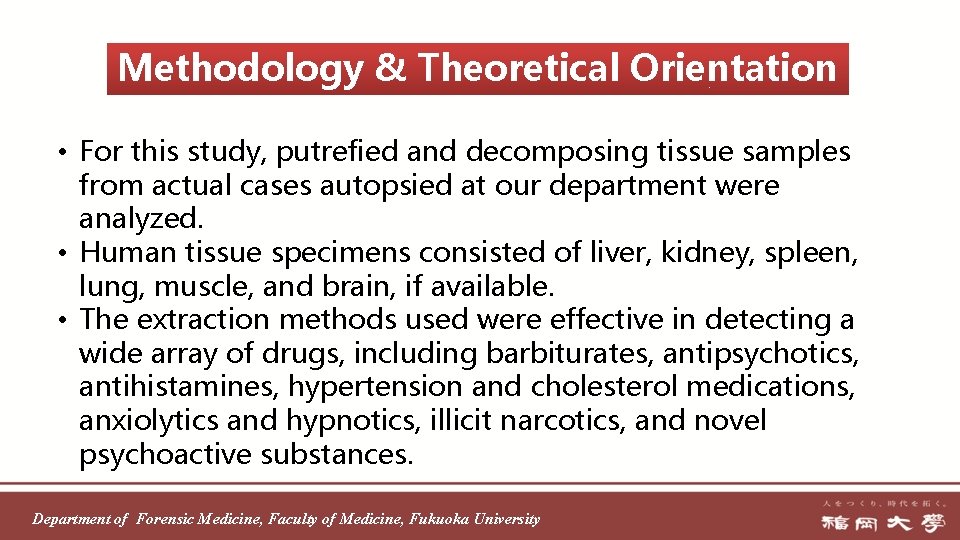
Methodology & Theoretical Orientation • For this study, putrefied and decomposing tissue samples from actual cases autopsied at our department were analyzed. • Human tissue specimens consisted of liver, kidney, spleen, lung, muscle, and brain, if available. • The extraction methods used were effective in detecting a wide array of drugs, including barbiturates, antipsychotics, antihistamines, hypertension and cholesterol medications, anxiolytics and hypnotics, illicit narcotics, and novel psychoactive substances. Department of Forensic Medicine, Faculty of Medicine, Fukuoka University
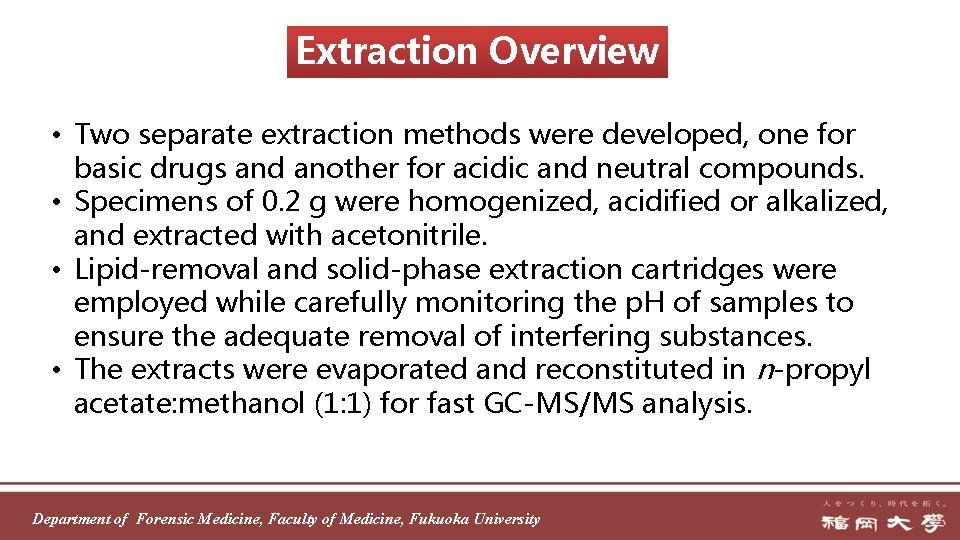
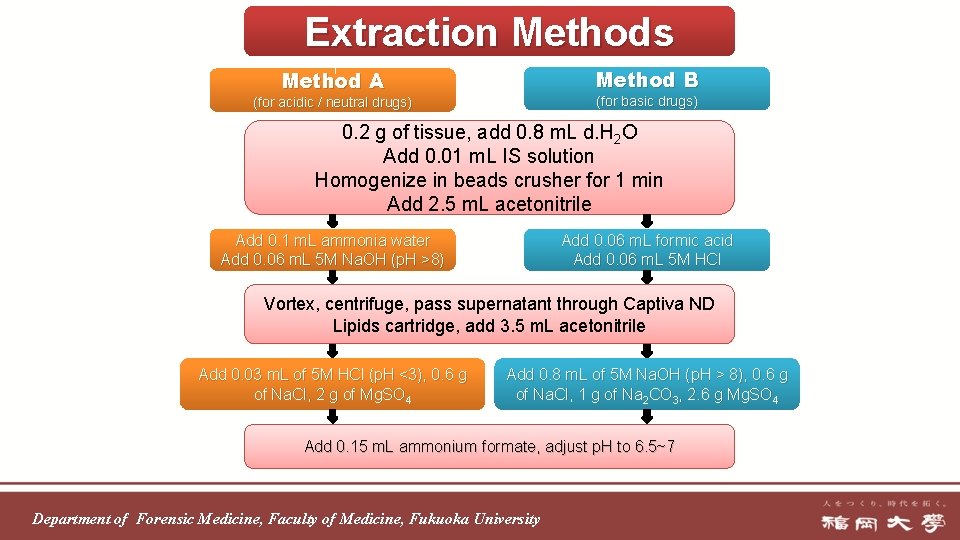
Extraction Overview • Two separate extraction methods were developed, one for basic drugs and another for acidic and neutral compounds. • Specimens of 0. 2 g were homogenized, acidified or alkalized, and extracted with acetonitrile. • Lipid-removal and solid-phase extraction cartridges were employed while carefully monitoring the p. H of samples to ensure the adequate removal of interfering substances. • The extracts were evaporated and reconstituted in n-propyl acetate: methanol (1: 1) for fast GC-MS/MS analysis. Department of Forensic Medicine, Faculty of Medicine, Fukuoka University
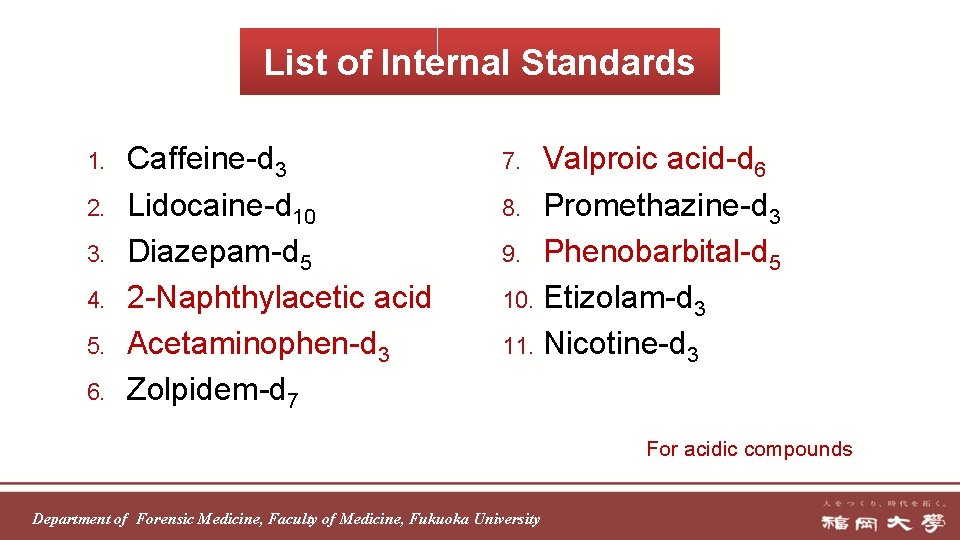
List of Internal Standards 1. 2. 3. 4. 5. 6. Caffeine-d 3 Lidocaine-d 10 Diazepam-d 5 2 -Naphthylacetic acid Acetaminophen-d 3 Zolpidem-d 7 Valproic acid-d 6 8. Promethazine-d 3 9. Phenobarbital-d 5 10. Etizolam-d 3 11. Nicotine-d 3 7. For acidic compounds Department of Forensic Medicine, Faculty of Medicine, Fukuoka University
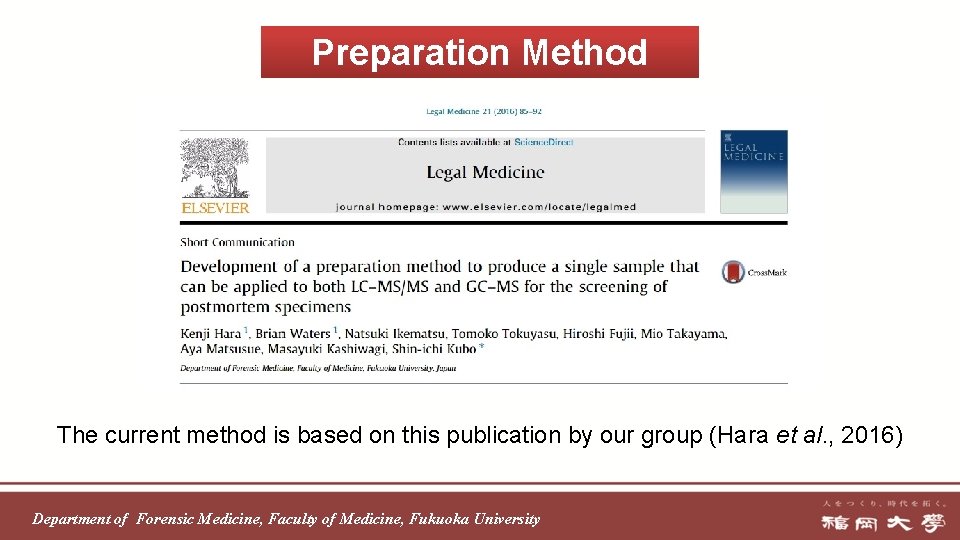
Preparation Method The current method is based on this publication by our group (Hara et al. , 2016) Department of Forensic Medicine, Faculty of Medicine, Fukuoka University
Extraction Methods Method B Method A (for basic drugs) (for acidic / neutral drugs) 0. 2 g of tissue, add 0. 8 m. L d. H 2 O Add 0. 01 m. L IS solution Homogenize in beads crusher for 1 min Add 2. 5 m. L acetonitrile Add 0. 1 m. L ammonia water Add 0. 06 m. L 5 M Na. OH (p. H >8) Add 0. 06 m. L formic acid Add 0. 06 m. L 5 M HCl Vortex, centrifuge, pass supernatant through Captiva ND Lipids cartridge, add 3. 5 m. L acetonitrile Add 0. 03 m. L of 5 M HCl (p. H <3), 0. 6 g of Na. Cl, 2 g of Mg. SO 4 Add 0. 8 m. L of 5 M Na. OH (p. H > 8), 0. 6 g of Na. Cl, 1 g of Na 2 CO 3, 2. 6 g Mg. SO 4 Add 0. 15 m. L ammonium formate, adjust p. H to 6. 5~7 Department of Forensic Medicine, Faculty of Medicine, Fukuoka University
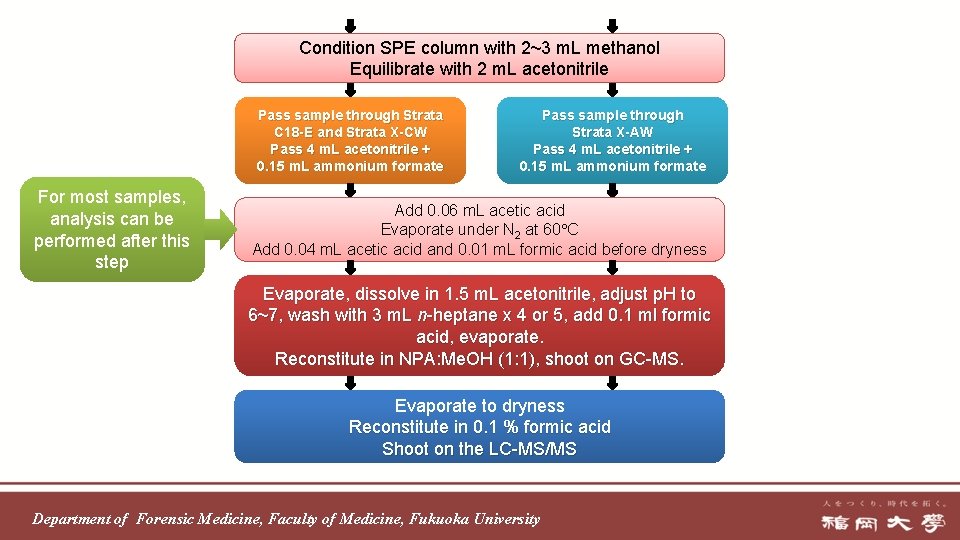
Condition SPE column with 2~3 m. L methanol Equilibrate with 2 m. L acetonitrile Pass sample through Strata C 18 -E and Strata X-CW Pass 4 m. L acetonitrile + 0. 15 m. L ammonium formate For most samples, analysis can be performed after this step Pass sample through Strata X-AW Pass 4 m. L acetonitrile + 0. 15 m. L ammonium formate Add 0. 06 m. L acetic acid Evaporate under N 2 at 60 C Add 0. 04 m. L acetic acid and 0. 01 m. L formic acid before dryness Evaporate, dissolve in 1. 5 m. L acetonitrile, adjust p. H to 6~7, wash with 3 m. L n-heptane x 4 or 5, add 0. 1 ml formic acid, evaporate. Reconstitute in NPA: Me. OH (1: 1), shoot on GC-MS. Evaporate to dryness Reconstitute in 0. 1 % formic acid Shoot on the LC-MS/MS Department of Forensic Medicine, Faculty of Medicine, Fukuoka University
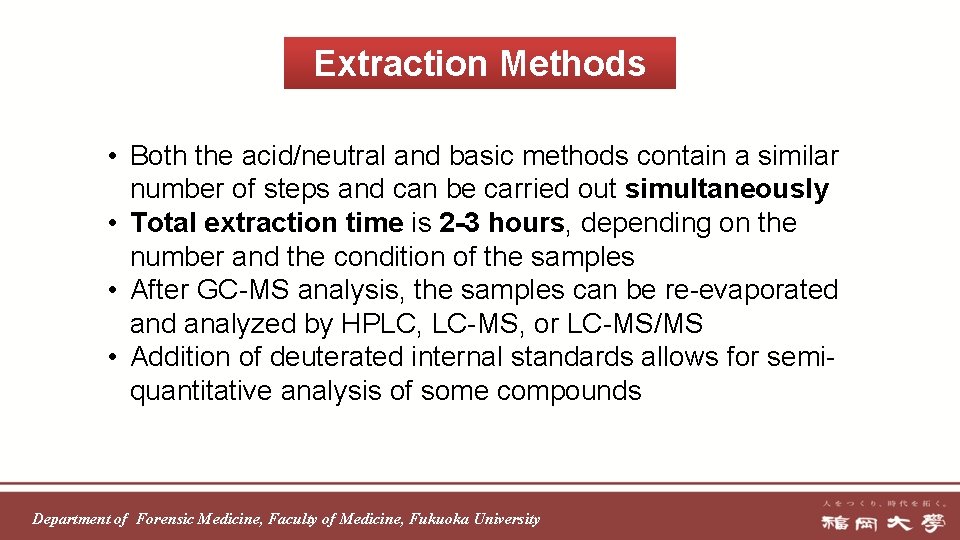
Extraction Methods • Both the acid/neutral and basic methods contain a similar number of steps and can be carried out simultaneously • Total extraction time is 2 -3 hours, depending on the number and the condition of the samples • After GC-MS analysis, the samples can be re-evaporated analyzed by HPLC, LC-MS, or LC-MS/MS • Addition of deuterated internal standards allows for semiquantitative analysis of some compounds Department of Forensic Medicine, Faculty of Medicine, Fukuoka University
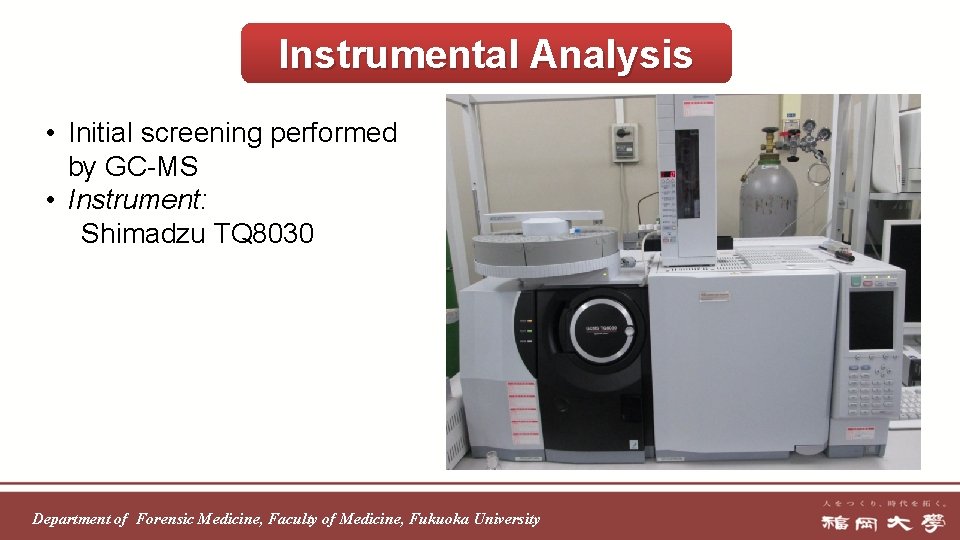
Instrumental Analysis • Initial screening performed by GC-MS • Instrument: Shimadzu TQ 8030 Department of Forensic Medicine, Faculty of Medicine, Fukuoka University
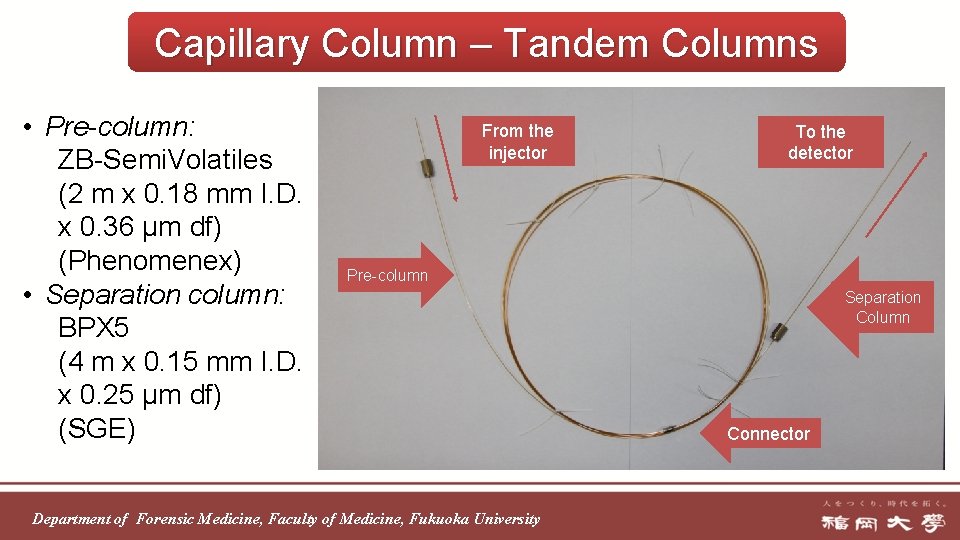
Capillary Column – Tandem Columns • Pre-column: ZB-Semi. Volatiles (2 m x 0. 18 mm I. D. x 0. 36 μm df) (Phenomenex) • Separation column: BPX 5 (4 m x 0. 15 mm I. D. x 0. 25 μm df) (SGE) From the injector To the detector Pre-column Department of Forensic Medicine, Faculty of Medicine, Fukuoka University Separation Column Connector
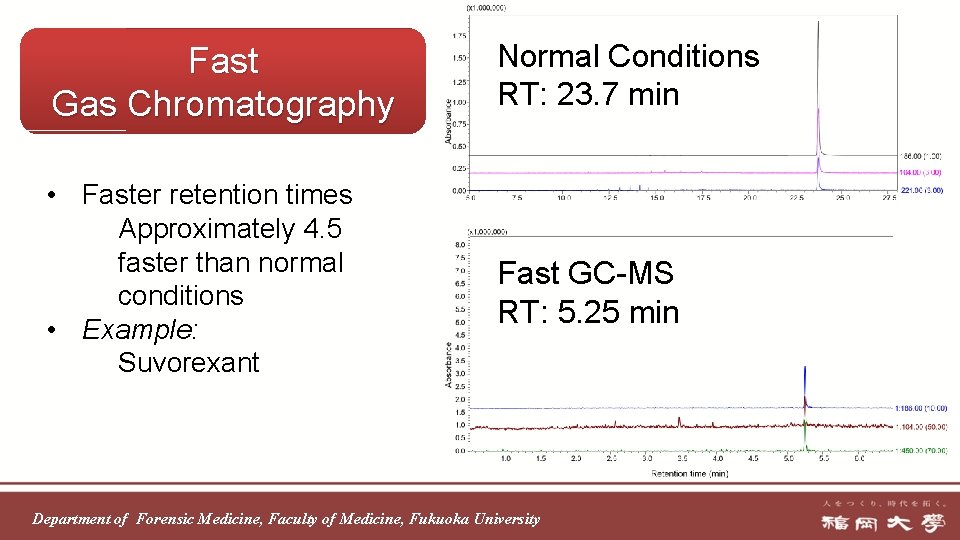
Fast Gas Chromatography Normal Conditions RT: 23. 7 min • Faster retention times Approximately 4. 5 faster than normal conditions • Example: Suvorexant Fast GC-MS RT: 5. 25 min Department of Forensic Medicine, Faculty of Medicine, Fukuoka University
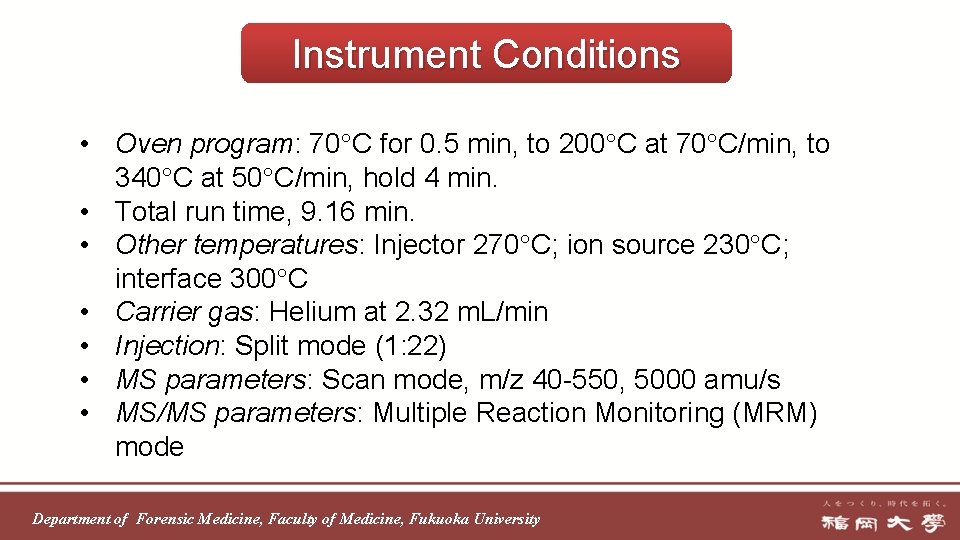
Instrument Conditions • Oven program: 70 C for 0. 5 min, to 200 C at 70 C/min, to 340 C at 50 C/min, hold 4 min. • Total run time, 9. 16 min. • Other temperatures: Injector 270 C; ion source 230 C; interface 300 C • Carrier gas: Helium at 2. 32 m. L/min • Injection: Split mode (1: 22) • MS parameters: Scan mode, m/z 40 -550, 5000 amu/s • MS/MS parameters: Multiple Reaction Monitoring (MRM) mode Department of Forensic Medicine, Faculty of Medicine, Fukuoka University
Results and Findings • The developed method was successful in clearly identifying drugs from putrefied specimens. • The fast GC method lowered the analysis time to under 10 minutes. • The use of tandem mass spectrometry helped to reduce the influence of background noise and interfering substances. Department of Forensic Medicine, Faculty of Medicine, Fukuoka University
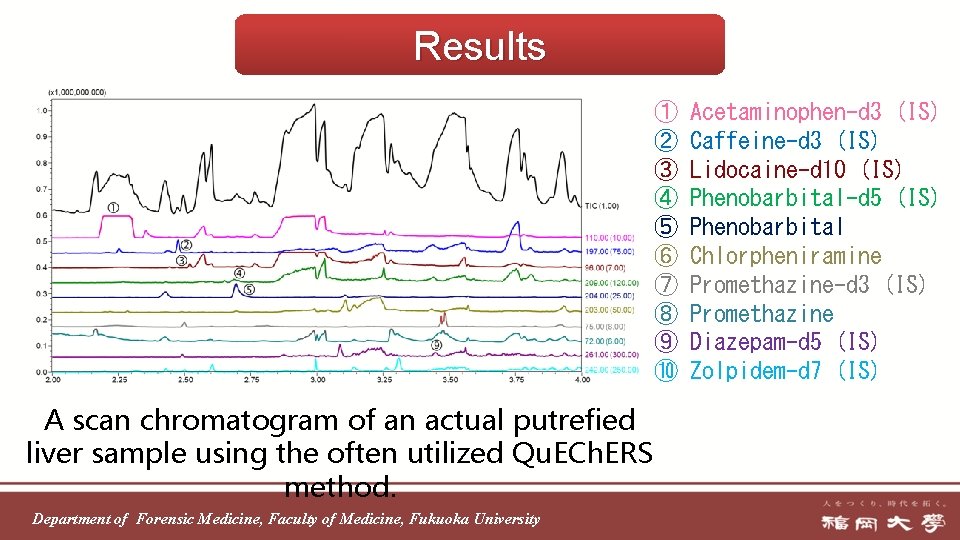
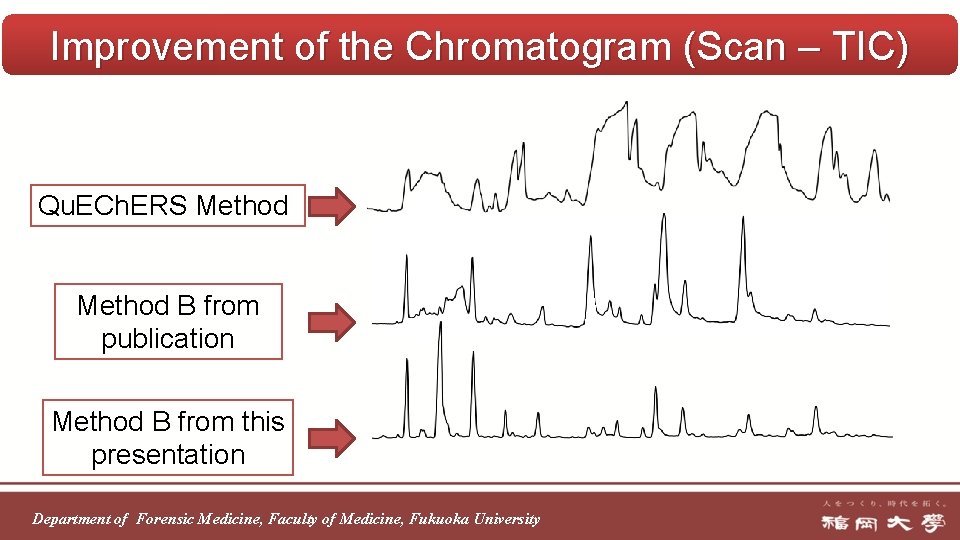
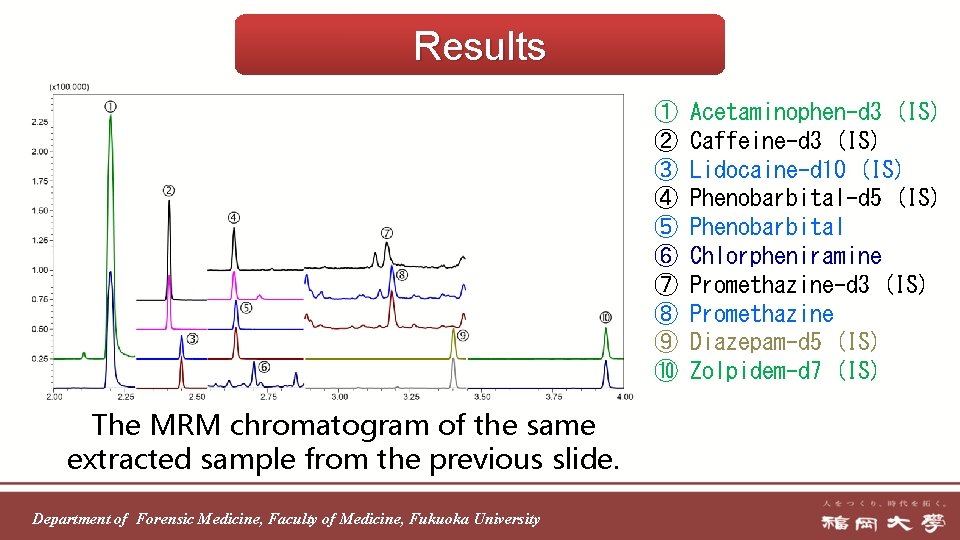
Results ① ② ③ ④ ⑤ ⑥ ⑦ ⑧ ⑨ ⑩ A scan chromatogram of an actual putrefied liver sample using the often utilized Qu. ECh. ERS method. Department of Forensic Medicine, Faculty of Medicine, Fukuoka University Acetaminophen-d 3 (IS) Caffeine-d 3 (IS) Lidocaine-d 10 (IS) Phenobarbital-d 5 (IS) Phenobarbital Chlorpheniramine Promethazine-d 3 (IS) Promethazine Diazepam-d 5 (IS) Zolpidem-d 7 (IS)
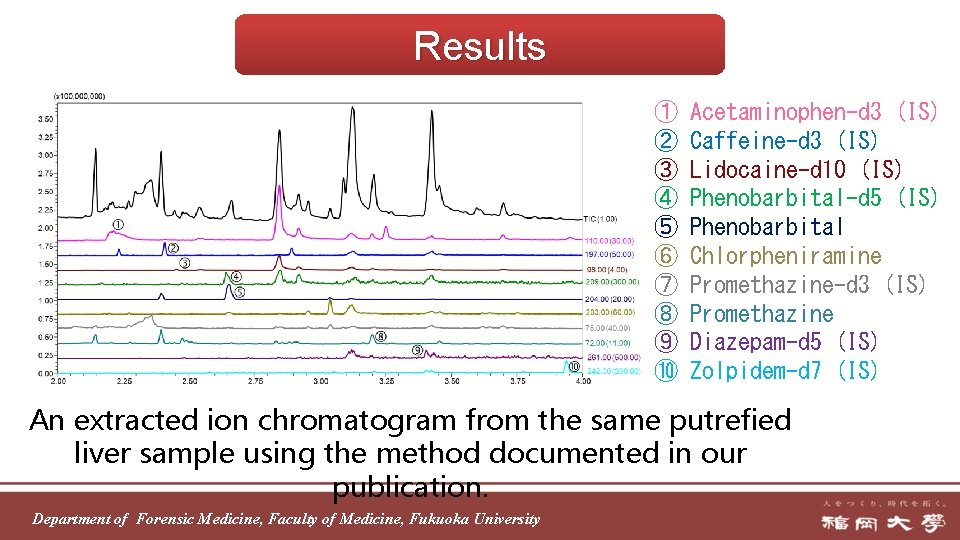
Results ① ② ③ ④ ⑤ ⑥ ⑦ ⑧ ⑨ ⑩ Acetaminophen-d 3 (IS) Caffeine-d 3 (IS) Lidocaine-d 10 (IS) Phenobarbital-d 5 (IS) Phenobarbital Chlorpheniramine Promethazine-d 3 (IS) Promethazine Diazepam-d 5 (IS) Zolpidem-d 7 (IS) An extracted ion chromatogram from the same putrefied liver sample using the method documented in our publication. Department of Forensic Medicine, Faculty of Medicine, Fukuoka University
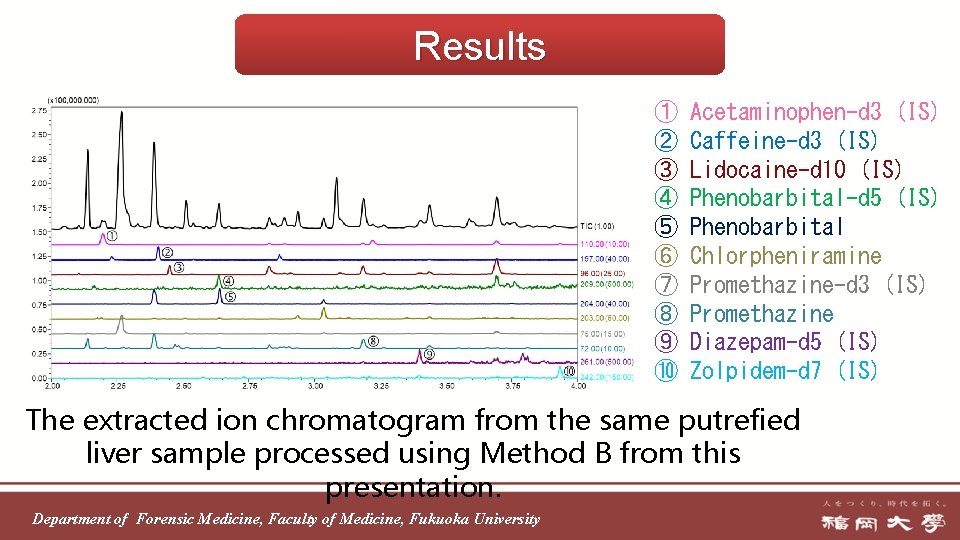
Results ① ② ③ ④ ⑤ ⑥ ⑦ ⑧ ⑨ ⑩ Acetaminophen-d 3 (IS) Caffeine-d 3 (IS) Lidocaine-d 10 (IS) Phenobarbital-d 5 (IS) Phenobarbital Chlorpheniramine Promethazine-d 3 (IS) Promethazine Diazepam-d 5 (IS) Zolpidem-d 7 (IS) The extracted ion chromatogram from the same putrefied liver sample processed using Method B from this presentation. Department of Forensic Medicine, Faculty of Medicine, Fukuoka University
Improvement of the Chromatogram (Scan – TIC) Qu. ECh. ERS Method B from publication Method B from this presentation Department of Forensic Medicine, Faculty of Medicine, Fukuoka University
Results ① ② ③ ④ ⑤ ⑥ ⑦ ⑧ ⑨ ⑩ The MRM chromatogram of the same extracted sample from the previous slide. Department of Forensic Medicine, Faculty of Medicine, Fukuoka University Acetaminophen-d 3 (IS) Caffeine-d 3 (IS) Lidocaine-d 10 (IS) Phenobarbital-d 5 (IS) Phenobarbital Chlorpheniramine Promethazine-d 3 (IS) Promethazine Diazepam-d 5 (IS) Zolpidem-d 7 (IS)
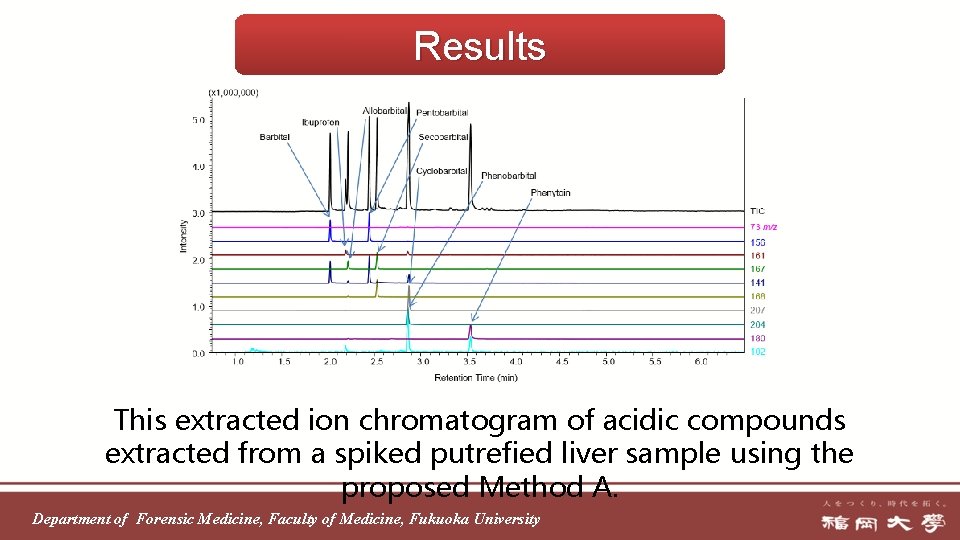
Results This extracted ion chromatogram of acidic compounds extracted from a spiked putrefied liver sample using the proposed Method A. Department of Forensic Medicine, Faculty of Medicine, Fukuoka University
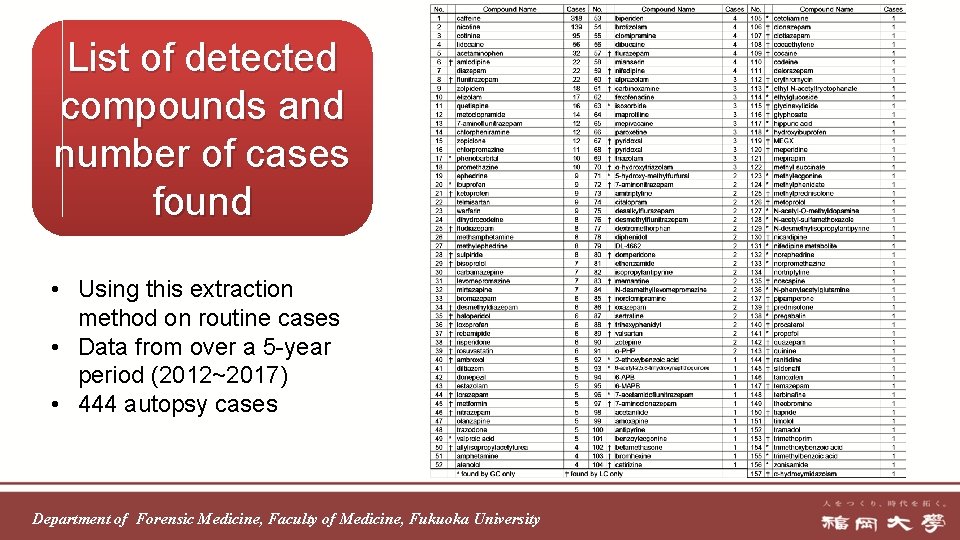
List of detected compounds and number of cases found • Using this extraction method on routine cases • Data from over a 5 -year period (2012~2017) • 444 autopsy cases Department of Forensic Medicine, Faculty of Medicine, Fukuoka University
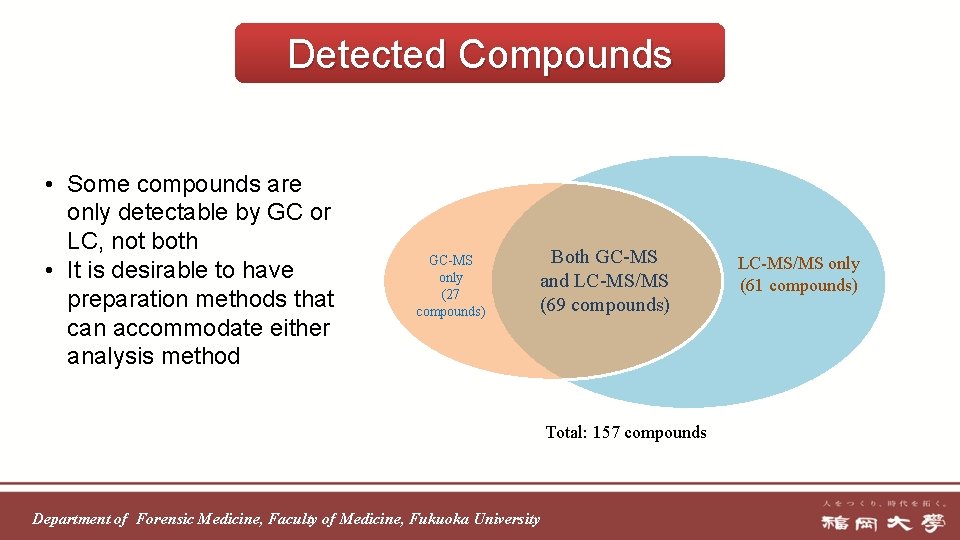
Detected Compounds • Some compounds are only detectable by GC or LC, not both • It is desirable to have preparation methods that can accommodate either analysis method GC-MS only (27 compounds) Both GC-MS and LC-MS/MS (69 compounds) Total: 157 compounds Department of Forensic Medicine, Faculty of Medicine, Fukuoka University LC-MS/MS only (61 compounds)
Conclusion & Significance • Putrefied specimens are often the only remaining samples left from severely decomposed cadavers. • The combination of a robust preparation method analysis with fast GC-MS/MS could aid the forensic medicine and toxicology communities in elucidating important information from these often-overlooked biological matrices. Department of Forensic Medicine, Faculty of Medicine, Fukuoka University
Thank you for your attention! Please join us in Fukuoka, Japan, for the 24 th Congress of the International Academy of Legal Medicine, June 5 -8 www. ialm 2018. org Department of Forensic Medicine, Faculty of Medicine, Fukuoka University