
DEOXYRIBONUCLEIC ACID The Double Helix Why does DNA
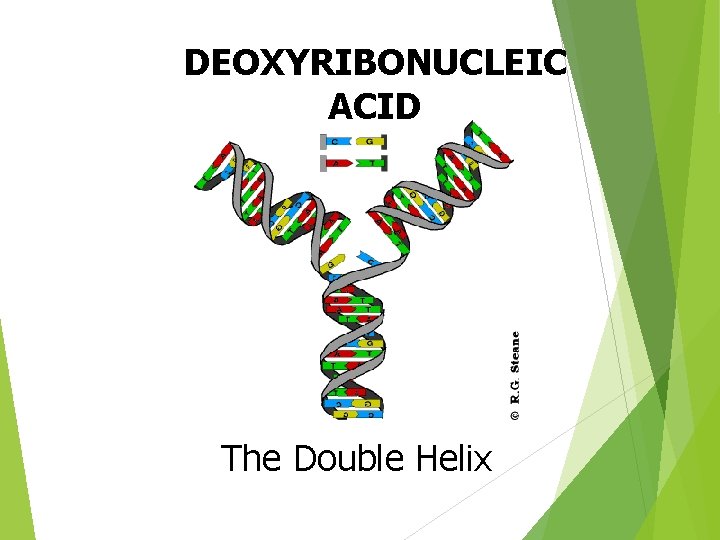
DEOXYRIBONUCLEIC ACID The Double Helix
Why does DNA replicate? Cells copy genetic information before cell division so that each new cell has a complete set of DNA
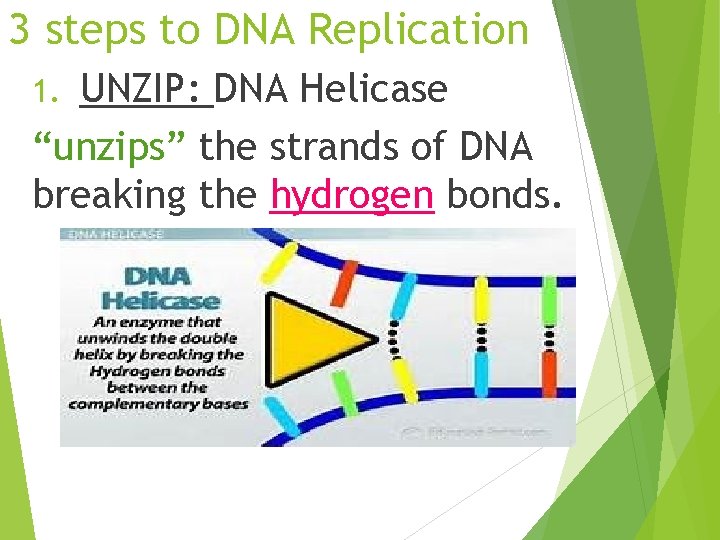
3 steps to DNA Replication UNZIP: DNA Helicase “unzips” the strands of DNA breaking the hydrogen bonds. 1.
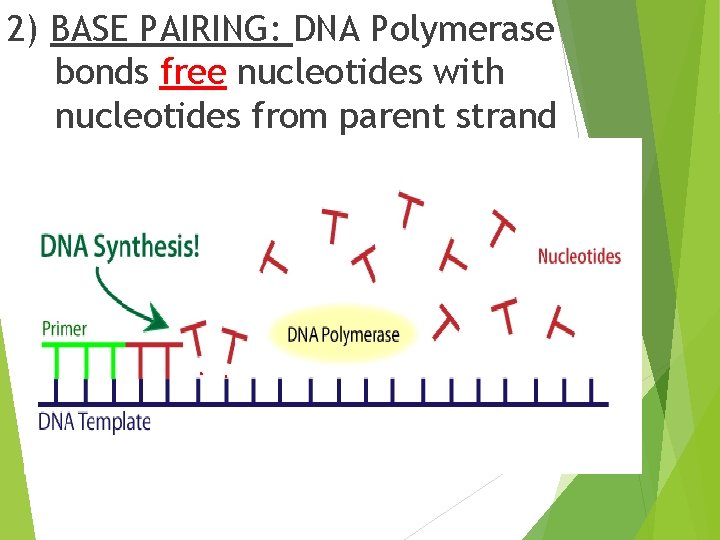
2) BASE PAIRING: DNA Polymerase bonds free nucleotides with nucleotides from parent strand
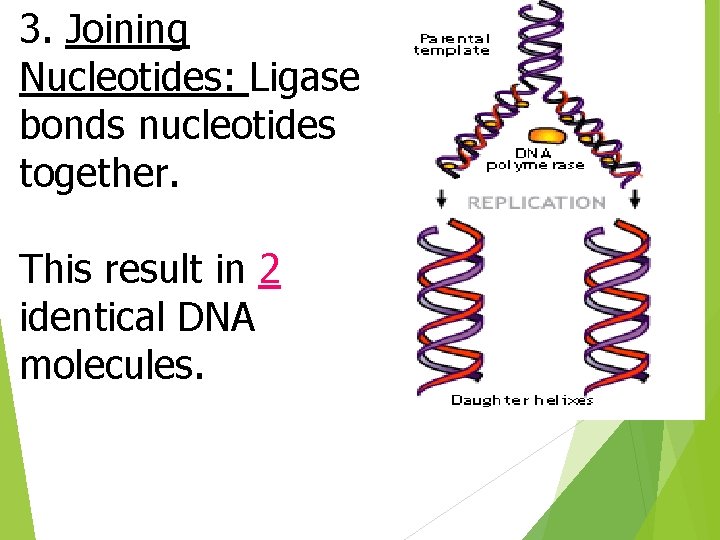
3. Joining Nucleotides: Ligase bonds nucleotides together. This result in 2 identical DNA molecules.
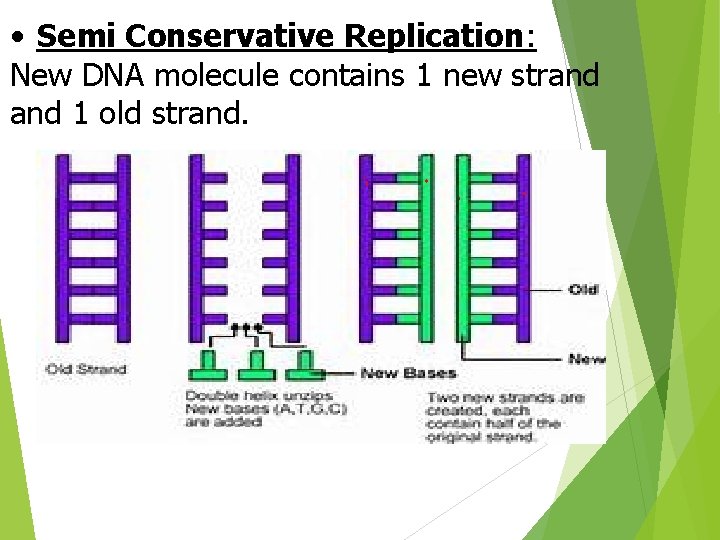
• Semi Conservative Replication: New DNA molecule contains 1 new strand 1 old strand.
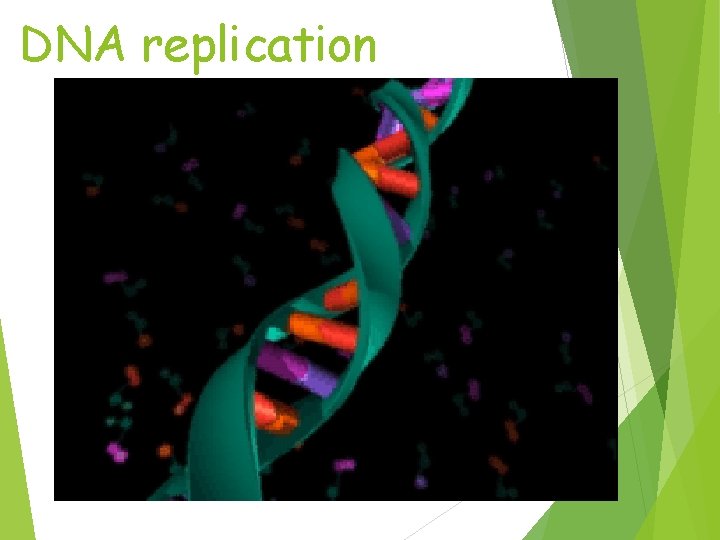
DNA replication
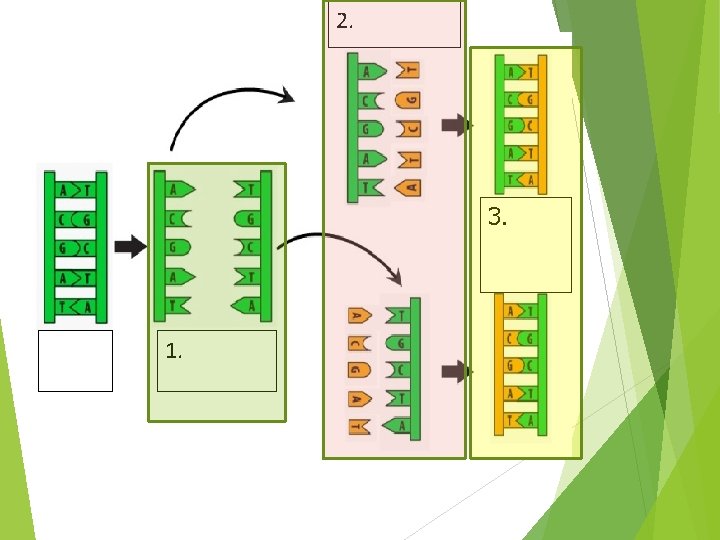
2. 3. 1.
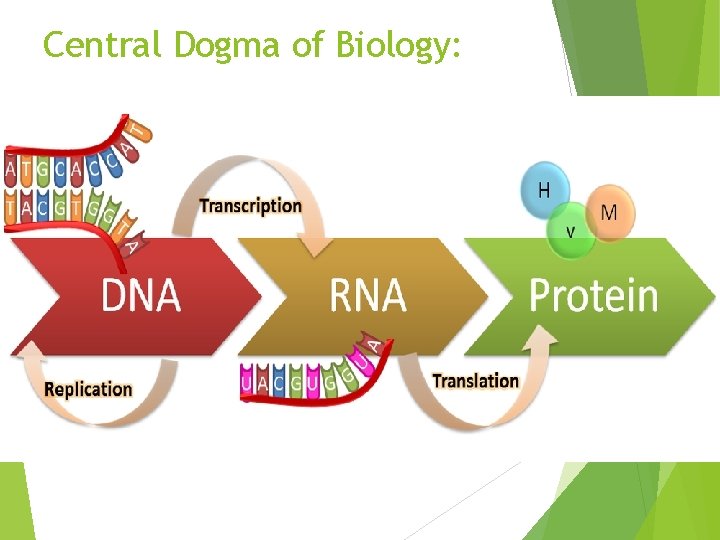
Central Dogma of Biology:
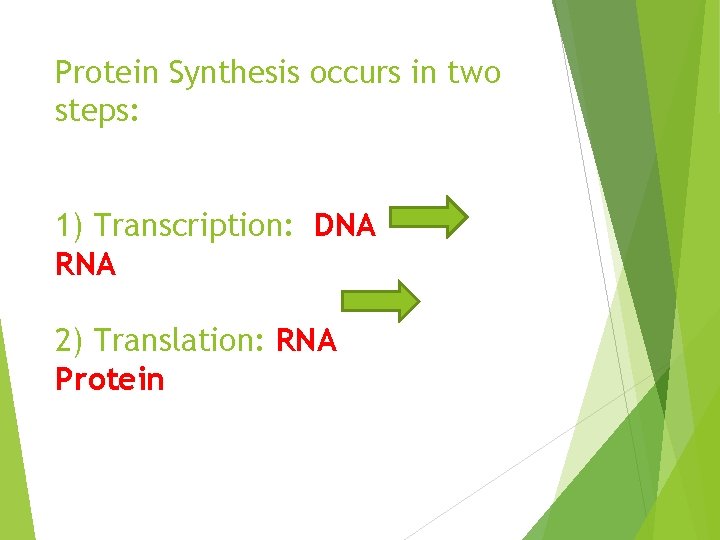
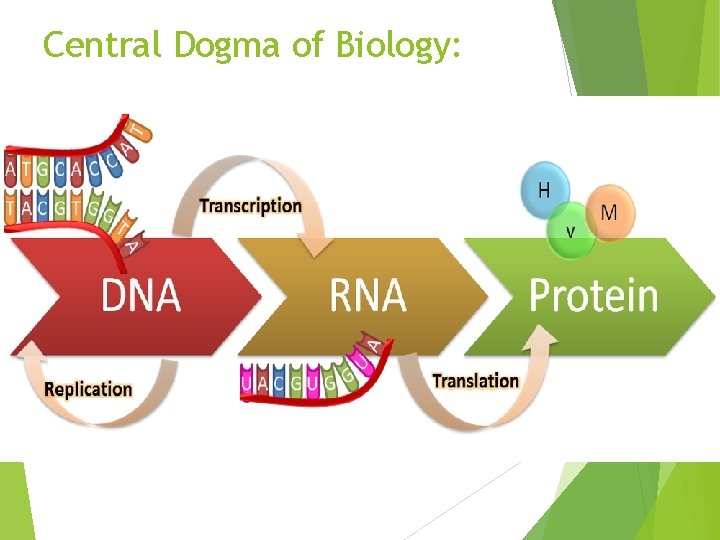
Protein Synthesis occurs in two steps: 1) Transcription: DNA RNA 2) Translation: RNA Protein
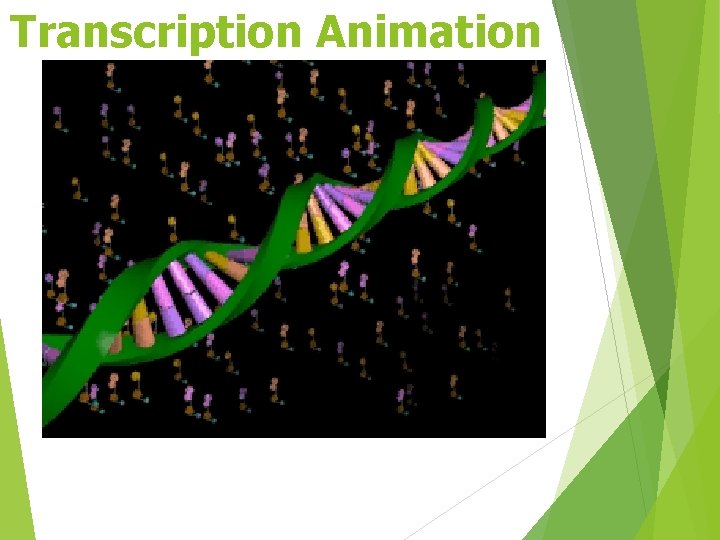
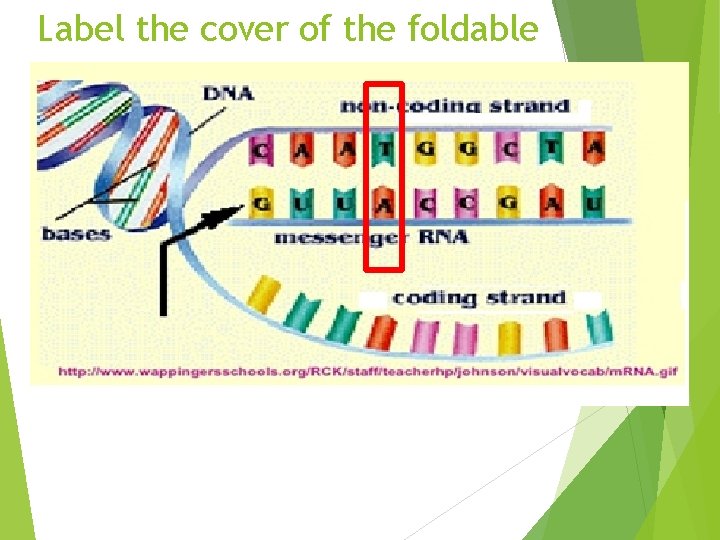
Transcription Makes a temporary copy of DNA
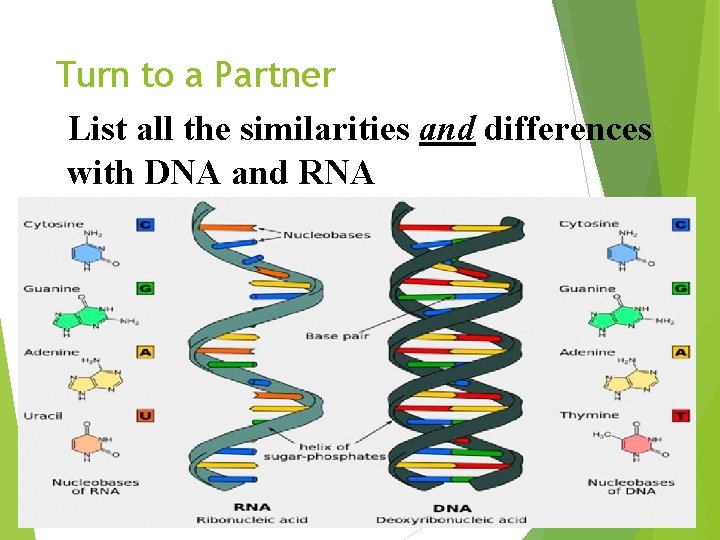
Turn to a Partner List all the similarities and differences with DNA and RNA
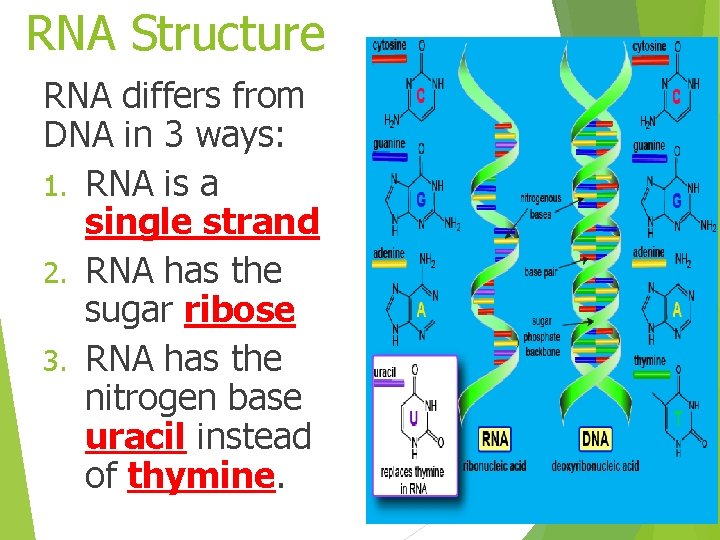
RNA Structure RNA differs from DNA in 3 ways: 1. RNA is a single strand 2. RNA has the sugar ribose 3. RNA has the nitrogen base uracil instead of thymine.
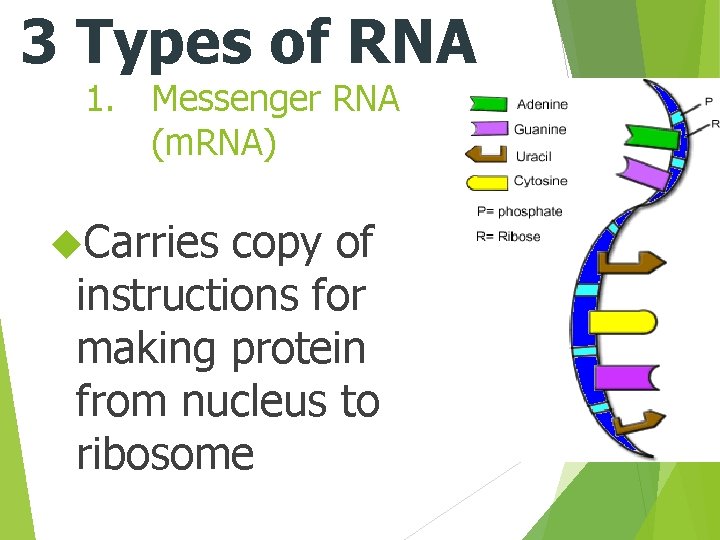
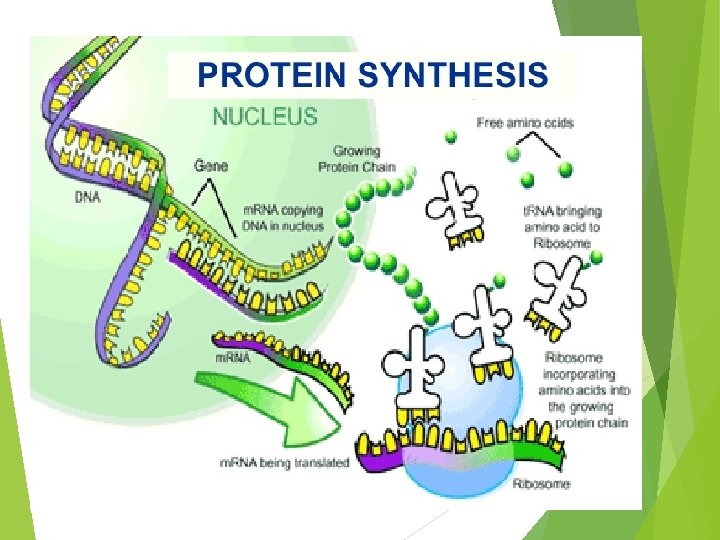
3 Types of RNA 1. Messenger RNA (m. RNA) Carries copy of instructions for making protein from nucleus to ribosome
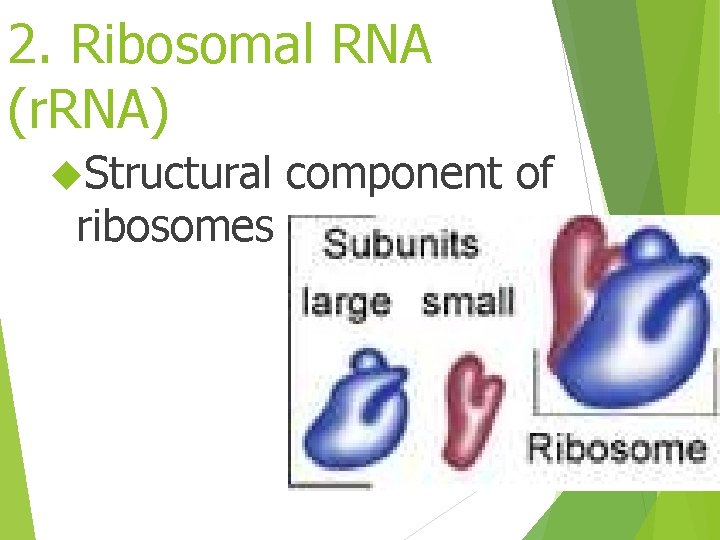
2. Ribosomal RNA (r. RNA) Structural ribosomes component of
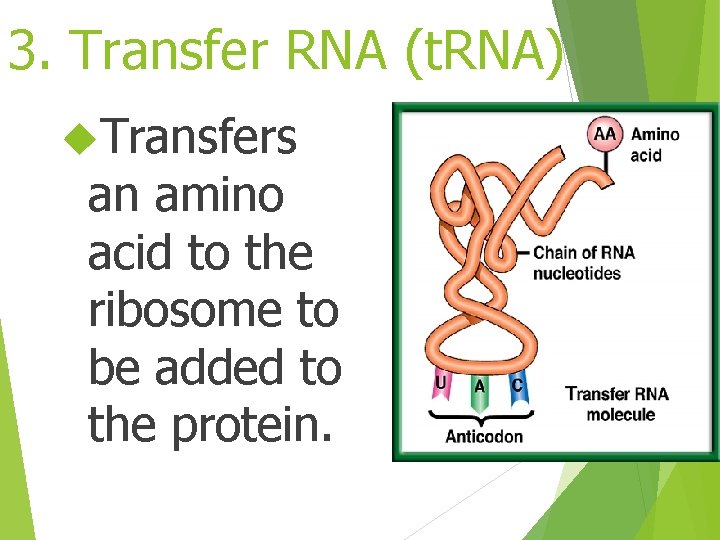
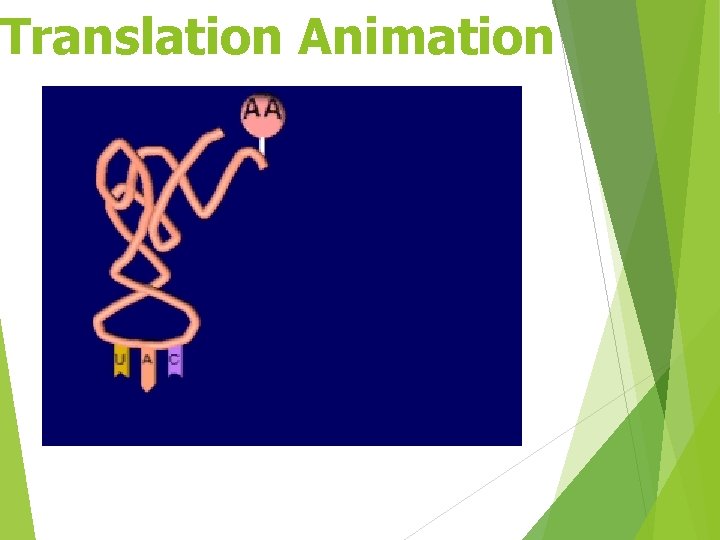
3. Transfer RNA (t. RNA) Transfers an amino acid to the ribosome to be added to the protein.
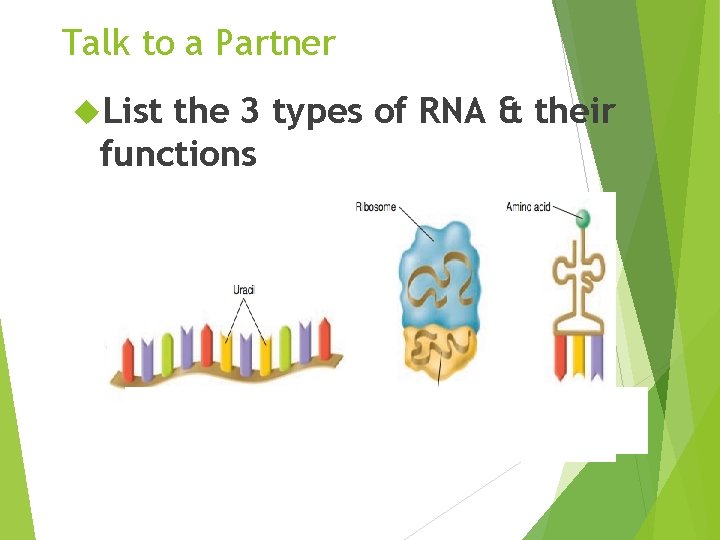
Talk to a Partner List the 3 types of RNA & their functions
Transcription: The process 1. An enzyme unzips DNA 2. As DNA unzips, free RNA nucleotides pair with the DNA nucleotides. 3. When base pairing is done, the new m. RNA breaks away. 4. m. RNA leaves the nucleus and enters the cytoplasm
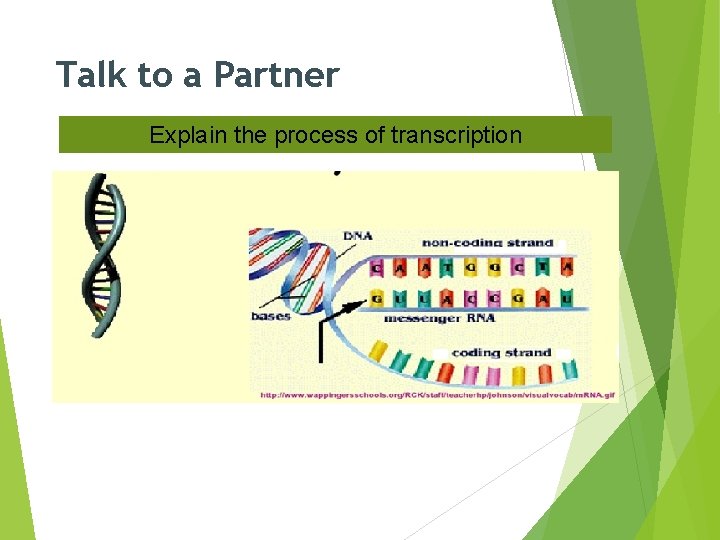
Talk to a Partner Explain the process of transcription
Transcription Animation
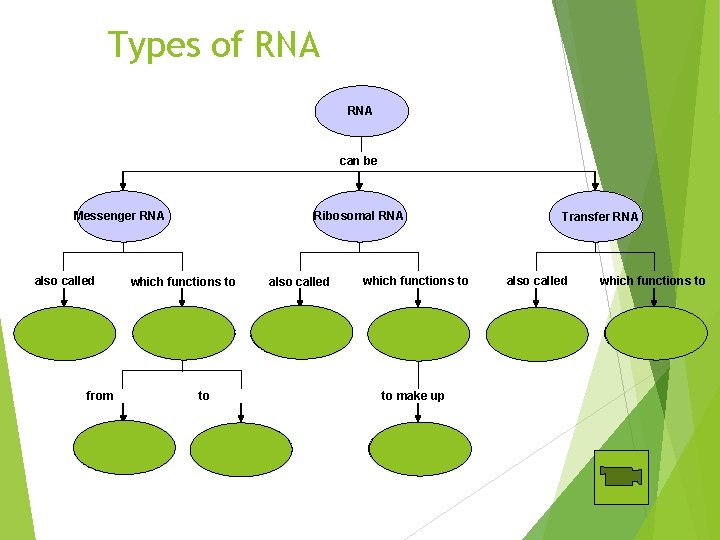
Types of RNA can be Messenger RNA Ribosomal RNA also called which functions to m. RNA Carry instructions from DNA to Ribosome also called r. RNA which functions to Combine with proteins to make up Ribosomes Transfer RNA also called t. RNA which functions to Bring amino acids to ribosome
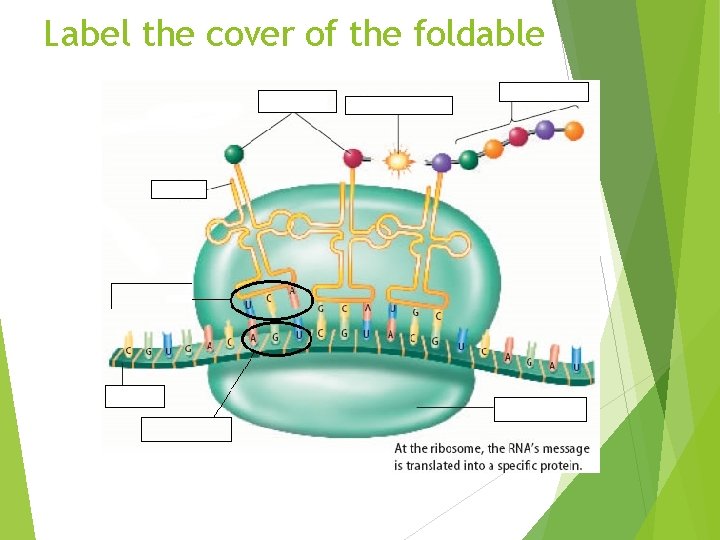
Label the cover of the foldable
Translation RNA to PROTEIN
Steps to Translation
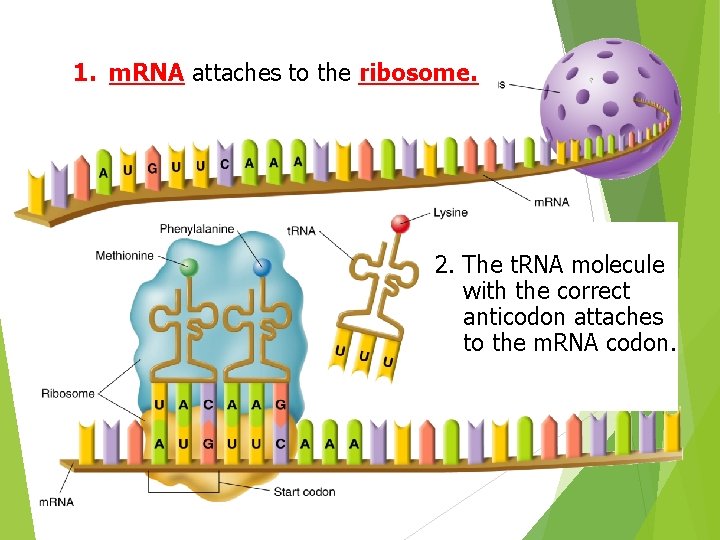
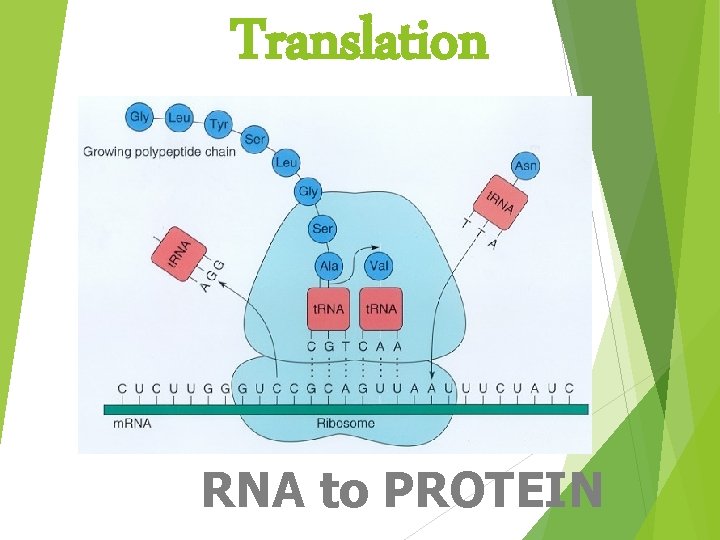
1. m. RNA attaches to the ribosome. 2. The t. RNA molecule with the correct anticodon attaches to the m. RNA codon.
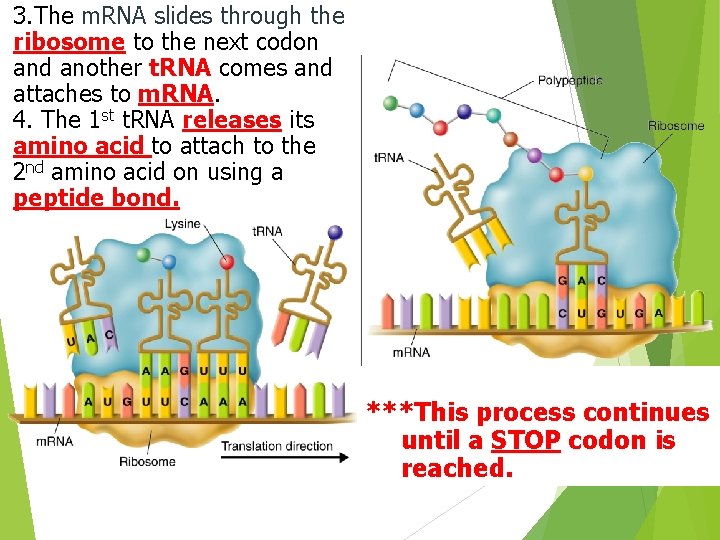
3. The m. RNA slides through the ribosome to the next codon and another t. RNA comes and attaches to m. RNA. 4. The 1 st t. RNA releases its amino acid to attach to the 2 nd amino acid on using a peptide bond. ***This process continues until a STOP codon is reached.
Talk to a Partner Translation: RNA to PROTEIN
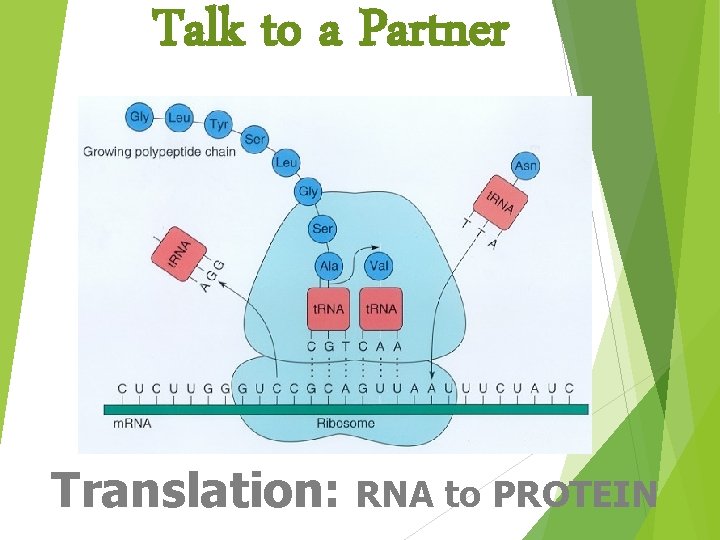
Translation into a Proteins are made by joining amino acids with a peptide bond into long chains called polypeptides. The genetic code is read three letters at a time, so that each “word” of the coded message is three m. RNA bases long. This 3 -letter “word” is known as a codon. Each codon corresponds to a particular amino acid (the anti-codon on t. RNA).
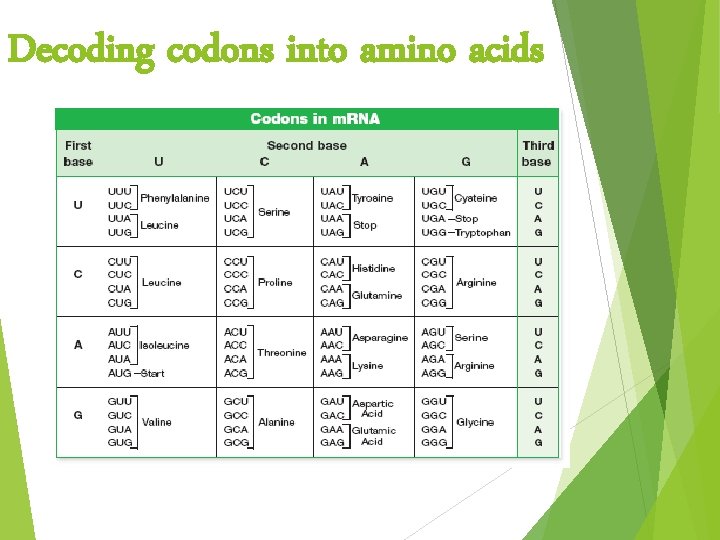
Decoding codons into amino acids
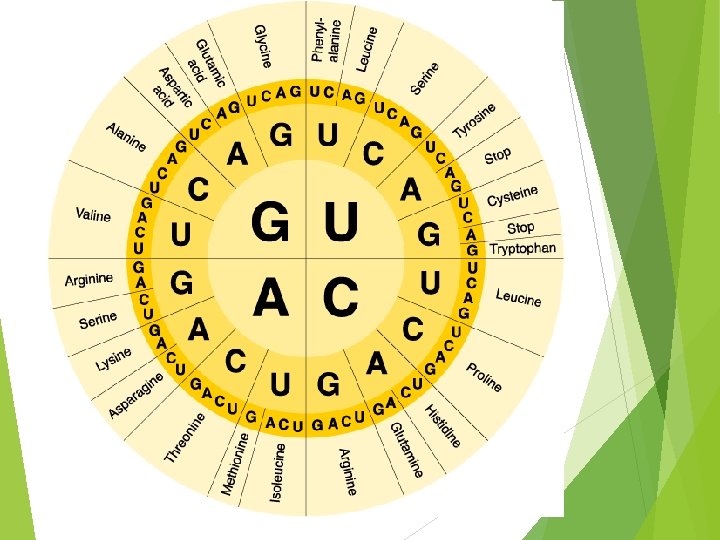

Example: Template DNA: TAC TGG CCT TCG ACT m. RNA: (Codon) t. RNA: (Anticodon) Amino Acids: AUG ACC GGA AGC UGA UAC UGG CCU UCG ACU Met- Thre- Gly- Ser -stop
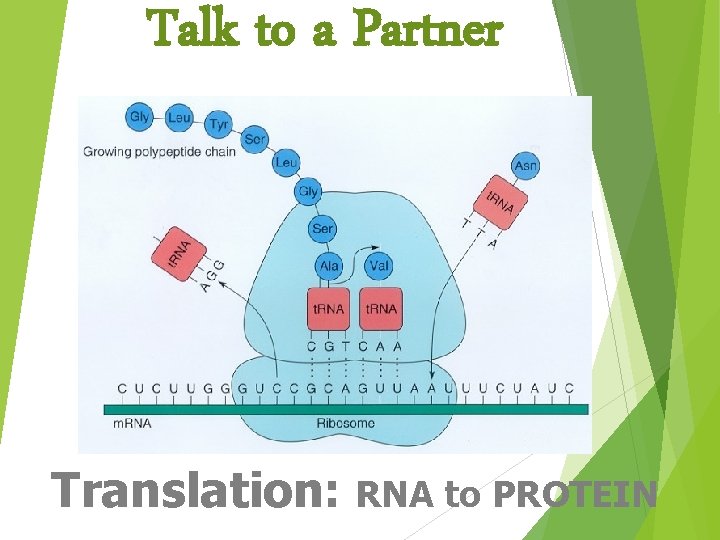
Talk to a Partner Translation: RNA to PROTEIN
Label the cover of the foldable
Translation Animation
Central Dogma of Biology:
- Slides: 36