
Dental Liners Bases and Bonding Systems Chapter 44
Dental Liners, Bases, and Bonding Systems Chapter 44 Copyright © 2009, 2006 by Saunders, an imprint of Elsevier Inc. All rights reserved.
Chapter 44 Lesson 44. 1 Copyright © 2009, 2006 by Saunders, an imprint of Elsevier Inc. All rights reserved.
Learning Objectives Pronounce, define, and spell the Key Terms. Discuss how the sensitivity of a tooth determines the type of dental material that is selected for a procedure. Discuss how and why cavity liners are used in restoring tooth structure. (Cont’d) Copyright © 2009, 2006 by Saunders, an imprint of Elsevier Inc. All rights reserved.
Learning Objectives (Cont’d) Apply calcium hydroxide to a prepared tooth surface. Discuss how and why varnishes are used in restoring tooth structure. Apply dental varnish to a prepared tooth surface. Copyright © 2009, 2006 by Saunders, an imprint of Elsevier Inc. All rights reserved.
Introduction Dental liners, bases, and bonding systems are a supplemental classification of dental materials that provide additional protection for the health and well-being of the tooth being restored. Copyright © 2009, 2006 by Saunders, an imprint of Elsevier Inc. All rights reserved.
Prepared Tooth Structures Design of the cavity preparation Provides strength within the tooth Ø Helps determine how the tooth will hold the restoration in place Ø Copyright © 2009, 2006 by Saunders, an imprint of Elsevier Inc. All rights reserved.
Pulpal Responses Type of Stimulus Physical Mechanical occlusion Chemical Biologic Example Thermal, electrical Handpiece, traumatic Acid from dental materials Bacteria from saliva Copyright © 2009, 2006 by Saunders, an imprint of Elsevier Inc. All rights reserved.
Dental Liners Dental liners provide a thin barrier to protect the pulpal tissue from irritation caused by physical, mechanical, chemical, and biologic elements. Copyright © 2009, 2006 by Saunders, an imprint of Elsevier Inc. All rights reserved.
Calcium Hydroxide Indications for use Protects the pulp from chemical irritation by way of its sealing ability Ø Stimulates the production of reparative or secondary dentin Ø Compatible with all types of restorative materials Ø Application process May be an advanced function in your state Ø Placed directly over the deepest portion of the preparation Ø Placed only on dentin Ø Copyright © 2009, 2006 by Saunders, an imprint of Elsevier Inc. All rights reserved.
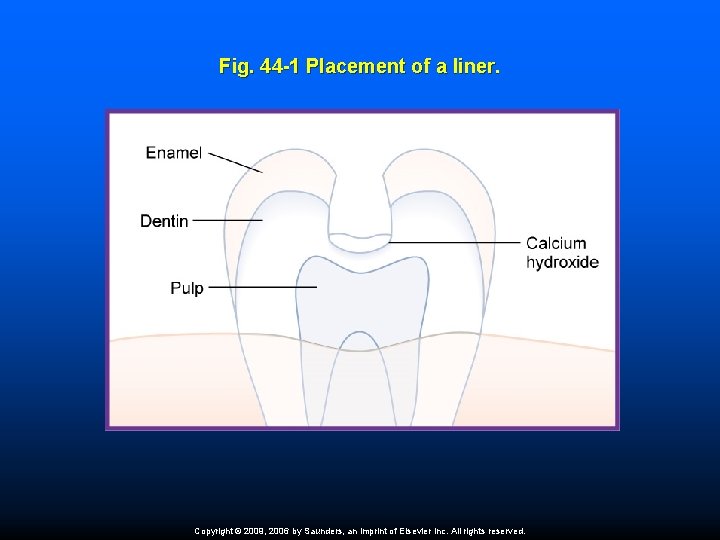
Fig. 44 -1 Placement of a liner. Copyright © 2009, 2006 by Saunders, an imprint of Elsevier Inc. All rights reserved.
Varnish is a liquid consisting of one or more resins in an organic solvent applied to the internal preparation structure. Copyright © 2009, 2006 by Saunders, an imprint of Elsevier Inc. All rights reserved.
Varnishes Indications for use* Sealing dentinal tubules Ø Reducing leakage around a restoration Ø Acting as a barrier to protect the tooth from highly acidic cements such as zinc phosphate Ø * This material is contraindicated in its use under composite resins and glass ionomer restorations. (Cont’d) Copyright © 2009, 2006 by Saunders, an imprint of Elsevier Inc. All rights reserved.
Varnishes (Cont’d) Application process Applied with the use of a small disposable applicator or a cotton pellet Ø Thin coating placed on the internal walls, floor, and margin of a cavity preparation Ø Allowed to air dry Ø Second application recommended Ø Copyright © 2009, 2006 by Saunders, an imprint of Elsevier Inc. All rights reserved.
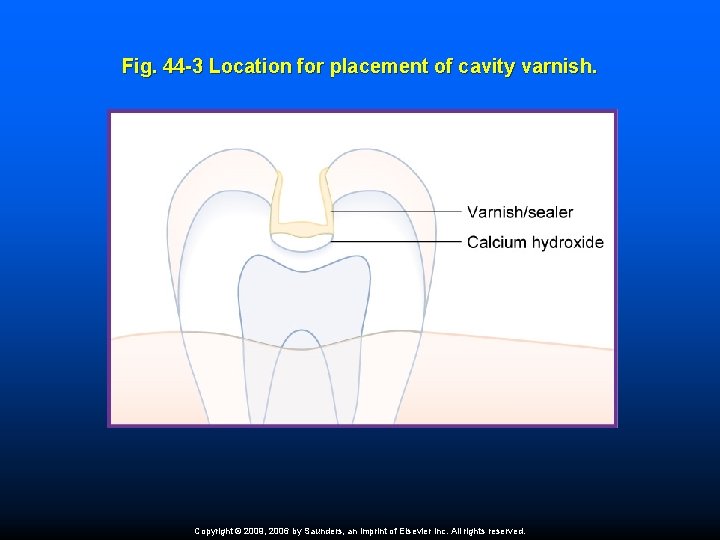
Fig. 44 -3 Location for placement of cavity varnish. Copyright © 2009, 2006 by Saunders, an imprint of Elsevier Inc. All rights reserved.
Chapter 44 Lesson 44. 2 Copyright © 2009, 2006 by Saunders, an imprint of Elsevier Inc. All rights reserved.
Learning Objectives Discuss how and why dentin sealers are used in restoring tooth structure. Apply a dentin sealer to a prepared tooth surface. Discuss how and why dental bases are used in restoring tooth structure. Mix and place three types of bases on a prepared tooth surface. Copyright © 2009, 2006 by Saunders, an imprint of Elsevier Inc. All rights reserved.
Dentin Sealer Indications for use Treatment or prevention of hypersensitivity Ø Instead of a varnish Ø Sealing of the dentinal tubules Ø Ideal for use under all indirect restorations Ø Application process Use the material sparingly. Ø Do not allow the material to make contact with soft tissues (HEMA and glutaraldehyde). Ø Apply the dentin sealer with the use of a cottontipped applicator. Ø Apply the sealer over all areas of exposed dentin. Ø Copyright © 2009, 2006 by Saunders, an imprint of Elsevier Inc. All rights reserved.
Dental Bases Dental bases provide different types of pulpal protection: Protective: protects the pulp from a large restoration Ø Insulating: protects the tooth from thermal shock Ø Sedative: soothes pulp that has been damaged by decay or irritated by mechanical means. Ø Copyright © 2009, 2006 by Saunders, an imprint of Elsevier Inc. All rights reserved.
Types of Base Materials Zinc oxide–eugenol (ZOE) Zinc phosphate Polycarboxylate Glass ionomer Copyright © 2009, 2006 by Saunders, an imprint of Elsevier Inc. All rights reserved.
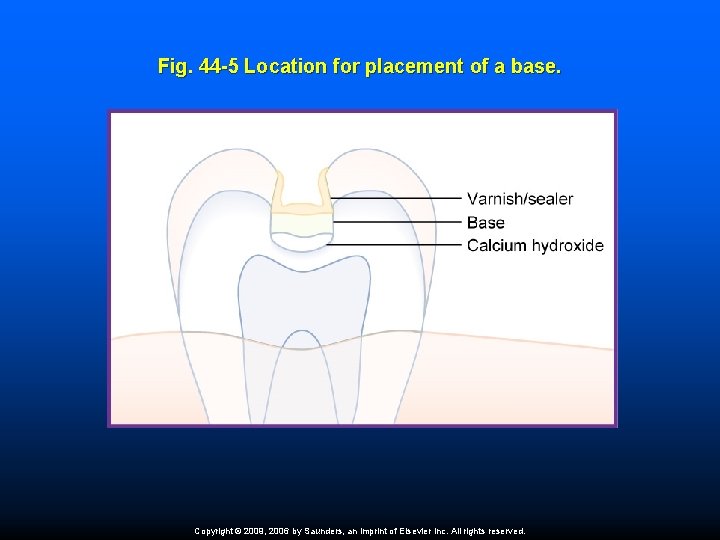
Fig. 44 -5 Location for placement of a base. Copyright © 2009, 2006 by Saunders, an imprint of Elsevier Inc. All rights reserved.
Chapter 44 Lesson 44. 3 Copyright © 2009, 2006 by Saunders, an imprint of Elsevier Inc. All rights reserved.
Learning Objectives Describe the tooth-etching process and its importance in the bonding of tooth and material. Describe bonding systems and how they provide a better adherence of dental materials to the tooth structure. Apply etchant material. Apply a bonding system to the prepared tooth structure. Copyright © 2009, 2006 by Saunders, an imprint of Elsevier Inc. All rights reserved.
Dental Bonding Dental bonding improves retention by creating a micromechanical retention between the tooth structure and the restoration. Copyright © 2009, 2006 by Saunders, an imprint of Elsevier Inc. All rights reserved.
Enamel Bonding Enamel bonding is placed directly on the intact enamel surface. Examples of enamel bonding Sealants Ø Bonded orthodontic brackets Ø Resin‑bonded bridges Ø Bonded veneers Ø Copyright © 2009, 2006 by Saunders, an imprint of Elsevier Inc. All rights reserved.
Dentin Bonding Dentin bonding is placed on the prepared dentin for the bonding of a restorative material to tooth structure. Smear layer Thin layer of debris Ø “Nature’s bandage” Ø Copyright © 2009, 2006 by Saunders, an imprint of Elsevier Inc. All rights reserved.
Etching Systems Etching systems are used to remove the smear layer in preparation for bonding. Supplied as: Liquid/gel Ø Maleic acid Ø Phosphoric acid Ø Copyright © 2009, 2006 by Saunders, an imprint of Elsevier Inc. All rights reserved.
Clinical Application of the Etchant and Bonding Systems Plaque or debris is removed before the bonding process. Etchant is applied to remove the smear layer. The tooth structure is rinsed and dried (avoid overdrying etched teeth). All surfaces are covered with onding solution. Too much bonding is better than too little. Contamination with saliva requires the entire procedure to be redone. Allow time for the bonding material to mature before completing the restoration. Copyright © 2009, 2006 by Saunders, an imprint of Elsevier Inc. All rights reserved.
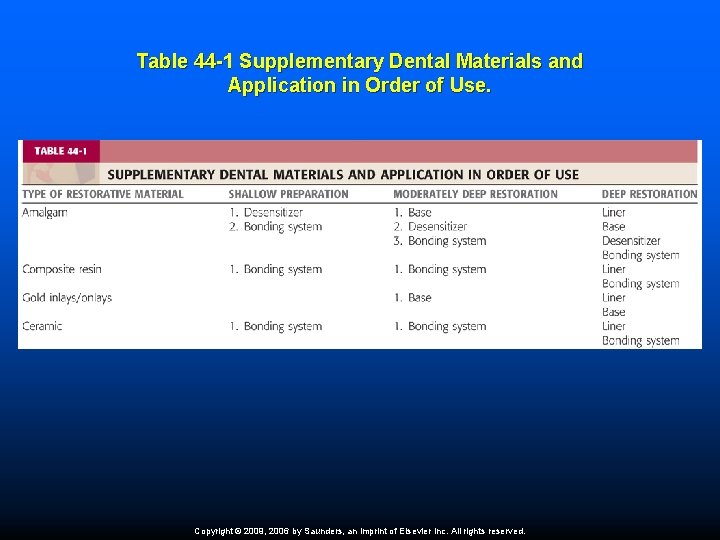
Table 44 -1 Supplementary Dental Materials and Application in Order of Use. Copyright © 2009, 2006 by Saunders, an imprint of Elsevier Inc. All rights reserved.
- Slides: 28