
DENTAL IMPLANTS TO PROBE OR NOT TO PROBE
DENTAL IMPLANTS: TO PROBE OR NOT TO PROBE BY: ALLISON WEBB
WHY DO WE PROBE? • Clinical method to determine periodontal health of a tooth • Detect ongoing inflammation and gauge bleeding tendencies • Evaluate results of therapy • Identify sites with perio history or sites at risk of breakdown • Locate calculus • Measure recession • Detect furcation involvement
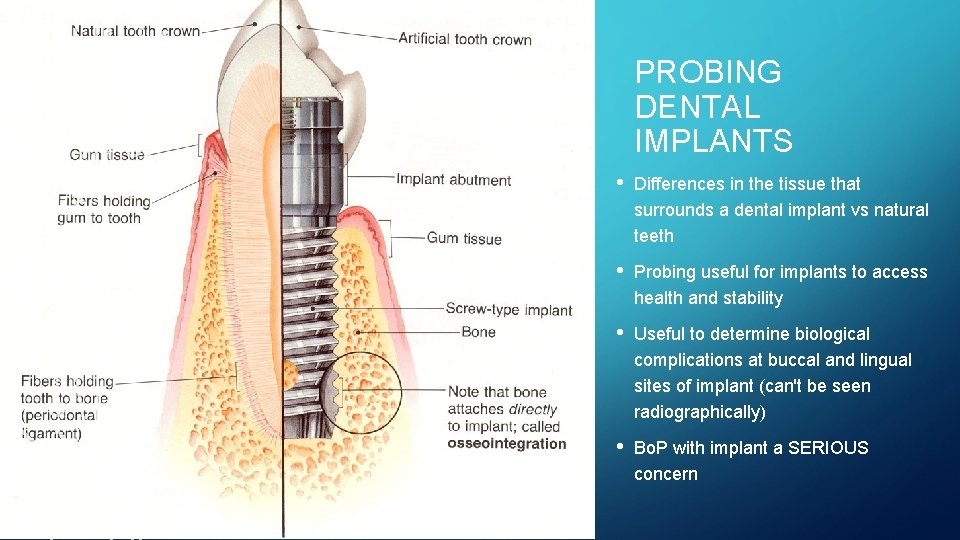
PROBING DENTAL IMPLANTS • Differences in the tissue that surrounds a dental implant vs natural teeth • Probing useful for implants to access health and stability • Useful to determine biological complications at buccal and lingual sites of implant (can't be seen radiographically) • Bo. P with implant a SERIOUS concern
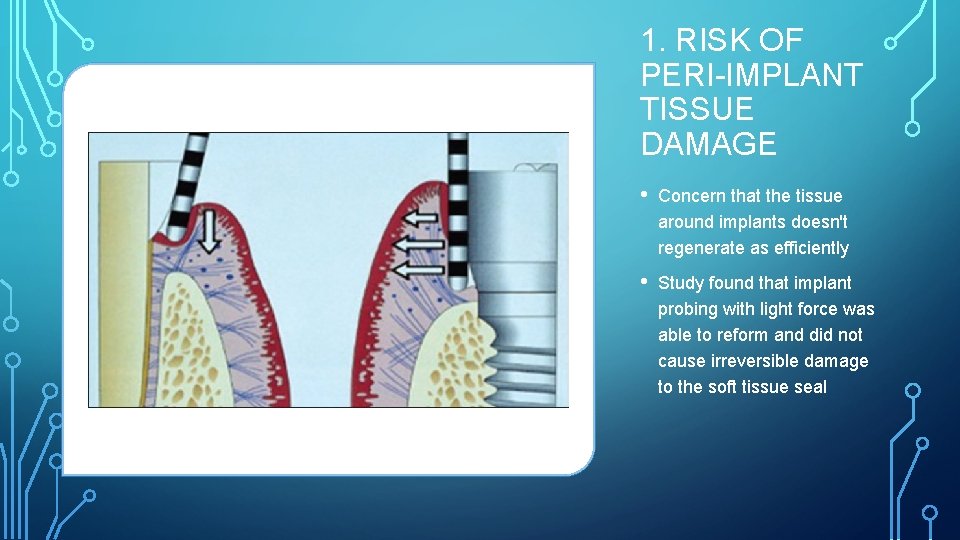
1. RISK OF PERI-IMPLANT TISSUE DAMAGE • Concern that the tissue around implants doesn't regenerate as efficiently • Study found that implant probing with light force was able to reform and did not cause irreversible damage to the soft tissue seal
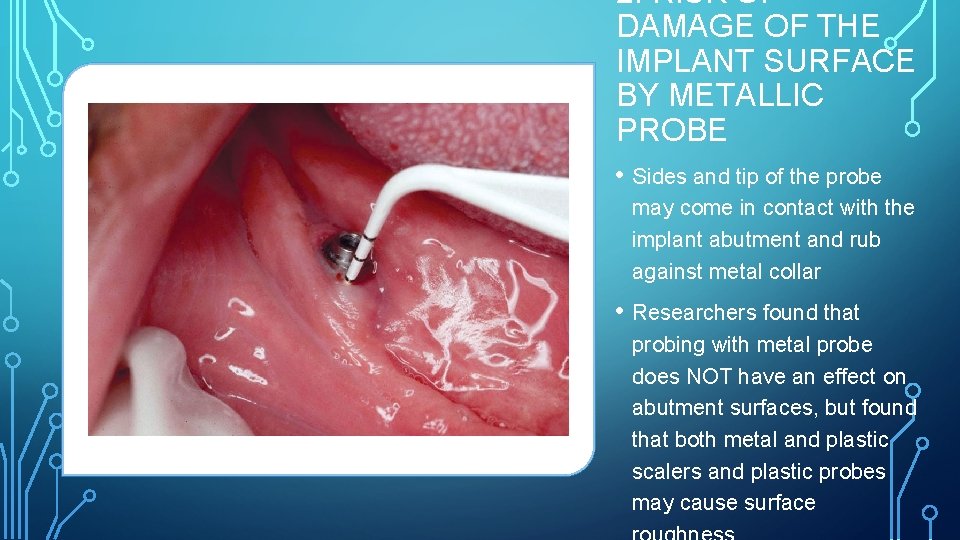
2. RISK OF DAMAGE OF THE IMPLANT SURFACE BY METALLIC PROBE • Sides and tip of the probe may come in contact with the implant abutment and rub against metal collar • Researchers found that probing with metal probe does NOT have an effect on abutment surfaces, but found that both metal and plastic scalers and plastic probes may cause surface
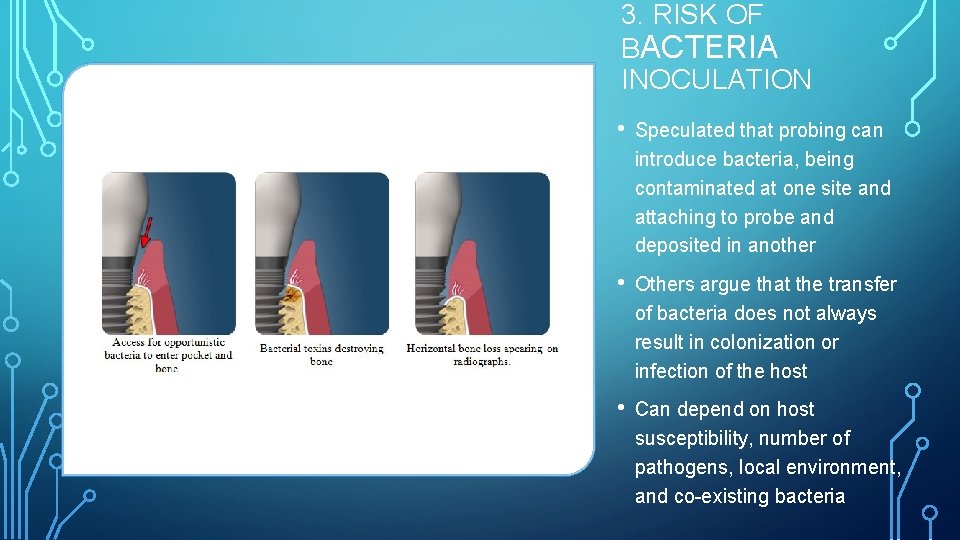
3. RISK OF BACTERIA INOCULATION • Speculated that probing can introduce bacteria, being contaminated at one site and attaching to probe and deposited in another • Others argue that the transfer of bacteria does not always result in colonization or infection of the host • Can depend on host susceptibility, number of pathogens, local environment, and co-existing bacteria
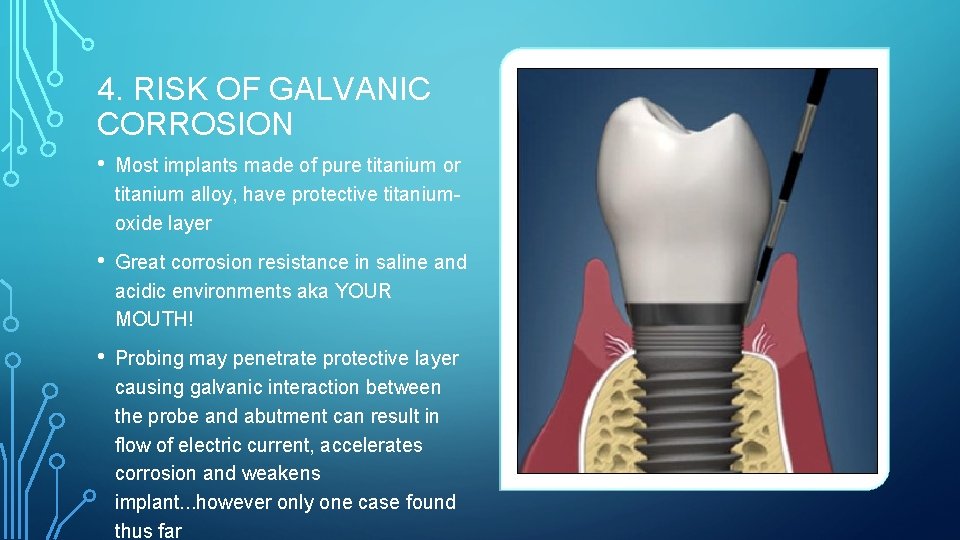
4. RISK OF GALVANIC CORROSION • Most implants made of pure titanium or titanium alloy, have protective titaniumoxide layer • Great corrosion resistance in saline and acidic environments aka YOUR MOUTH! • Probing may penetrate protective layer causing galvanic interaction between the probe and abutment can result in flow of electric current, accelerates corrosion and weakens implant. . . however only one case found thus far
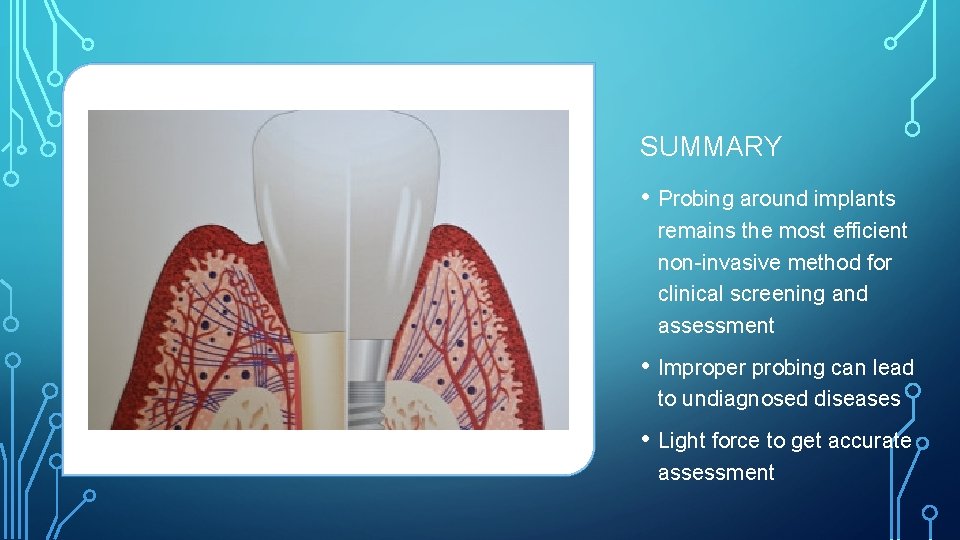
SUMMARY • Probing around implants remains the most efficient non-invasive method for clinical screening and assessment • Improper probing can lead to undiagnosed diseases • Light force to get accurate assessment
- Slides: 8