
DENTAL COMPLAINTS IN THE GENERAL MEDICINE OUTPATIENT SETTING
- Slides: 17
DENTAL COMPLAINTS IN THE GENERAL MEDICINE OUTPATIENT SETTING: A PRACTICE FLOWCHART FOR PROPER MANAGEMENT IN THE NON-DENTAL CLINIC Jessica Fordham, MSN, APRN, FNP-C Mississippi University for women
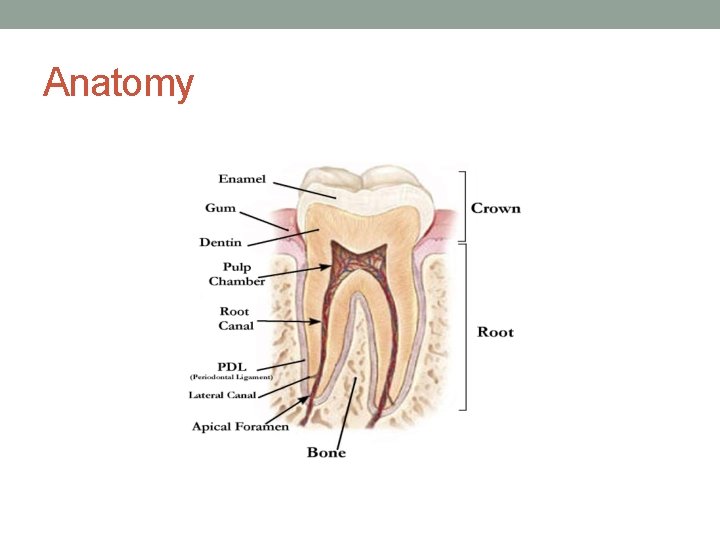
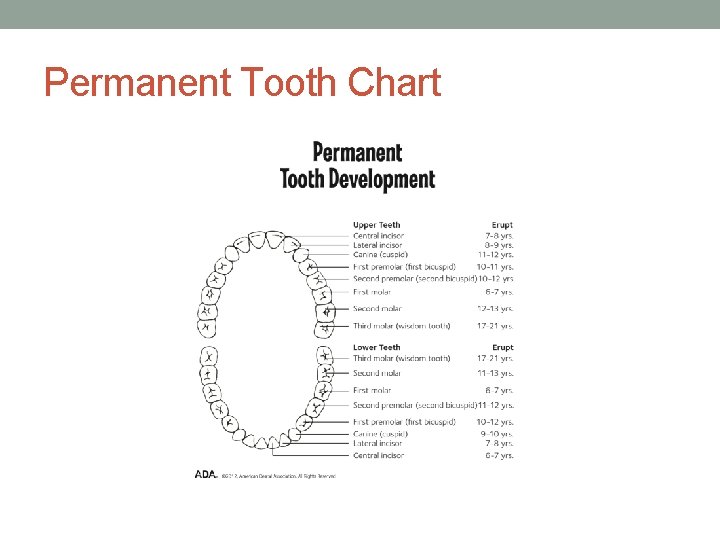
Objective • Discuss the most common dental complaint that presents to the non-dental outpatient clinic visits • Discuss the most common chief complaint associated with non-dental outpatient clinic visits • Define the tooth anatomy • Identify each tooth within the oral cavity • Discuss and define common oral pathologies such as: dental caries, pulpitis, pericoronitis, periapical abscess, dry socket, and tooth fractures • Discuss Recommended antibiotics for treatment • Define the components of the Dental Treatment Flowchart and utilize it as a user-friendly resource in clinical practice
The Most Common Reason for Dental Complaints in the Outpatient Setting • Cost • Lack of access to immediate dental healthcare • Unable to obtain an instantaneous appointment with a dental provider • Lack of insurance for dental services • Severe Pain during dental after-hours • Perception of patients identifying general practitioners as the primary manager of integrated and complete health care
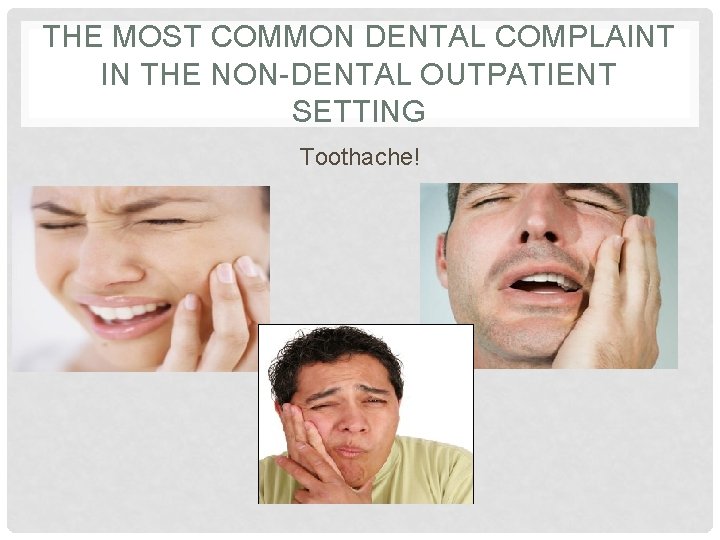
THE MOST COMMON DENTAL COMPLAINT IN THE NON-DENTAL OUTPATIENT SETTING Toothache!
Anatomy
Permanent Tooth Chart
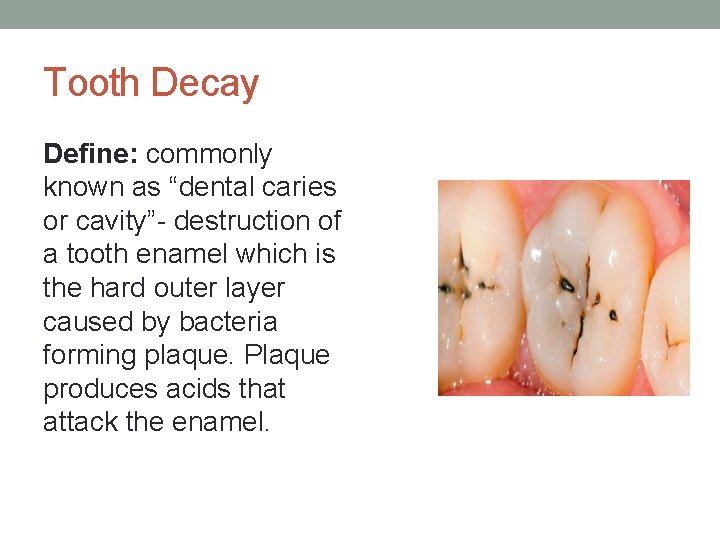
Tooth Decay Define: commonly known as “dental caries or cavity”- destruction of a tooth enamel which is the hard outer layer caused by bacteria forming plaque. Plaque produces acids that attack the enamel.
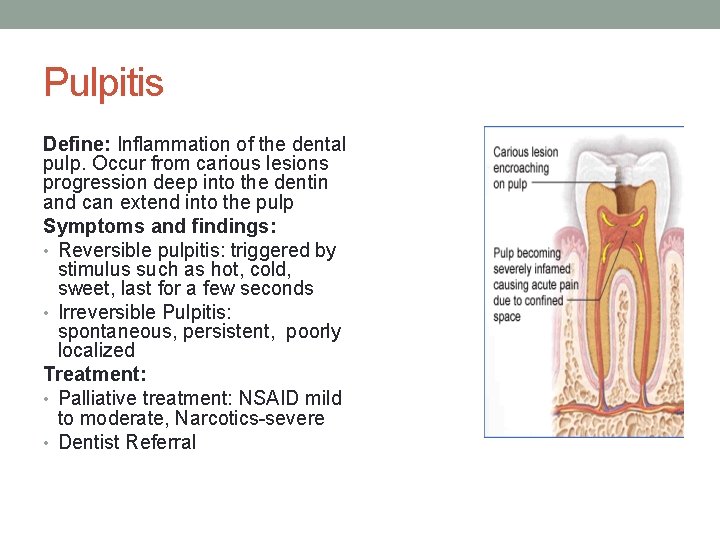
Pulpitis Define: Inflammation of the dental pulp. Occur from carious lesions progression deep into the dentin and can extend into the pulp Symptoms and findings: • Reversible pulpitis: triggered by stimulus such as hot, cold, sweet, last for a few seconds • Irreversible Pulpitis: spontaneous, persistent, poorly localized Treatment: • Palliative treatment: NSAID mild to moderate, Narcotics-severe • Dentist Referral
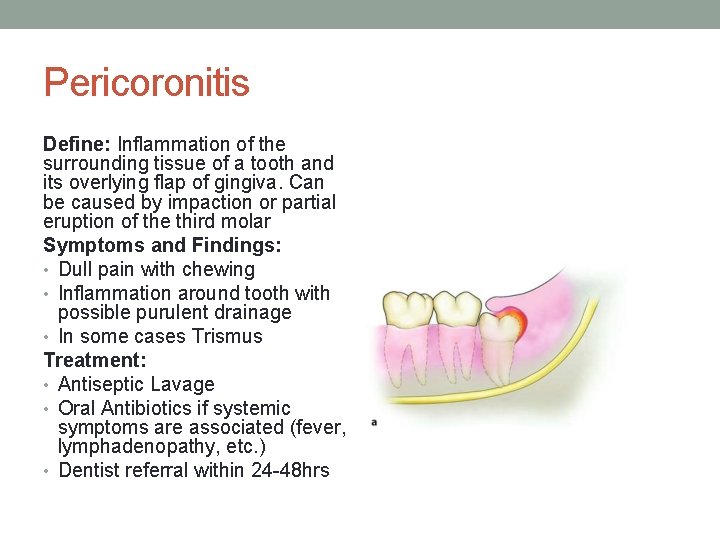
Pericoronitis Define: Inflammation of the surrounding tissue of a tooth and its overlying flap of gingiva. Can be caused by impaction or partial eruption of the third molar Symptoms and Findings: • Dull pain with chewing • Inflammation around tooth with possible purulent drainage • In some cases Trismus Treatment: • Antiseptic Lavage • Oral Antibiotics if systemic symptoms are associated (fever, lymphadenopathy, etc. ) • Dentist referral within 24 -48 hrs
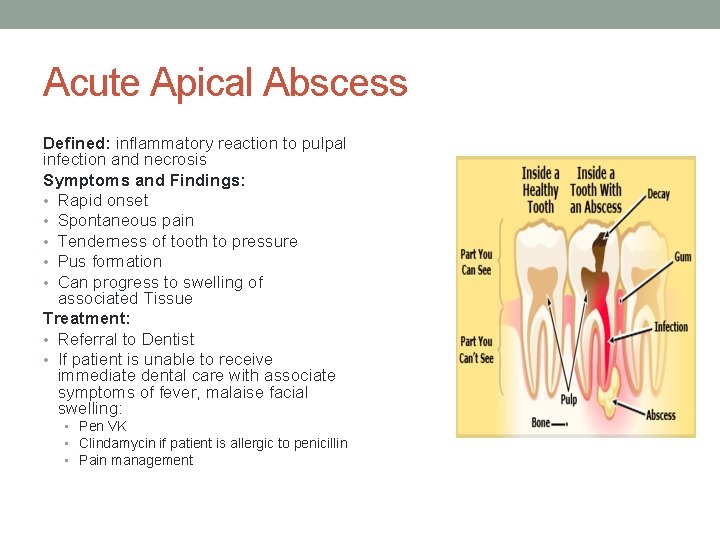
Acute Apical Abscess Defined: inflammatory reaction to pulpal infection and necrosis Symptoms and Findings: • Rapid onset • Spontaneous pain • Tenderness of tooth to pressure • Pus formation • Can progress to swelling of associated Tissue Treatment: • Referral to Dentist • If patient is unable to receive immediate dental care with associate symptoms of fever, malaise facial swelling: • Pen VK • Clindamycin if patient is allergic to penicillin • Pain management
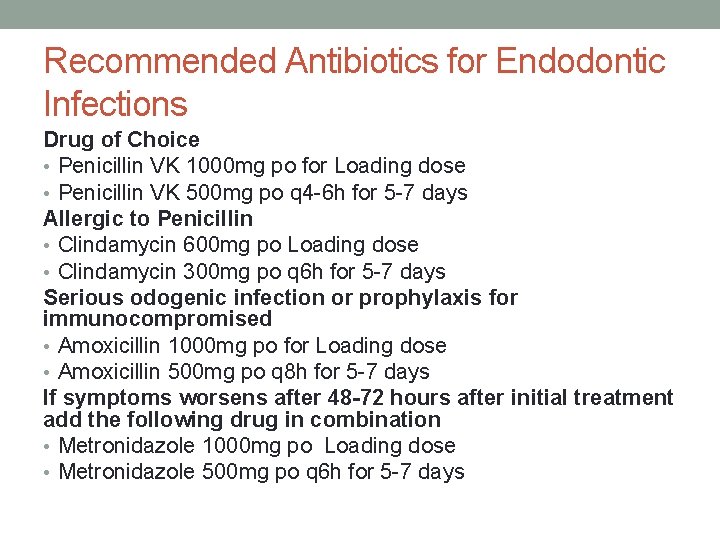
Recommended Antibiotics for Endodontic Infections Drug of Choice • Penicillin VK 1000 mg po for Loading dose • Penicillin VK 500 mg po q 4 -6 h for 5 -7 days Allergic to Penicillin • Clindamycin 600 mg po Loading dose • Clindamycin 300 mg po q 6 h for 5 -7 days Serious odogenic infection or prophylaxis for immunocompromised • Amoxicillin 1000 mg po for Loading dose • Amoxicillin 500 mg po q 8 h for 5 -7 days If symptoms worsens after 48 -72 hours after initial treatment add the following drug in combination • Metronidazole 1000 mg po Loading dose • Metronidazole 500 mg po q 6 h for 5 -7 days
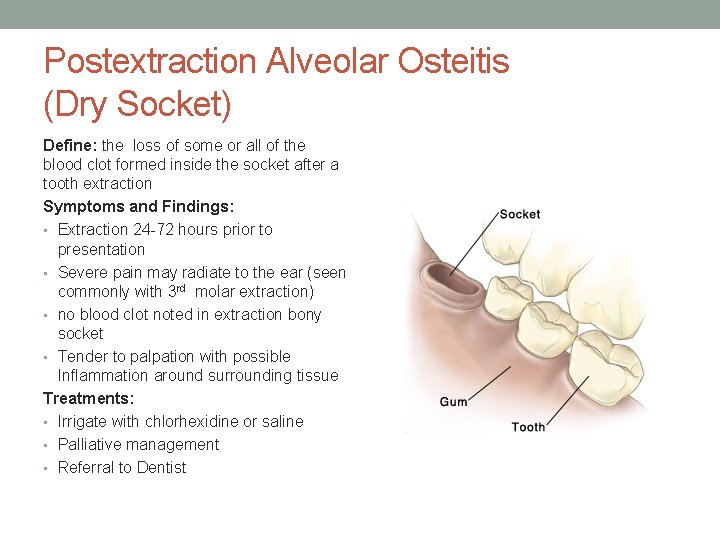
Postextraction Alveolar Osteitis (Dry Socket) Define: the loss of some or all of the blood clot formed inside the socket after a tooth extraction Symptoms and Findings: • Extraction 24 -72 hours prior to presentation • Severe pain may radiate to the ear (seen commonly with 3 rd molar extraction) • no blood clot noted in extraction bony socket • Tender to palpation with possible Inflammation around surrounding tissue Treatments: • Irrigate with chlorhexidine or saline • Palliative management • Referral to Dentist
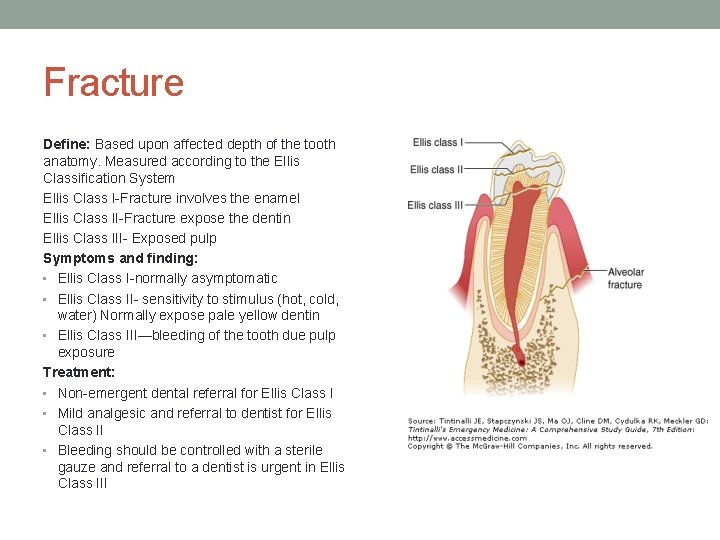
Fracture Define: Based upon affected depth of the tooth anatomy. Measured according to the Ellis Classification System Ellis Class I-Fracture involves the enamel Ellis Class II-Fracture expose the dentin Ellis Class III- Exposed pulp Symptoms and finding: • Ellis Class I-normally asymptomatic • Ellis Class II- sensitivity to stimulus (hot, cold, water) Normally expose pale yellow dentin • Ellis Class III—bleeding of the tooth due pulp exposure Treatment: • Non-emergent dental referral for Ellis Class I • Mild analgesic and referral to dentist for Ellis Class II • Bleeding should be controlled with a sterile gauze and referral to a dentist is urgent in Ellis Class III
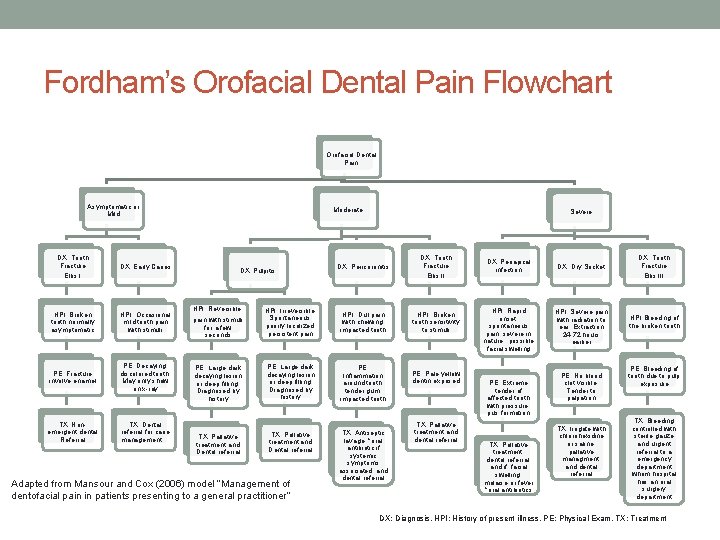
Fordham’s Orofacial Dental Pain Flowchart Orofacial Dental Pain Asymptomatic or Mild DX: Tooth Fracture Ellis I DX: Early Caries HPI: Broken tooth normally asymptomatic HPI: Occasional mild tooth pain with stimuli PE: Fracture involve enamel PE: Decaying, discolored tooth. May only show on x-ray TX: Nonemergent dental Referral TX: Dental referral for carie management Moderate DX: Pulpitis HPI: Reversible: Severe DX: Pericoronitis DX: Tooth Fracture Ellis II HPI: Broken tooth sensitivity to stimuli pain with stimuli for a few seconds HPI: Irreversible: Spontaneous, poorly localized, persistent pain HPI: Dull pain with chewing, impacted tooth PE: Large dark decaying lesion or deep filling. Diagnosed by history PE: Inflammation around tooth, tender gum, impacted tooth TX: Pallative treatment and Dental referral TX: Antiseptic lavage, *oral antibiotic if systemic symptoms associated, and dental referral TX: Pallative treatment and Dental referral Adapted from Mansour and Cox (2006) model “Management of dentofacial pain in patients presenting to a general practitioner” PE: Pale yellow dentin exposed TX: Pallative treatment and dental referral DX: Periapical infection DX: Dry Socket HPI: Rapid onset, spontaneous pain, severe in nature, possible facial swelling HPI: Severe pain with radiation to ear, Extraction 24 -72 hours earlier PE: Extreme tender of affected tooth with pressure; pus formation TX: Pallative treatment, dental referral, and if facial swelling, malaise or fever *oral antibiotics PE: No blood clot visible. Tender to palpation TX: Irrigate with chlorohexidine or saline, pallative managment, and dental referral DX: Tooth Fracture Ellis III HPI: Bleeding of the broken tooth PE: Bleeding of tooth due to pulp exposure TX: Bleeding controlled with sterile gauze and urgent referral to a emergency department whom hospital has an oral surgery department DX: Diagnosis, HPI: History of present illness, PE: Physical Exam, TX: Treatment
References American Association of Endodontics (summer, 2014). Endodontic diagnosis. Endodontics Colleagues for Excellence. Retrieved from http: //www. aae. org/uploaded. Files/Publications_and_Research/Newsletters/Endodontics_C olleagues_for_Excellence_Newsletter/ECFE_Summer 2014%20 FINAL. pdf American Association of Endodontics (winter, 2012). Endodontic diagnosis. Endodontics Colleagues for Excellence. Retrieved from http: //www. aae. org/uploaded. Files/Publications_and_Research/Endodontics_Colleagues_fo r_Excellence_Newsletter/ecfewinter 12 Final. pdf American Association of Endodontics(2006). Antibiotics and the treatment of endodontic infections. Endodontics Colleagues for Excellence. Retrieved from http: //www. aae. org/uploaded. Files/Publications_and_Research/Endodontics_Colleagues_fo r_Excellence_Newsletter/summer 06 ecfe. pdf American Dental Association. Permanent Tooth Development. Retrieved from http: //www. mouthhealthy. org/en/az-topics/e/eruption-charts Cohen, L. , A. (2013). Expanding the physicians role in addressing the oral health of adults. American Journal of Public health, 103(3), 408 -412. doi: 10. 2105/AJPH. 2012. 300990 Davis, M. M. , Hilton, T. J. , Benson, S. , Schott, J. , Howard, A. , Mc. Ginnis, P. , & Fagnan, L. (2010). Unmet dental needs in rural primary care: a clinic, community, and practice based research network collaborative. Journal of the American Board of Family Medicine, 23(4) 514 -516
Reference Idzik, S. , & Krauss, E. (2013). Evaluating and Managing Dental Complaints in the primary and urgent care. The Journal for Nurse practitioners, 9(6) 329 -338 Knight, J. (2009) Dental Basics for the primary Care NPs. The American Journal of Nurse Practitioners, 13(3), 36 -41. Mansour, M. , H. , & Cox, S. , C. (2006) Patients presenting to the general practitioner with pain of dental origin. Medical Journal of Australia, 185(2), 64 -67 Tintinalli, J. , E. , Stapczynski J. , S. , Ma, O. , J. , Cydulka, R. , K. , Meckler, G. , D. , (2011). Tintinalli Emergency Medicine (7 th ed. ). Retriewved from http: //accessmedicine. mhmedical. com/Search. Results. aspx? q=tooth+fracture#q=tooth+fract ure&fl_Top. Level. Content. Display. Name=Images&instance. Name=Search. Results&controller =Solr&action=Search. Results. With. Highlights&update. Target. Selector=#div. Search. Results Uppal, I. , Ginsber, E. , Pekmezaris, R. , Rosen, L. , Chawla, M. , Bangiyeva, N. , Nouryan, C. , & Wolf-klein (2012) Dental care and older adults: a survey of physician knowledge and practice. Journal of the American Geriatric Society, 60, 1374 -1375. US Departmen of Health and Human Services. Oral Health in America. A Report of the Surgeon General. 2000. http: //www 2. nidcr. nih. gov/sgrohweb/welcome. htm. Vanderbilt, A. , Isringhausen, K. T. , Vander. Wielen, L. , M. , Wright, M. , Slashcheva, L. , D. , & Madden, M. , A. (2013). Health disparities among highly vulnerable populations in the united States: a call to action for medical and oral health care. Medical Education Online, 18. Retrieved from http: //www. ncbi. nlm. nih. gov/pmc/articles/PMC 3609999/
Thank You Please proceed to reviewing the pdf copy of the dental treatment flowchart and post survey evaluation.