
Denominational Life Cycle BIRTH DEATH Every Living Thing
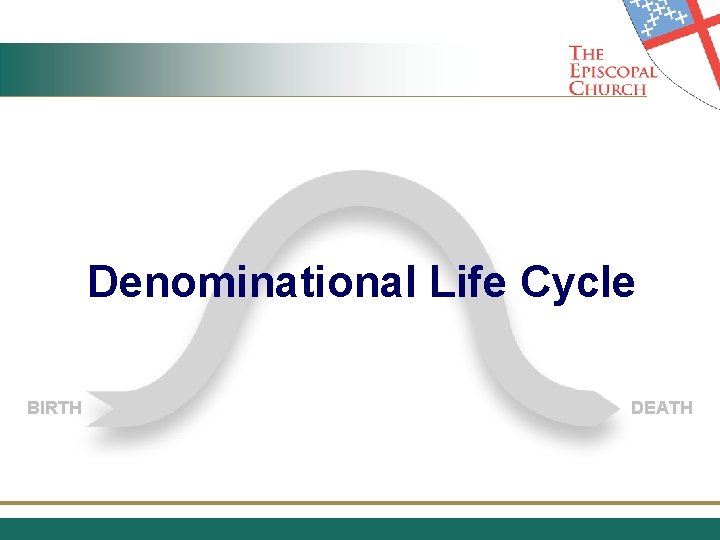
Denominational Life Cycle BIRTH DEATH

Every Living Thing and System has a Natural Life Cycle.

The Cycle Begins at Birth n Potential n Purpose and Vision (assumed or stated) — DNA n Constant Care/Protection BIRTH

Birth Is Followed by a Period of Growth GR OW TH n Energy and Excitement n Unexpected n Progress BIRTH

Growth Is Followed by Stability STABILITY n Accomplishment GR OW TH n Fulfillment n Predictability n Nostalgia BIRTH
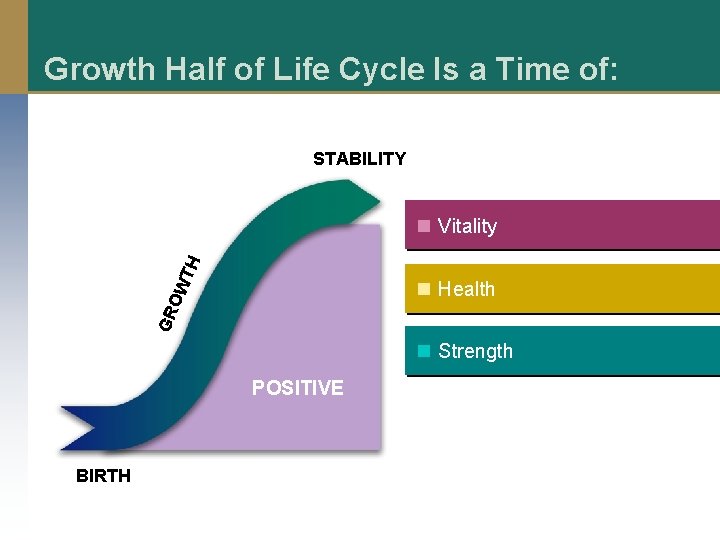
Growth Half of Life Cycle Is a Time of: STABILITY TH n Vitality GR OW n Health n Strength POSITIVE BIRTH
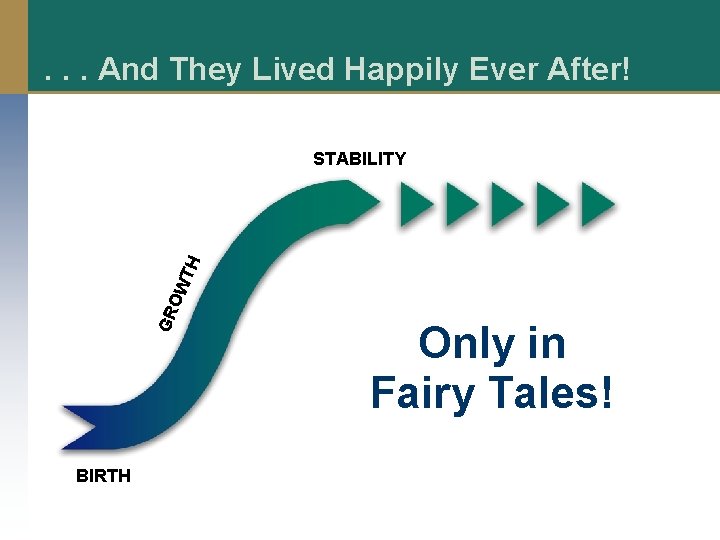
. . . And They Lived Happily Ever After! GR OW TH STABILITY BIRTH Only in Fairy Tales!
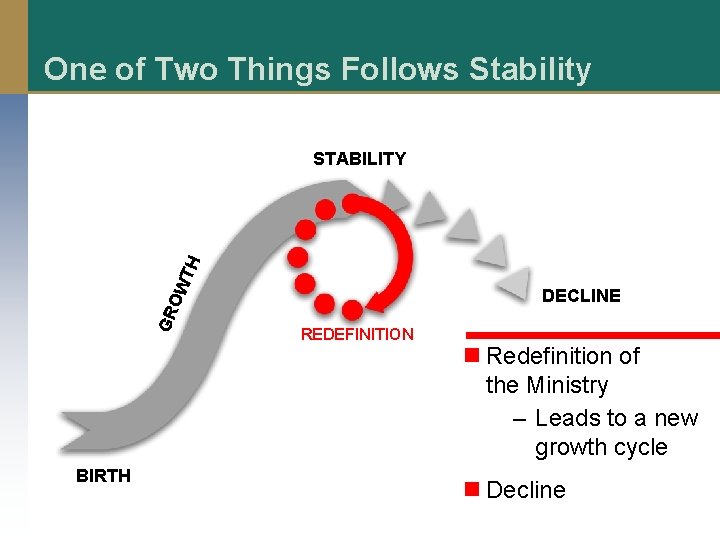
One of Two Things Follows Stability GR OW TH STABILITY BIRTH DECLINE REDEFINITION n Redefinition of the Ministry – Leads to a new growth cycle n Decline
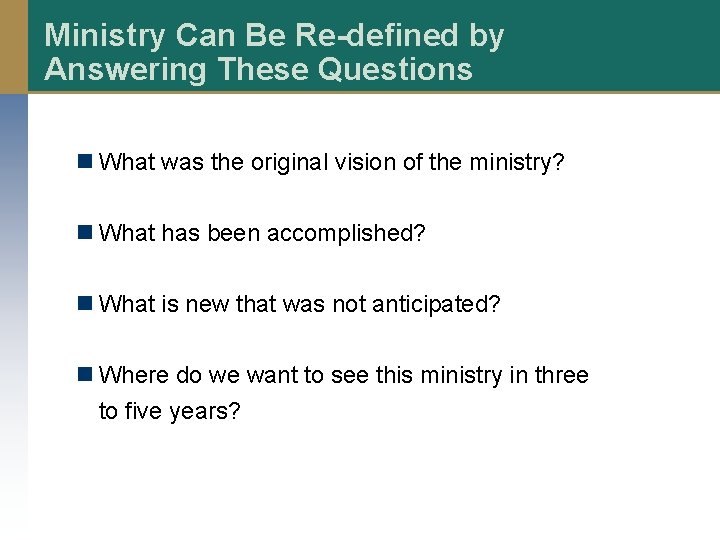
Ministry Can Be Re-defined by Answering These Questions n What was the original vision of the ministry? n What has been accomplished? n What is new that was not anticipated? n Where do we want to see this ministry in three to five years?
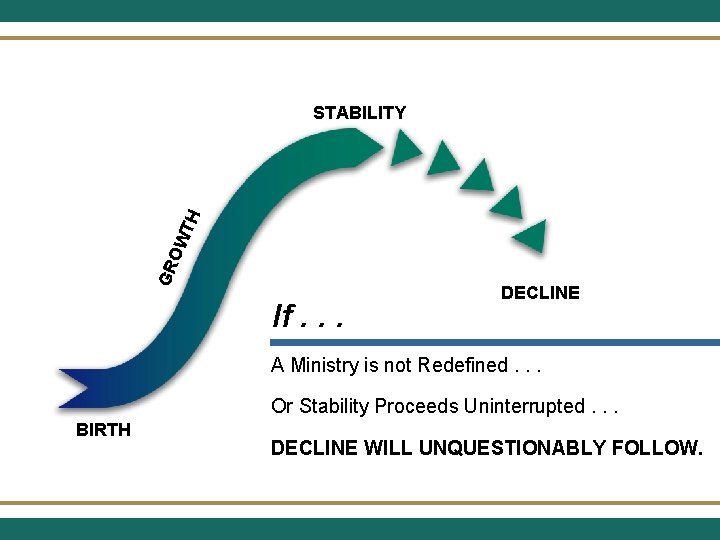
GR OW TH STABILITY If. . . DECLINE A Ministry is not Redefined. . . Or Stability Proceeds Uninterrupted. . . BIRTH DECLINE WILL UNQUESTIONABLY FOLLOW.
Once a ministry is in decline there is still the possibility of new life. — But the cost of new life is greater.
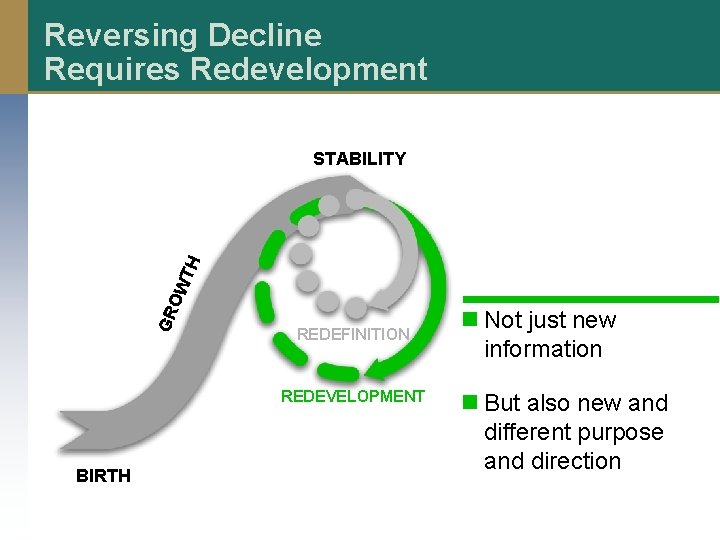
Reversing Decline Requires Redevelopment GR OW TH STABILITY REDEFINITION REDEVELOPMENT BIRTH n Not just new information n But also new and different purpose and direction
Redevelopment n New information alone will not reverse decline n A new, different purpose and direction can reverse decline n New purpose will be experienced by the congregation as significant change, and by some as loss
Intervening in decline is difficult. — It requires skilled and differentiated leadership.
Differentiated Leaders n Don’t require affirmation from the congregation n Do not change course in response to the discomfort provoked by change
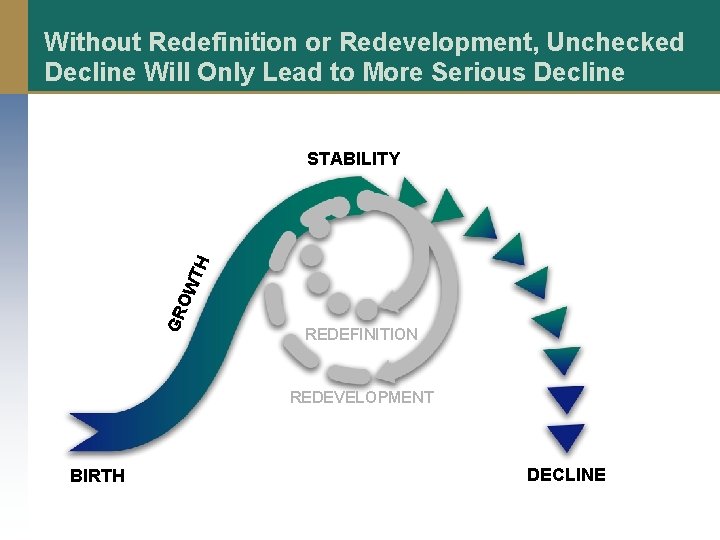
Without Redefinition or Redevelopment, Unchecked Decline Will Only Lead to More Serious Decline GR OW TH STABILITY REDEFINITION REDEVELOPMENT BIRTH DECLINE
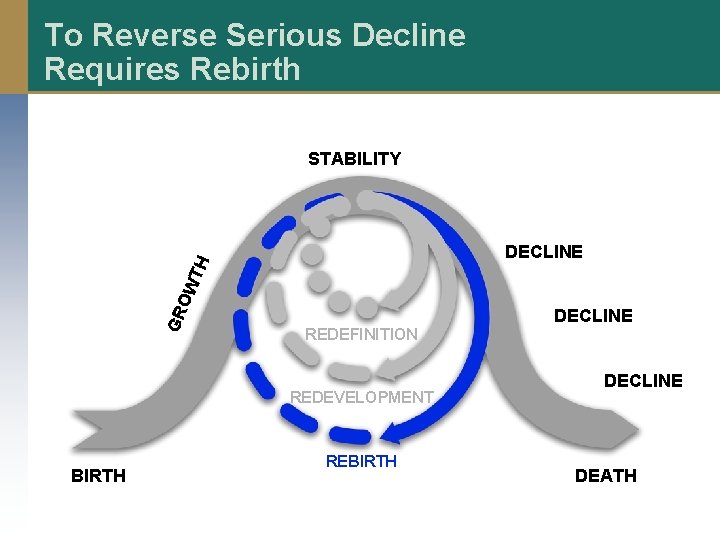
To Reverse Serious Decline Requires Rebirth STABILITY GR OW TH DECLINE REDEFINITION REDEVELOPMENT BIRTH REBIRTH DECLINE DEATH
To rebirth a seriously DECLINING ministry requires radical change.
Rebirth will involve a different purpose or ministry. — It is not just doing the old thing differently, it is doing a new thing. And, perhaps in a different place or with different people.

Without rebirth, decline will lead to death.

Some facts about decline.
As the depth of decline increases, more interruption and letting go is required.
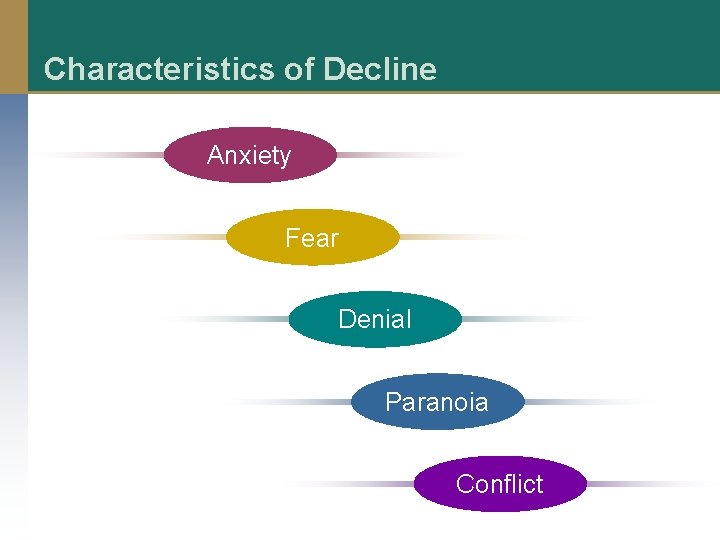
Characteristics of Decline Anxiety Fear Denial Paranoia Conflict
It is the nature of congregational decline to deny the decline as long as possible, to underestimate the decline, and then to under respond. Declining congregations — n Ignore the congregational cold n Treat congregational pneumonia with aspirin n Embalm with penicillin
There is no gain for underestimating decline. — There is no penalty for overestimating decline.
Resurrection does not follow denial — Resurrection (new life) follows death (truth telling) The questions are: n What needs to die? n What needs to be let go of?
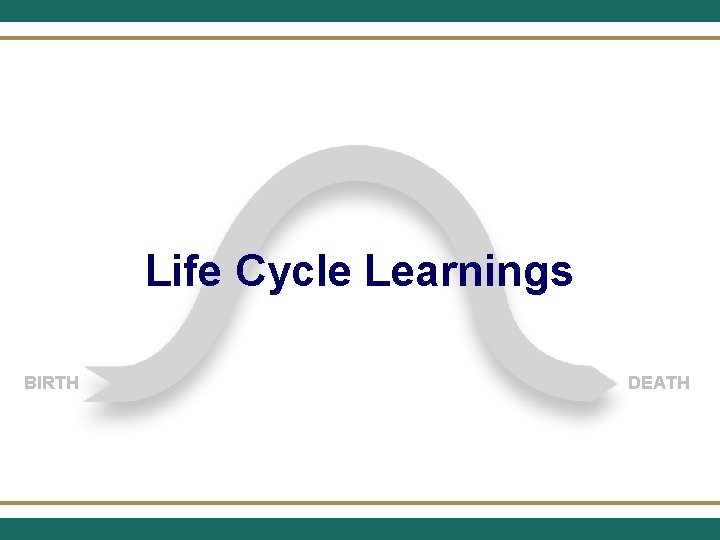
Life Cycle Learnings BIRTH DEATH
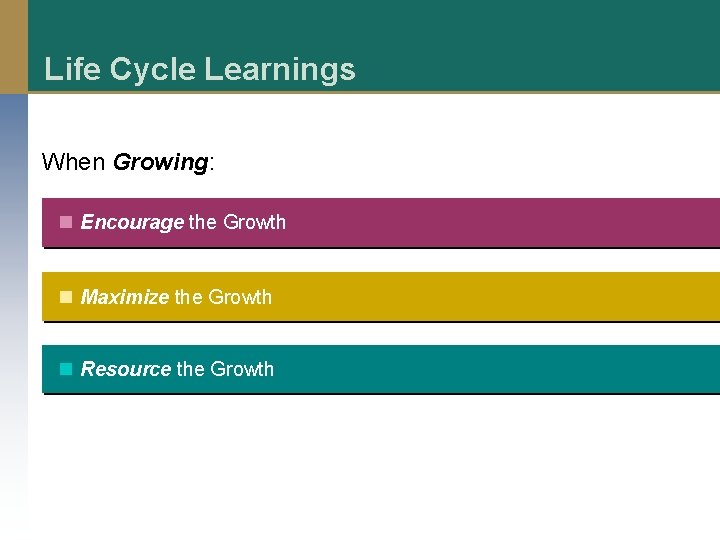
Life Cycle Learnings When Growing: n Encourage the Growth n Maximize the Growth n Resource the Growth
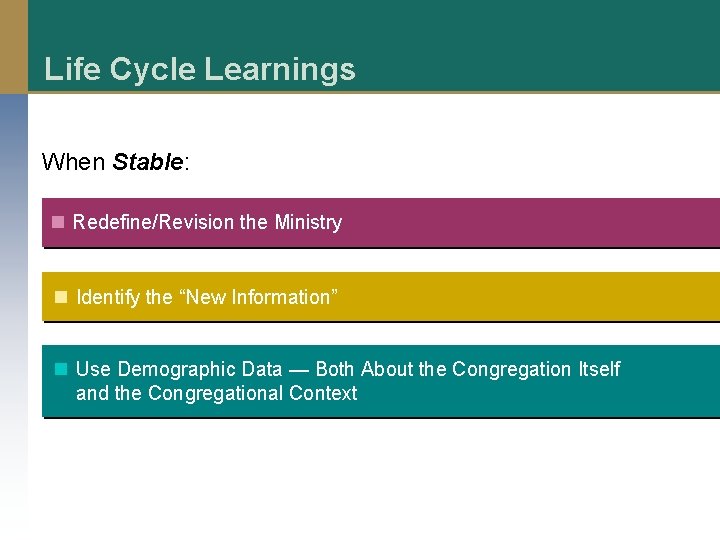
Life Cycle Learnings When Stable: n Redefine/Revision the Ministry n Identify the “New Information” n Use Demographic Data — Both About the Congregation Itself and the Congregational Context
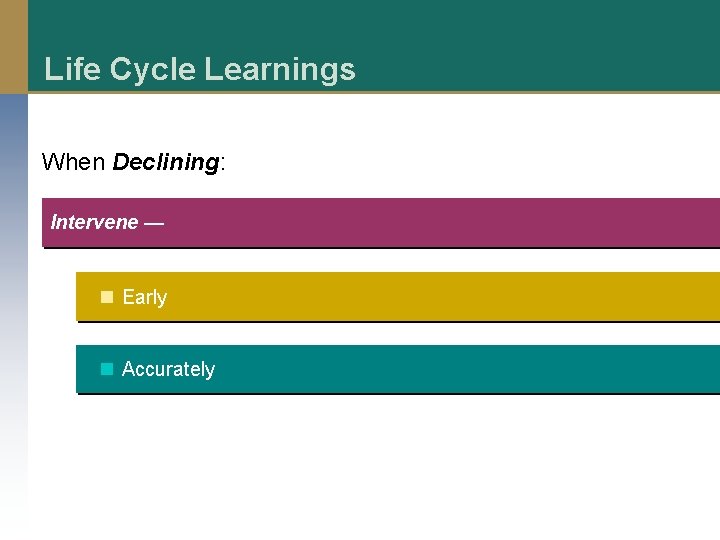
Life Cycle Learnings When Declining: Intervene — n Early n Accurately
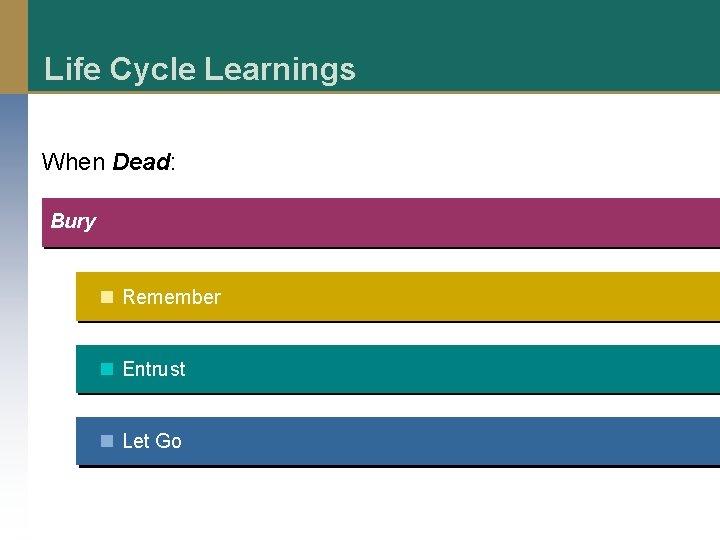
Life Cycle Learnings When Dead: Bury n Remember n Entrust n Let Go
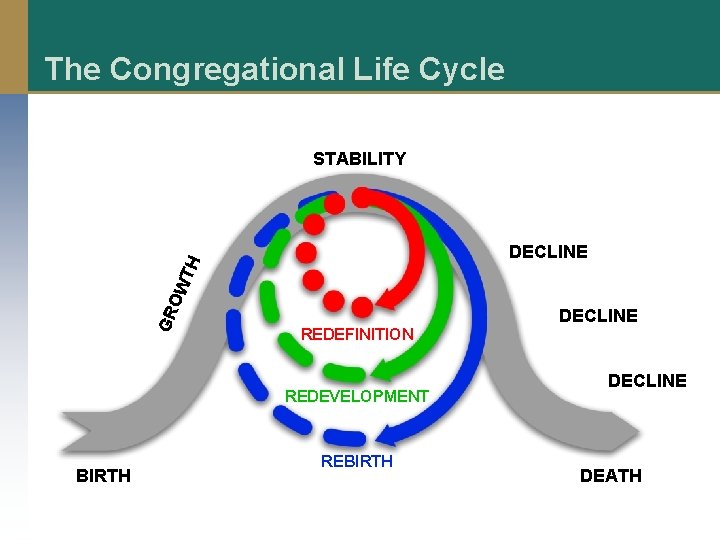
The Congregational Life Cycle STABILITY GR OW TH DECLINE REDEFINITION REDEVELOPMENT BIRTH REBIRTH DECLINE DEATH
For more information contact us at the Office of Congregational Development The Episcopal Church Center 815 Second Avenue New York, NY 10017 Telephone: 800 -334 -7626 www. episcopalchurch. org For copies of this presentation look on our website or contact Episcopal Parish Services at 800 -903 -5544
- Slides: 33