
Dennis Brezina Soil Scientist Temple Texas Soil Health
Dennis Brezina Soil Scientist, Temple, Texas Soil Health Activities with Texas NRCS Conservation… Our Purpose. Our Passion.
In Memory of 4 important members of this Workshop Family: ∙ “Larry” P. Wilding, October 1, 1934 – January 12, 2019 ∙ Eugene Arnold Brams, 1923 – April 15, 2019 ∙ Murray H. Milford, September 29, 1934 – August 20, 2019 ∙ Clyde R. Stahnke, December 4, 1935 – October 20, 2019
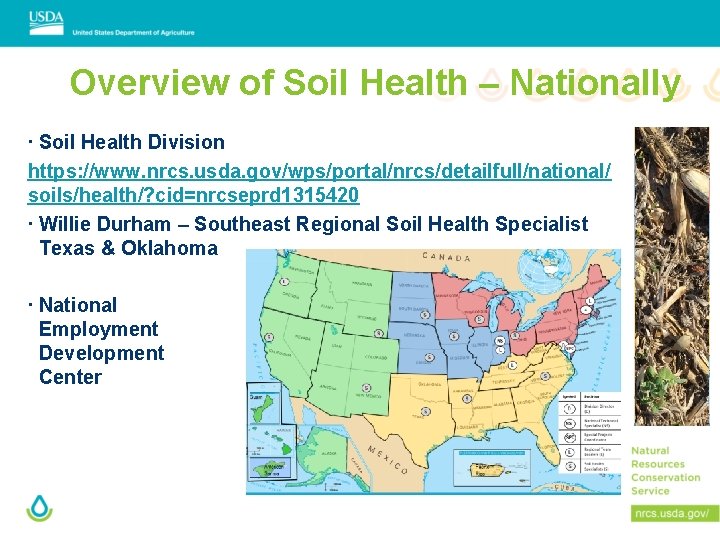
Overview of Soil Health – Nationally ∙ Soil Health Division https: //www. nrcs. usda. gov/wps/portal/nrcs/detailfull/national/ soils/health/? cid=nrcseprd 1315420 ∙ Willie Durham – Southeast Regional Soil Health Specialist Texas & Oklahoma ∙ National Employment Development Center
Overview of Soil Health – Texas Ecological Sciences - staffed similar to our five Zone Offices ∙ State Resource Conservationist - Kristy Oates ∙ Agronomist - Fred Schrank ∙ Biologist - Russell Castro ∙ Compliance/Wetland Specialist - Dan Keesee ∙ Forester - Vacant, Lori Hazel acting, Texas Forest Service ∙ Rangland Management Specialist - Charles Kneuper ∙ Water Quality Specialist - Kyle Wright ∙ Coastal Wetland Habitat- Scott Alford (Baytown) ∙ State “Resource Soil Scientist” - Dennis Brezina https: //www. nrcs. usda. gov/wps/portal/nrcs/detail/tx/contact/s tate/? cid=stelprdb 1257809
Soil Health Position aka State “Resource Soil Scientist” ∙ I started in October ∙ Trying to find my identity in this position ∙ Coming from a pasture and forest area of the state ∙ 15 years of Riparian and Wetland work ∙ Different perspective ∙ Soil Health is a Management Decision ∙ Soil Health is not for everyone ∙ All components of Soil Health are not for everyone ∙ 11/23 Technical Presentations on Soil Health (47. 8%) ∙ Bekewe – 2. 1% Texas Double Cropping; 8. 8% in No-Till. ∙ Flynn – Cover Crops are more Stable than No-Till alone.
Mr. J. F. “Hank” Mills ∙ Texas A&M College Class of 1943 ∙ Served in the U. S. Navy during World War II ∙ Associate Professor and Academic Advisor ∙ Collegiate Soils Judging Coach ∙ Retired in 1987 after 42 years ∙ Taught & advised 5, 000+ students at Texas A&M University ∙ AGRO 310 Soil Morphology ∙ AGRO 318 Soil Conservation and Land Use ∙ Taught countless students how to play 42.
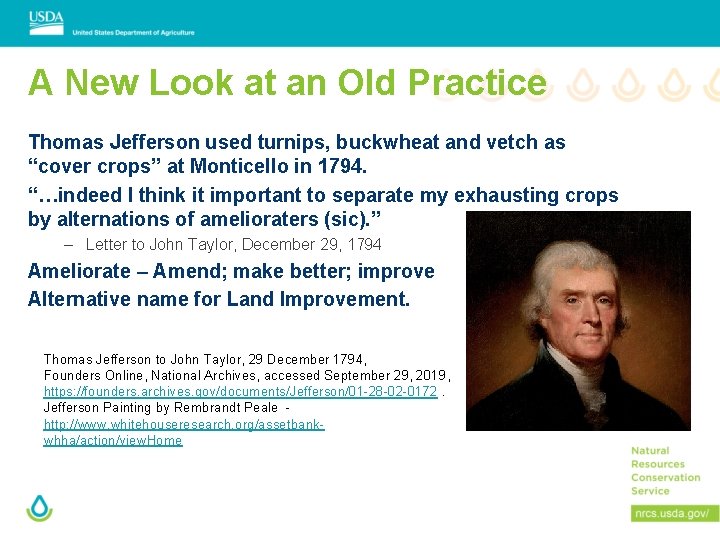
A New Look at an Old Practice Thomas Jefferson used turnips, buckwheat and vetch as “cover crops” at Monticello in 1794. “…indeed I think it important to separate my exhausting crops by alternations of amelioraters (sic). ” – Letter to John Taylor, December 29, 1794 Ameliorate – Amend; make better; improve Alternative name for Land Improvement. Thomas Jefferson to John Taylor, 29 December 1794, Founders Online, National Archives, accessed September 29, 2019, https: //founders. archives. gov/documents/Jefferson/01 -28 -02 -0172. Jefferson Painting by Rembrandt Peale http: //www. whitehouseresearch. org/assetbankwhha/action/view. Home
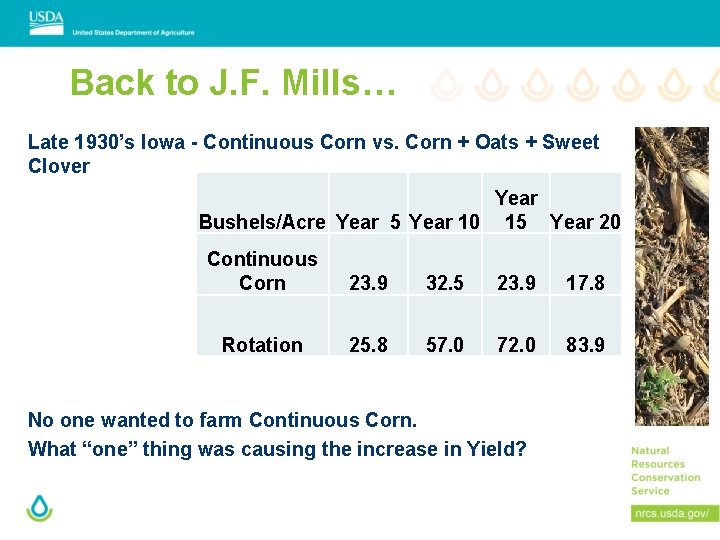
Back to J. F. Mills… Late 1930’s Iowa - Continuous Corn vs. Corn + Oats + Sweet Clover Year Bushels/Acre Year 5 Year 10 15 Year 20 Continuous Corn 23. 9 32. 5 23. 9 17. 8 Rotation 25. 8 57. 0 72. 0 83. 9 No one wanted to farm Continuous Corn. What “one” thing was causing the increase in Yield?
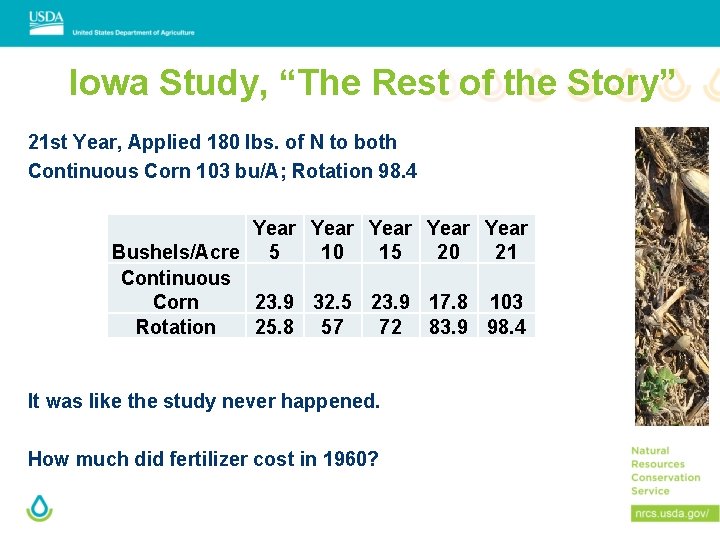
Iowa Study, “The Rest of the Story” 21 st Year, Applied 180 lbs. of N to both Continuous Corn 103 bu/A; Rotation 98. 4 Year Year Bushels/Acre 5 10 15 20 21 Continuous Corn 23. 9 32. 5 23. 9 17. 8 103 Rotation 25. 8 57 72 83. 9 98. 4 It was like the study never happened. How much did fertilizer cost in 1960?
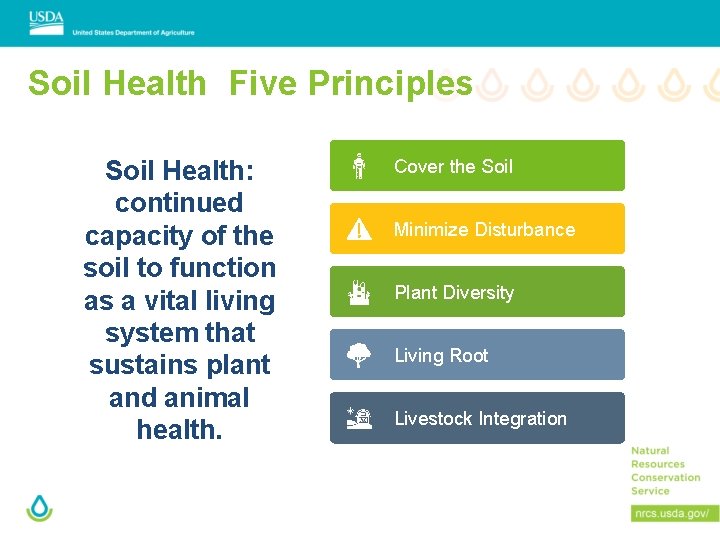
Soil Health Five Principles Soil Health: continued capacity of the soil to function as a vital living system that sustains plant and animal health. Cover the Soil Minimize Disturbance Plant Diversity Living Root Livestock Integration
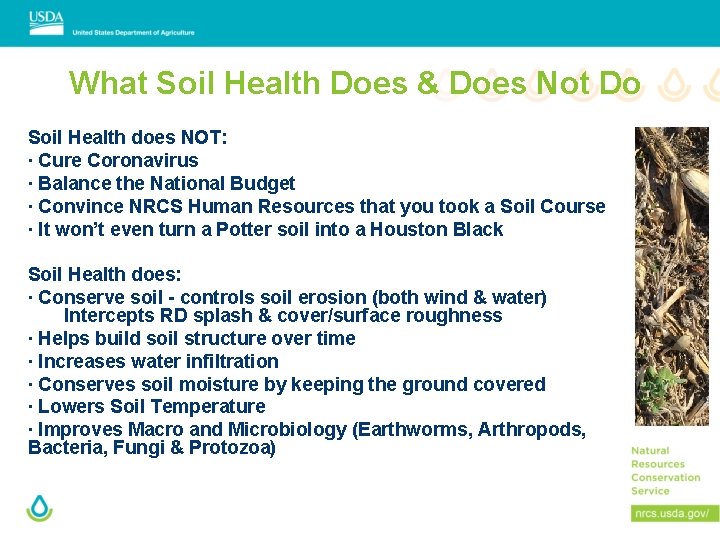
What Soil Health Does & Does Not Do Soil Health does NOT: ∙ Cure Coronavirus ∙ Balance the National Budget ∙ Convince NRCS Human Resources that you took a Soil Course ∙ It won’t even turn a Potter soil into a Houston Black Soil Health does: ∙ Conserve soil - controls soil erosion (both wind & water) Intercepts RD splash & cover/surface roughness ∙ Helps build soil structure over time ∙ Increases water infiltration ∙ Conserves soil moisture by keeping the ground covered ∙ Lowers Soil Temperature ∙ Improves Macro and Microbiology (Earthworms, Arthropods, Bacteria, Fungi & Protozoa)
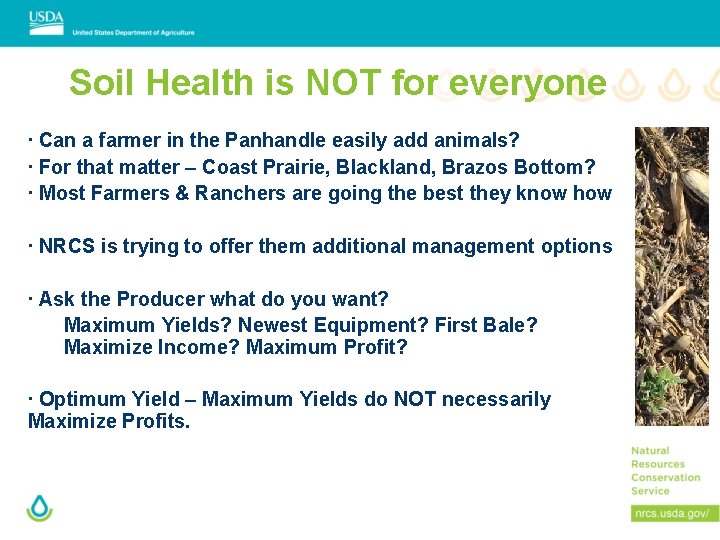
Soil Health is NOT for everyone ∙ Can a farmer in the Panhandle easily add animals? ∙ For that matter – Coast Prairie, Blackland, Brazos Bottom? ∙ Most Farmers & Ranchers are going the best they know how ∙ NRCS is trying to offer them additional management options ∙ Ask the Producer what do you want? Maximum Yields? Newest Equipment? First Bale? Maximize Income? Maximum Profit? ∙ Optimum Yield – Maximum Yields do NOT necessarily Maximize Profits.
Soil Health Activities with Texas NRCS ∙ 10 Conservation Planning Courses statewide (NRCS staff) Soil Health Division – Soil Health & Sustainability ∙ Partner Course with Agri. Life and NRCS – early March ∙ No-Till Texas, Lubbock – February 11 -12 ∙ Soil Regen – Regenerative Grazing, Salado – February 19 -20 ∙ No-Till USDA–ARS & Texas Tech, Lubbock – March 24 ∙ State-wide Soil Health Field Days with National Center for Appropriate Technology (NCAT) throughout year ∙ Texas Association of Soil & Water Conservation Districts & NRCS Soil Health Short Course, Sweetwater ~ April 20, 2020
Partnership Agreements ∙ Texas A&M University in Wilbarger County – Replicated Soil Health Research in Residue Management & Cover Crops ∙ Tarleton State University – Soils and Wildlife Department to monitor DNA of Soils under Different Cropping Systems ∙ Prairie View A&M University – Plan & Implement a Conservation Plan as a Demonstration/Research Farm ∙ Texas Association of Soil & Water Conservation Districts to conduct Soil Health Short Courses Wichita Falls 2017; Palestine 2018 -19 Sweetwater – April 20, 2020 ∙ USDA-ARS Grassland Research Center Riesel – Comparison of Conservation System to Conventional
Partnership Agreements – Soil & Water Conservation Districts (SWCD’s) ∙ Wichita County – Residue Management, Cover Crops, Crop Rotation & Prescribed Grazing Central Prairies ∙ Runnels County – Residue Management (Alone) and Residue Management with Cover Crops in Rolling Red Plains ∙ Austin County – Cover Crop & Prescribed Grazing Native Prairie & Improved Pasture Blackland Prairies ∙ Guadalupe County – Residue Management & Cover Crops Corn-Sorghum-Wheat Blackland Prairies ∙ Anderson County – Cover Crops and Prescribed Grazing versus Continuous Grazing on Pasture in Claypan Prairies/East Texas Timberlands ∙ Nacogdoches County – Forest Management – Longleaf, Loblolly Plantation (typical vs. prescribed fire), Native Grass planting, Bermudagrass Hay Production, Bottomland Hardwood and Cropland in East Texas Timberlands
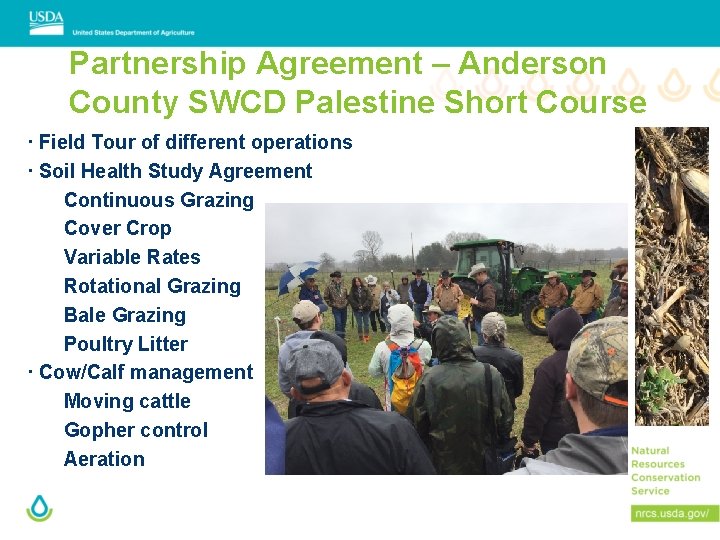
Partnership Agreement – Anderson County SWCD Palestine Short Course ∙ Field Tour of different operations ∙ Soil Health Study Agreement Continuous Grazing Cover Crop Variable Rates Rotational Grazing Bale Grazing Poultry Litter ∙ Cow/Calf management Moving cattle Gopher control Aeration
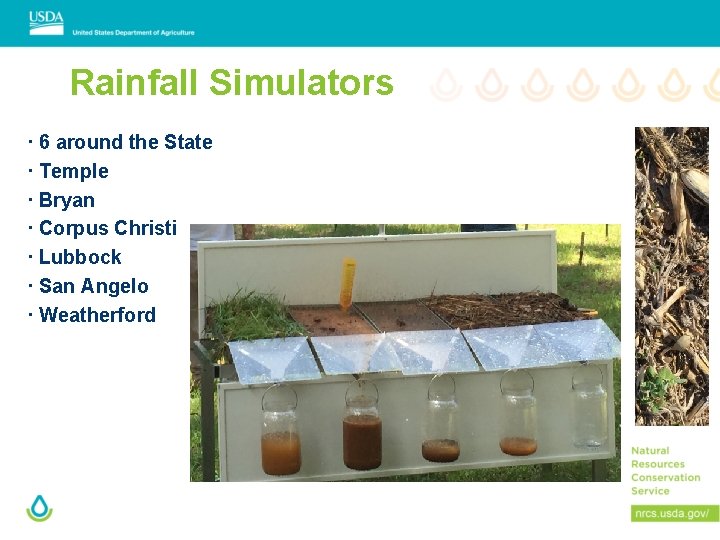
Rainfall Simulators ∙ 6 around the State ∙ Temple ∙ Bryan ∙ Corpus Christi ∙ Lubbock ∙ San Angelo ∙ Weatherford
Conversation with Dr. Morgan ∙ How much “better” we farm today ∙ Agree, but we can do better: ∙ Riparian areas with large mesquite and hackberry cleared to be cropped this year ∙ Farming up and down and over terraces Terraces need maintenance Or is it just a 20 -year practice? ∙ Paradigm Shift ∙ Financial and Cultural Barriers
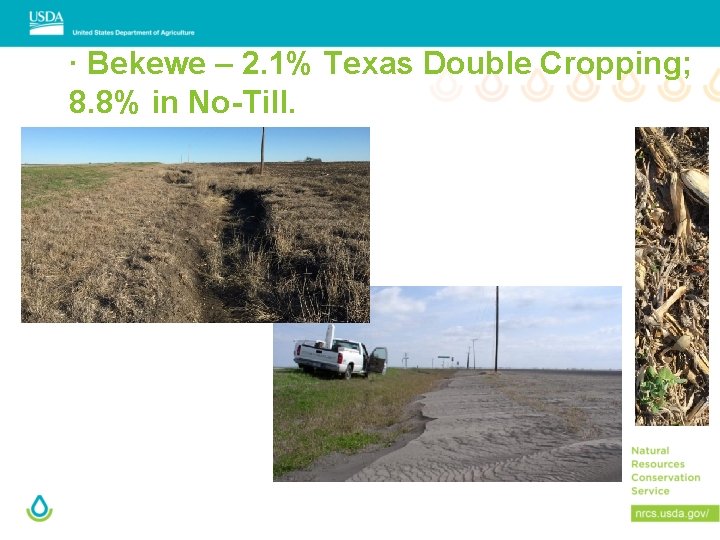
∙ Bekewe – 2. 1% Texas Double Cropping; 8. 8% in No-Till.
Helping People Understand Soils USDA Nondiscriminatory Policy In accordance with Federal civil rights law and U. S. Department of Agriculture (USDA) civil rights regulations and policies, the USDA, its Agencies, offices, and employees, and institutions participating in or administering USDA programs are prohibited from discriminating based on race, color, national origin, religion, sex, gender identity (including gender expression), sexual orientation, disability, age, marital status, family/parental status, income derived from a public assistance program, political beliefs, or reprisal or retaliation for prior civil rights activity, in any program or activity conducted or funded by USDA (not all bases apply to all programs). Remedies and complaint filing deadlines vary by program or incident. Persons with disabilities who require alternative means of communication for program information (e. g. , Braille, large print, audiotape, American Sign Language, etc. ) should contact the responsible Agency or USDA's TARGET Center at (202) 720 -2600 (voice and TTY) or contact USDA through the Federal Relay Service at (800) 877 -8339. Additionally, program information may be made available in languages other than English. To file a program discrimination complaint, complete the USDA Program Discrimination Complaint Form, AD-3027, found online at How to File a Program Discrimination Complaint and at any USDA office or write a letter addressed to USDA and provide in the letter all of the information requested in the form. To request a copy of the complaint form, call (866) 632 -9992. Submit your completed form or letter to USDA by: (1) mail: U. S. Department of Agriculture, Office of the Assistant Secretary for Civil Rights, 1400 Independence Avenue, SW, Washington, D. C. 20250 -9410; (2) fax: (202) 690 -7442; or (3) email: program. intake@usda. gov. USDA is an equal opportunity provider, employer, and lender.
- Slides: 20