
Demographic Challenges and Opportunities in the Waikato Region





- Slides: 42
Demographic Challenges and Opportunities in the Waikato Region: An A-B-C Approach to Population Ageing HAMILTON in Context Natalie Jackson © Professor of Demography Director, Population Studies Centre 2010 1
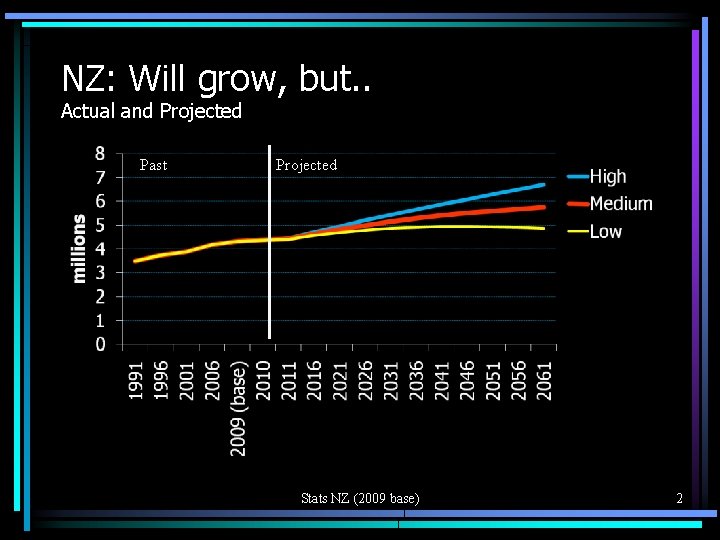
NZ: Will grow, but. . Actual and Projected Past Projected Stats NZ (2009 base) 2
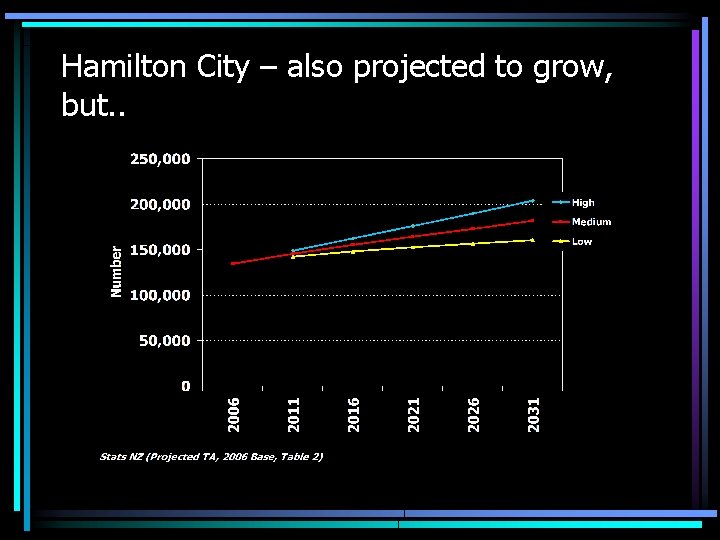
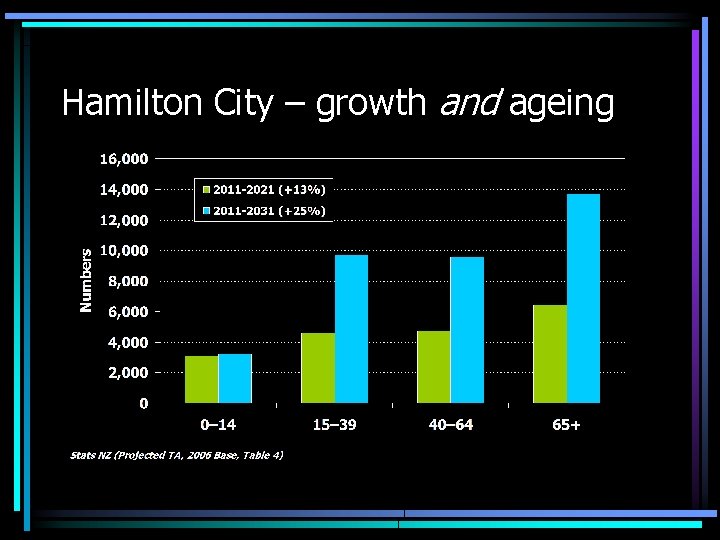
Hamilton City – also projected to grow, but. .
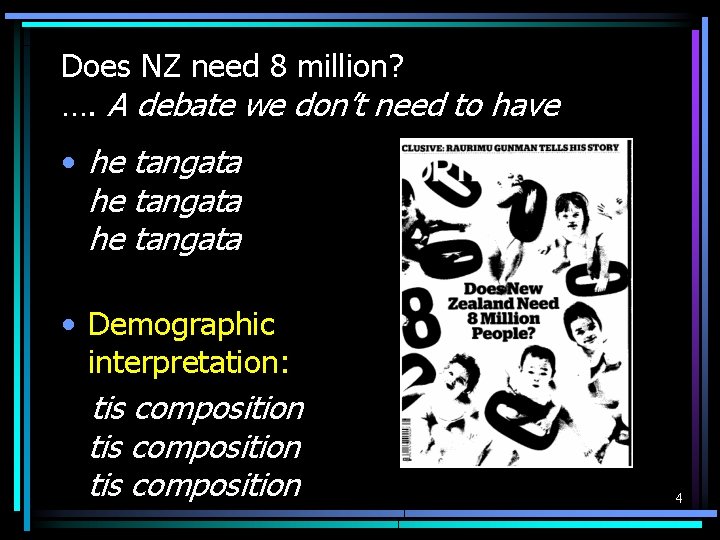
Does NZ need 8 million? …. A debate we don’t need to have • he tangata • Demographic interpretation: tis composition 4
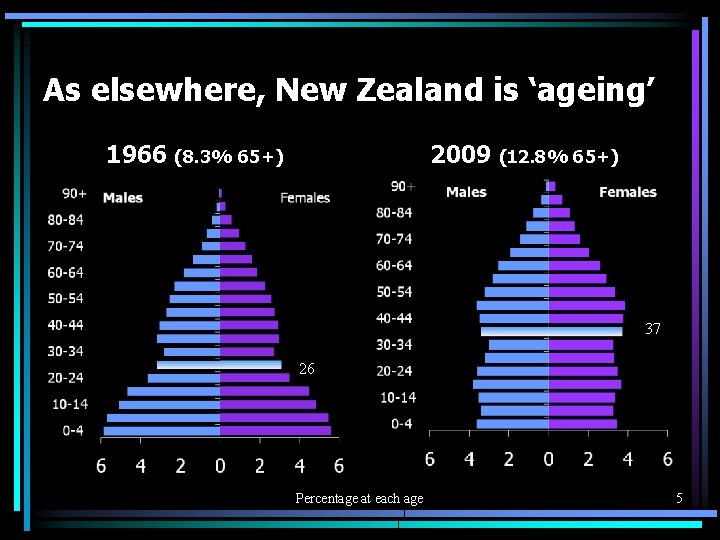
As elsewhere, New Zealand is ‘ageing’ 1966 (8. 3% 65+) 2009 (12. 8% 65+) 37 26 Percentage at each age 5
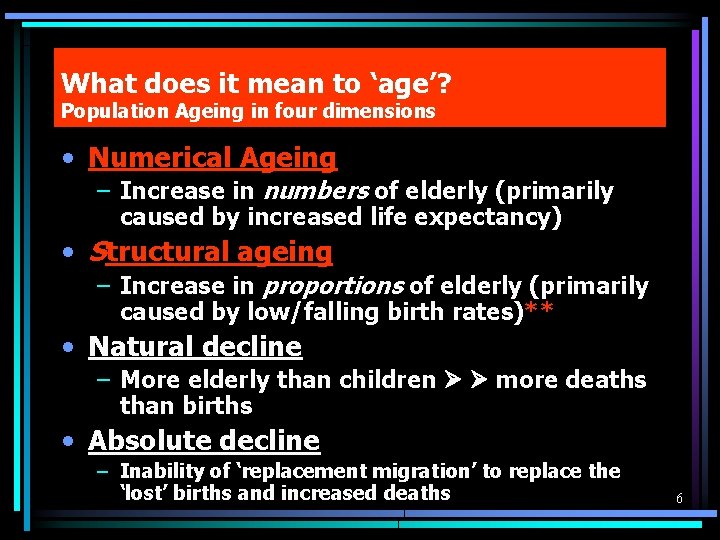
What does it mean to ‘age’? Population Ageing in four dimensions • Numerical Ageing – Increase in numbers of elderly (primarily caused by increased life expectancy) • Structural ageing – Increase in proportions of elderly (primarily caused by low/falling birth rates)** • Natural decline – More elderly than children more deaths than births • Absolute decline – Inability of ‘replacement migration’ to replace the ‘lost’ births and increased deaths 6
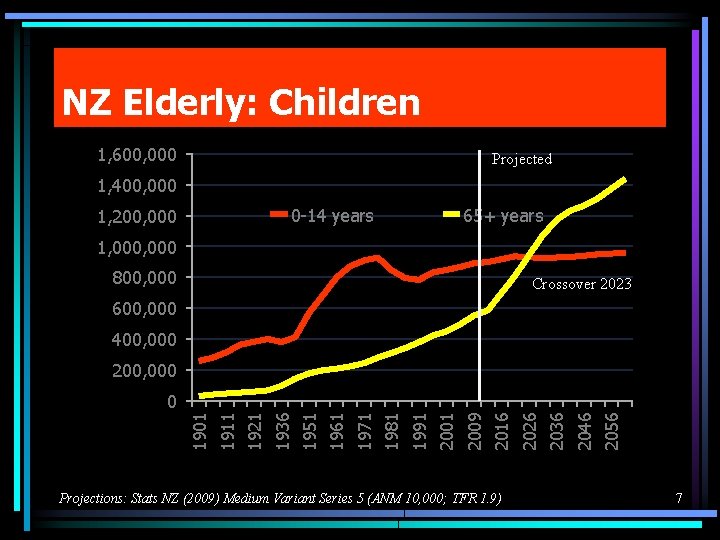
NZ Elderly: Children 1, 600, 000 Projected 1, 400, 000 0 -14 years Number 1, 200, 000 65+ years 1, 000 800, 000 Crossover 2023 600, 000 400, 000 200, 000 Projections: Stats NZ (2009) Medium Variant Series 5 (ANM 10, 000; TFR 1. 9) 2056 2046 2036 2026 2016 2009 2001 1991 1981 1971 1961 1951 1936 1921 1911 1901 0 7
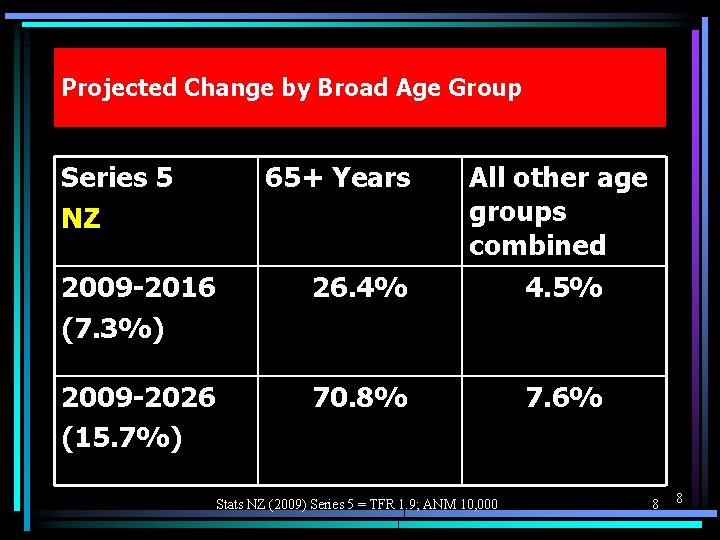
Projected Change by Broad Age Group Series 5 NZ 65+ Years All other age groups combined 2009 -2016 (7. 3%) 26. 4% 4. 5% 2009 -2026 (15. 7%) 70. 8% 7. 6% Stats NZ (2009) Series 5 = TFR 1. 9; ANM 10, 000 8 8
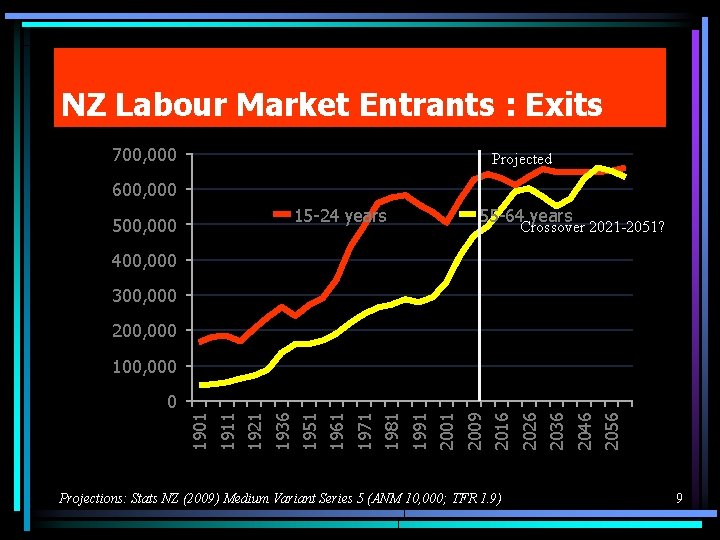
NZ Labour Market Entrants : Exits 700, 000 Projected 600, 000 15 -24 years Number 500, 000 55 -64 years Crossover 2021 -2051? 400, 000 300, 000 200, 000 100, 000 Projections: Stats NZ (2009) Medium Variant Series 5 (ANM 10, 000; TFR 1. 9) 2056 2046 2036 2026 2016 2009 2001 1991 1981 1971 1961 1951 1936 1921 1911 1901 0 9
Enter: a demographically tight labour market Australia 2007 -200910
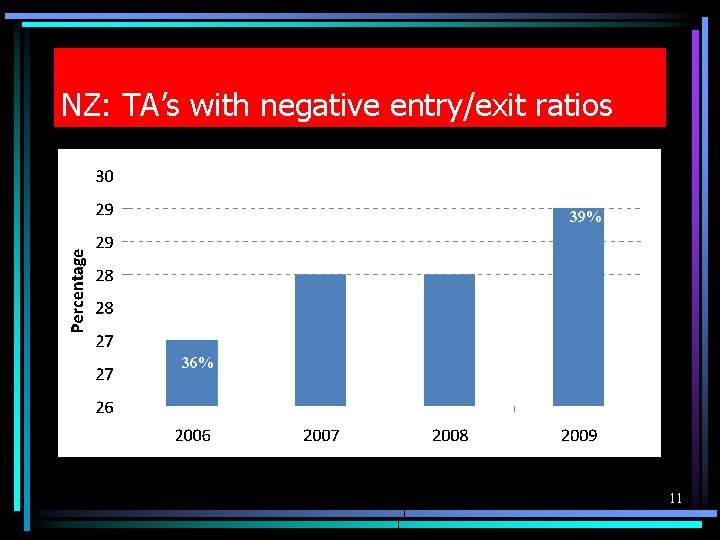
NZ: TA’s with negative entry/exit ratios 39% 36% 11
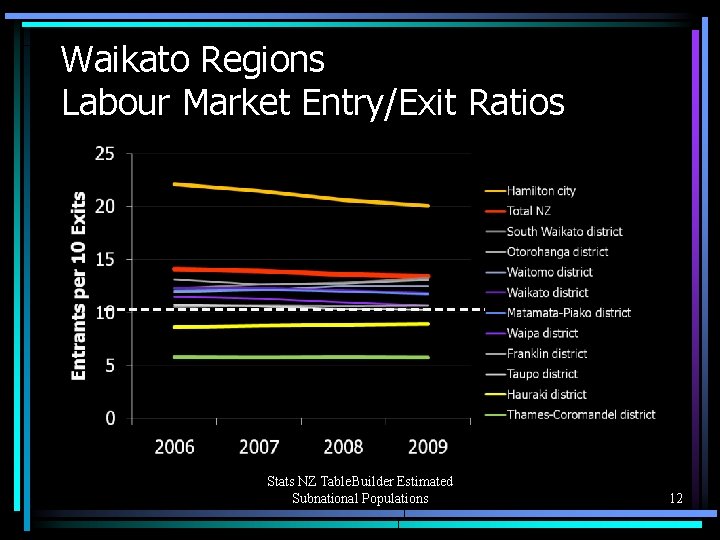
Waikato Regions Labour Market Entry/Exit Ratios Stats NZ Table. Builder Estimated Subnational Populations 12
13
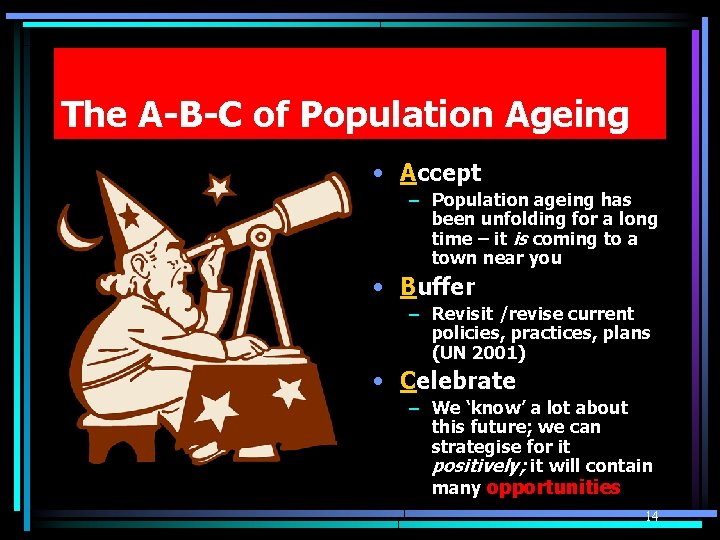
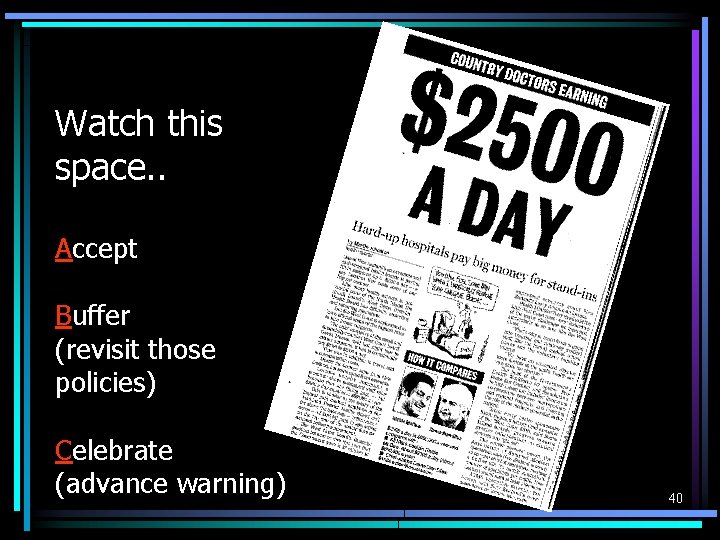
The A-B-C of Population Ageing • Accept – Population ageing has been unfolding for a long time – it is coming to a town near you • Buffer – Revisit /revise current policies, practices, plans (UN 2001) • Celebrate – We ‘know’ a lot about this future; we can strategise for it positively; it will contain many opportunities 14
Challenges and Opportunities for the Waikato A story in age structures 15
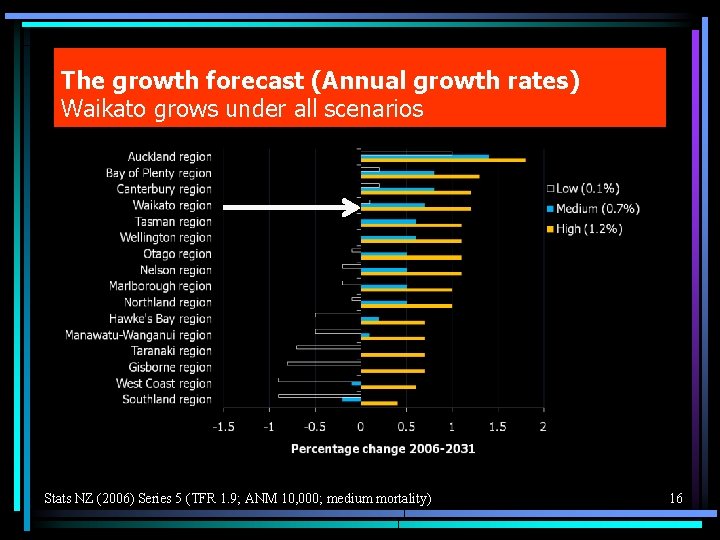
The growth forecast (Annual growth rates) Waikato grows under all scenarios Stats NZ (2006) Series 5 (TFR 1. 9; ANM 10, 000; medium mortality) 16
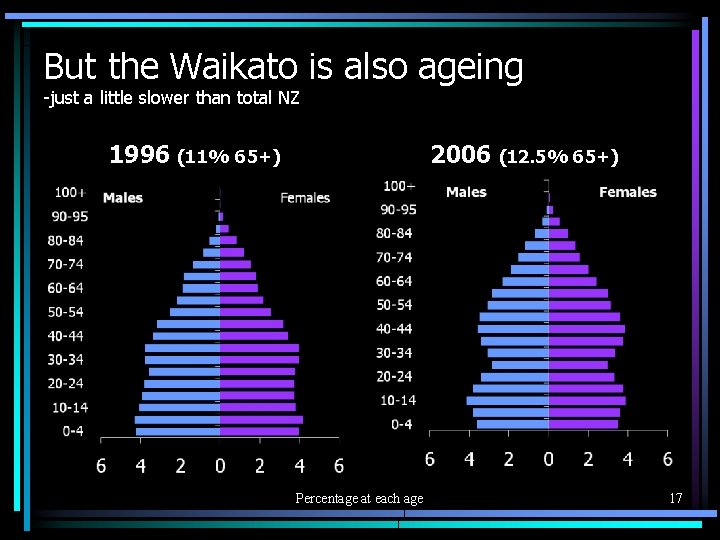
But the Waikato is also ageing -just a little slower than total NZ 1996 (11% 65+) 2006 (12. 5% 65+) Percentage at each age 17
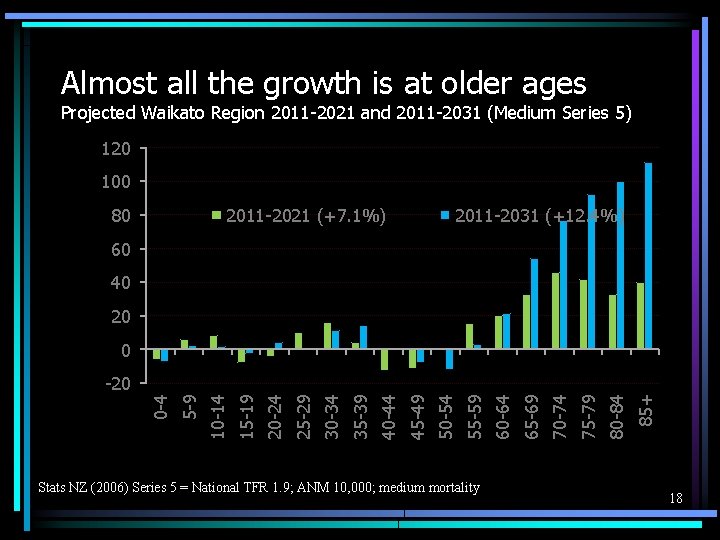
Almost all the growth is at older ages Projected Waikato Region 2011 -2021 and 2011 -2031 (Medium Series 5) 120 Percentage Change 100 80 2011 -2021 (+7. 1%) 2011 -2031 (+12. 4%) 60 40 20 0 85+ 80 -84 75 -79 70 -74 65 -69 60 -64 55 -59 50 -54 45 -49 40 -44 35 -39 30 -34 25 -29 20 -24 15 -19 10 -14 5 -9 0 -4 -20 age Stats NZ (2006) Series 5 = National TFR 1. 9; ANM 10, 000; medium mortality 18
Hamilton City – growth and ageing
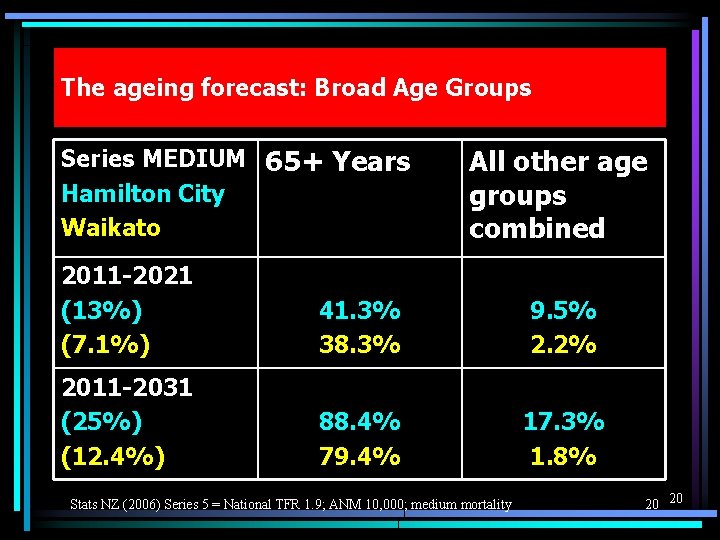
The ageing forecast: Broad Age Groups Series MEDIUM 65+ Years Hamilton City Waikato All other age groups combined 2011 -2021 (13%) (7. 1%) 41. 3% 38. 3% 9. 5% 2. 2% 2011 -2031 (25%) (12. 4%) 88. 4% 79. 4% 17. 3% 1. 8% Stats NZ (2006) Series 5 = National TFR 1. 9; ANM 10, 000; medium mortality 20 20
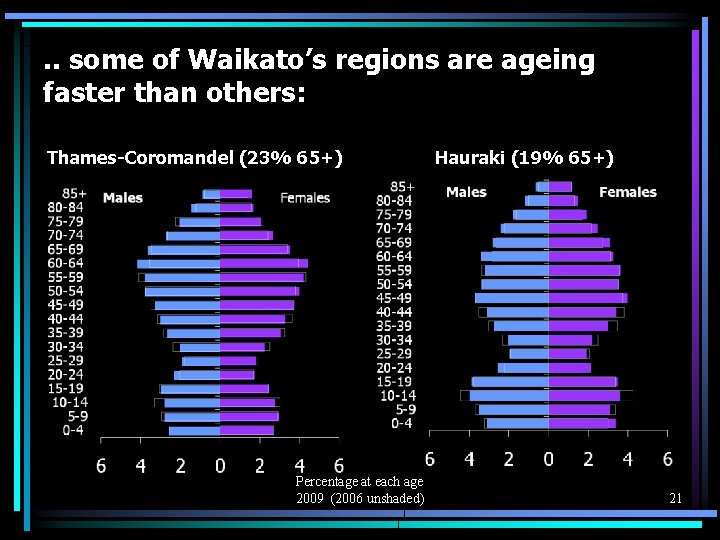
. . some of Waikato’s regions are ageing faster than others: Thames-Coromandel (23% 65+) Percentage at each age 2009 (2006 unshaded) Hauraki (19% 65+) 21
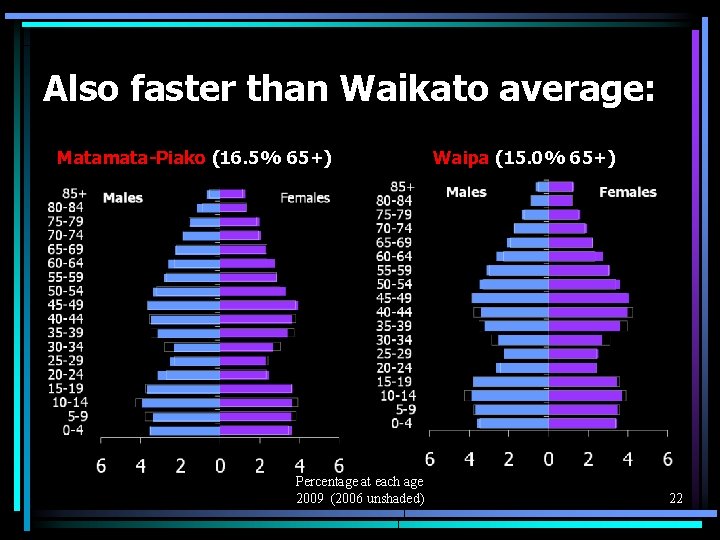
Also faster than Waikato average: Matamata-Piako (16. 5% 65+) Percentage at each age 2009 (2006 unshaded) Waipa (15. 0% 65+) 22
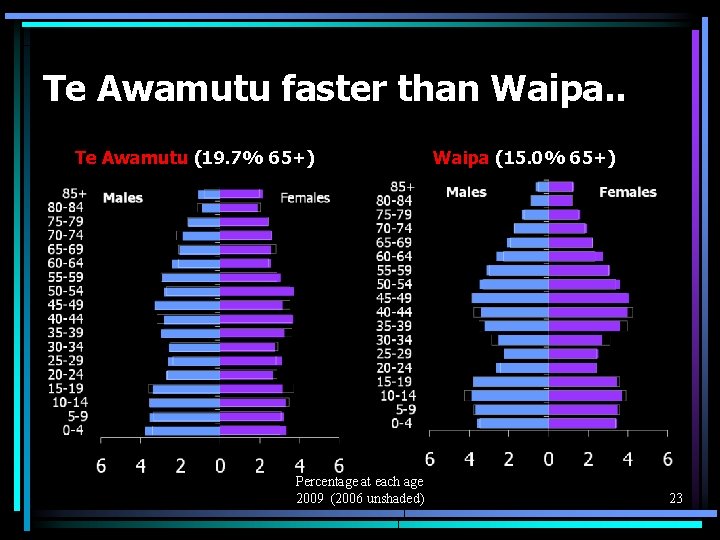
Te Awamutu faster than Waipa. . Te Awamutu (19. 7% 65+) Percentage at each age 2009 (2006 unshaded) Waipa (15. 0% 65+) 23
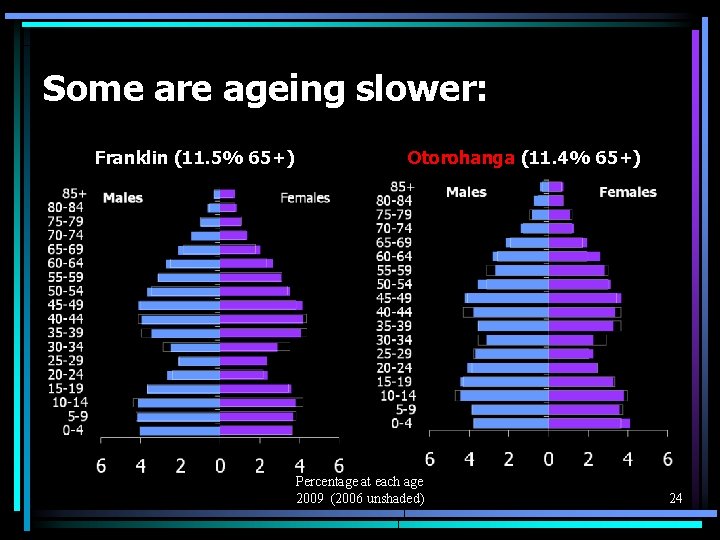
Some are ageing slower: Franklin (11. 5% 65+) Otorohanga (11. 4% 65+) Percentage at each age 2009 (2006 unshaded) 24
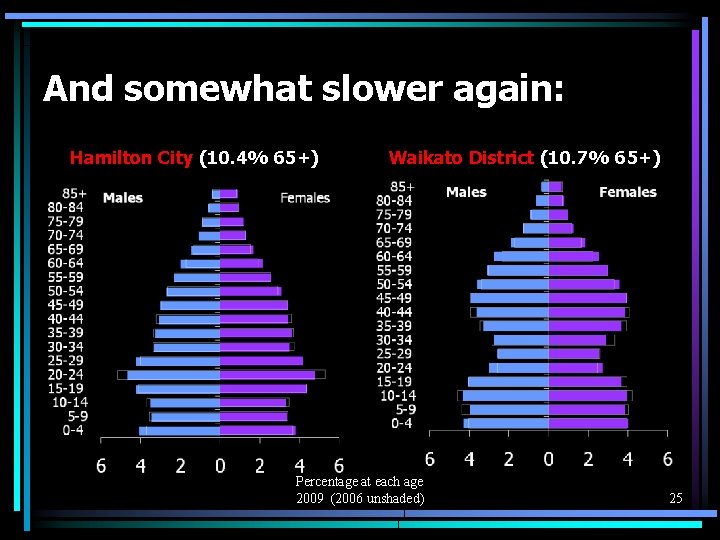
And somewhat slower again: Hamilton City (10. 4% 65+) Waikato District (10. 7% 65+) Percentage at each age 2009 (2006 unshaded) 25
26
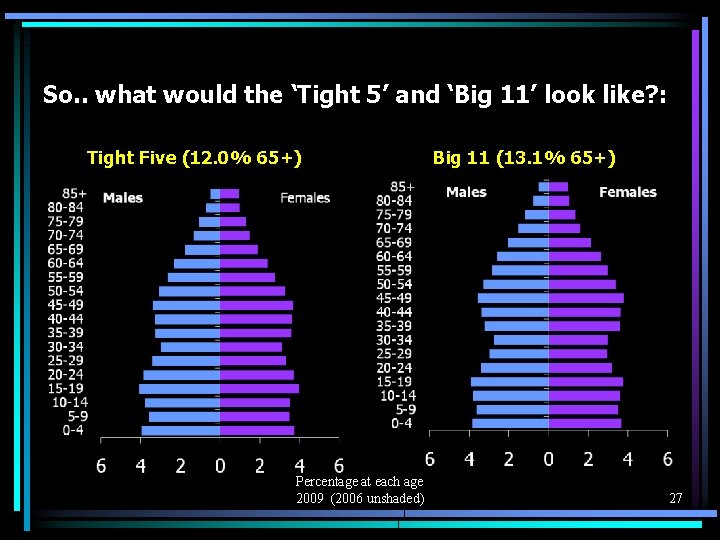
So. . what would the ‘Tight 5’ and ‘Big 11’ look like? : Tight Five (12. 0% 65+) Percentage at each age 2009 (2006 unshaded) Big 11 (13. 1% 65+) 27
How well would such amalgamations serve the underlying demographic constituencies?
Competition for workers End of unemployment?
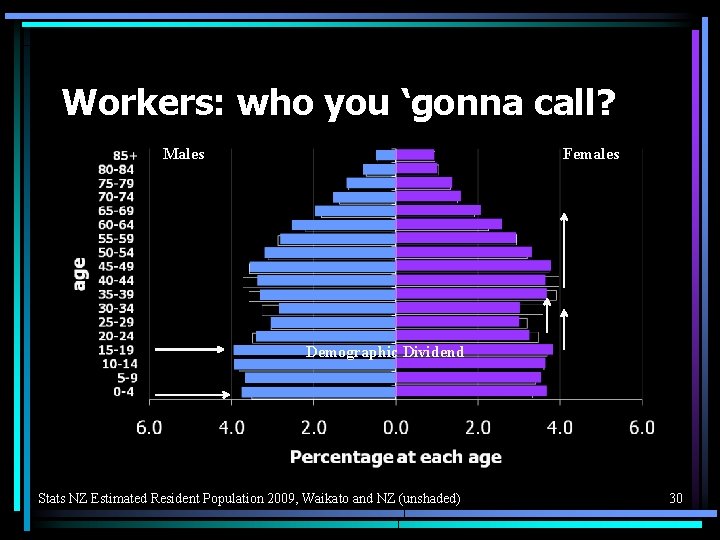
Workers: who you ‘gonna call? Males Females Demographic Dividend Stats NZ Estimated Resident Population 2009, Waikato and NZ (unshaded) 30
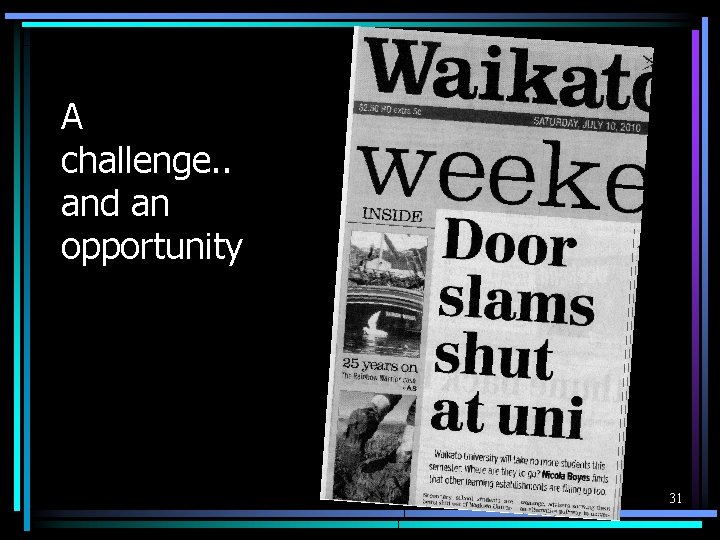
A challenge. . and an opportunity 31
Who will be the workers?
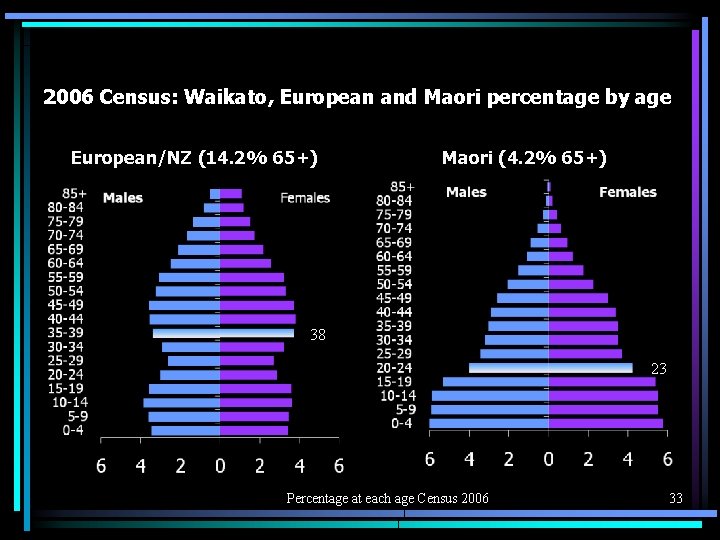
2006 Census: Waikato, European and Maori percentage by age European/NZ (14. 2% 65+) Maori (4. 2% 65+) 38 23 Percentage at each age Census 2006 33
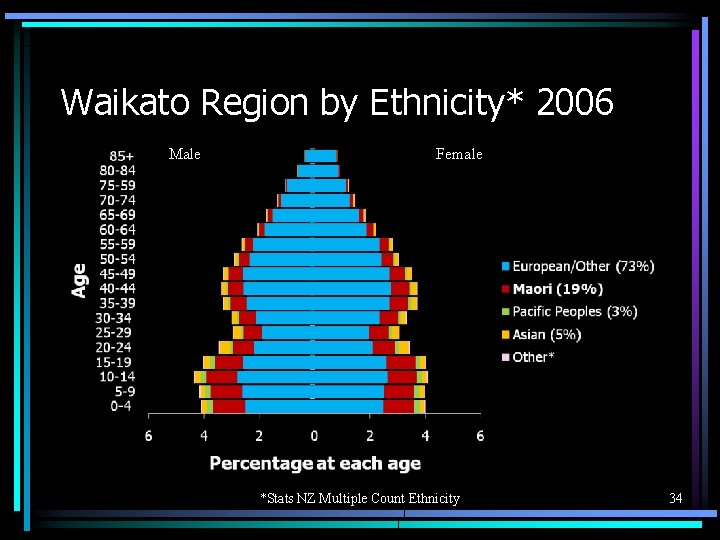
Waikato Region by Ethnicity* 2006 Male Female *Stats NZ Multiple Count Ethnicity 34
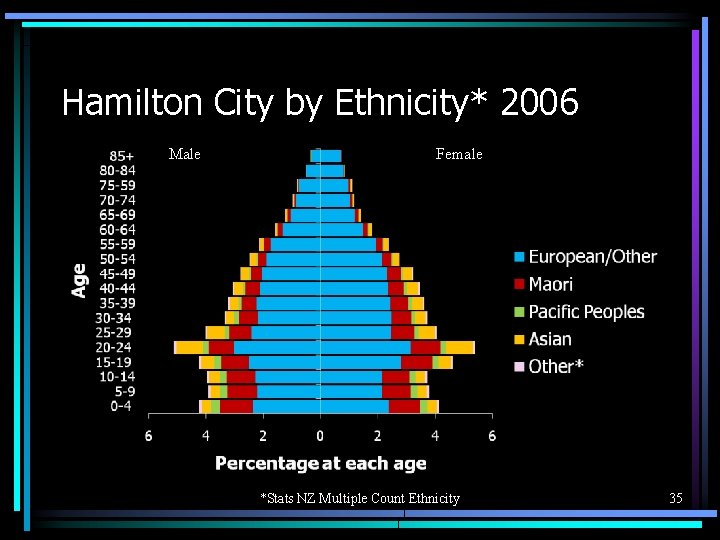
Hamilton City by Ethnicity* 2006 Male Female *Stats NZ Multiple Count Ethnicity 35
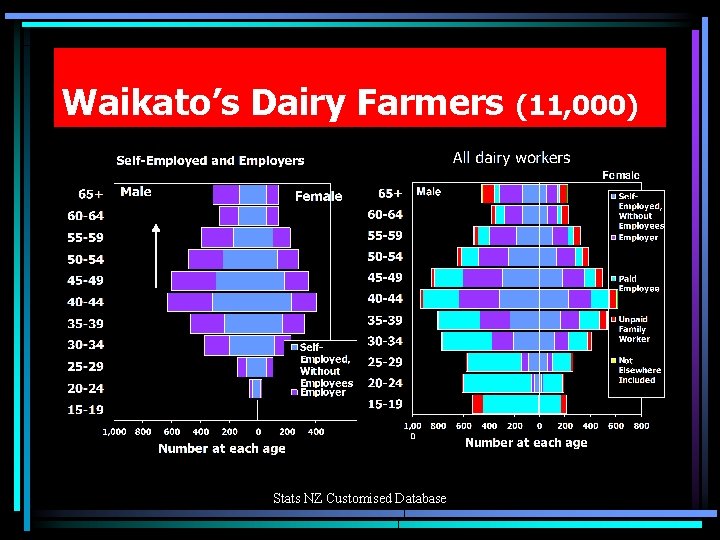
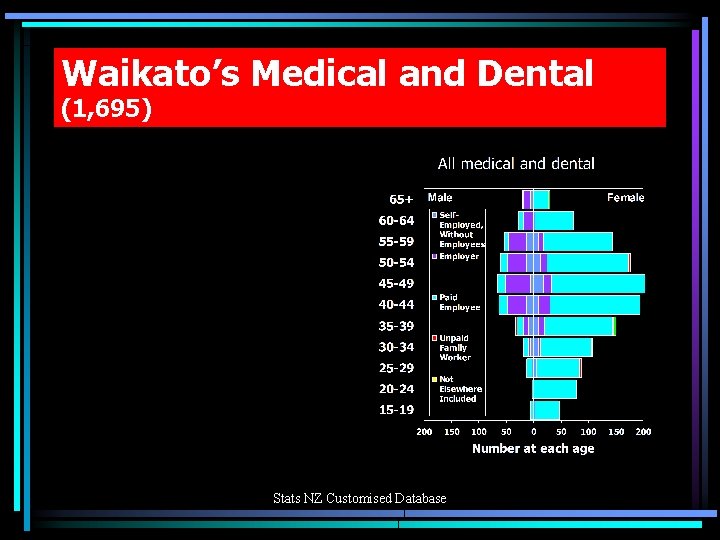
And what will be the industry?
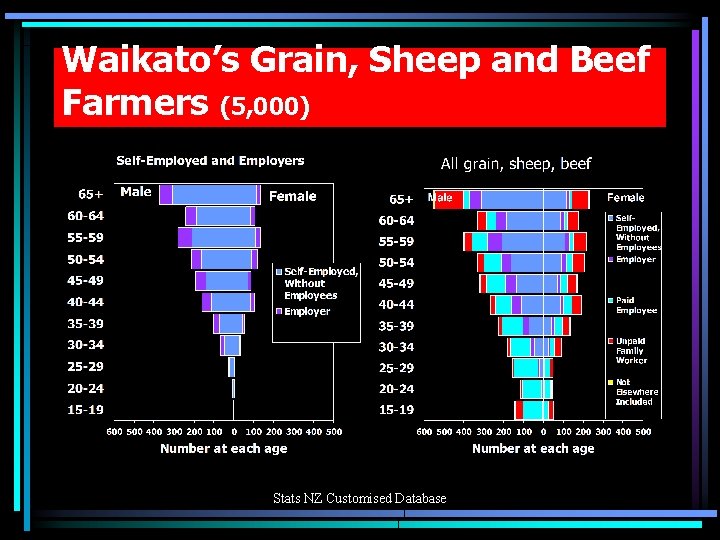
Waikato’s Grain, Sheep and Beef Farmers (5, 000) Stats NZ Customised Database
Waikato’s Dairy Farmers Stats NZ Customised Database (11, 000)
Waikato’s Medical and Dental (1, 695) Stats NZ Customised Database
Watch this space. . Accept Buffer (revisit those policies) Celebrate (advance warning) 40
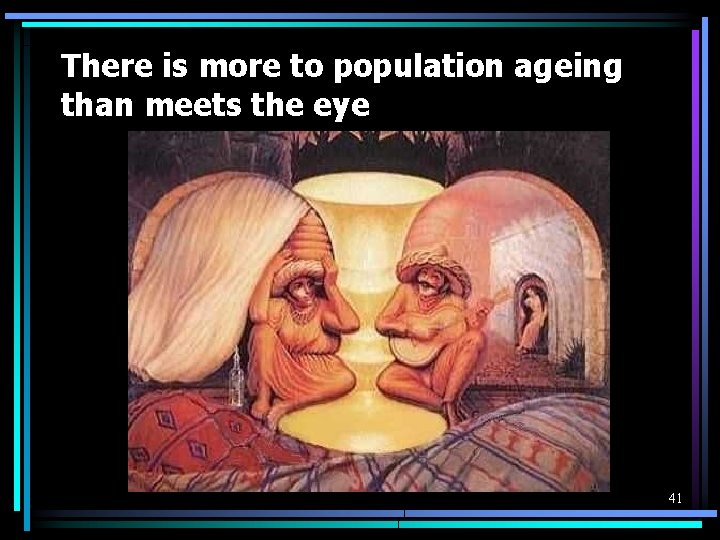
There is more to population ageing than meets the eye 41
Thankyou • Population Studies Centre • will become NIDEA – The National Institute for Demographic and Economic Analysis – on November 24 th 2010 • natalie. jackson@waikato. ac. nz 42