
DEMOCRACY OR NOT Made by Giulia Barrale and
DEMOCRACY OR NOT? Made by: Giulia Barrale and Miriam Costanza (5^N)
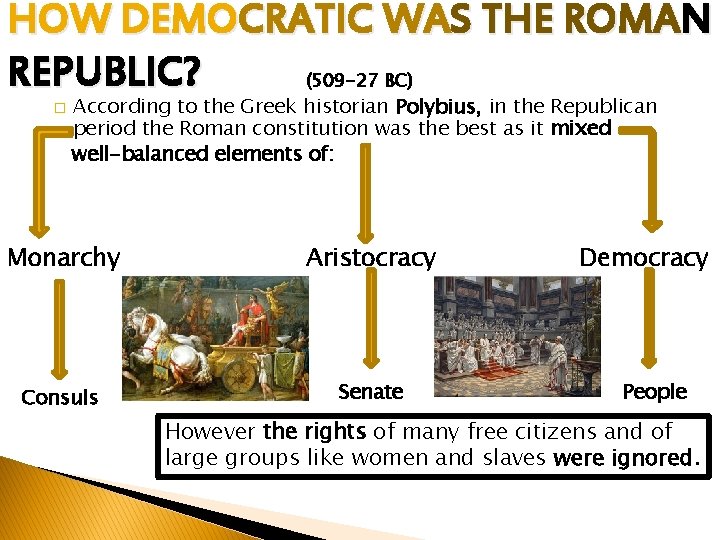
HOW DEMOCRATIC WAS THE ROMAN REPUBLIC? (509 -27 BC) � According to the Greek historian Polybius, in the Republican period the Roman constitution was the best as it mixed well-balanced elements of: Monarchy Aristocracy Consuls Senate Democracy People However the rights of many free citizens and of large groups like women and slaves were ignored.
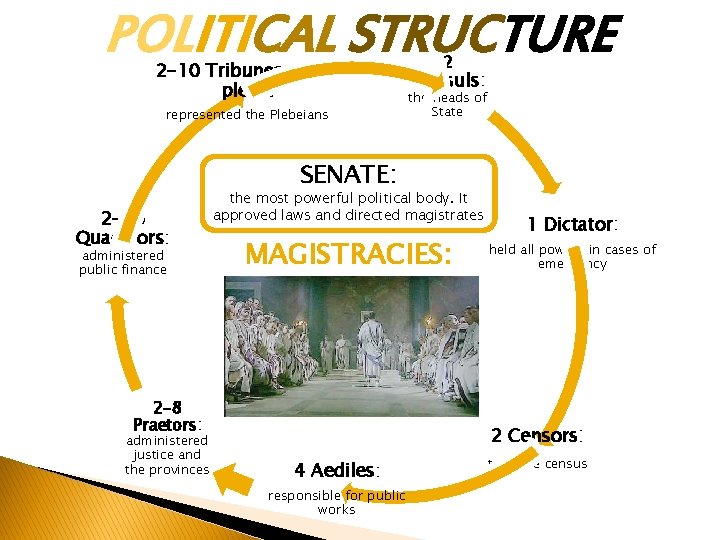
POLITICAL STRUCTURE 2 -10 Tribunes of the plebs: represented the Plebeians 2 Consuls: the heads of State SENATE: 2 -20 Quaestors: administered public finance the most powerful political body. It approved laws and directed magistrates MAGISTRACIES: 2 -8 Praetors: administered justice and the provinces 1 Dictator: held all powers in cases of emergency 2 Censors: 4 Aediles: responsible for public works took the census
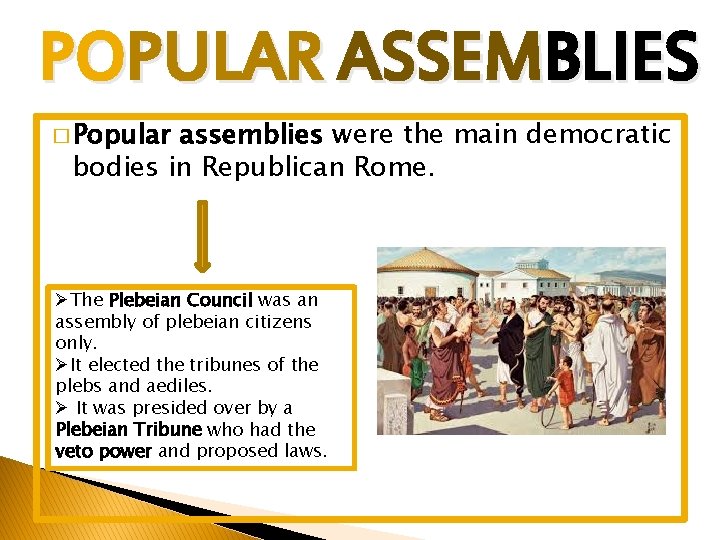
POPULAR ASSEMBLIES � Popular assemblies were the main democratic bodies in Republican Rome. ØThe Plebeian Council was an assembly of plebeian citizens only. ØIt elected the tribunes of the plebs and aediles. Ø It was presided over by a Plebeian Tribune who had the veto power and proposed laws.

THE COMITIA The Comitia (committees) were assemblies of all Roman free citizens, both patricians and plebeians, presided over by Consuls. There were three types of Committees: The Curiate Assembly, that played formal roles. The Centuriate Assembly, organized into units of soldiers on the basis of wealth. It passed laws and elected the most important magistrates. The Tribal Assembly, consisting of all Roman citizens organized into tribes. It voted on proposals made by consuls and elected less important officials.
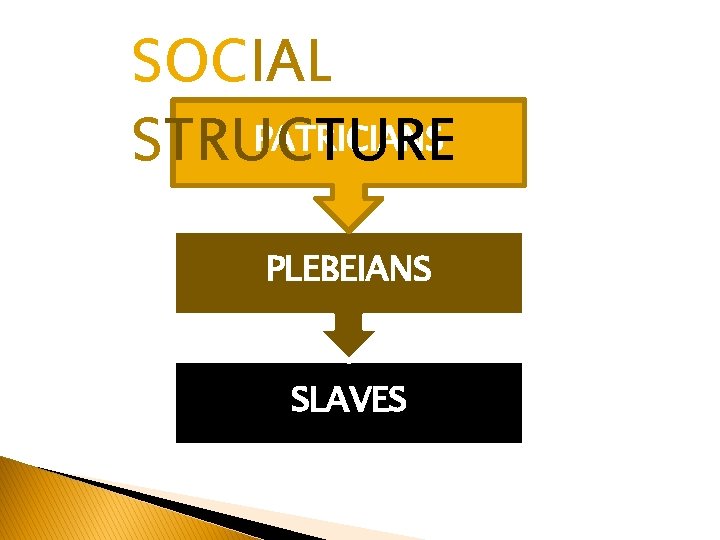
SOCIAL PATRICIANS STRUCTURE PLEBEIANS SLAVES
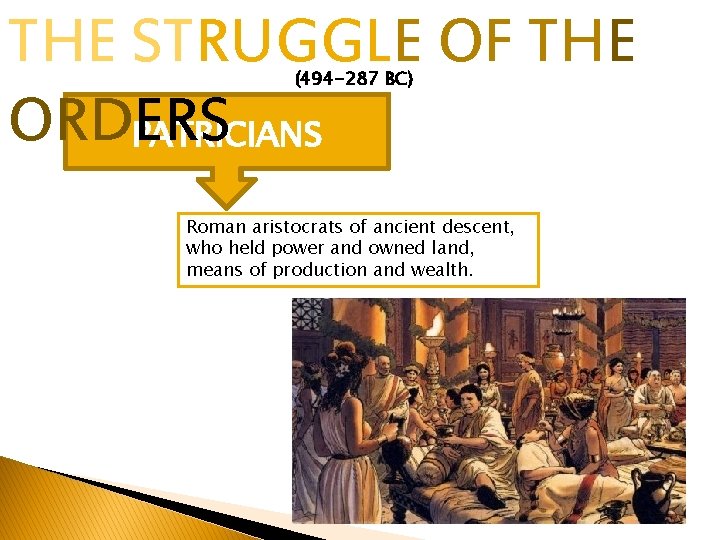
THE STRUGGLE OF THE ORDERS PATRICIANS (494 -287 BC) Roman aristocrats of ancient descent, who held power and owned land, means of production and wealth.
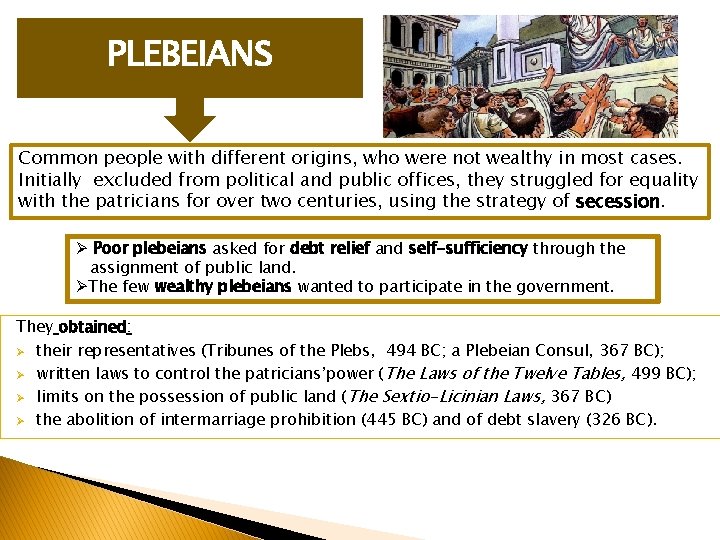
PLEBEIANS Common people with different origins, who were not wealthy in most cases. Initially excluded from political and public offices, they struggled for equality with the patricians for over two centuries, using the strategy of secession. Ø Poor plebeians asked for debt relief and self-sufficiency through the assignment of public land. ØThe few wealthy plebeians wanted to participate in the government. They obtained: Ø their representatives (Tribunes of the Plebs, 494 BC; a Plebeian Consul, 367 BC); Ø written laws to control the patricians’power (The Laws of the Twelve Tables, 499 BC); Ø limits on the possession of public land (The Sextio-Licinian Laws, 367 BC) Ø the abolition of intermarriage prohibition (445 BC) and of debt slavery (326 BC).
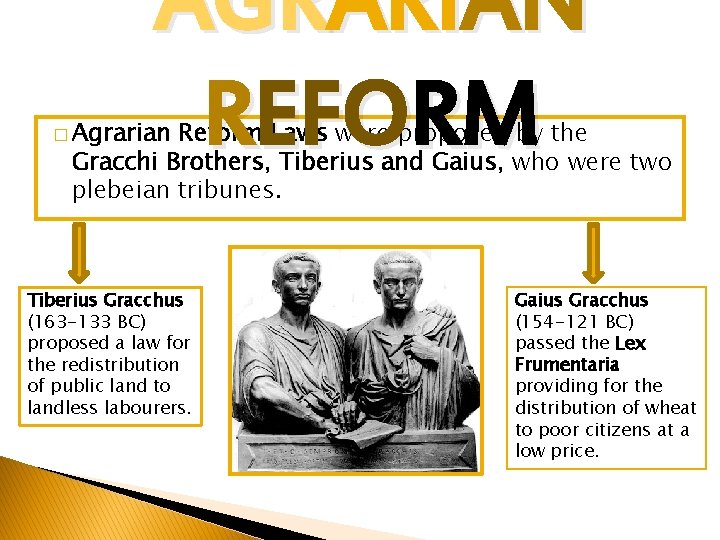
AGRARIAN REFORM � Agrarian Reform Laws were proposed by the Gracchi Brothers, Tiberius and Gaius, who were two plebeian tribunes. Tiberius Gracchus (163 -133 BC) proposed a law for the redistribution of public land to landless labourers. Gaius Gracchus (154 -121 BC) passed the Lex Frumentaria providing for the distribution of wheat to poor citizens at a low price.
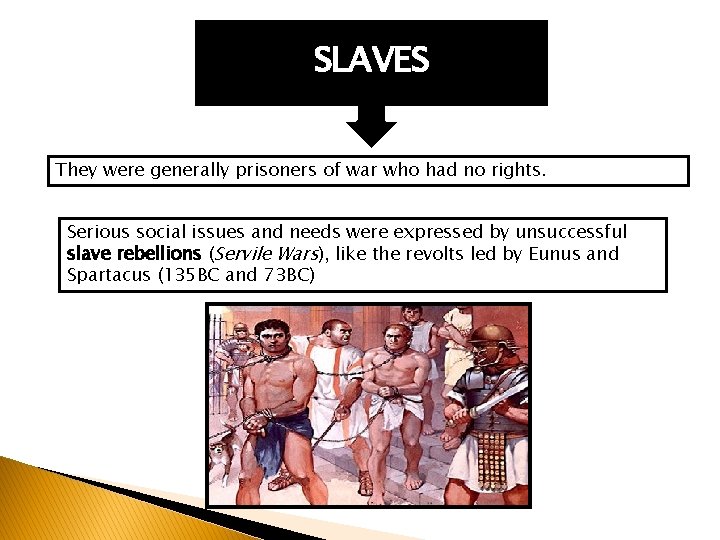
SLAVES They were generally prisoners of war who had no rights. Serious social issues and needs were expressed by unsuccessful slave rebellions (Servile Wars), like the revolts led by Eunus and Spartacus (135 BC and 73 BC)
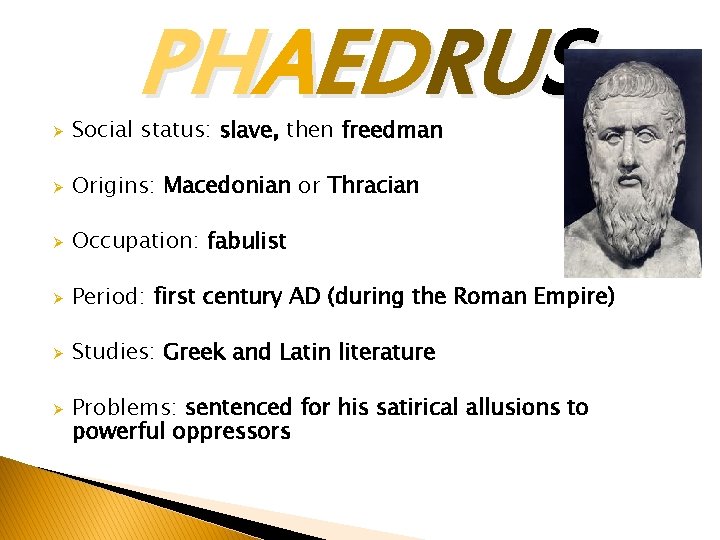
PHAEDRUS Ø Social status: slave, then freedman Ø Origins: Macedonian or Thracian Ø Occupation: fabulist Ø Period: first century AD (during the Roman Empire) Ø Studies: Greek and Latin literature Ø Problems: sentenced for his satirical allusions to powerful oppressors
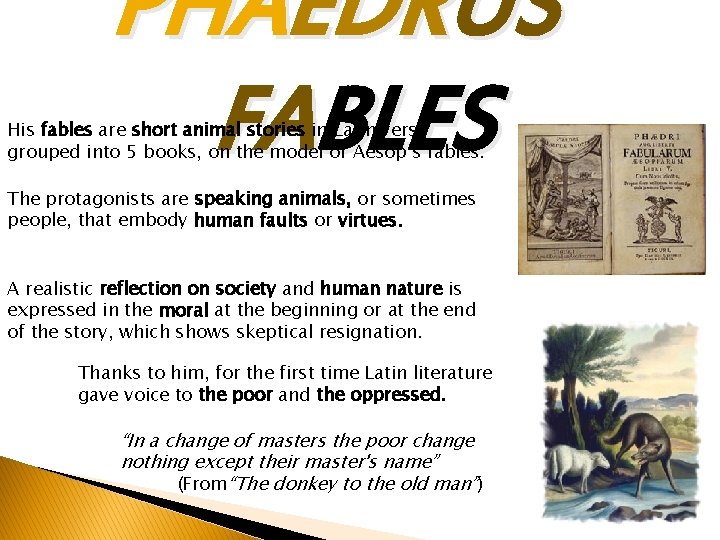
PHAEDRUS ‘ FABLES His fables are short animal stories in Latin verse grouped into 5 books, on the model of Aesop’s fables. The protagonists are speaking animals, or sometimes people, that embody human faults or virtues. A realistic reflection on society and human nature is expressed in the moral at the beginning or at the end of the story, which shows skeptical resignation. Thanks to him, for the first time Latin literature gave voice to the poor and the oppressed. “In a change of masters the poor change nothing except their master's name” (From“The donkey to the old man”)
- Slides: 12