
Democracy Authority from the People Defining Democracy n
- Slides: 11
Democracy Authority from the People
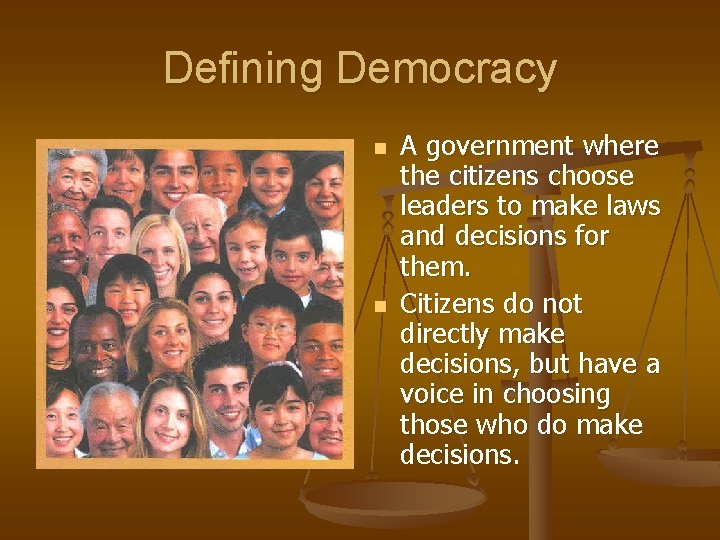
Defining Democracy n n A government where the citizens choose leaders to make laws and decisions for them. Citizens do not directly make decisions, but have a voice in choosing those who do make decisions.
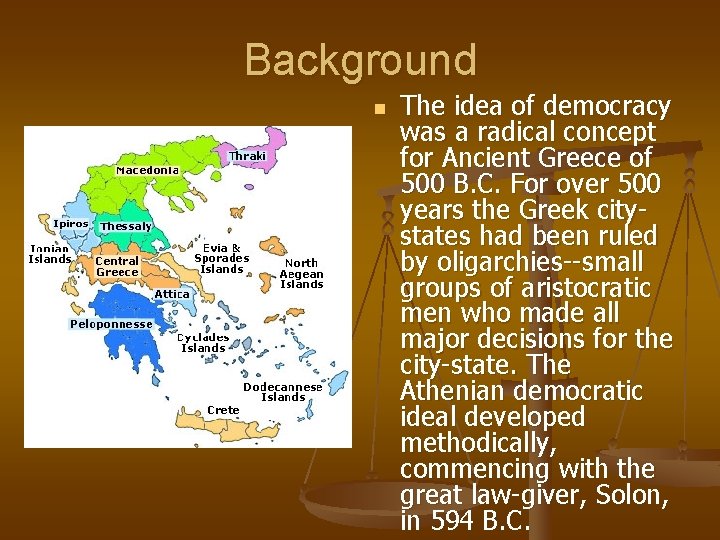
Background n The idea of democracy was a radical concept for Ancient Greece of 500 B. C. For over 500 years the Greek citystates had been ruled by oligarchies--small groups of aristocratic men who made all major decisions for the city-state. The Athenian democratic ideal developed methodically, commencing with the great law-giver, Solon, in 594 B. C.
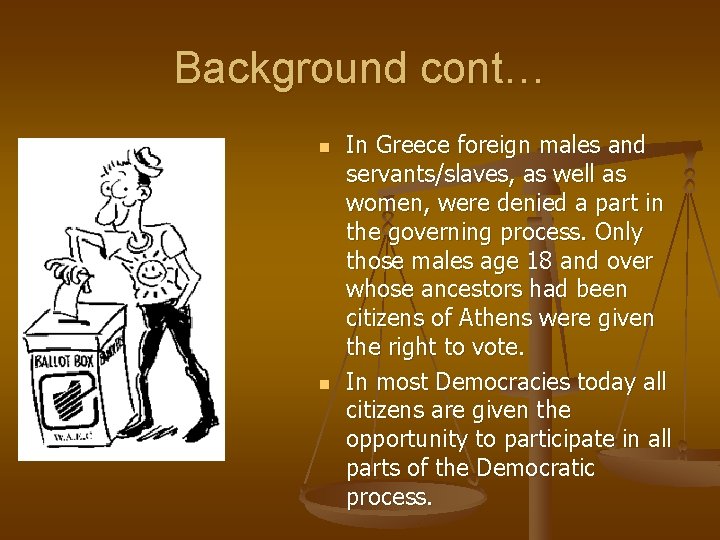
Background cont… n n In Greece foreign males and servants/slaves, as well as women, were denied a part in the governing process. Only those males age 18 and over whose ancestors had been citizens of Athens were given the right to vote. In most Democracies today all citizens are given the opportunity to participate in all parts of the Democratic process.
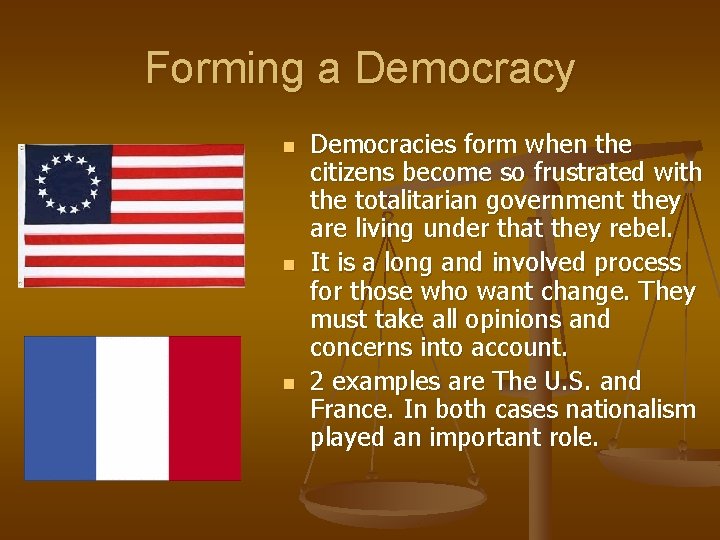
Forming a Democracy n n n Democracies form when the citizens become so frustrated with the totalitarian government they are living under that they rebel. It is a long and involved process for those who want change. They must take all opinions and concerns into account. 2 examples are The U. S. and France. In both cases nationalism played an important role.
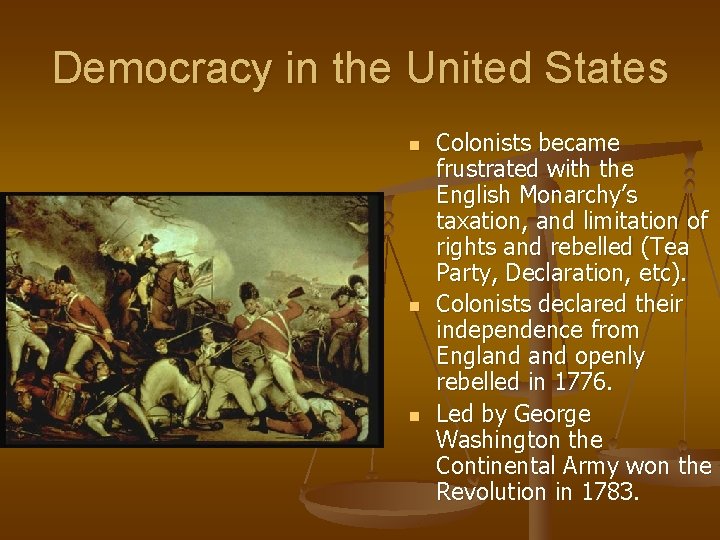
Democracy in the United States n n n Colonists became frustrated with the English Monarchy’s taxation, and limitation of rights and rebelled (Tea Party, Declaration, etc). Colonists declared their independence from England openly rebelled in 1776. Led by George Washington the Continental Army won the Revolution in 1783.
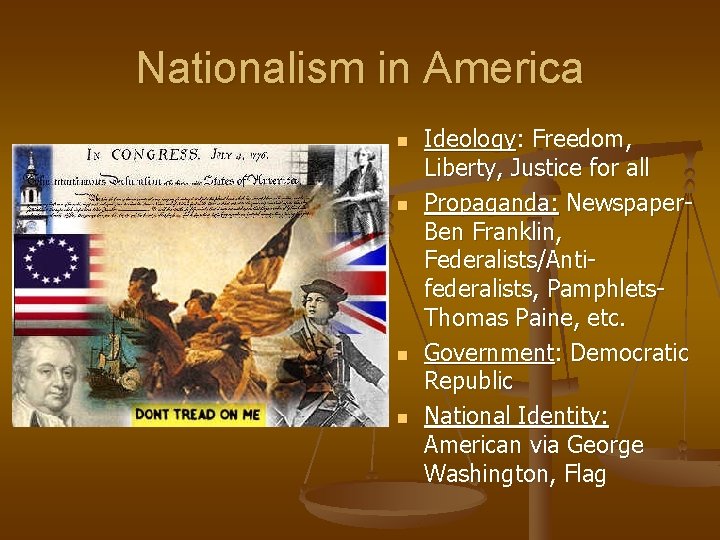
Nationalism in America n n Ideology: Freedom, Liberty, Justice for all Propaganda: Newspaper. Ben Franklin, Federalists/Antifederalists, Pamphlets. Thomas Paine, etc. Government: Democratic Republic National Identity: American via George Washington, Flag
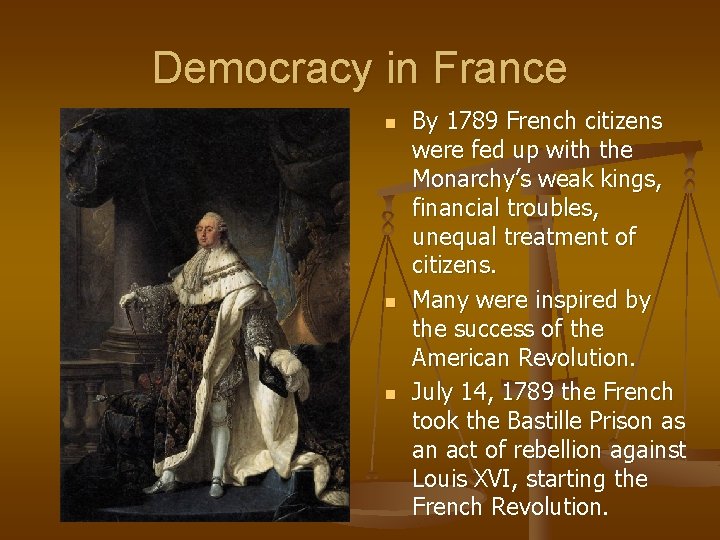
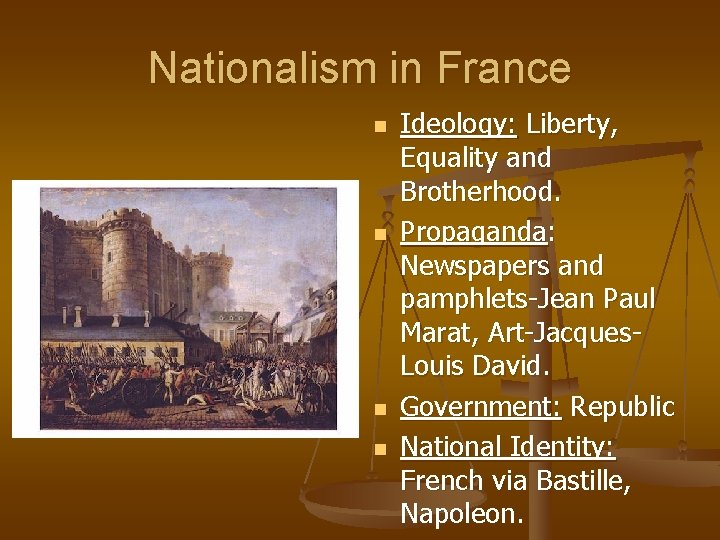
Democracy in France n n n By 1789 French citizens were fed up with the Monarchy’s weak kings, financial troubles, unequal treatment of citizens. Many were inspired by the success of the American Revolution. July 14, 1789 the French took the Bastille Prison as an act of rebellion against Louis XVI, starting the French Revolution.
Nationalism in France n n Ideology: Liberty, Equality and Brotherhood. Propaganda: Newspapers and pamphlets-Jean Paul Marat, Art-Jacques. Louis David. Government: Republic National Identity: French via Bastille, Napoleon.
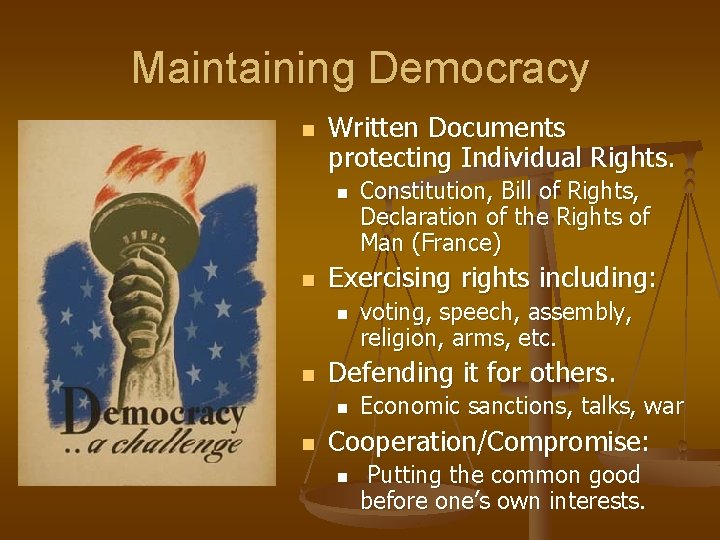
Maintaining Democracy n Written Documents protecting Individual Rights. n n Exercising rights including: n n voting, speech, assembly, religion, arms, etc. Defending it for others. n n Constitution, Bill of Rights, Declaration of the Rights of Man (France) Economic sanctions, talks, war Cooperation/Compromise: n Putting the common good before one’s own interests.
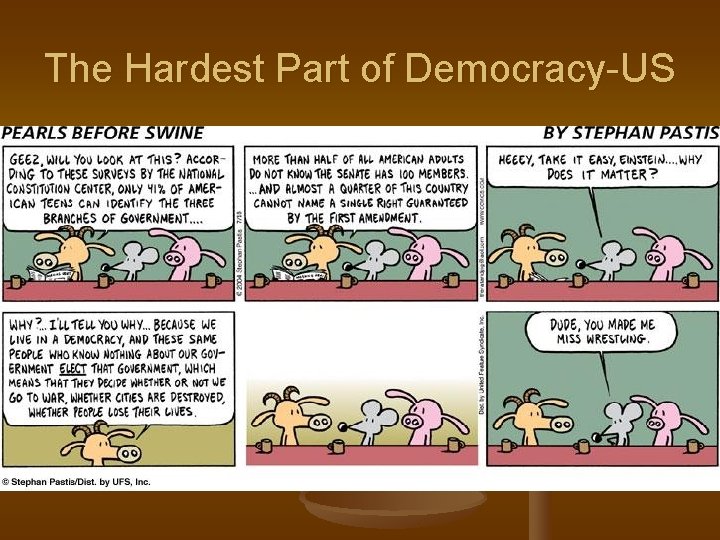
The Hardest Part of Democracy-US