
Demo Outline Introduction q Body tracking q Deep

Demo
Outline ØIntroduction q Body tracking q Deep Learning ØSystem setup ØResults
Outline ØIntroduction q Body tracking q Deep Learning ØSystem setup ØResults
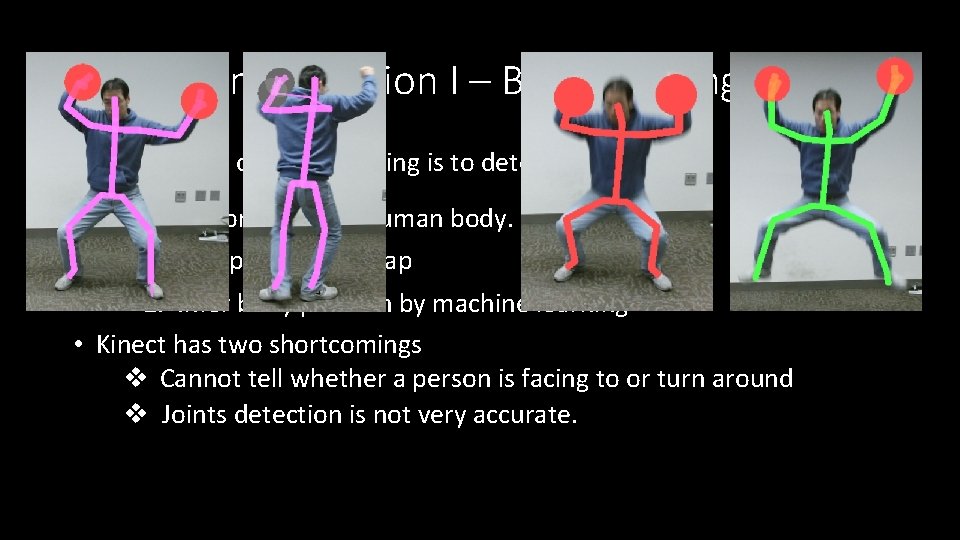
Introduction I – Body tracking • The essence of body tracking is to detect joints. • Kinect sensor can track human body. 1. Compute depth map 2. Infer body position by machine learning • Kinect has two shortcomings v Cannot tell whether a person is facing to or turn around v Joints detection is not very accurate.
Outline ØIntroduction ü Body tracking q Deep Learning ØSystem setup ØResults

Introduction II – Deep Learning Neural Network (NN) Network (CNN) Convolutional Neural
Introduction II – Deep Learning Convolutional Neural Network (CNN) There are 4 main operations in CNN 1. Convolution 2. 2. Non Linearity 3. Pooling 4. Classification
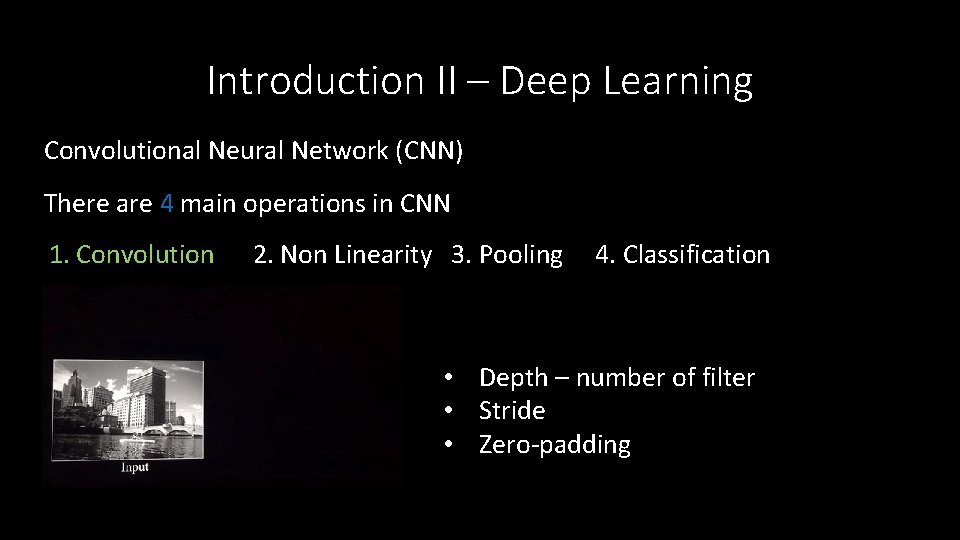
Introduction II – Deep Learning Convolutional Neural Network (CNN) There are 4 main operations in CNN 1. Convolution 2. Non Linearity 3. Pooling 4. Classification • Depth – number of filter • Stride • Zero-padding
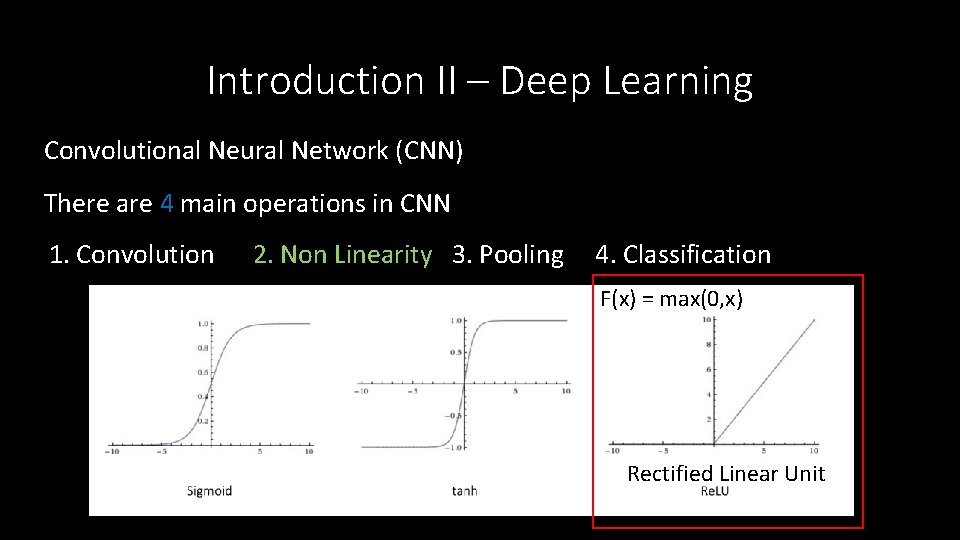
Introduction II – Deep Learning Convolutional Neural Network (CNN) There are 4 main operations in CNN 1. Convolution 2. Non Linearity 3. Pooling 4. Classification F(x) = max(0, x) Rectified Linear Unit
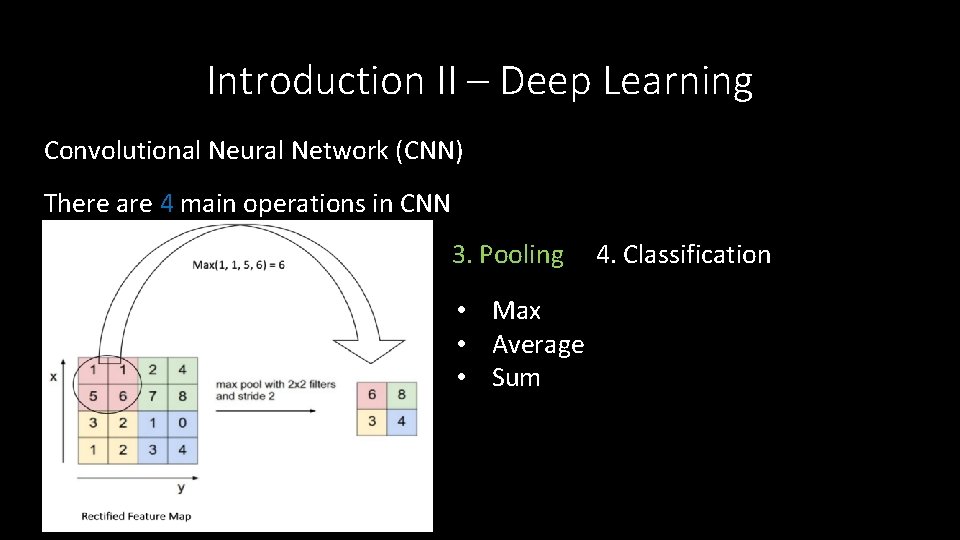
Introduction II – Deep Learning Convolutional Neural Network (CNN) There are 4 main operations in CNN 1. Convolution 2. Non Linearity 3. Pooling • Max • Average • Sum 4. Classification
Introduction II – Deep Learning Convolutional Neural Network (CNN) There are 4 main operations in CNN 1. Convolution 2. Non Linearity 3. Pooling 4. Classification
Introduction II – Deep Learning Convolutional Neural Network (CNN) There are 4 main operations in CNN 1. Convolution 2. Non Linearity 3. Pooling 4. Fully connected layer
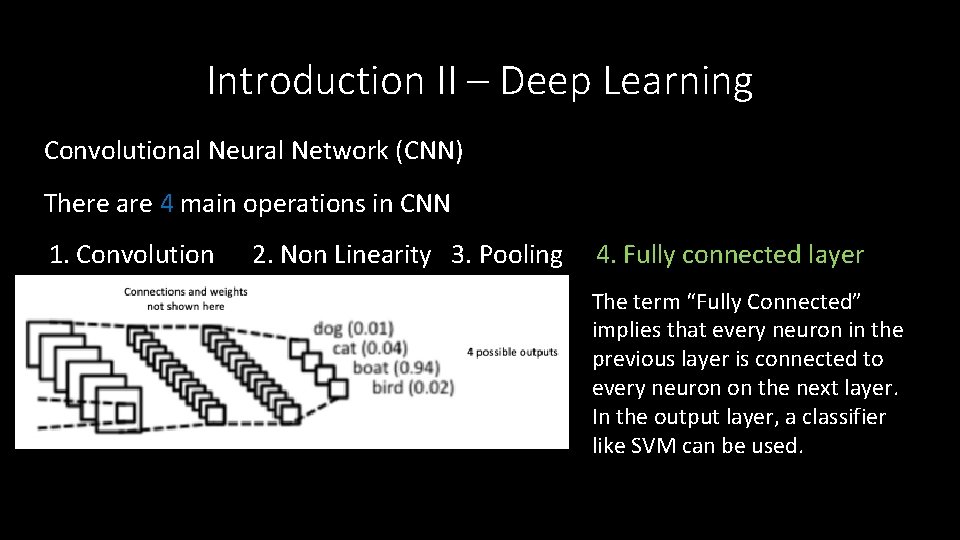
Introduction II – Deep Learning Convolutional Neural Network (CNN) There are 4 main operations in CNN 1. Convolution 2. Non Linearity 3. Pooling 4. Fully connected layer The term “Fully Connected” implies that every neuron in the previous layer is connected to every neuron on the next layer. In the output layer, a classifier like SVM can be used.
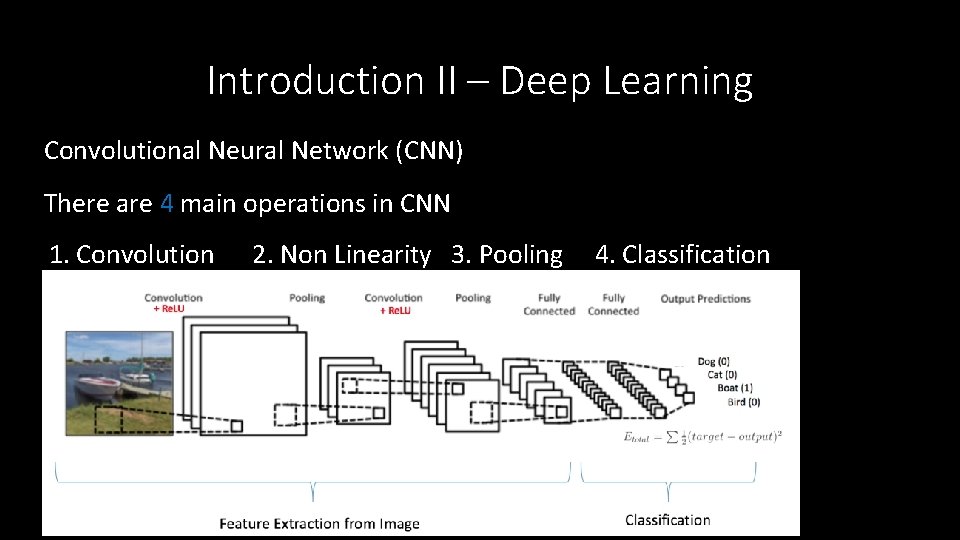
Introduction II – Deep Learning Convolutional Neural Network (CNN) There are 4 main operations in CNN 1. Convolution 2. Non Linearity 3. Pooling 4. Classification
Outline üIntroduction ü Body tracking ü Deep Learning ØSystem setup ØResults
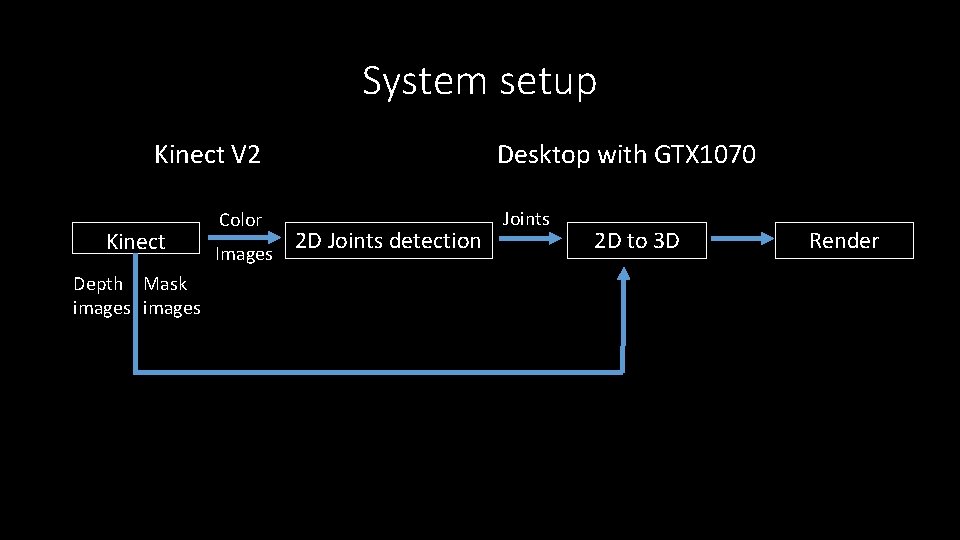
System setup Kinect V 2 Kinect Depth Mask images Color Images Desktop with GTX 1070 2 D Joints detection Joints 2 D to 3 D Render
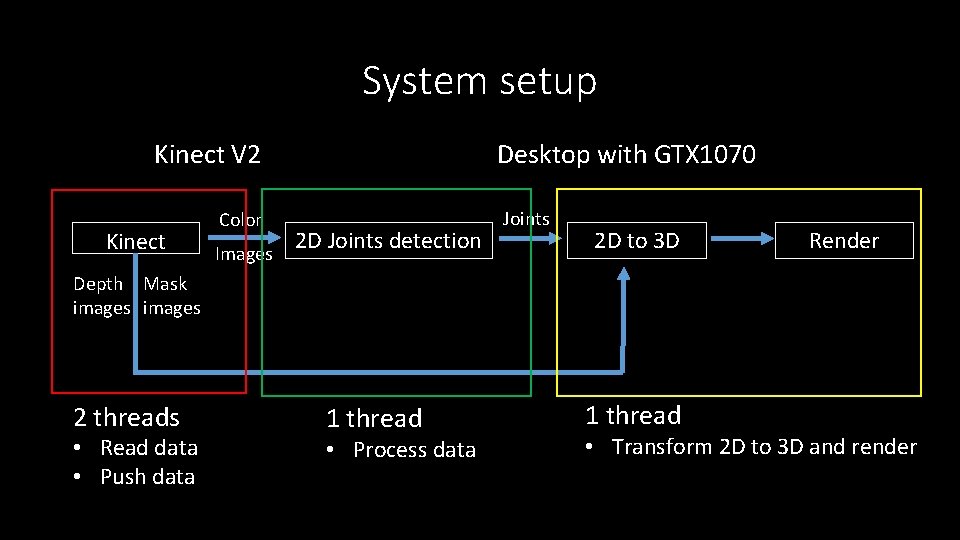
System setup Kinect V 2 Kinect Color Images Desktop with GTX 1070 2 D Joints detection Joints 2 D to 3 D Render Depth Mask images 2 threads • Read data • Push data 1 thread • Process data 1 thread • Transform 2 D to 3 D and render
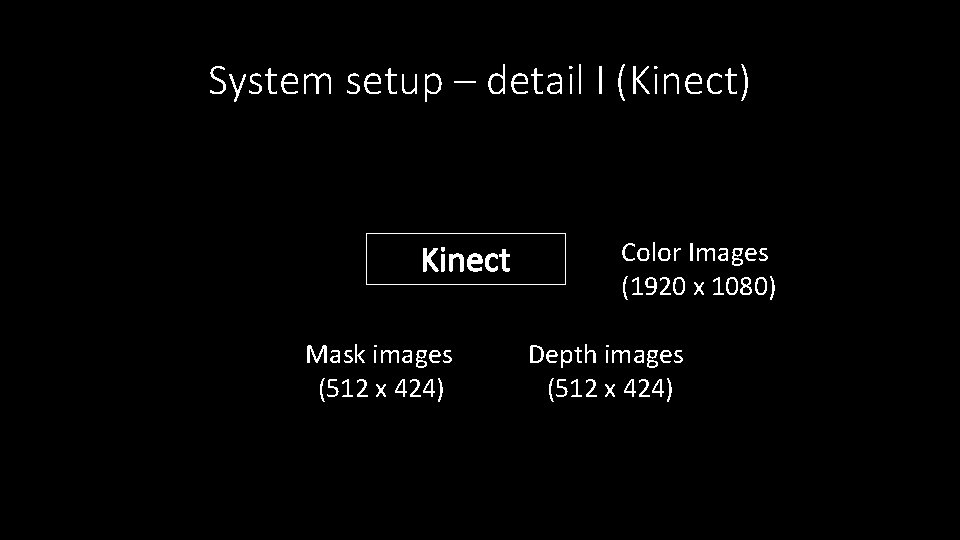
System setup – detail I (Kinect) Kinect Mask images (512 x 424) Color Images (1920 x 1080) Depth images (512 x 424)
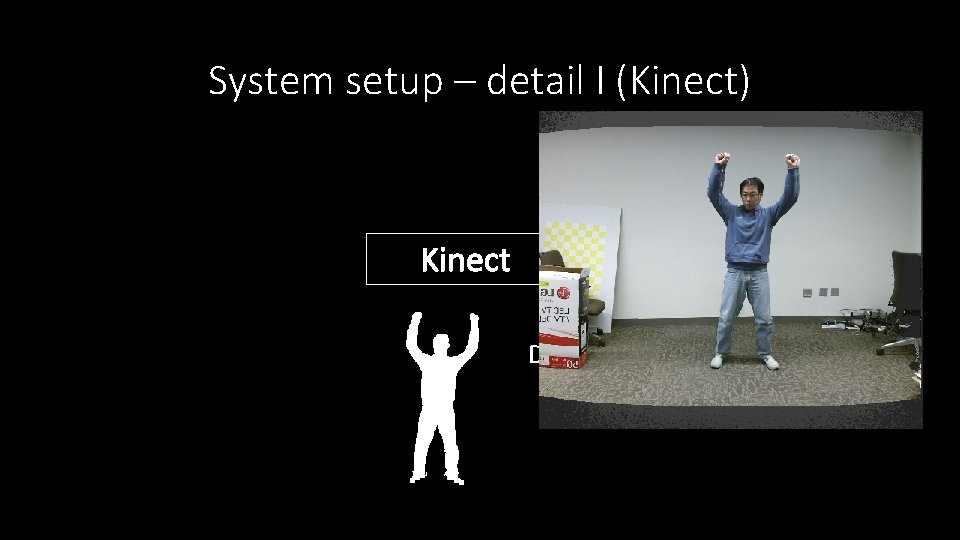
System setup – detail I (Kinect) Kinect Mask images (512 x 424) Color Images ( 512 x 424) Depth images (512 x 424)
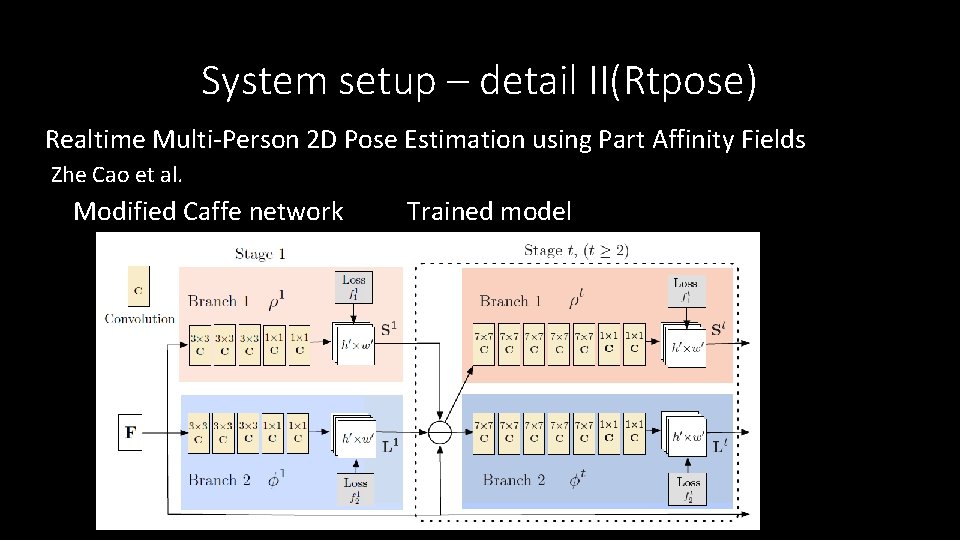
System setup – detail II(Rtpose) Realtime Multi-Person 2 D Pose Estimation using Part Affinity Fields Zhe Cao et al. Modified Caffe network Trained model
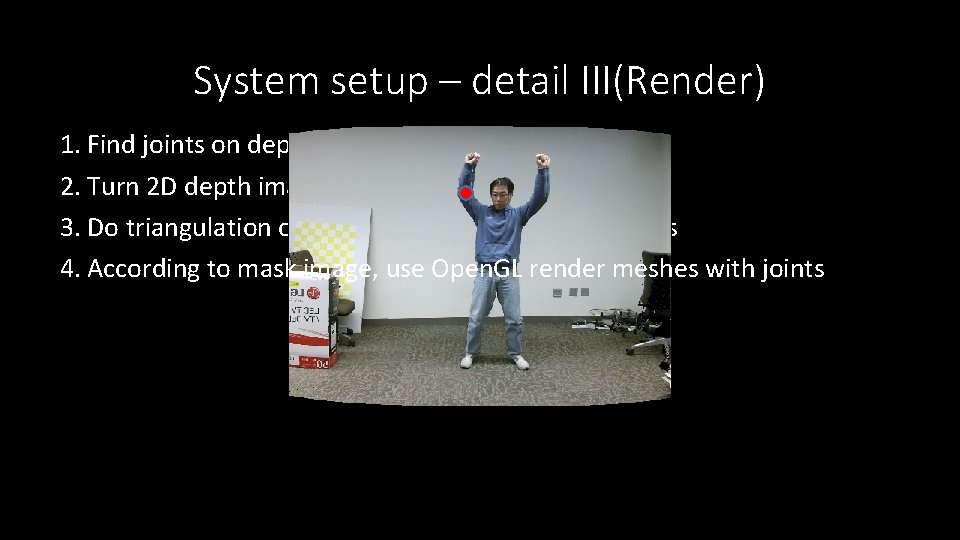
System setup – detail III(Render) 1. Find joints on depth image 2. Turn 2 D depth image to 3 D points cloud 3. Do triangulation on points cloud to produce meshes 4. According to mask image, use Open. GL render meshes with joints
Outline üIntroduction ü Body tracking ü Deep Learning üSystem setup ØResults
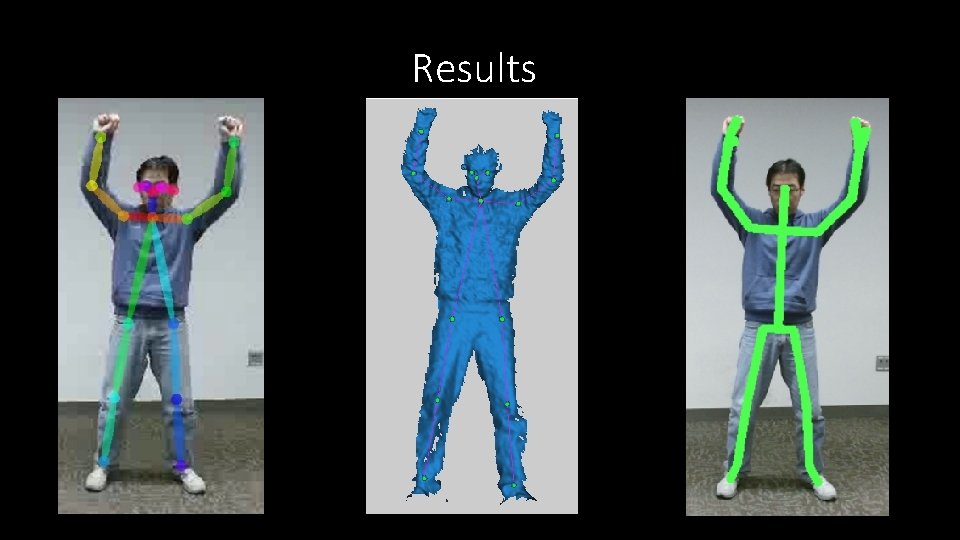
Results
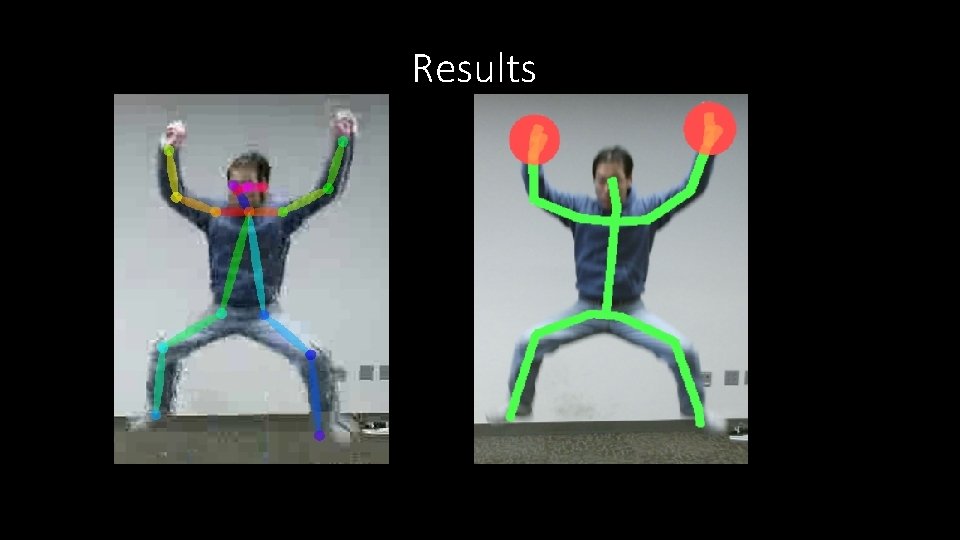
Results
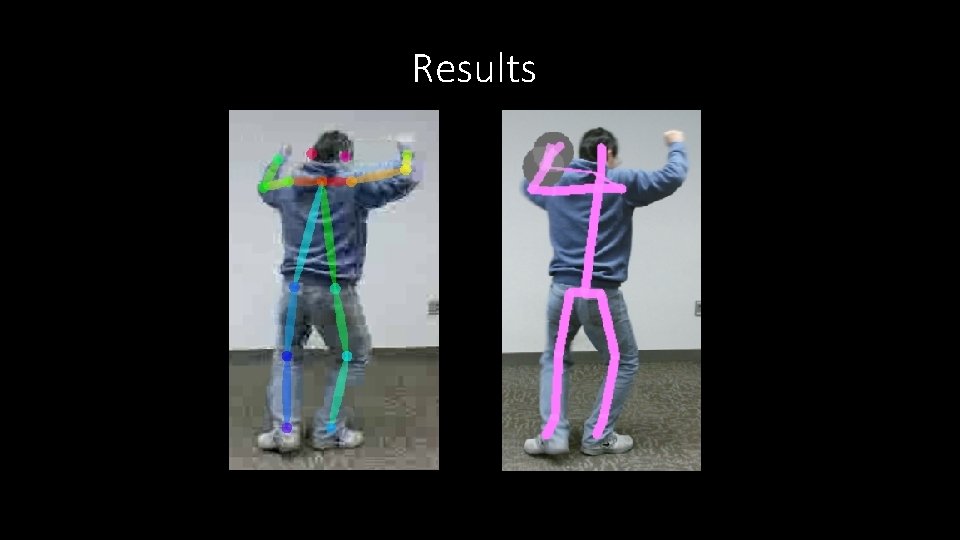
Results
- Slides: 25