
Demo 1 Tearing Paper Does the paper change
- Slides: 27
Demo #1: Tearing Paper • Does the paper change its chemistry (chemical identity) and form a new substance with different properties? • Is the ability to be torn a physical or chemical property? – Physical Property: Property that can be tested/observed without changing the chemical identity of the substance; can be undone • Is tearing a physical change or a chemical change?
Demo #2: Burning Paper • Does the paper change its chemistry (chemical identity) and form a new substance with different properties? • Is the ability to burn a physical or chemical property? – Chemical Property: A property that can only be tested/observed by changing the chemical identity of a substance; hard to undo • Is burning a physical change or a chemical change?
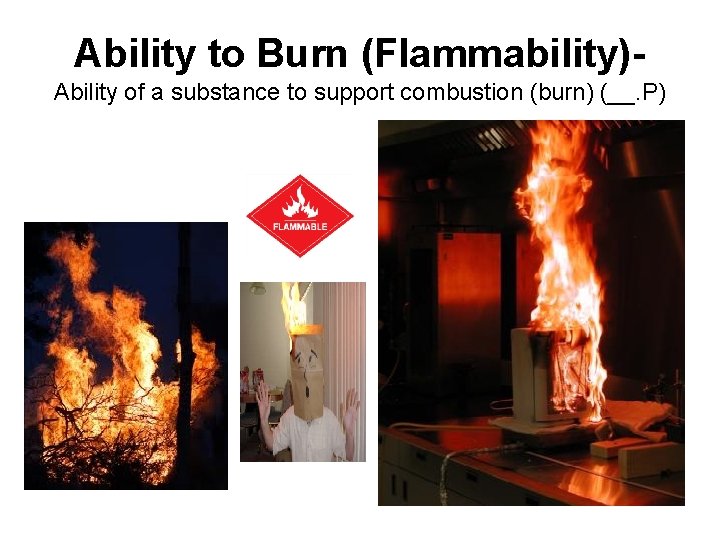
Ability to Burn (Flammability)Ability of a substance to support combustion (burn) (__. P)
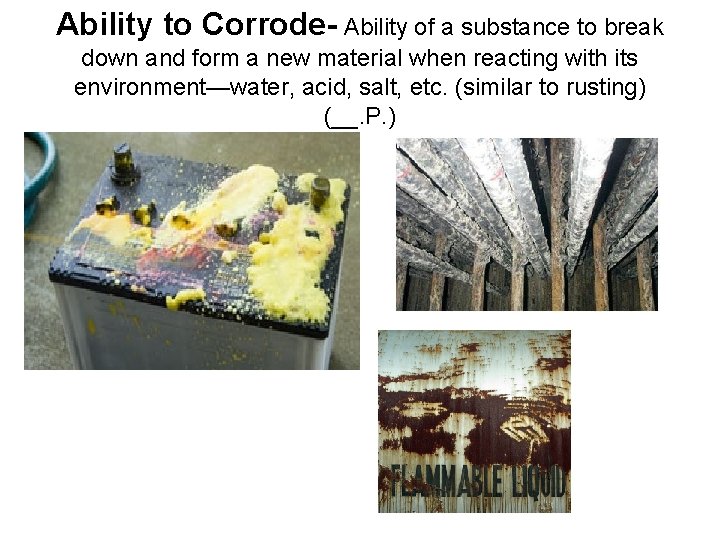
Ability to Corrode- Ability of a substance to break down and form a new material when reacting with its environment—water, acid, salt, etc. (similar to rusting) (__. P. )
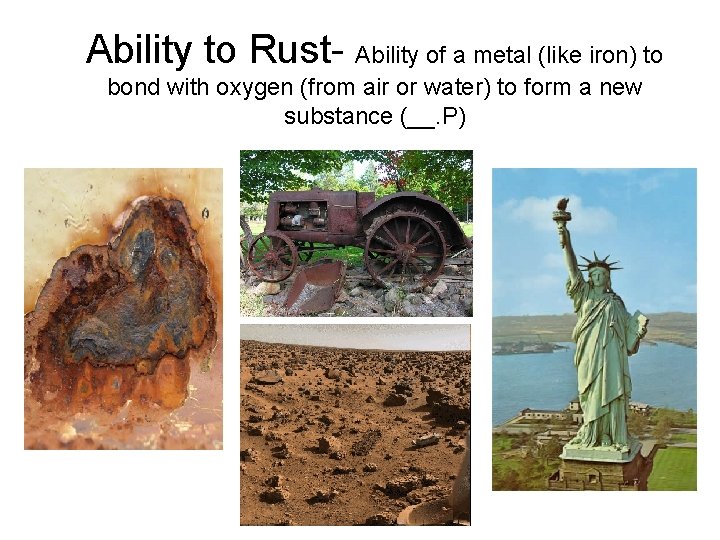
Ability to Rust- Ability of a metal (like iron) to bond with oxygen (from air or water) to form a new substance (__. P)
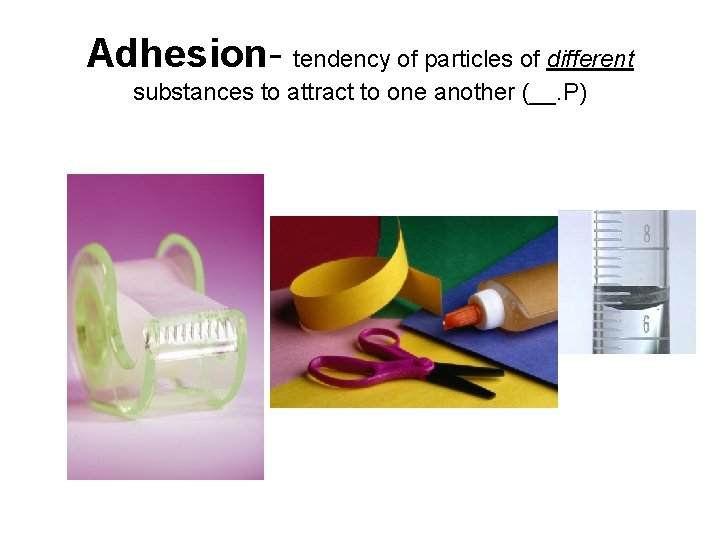
Adhesion- tendency of particles of different substances to attract to one another (__. P)
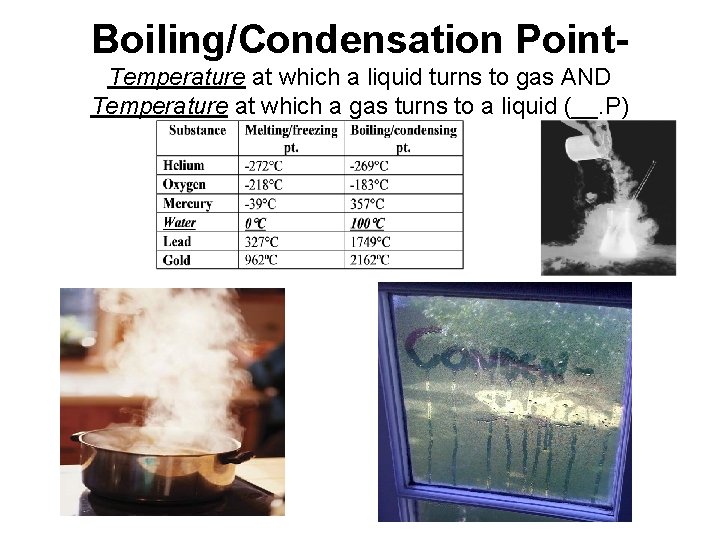
Boiling/Condensation Point. Temperature at which a liquid turns to gas AND Temperature at which a gas turns to a liquid (__. P)
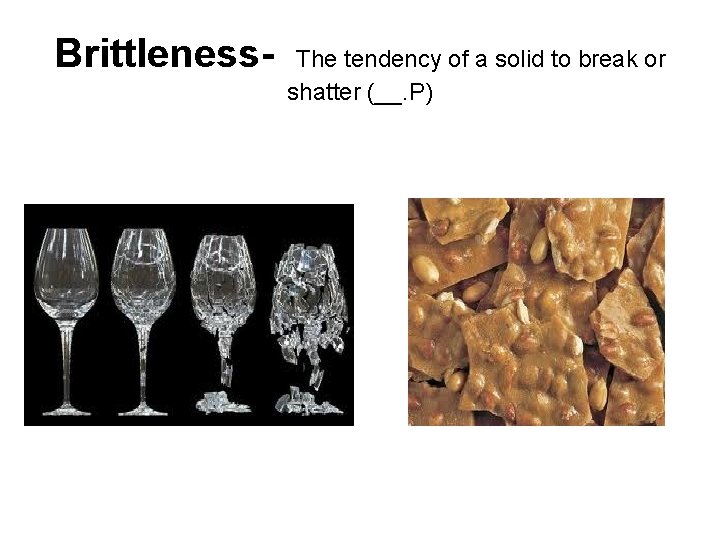
Brittleness- The tendency of a solid to break or shatter (__. P)
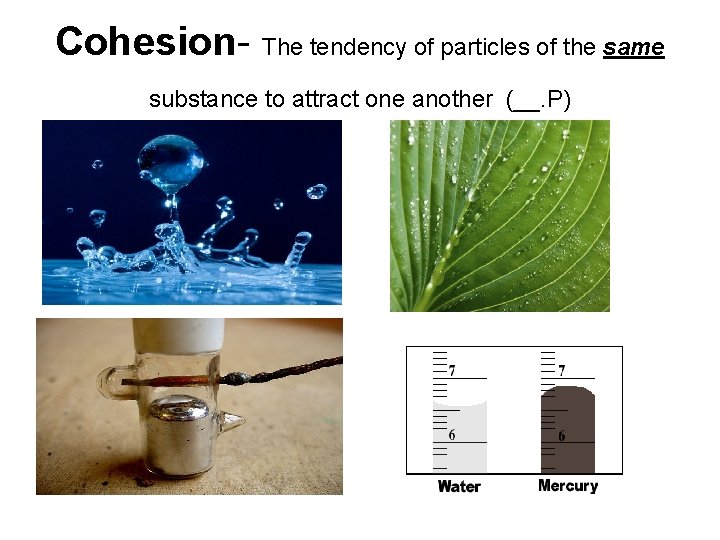
Cohesion- The tendency of particles of the same substance to attract one another (__. P)
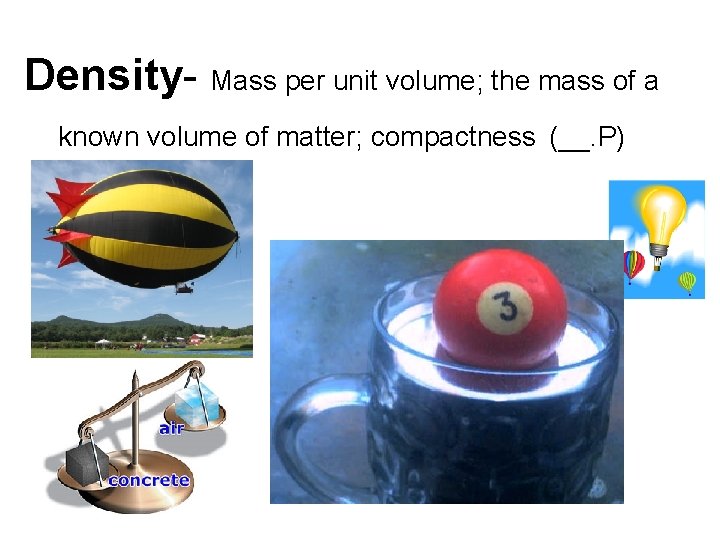
Density- Mass per unit volume; the mass of a known volume of matter; compactness (__. P)
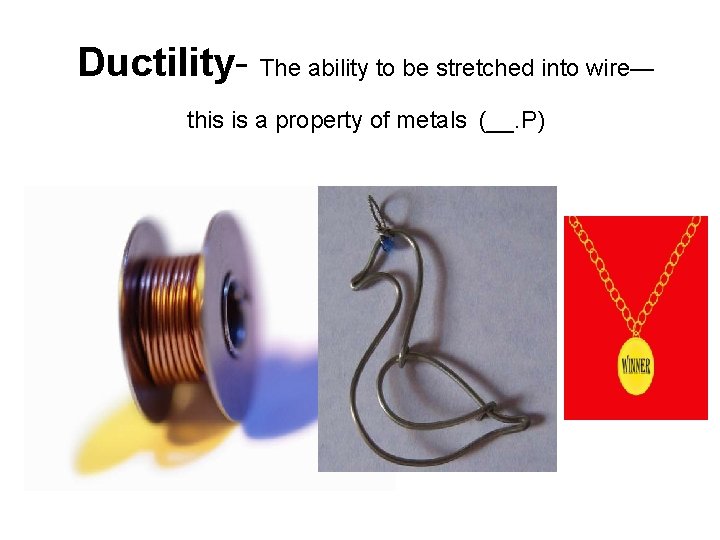
Ductility- The ability to be stretched into wire— this is a property of metals (__. P)
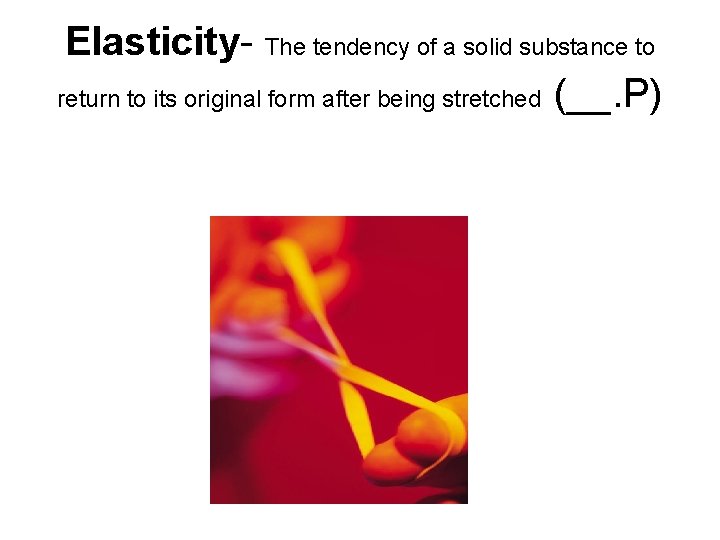
Elasticity- The tendency of a solid substance to return to its original form after being stretched (__. P)
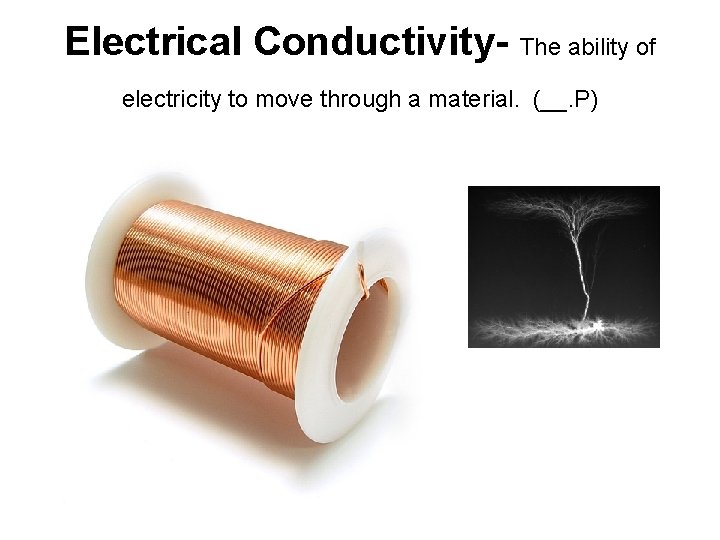
Electrical Conductivity- The ability of electricity to move through a material. (__. P)
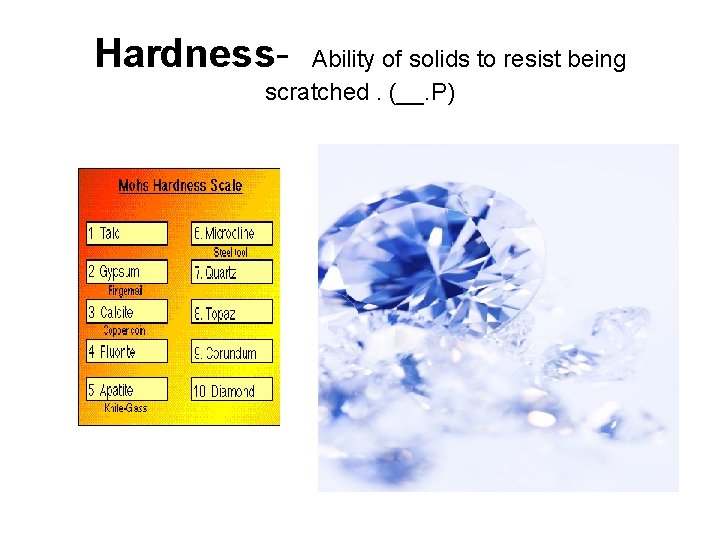
Hardness- Ability of solids to resist being scratched. (__. P)
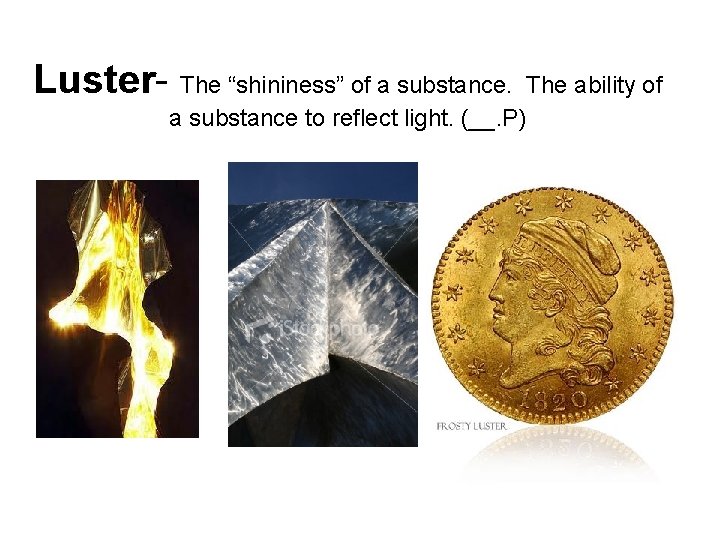
Luster- The “shininess” of a substance to reflect light. (__. P) The ability of
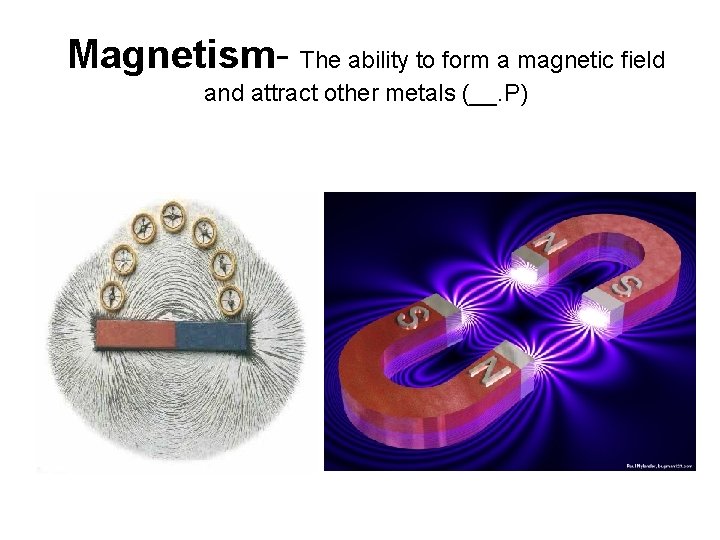
Magnetism- The ability to form a magnetic field and attract other metals (__. P)
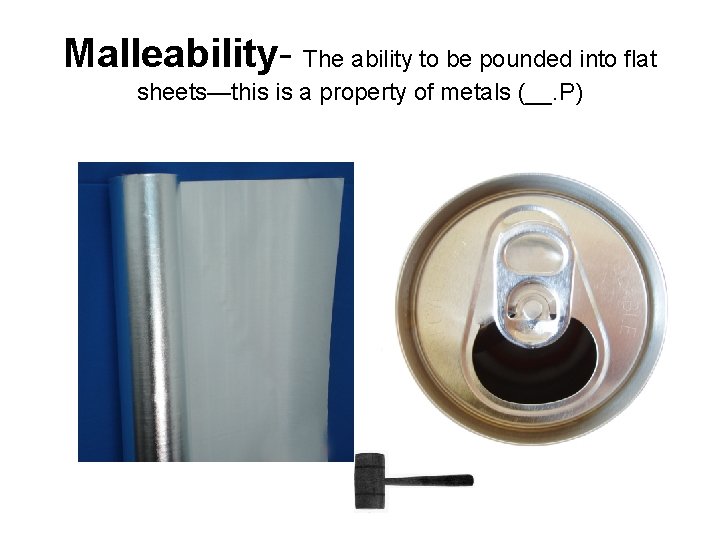
Malleability- The ability to be pounded into flat sheets—this is a property of metals (__. P)
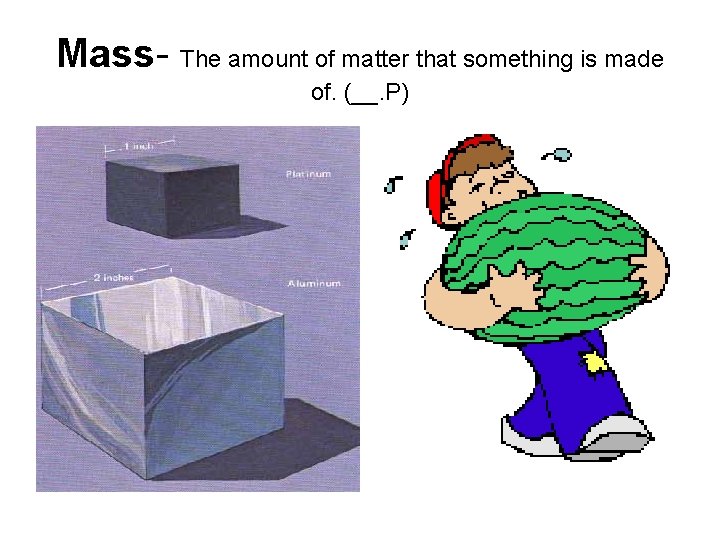
Mass- The amount of matter that something is made of. (__. P)
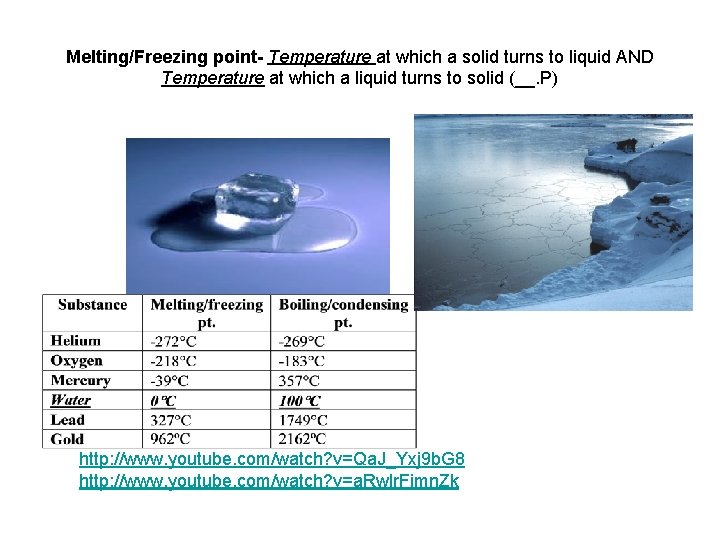
Melting/Freezing point- Temperature at which a solid turns to liquid AND Temperature at which a liquid turns to solid (__. P) http: //www. youtube. com/watch? v=Qa. J_Yxj 9 b. G 8 http: //www. youtube. com/watch? v=a. Rwlr. Fimn. Zk
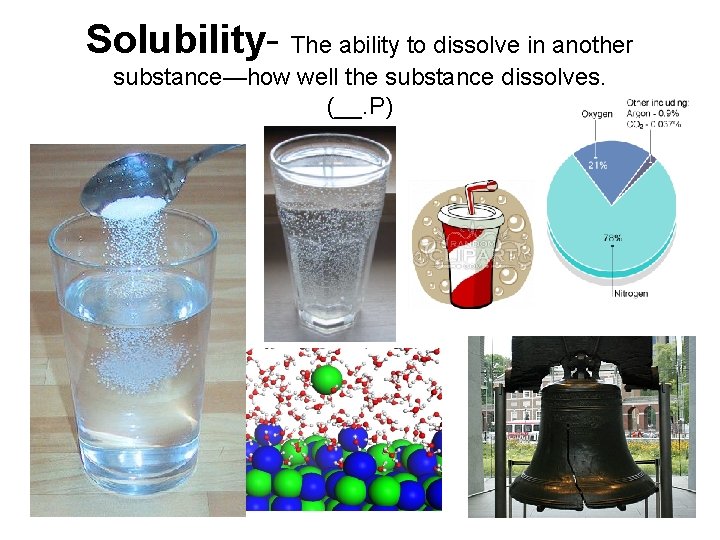
Solubility- The ability to dissolve in another substance—how well the substance dissolves. (__. P)
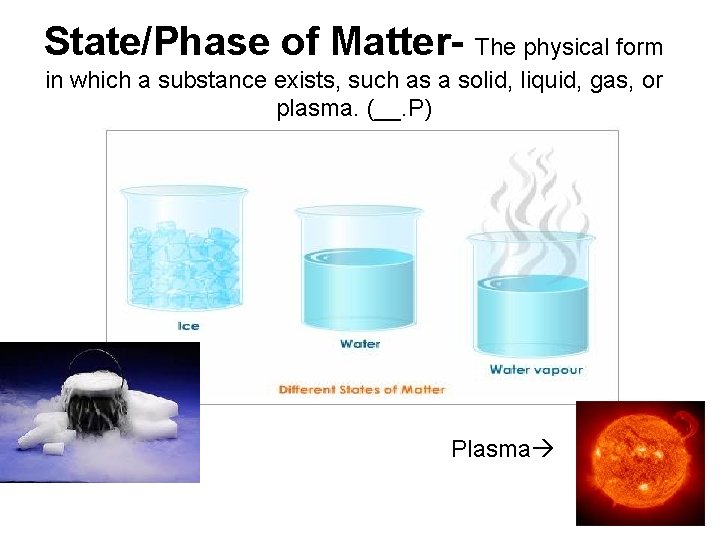
State/Phase of Matter- The physical form in which a substance exists, such as a solid, liquid, gas, or plasma. (__. P) Plasma
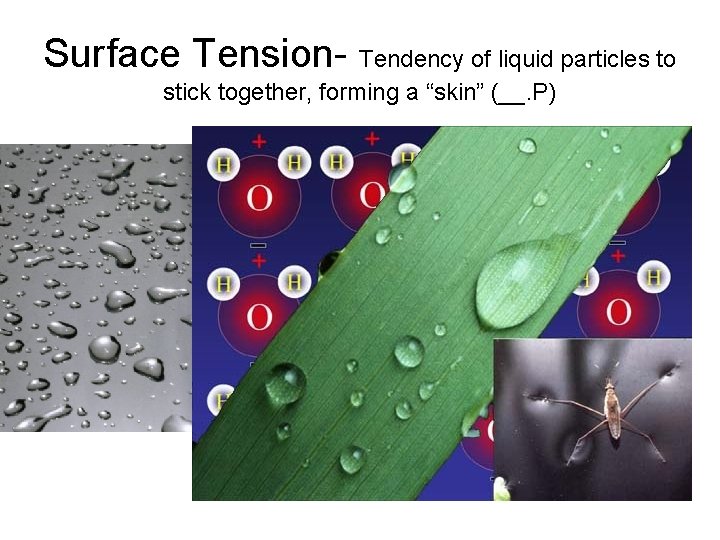
Surface Tension- Tendency of liquid particles to stick together, forming a “skin” (__. P)
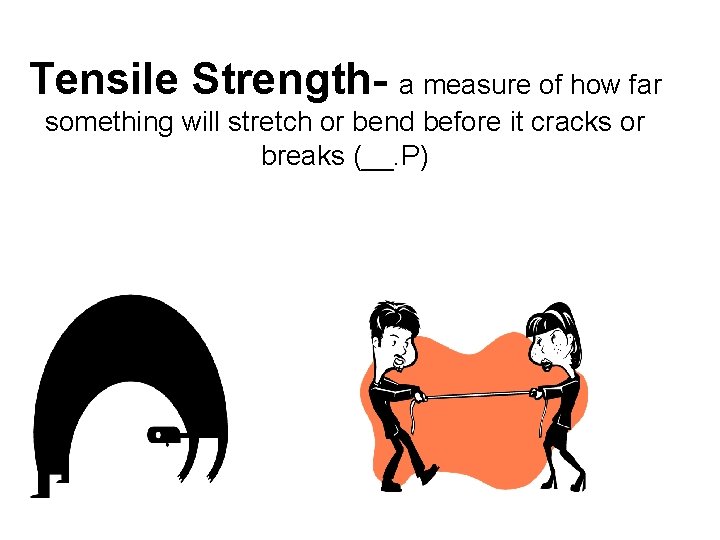
Tensile Strength- a measure of how far something will stretch or bend before it cracks or breaks (__. P)
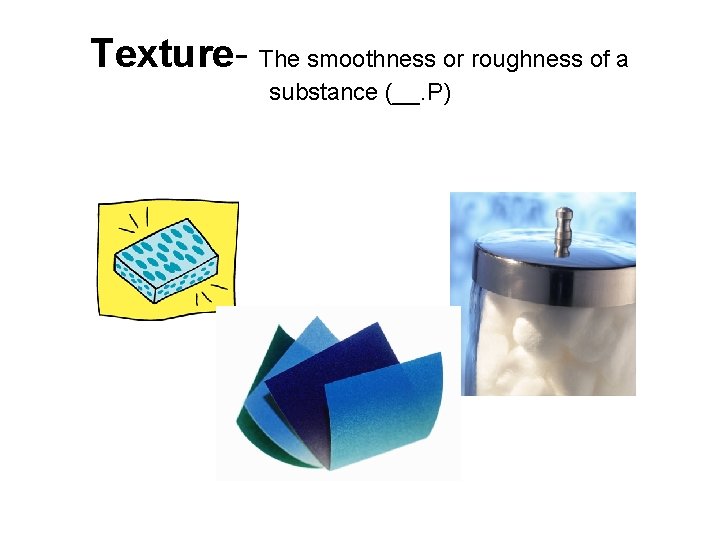
Texture- The smoothness or roughness of a substance (__. P)
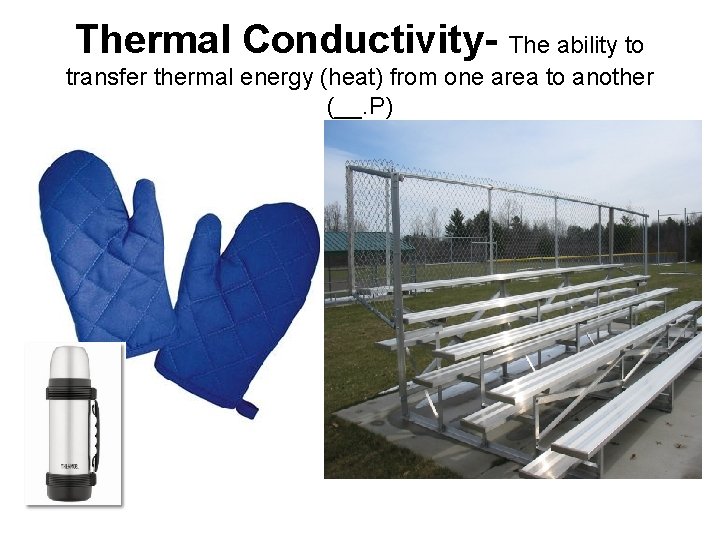
Thermal Conductivity- The ability to transfer thermal energy (heat) from one area to another (__. P)
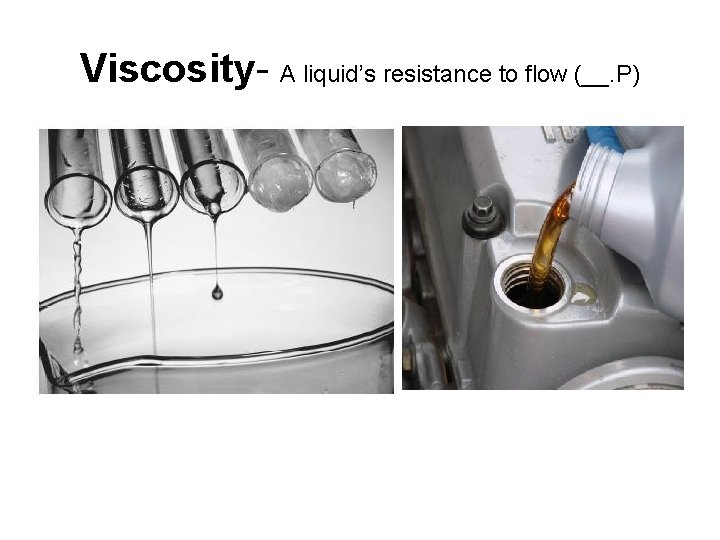
Viscosity- A liquid’s resistance to flow (__. P)
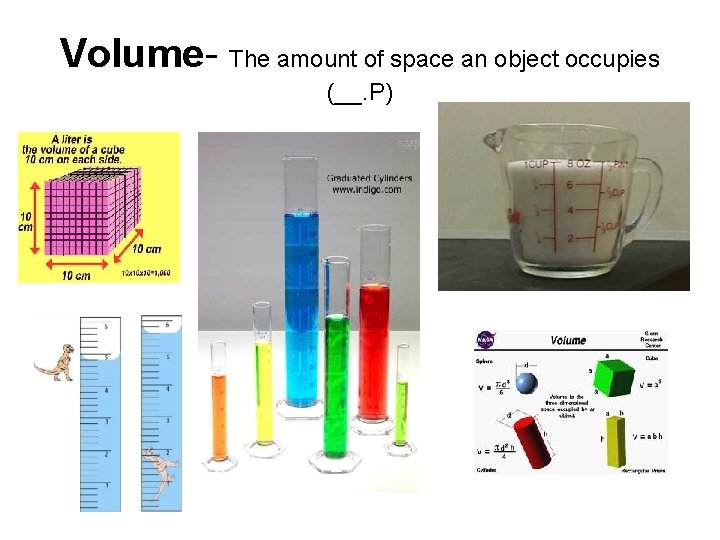
Volume- The amount of space an object occupies (__. P)