
Dementia Sibel Ertan MD Dpt of Neurology Dementia
Dementia Sibel Ertan MD Dpt. of Neurology
Dementia n n Definition Diagnostic criteria Epidemiology Differential diagnosis typical features and treatment of certain dementia syndromes
Dementia: Definition n Dementia is a clinical syndrome characterised by a decline of intellectual function in comparison with the patient’s previous level of cognition. Social and occupational activities and behaviour are also influenced. A decline in the activities of daily living (ADL) often accompanies first two.
Dementia: Criteria n DSM IV Criteria for the dementia: n Development of multiple cognitive deficit including memory impairment and at least one of the following: n n n aphasia apraxia agnosia executive functioning disturbance The cognitive deficit must, n n be sufficiently severe to cause impairment in occupational and social functioning. represent a decline from a previous higher level of functioning.
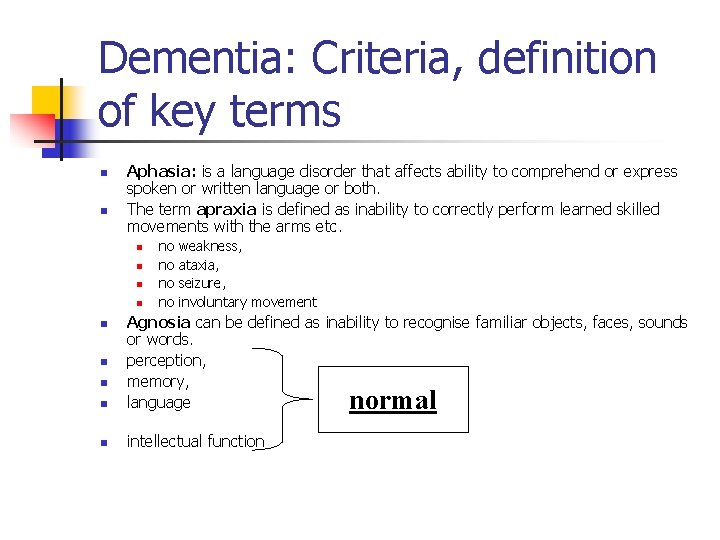
Dementia: Criteria, definition of key terms n n Aphasia: is a language disorder that affects ability to comprehend or express spoken or written language or both. The term apraxia is defined as inability to correctly perform learned skilled movements with the arms etc. n n no no weakness, ataxia, seizure, involuntary movement n Agnosia can be defined as inability to recognise familiar objects, faces, sounds or words. perception, memory, language n intellectual function n normal
Dementia: Epidemiology I n n n Over 65, about 5 -10 percent of population has some kind of cognitive decline. This ratio reaches, 20 -50 percent of all population in the age of 85. Dementia is a health problem both for the developed and developing countries.
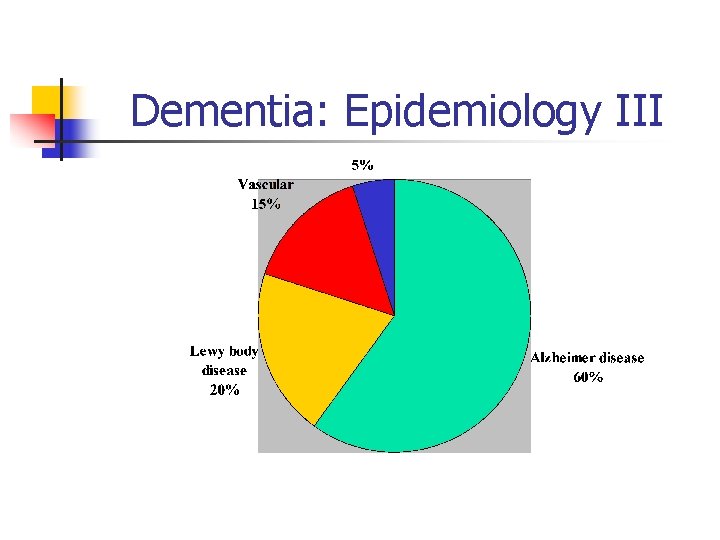
Dementia: Epidemiology III
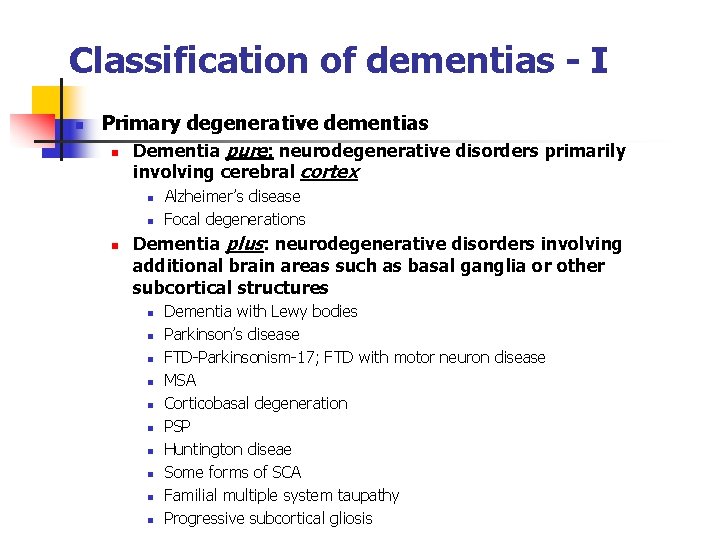
Classification of dementias - I n Primary degenerative dementias n Dementia pure: neurodegenerative disorders primarily involving cerebral cortex n n n Alzheimer’s disease Focal degenerations Dementia plus: neurodegenerative disorders involving additional brain areas such as basal ganglia or other subcortical structures n n n n n Dementia with Lewy bodies Parkinson’s disease FTD-Parkinsonism-17; FTD with motor neuron disease MSA Corticobasal degeneration PSP Huntington diseae Some forms of SCA Familial multiple system taupathy Progressive subcortical gliosis
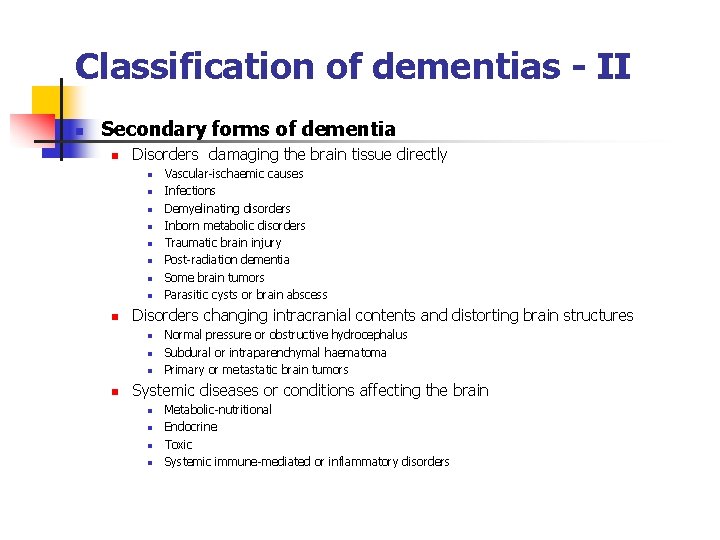
Classification of dementias - II n Secondary forms of dementia n Disorders damaging the brain tissue directly n n n n n Disorders changing intracranial contents and distorting brain structures n n Vascular-ischaemic causes Infections Demyelinating disorders Inborn metabolic disorders Traumatic brain injury Post-radiation dementia Some brain tumors Parasitic cysts or brain abscess Normal pressure or obstructive hydrocephalus Subdural or intraparenchymal haematoma Primary or metastatic brain tumors Systemic diseases or conditions affecting the brain n n Metabolic-nutritional Endocrine Toxic Systemic immune-mediated or inflammatory disorders
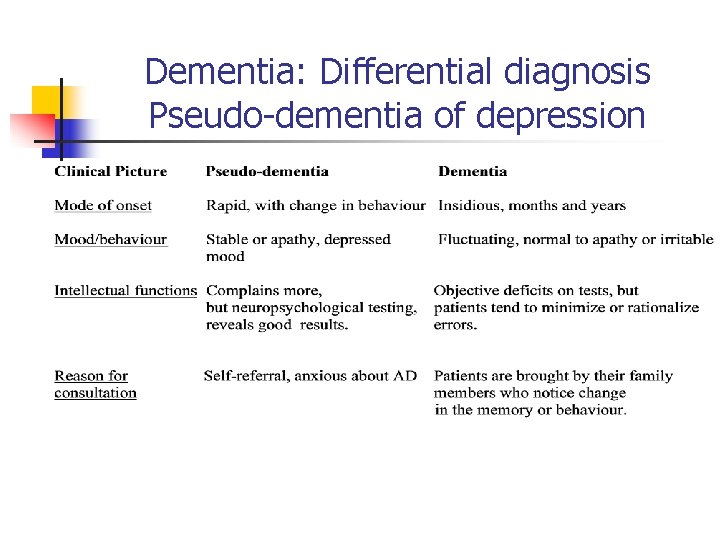
Dementia: Differential diagnosis Pseudo-dementia of depression
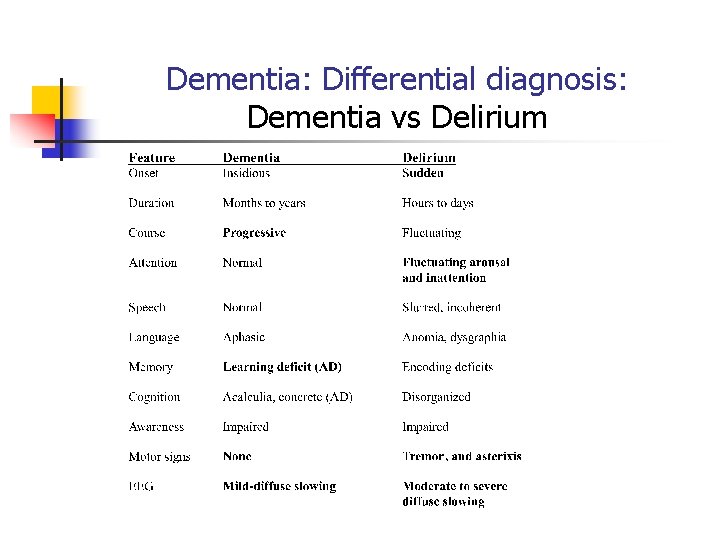
Dementia: Differential diagnosis: Dementia vs Delirium
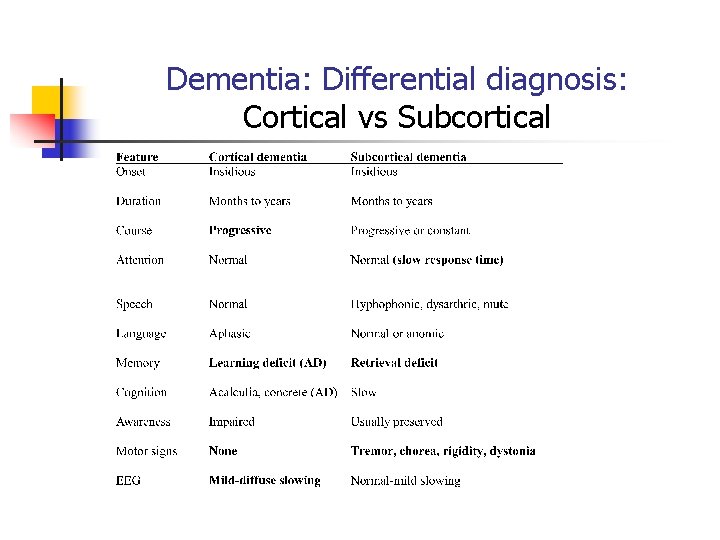
Dementia: Differential diagnosis: Cortical vs Subcortical
Treatable Dementias Thyroid disease B 12 deficiency Thiamine deficiency (Wernicke’s encephalopathy) Pellegra Alcohol Hepatic encephalopathy Normal- pressure hydrocephalus Sub-dural haematoma Benign brain tumors Chronic meningitis Abscess Cyst
Alzheimer’s Disease (AD): Genetics, prevalence, risk factors I n n n In 5 -10 % of AD patients disease shows an autosomal dominant trait. It’s onset is at 30 s or 40 s. APP (chromosome 21), presenilin 1(chromosome 14) and presenilin 2 (chromosome 1) mutations cause this type of inheritance. All of them result in excessive production of insoluble ß amyloid. In patients with Down syndrome the AD pathology occurs when they are 30 -40 years old because of the over-production of ß amyloid due to the existence of an extra chromosome 21.
Alzheimer’s Disease (AD): Genetics, prevalence, risk factors II n n In 90 -95 % of the patients AD does not show an autosomal dominant transmission. The disease onset is at about their 65 s. But in this group, some of the patients come from the families where the prevalence of AD is higher than general populations (nondominant familial AD). The rest of the patients comes from families, their prevalence of AD is similar to that of the general population (sporadic AD).
Alzheimer’s Disease (AD): Genetics, prevalence, risk factors III n n The most important risk factor for AD is age. Prevalence doubles for every 5 years after the age of 65 (10%) and reaches 40% among those older than 85. Head injury, female gender and a positive family history are other known risk factors. An additional risk factor has been linked to chromosome 19 that encodes apolipoprotein E (Apo. E). The e 4 allele frequency is 20% in the general population and 40% in AD.
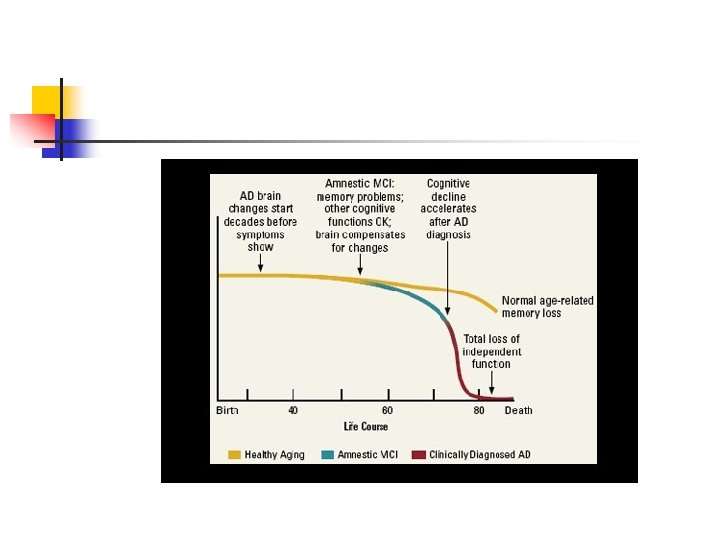
AD: Clinical Picture (ABC’s of AD) n n AD is an amnestic dementia with an insidious onset and indolent course. It causes disturbances in daily living activities, behavioural symptoms and cognitive decline. Diagnosis death about 15 -20 years. Symptoms change as the pathology of the disease progresses.
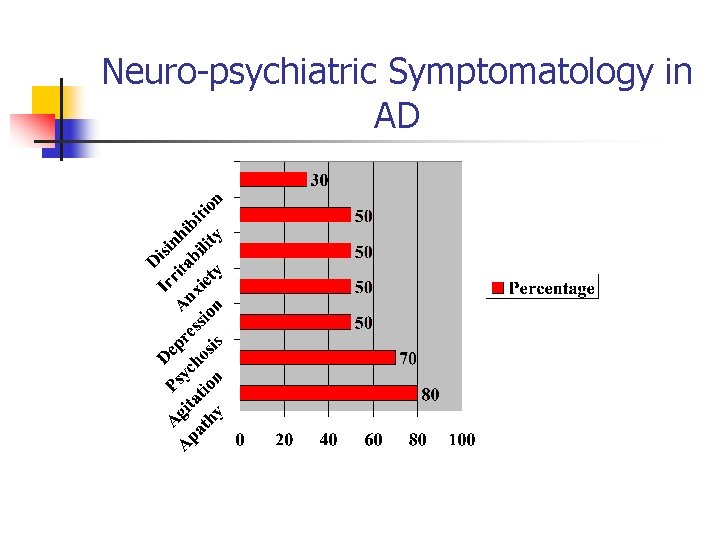
Neuro-psychiatric Symptomatology in AD
AD: Initial Stage I n Memory problems n n forgets names, repeat themselves, misplaces their belongings, makes lists may fluctuate in intensity, good for remote events and recent events with high emotional impact. poor for ordinary recent events clues and multiple choices are useful.
AD: Initial Stage II n Language and behavioural problems n n n speech becomes less fluent and loses spontaneity. difficulty in word finding. Self awareness of impairment may elicit depression. may keep working, especially when he/she is protected by understanding staff in his/her office. may have some difficulties in choosing dress, complex financial tasks. may keep house, pay bill, drive car,
AD: Intermediate Stage I n Memory problems n n n recognition difficulties (forgets remote events) forgets faces inability to use clues or lists spatial orientation disturbances (getting lost in unfamiliar environment) inability to store new data (even for minutes)
AD: Intermediate Stage II n Language and behavioural problems n n n word finding difficulty in ordinary conversations increased misunderstanding become indifferent to their symptoms, depression subsides. paranoid ideation (spousal infidelity, stolen personal object due to misplacement) sun downing (worsening of cognitive and behavioural symptoms at the end of the day) Independency in housekeeping, dressing, bathing, grooming, paying bills are gradually lost
AD: Final Stage I n Memory problems n n n living in past inability to recognize family members recognized as if they are not themselves (they recognized as their imitations) getting lost even in familiar surroundings inability recognize home and rooms
AD: Final Stage II n Language and behavioural problems n n n n n incoherent speech loss of speech wandering purposeless movements crying agitation difficulties in moving and feeding, bathing, continence towards the end of stage myoclonus, rigidity, gait difficulties become bedridden and death due to infections or emboli.
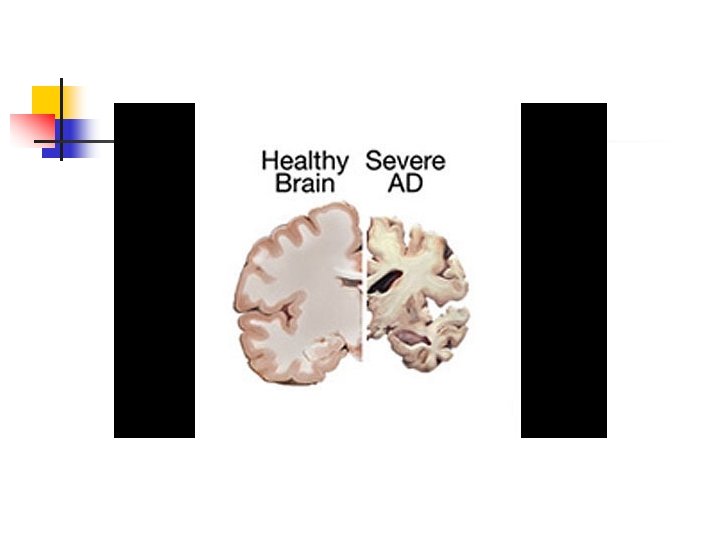
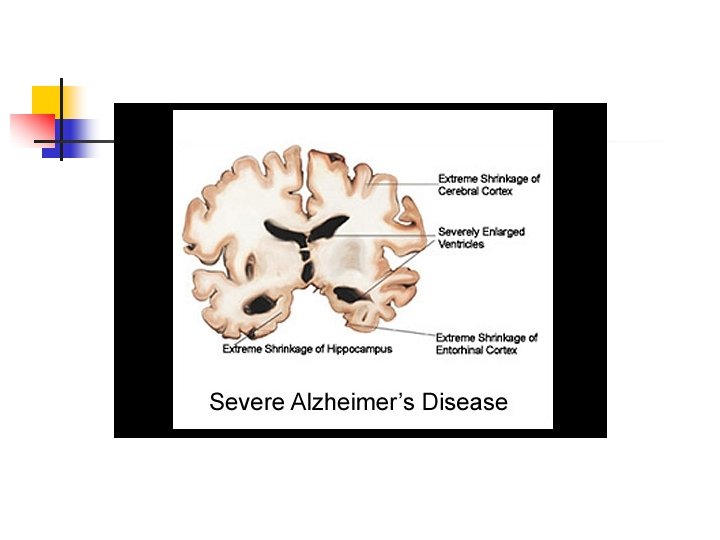
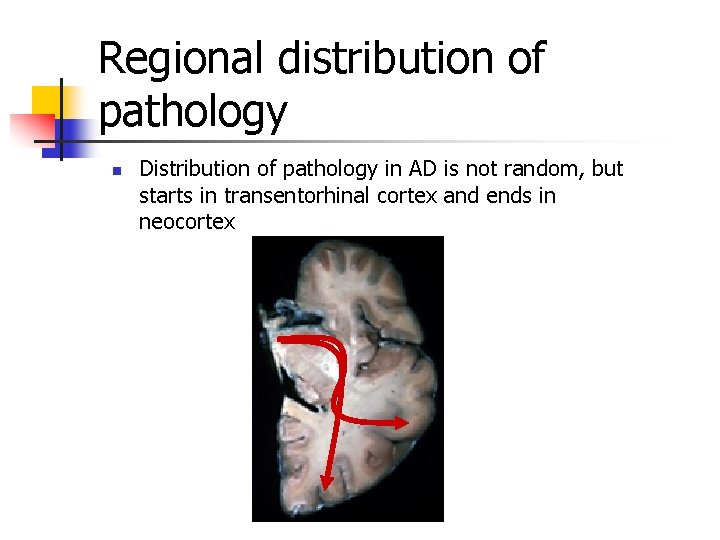
Regional distribution of pathology n Distribution of pathology in AD is not random, but starts in transentorhinal cortex and ends in neocortex
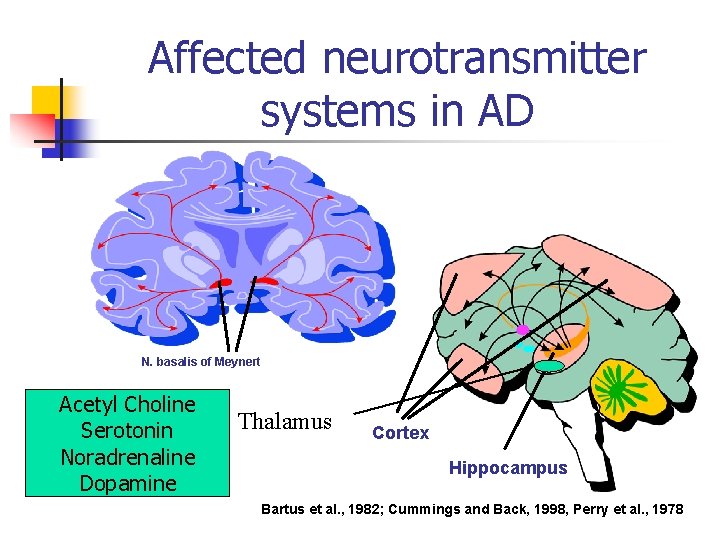
Affected neurotransmitter systems in AD N. basalis of Meynert Acetyl Choline Serotonin Noradrenaline Dopamine Thalamus Cortex Hippocampus Bartus et al. , 1982; Cummings and Back, 1998, Perry et al. , 1978
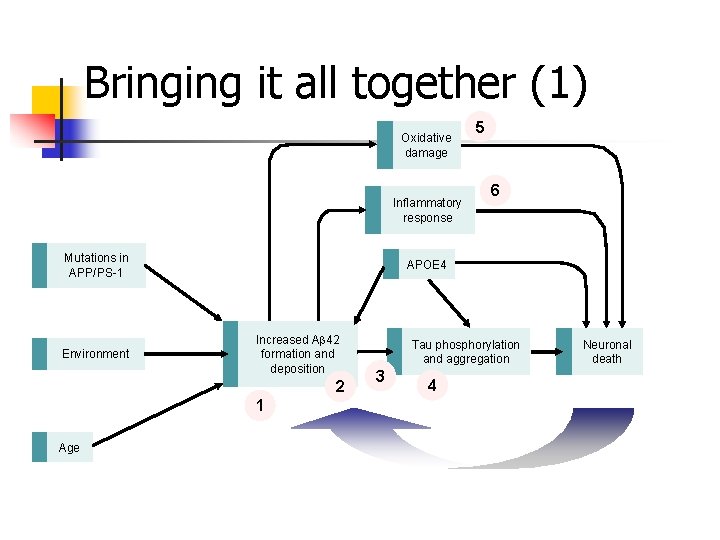
Bringing it all together (1) Oxidative damage Inflammatory response Mutations in APP/PS-1 Environment 6 APOE 4 Increased Ab 42 formation and deposition 2 1 Age 5 Tau phosphorylation and aggregation 3 4 Neuronal death
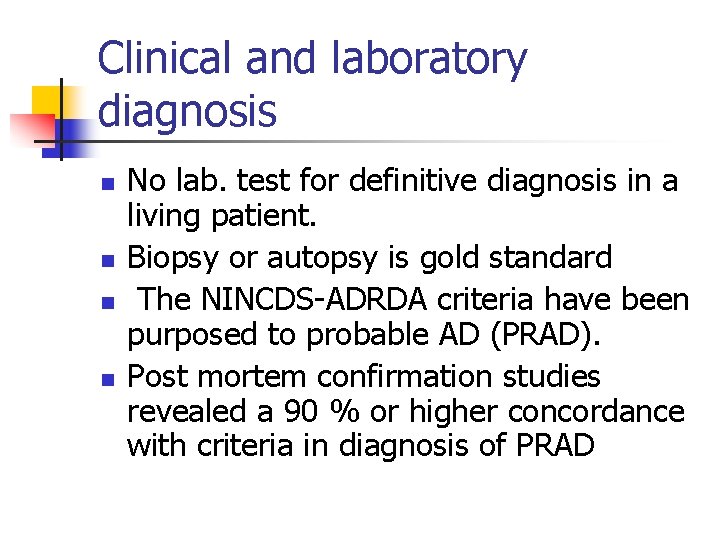
Clinical and laboratory diagnosis n n No lab. test for definitive diagnosis in a living patient. Biopsy or autopsy is gold standard The NINCDS-ADRDA criteria have been purposed to probable AD (PRAD). Post mortem confirmation studies revealed a 90 % or higher concordance with criteria in diagnosis of PRAD
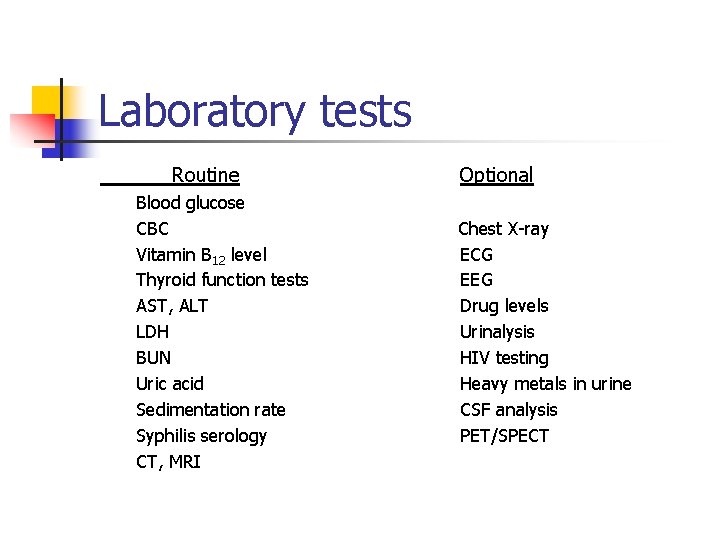
Laboratory tests Routine Blood glucose CBC Vitamin B 12 level Thyroid function tests AST, ALT LDH BUN Uric acid Sedimentation rate Syphilis serology CT, MRI Optional Chest X-ray ECG EEG Drug levels Urinalysis HIV testing Heavy metals in urine CSF analysis PET/SPECT
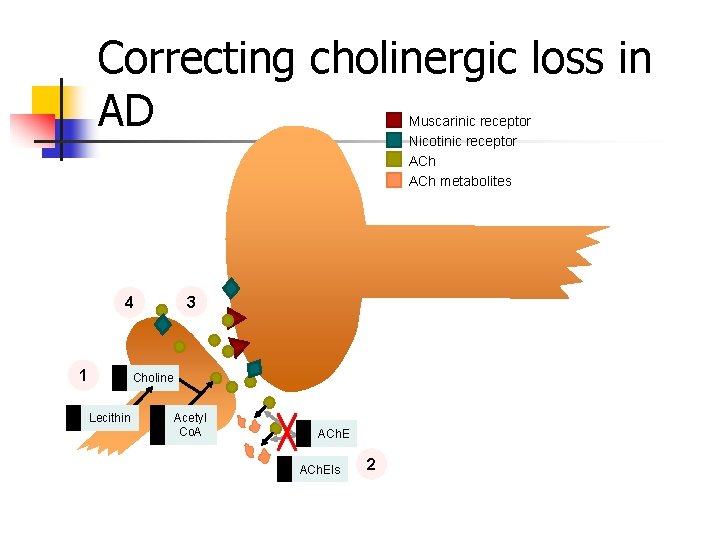
Correcting cholinergic loss in AD Muscarinic receptor Nicotinic receptor ACh metabolites 4 1 3 Choline Lecithin Acetyl Co. A ACh. EIs 2
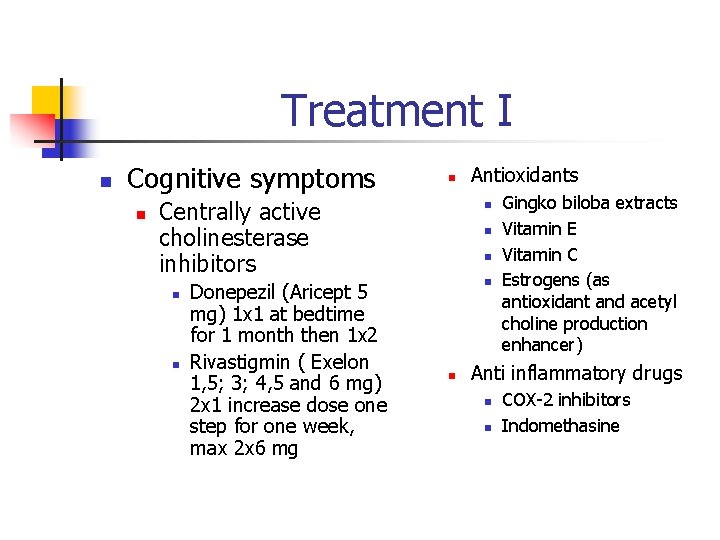
Treatment I n Cognitive symptoms n n Centrally active cholinesterase inhibitors n n Donepezil (Aricept 5 mg) 1 x 1 at bedtime for 1 month then 1 x 2 Rivastigmin ( Exelon 1, 5; 3; 4, 5 and 6 mg) 2 x 1 increase dose one step for one week, max 2 x 6 mg Antioxidants n n n Gingko biloba extracts Vitamin E Vitamin C Estrogens (as antioxidant and acetyl choline production enhancer) Anti inflammatory drugs n n COX-2 inhibitors Indomethasine
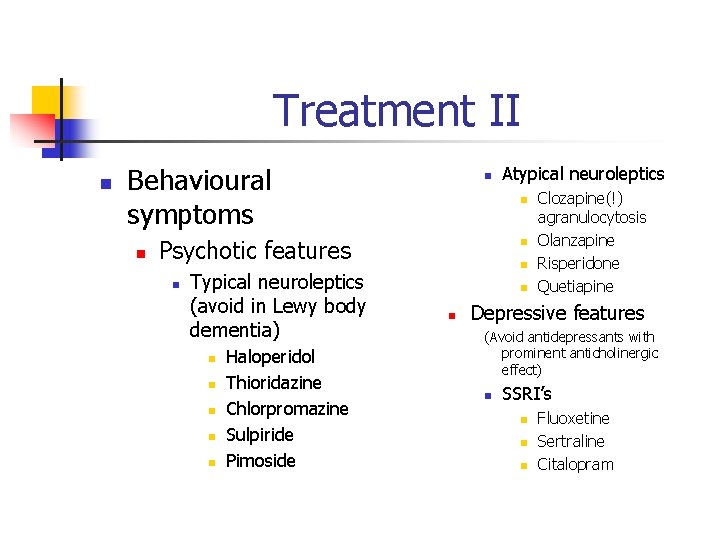
Treatment II n Behavioural symptoms n n n Psychotic features n Typical neuroleptics (avoid in Lewy body dementia) n n n Haloperidol Thioridazine Chlorpromazine Sulpiride Pimoside Atypical neuroleptics n n Clozapine(!) agranulocytosis Olanzapine Risperidone Quetiapine Depressive features (Avoid antidepressants with prominent anticholinergic effect) n SSRI’s n n n Fluoxetine Sertraline Citalopram
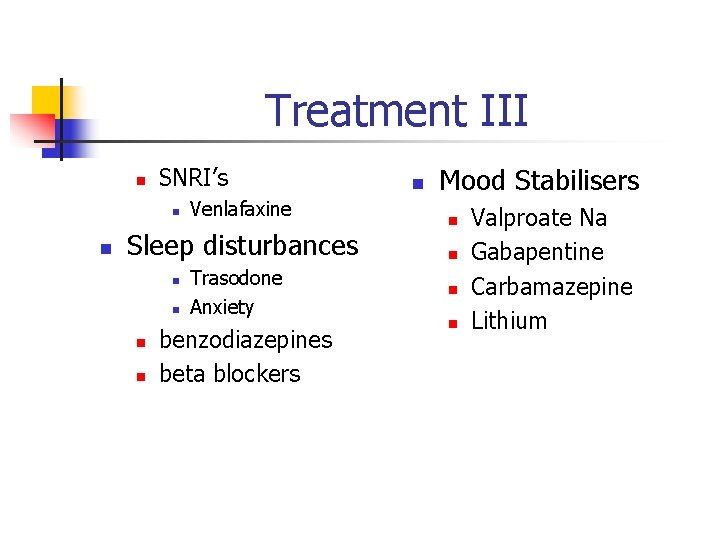
Treatment III n SNRI’s n n Venlafaxine Sleep disturbances n n Trasodone Anxiety benzodiazepines beta blockers n Mood Stabilisers n n Valproate Na Gabapentine Carbamazepine Lithium
- Slides: 36