
Dementia Level 1 Dementia Capable Caregiving Agenda 9
Dementia, Level 1 Dementia Capable Caregiving
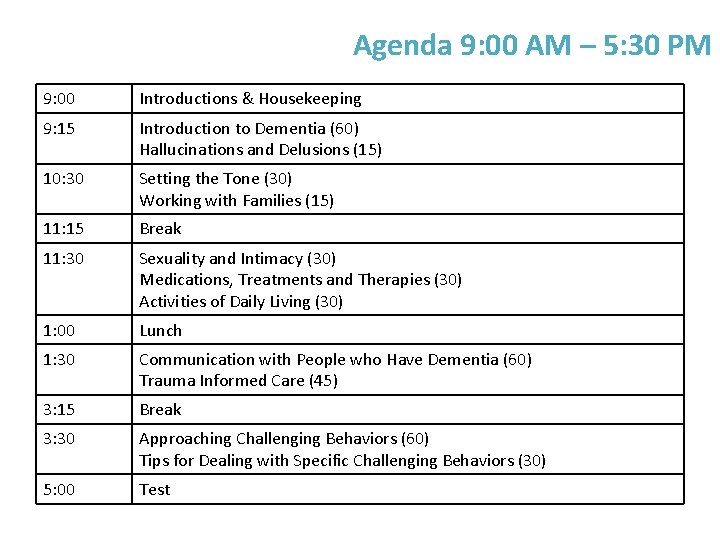
Agenda 9: 00 AM – 5: 30 PM 9: 00 Introductions & Housekeeping 9: 15 Introduction to Dementia (60) Hallucinations and Delusions (15) 10: 30 Setting the Tone (30) Working with Families (15) 11: 15 Break 11: 30 Sexuality and Intimacy (30) Medications, Treatments and Therapies (30) Activities of Daily Living (30) 1: 00 Lunch 1: 30 Communication with People who Have Dementia (60) Trauma Informed Care (45) 3: 15 Break 3: 30 Approaching Challenging Behaviors (60) Tips for Dealing with Specific Challenging Behaviors (30) 5: 00 Test
Module 1: Understanding Dementia Lesson 1: Introduction to Dementia Lesson 2: Hallucinations and Delusions Lesson 3: Setting the Tone Lesson 4: Working with Families Page 3
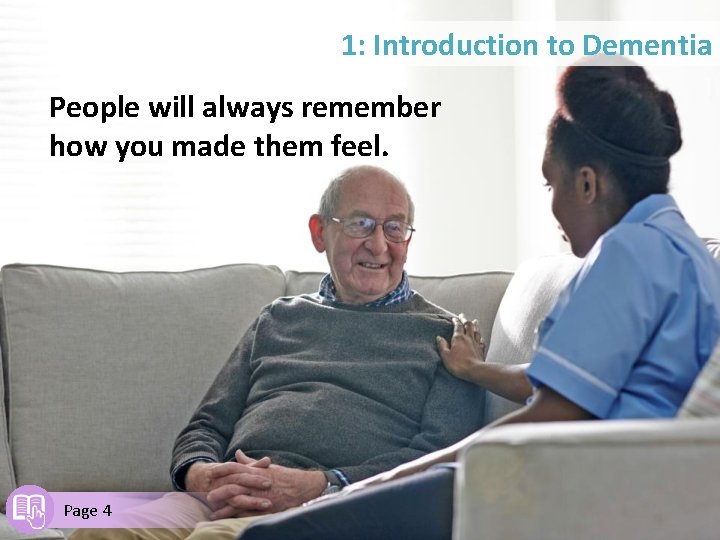
1: Introduction to Dementia People will always remember how you made them feel. Page 4
Step Into Dementia Page 4
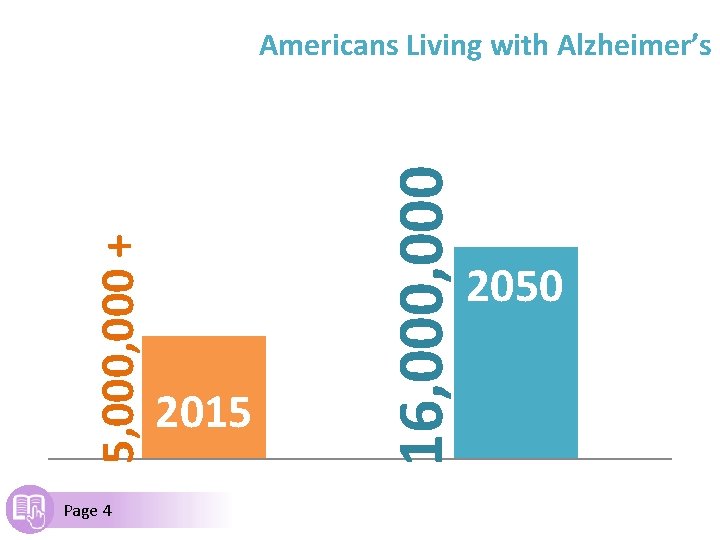
Page 4 2015 16, 000 5, 000 + Americans Living with Alzheimer’s 2050
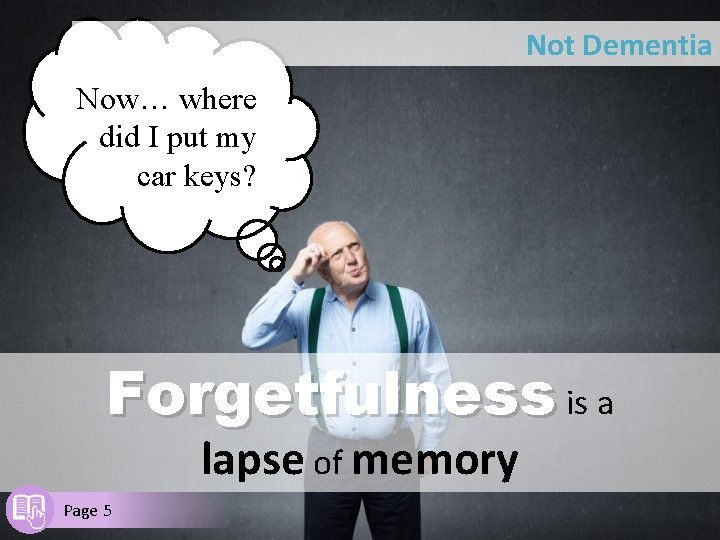
Not Dementia Now… where did I put my car keys? Forgetfulness is a lapse of memory Page 5
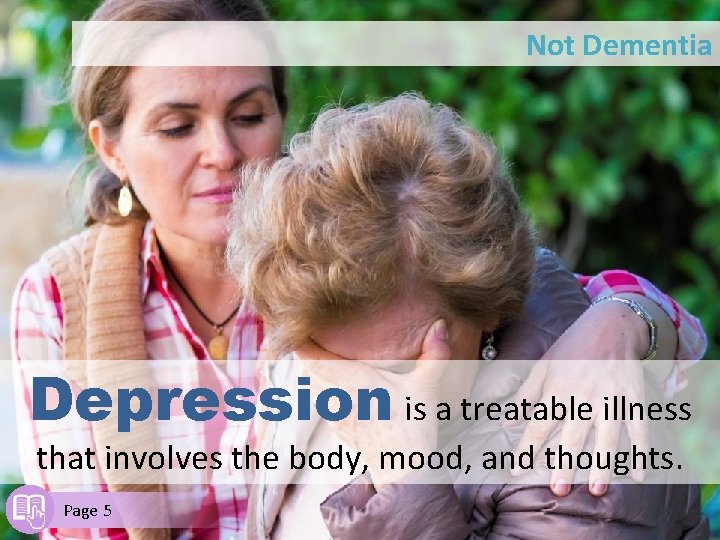
Not Dementia Depression is a treatable illness that involves the body, mood, and thoughts. Page 5
Activity You have been caring for Mr. Miley for nearly six months. For the first several months, he was generally in a good mood and you would often find him gardening and visiting with his friends and family. Over the last two months, you notice he is sleeping more than usual and has gradually lost interest in gardening and spends time in his room. He is refusing visits with friends and family. You notice that over the last two weeks he is becoming increasingly angry and agitated toward others. Highlight the symptoms that might look like depression. Page 6
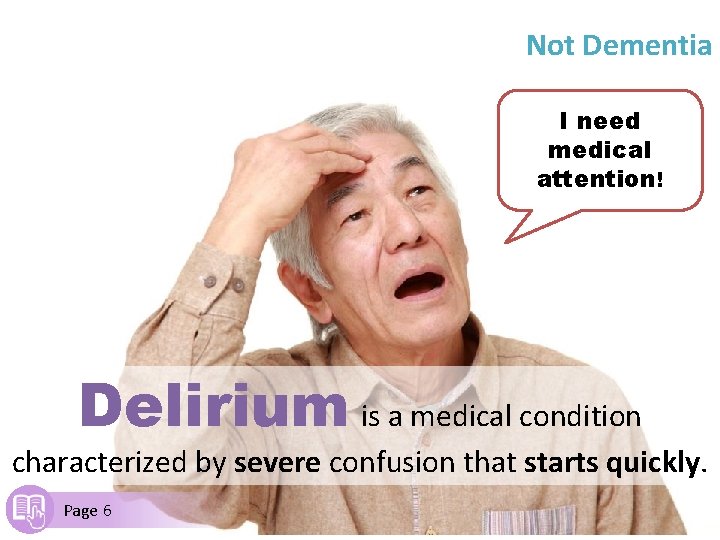
Not Dementia I need medical attention! Delirium is a medical condition characterized by severe confusion that starts quickly. Page 6
Activity Ms. Zellmer enjoys participating in activities and taking walks. She is generally in a good mood with occasional times of unhappiness. During this morning’s activity, she suddenly becomes agitated and confused about where she is at and what she is doing. Frantically, she swings her arms in front of her as if she were hitting at something. You know she just started a new medication. Highlight the symptoms that might look like delirium. Page 6
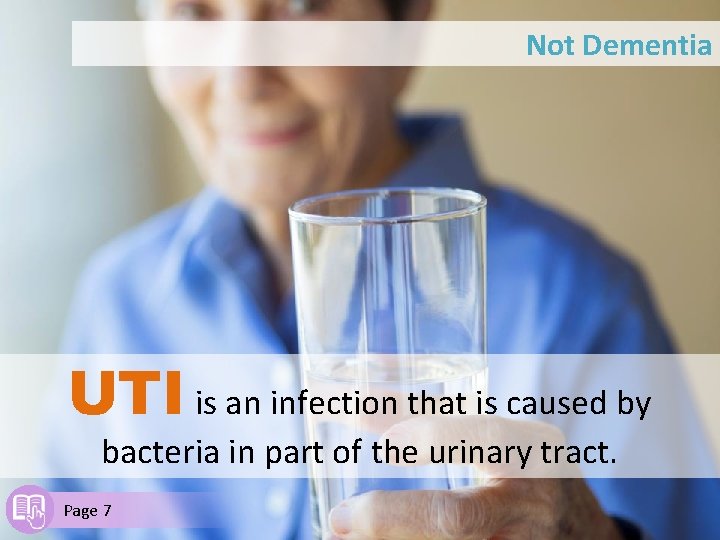
Not Dementia UTI is an infection that is caused by bacteria in part of the urinary tract. Page 7
Activity Claudia Combs, a 91 -year-old woman with dementia complains of dizziness and you notice she has less energy than usual. One day you notice she takes an unusually long nap. When she wakes, she is more confused than usual and unable to dress herself. Highlight the symptoms that might look like UTI. Page 7
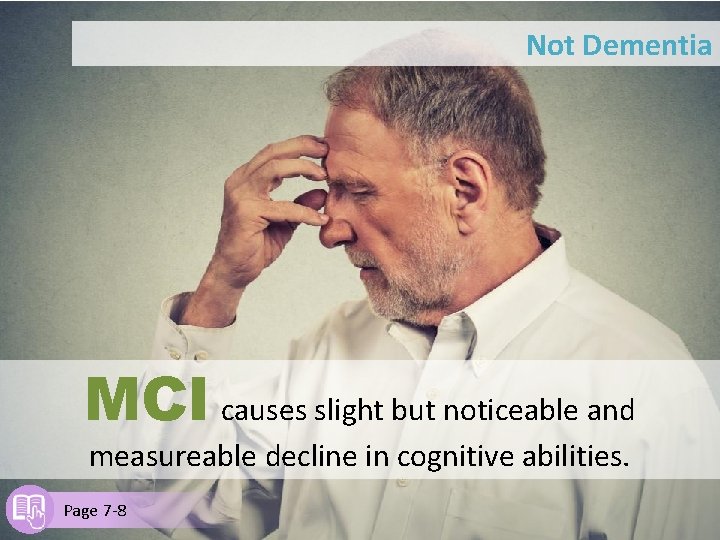
Not Dementia MCI causes slight but noticeable and measureable decline in cognitive abilities. Page 7 -8
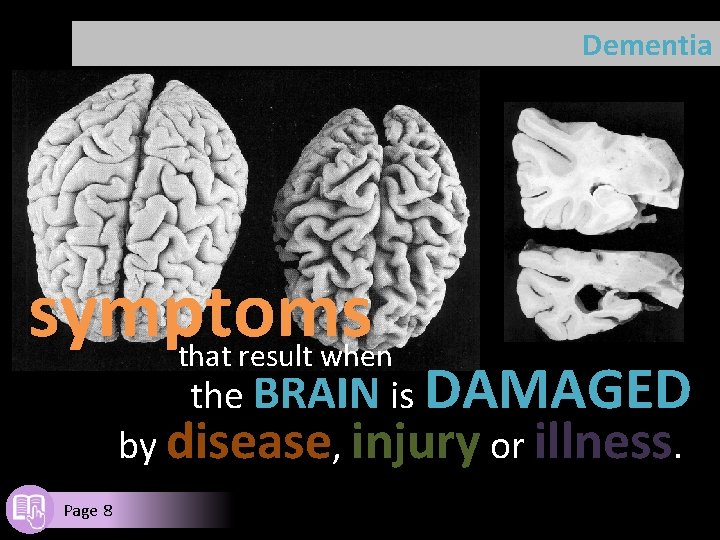
Dementia symptoms that result when the BRAIN is DAMAGED by disease, injury or illness. Page 8
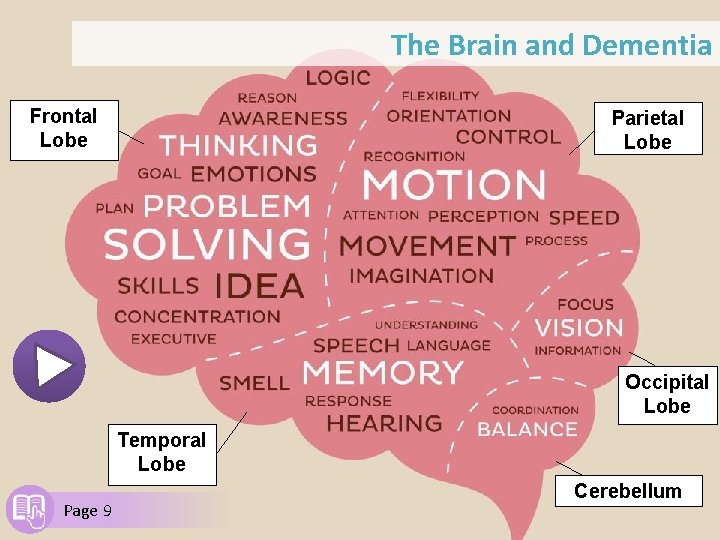
The Brain and Dementia Frontal Lobe Parietal Lobe Occipital Lobe Temporal Lobe Page 9 Cerebellum
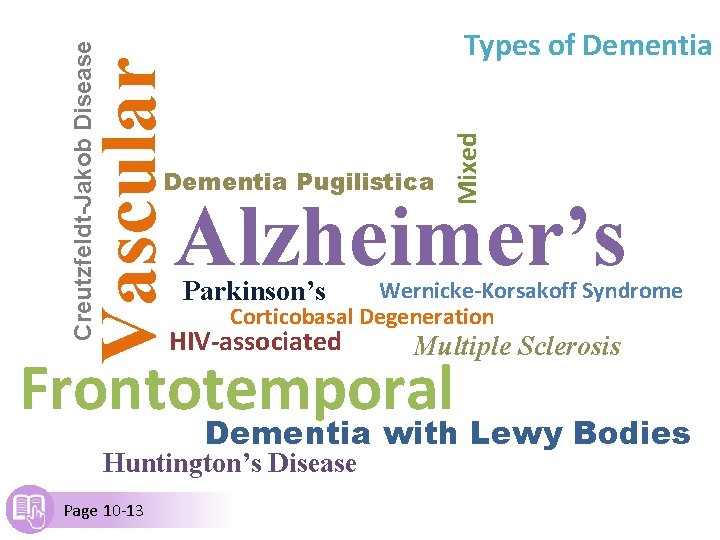
Dementia Pugilistica Mixed Vascular Creutzfeldt-Jakob Disease Types of Dementia Alzheimer’s Parkinson’s Wernicke-Korsakoff Syndrome Corticobasal Degeneration HIV-associated Multiple Sclerosis Frontotemporal Dementia with Lewy Bodies Huntington’s Disease Page 10 -13
Checkpoint Check your knowledge Page 13
2: Hallucinations and Delusions Reality is merely an Page 14 illusion
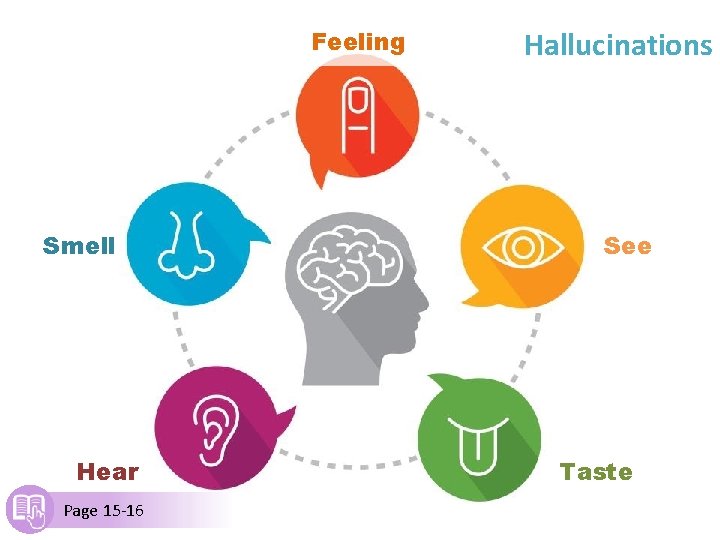
Feeling Smell Hear Page 15 -16 Hallucinations See Taste

Delusions What do you Page 16 see?

Do not overlook or dismiss that the claim could be real. Page 16
Checkpoint Check your knowledge Page 13
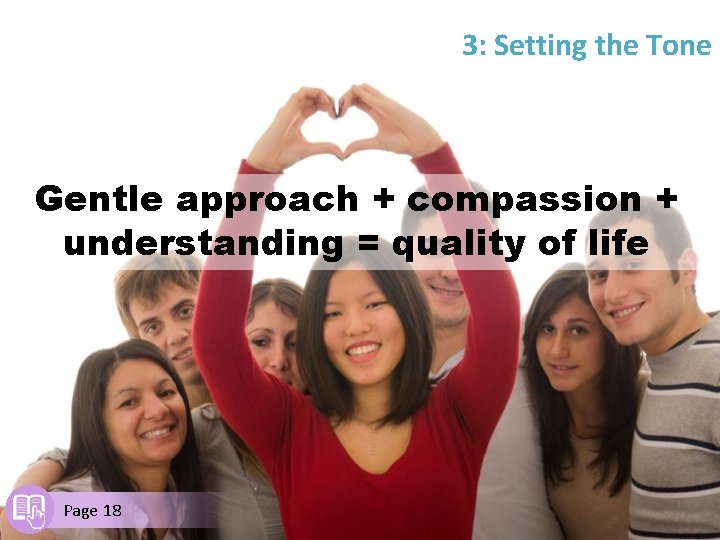
3: Setting the Tone Gentle approach + compassion + understanding = quality of life Page 18
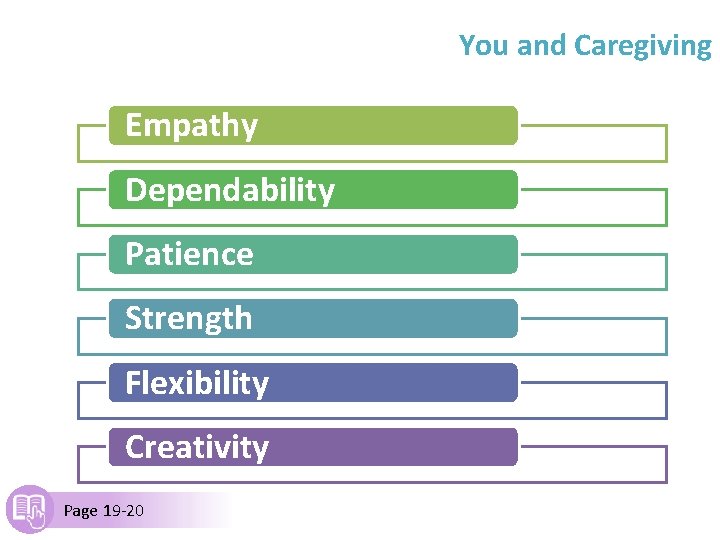
You and Caregiving Empathy Dependability Patience Strength Flexibility Creativity Page 19 -20
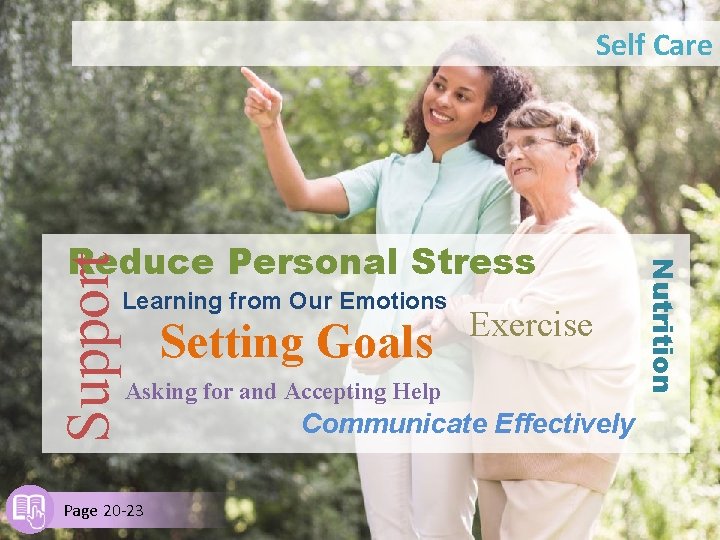
Self Care Support Learning from Our Emotions Setting Goals Exercise Asking for and Accepting Help Page 20 -23 Communicate Effectively Nutrition Reduce Personal Stress
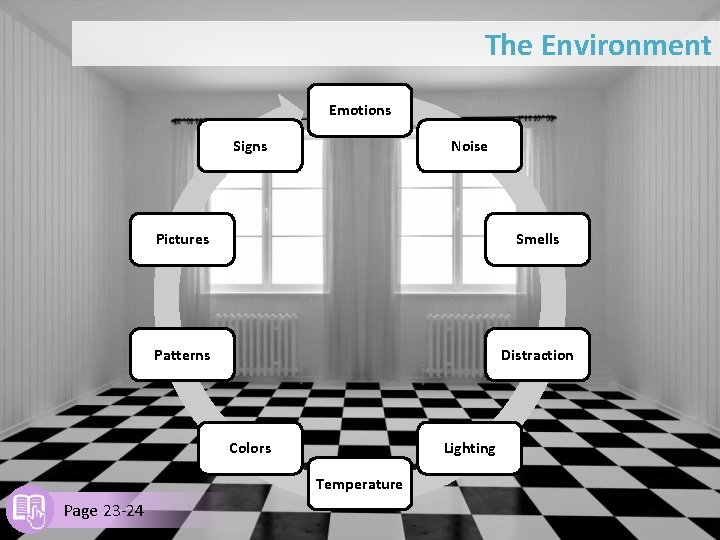
The Environment Emotions Signs Noise Pictures Smells Patterns Distraction Colors Lighting Temperature Page 23 -24

Checkpoint Check your knowledge Page 25
4: Working with Families Dementia has a huge impact on families. Page 26
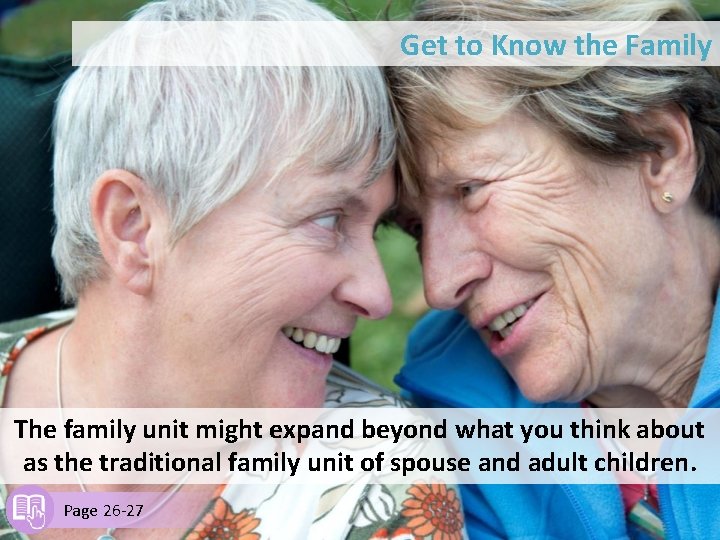
Get to Know the Family The family unit might expand beyond what you think about as the traditional family unit of spouse and adult children. Page 26 -27
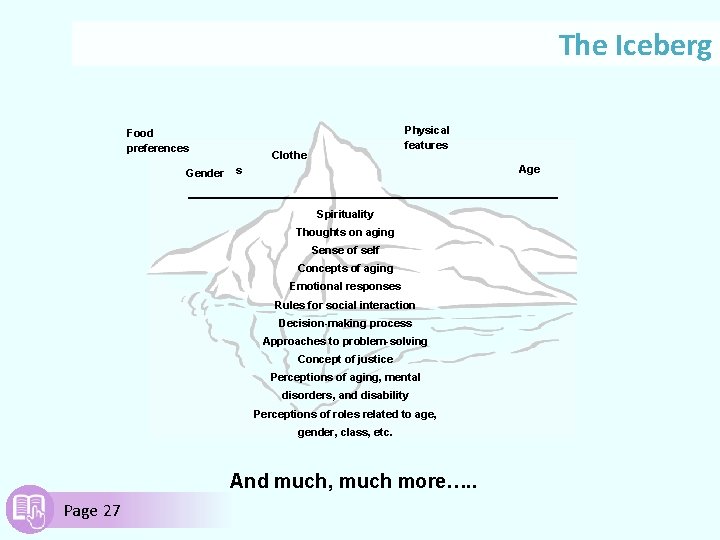
The Iceberg Food preferences Gender Physical features Clothe Age s Spirituality Thoughts on aging Sense of self Concepts of aging Emotional responses Rules for social interaction Decision-making process Approaches to problem-solving Concept of justice Perceptions of aging, mental disorders, and disability Perceptions of roles related to age, gender, class, etc. And much, much more…. . Page 27
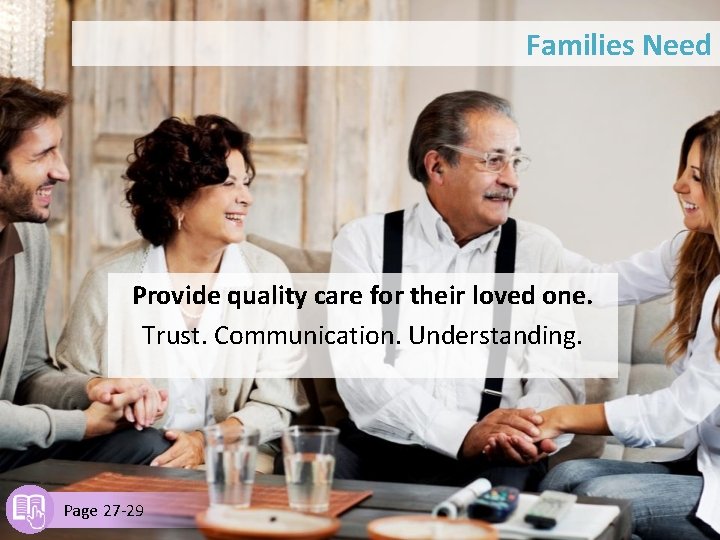
Families Need Provide quality care for their loved one. Trust. Communication. Understanding. Page 27 -29
Checkpoint Check your knowledge Page 29
Break
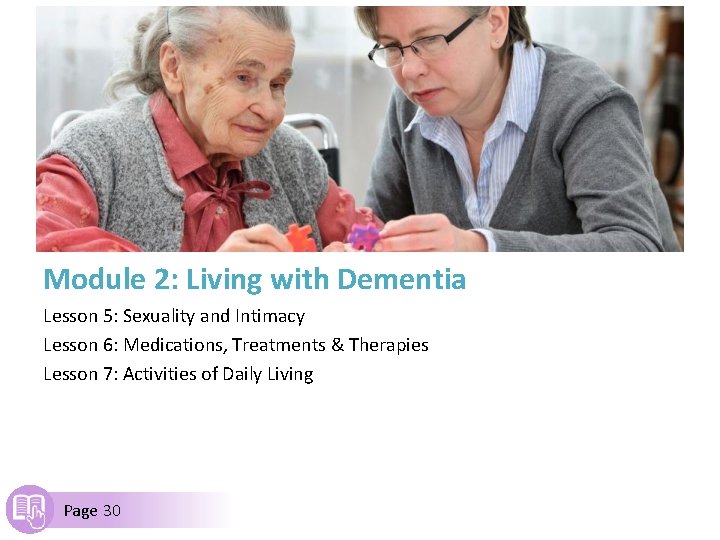
Module 2: Living with Dementia Lesson 5: Sexuality and Intimacy Lesson 6: Medications, Treatments & Therapies Lesson 7: Activities of Daily Living Page 30
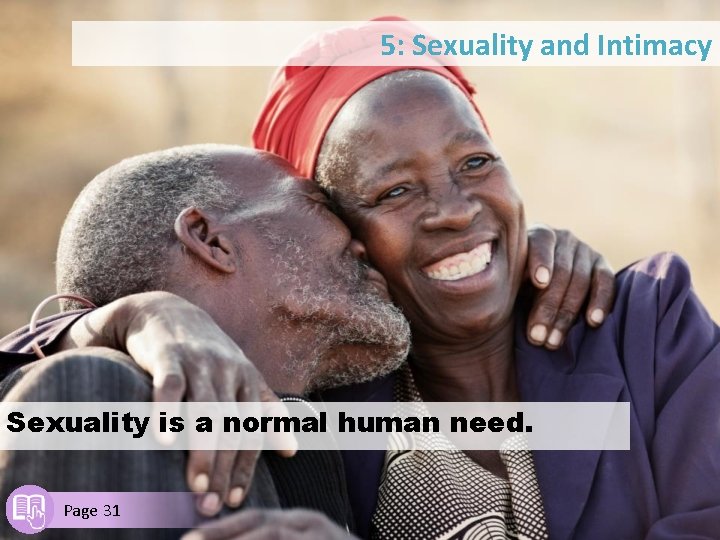
5: Sexuality and Intimacy Sexuality is a normal human need. Page 31
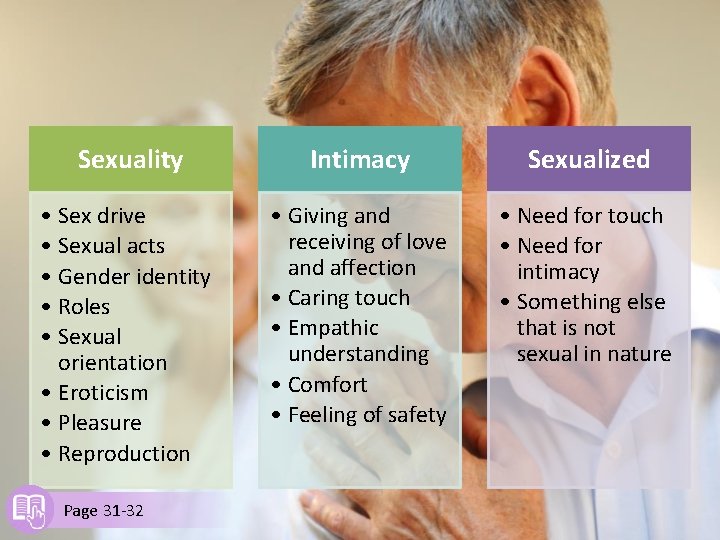
Sexuality Intimacy Sexualized • Sex drive • Sexual acts • Gender identity • Roles • Sexual orientation • Eroticism • Pleasure • Reproduction • Giving and receiving of love and affection • Caring touch • Empathic understanding • Comfort • Feeling of safety • Need for touch • Need for intimacy • Something else that is not sexual in nature Page 31 -32
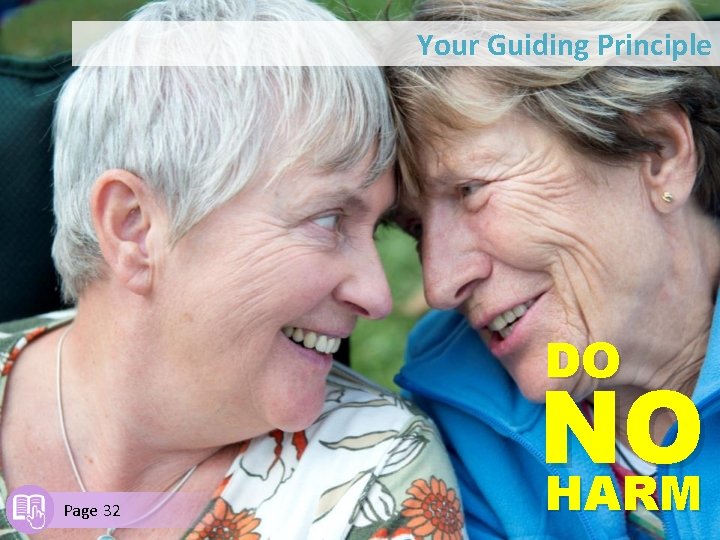
Your Guiding Principle DO Page 32 NO HARM
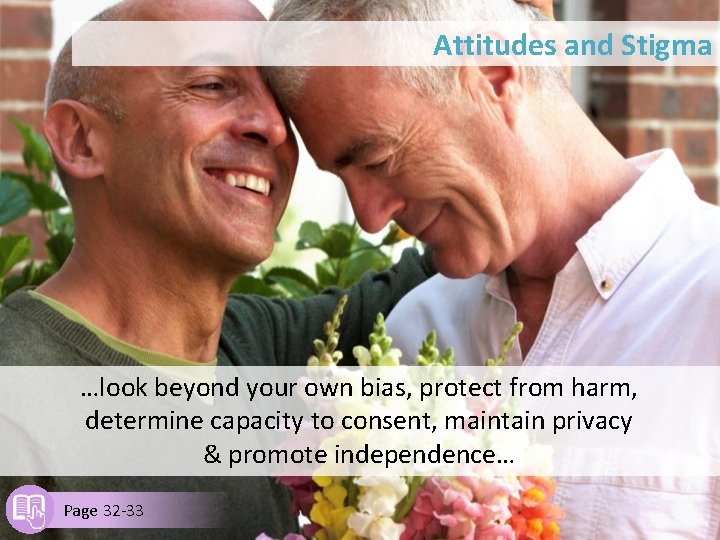
Attitudes and Stigma …look beyond your own bias, protect from harm, determine capacity to consent, maintain privacy & promote independence… Page 32 -33
Activity Maybell Wiggin is 77 years old and has Vascular Dementia. She recently moved into an assisted living facility because her husband could no longer provide the care she needed. Maybell does not recognize her husband has recently shown interest in Lance, a male resident at the facility. Earlier today you found the two cuddling and kissing in Maybell’s bed. How might you deal with this situation? Page 33
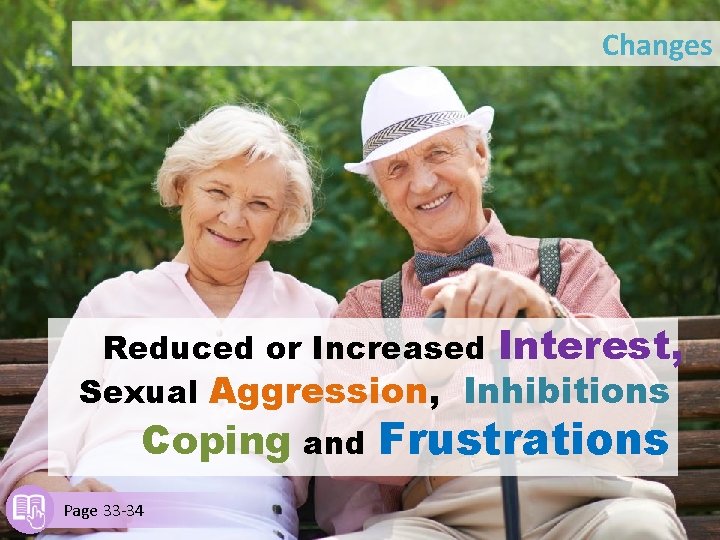
Changes Reduced or Increased Interest, Sexual Aggression, Inhibitions Coping and Frustrations Page 33 -34
Activity Sonny Tricket, who has been in your care for the last two years, was diagnosed with Alzheimer’s disease at age 76. His disease has progressed quickly over the last few months since his wife passed away. One evening, Mr. Tricket is shifting in his seat and pulling at his pants. He begins to pull his pants down. What are some possible reasons he may be behaving in this way that do not involve sexual arousal? Page 34
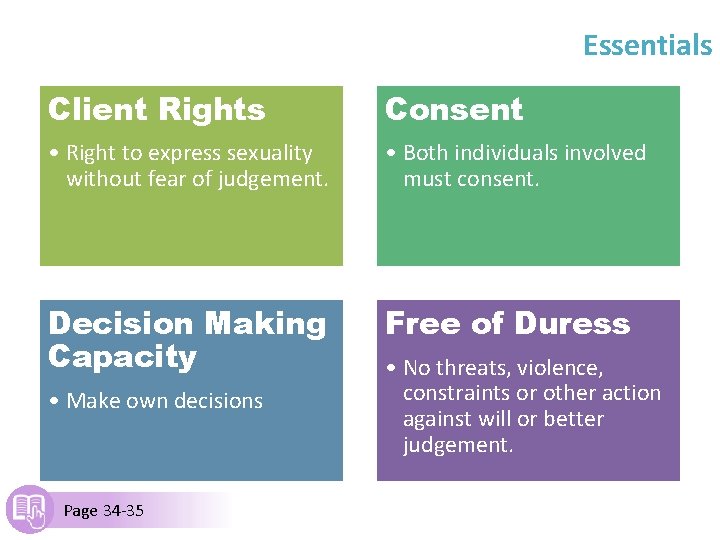
Essentials Client Rights Consent • Right to express sexuality without fear of judgement. • Both individuals involved must consent. Decision Making Capacity Free of Duress • Make own decisions Page 34 -35 • No threats, violence, constraints or other action against will or better judgement.
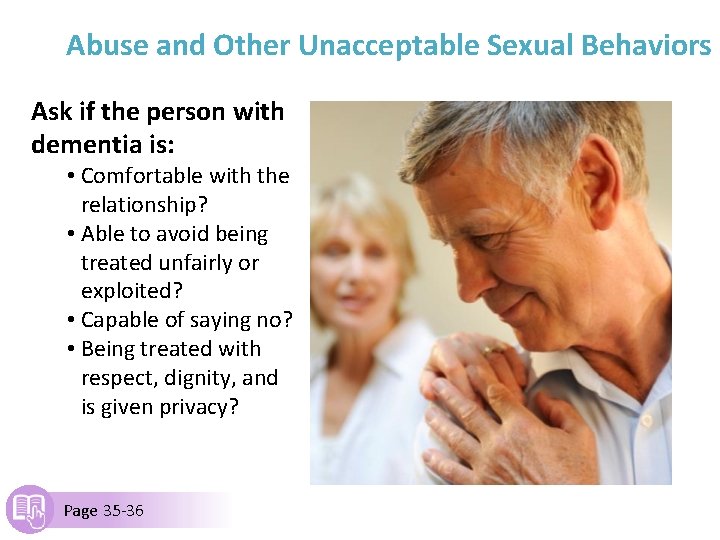
Abuse and Other Unacceptable Sexual Behaviors Ask if the person with dementia is: • Comfortable with the relationship? • Able to avoid being treated unfairly or exploited? • Capable of saying no? • Being treated with respect, dignity, and is given privacy? Page 35 -36
Activity Cristi Stuck, a 90 year old woman with vascular dementia has been affectionate on and off with a male resident, also with vascular dementia. They both seem to be at the same stage of dementia. Their emotions seem to change daily and at times, one or both do not recognize each other. How do you manage this relationship? Page 36
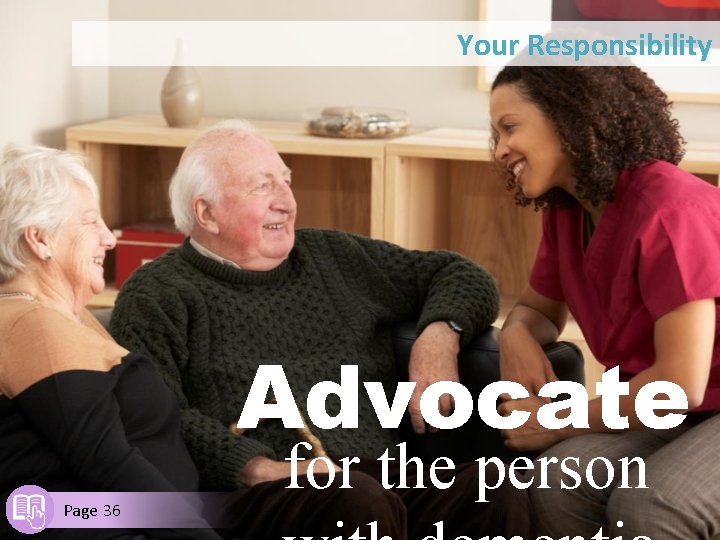
Your Responsibility Advocate Page 36 for the person
Washington State Law Report all concerns of suspected non-consensual sexual contact and/or relationships. Page 38
Checkpoint Check your knowledge Page 38
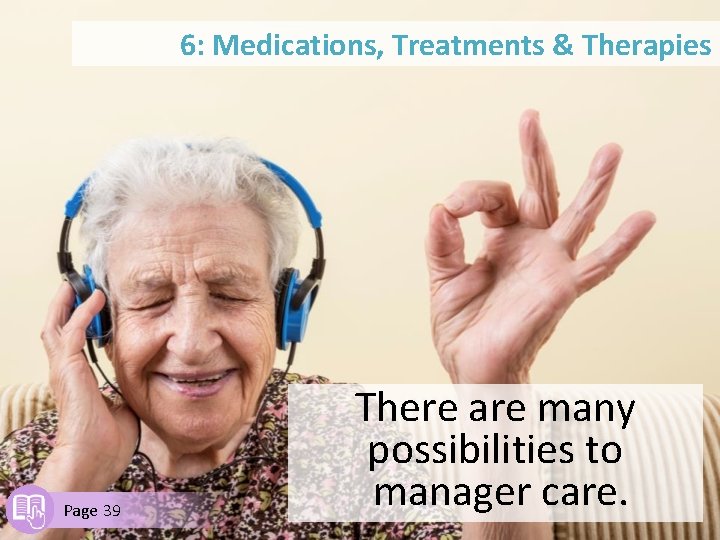
6: Medications, Treatments & Therapies Page 39 There are many possibilities to manager care.
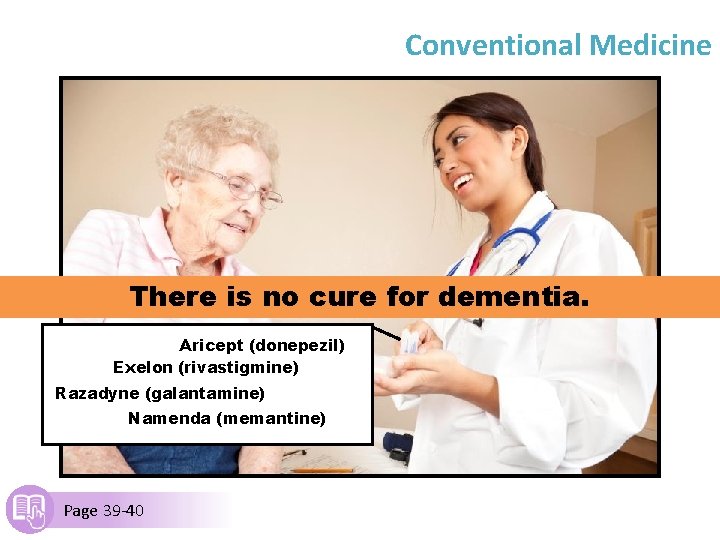
Conventional Medicine There is no cure for dementia. Aricept (donepezil) Exelon (rivastigmine) Razadyne (galantamine) Namenda (memantine) Page 39 -40
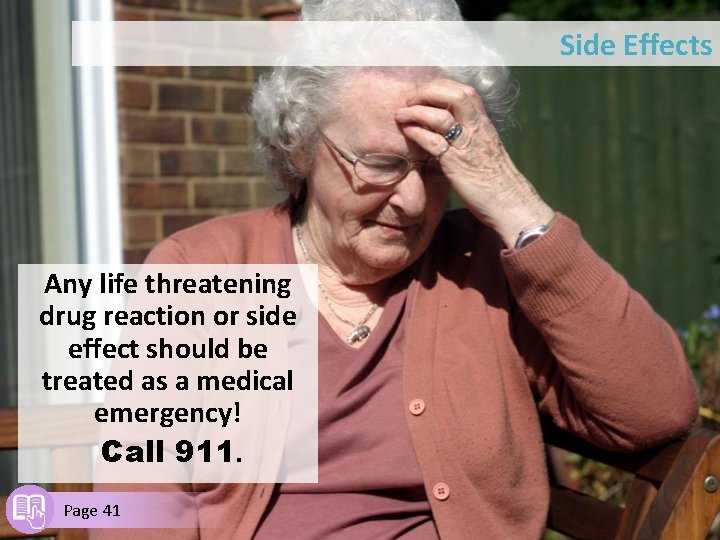
Side Effects Any life threatening drug reaction or side effect should be treated as a medical emergency! Call 911. Page 41
Activity Earlier this week, Jacquline Pool started an increased dose of Donepezil for her Alzheimer’s. Yesterday she started complaining about her stomach and holding her stomach area. She is having diarrhea and refused to eat breakfast and lunch today. What should you do? Page 42
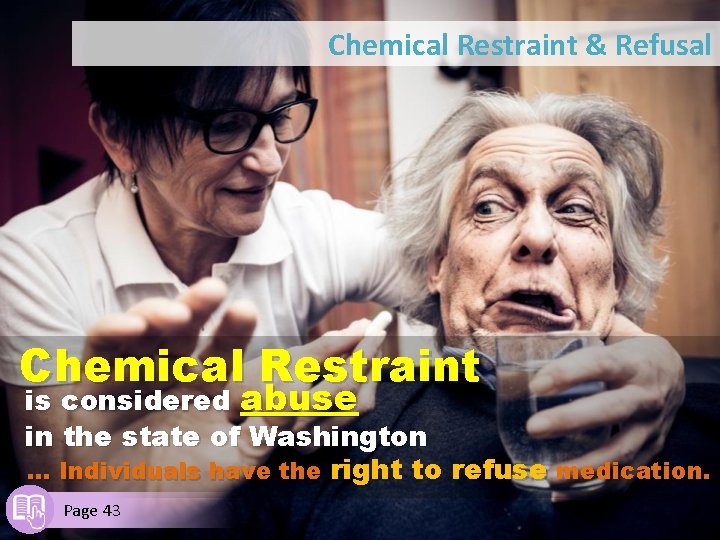
Chemical Restraint & Refusal Chemical Restraint is considered abuse in the state of Washington … Individuals have the right to refuse medication. Page 43
Activity Over the last six months, Dania Denner continues to get frustrated toward you and other staff, threatening several times a week that she will call the police on someone for looking at her wrong. You did not sleep well last night and her constant moving and fidgeting is getting on your nerves. Is it acceptable to give her some Benedryl or other over the counter drug to get her to nap so you can have a break? Why? Page 43

Non-Drug Therapies Page 43 -46 Natural Medicine Cannabis Holistic Therapies Nutrition
Checkpoint Check your knowledge Page 47
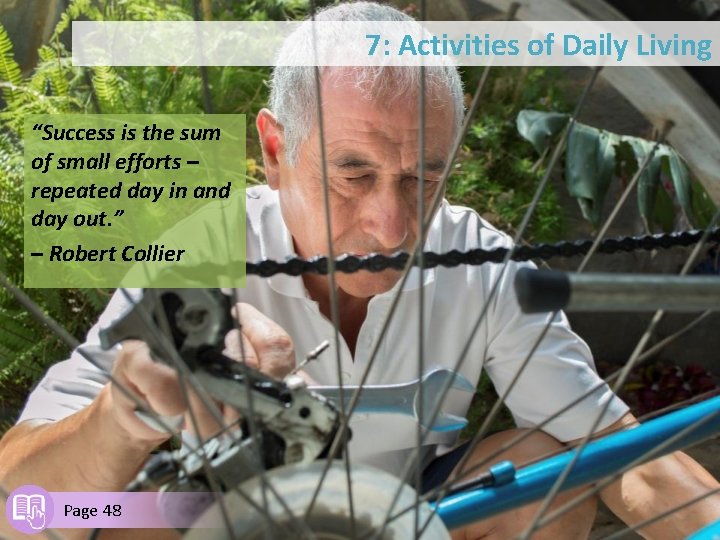
7: Activities of Daily Living “Success is the sum of small efforts – repeated day in and day out. ” – Robert Collier Page 48
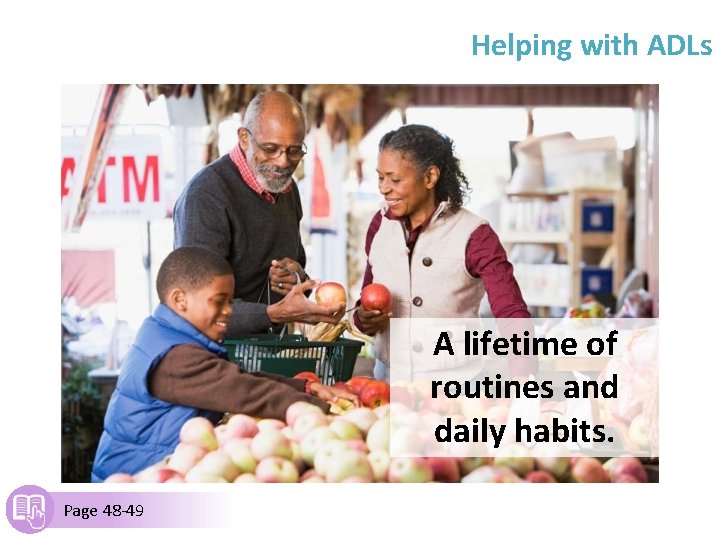
Helping with ADLs A lifetime of routines and daily habits. Page 48 -49
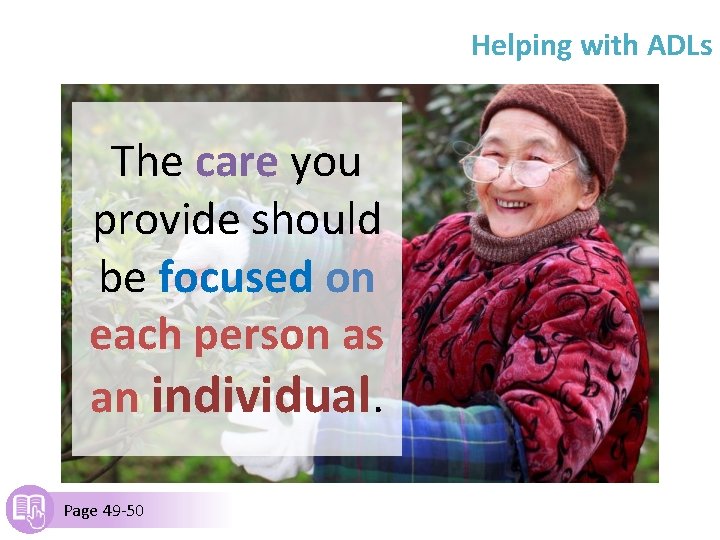
Helping with ADLs The care you provide should be focused on each person as an individual. Page 49 -50
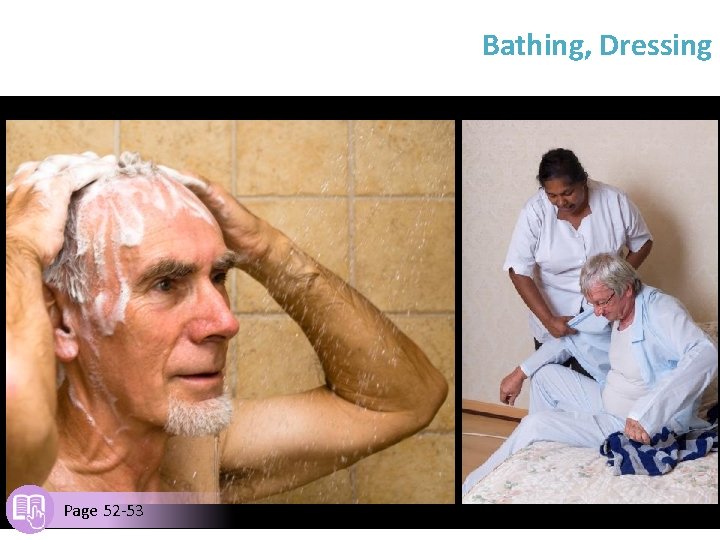
Bathing, Dressing Page 52 -53
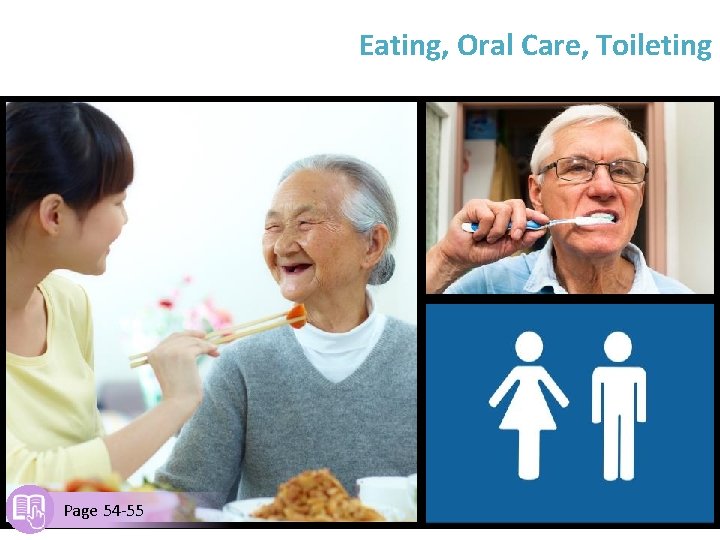
Eating, Oral Care, Toileting Page 54 -55
Checkpoint Check your knowledge Page 57
Lunch
Module 3: Fostering Communication and Understanding Lesson 8: Communicating with People who Have Dementia Lesson 9: Trauma-Informed Care Page 58
8: Communicating with People with Dementia Communication is more than a verbal exchange. Page 59
8: Communicating with People with Dementia Page 59
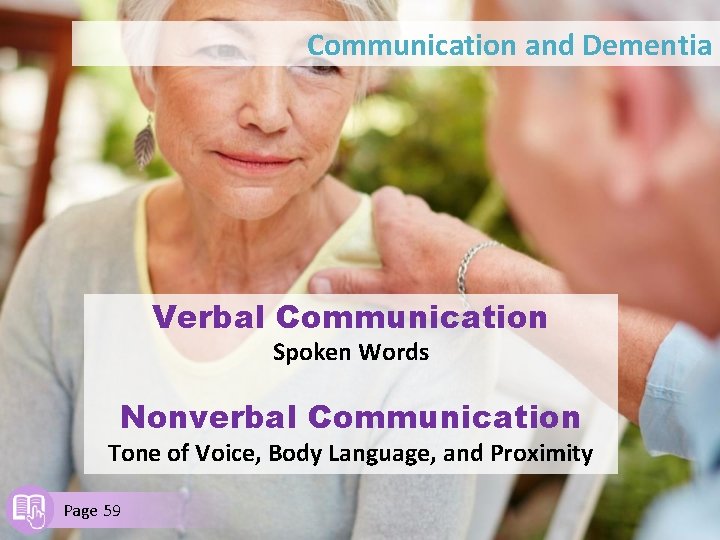
Communication and Dementia Verbal Communication Spoken Words Nonverbal Communication Tone of Voice, Body Language, and Proximity Page 59
Activity Role-Play! Pair up. Each choose a role and interact using verbal and nonverbal communication for one minute. Switch roles for one minute. Caregiver: You are in a hurry to finish ADLs with B. Miley so you can get to breakfast. You turn to the closet to put away some clothes. B. Miley: You have Alzheimer’s disease. You are feeling tired and just woke up. Page 59
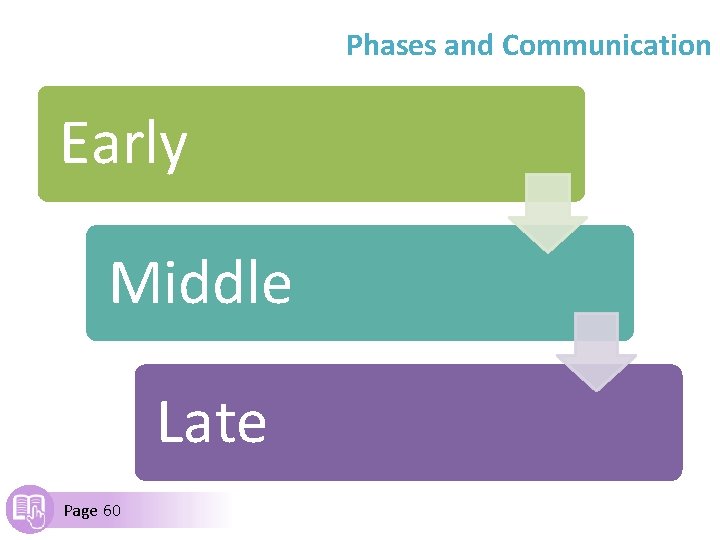
Phases and Communication Early Middle Late Page 60
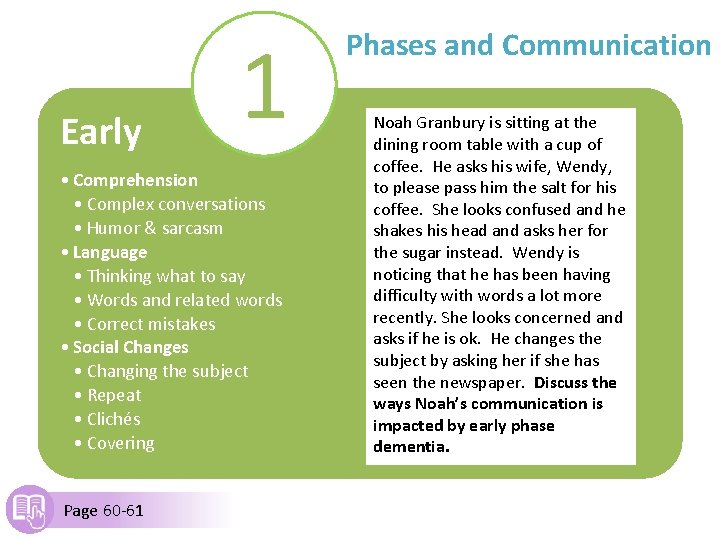
Early 1 • Comprehension • Complex conversations • Humor & sarcasm • Language • Thinking what to say • Words and related words • Correct mistakes • Social Changes • Changing the subject • Repeat • Clichés • Covering Page 60 -61 Phases and Communication Noah Granbury is sitting at the dining room table with a cup of coffee. He asks his wife, Wendy, to please pass him the salt for his coffee. She looks confused and he shakes his head and asks her for the sugar instead. Wendy is noticing that he has been having difficulty with words a lot more recently. She looks concerned and asks if he is ok. He changes the subject by asking her if she has seen the newspaper. Discuss the ways Noah’s communication is impacted by early phase dementia.
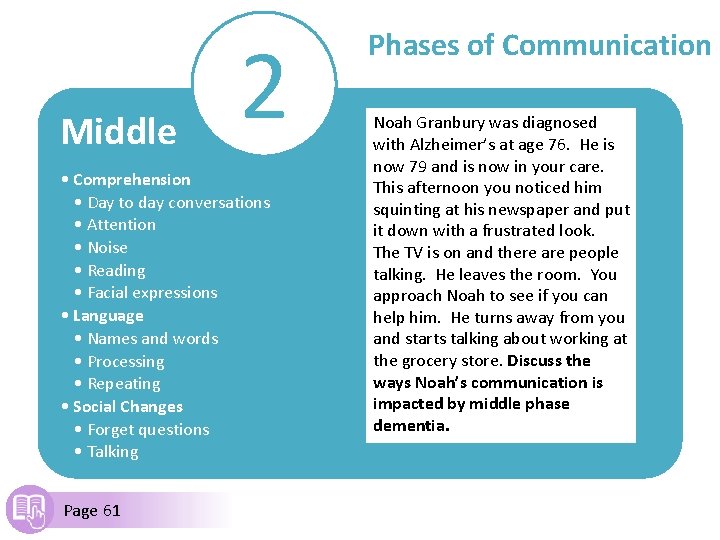
Middle 2 • Comprehension • Day to day conversations • Attention • Noise • Reading • Facial expressions • Language • Names and words • Processing • Repeating • Social Changes • Forget questions • Talking Page 61 Phases of Communication Noah Granbury was diagnosed with Alzheimer’s at age 76. He is now 79 and is now in your care. This afternoon you noticed him squinting at his newspaper and put it down with a frustrated look. The TV is on and there are people talking. He leaves the room. You approach Noah to see if you can help him. He turns away from you and starts talking about working at the grocery store. Discuss the ways Noah’s communication is impacted by middle phase dementia.
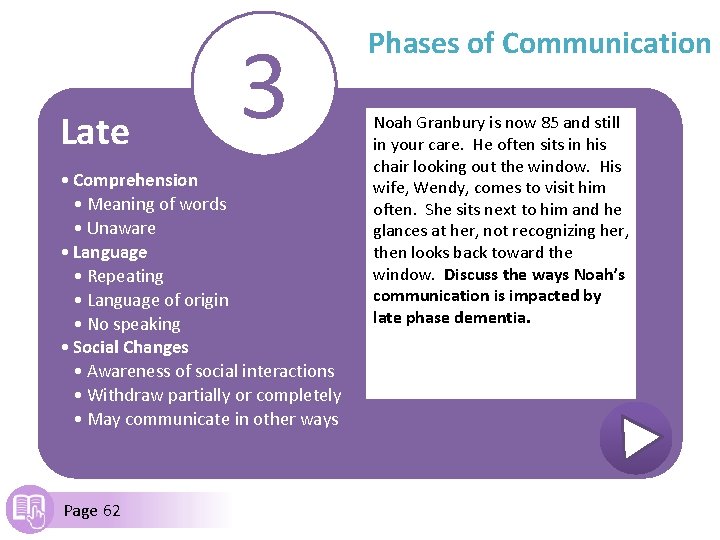
Late 3 • Comprehension • Meaning of words • Unaware • Language • Repeating • Language of origin • No speaking • Social Changes • Awareness of social interactions • Withdraw partially or completely • May communicate in other ways Page 62 Phases of Communication Noah Granbury is now 85 and still in your care. He often sits in his chair looking out the window. His wife, Wendy, comes to visit him often. She sits next to him and he glances at her, not recognizing her, then looks back toward the window. Discuss the ways Noah’s communication is impacted by late phase dementia.
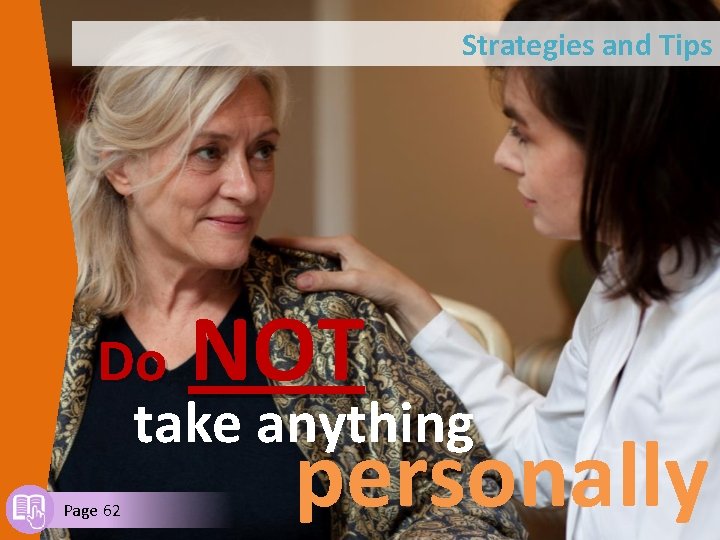
Strategies and Tips NOT personally Do take anything Page 62
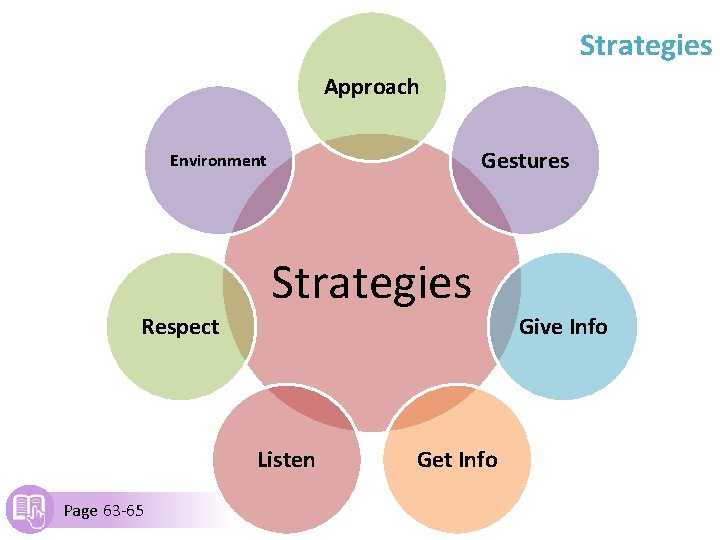
Strategies Approach Gestures Environment Respect Strategies Listen Page 63 -65 Get Info Give Info
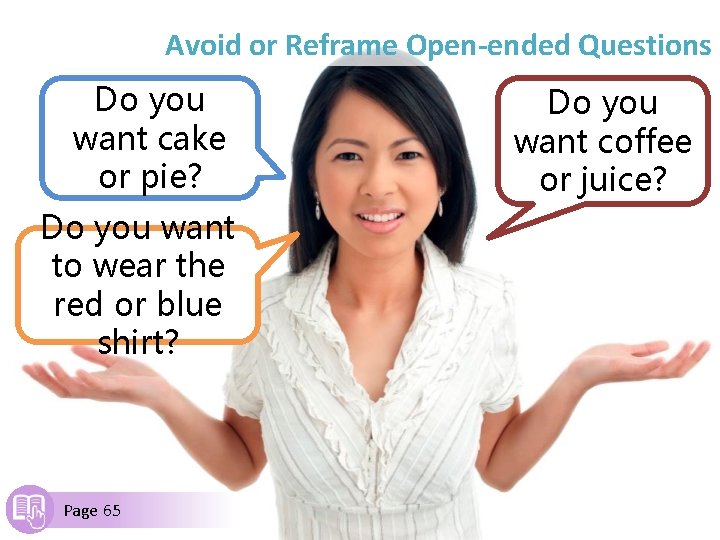
Avoid or Reframe Open-ended Questions Do you want cake or pie? Do you want to wear the red or blue shirt? Page 65 Do you want coffee or juice?
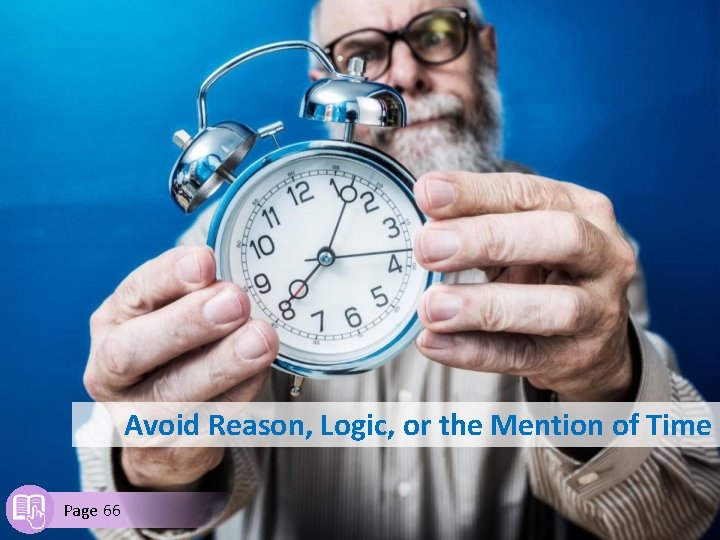
Avoid Reason, Logic, or the Mention of Time Page 66
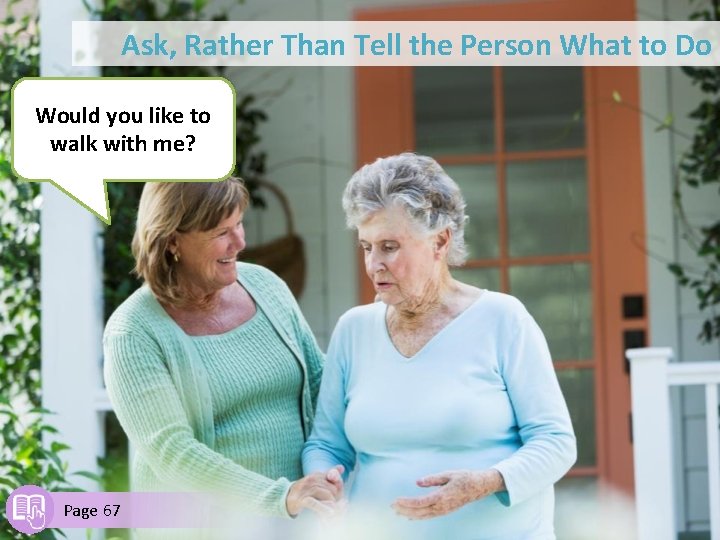
Ask, Rather Than Tell the Person What to Do Would you like to walk with me? Page 67
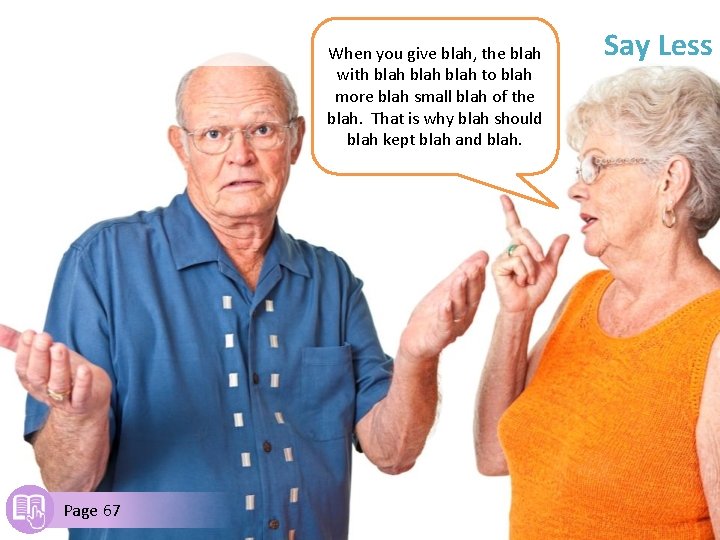
When you give blah, the blah with blah to blah more blah small blah of the blah. That is why blah should blah kept blah and blah. Page 67 Say Less
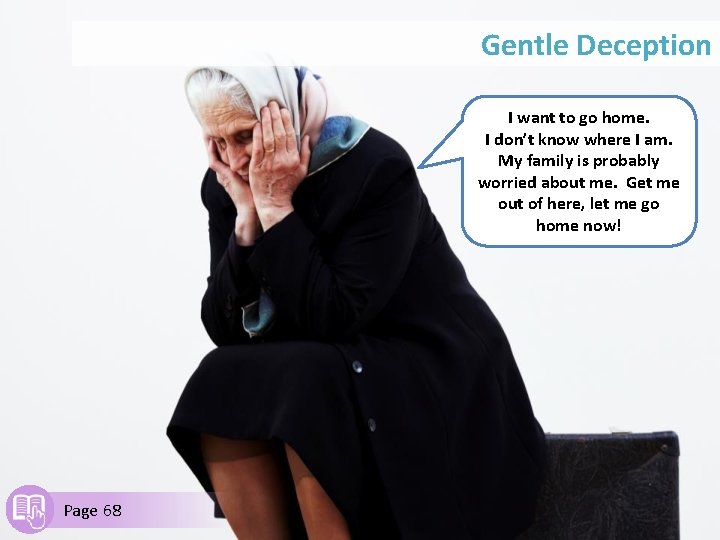
Gentle Deception I want to go home. I don’t know where I am. My family is probably worried about me. Get me out of here, let me go home now! Page 68
Activity Mrs. Hoyton’s husband died several years ago. Every morning she asks staff, “Where is my husband? He is supposed to pick me up. ” Using Gentle Deception, how might you respond to Mrs. Hoyton? Page 68
Checkpoint Check your knowledge Page 69
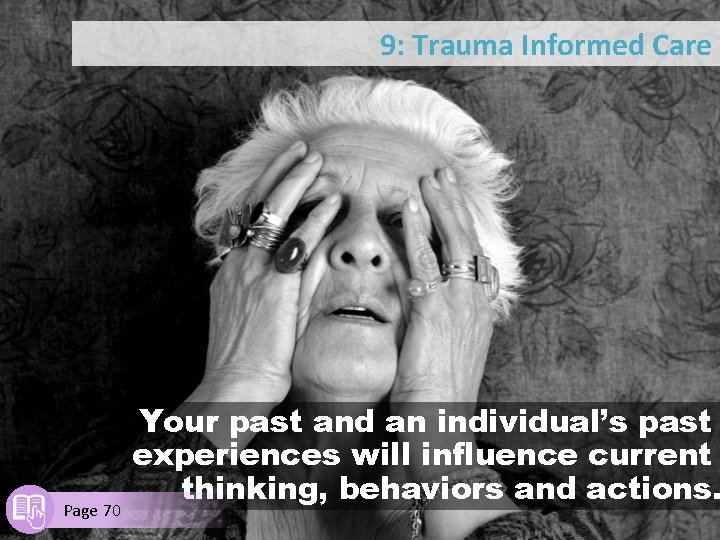
9: Trauma Informed Care Page 70 Your past and an individual’s past experiences will influence current thinking, behaviors and actions.
Activity In groups: Discuss how each event might impact the individual with dementia and the care you provide to them. Loss of a child or spouse Holocaust Victim of domestic violence Victim of sexual abuse Traumatic accidents such as train, plane crashes etc. Military war experience Other Page 70
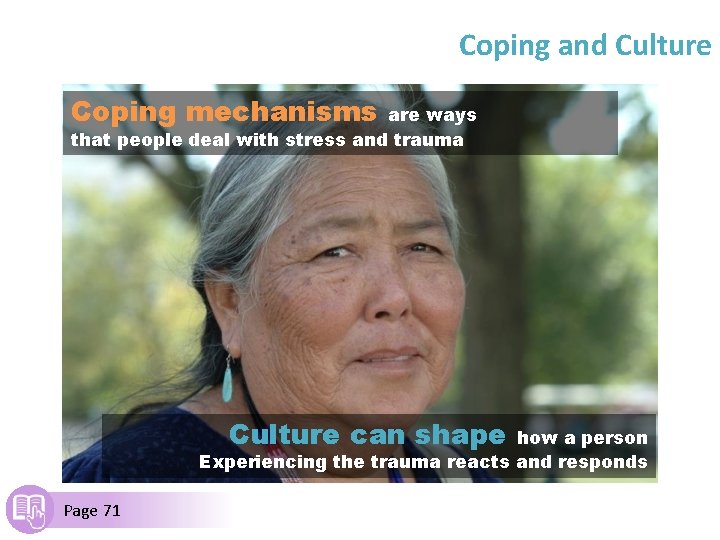
Coping and Culture Coping mechanisms are ways that people deal with stress and trauma Culture can shape how a person Experiencing the trauma reacts and responds Page 71
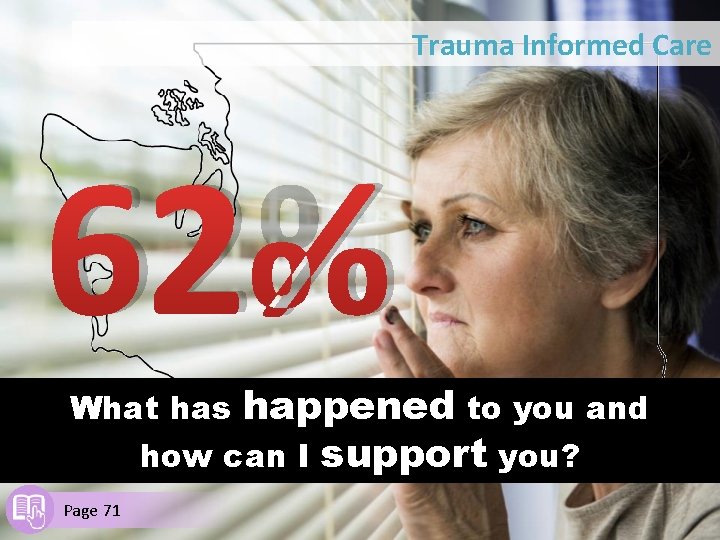
Trauma Informed Care 62% What has happened to you and how can I support you? Page 71
A Culture Shift Individuals, their personal story, their history, and culture must be separated from their condition(s) and protected from physical harm and re-traumatization. Page 72
Activity You have been hearing from others that Ms. Denner has been screaming every time someone tries to shower her. You are not looking forward to assisting with her shower today. You try to approach Ms. Denner with a smile and you use a towel around her to help with possible privacy concerns. She still screams in the shower. After talking with your supervisor and the family, you find out that Ms. Denner is a concentration camp survivor and her memory of white tiled shower rooms were gassing chambers. Discuss ways that you might handle this in the future. Page 72
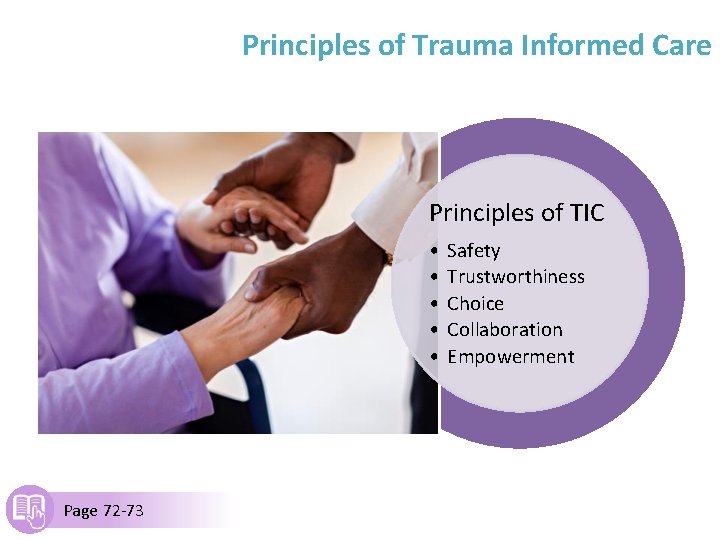
Principles of Trauma Informed Care Principles of TIC • • • Page 72 -73 Safety Trustworthiness Choice Collaboration Empowerment
Activity Michael Smith is 79 years old and has Lewy Body Dementia. When he was a child, his father was an alcoholic, often physically abused his mother in front of him, and sexually abused Michael. His father later went to jail and his mother suffered from depression. He often has conflict with staff and says that you or others want to hurt him. Discuss ways that you might use the five principles of trauma informed care and support Michael to improve his quality of life. Page 73
Checkpoint Check your knowledge Page 75
Break
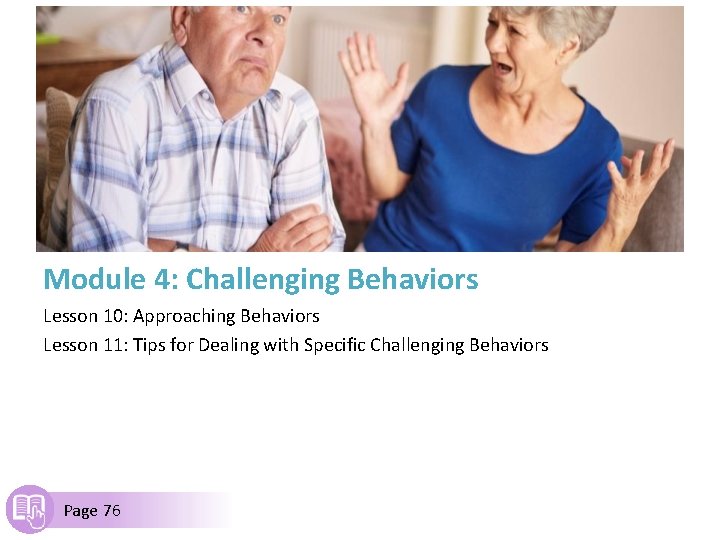
Module 4: Challenging Behaviors Lesson 10: Approaching Behaviors Lesson 11: Tips for Dealing with Specific Challenging Behaviors Page 76
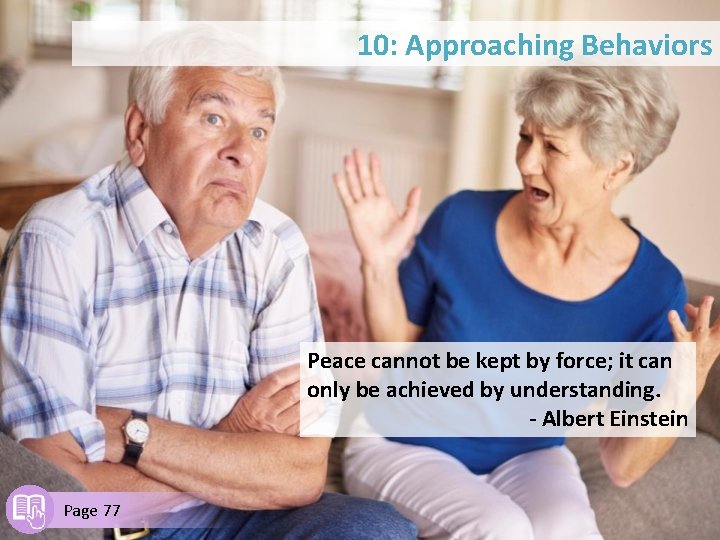
10: Approaching Behaviors Peace cannot be kept by force; it can only be achieved by understanding. - Albert Einstein Page 77
Activity Imagine that you are checking into a hotel. You have been traveling all day and you are tired. You put your suitcase in the closet and crawl into one of the beds. You pull the covers over and turn the light out. It is not long before you are sleeping soundly. In the morning, you open your eyes and you roll over to find the housekeeper from the hotel trying to get you out of bed. What would you do? Page 77
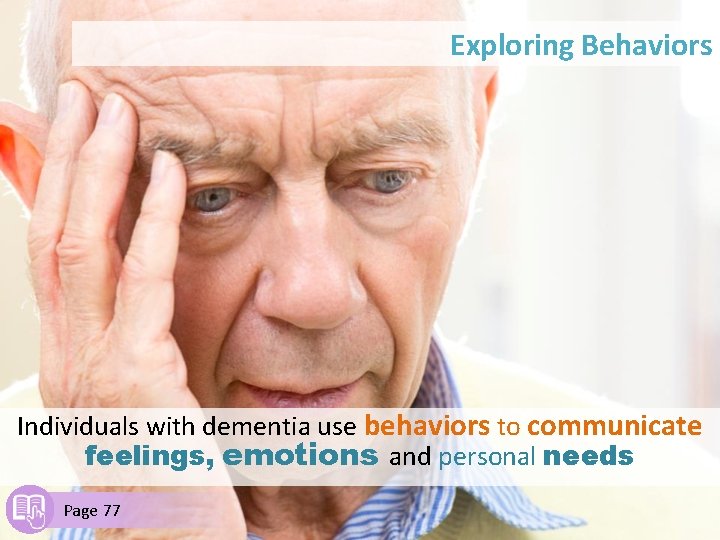
Exploring Behaviors Individuals with dementia use behaviors to communicate feelings, emotions and personal needs Page 77
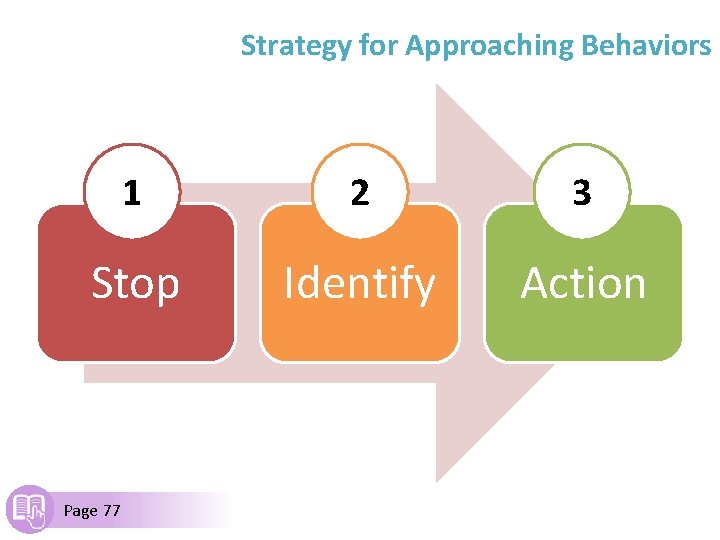
Strategy for Approaching Behaviors 1 2 3 Stop Identify Action Page 77
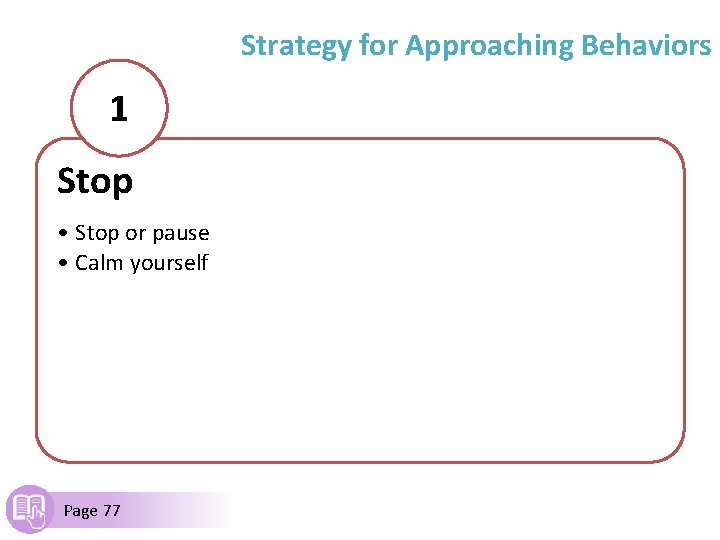
Strategy for Approaching Behaviors 1 Stop • Stop or pause • Calm yourself Page 77
Strategy for Approaching Behaviors 1 What are ways to calm yourself? Page 78
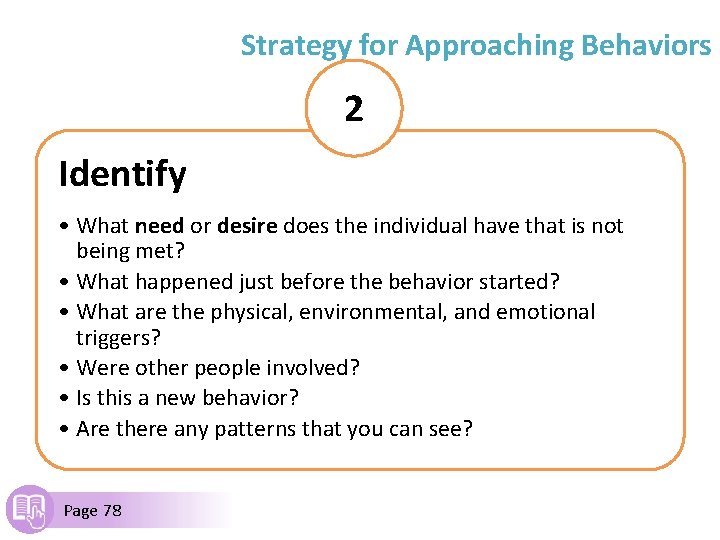
Strategy for Approaching Behaviors 2 Identify • What need or desire does the individual have that is not being met? • What happened just before the behavior started? • What are the physical, environmental, and emotional triggers? • Were other people involved? • Is this a new behavior? • Are there any patterns that you can see? Page 78
Strategy for Approaching Behaviors 2 What are some of the common triggers to look for that may be causing a behavior? Page 79
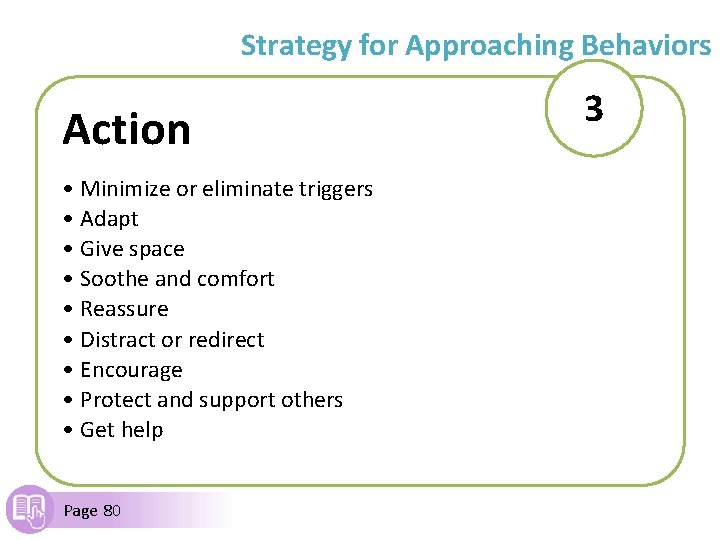
Strategy for Approaching Behaviors Action • Minimize or eliminate triggers • Adapt • Give space • Soothe and comfort • Reassure • Distract or redirect • Encourage • Protect and support others • Get help Page 80 3
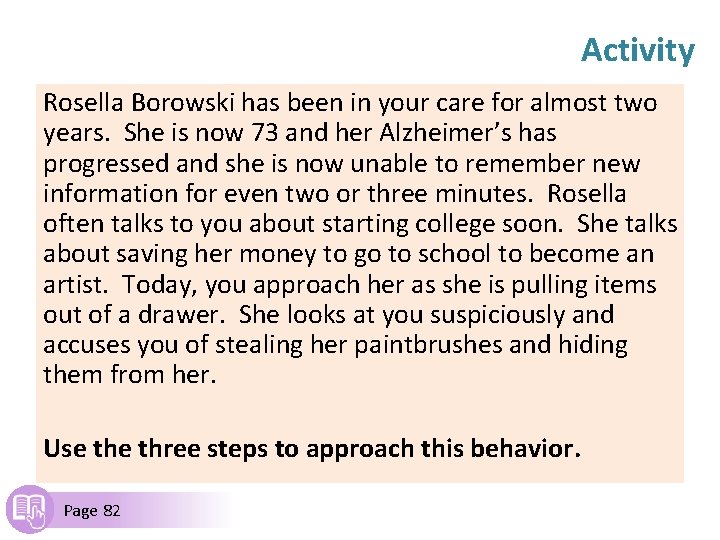
Activity Rosella Borowski has been in your care for almost two years. She is now 73 and her Alzheimer’s has progressed and she is now unable to remember new information for even two or three minutes. Rosella often talks to you about starting college soon. She talks about saving her money to go to school to become an artist. Today, you approach her as she is pulling items out of a drawer. She looks at you suspiciously and accuses you of stealing her paintbrushes and hiding them from her. Use three steps to approach this behavior. Page 82
Prevent or Minimize Challenging Behaviors Objectively writing down what happened and what actions you took gives everyone a record. Page 82
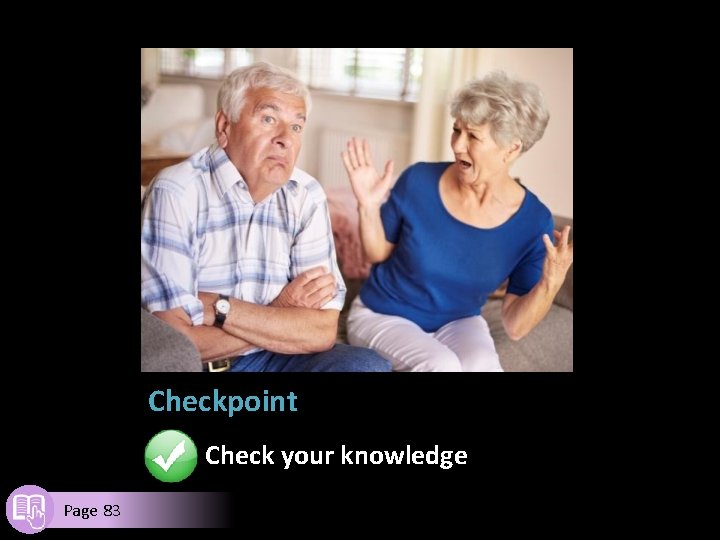
Checkpoint Check your knowledge Page 83
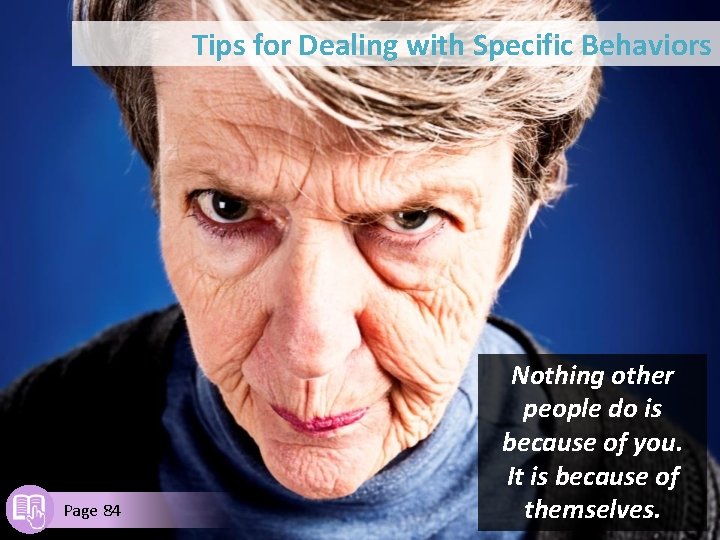
Tips for Dealing with Specific Behaviors Page 84 Nothing other people do is because of you. It is because of themselves.
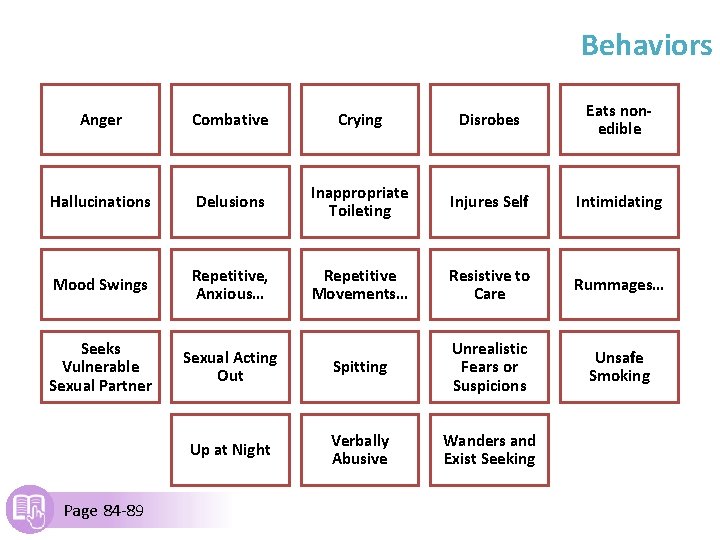
Behaviors Anger Combative Crying Disrobes Eats nonedible Hallucinations Delusions Inappropriate Toileting Injures Self Intimidating Mood Swings Repetitive, Anxious… Repetitive Movements… Resistive to Care Rummages… Seeks Vulnerable Sexual Partner Sexual Acting Out Spitting Unrealistic Fears or Suspicions Unsafe Smoking Up at Night Verbally Abusive Wanders and Exist Seeking Page 84 -89
Checkpoint Check your knowledge Page 89
Exam and Evaluation
- Slides: 108