
Dementia from prevention to cure Christopher Patterson Mc


- Slides: 67
Dementia: from prevention to cure Christopher Patterson Mc. Master University, Hamilton, Ontario Canada
Objectives • Define dementia • Describe epidemiology of dementia in India • Distinguish the common types of dementia • Describe “standard” investigation of suspected dementia • Introduce principles of management • Touch on future trends
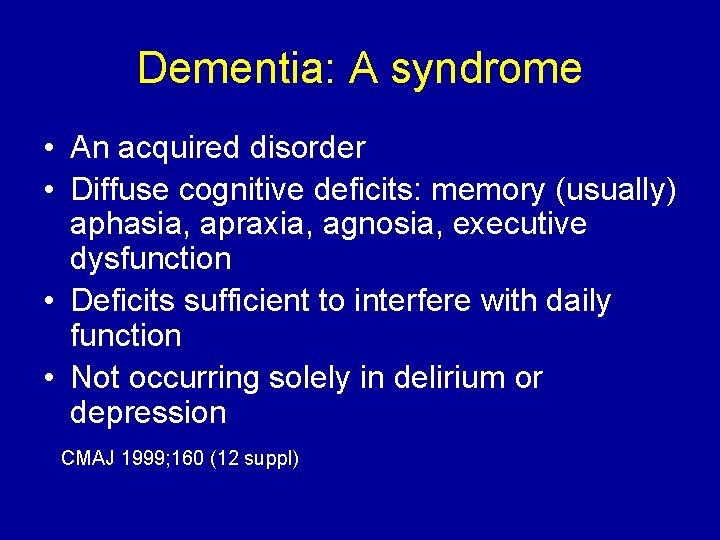
Dementia: A syndrome • An acquired disorder • Diffuse cognitive deficits: memory (usually) aphasia, apraxia, agnosia, executive dysfunction • Deficits sufficient to interfere with daily function • Not occurring solely in delirium or depression CMAJ 1999; 160 (12 suppl)
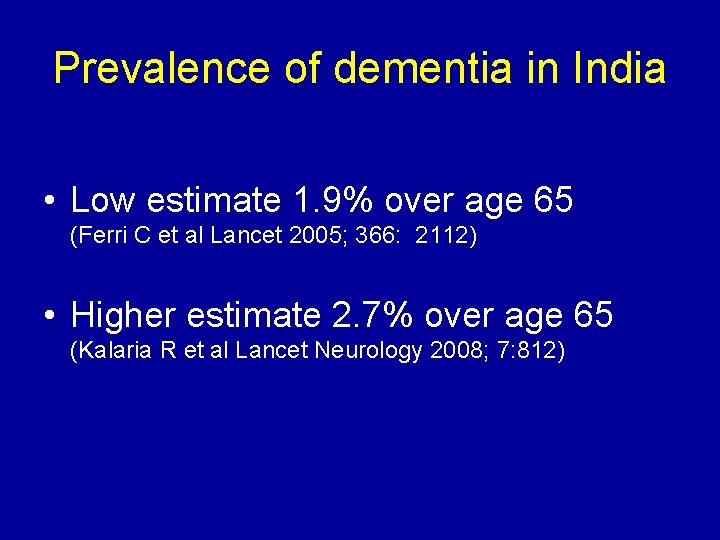
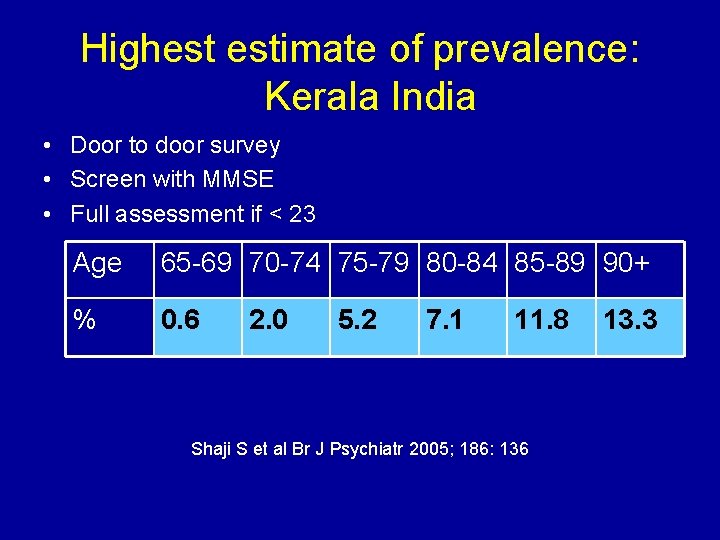
Prevalence of dementia in India • Low estimate 1. 9% over age 65 (Ferri C et al Lancet 2005; 366: 2112) • Higher estimate 2. 7% over age 65 (Kalaria R et al Lancet Neurology 2008; 7: 812)
Highest estimate of prevalence: Kerala India • Door to door survey • Screen with MMSE • Full assessment if < 23 Age 65 -69 70 -74 75 -79 80 -84 85 -89 90+ % 0. 6 2. 0 5. 2 7. 1 11. 8 Shaji S et al Br J Psychiatr 2005; 186: 136 13. 3
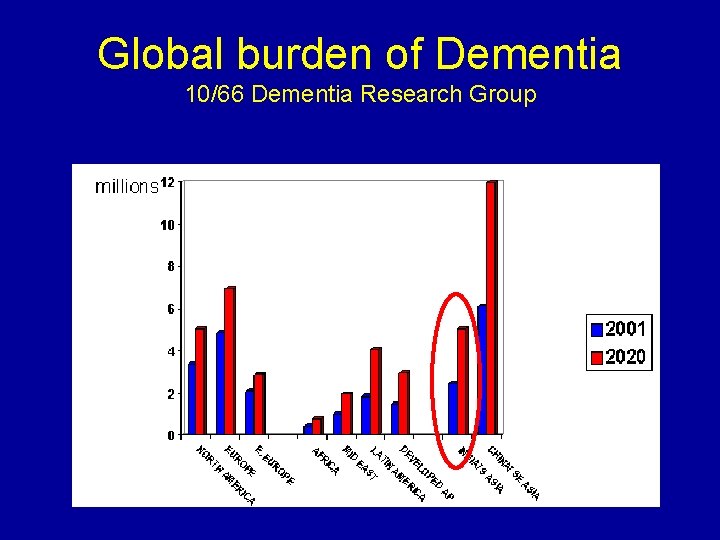
Global burden of Dementia 10/66 Dementia Research Group
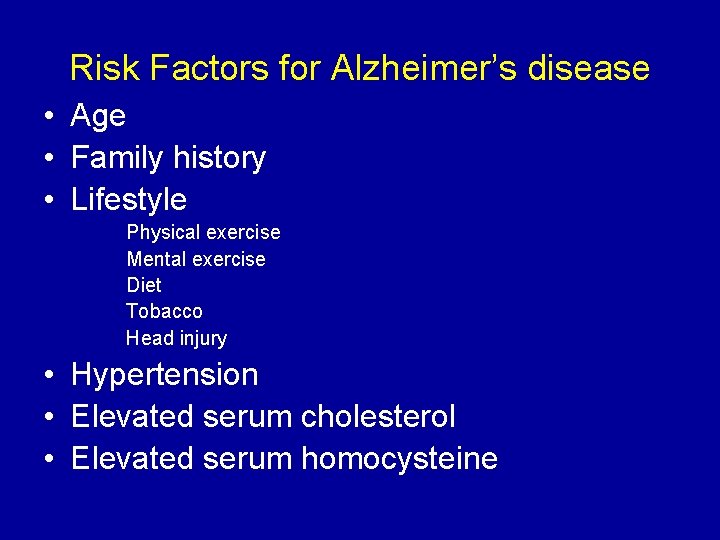
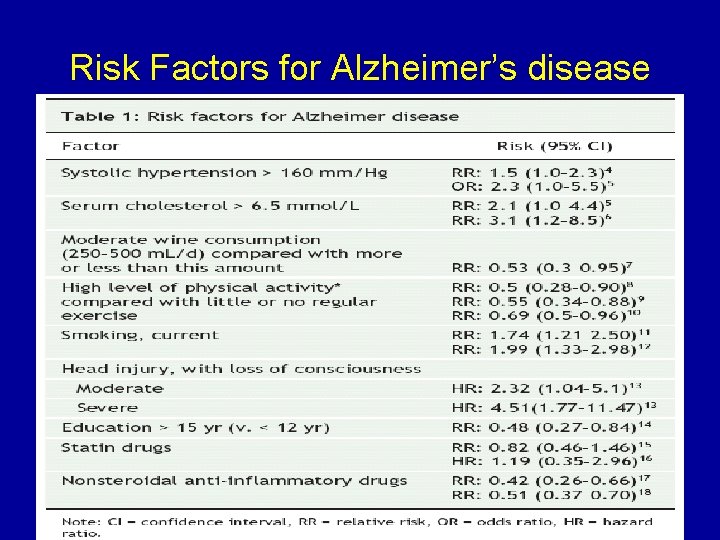
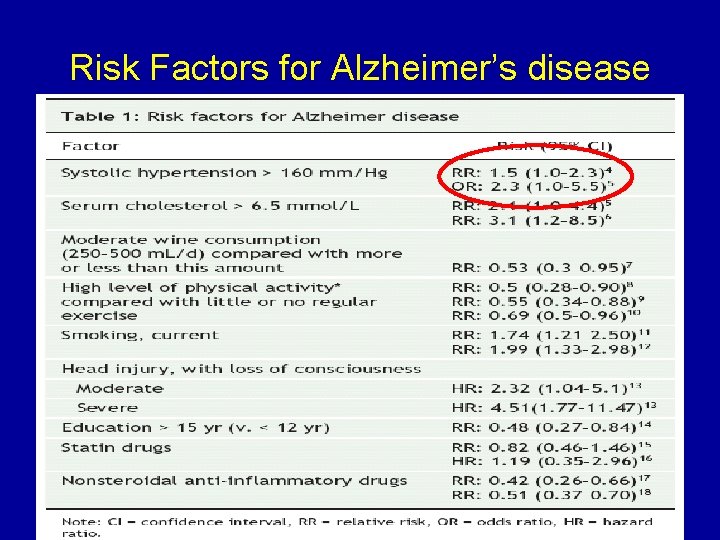
Risk Factors for Alzheimer’s disease • Age • Family history • Lifestyle Physical exercise Mental exercise Diet Tobacco Head injury • Hypertension • Elevated serum cholesterol • Elevated serum homocysteine
Risk Factors for Alzheimer’s disease
Risk Factors for Alzheimer’s disease
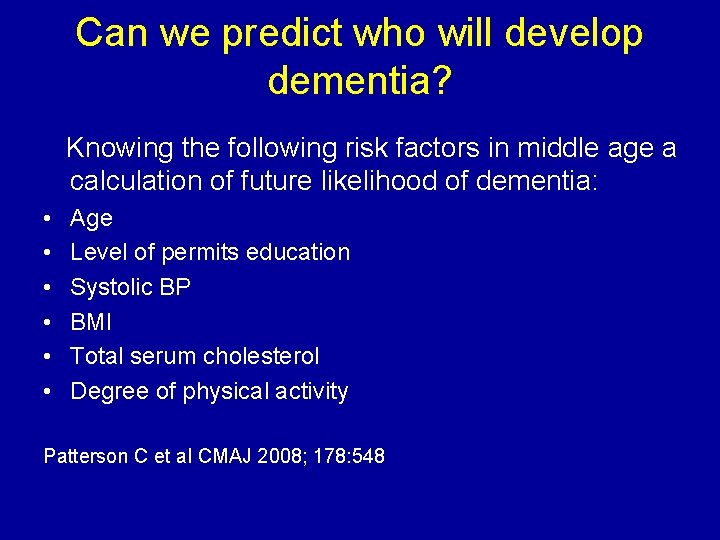
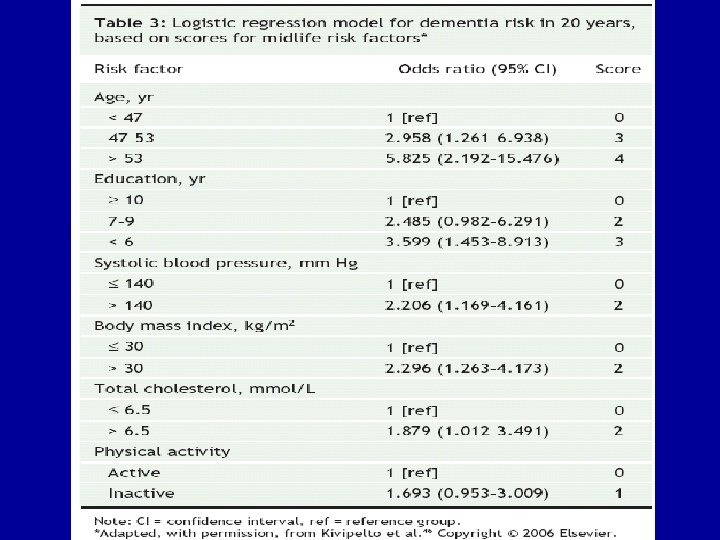
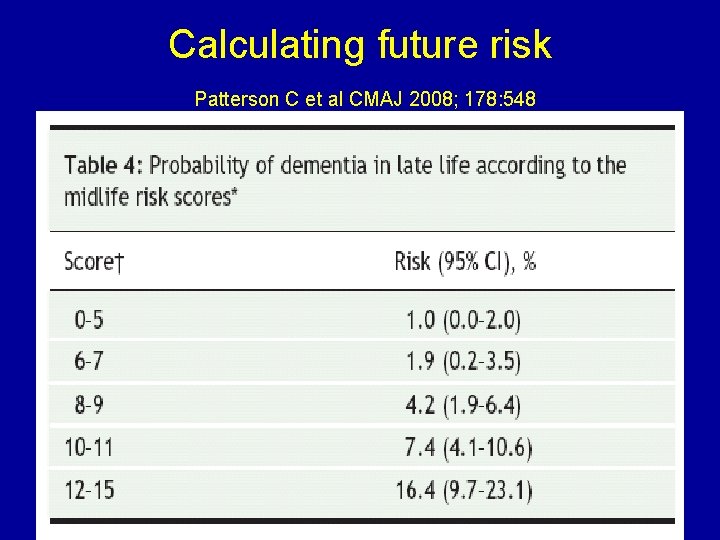
Can we predict who will develop dementia? Knowing the following risk factors in middle age a calculation of future likelihood of dementia: • • • Age Level of permits education Systolic BP BMI Total serum cholesterol Degree of physical activity Patterson C et al CMAJ 2008; 178: 548
Calculating future risk Patterson C et al CMAJ 2008; 178: 548
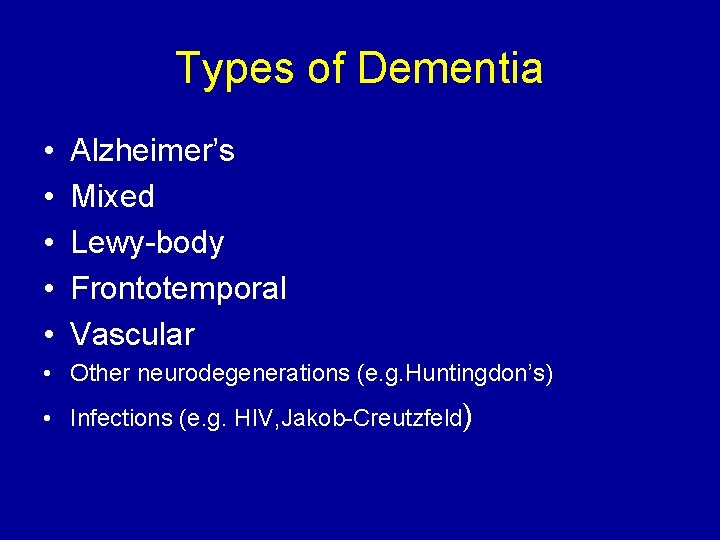
Types of Dementia • • • Alzheimer’s Mixed Lewy-body Frontotemporal Vascular • Other neurodegenerations (e. g. Huntingdon’s) • Infections (e. g. HIV, Jakob-Creutzfeld)
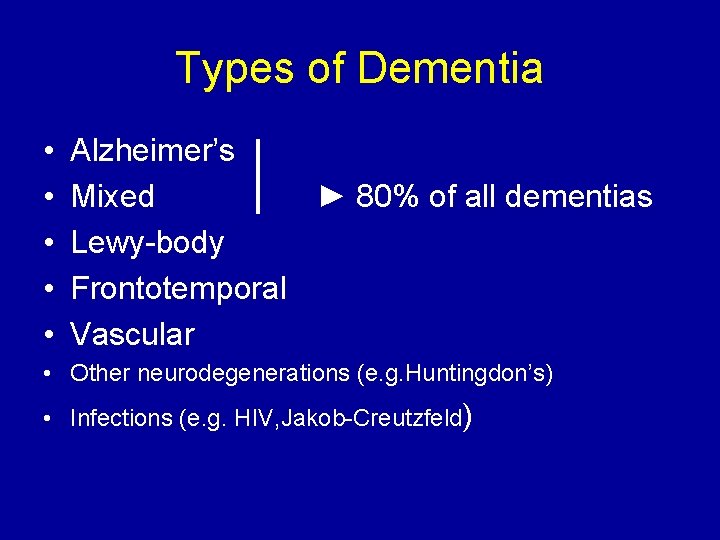
Types of Dementia • • • Alzheimer’s Mixed ► 80% of all dementias Lewy-body Frontotemporal Vascular • Other neurodegenerations (e. g. Huntingdon’s) • Infections (e. g. HIV, Jakob-Creutzfeld)
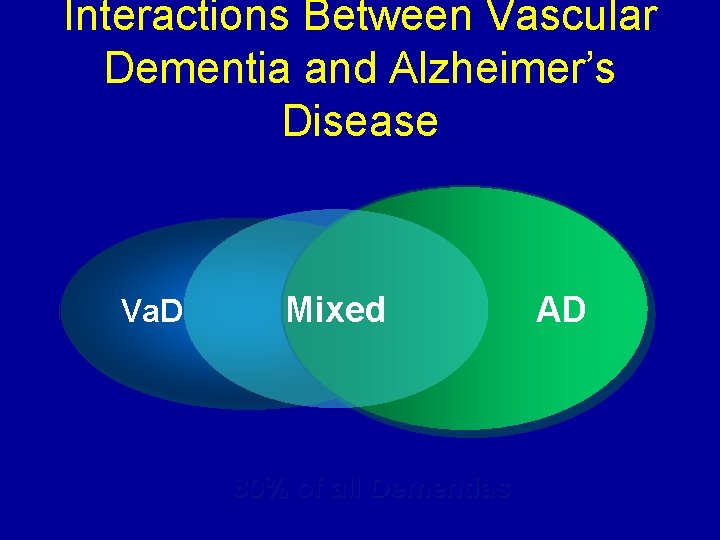
Interactions Between Vascular Dementia and Alzheimer’s Disease Va. D Mixed 80% of all Dementias AD
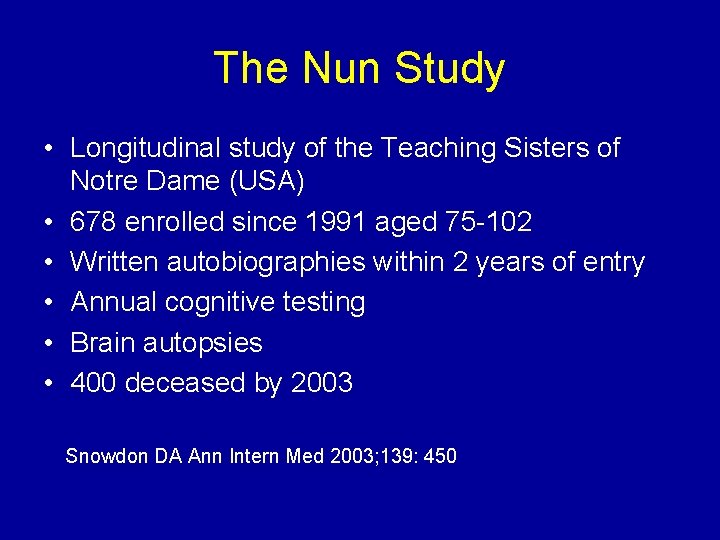
The Nun Study • Longitudinal study of the Teaching Sisters of Notre Dame (USA) • 678 enrolled since 1991 aged 75 -102 • Written autobiographies within 2 years of entry • Annual cognitive testing • Brain autopsies • 400 deceased by 2003 Snowdon DA Ann Intern Med 2003; 139: 450
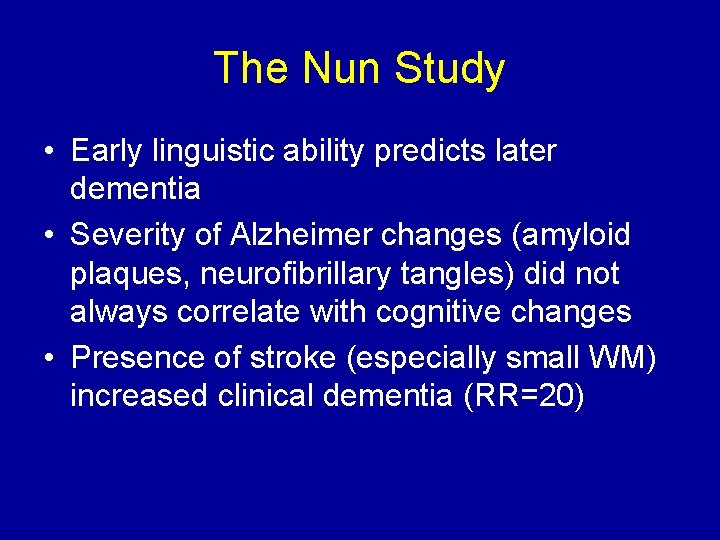
The Nun Study • Early linguistic ability predicts later dementia • Severity of Alzheimer changes (amyloid plaques, neurofibrillary tangles) did not always correlate with cognitive changes • Presence of stroke (especially small WM) increased clinical dementia (RR=20)
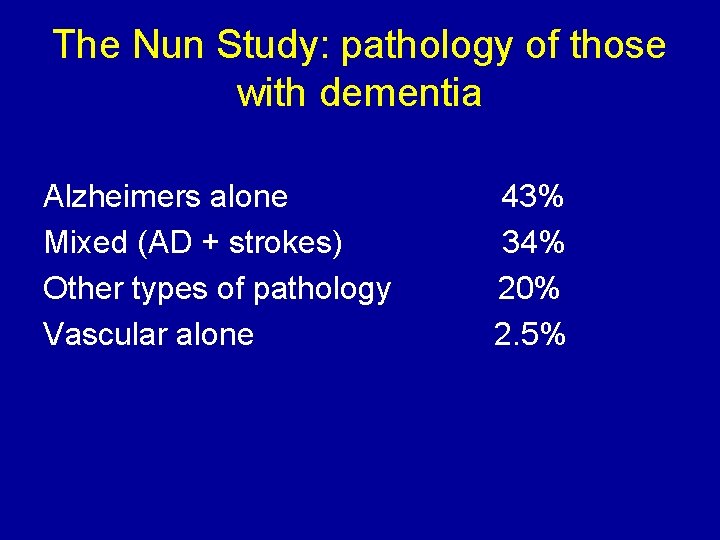
The Nun Study: pathology of those with dementia Alzheimers alone Mixed (AD + strokes) Other types of pathology Vascular alone 43% 34% 20% 2. 5%
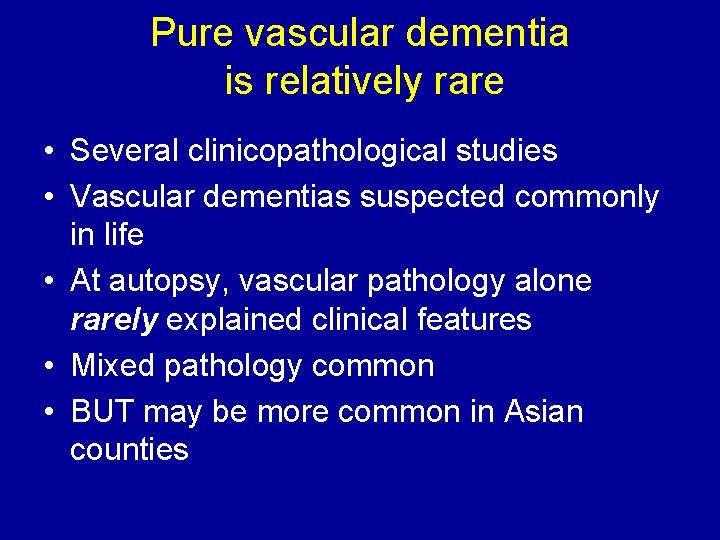
Pure vascular dementia is relatively rare • Several clinicopathological studies • Vascular dementias suspected commonly in life • At autopsy, vascular pathology alone rarely explained clinical features • Mixed pathology common • BUT may be more common in Asian counties
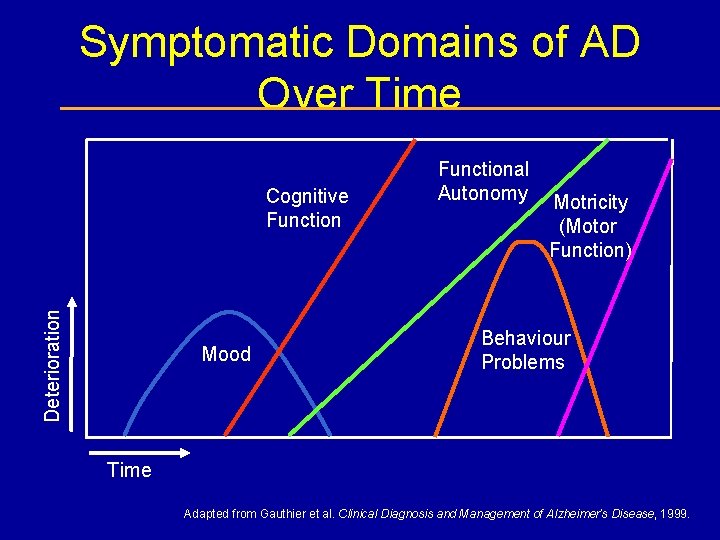
Symptomatic Domains of AD Over Time Deterioration Cognitive Function Mood Functional Autonomy Motricity (Motor Function) Behaviour Problems Time Adapted from Gauthier et al. Clinical Diagnosis and Management of Alzheimer’s Disease, 1999.
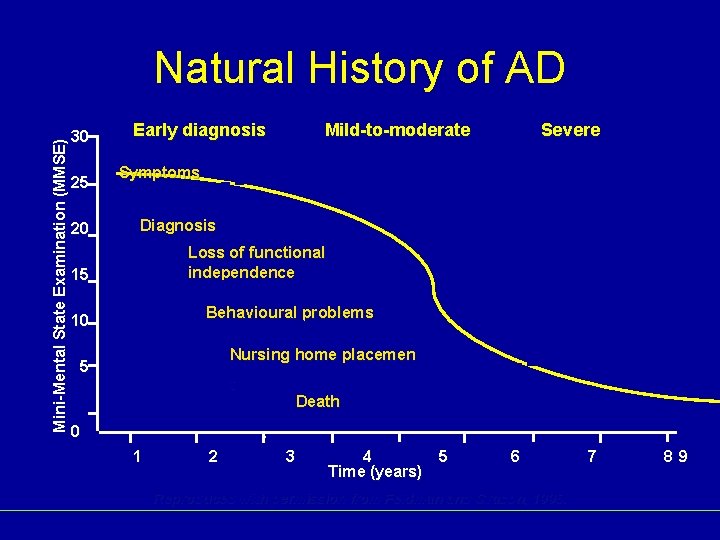
Mini-Mental State Examination (MMSE) Natural History of AD 30 25 20 Early diagnosis Severe Mild-to-moderate Symptoms Diagnosis Loss of functional independence 15 Behavioural problems 10 Nursing home placemen 5 t Death 0 1 2 3 4 Time (years) 5 6 Reproduced with permission from Feldman and Gracon, 1996. 7 89
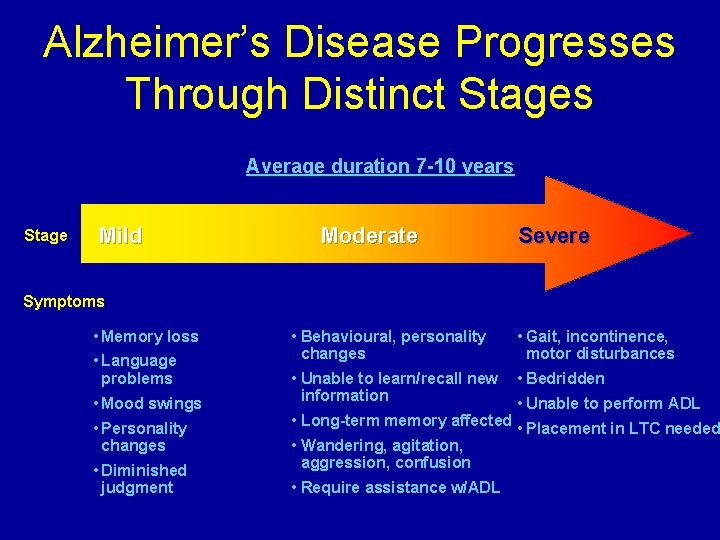
Alzheimer’s Disease Progresses Through Distinct Stages Average duration 7 -10 years Stage Mild Moderate Severe Symptoms • Memory loss • Language problems • Mood swings • Personality changes • Diminished judgment • Behavioural, personality • Gait, incontinence, changes motor disturbances • Unable to learn/recall new • Bedridden information • Unable to perform ADL • Long-term memory affected • Placement in LTC needed • Wandering, agitation, aggression, confusion • Require assistance w/ADL
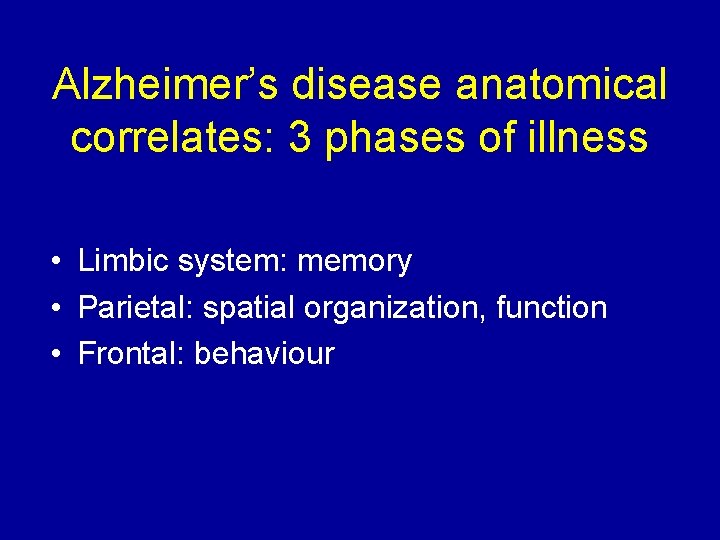
Alzheimer’s disease anatomical correlates: 3 phases of illness • Limbic system: memory • Parietal: spatial organization, function • Frontal: behaviour
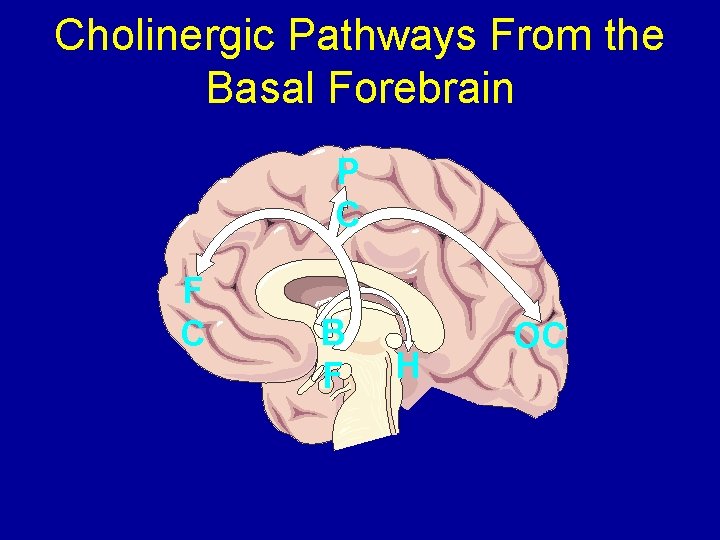
Cholinergic Pathways From the Basal Forebrain P C F C B F H OC
Frontotemporal Dementia
Frontotemporal dementia 3 clusters of features: (a) Behavioural (disinhibition, apathy, poor insight and judgement) (b) Language (progressive expressive type aphasia, contraction of language) (c) Self neglect First described by Arnold Pick
Frontotemporal dementia • • Familial in 50% Serotoninergic (vs. cholinergic) deficit Memory not a prominent feature until late Often difficult to manage
Lewy (or Lewey) body dementia Also known as: • Dementia with Lewy bodies • Lewy body dementia
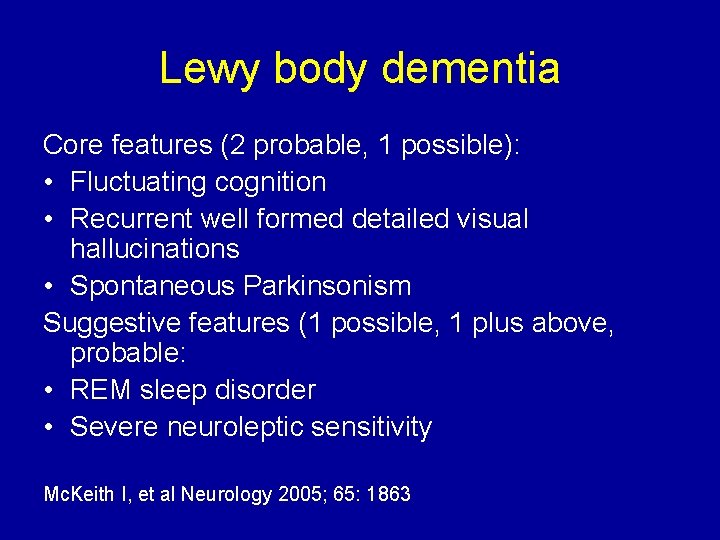
Lewy body dementia Core features (2 probable, 1 possible): • Fluctuating cognition • Recurrent well formed detailed visual hallucinations • Spontaneous Parkinsonism Suggestive features (1 possible, 1 plus above, probable: • REM sleep disorder • Severe neuroleptic sensitivity Mc. Keith I, et al Neurology 2005; 65: 1863
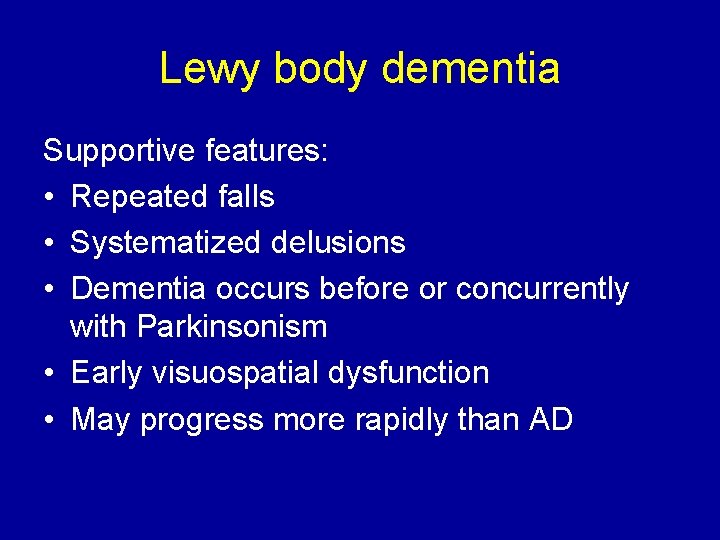
Lewy body dementia Supportive features: • Repeated falls • Systematized delusions • Dementia occurs before or concurrently with Parkinsonism • Early visuospatial dysfunction • May progress more rapidly than AD
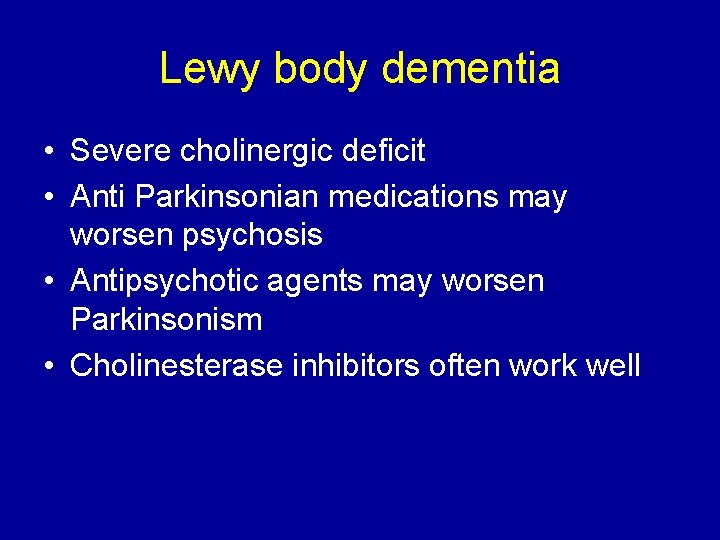
Lewy body dementia • Severe cholinergic deficit • Anti Parkinsonian medications may worsen psychosis • Antipsychotic agents may worsen Parkinsonism • Cholinesterase inhibitors often work well
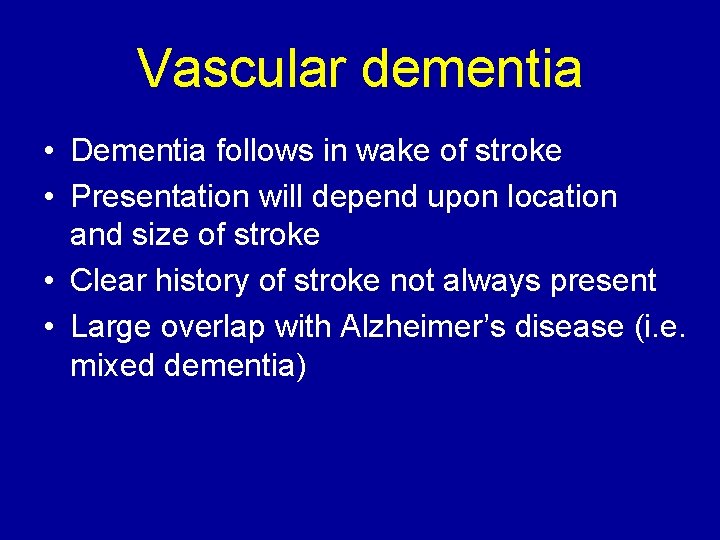
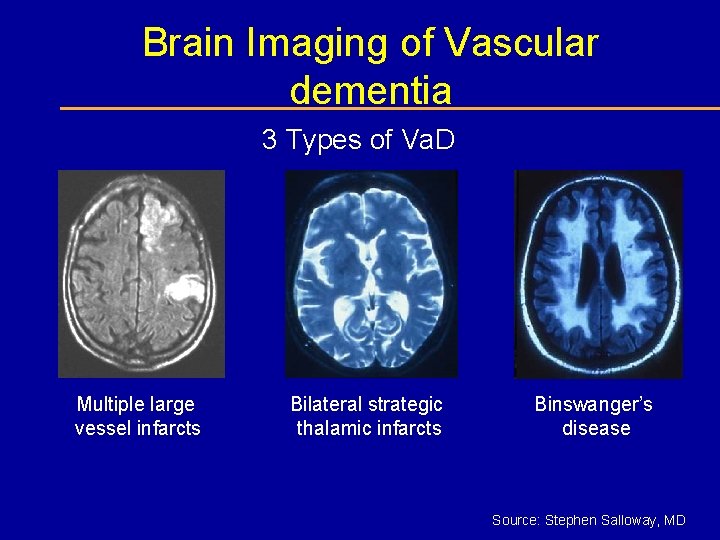
Vascular dementia • Dementia follows in wake of stroke • Presentation will depend upon location and size of stroke • Clear history of stroke not always present • Large overlap with Alzheimer’s disease (i. e. mixed dementia)
Brain Imaging of Vascular dementia 3 Types of Va. D Multiple large vessel infarcts Bilateral strategic thalamic infarcts Binswanger’s disease Source: Stephen Salloway, MD
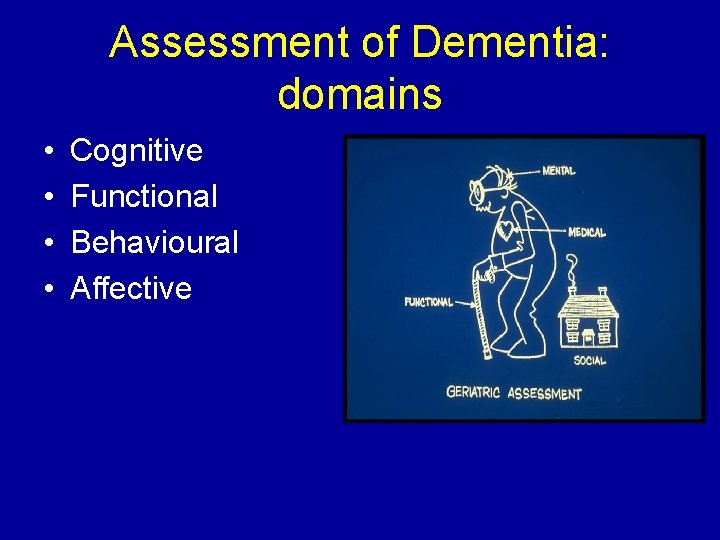
Assessment of Dementia: domains • • Cognitive Functional Behavioural Affective
80 year old lady • • Brought to you by only daughter Forgot daughter’s birthday this year Missed payment of several bills Housework and personal hygiene slipping slightly
80 year old lady: history
80 year old lady: history • • • Onset and duration Focal neurological symptoms Precipitating events Past history and risk factors Social history and risks (fire, wandering, summoning help, low TI medications) • Medications (all of them) • Order lab tests?
80 year old lady: examination
80 year old lady: examination • Overall appearance (e. g. cleanliness, grooming, trauma, clothing) • General physical ( e. g. HF, hypoxia, thyroid, tumours) • Focal neurological signs • Gait, balance
80 year old lady: mental status
80 year old lady: mental status • • MMSE or equivalent Clock drawing Montreal Cognitive Assessment (Mo. CA) Measures of insight & judgement
80 year old lady: laboratory
80 year old lady: laboratory • • • CBC Blood sugar Electrolytes TSH B 12 Calcium
80 year old lady: neuroimaging
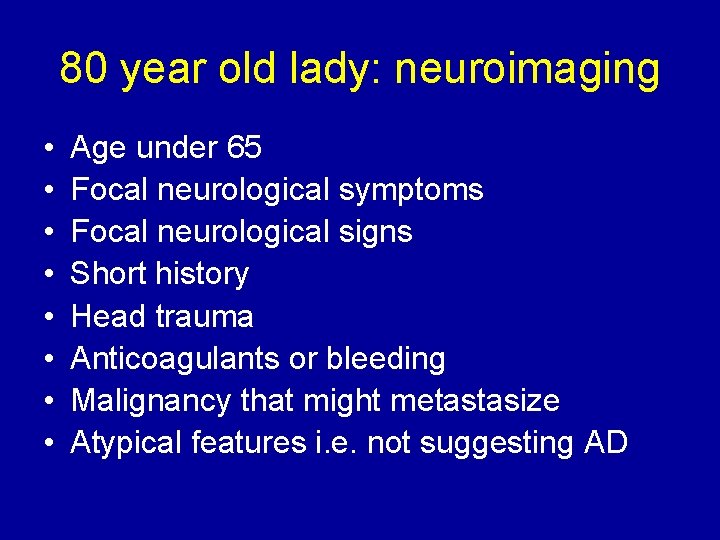
80 year old lady: neuroimaging • • Age under 65 Focal neurological symptoms Focal neurological signs Short history Head trauma Anticoagulants or bleeding Malignancy that might metastasize Atypical features i. e. not suggesting AD
80 year old lady: management
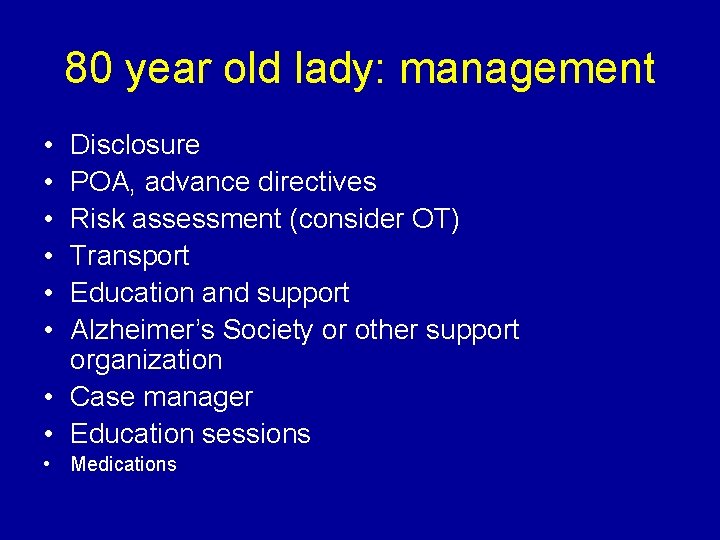
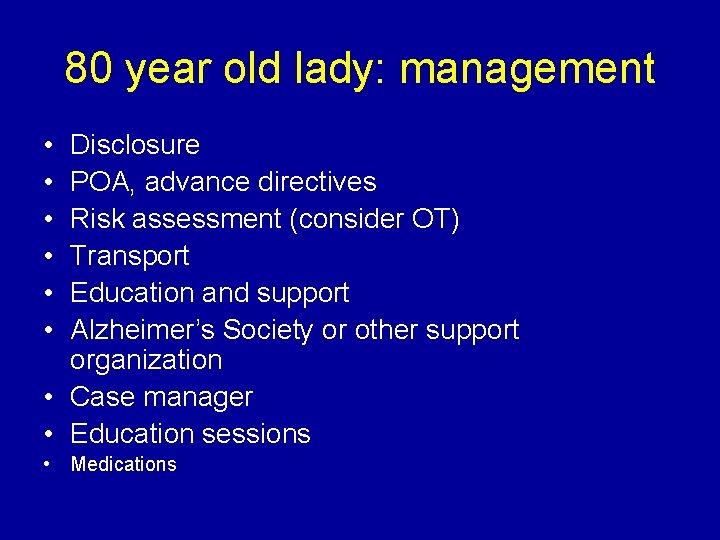
80 year old lady: management • • • Disclosure POA, advance directives Risk assessment (consider OT) Transport Education and support Alzheimer’s Society or other support organization • Case manager • Education sessions • Medications
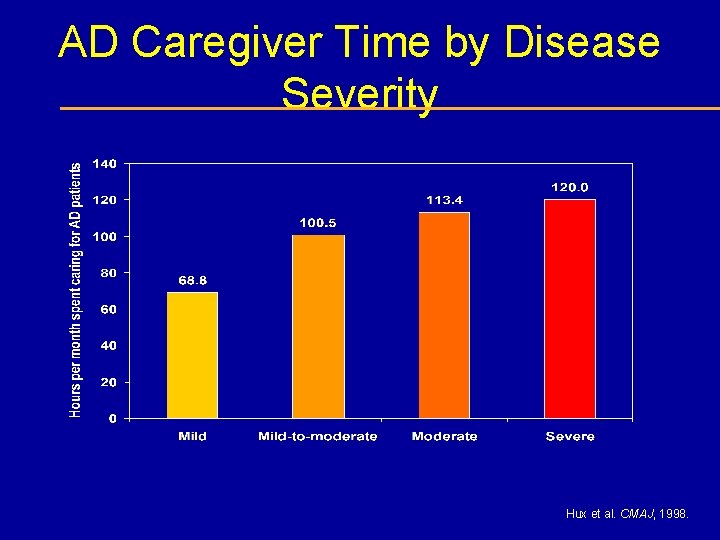
AD Caregiver Time by Disease Severity Hux et al. CMAJ, 1998.
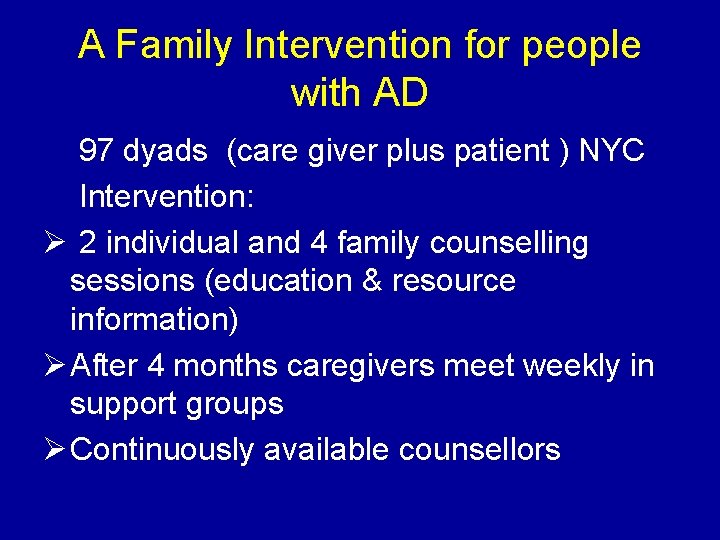
A Family Intervention for people with AD 97 dyads (care giver plus patient ) NYC Intervention: Ø 2 individual and 4 family counselling sessions (education & resource information) Ø After 4 months caregivers meet weekly in support groups Ø Continuously available counsellors
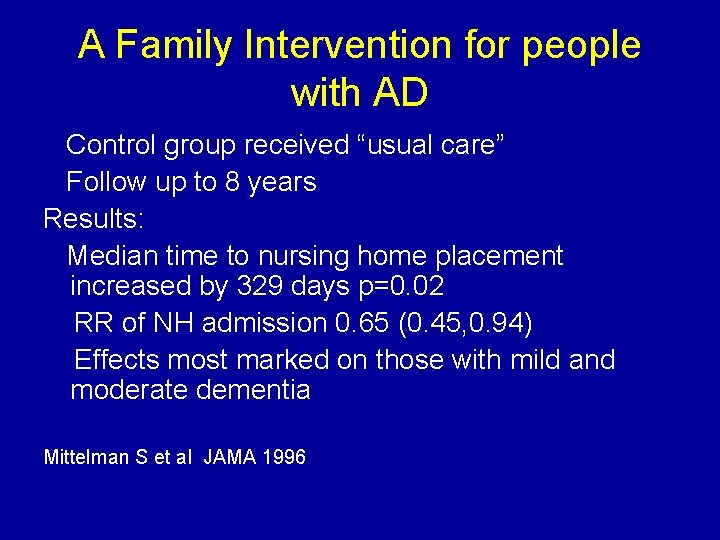
A Family Intervention for people with AD Control group received “usual care” Follow up to 8 years Results: Median time to nursing home placement increased by 329 days p=0. 02 RR of NH admission 0. 65 (0. 45, 0. 94) Effects most marked on those with mild and moderate dementia Mittelman S et al JAMA 1996
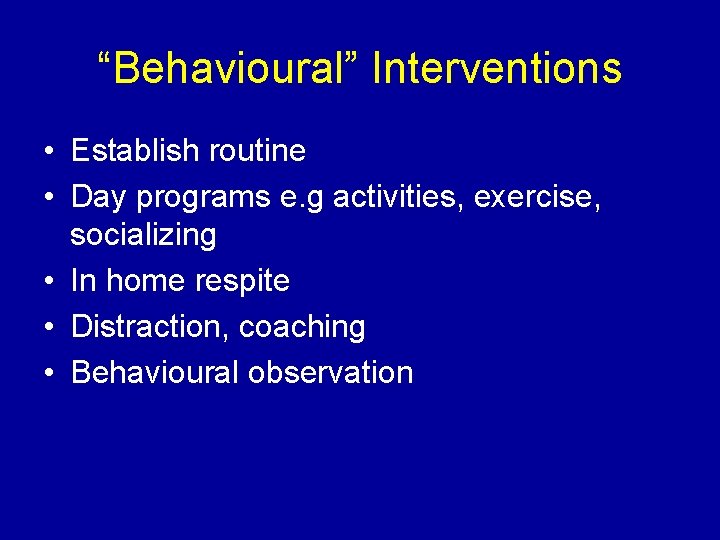
“Behavioural” Interventions • Establish routine • Day programs e. g activities, exercise, socializing • In home respite • Distraction, coaching • Behavioural observation
80 year old lady: management • • • Disclosure POA, advance directives Risk assessment (consider OT) Transport Education and support Alzheimer’s Society or other support organization • Case manager • Education sessions • Medications
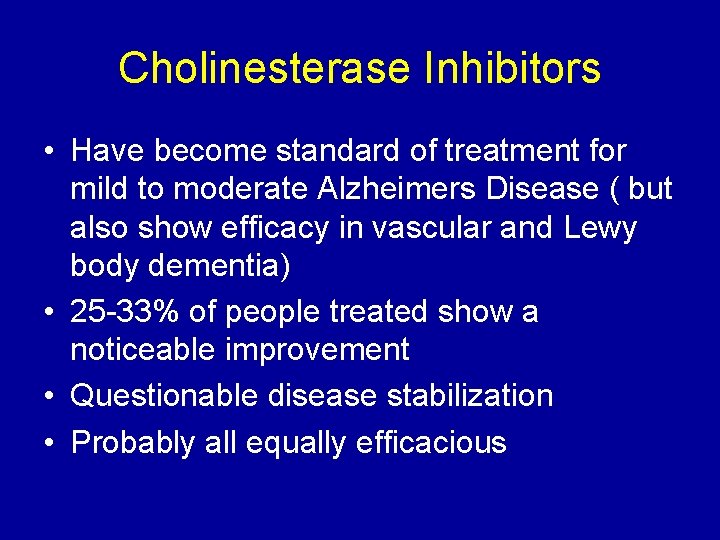
Cholinesterase Inhibitors • Have become standard of treatment for mild to moderate Alzheimers Disease ( but also show efficacy in vascular and Lewy body dementia) • 25 -33% of people treated show a noticeable improvement • Questionable disease stabilization • Probably all equally efficacious
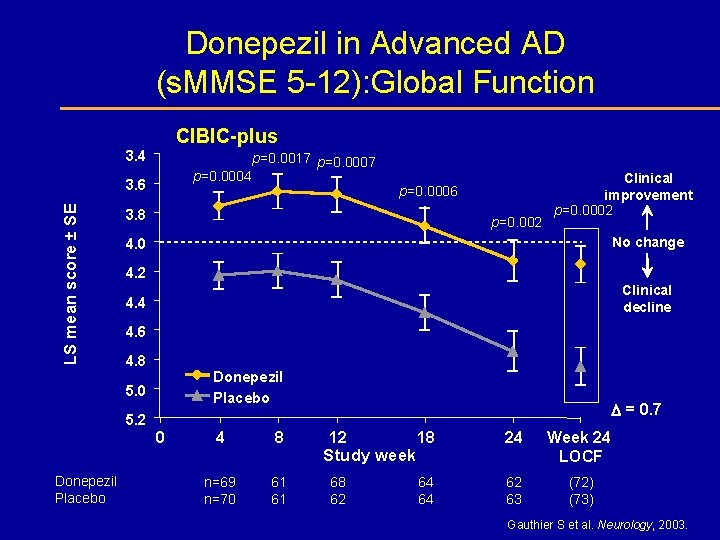
Donepezil in Advanced AD (s. MMSE 5 -12): Global Function CIBIC-plus 3. 4 p=0. 0004 LS mean score ± SE 3. 6 p=0. 0017 p=0. 0006 3. 8 p=0. 002 Clinical improvement p=0. 0002 No change 4. 0 4. 2 Clinical decline 4. 4 4. 6 4. 8 Donepezil Placebo 5. 0 = 0. 7 5. 2 0 Donepezil Placebo 4 8 n=69 n=70 61 61 12 18 24 Week 24 LOCF 68 62 64 64 62 63 (72) (73) Study week Gauthier S et al. Neurology, 2003.
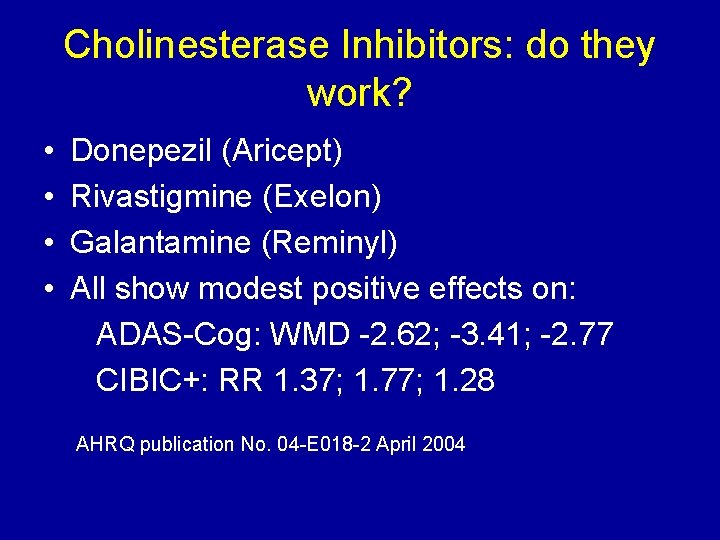
Cholinesterase Inhibitors: do they work? • • Donepezil (Aricept) Rivastigmine (Exelon) Galantamine (Reminyl) All show modest positive effects on: ADAS-Cog: WMD -2. 62; -3. 41; -2. 77 CIBIC+: RR 1. 37; 1. 77; 1. 28 AHRQ publication No. 04 -E 018 -2 April 2004
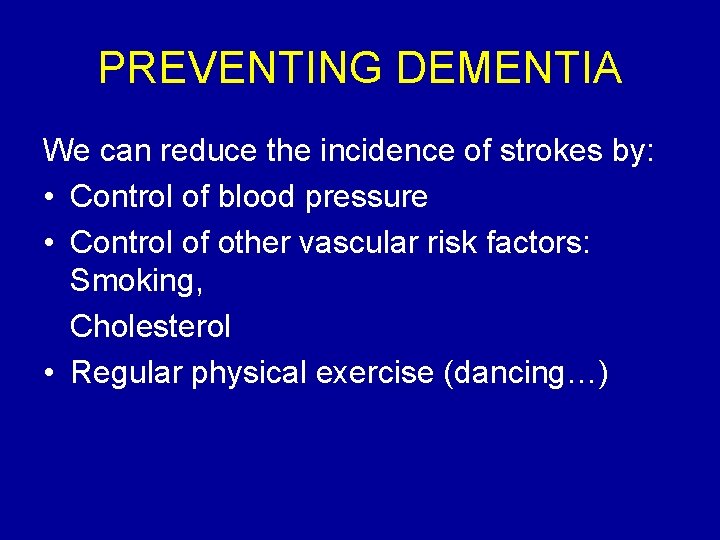
PREVENTING DEMENTIA We can reduce the incidence of strokes by: • Control of blood pressure • Control of other vascular risk factors: Smoking, Cholesterol • Regular physical exercise (dancing…)
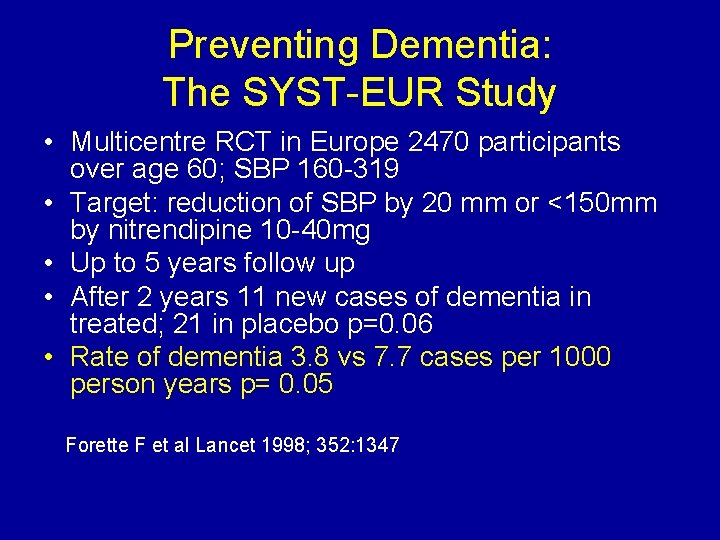
Preventing Dementia: The SYST-EUR Study • Multicentre RCT in Europe 2470 participants over age 60; SBP 160 -319 • Target: reduction of SBP by 20 mm or <150 mm by nitrendipine 10 -40 mg • Up to 5 years follow up • After 2 years 11 new cases of dementia in treated; 21 in placebo p=0. 06 • Rate of dementia 3. 8 vs 7. 7 cases per 1000 person years p= 0. 05 Forette F et al Lancet 1998; 352: 1347
What is new in Pharmacological Treatment? • • • Memantine for AD Vaccination against AD Antibiotics for AD Lipid lowering agents for AD A word of caution about novel neuroleptics
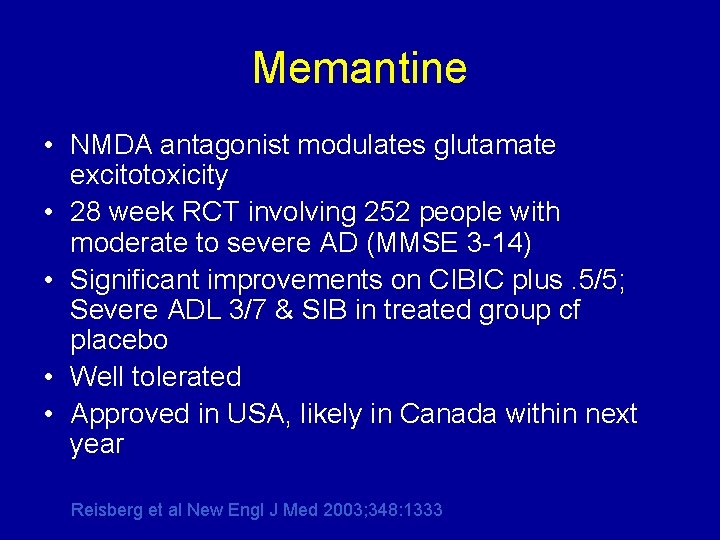
Memantine • NMDA antagonist modulates glutamate excitotoxicity • 28 week RCT involving 252 people with moderate to severe AD (MMSE 3 -14) • Significant improvements on CIBIC plus. 5/5; Severe ADL 3/7 & SIB in treated group cf placebo • Well tolerated • Approved in USA, likely in Canada within next year Reisberg et al New Engl J Med 2003; 348: 1333
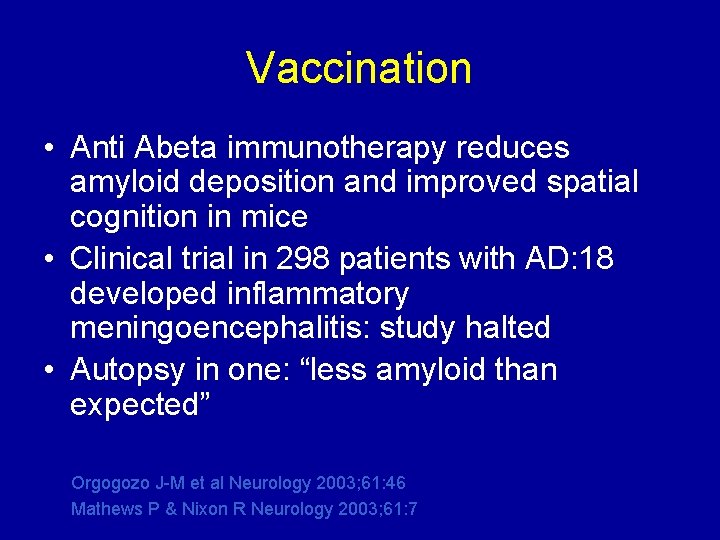
Vaccination • Anti Abeta immunotherapy reduces amyloid deposition and improved spatial cognition in mice • Clinical trial in 298 patients with AD: 18 developed inflammatory meningoencephalitis: study halted • Autopsy in one: “less amyloid than expected” Orgogozo J-M et al Neurology 2003; 61: 46 Mathews P & Nixon R Neurology 2003; 61: 7
Vaccination • In subgroup of 30 patients, those who generated Abeta antibodies had reduced disease progression • Attempts being made to reformulate vaccine • Passive immunization considered Hock C et al. Neuron 2003; 38: 547 Wolfe MS. Nat Rev. Drug Discov 2002; 1: 859
Antibiotics for AD • Higher than normal titres of Chlamydia in people with AD • Multicentre Canadian double blind placebo controlled RCT • 101 patients with mild to moderate AD (MMSE 11 -25) • Daily doxycycline 200 mg plus rifampin 300 mg or placebo for 3 months
Antibiotics for AD • Standardized ADAS Cog @ 6 months difference of 2. 75/70 between treated and placebo group (significant @ 6 but not 12 months) • Standardized MMSE score 2. 2/30 higher @12 (but not 3 or 6) months • Intriguing results! • Larger study in planning stages Loeb M, Molloy DW et al JAGS 2004; 52: 381
Lipid lowering and AD • Previous observations suggested lower risk of AD in those taking “statins” • Recently presented at 8 th International Symposium on Advances in AD therapy • Atorvostatin treatment associated with less decline in memory, function, mood & behaviour in people with AD • Premature to decide until full details available in peer reviewed publication
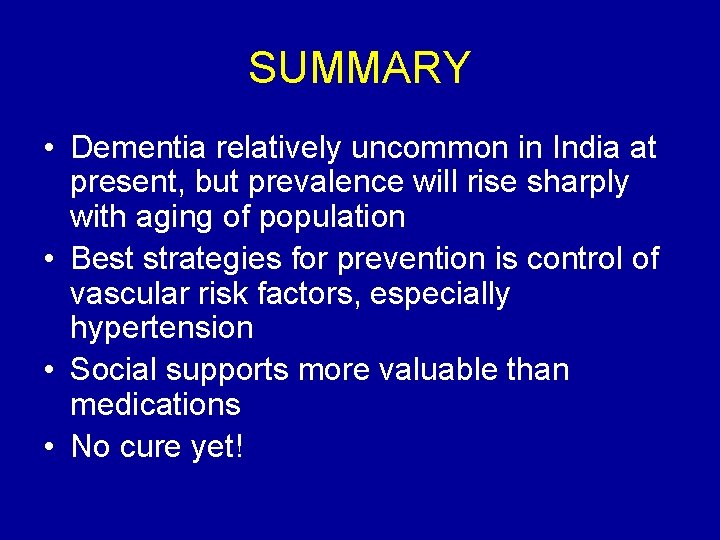
SUMMARY • Dementia relatively uncommon in India at present, but prevalence will rise sharply with aging of population • Best strategies for prevention is control of vascular risk factors, especially hypertension • Social supports more valuable than medications • No cure yet!