
Dementia and Rehabilitation Maria Crotty FAFRM Professor of
Dementia and Rehabilitation Maria Crotty FAFRM Professor of Rehabilitation and Aged Care Repatriation General Hospital Flinders University
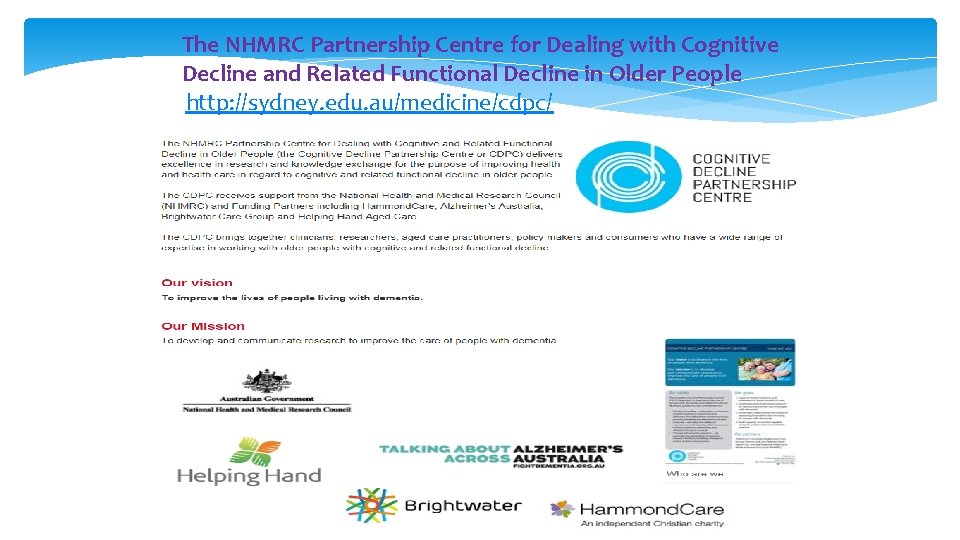
The NHMRC Partnership Centre for Dealing with Cognitive Decline and Related Functional Decline in Older People http: //sydney. edu. au/medicine/cdpc/
Declarations • Contents here • Eli Lily – funding to Repatriation General Hospital 2012 for trial of drug treatment for sarcopenia (muscle weakness) • Novartis – funding for a trial of a drug treatment for sarcopenia 2016
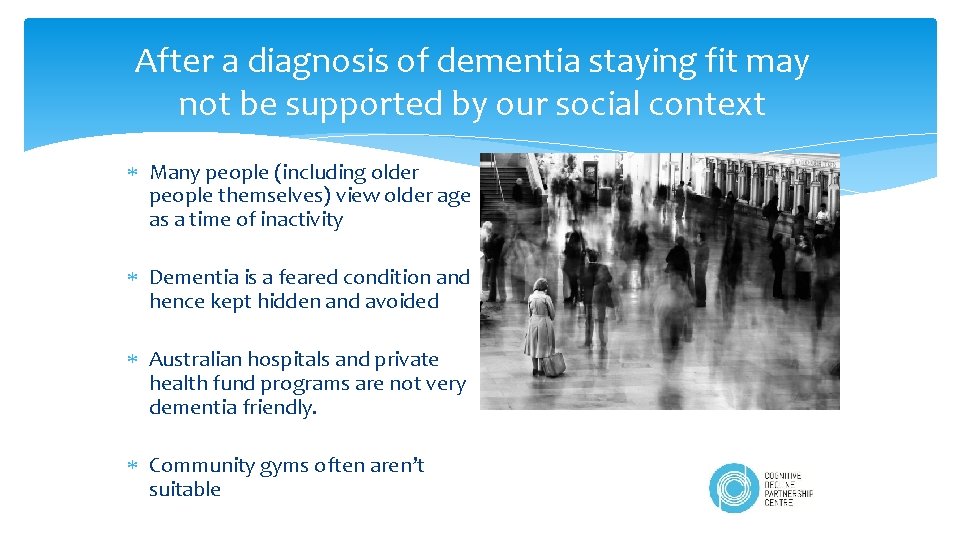
After a diagnosis of dementia staying fit may not be supported by our social context Many people (including older people themselves) view older age as a time of inactivity Dementia is a feared condition and hence kept hidden and avoided Australian hospitals and private health fund programs are not very dementia friendly. Community gyms often aren’t suitable
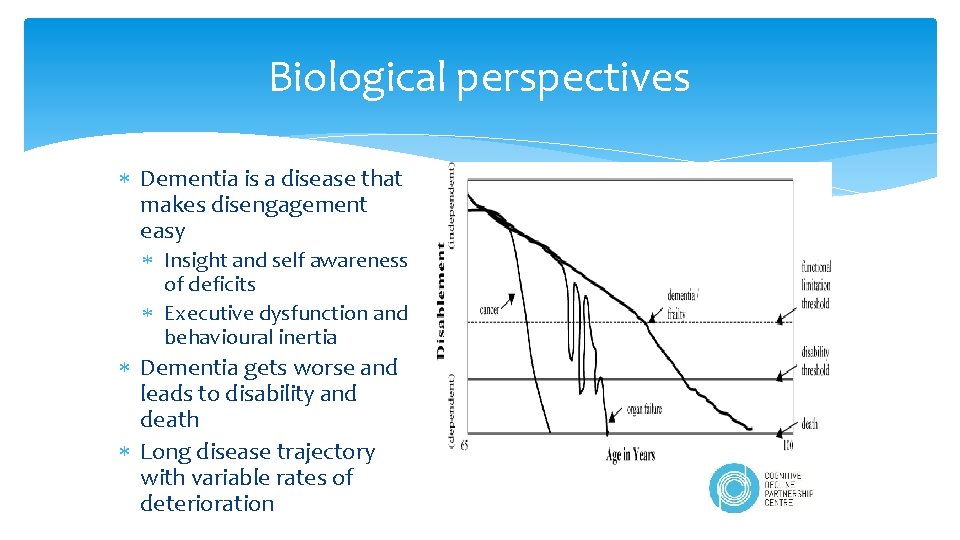
Biological perspectives Dementia is a disease that makes disengagement easy Insight and self awareness of deficits Executive dysfunction and behavioural inertia Dementia gets worse and leads to disability and death Long disease trajectory with variable rates of deterioration

Rehabilitation - Functional Reserve Clegg et al. Frailty in Elderly People. Lancet Feb 8 2013
What do the new guidelines say about rehabilitation? • Review the available evidence • Creates recommendations ( in this case starting with the NICE 2006) • Rates these recommendations • Practice points: No better evidence other than consensus expert opinion • Consensus based recommendations: Only poor quality evidence exists • Evidence based recommendations: Adequate quality evidence to be reviewed and this evidence is rated
Clinical Practice Guidelines and Principles of care for people with dementia Launched March 2016 Included consumers and dementia “experts” from around Australia and across disciplines. Updated the literature from 2006 to 2015 109 recommendations 29 evidenced based recommendations most of evidence was low quality Similar to other conditions such as Diabetes although the number of low quality EBR is higher. Endorsed by a range of specialist societies Consumer version will be launched in Canberra NOVEMBER 2016
Summary of recommendations Best level of evidence existed for Avoiding and appropriate use of antipsychotics Avoiding antidepressants for depressive symptoms Antidepressants for agitation Numerous other recommendations Non drug treatment for Changed Behaviours of Dementia Carer training and support programs Accessing assessment and diagnostic services
Promoting functional independence u Encourage “dyadic” interventions including environmental assessment and modification, problem solving and carer training. u Encourage exercise
Limitations of the NHMRC Guideline Clinical guidelines are a snapshot in time Evidence is constantly evolving The process is very structured with close monitoring about the relationship between the recommendation and evidence The guideline didn’t deal well with Cognitive stimulation, training and rehabilitation Technological innovations with dementia Combined exercise and cognitive training
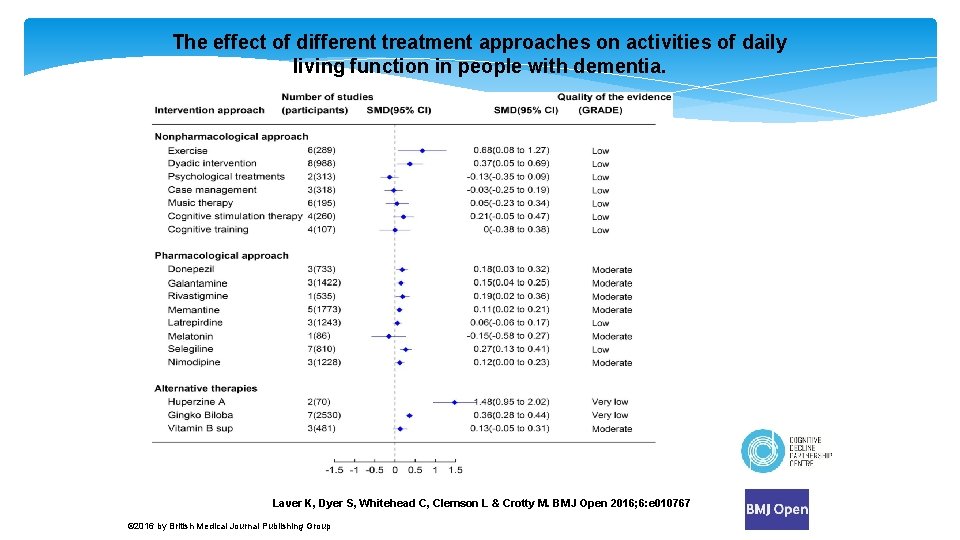
The effect of different treatment approaches on activities of daily living function in people with dementia. Laver K, Dyer S, Whitehead C, Clemson L & Crotty M. BMJ Open 2016; 6: e 010767 © 2016 by British Medical Journal Publishing Group
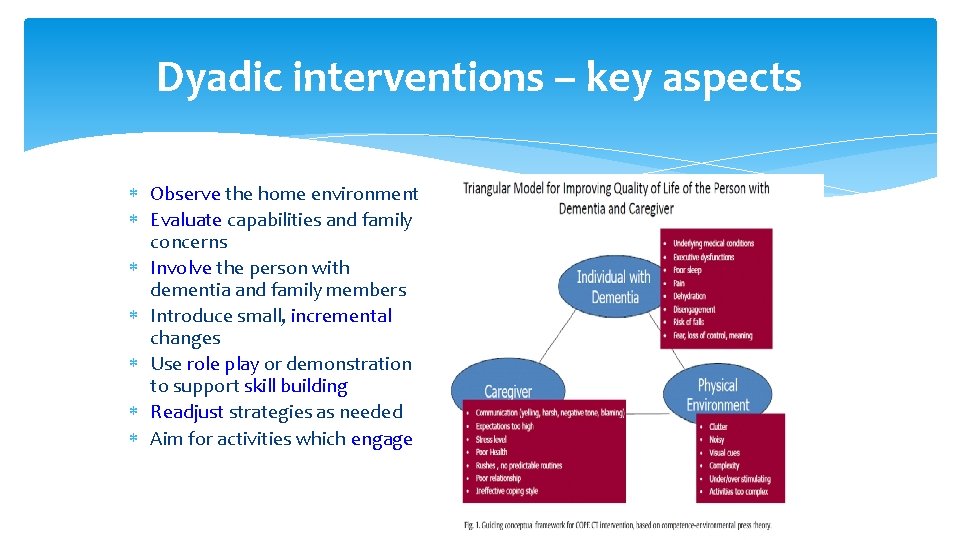
Dyadic interventions – key aspects Observe the home environment Evaluate capabilities and family concerns Involve the person with dementia and family members Introduce small, incremental changes Use role play or demonstration to support skill building Readjust strategies as needed Aim for activities which engage
Why COPE? • Aimed at people with mild to moderate cognitive impairment • Demonstrated to be effective in a large high quality RCT in the US • Increases patient engagement • Delays functional decline improves carer wellbeing • Positive effects reported even 9 months after intervention
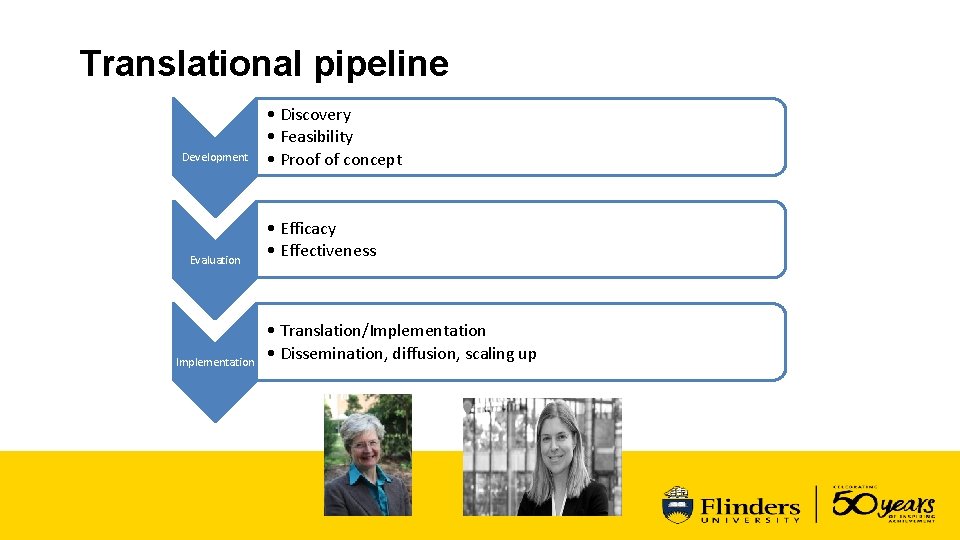
Translational pipeline Development Evaluation Implementation • Discovery • Feasibility • Proof of concept • Efficacy • Effectiveness • Translation/Implementation • Dissemination, diffusion, scaling up
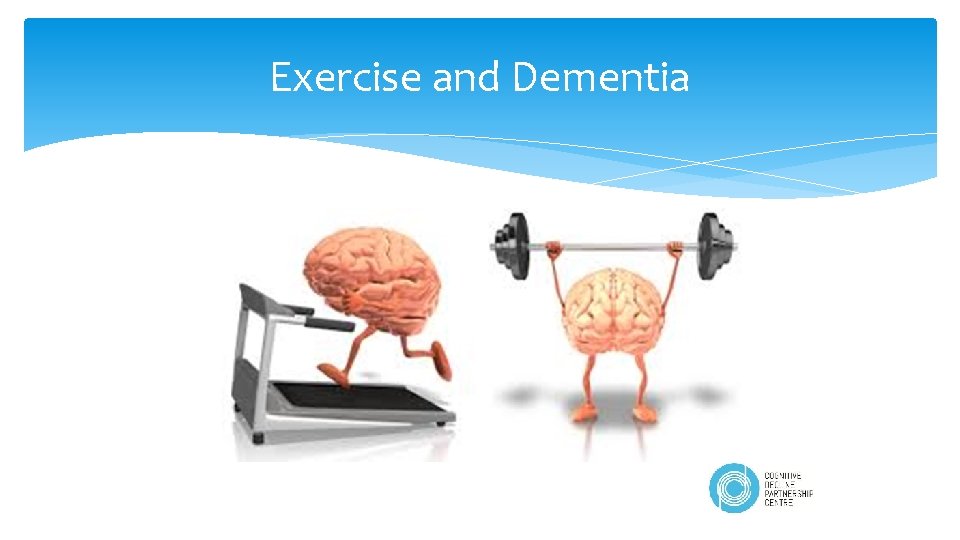
Exercise and Dementia
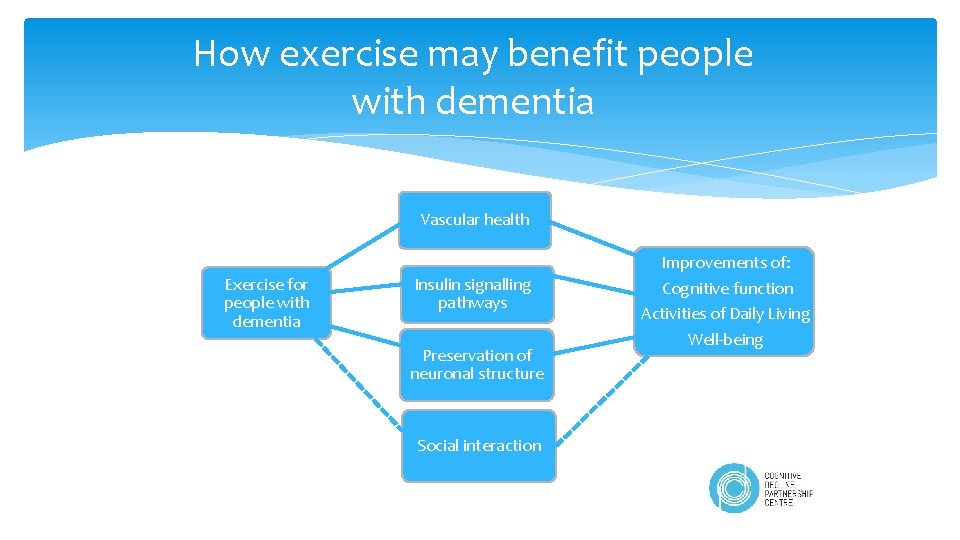
How exercise may benefit people with dementia Vascular health Exercise for people with dementia Insulin signalling pathways Preservation of neuronal structure Social interaction Improvements of: Cognitive function Activities of Daily Living Well-being
Prevention of Dementia u. Lots of observational evidence that ongoing physical activity from mid life reduces the risk of dementia u. In normal older adults cognition improves with exercise u. Some RCT evidence once you have Mild Cognitive impairment that the rate of cognitive loss slows but trials are inconsistent © The Author (2011)
Evidence on exercise after diagnosis isn’t as clear The vascular effects of aerobically based exercise training are well documented however the impact of aerobic exercise on cognition after diagnosis has not been unequivocally established Multimodality exercise programs with mind motor training are now a focus – visuospatial outcomes Holistic frailty approaches have growing evidence Gregory M. Group based exercise and cognitive physical training in older adults with self reported cognitive complaints: the multiple-modality, Min-Motor (M 4) study protocol. BMC Geriatrics 2016
Frailty and dementia Postulated that frailty and dementia share common underlying mechanisms: Cardiovascular and cerebrovascular disease are risk factors for both frailty and AD Raised levels of pro-inflammatory cytokines eg. interleukins, CRP, TNF-α common to both, indicating possible state of low grade chronic inflammation Mitochondrial malfunction Oxidative stress Raji 2010; Watson 2010; Zuliani 2007
Recommendations for management of frailty in dementia Aerobic exercise: Some suggestion increases hippocampal size Slows cognitive decline and improves function in people with mod-severe dementia Is feasible in nursing home residents with dementia Resistance/strength training: Lowers interleukins and TNF-α Improves cognitive function (in older people without cognitive impairment) Cassilhas 2007; Littbrand 2006; Venturelli 2011
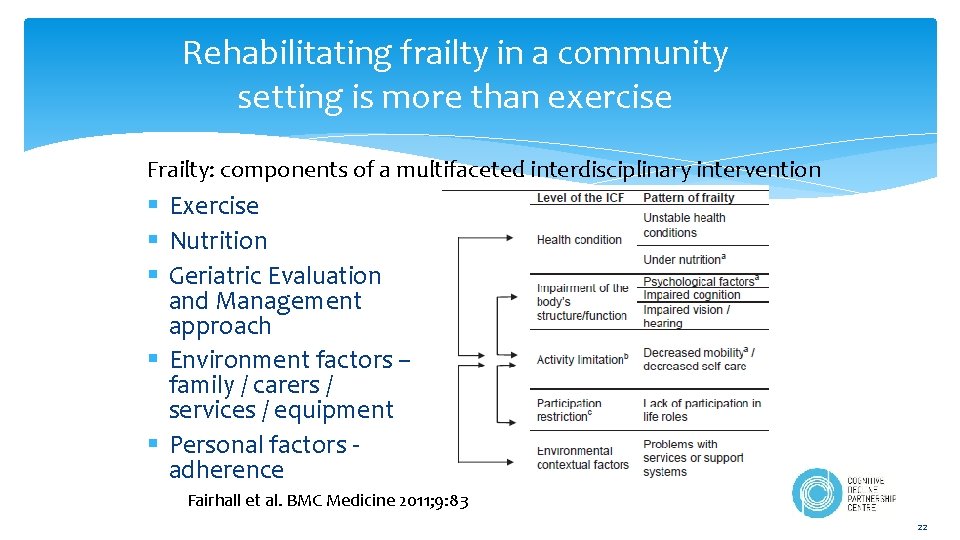
Rehabilitating frailty in a community setting is more than exercise Frailty: components of a multifaceted interdisciplinary intervention § Exercise § Nutrition § Geriatric Evaluation and Management approach § Environment factors – family / carers / services / equipment § Personal factors adherence Fairhall et al. BMC Medicine 2011; 9: 83 22
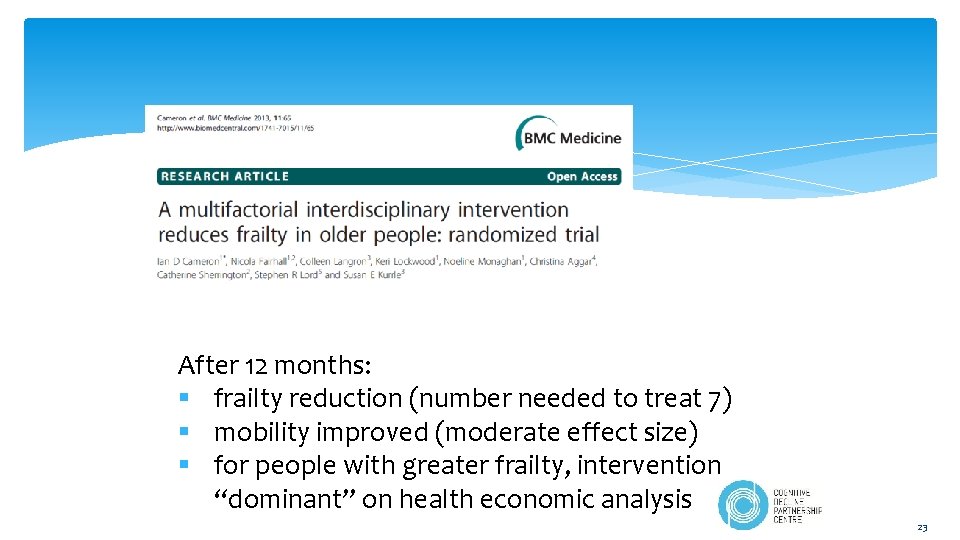
After 12 months: § frailty reduction (number needed to treat 7) § mobility improved (moderate effect size) § for people with greater frailty, intervention “dominant” on health economic analysis 23
Rehabilitation for people who live in nursing homes § Few trials. Gains in functioning possible but may need different delivery approach. § May require a longer length of program to achieve equivalent gains. § Pain is a key issue § “Return on investment” is uncertain. 24
Conclusion Rehabilitation Models for Dementia are emerging but lots of gaps Different populations so different delivery models at various time points Ripe for “disruptive innovation”
- Slides: 25