
Dementia and Dentistry An Overview by Natalie Wilson
Dementia and Dentistry An Overview, by Natalie Wilson
What is Dementia? • ICD-10: “as a disorder with deterioration in both memory and thinking which is sufficient to impair personal activities of daily living. . . patients have deficits in thinking and reasoning in addition to the memory disturbance. ” • A syndrome - a range of clinical symptoms that combine to form an overall clinical picture • Can be over 100 causes
Prevalence • Increasing - recognised global time bomb • Currently vastly underdiagnosed (up to 55% of those affected) • Estimated >1 million diagnosed in UK by 2025 • 1 in 3 will have some form of dementia
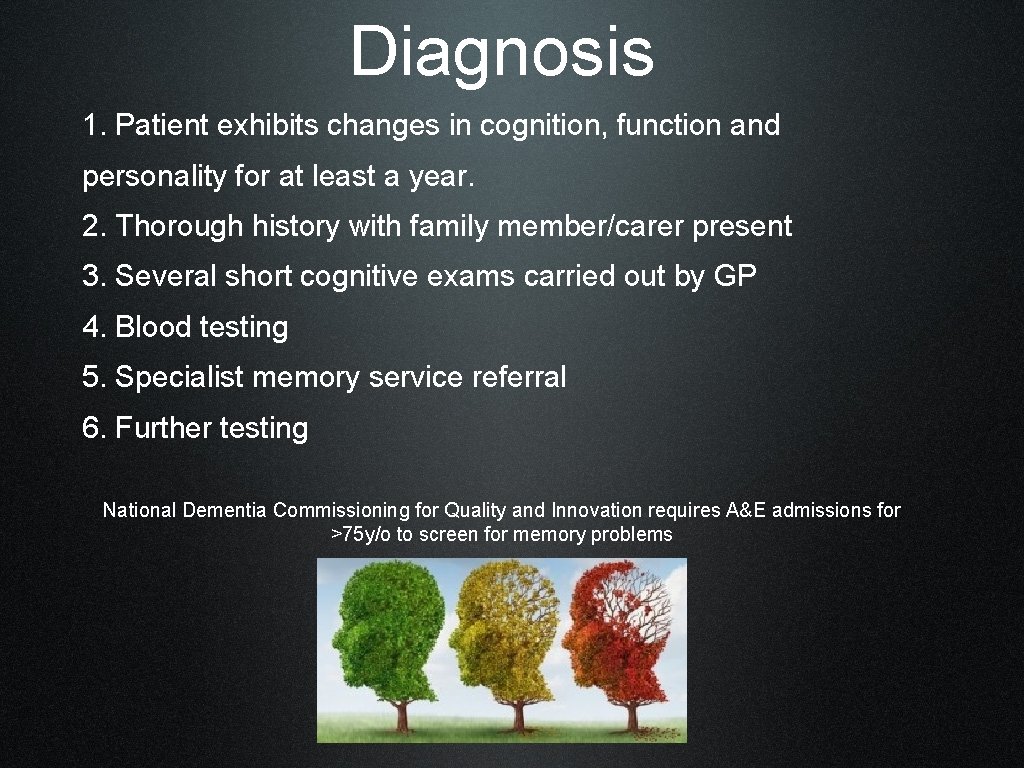
Diagnosis 1. Patient exhibits changes in cognition, function and personality for at least a year. 2. Thorough history with family member/carer present 3. Several short cognitive exams carried out by GP 4. Blood testing 5. Specialist memory service referral 6. Further testing National Dementia Commissioning for Quality and Innovation requires A&E admissions for >75 y/o to screen for memory problems
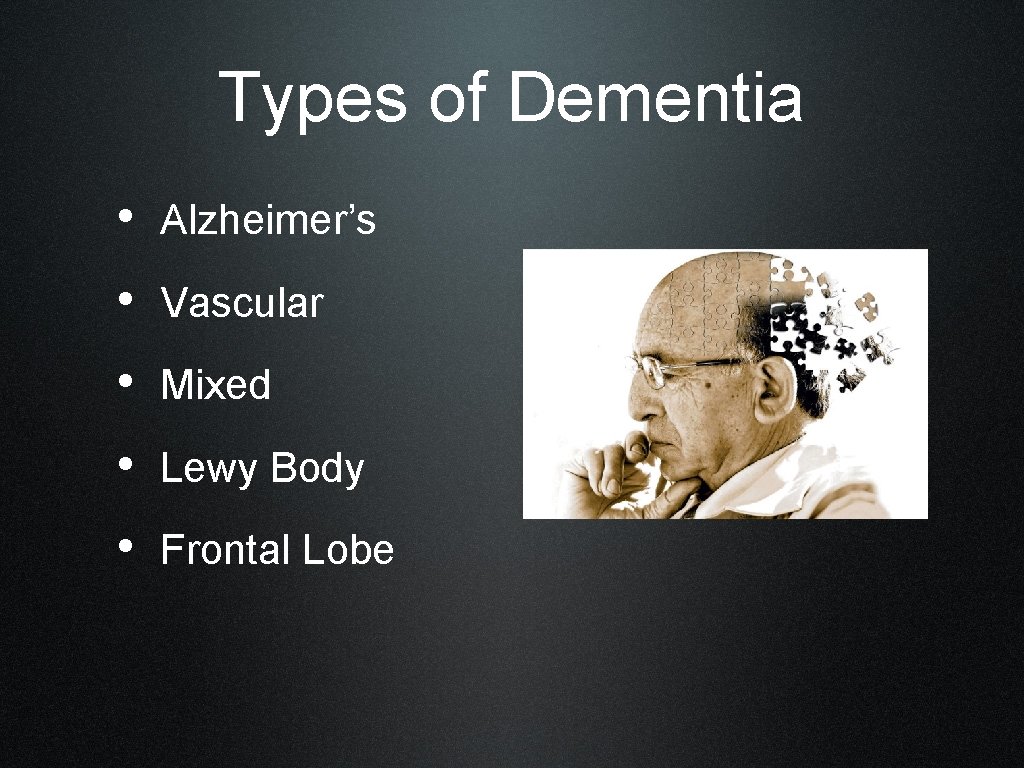
Types of Dementia • Alzheimer’s • Vascular • Mixed • Lewy Body • Frontal Lobe
Alzheimer’s • Most common (60%) • Chemical changes in nerve cells in the brain plaques appear • Typically presents with short term memory loss and word difficulties • Forgetting names, places, events • Mood swings and frustration • Become withdrawn • NICE recommended drug of choice is Donepizil (Aricept) - anti cholinergic

Normal healthy brain vs Alzheimer’s affected brain https: //en. wikipedia. org/wiki/Dementia#/media/File: Alzheimer%27 s_disease_brain_comparison. jpg
Vascular Dementia • Caused by congestion of small blood vessels in the brain affecting supply of blood to the brain • Often diagnosed following a stroke or series of Transient Ischaemic Attacks • Linked to cerebrovascular changes in the brain • Stepwise deterioration, similar signs as AD • Managed with therapeutic interventions as for coronary artery disease • Possibly also anti coagulant therapy to prevent clots
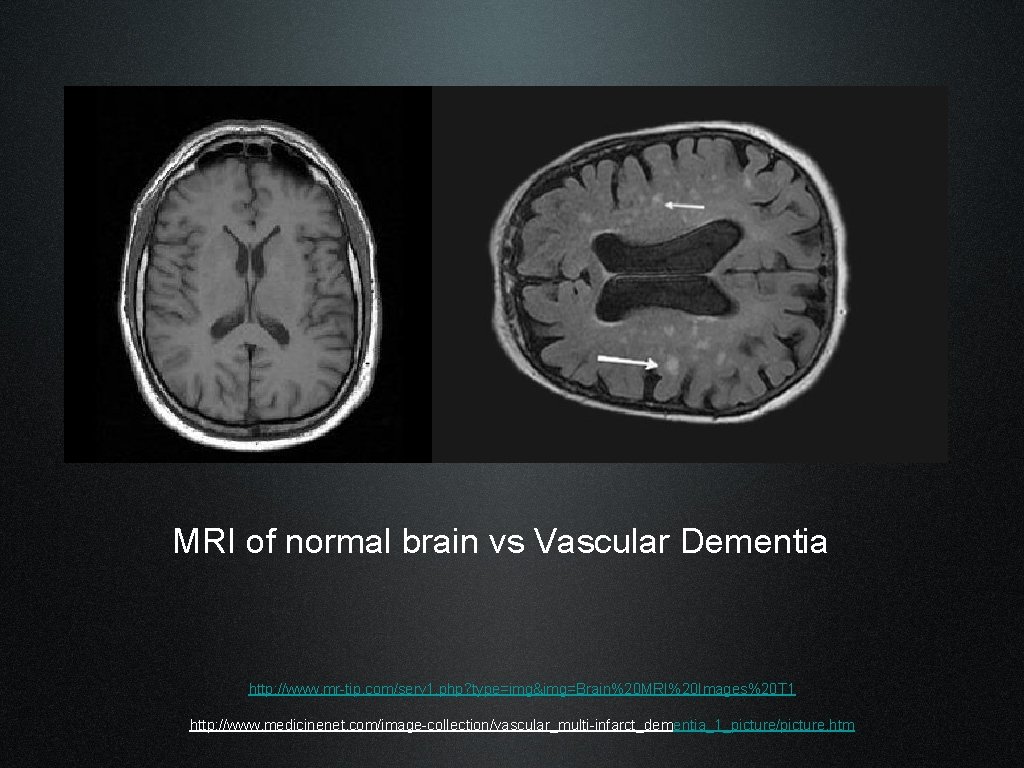
MRI of normal brain vs Vascular Dementia http: //www. mr-tip. com/serv 1. php? type=img&img=Brain%20 MRI%20 Images%20 T 1 http: //www. medicinenet. com/image-collection/vascular_multi-infarct_dementia_1_picture/picture. htm
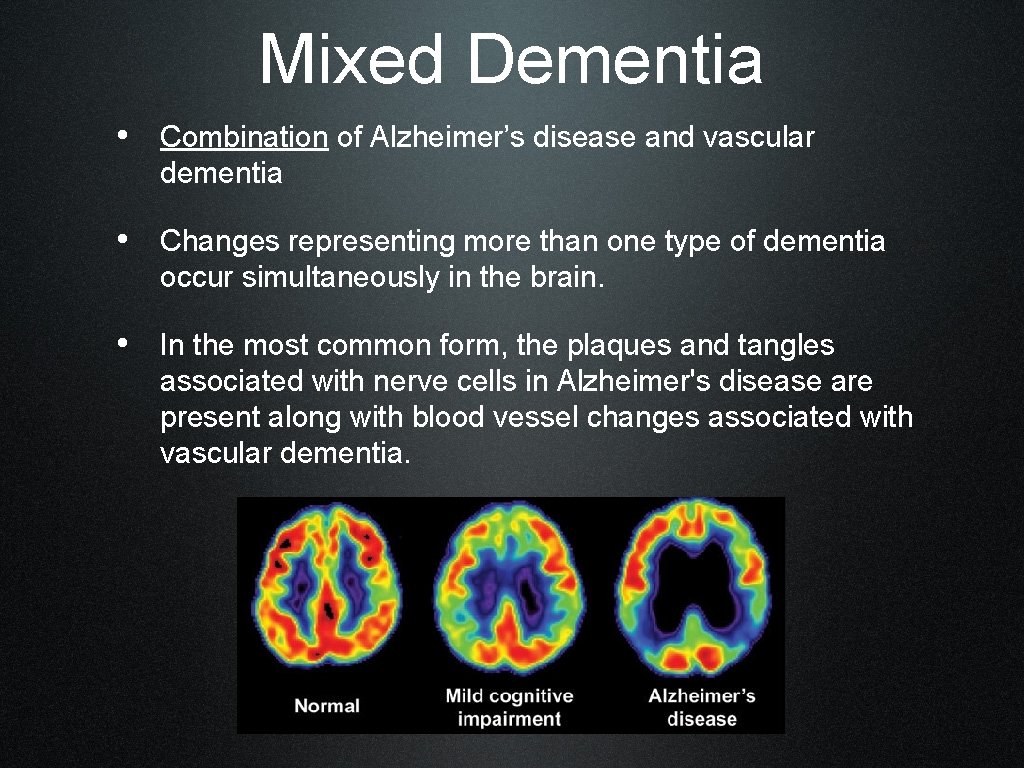
Mixed Dementia • Combination of Alzheimer’s disease and vascular dementia • Changes representing more than one type of dementia occur simultaneously in the brain. • In the most common form, the plaques and tangles associated with nerve cells in Alzheimer's disease are present along with blood vessel changes associated with vascular dementia.
Lewy Body Dementia • Protein deposits on nerve cells • Named after physician who discovered these • Often present with sleep disturbance and halucinations • Can cause Parkinson’s Disease • Symptoms depend on area of brain affected motor/cognitive • Management of symptoms and support of patients
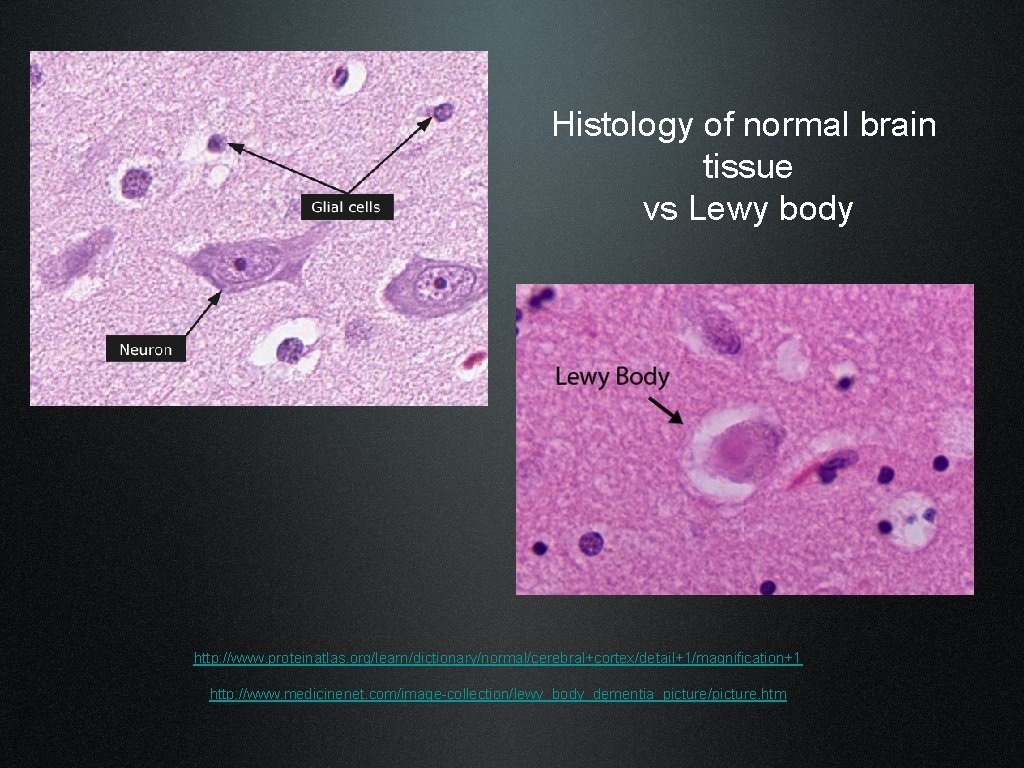
Histology of normal brain tissue vs Lewy body http: //www. proteinatlas. org/learn/dictionary/normal/cerebral+cortex/detail+1/magnification+1 http: //www. medicinenet. com/image-collection/lewy_body_dementia_picture/picture. htm
Frontal Lobe Dementia • Generally affects younger people (60 s) than other dementias • Frontal and temporal lobes damaged • Early features include personality change and problems with executive function • Can be aggressive/short tempered • Mood swings and sexually inappropriate behaviour • Linked to MND • MDT support
Dementia and Oral Disease • Research suggests less frequent toothbrushing and accumulation of plaque may be early indications of cognitive decline • GDP may spot this before family member notices memory loss • Systemic inflammation from periodontal disease can affect the brain, disrupt neurons and cause poor memory • Carers may ask YOU for advice
Signs for the Dental Team • Early Stages: • Missing/incorrect appointments • Difficulty in decision making • Deterioration in OH • Repetition of questions • Confusion/difficulty grasping new ideas
• Middle Stages: • Need reminding and help to carry out daily personal care • Failure to recognise dental team • Failure to remember answers to questions, despite repeatedly asking
• Later Stages: • Increasing difficulty to attend surgery due to mobility issues • May be confined to bed • Difficulty in eating/swallowing • Weight loss • Increasing difficulty in communicating
Dementia and the Dental Team Need to be aware of early signs and how to manage middle and late stages Many potential issues to manage: • Communication: language, time, prompts, explanation • Consent: Mental Capacity Act 2005 (Eng), Po. A/ IMCA • Access: mobility/carers, time of day, doms visits • Tx planning: simple, maintenance + prevention, dents • Cooperation: capacity, anxiety/depression, sedation • Drug therapy: oral effects, interactions, metabolism
What can we do? • Ensure staff are properly trained in recognising/managing patients with dementia • Sensitive conversation with patient and family • Can speak to GP • Encourage patients to seek diagnosis - early Tx slows progression • Be patient and supportive of patient needs • Ensure focus is on patient comfort in later stages • Ensure caregivers carry out regular oral care • Help patients access care services
References • www. alzheimercalgary. ca/about. . . and-dementia/. . . dementia/mixeddementia • https: //www. alzheimers. org. uk/site/scripts/documents_info. php? documen t. ID=161 • Boyle, C; Edwards, J A; Ford L: Dementia and Dentistry. Dental Update, p 464, June 2015

Thanks for Listening
- Slides: 21