
Demand Supply and Equilibrium Microeconomics Unit 2 Nature

Demand, Supply, and Equilibrium Microeconomics – Unit 2: Nature and Function of Product Markets

The Relationship Between Demand Total/Marginal Utility �Total Utility �Marginal Utility �The Law of Diminishing Marginal Utility
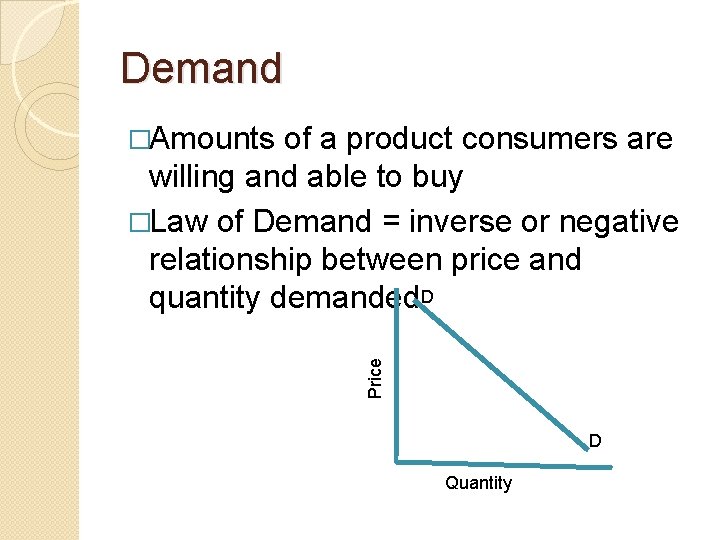
Demand of a product consumers are willing and able to buy �Law of Demand = inverse or negative relationship between price and quantity demanded. D Price �Amounts D Quantity
Law of Demand �Why? ◦ Price is an obstacle to buying ◦ Diminishing marginal utility
Determinants of Demand �Consumer tastes/preferences �# of buyers in the market �Consumers’ incomes ◦ Income Effect �Prices of related goods ◦ Substitute goods �Substitution Effect ◦ Complementary goods �Consumer expectations
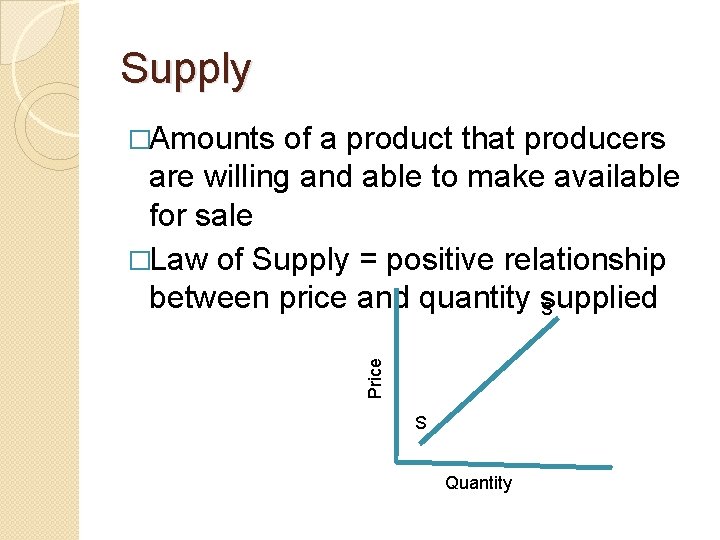
Supply of a product that producers are willing and able to make available for sale �Law of Supply = positive relationship between price and quantity supplied S Price �Amounts S Quantity
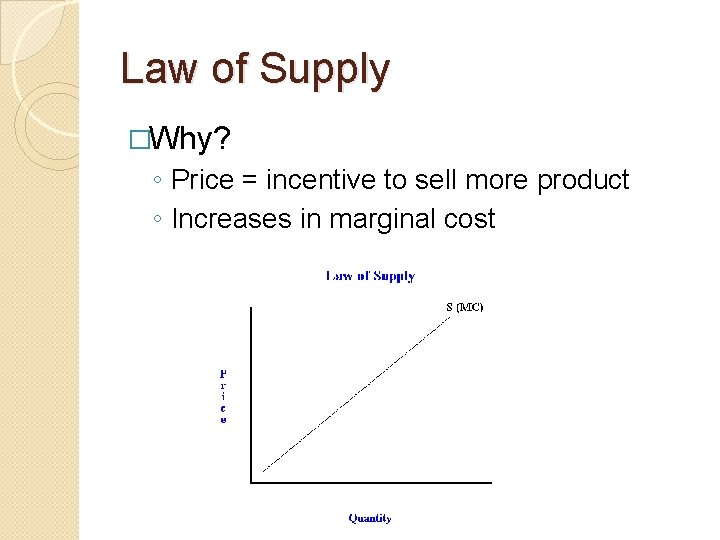
Law of Supply �Why? ◦ Price = incentive to sell more product ◦ Increases in marginal cost
Determinants of Supply �Resource prices �Technology �Taxes and subsidies �Prices of other goods ◦ Substitution in production �Producer expectations �# of sellers in the market
Market Equilibrium �Equilibrium price = “market clearing price” �Equilibrium price (Po) = ◦ A. Productive Efficiency ◦ B. Allocative Efficiency �Market ensures MB ≥ MC �Any price above equilibrium = surplus �Any price below equilibrium = shortage
Producer and Consumer Surplus �Consumer Surplus = the sum of the products of the prices and quantities consumers would have been willing to buy ABOVE the equilibrium price �Producer Surplus = the sum of the products of the prices and quantities suppliers would have been willing to sell BELOW the equilibrium price
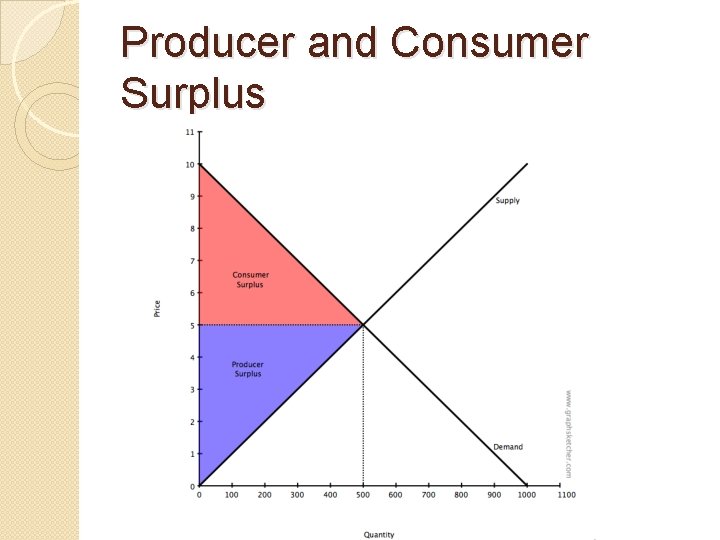
Producer and Consumer Surplus
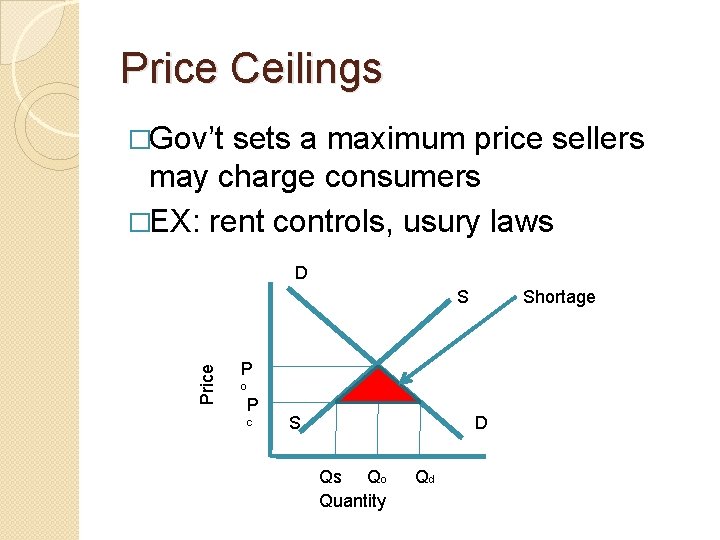
Price Ceilings �Gov’t sets a maximum price sellers may charge consumers �EX: rent controls, usury laws D Price S Shortage P o P c S D Qs Qo Quantity Qd
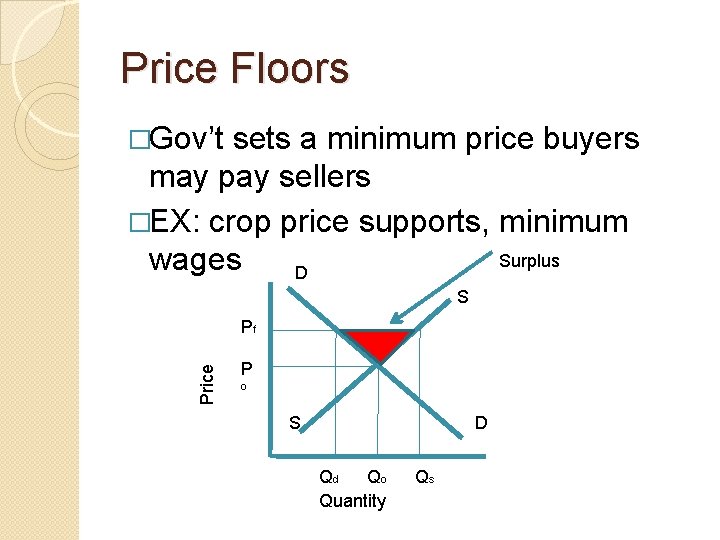
Price Floors �Gov’t sets a minimum price buyers may pay sellers �EX: crop price supports, minimum Surplus wages D S Price Pf P o S D Qd Qo Quantity Qs
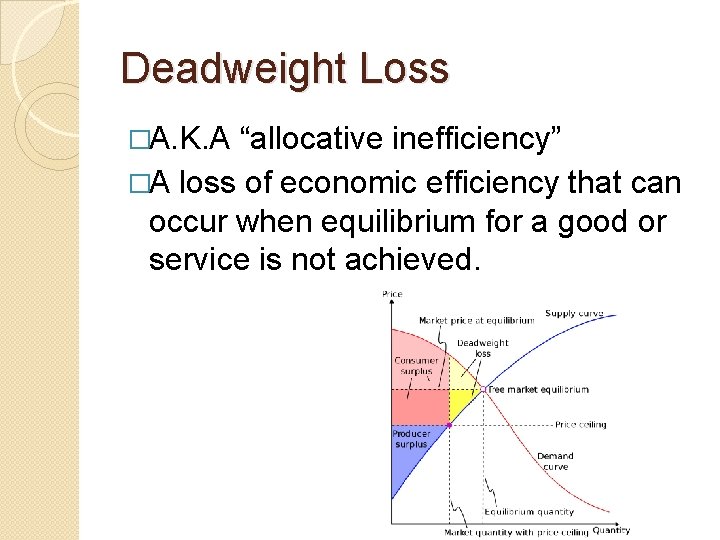
Deadweight Loss �A. K. A “allocative inefficiency” �A loss of economic efficiency that can occur when equilibrium for a good or service is not achieved.
Consumer and Producer Surplus w/Deadweight Loss �Consumer and Producer Surplus
Differences in Qd/Qs and Changes in Demand/Supply �A change in QUANTITY demanded or supply is a MOVEMENT ALONG the demand or supply curve (a move from one point on the curve to another). Almost always caused by a change in price. �A CHANGE in demand or supply is a shift of the ENTIRE demand or supply curve.

Fictional Product: Greebies
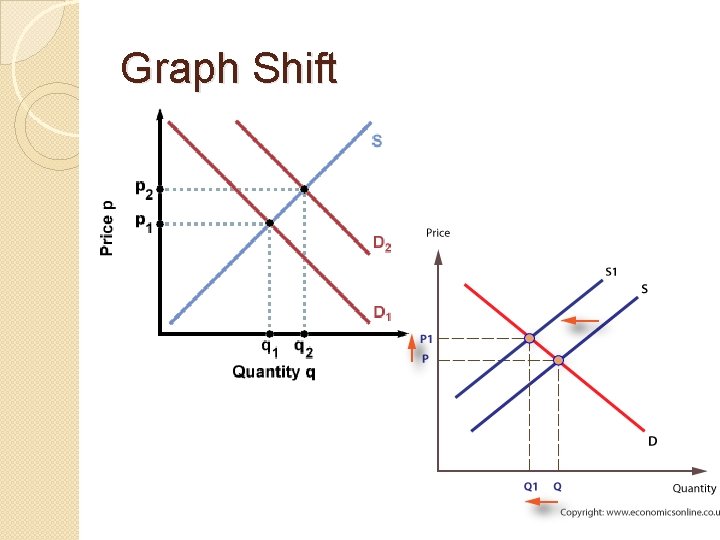
Changes in Supply/Demand/Equilibrium �∆’s in Demand ◦ Raises or reduces both equilibrium price (Price) and equilibrium quantity (Qty) �∆’s in Supply ◦ Increase in S = lower Price, higher Qty ◦ Decrease in S = higher Price, lower Qty
Graph Shift
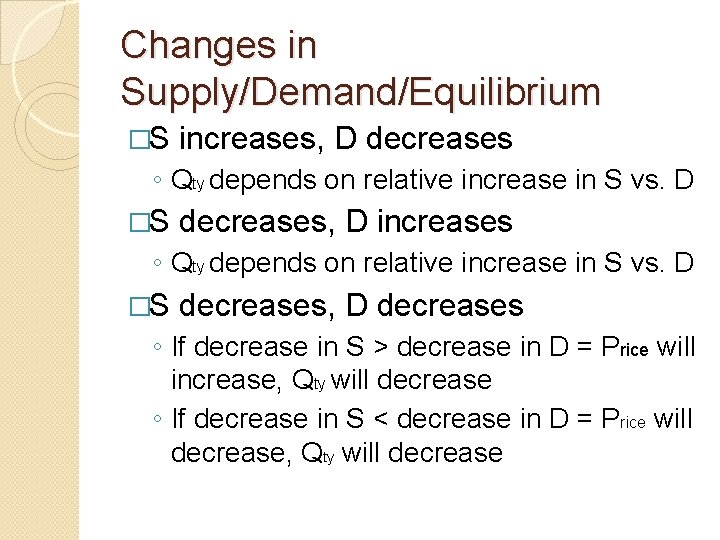
Changes in Supply/Demand/Equilibrium �S increases, D decreases ◦ Qty depends on relative increase in S vs. D �S decreases, D increases ◦ Qty depends on relative increase in S vs. D �S decreases, D decreases ◦ If decrease in S > decrease in D = Price will increase, Qty will decrease ◦ If decrease in S < decrease in D = Price will decrease, Qty will decrease
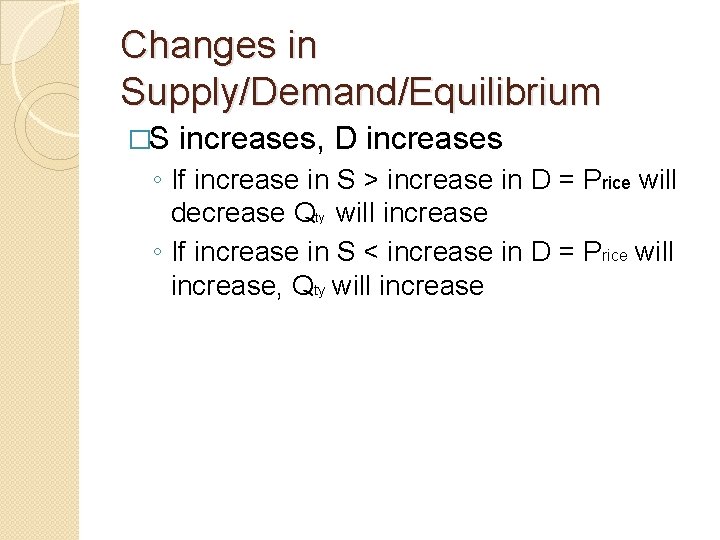
Changes in Supply/Demand/Equilibrium �S increases, D increases ◦ If increase in S > increase in D = Price will decrease Qty will increase ◦ If increase in S < increase in D = Price will increase, Qty will increase
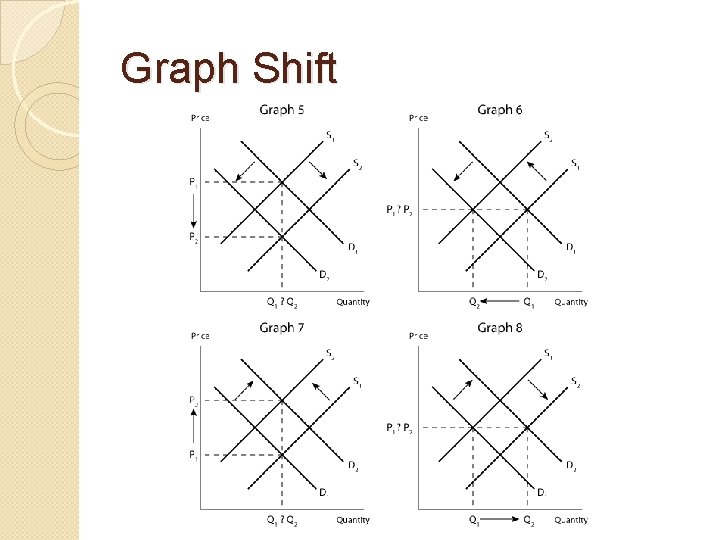
Graph Shift
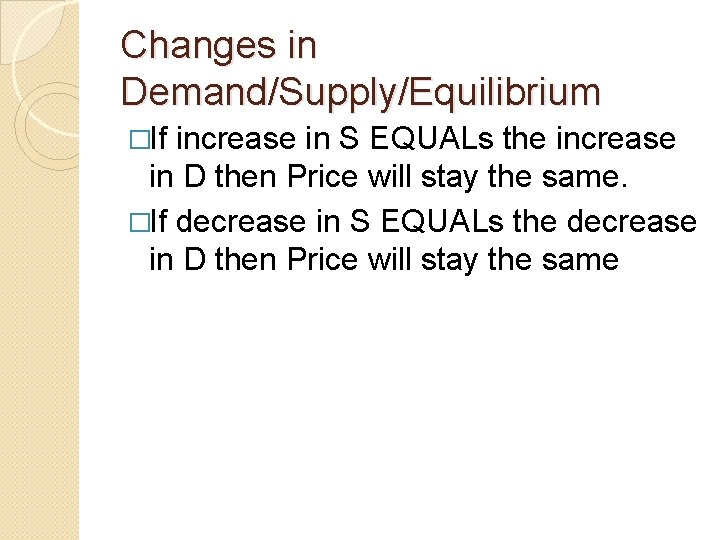
Changes in Demand/Supply/Equilibrium �If increase in S EQUALs the increase in D then Price will stay the same. �If decrease in S EQUALs the decrease in D then Price will stay the same

Wrap it up! �Supply and Demand Conclusion
Closure: Exit Ticket Activity �Answer question on Socrative
- Slides: 25