
Deltaic Depositional Systems Modern and Ancient Arno River
- Slides: 45
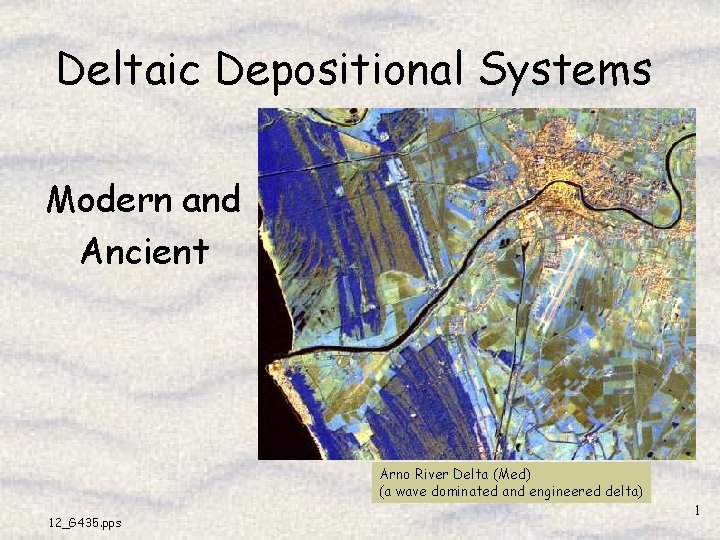
Deltaic Depositional Systems Modern and Ancient Arno River Delta (Med) (a wave dominated and engineered delta) 12_G 435. pps 1
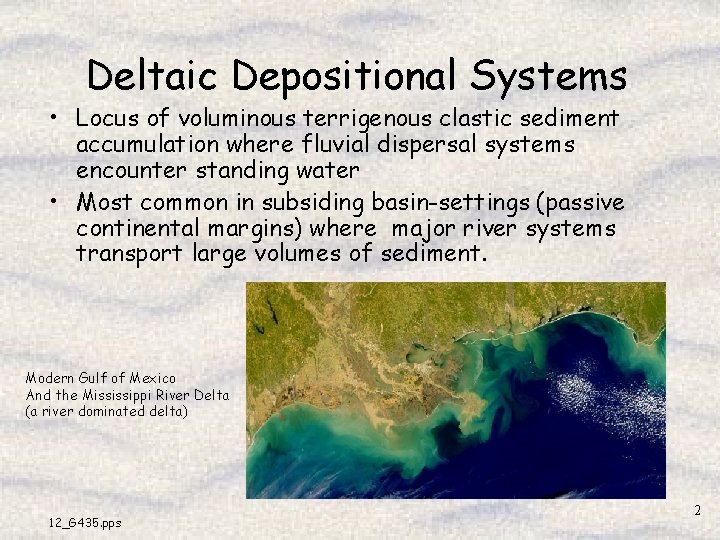
Deltaic Depositional Systems • Locus of voluminous terrigenous clastic sediment accumulation where fluvial dispersal systems encounter standing water • Most common in subsiding basin-settings (passive continental margins) where major river systems transport large volumes of sediment. Modern Gulf of Mexico And the Mississippi River Delta (a river dominated delta) 12_G 435. pps 2
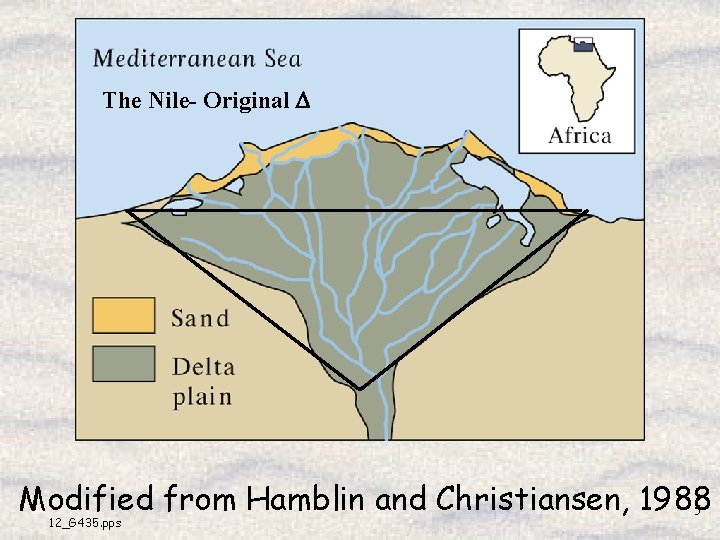
Deltas • Rivers – flow seaward – change slope and velocity – carry a sediment load. • When river empties into coastal body of water – velocity slows – sediments are deposited. • Herodotus (c. 400 BC) - thought the alluvial plain at mouth of Nile looked like a D 12_G 435. pps 3
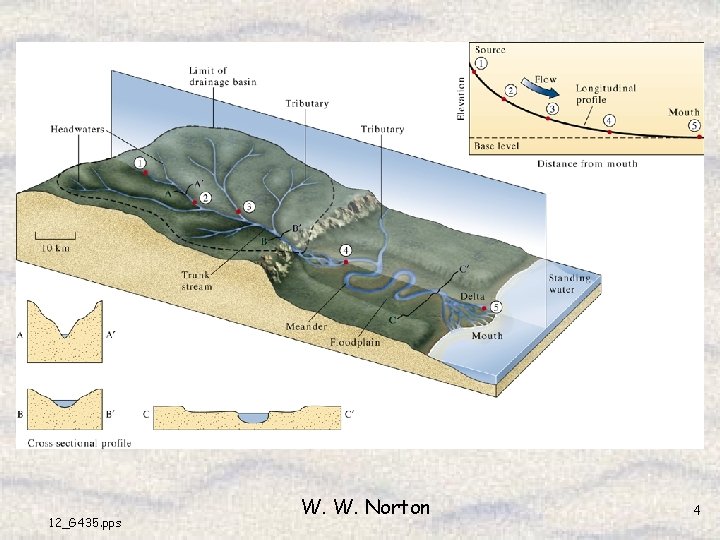
12_G 435. pps W. W. Norton 4
The Nile- Original D Modified from Hamblin and Christiansen, 1988 5 12_G 435. pps
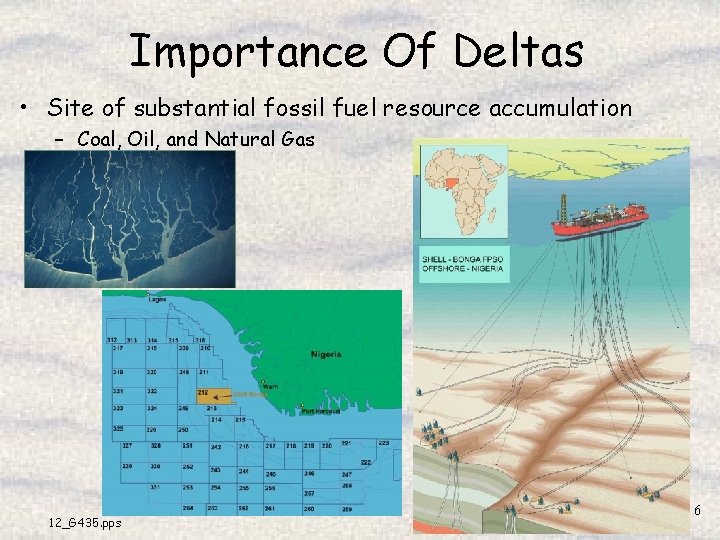
Importance Of Deltas • Site of substantial fossil fuel resource accumulation – Coal, Oil, and Natural Gas 12_G 435. pps 6
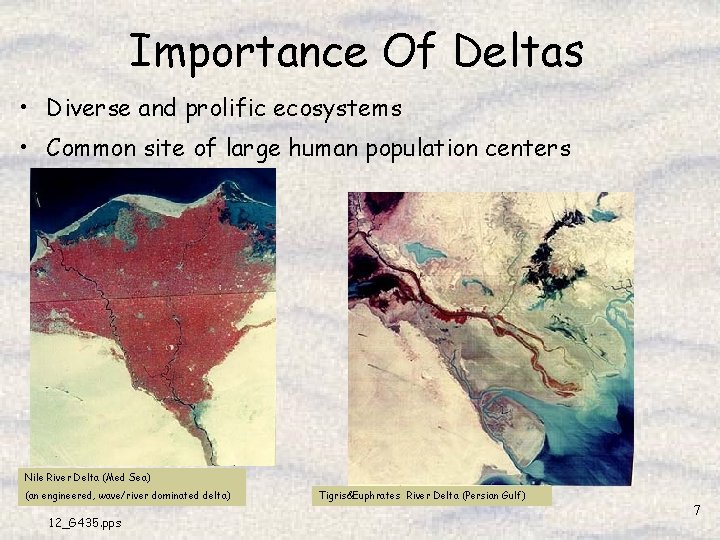
Importance Of Deltas • Diverse and prolific ecosystems • Common site of large human population centers Nile River Delta (Med Sea) (an engineered, wave/river dominated delta) 12_G 435. pps Tigris&Euphrates River Delta (Persian Gulf) 7
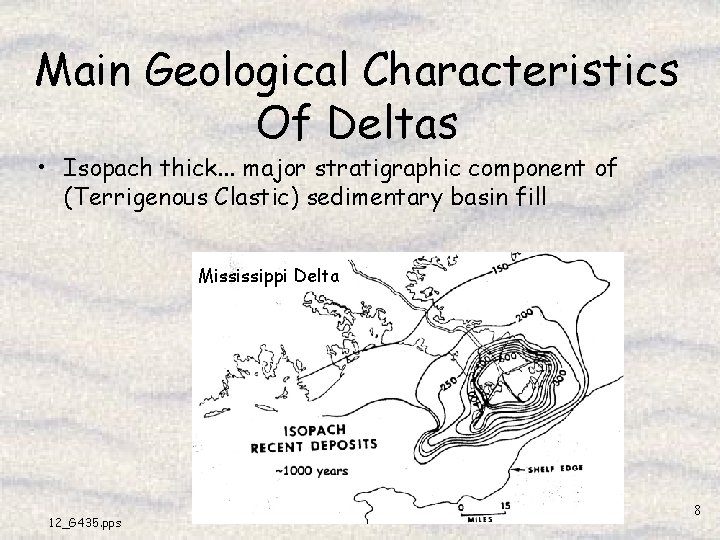
Main Geological Characteristics Of Deltas • Isopach thick. . . major stratigraphic component of (Terrigenous Clastic) sedimentary basin fill Mississippi Delta 12_G 435. pps 8
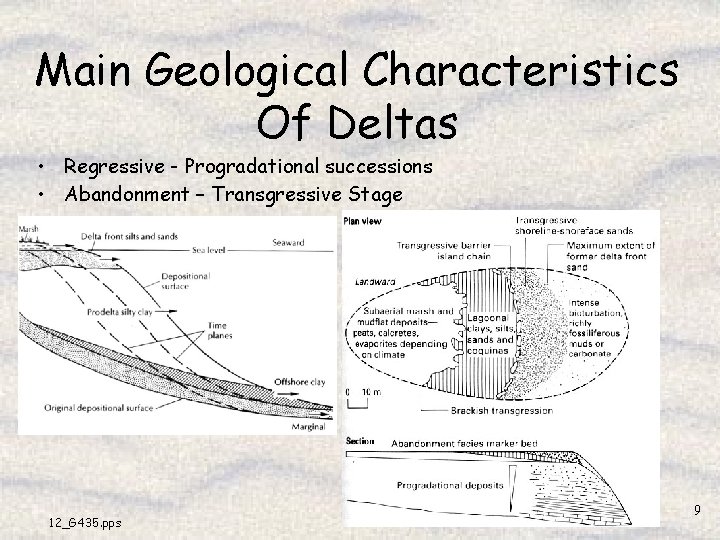
Main Geological Characteristics Of Deltas • Regressive - Progradational successions • Abandonment – Transgressive Stage 12_G 435. pps 9
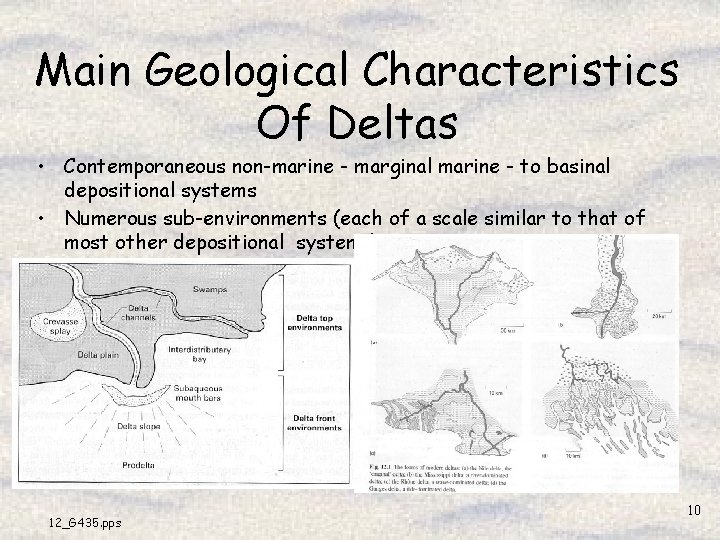
Main Geological Characteristics Of Deltas • Contemporaneous non-marine - marginal marine - to basinal depositional systems • Numerous sub-environments (each of a scale similar to that of most other depositional systems) 12_G 435. pps 10
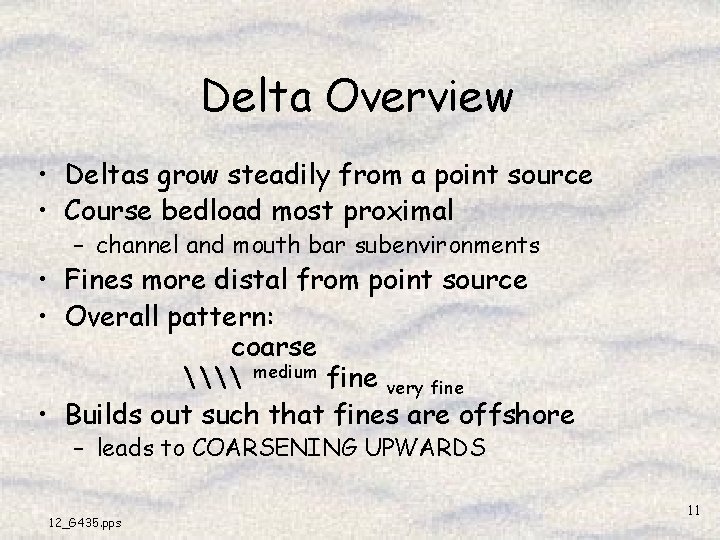
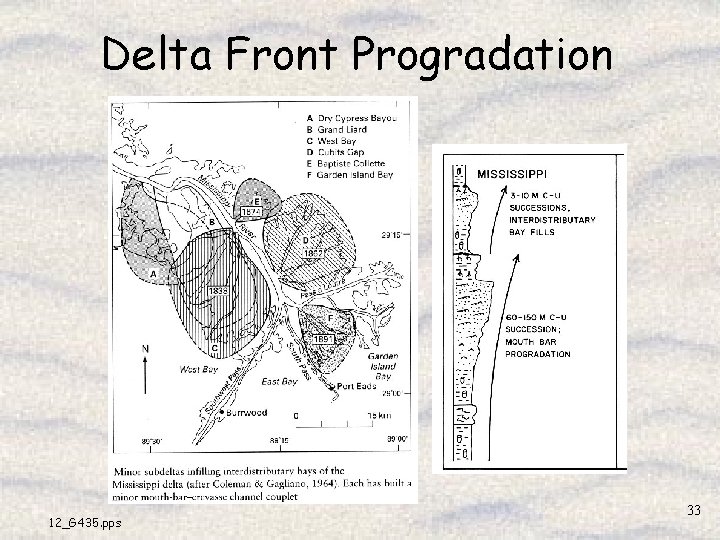
Delta Overview • Deltas grow steadily from a point source • Course bedload most proximal – channel and mouth bar subenvironments • Fines more distal from point source • Overall pattern: coarse \\ medium fine very fine • Builds out such that fines are offshore – leads to COARSENING UPWARDS 12_G 435. pps 11
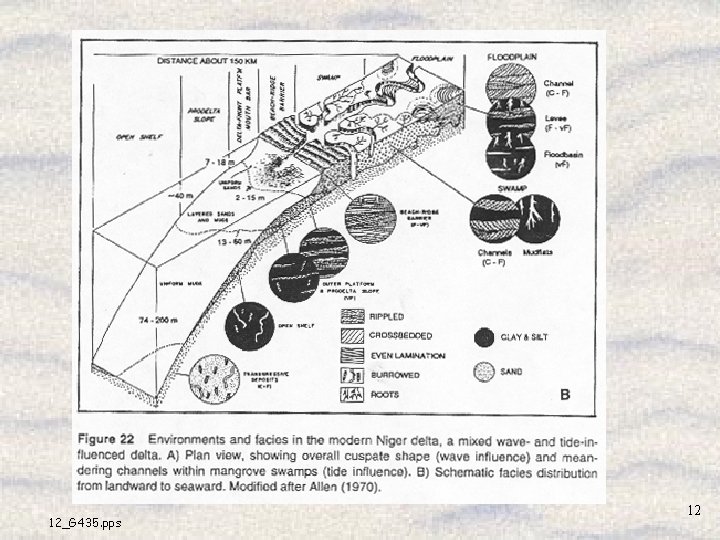
12_G 435. pps 12
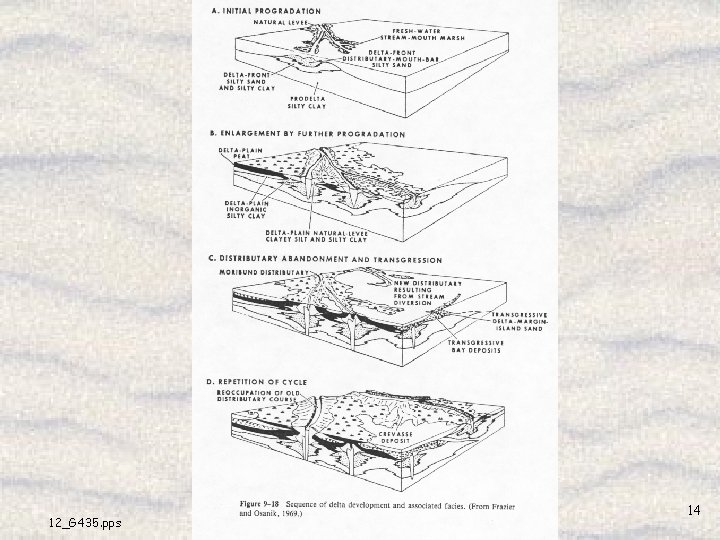
• Delta progradation – cross-section results as clastics are deposited in the sub environments – sediments builds out – PROGRADES INTO BASIN 12_G 435. pps 13
12_G 435. pps 14
Delta Morphology • Function of most dominant process • Elongate – little reworking of sediments; levies form, builds out into basin • Lobate – better reworking (tidal); more blunt shape • Cuspate – water concentrates its energy to oppose wave action – each ridge is built as it moves out and progrades 12_G 435. pps 15
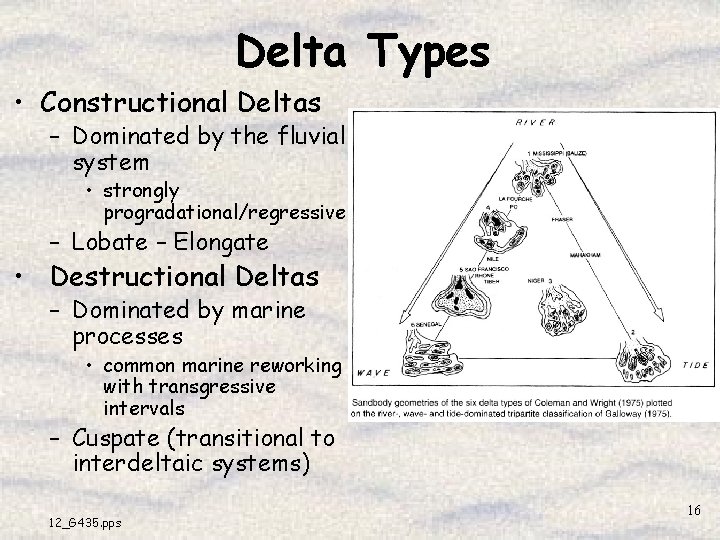
Delta Types • Constructional Deltas – Dominated by the fluvial system • strongly progradational/regressive – Lobate – Elongate • Destructional Deltas – Dominated by marine processes • common marine reworking with transgressive intervals – Cuspate (transitional to interdeltaic systems) 12_G 435. pps 16
Main Processes Influencing Delta Depositional Systems • Climate • Relief • Fluvial Discharge (water volume and time variation) • Sediment load and type • River mouth processes • Tidal Processes • Wave energy 12_G 435. pps 17
Subenvironments • Delta plain/ delta top – Delta Channels – Floodplain • Delta front environments – Delta Front – Prodelta – Foredelta • Marginal (distal) • Offshore 12_G 435. pps 18
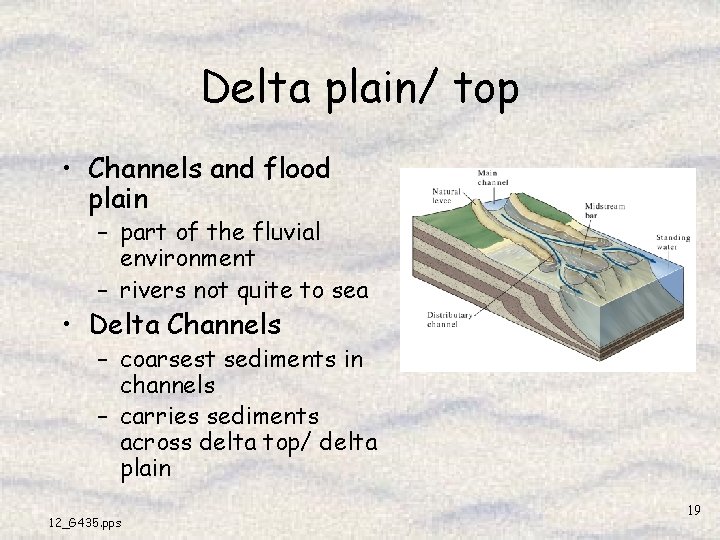
Delta plain/ top • Channels and flood plain – part of the fluvial environment – rivers not quite to sea • Delta Channels – coarsest sediments in channels – carries sediments across delta top/ delta plain 12_G 435. pps 19
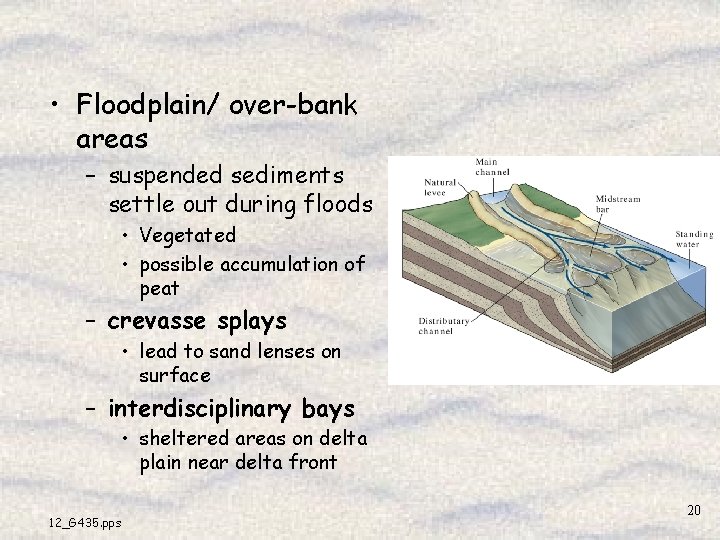
• Floodplain/ over-bank areas – suspended sediments settle out during floods • Vegetated • possible accumulation of peat – crevasse splays • lead to sand lenses on surface – interdisciplinary bays • sheltered areas on delta plain near delta front 12_G 435. pps 20
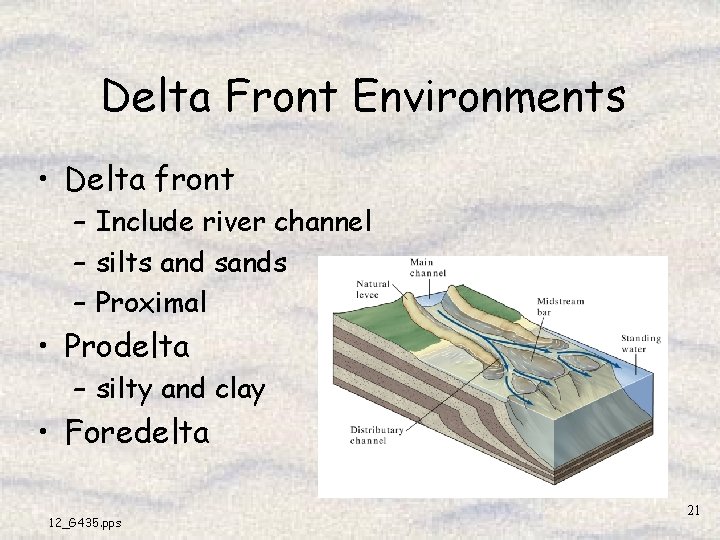
Delta Front Environments • Delta front – Include river channel – silts and sands – Proximal • Prodelta – silty and clay • Foredelta 12_G 435. pps 21
Delta front environments • River channel • Site of deposition of bedload • Forms sub-aqueous mouth bar • coarsens up • coarse sediments reworked by tides, wave actions • water often brackish 12_G 435. pps 22
Delta front environments • Prodelta – finest grained sediments • aided by plume of sediment rich water that extends across delta front • blankets area with fine grains • suspended sediments – some coarser sediments from turbidites 12_G 435. pps 23
Delta front environments • Delta slope – inclined area in front of delta top • • Slope delta front is related to grain size Coarse grains make steep slope – • • 12_G 435. pps up to 35° angle of repose Fine grains (silty clay) is <1° slope Fines increase away from river 24
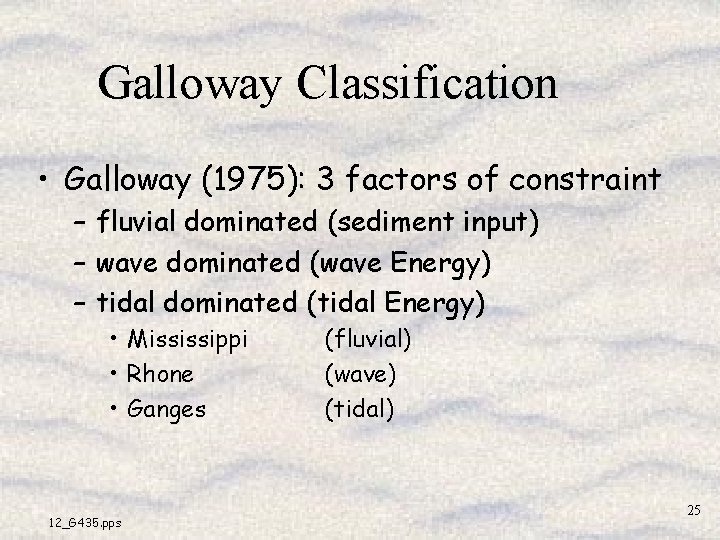
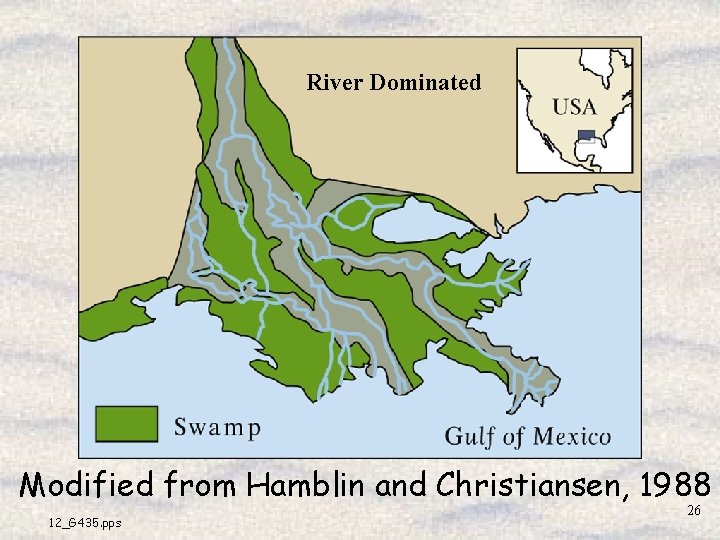
Galloway Classification • Galloway (1975): 3 factors of constraint – fluvial dominated (sediment input) – wave dominated (wave Energy) – tidal dominated (tidal Energy) • Mississippi • Rhone • Ganges 12_G 435. pps (fluvial) (wave) (tidal) 25
River Dominated Modified from Hamblin and Christiansen, 1988 12_G 435. pps 26
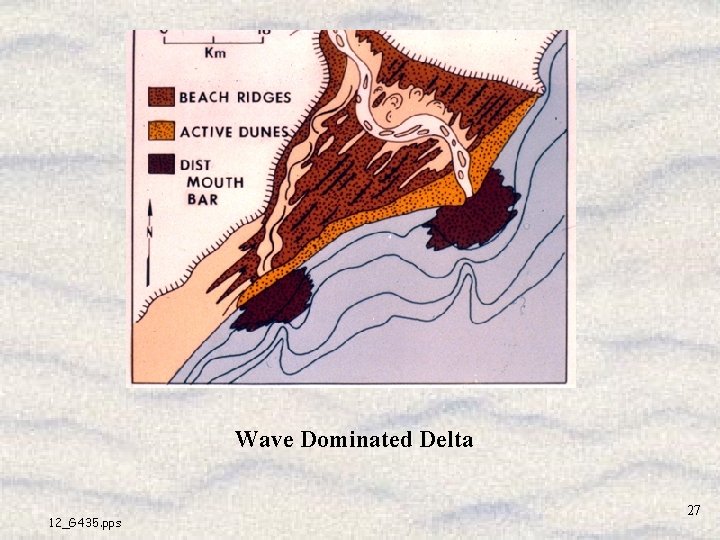
Wave Dominated Delta 12_G 435. pps 27
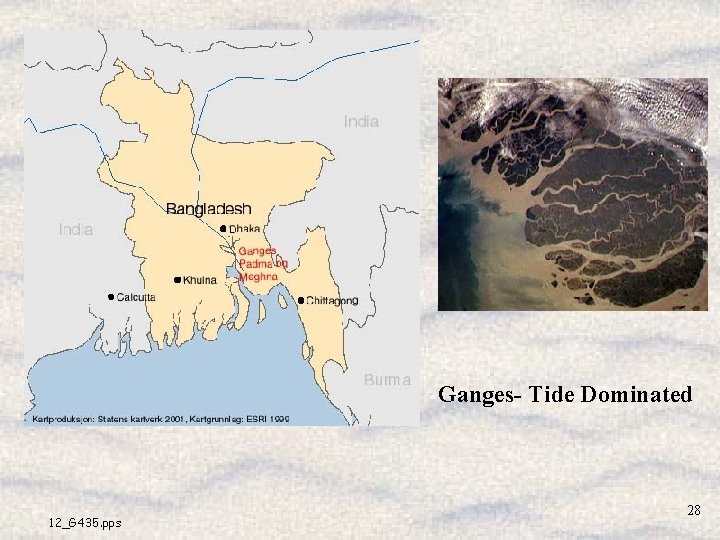
Ganges- Tide Dominated 12_G 435. pps 28
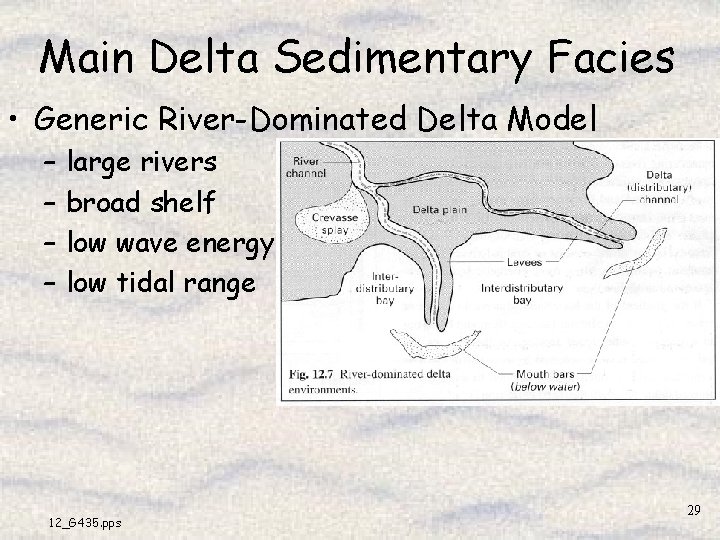
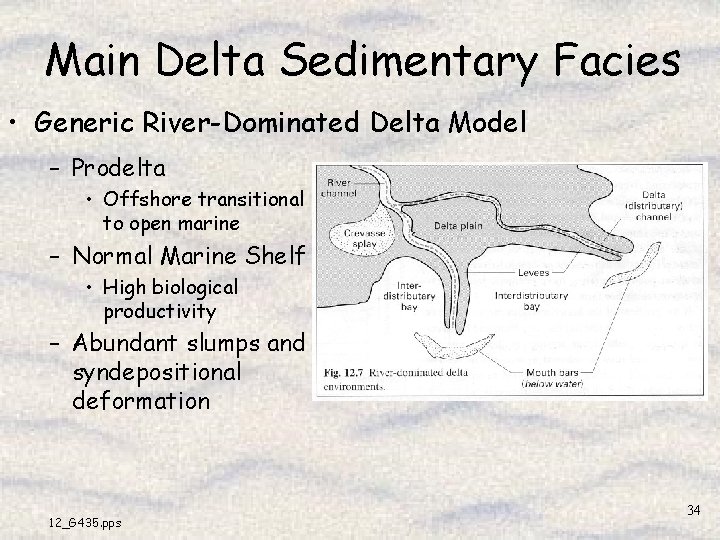
Main Delta Sedimentary Facies • Generic River-Dominated Delta Model – – large rivers broad shelf low wave energy low tidal range 12_G 435. pps 29
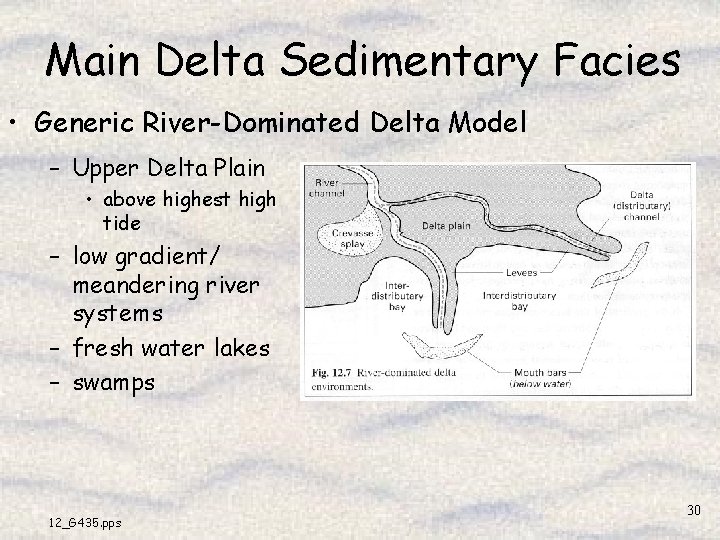
Main Delta Sedimentary Facies • Generic River-Dominated Delta Model – Upper Delta Plain • above highest high tide – low gradient/ meandering river systems – fresh water lakes – swamps 12_G 435. pps 30
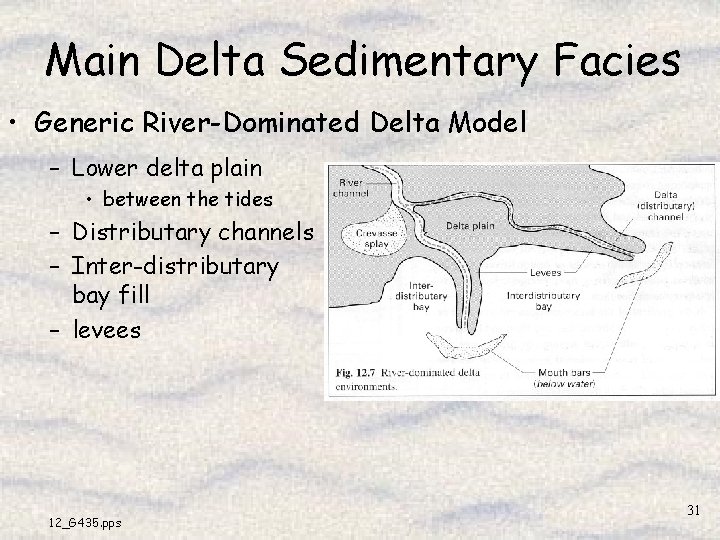
Main Delta Sedimentary Facies • Generic River-Dominated Delta Model – Lower delta plain • between the tides – Distributary channels – Inter-distributary bay fill – levees 12_G 435. pps 31
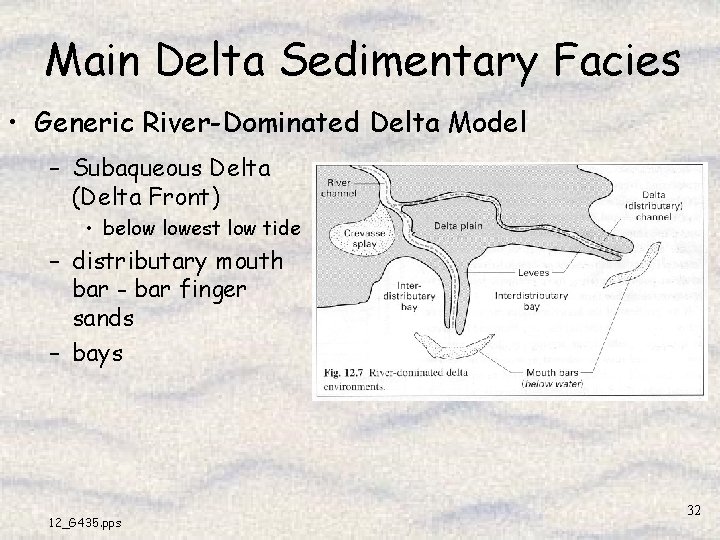
Main Delta Sedimentary Facies • Generic River-Dominated Delta Model – Subaqueous Delta (Delta Front) • below lowest low tide – distributary mouth bar - bar finger sands – bays 12_G 435. pps 32
Delta Front Progradation 12_G 435. pps 33
Main Delta Sedimentary Facies • Generic River-Dominated Delta Model – Prodelta • Offshore transitional to open marine – Normal Marine Shelf • High biological productivity – Abundant slumps and syndepositional deformation 12_G 435. pps 34
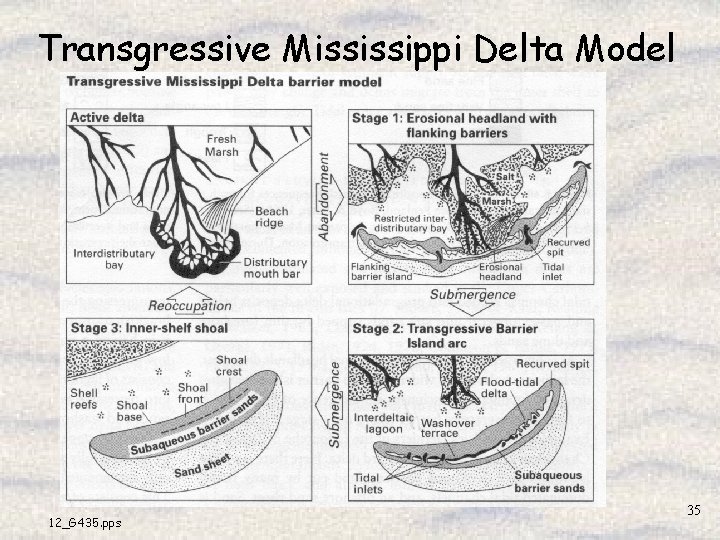
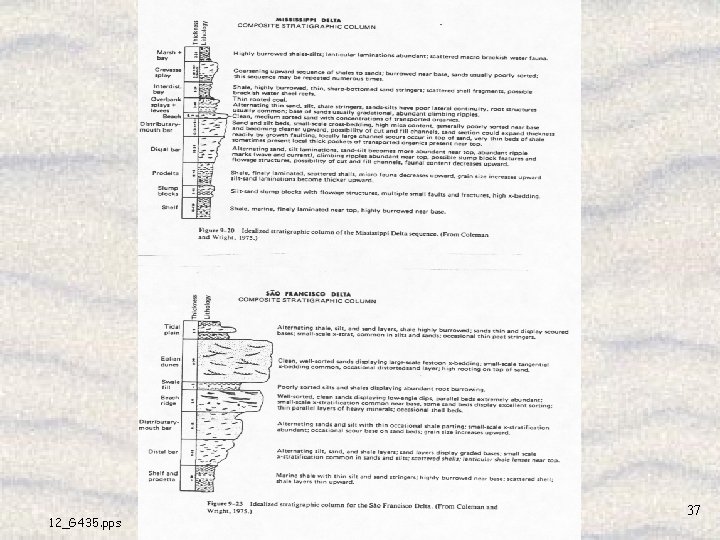
Transgressive Mississippi Delta Model 12_G 435. pps 35
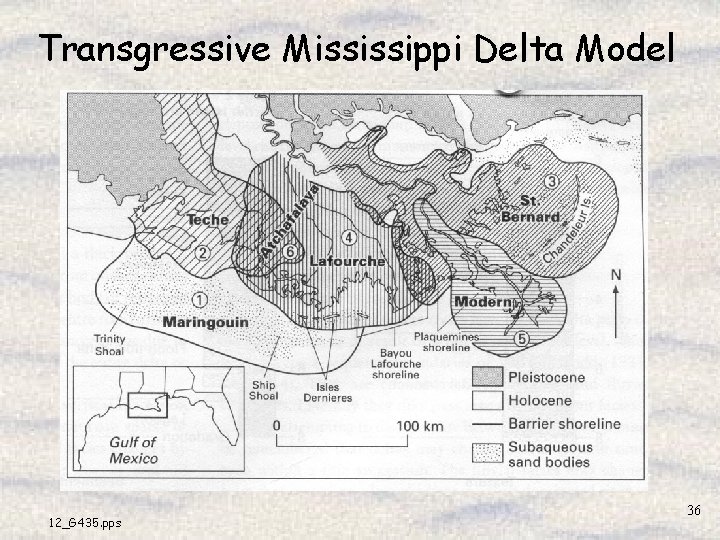
Transgressive Mississippi Delta Model 12_G 435. pps 36
12_G 435. pps 37
Wave dominated deltas • Wave dominated – – wind- driven waves agitate surface rework sediments in shallow water affects mouth bars in basin and mouth of river modifies river –dominated delta • Morphology limits progradation – can’t form sub-aqueous levees • bedload is immediately reworked • if waves hit obliquely (and usually do), get lateral migration of sediments and development of spits – beach and mouth bars form // to coast • waves sort grains • mouth bar is better sorted sediments 12_G 435. pps 38
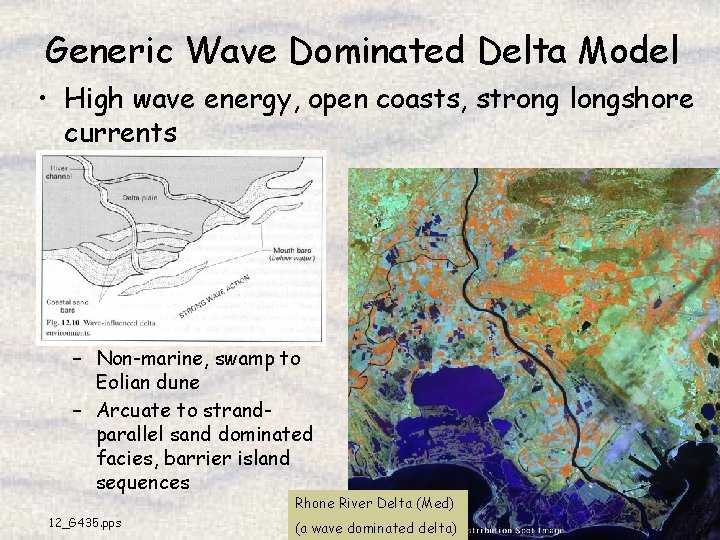
Generic Wave Dominated Delta Model • High wave energy, open coasts, strong longshore currents – Non-marine, swamp to Eolian dune – Arcuate to strandparallel sand dominated facies, barrier island sequences Rhone River Delta (Med) 12_G 435. pps (a wave dominated delta) 39
Wave dominated deltas • Progradation – waves don’t transport ALL material from river mouth – mouth bars build to form new beaches – River mouth bars aren’t as continuous and have more overbank deposits – probably similar delta slope and front 12_G 435. pps 40
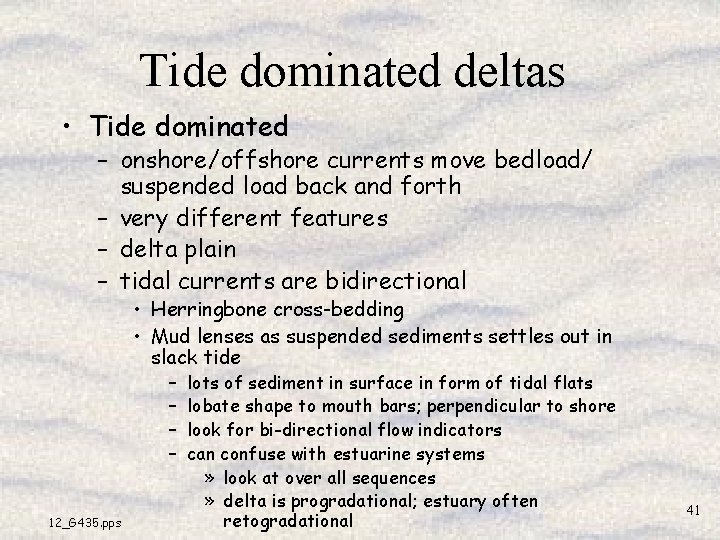
Tide dominated deltas • Tide dominated – onshore/offshore currents move bedload/ suspended load back and forth – very different features – delta plain – tidal currents are bidirectional • Herringbone cross-bedding • Mud lenses as suspended sediments settles out in slack tide – – 12_G 435. pps lots of sediment in surface in form of tidal flats lobate shape to mouth bars; perpendicular to shore look for bi-directional flow indicators can confuse with estuarine systems » look at over all sequences » delta is progradational; estuary often retogradational 41
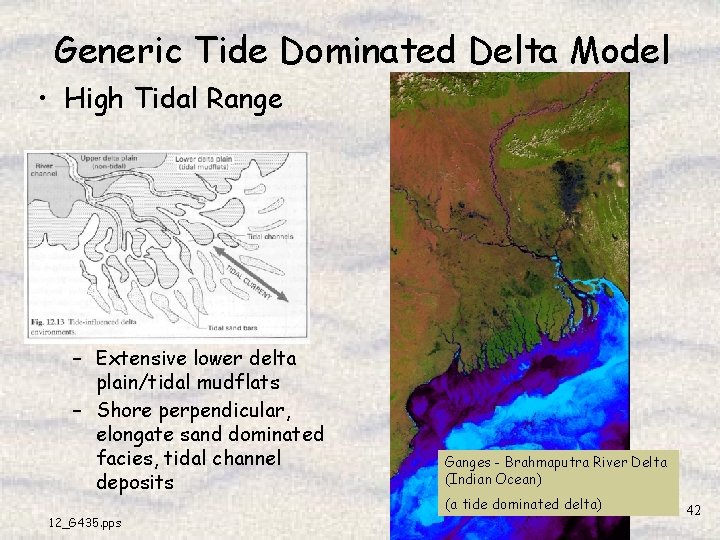
Generic Tide Dominated Delta Model • High Tidal Range – Extensive lower delta plain/tidal mudflats – Shore perpendicular, elongate sand dominated facies, tidal channel deposits 12_G 435. pps Ganges - Brahmaputra River Delta (Indian Ocean) (a tide dominated delta) 42
Tide dominated deltas • Coarse grained deltas – bodies of gravelly detritus that form on margins of lakes and seas – needs braided river or alluvial fan 12_G 435. pps 43
Environmental Issues in Modern Deltas • Damming, Dredging, Diverting – Coastal Land loss (erosion/subsidence) – Coastal Pollution • Nutrient loading, – anoxic events • Petroleum contamination – Habitat Destruction • land loss, • contamination, and • development 12_G 435. pps 44
Environmental Issues in Modern Deltas • Mississippi Delta Coastal Land loss – Louisiana's coastal wetlands, a national resource supporting 30% of the nation's fisheries and most of the wintering ducks in the Mississippi Flyway, are at risk from the annual conversion of an estimated 35 -45 mi 2 of wetlands to open water. Louisiana's wetland loss rate is the highest of any state in the nation. The processes causing wetland loss in coastal Louisiana are complex and varied. 12_G 435. pps 45