
Deltaic Depositional Systems Modern and Ancient Arno River
- Slides: 24
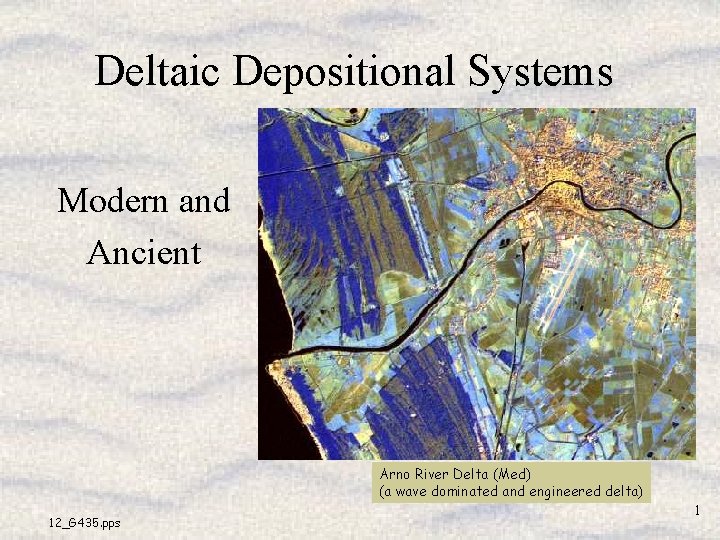
Deltaic Depositional Systems Modern and Ancient Arno River Delta (Med) (a wave dominated and engineered delta) 12_G 435. pps 1
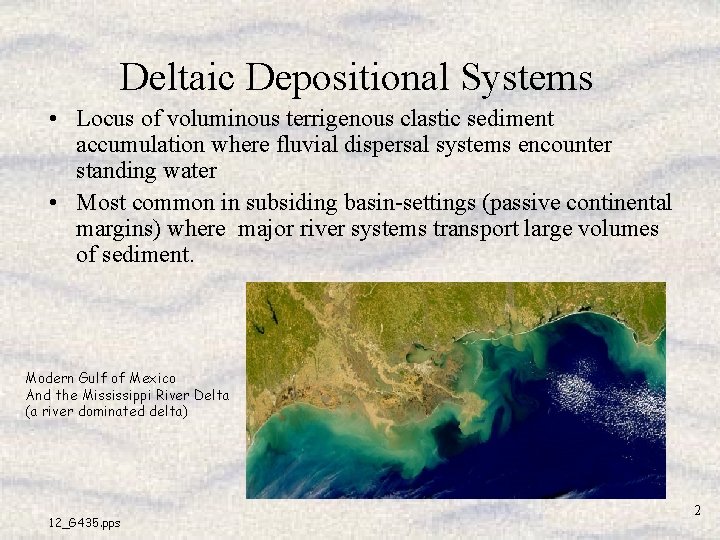
Deltaic Depositional Systems • Locus of voluminous terrigenous clastic sediment accumulation where fluvial dispersal systems encounter standing water • Most common in subsiding basin-settings (passive continental margins) where major river systems transport large volumes of sediment. Modern Gulf of Mexico And the Mississippi River Delta (a river dominated delta) 12_G 435. pps 2
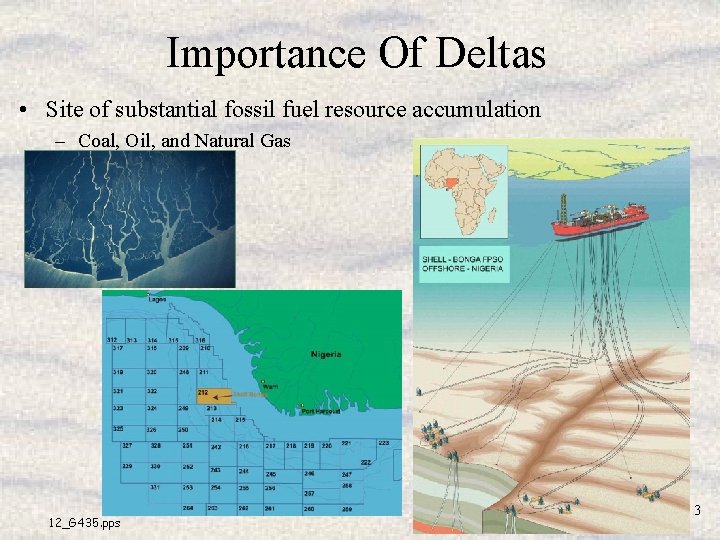
Importance Of Deltas • Site of substantial fossil fuel resource accumulation – Coal, Oil, and Natural Gas 12_G 435. pps 3
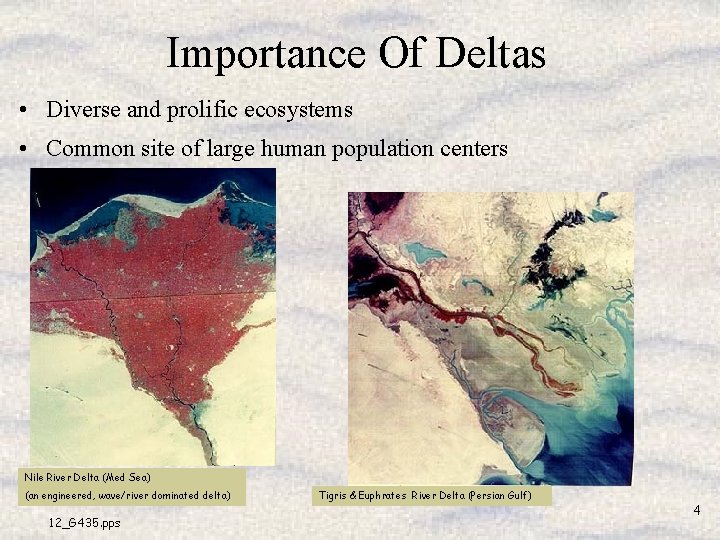
Importance Of Deltas • Diverse and prolific ecosystems • Common site of large human population centers Nile River Delta (Med Sea) (an engineered, wave/river dominated delta) 12_G 435. pps Tigris & Euphrates River Delta (Persian Gulf) 4
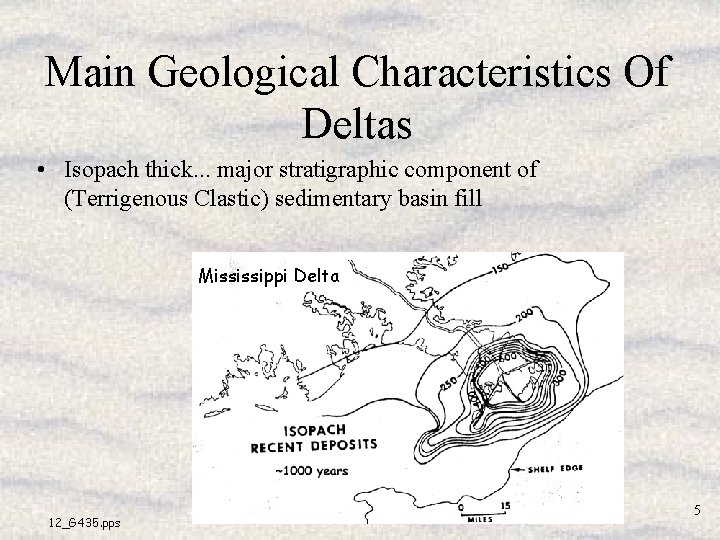
Main Geological Characteristics Of Deltas • Isopach thick. . . major stratigraphic component of (Terrigenous Clastic) sedimentary basin fill Mississippi Delta 12_G 435. pps 5
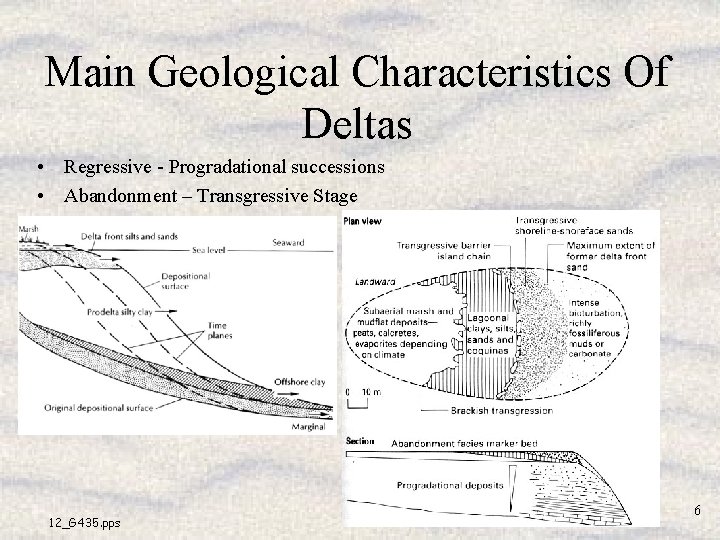
Main Geological Characteristics Of Deltas • Regressive - Progradational successions • Abandonment – Transgressive Stage 12_G 435. pps 6
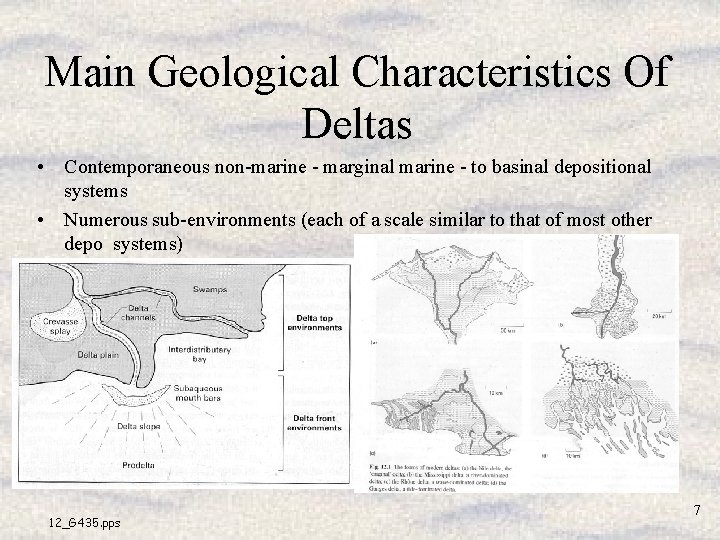
Main Geological Characteristics Of Deltas • Contemporaneous non-marine - marginal marine - to basinal depositional systems • Numerous sub-environments (each of a scale similar to that of most other depo systems) 12_G 435. pps 7
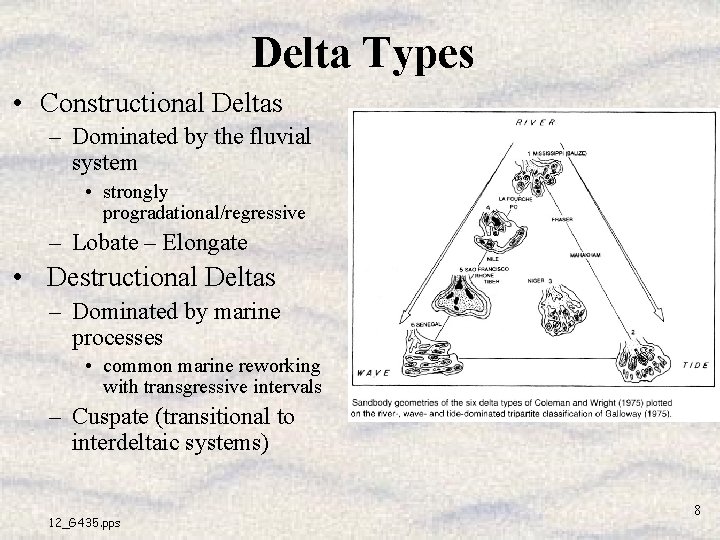
Delta Types • Constructional Deltas – Dominated by the fluvial system • strongly progradational/regressive – Lobate – Elongate • Destructional Deltas – Dominated by marine processes • common marine reworking with transgressive intervals – Cuspate (transitional to interdeltaic systems) 12_G 435. pps 8
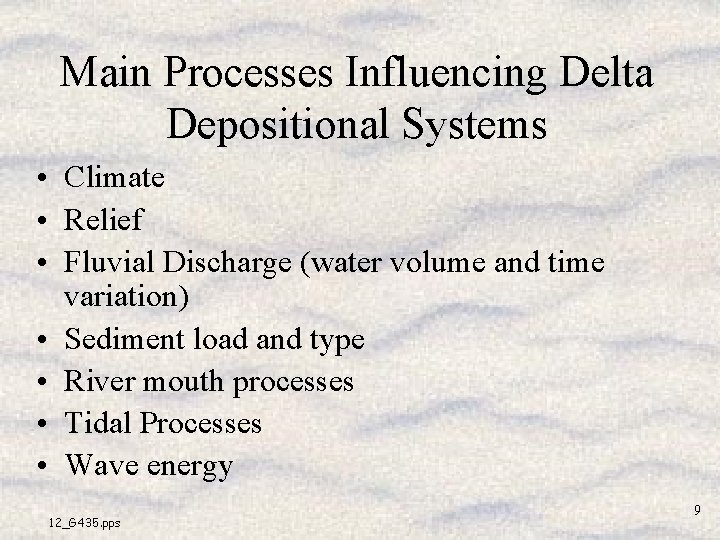
Main Processes Influencing Delta Depositional Systems • Climate • Relief • Fluvial Discharge (water volume and time variation) • Sediment load and type • River mouth processes • Tidal Processes • Wave energy 12_G 435. pps 9
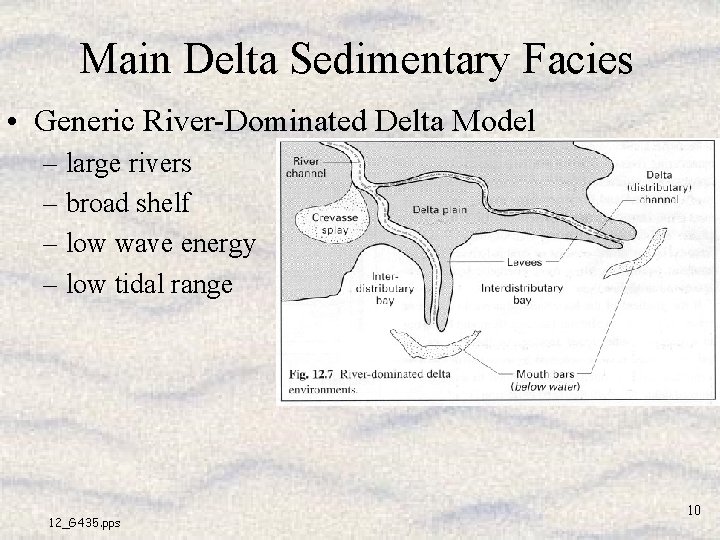
Main Delta Sedimentary Facies • Generic River-Dominated Delta Model – large rivers – broad shelf – low wave energy – low tidal range 12_G 435. pps 10
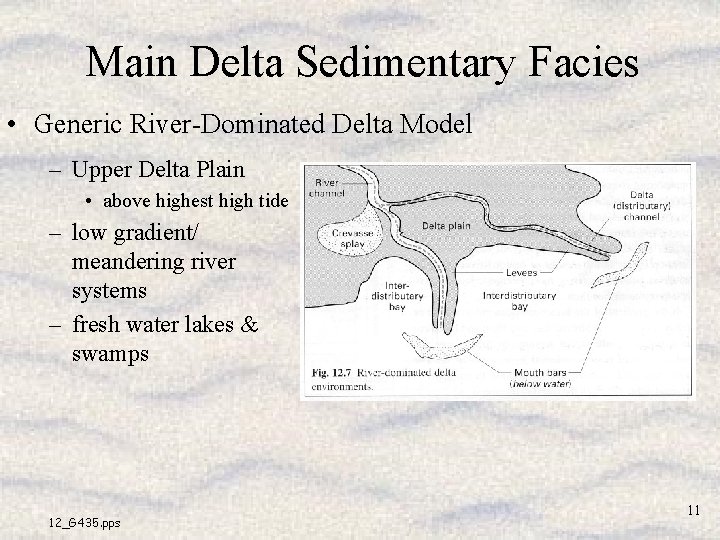
Main Delta Sedimentary Facies • Generic River-Dominated Delta Model – Upper Delta Plain • above highest high tide – low gradient/ meandering river systems – fresh water lakes & swamps 12_G 435. pps 11
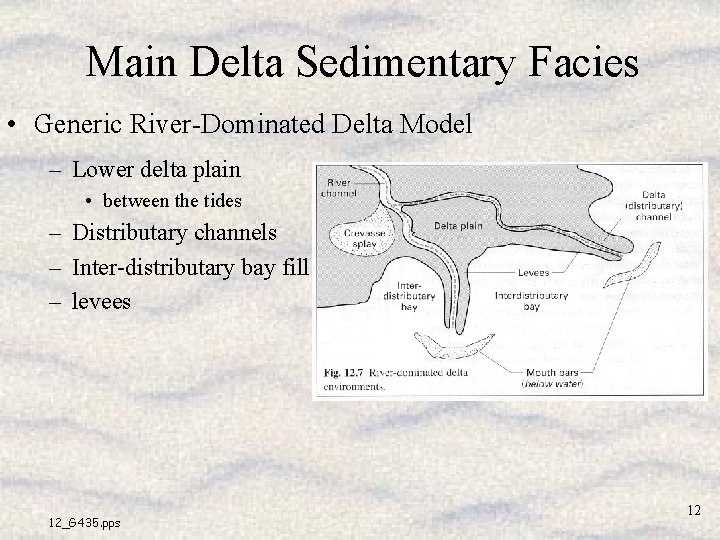
Main Delta Sedimentary Facies • Generic River-Dominated Delta Model – Lower delta plain • between the tides – Distributary channels – Inter-distributary bay fill – levees 12_G 435. pps 12
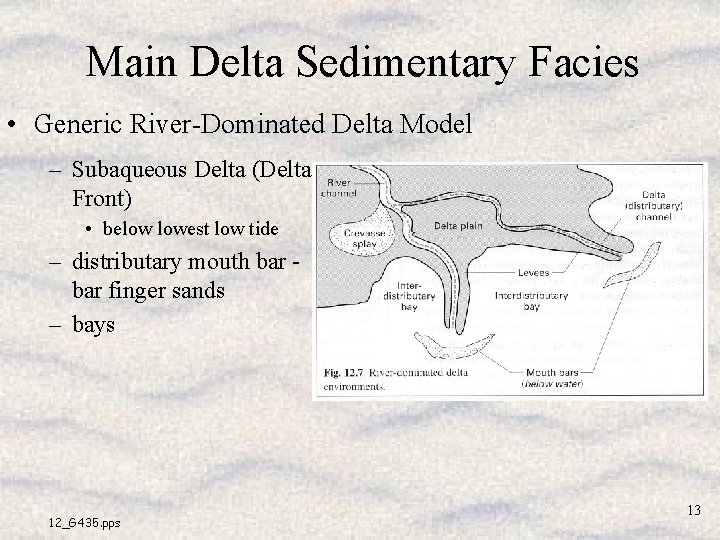
Main Delta Sedimentary Facies • Generic River-Dominated Delta Model – Subaqueous Delta (Delta Front) • below lowest low tide – distributary mouth bar finger sands – bays 12_G 435. pps 13
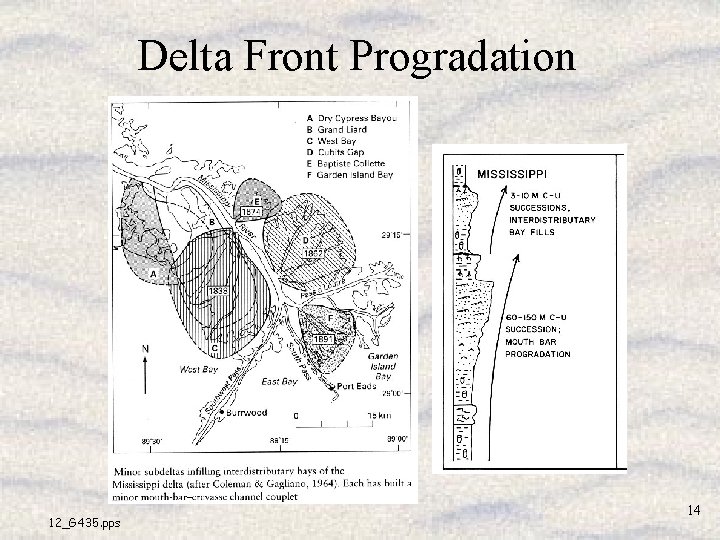
Delta Front Progradation 12_G 435. pps 14
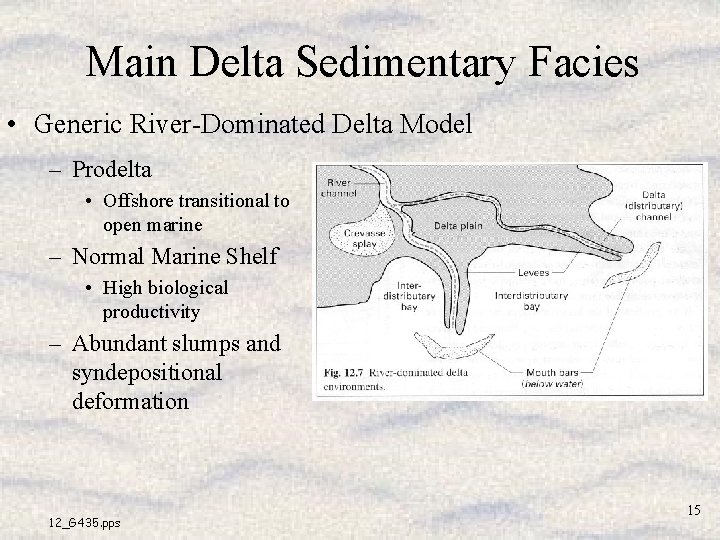
Main Delta Sedimentary Facies • Generic River-Dominated Delta Model – Prodelta • Offshore transitional to open marine – Normal Marine Shelf • High biological productivity – Abundant slumps and syndepositional deformation 12_G 435. pps 15
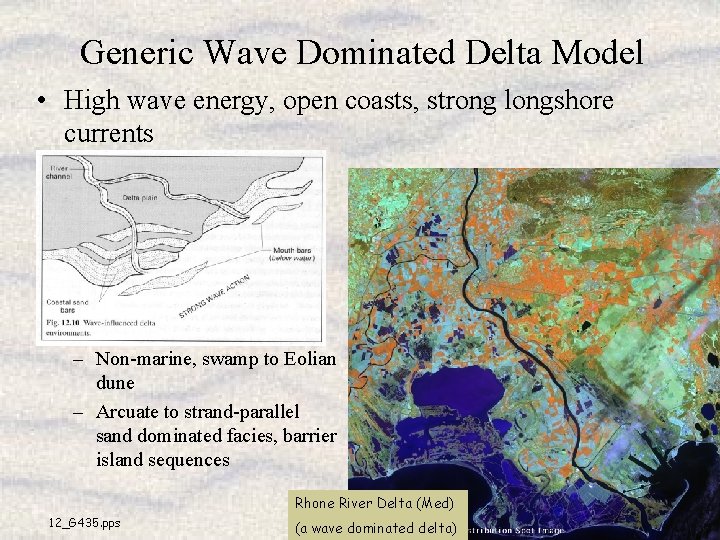
Generic Wave Dominated Delta Model • High wave energy, open coasts, strong longshore currents – Non-marine, swamp to Eolian dune – Arcuate to strand-parallel sand dominated facies, barrier island sequences Rhone River Delta (Med) 12_G 435. pps (a wave dominated delta) 16
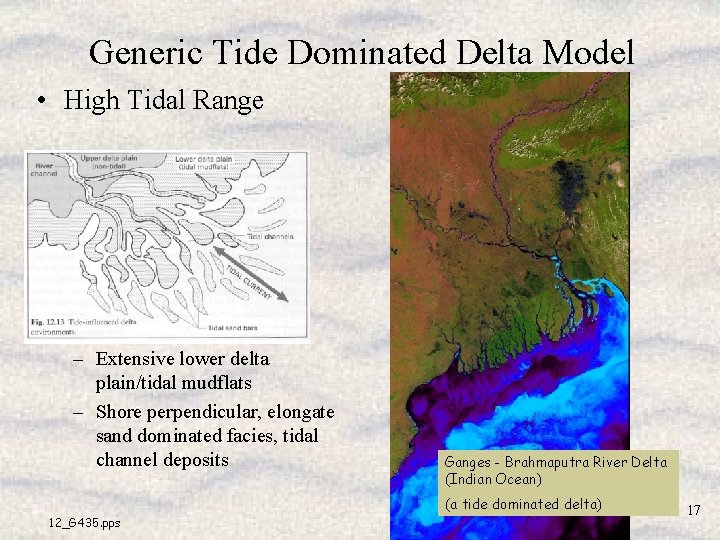
Generic Tide Dominated Delta Model • High Tidal Range – Extensive lower delta plain/tidal mudflats – Shore perpendicular, elongate sand dominated facies, tidal channel deposits Ganges - Brahmaputra River Delta (Indian Ocean) (a tide dominated delta) 12_G 435. pps 17
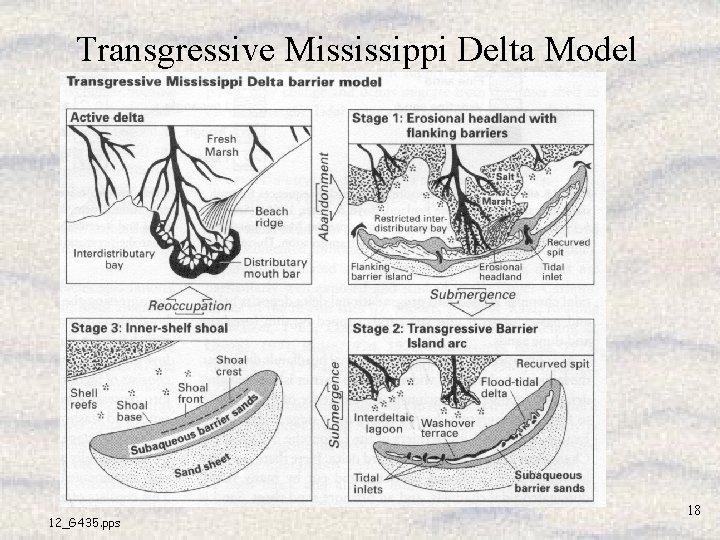
Transgressive Mississippi Delta Model 12_G 435. pps 18
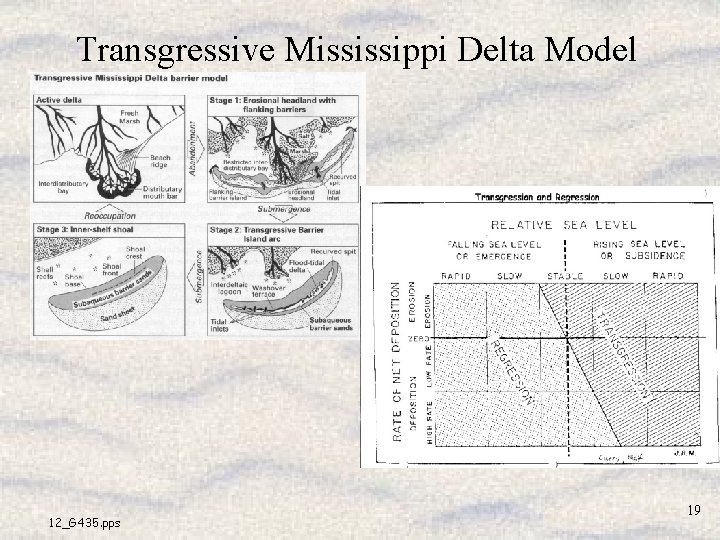
Transgressive Mississippi Delta Model 12_G 435. pps 19
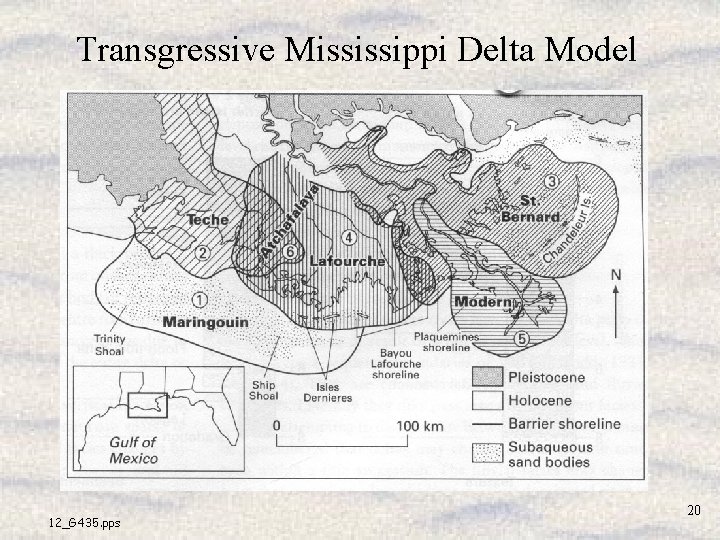
Transgressive Mississippi Delta Model 12_G 435. pps 20
Environmental Issues in Modern Deltas • Damming, Dredging, Diverting – Coastal Land loss (erosion/subsidence) – Coastal Pollution • Nutrient loading, – anoxic events • Petroleum contamination – Habitat Destruction • land loss, • contamination, and • development 12_G 435. pps 21
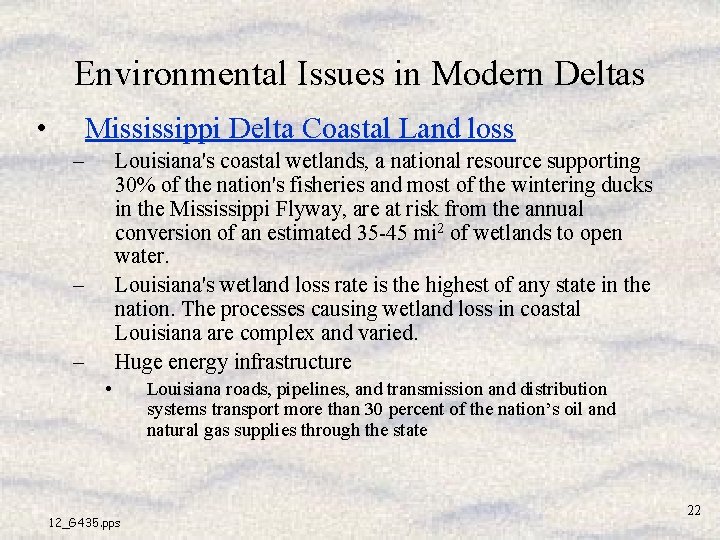
Environmental Issues in Modern Deltas • Mississippi Delta Coastal Land loss – Louisiana's coastal wetlands, a national resource supporting 30% of the nation's fisheries and most of the wintering ducks in the Mississippi Flyway, are at risk from the annual conversion of an estimated 35 -45 mi 2 of wetlands to open water. Louisiana's wetland loss rate is the highest of any state in the nation. The processes causing wetland loss in coastal Louisiana are complex and varied. Huge energy infrastructure – – • 12_G 435. pps Louisiana roads, pipelines, and transmission and distribution systems transport more than 30 percent of the nation’s oil and natural gas supplies through the state 22
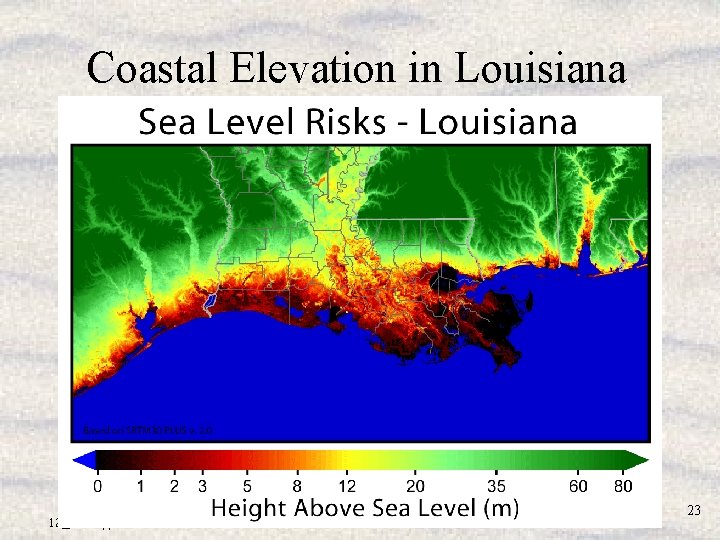
Coastal Elevation in Louisiana 12_G 435. pps 23
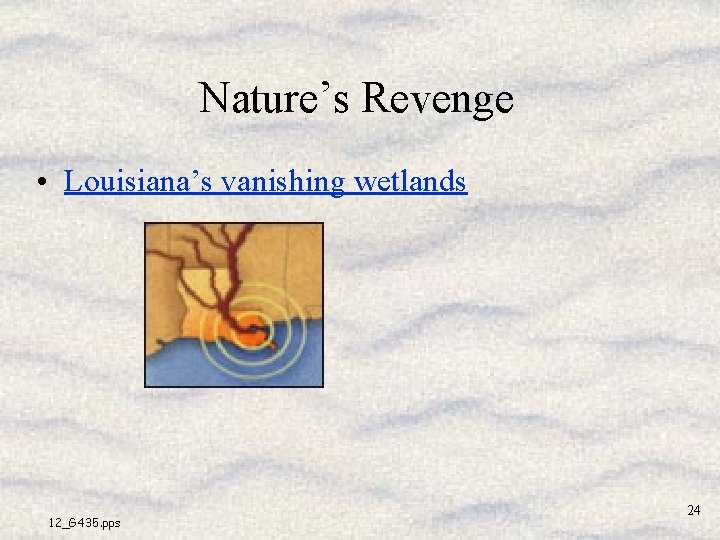
Nature’s Revenge • Louisiana’s vanishing wetlands 12_G 435. pps 24