
Delivery of Oxygen to cells Chapter 21 Oxygen
- Slides: 5
Delivery of Oxygen to cells Chapter 21
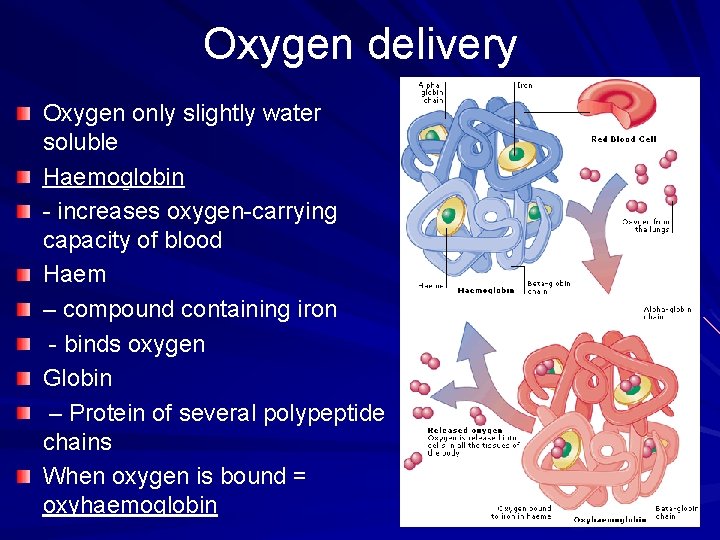
Oxygen delivery Oxygen only slightly water soluble Haemoglobin - increases oxygen-carrying capacity of blood Haem – compound containing iron - binds oxygen Globin – Protein of several polypeptide chains When oxygen is bound = oxyhaemoglobin
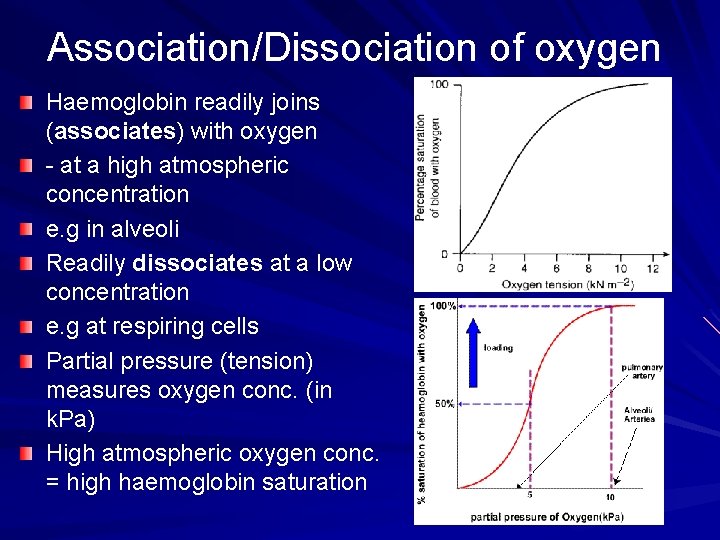
Association/Dissociation of oxygen Haemoglobin readily joins (associates) with oxygen - at a high atmospheric concentration e. g in alveoli Readily dissociates at a low concentration e. g at respiring cells Partial pressure (tension) measures oxygen conc. (in k. Pa) High atmospheric oxygen conc. = high haemoglobin saturation
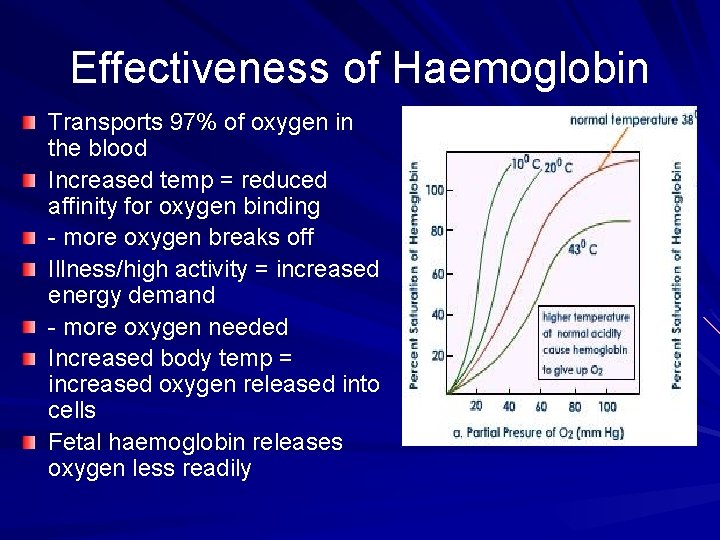
Effectiveness of Haemoglobin Transports 97% of oxygen in the blood Increased temp = reduced affinity for oxygen binding - more oxygen breaks off Illness/high activity = increased energy demand - more oxygen needed Increased body temp = increased oxygen released into cells Fetal haemoglobin releases oxygen less readily
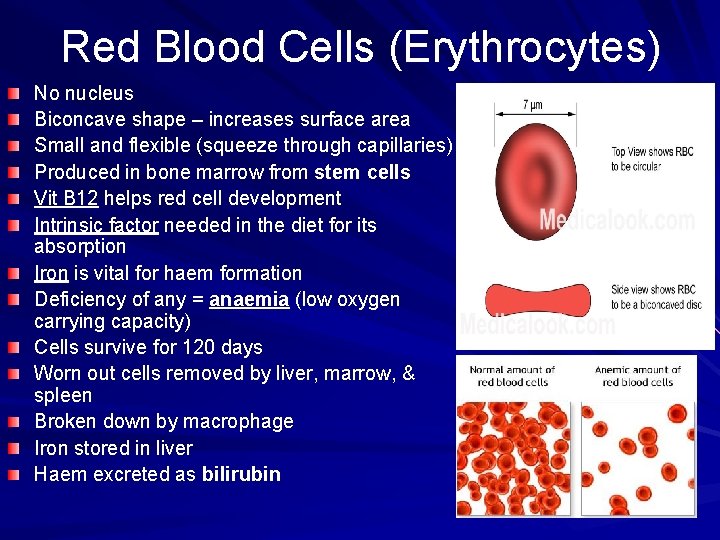
Red Blood Cells (Erythrocytes) No nucleus Biconcave shape – increases surface area Small and flexible (squeeze through capillaries) Produced in bone marrow from stem cells Vit B 12 helps red cell development Intrinsic factor needed in the diet for its absorption Iron is vital for haem formation Deficiency of any = anaemia (low oxygen carrying capacity) Cells survive for 120 days Worn out cells removed by liver, marrow, & spleen Broken down by macrophage Iron stored in liver Haem excreted as bilirubin