
Delirium Case Presentation Case 93 PC l l
- Slides: 32
Delirium Case Presentation
Case ¡ 93 ♂ ¡ PC l l 4/7 Confusion, agitation + general deterioration 3/7 poor urine output
PMH BPH ¡ Long term catheter in situ ¡ MI ¡
DH Omeprazole 20 mg po od ¡ Betahistine 8 mg po om ¡ Aspirin 75 mg po om ¡ Calcichew D 3 forte ¡
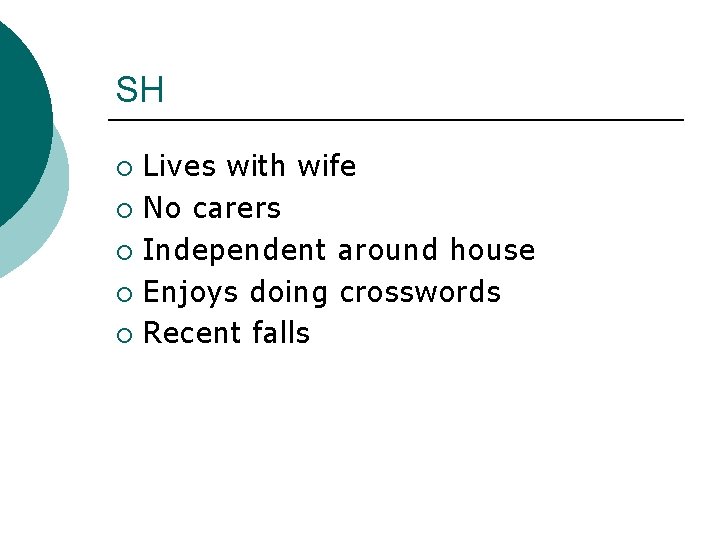
SH Lives with wife ¡ No carers ¡ Independent around house ¡ Enjoys doing crosswords ¡ Recent falls ¡
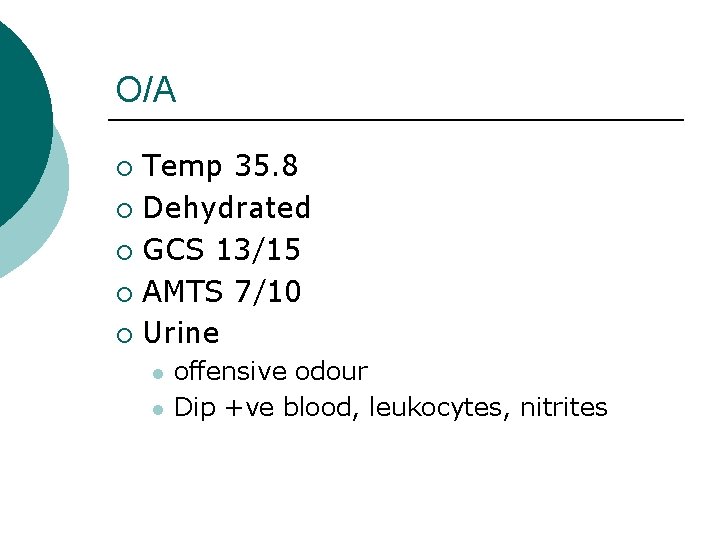
O/A Temp 35. 8 ¡ Dehydrated ¡ GCS 13/15 ¡ AMTS 7/10 ¡ Urine ¡ l l offensive odour Dip +ve blood, leukocytes, nitrites
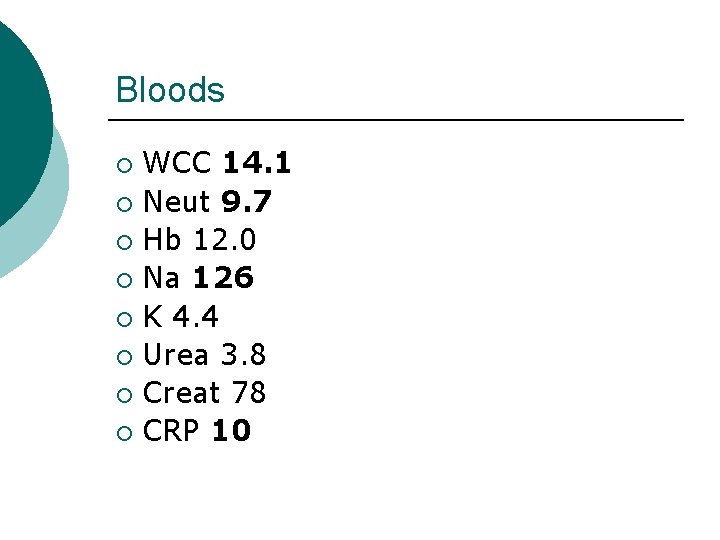
Bloods WCC 14. 1 ¡ Neut 9. 7 ¡ Hb 12. 0 ¡ Na 126 ¡ K 4. 4 ¡ Urea 3. 8 ¡ Creat 78 ¡ CRP 10 ¡
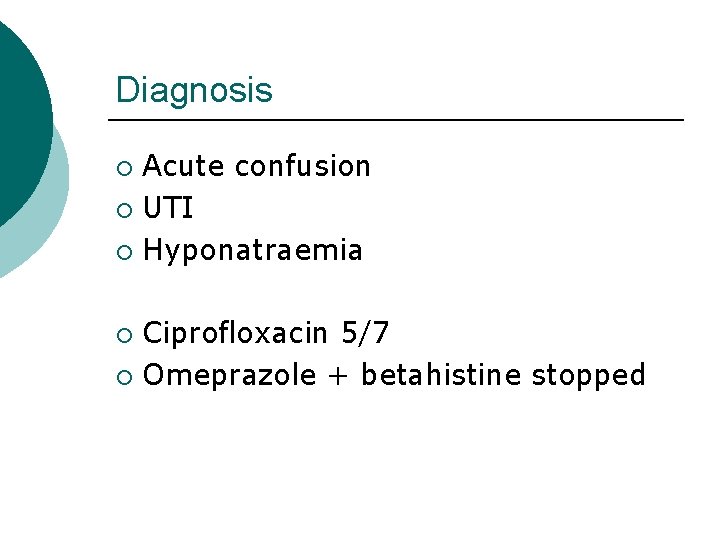
Diagnosis Acute confusion ¡ UTI ¡ Hyponatraemia ¡ Ciprofloxacin 5/7 ¡ Omeprazole + betahistine stopped ¡
Day 2 ¡ GCS 7/15 ¡ CT Brain l l ¡ Small vessel ischaemia No evidence of space occupying lesion, intracranial haemorrhage or skull # CRP 46
After 2/52 GCS 15 ¡ AMTS 10/10 ¡ A/W discharge home ¡ Prophylactic trimethoprim ¡
Delirium ¡ Derived from Latin ‘off the track’
Delirium Transient global disorder of cognition ¡ Medical emergency ¡ Affects 20% patients on general wards ¡ Affects 30% of elderly medical patients ¡ Associated with increased mortality, increased nursing, failed rehab and delayed discharge ¡
Presentation Acute + relatively sudden onset (over hours to days) ¡ Decline in attention-focus, perception and cognition ¡ Change in cognition must not be one better accounted for by dementia ¡ Fluctuating time course of delirium helps to differentiate ¡
Characterised by: ¡ ¡ ¡ ¡ Disorientation in time, place +/- person Impaired concentration + attention Altered cognitive state Impaired ability to communicate Wakefulness – insomnia + nocturnal agitation Reduced cooperation Overactive psychomotor activity – irritability + agression
Diagnosis Cannot be made without knowledge of baseline cognitive function ¡ Can be confused with ¡ l l l 1. dementia – irreversible, not assd with change in consciousness 2. depression 3. psychosis – may be overlap but usually consciousness + cognition not impaired
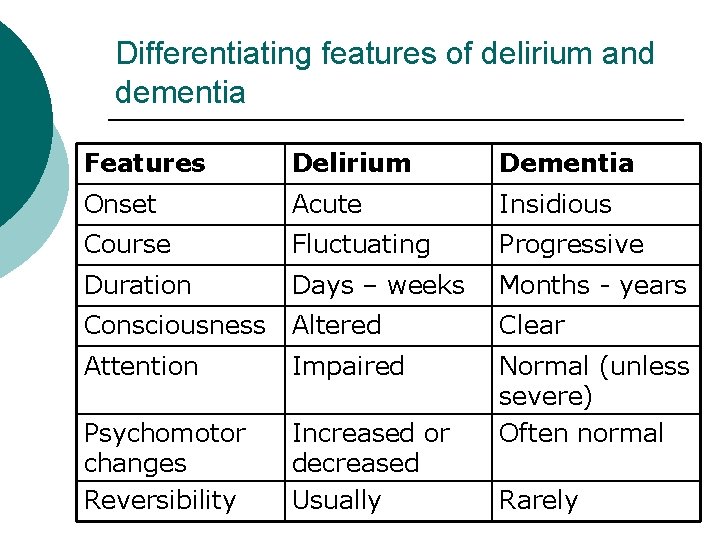
Differentiating features of delirium and dementia Features Delirium Dementia Onset Acute Insidious Course Fluctuating Progressive Duration Days – weeks Months - years Consciousness Altered Clear Attention Impaired Psychomotor changes Reversibility Increased or decreased Usually Normal (unless severe) Often normal Rarely
Risk factors in elderly ¡ ¡ ¡ ¡ ¡ Age >80 Extreme physical frailty Multiple medical problems Infections (chest + urine) Polypharmacy Sensory impairment Metabolic disturbance Long-bone # General anaesthesia
Risk factors Dementia is one of the most consistent risk factors ¡ Underlying dementia in 25 -50% ¡ Presence of dementia increases risk of delirium by 2 -3 times ¡
Causes ¡ Severe physical or mental illness or any process interfering with normal metabolism or function of the brain
Causes mnemonic ¡ ¡ ¡ Infections (pneumonia, UTI) Withdrawl (alcohol, opiate) Acute metabolic (acidosis, renal failure) Trauma (acute severe pain) CNS pathology (epilepsy, cerebral haemorrhage) Hypoxia Deficiencies (B 12, thiamine) Endocrine (thyroid, PTH, hypo/hyperglycaemia) Acute vascular (stroke, MI, PE, heart failure) Toxins/drugs (prescribed tramadol, dig toxicity, antidepressants, anticholinergics, corticosteroids) recreational) Heavy metals
Pathophysiology ¡ ¡ ¡ ¡ Not fully understood Main theory = reversible impairment of cerebral oxidative metabolism + neurotransmitter abnormalities Ach – anticholinergics = cause of acute confusional states + Pts with impaired cholinergic transmission (eg Alzheimers) are more susceptible Dopamine – excess dopamine in delirium Serotonin – increased in delirium Inflammatory mechanism – cytokines eg interleukin-1 release from cells Stress reaction + sleep deprivation Disrupted BBB may cause delirium
NICE Guidelines
Management 1. Identify + treat underlying cause (return to pre-morbid state can take up to 3 weeks) ¡ 2. Complete lab tests + investigations eg. FBC, CRP, U+Es, BM, LFTs, TFTs, B 12, MSU, CXR ¡ 3. Rule out Et. OH withdrawl ¡ 4. Assume an underlying organic cause ¡
Management 5. Ensure adequate hydration + nutrition ¡ 6. Use clear, straightforward communication ¡ 7. Orientate the patient to environment + frequent reassurance ¡ 8. Identify if environmental factors are contributing to confused state ¡
Management Disturbed, agitated or uncooperative patients often require additional nursing input ¡ Medication should not be regarded as first line treatment ¡ Consider medication if all other strategies fail but remember all psychotropic meds can increase delirium + confusion ¡
Medications ¡ Benzodiazepines l l Lorazepam 0. 5 -1 mg tds orally Shorter half life than diazepam + effective at lower doses S/E - Respiratory depression, increased risk of falls, hypotension Not for long term use
Medications ¡ Antipsychotics l l l Avoid in PD Haloperidol 0. 5 -1 mg S/E – cardiac, avoid in patients with hypotension, tachycardia + arrhythmias, extrapyramidal Recent evidence suggests not to use in patients with dementia or risk of CVD due to increased risk of cerebral ischaemia 3 X increase in risk of stroke when Risperidone used in older patients with dementia
Medications ¡ Dementia with Lewy Bodies l Severe reactions to antipsychotic drugs that can lead to death ¡ l Due to extrapyramidal effects Urgent psychiatric opinion
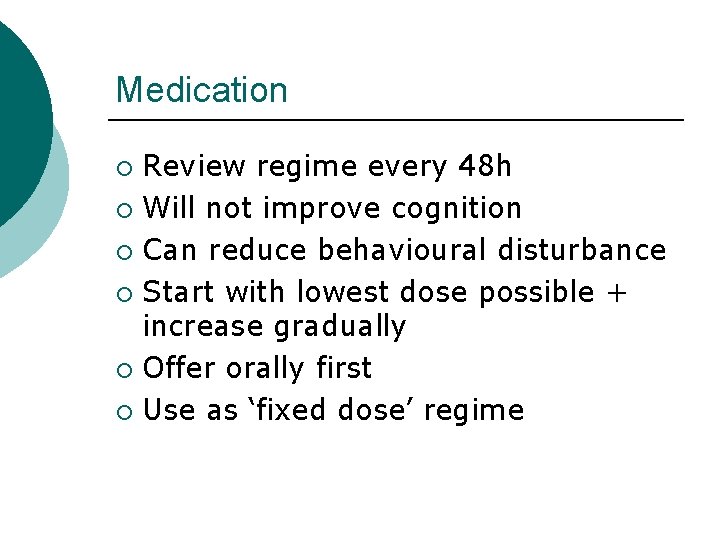
Medication Review regime every 48 h ¡ Will not improve cognition ¡ Can reduce behavioural disturbance ¡ Start with lowest dose possible + increase gradually ¡ Offer orally first ¡ Use as ‘fixed dose’ regime ¡
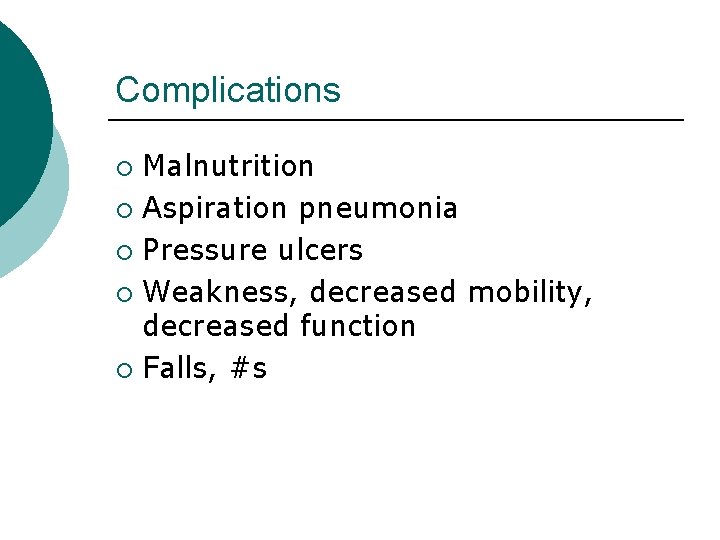
Complications Malnutrition ¡ Aspiration pneumonia ¡ Pressure ulcers ¡ Weakness, decreased mobility, decreased function ¡ Falls, #s ¡
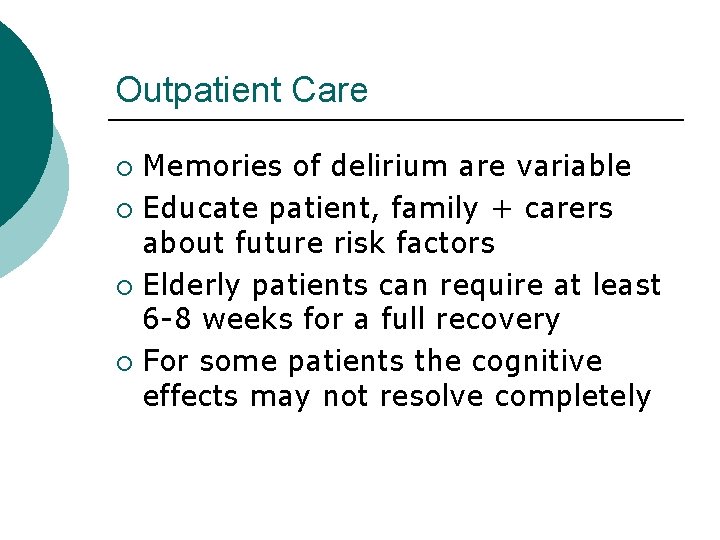
Outpatient Care Memories of delirium are variable ¡ Educate patient, family + carers about future risk factors ¡ Elderly patients can require at least 6 -8 weeks for a full recovery ¡ For some patients the cognitive effects may not resolve completely ¡
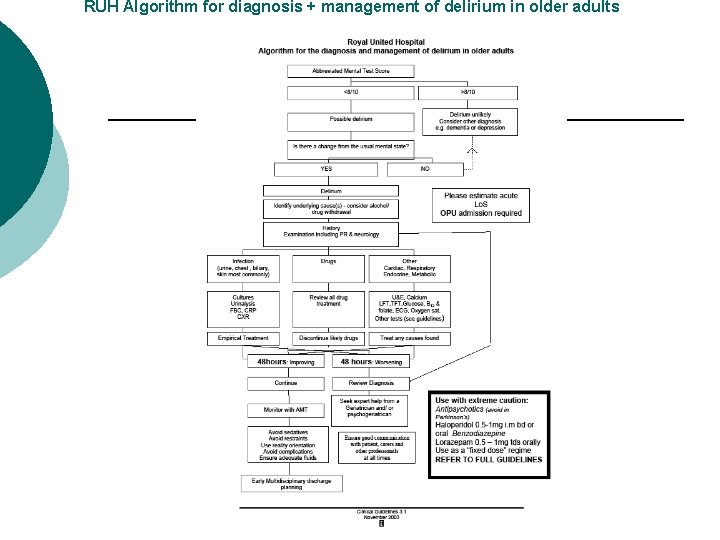
RUH Algorithm for diagnosis + management of delirium in older adults