
Delayed healingcauses and treatment principles AO Trauma Basic
Delayed healing—causes and treatment principles AO Trauma Basic Principles Course
Learning objectives • List factors leading to nonunion • Understand the difference between delayed union and nonunion • Discuss how these complications might be avoided in fracture management • Outline the principles of treatment of nonunion

Definition of disturbed bone healing • Delayed union—failure to consolidate within the normally expected time for fracture types and location • Nonunion—the opinion of the treating surgeon is that healing will not occur without intervention • Pseudoarthrosis—Formation of a false joint where a fibrocartilaginous cavity is lined with synovial membrane
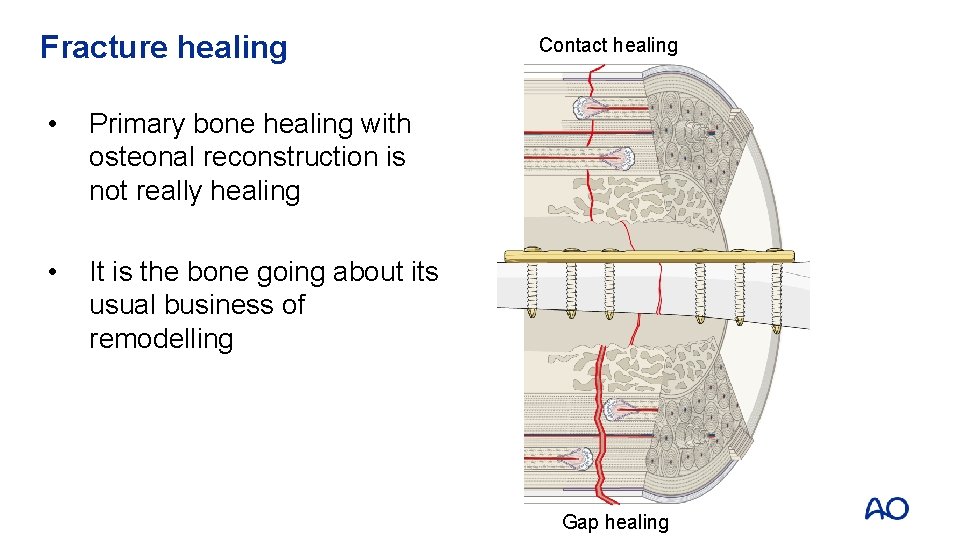
Fracture healing • Primary bone healing with osteonal reconstruction is not really healing • It is the bone going about its usual business of remodelling Contact healing Gap healing
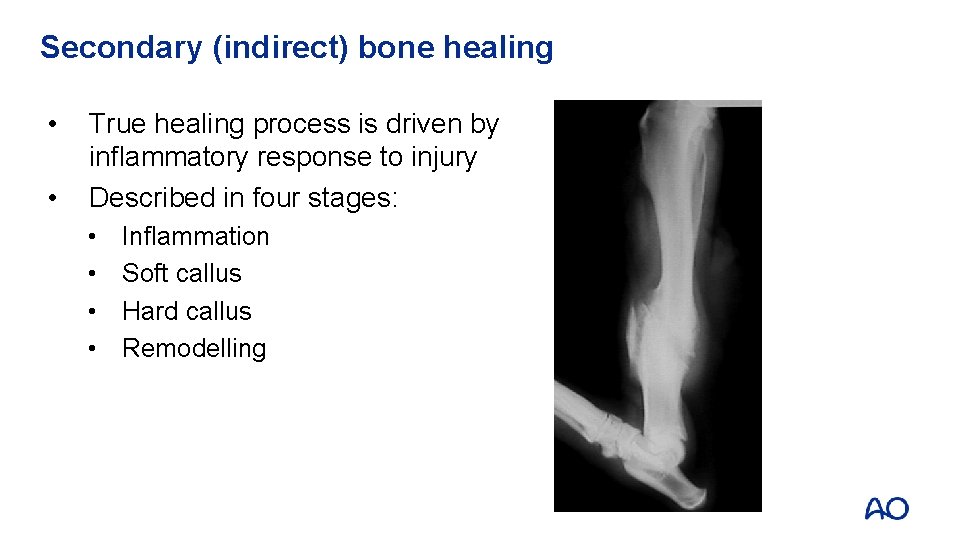
Secondary (indirect) bone healing • • True healing process is driven by inflammatory response to injury Described in four stages: • • Inflammation Soft callus Hard callus Remodelling
Requirements for bone healing • Bone healing organ (BHO) is a hypothetical temporary structure • Postulating its existence helps us understand the reasons for failure of bone healing • BHO is derived from fracture hematoma and migrating pluripotential stem cells • Appropriate mechanical environment
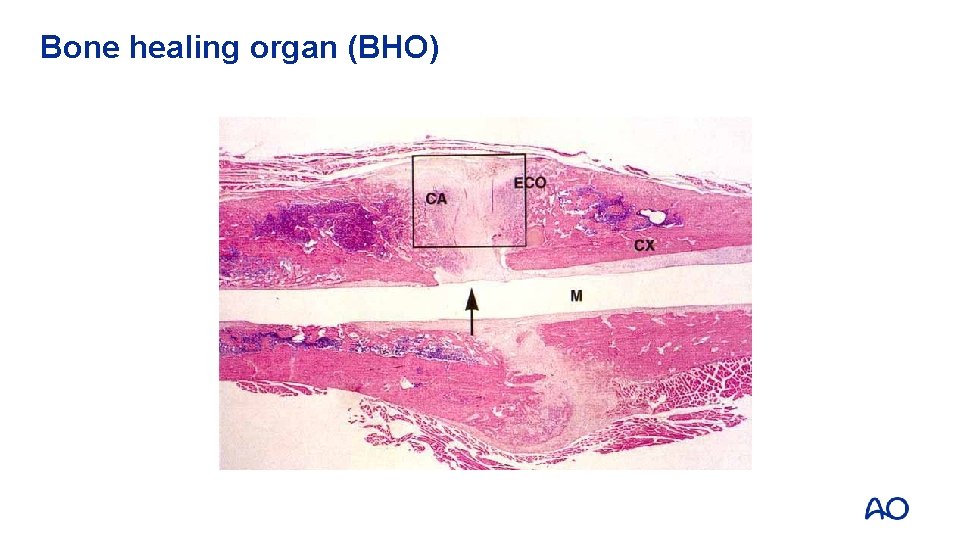
Bone healing organ (BHO)
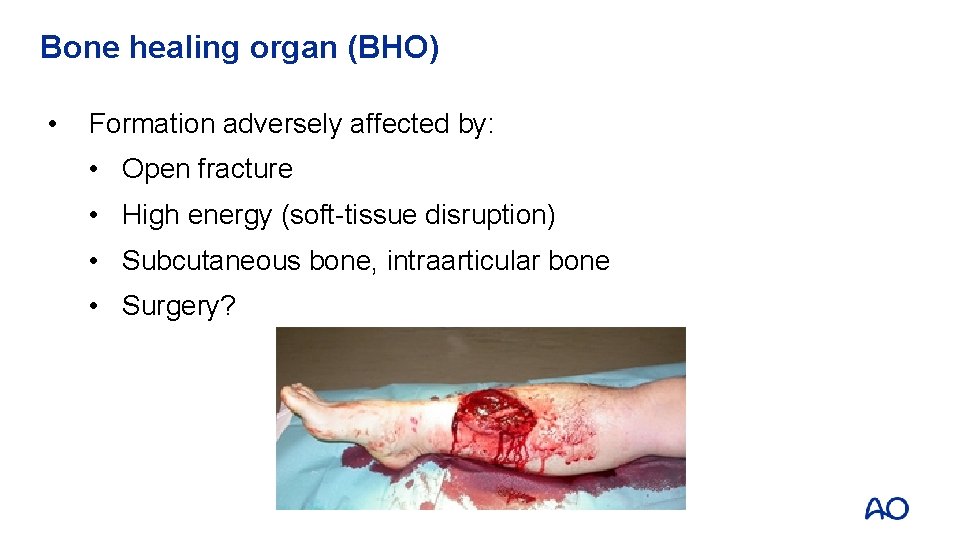
Bone healing organ (BHO) • Formation adversely affected by: • Open fracture • High energy (soft-tissue disruption) • Subcutaneous bone, intraarticular bone • Surgery?
Bone healing organ (BHO) • Performance adversely affected by: • Presence of carbon monoxide (smoking) • Poor blood supply (microvascular disease) • Infection • High strain environment (instability)
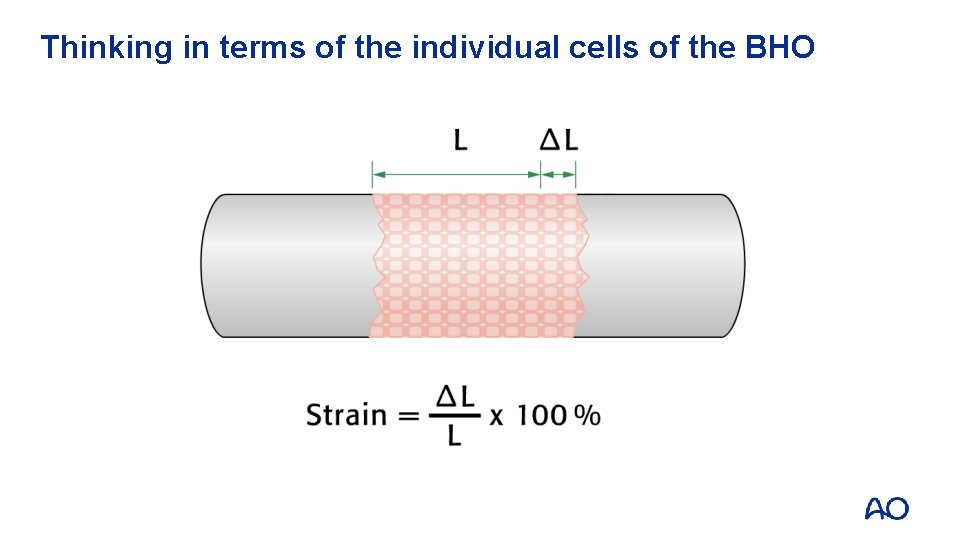
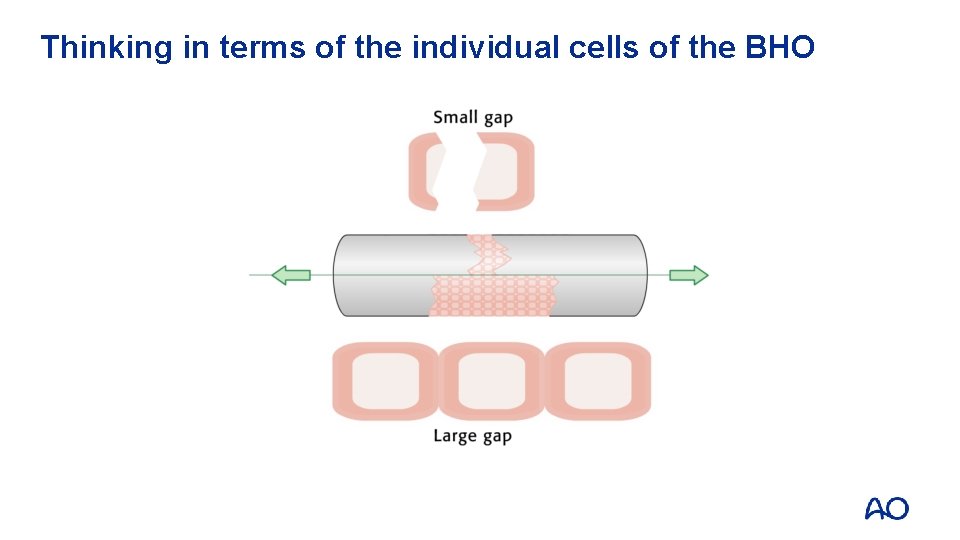
Bone healing organ (BHO) • Type of tissue formed is dependent on the mechanical environment • Interfragmentary Strain Theory of Fracture Healing—Stephan Perren (1975)
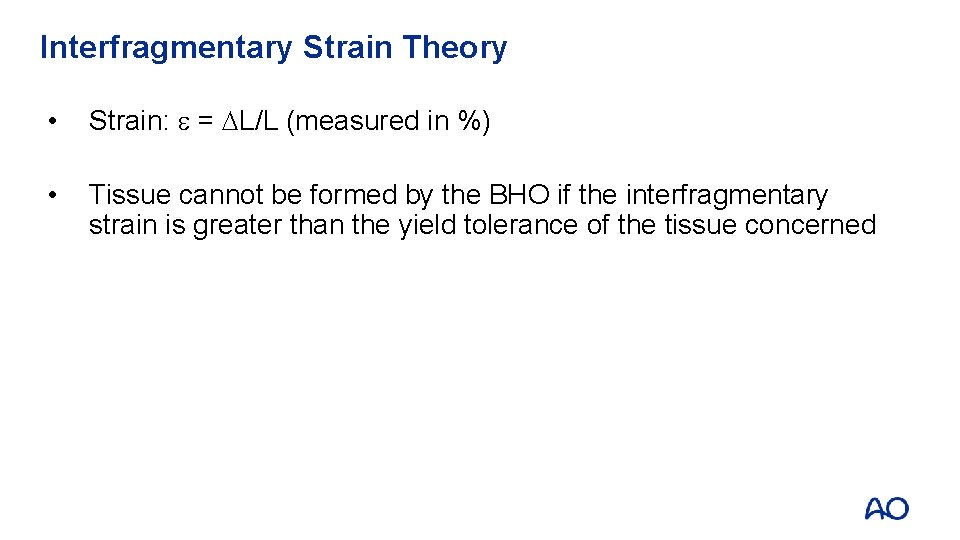
Interfragmentary Strain Theory • Strain: = L/L (measured in %) • Tissue cannot be formed by the BHO if the interfragmentary strain is greater than the yield tolerance of the tissue concerned
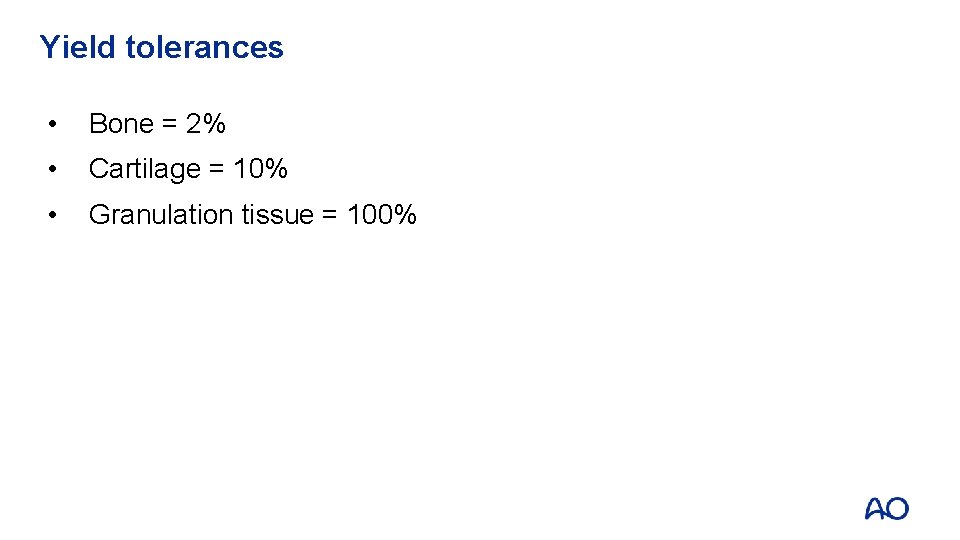
Yield tolerances • Bone = 2% • Cartilage = 10% • Granulation tissue = 100%
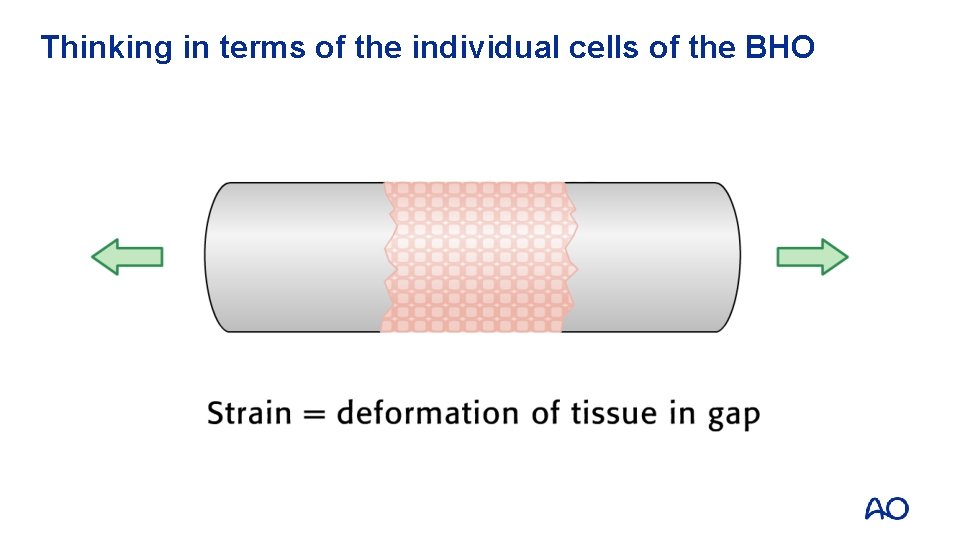
Thinking in terms of the individual cells of the BHO
Thinking in terms of the individual cells of the BHO
Thinking in terms of the individual cells of the BHO
Clinical relevance
Clinical relevance
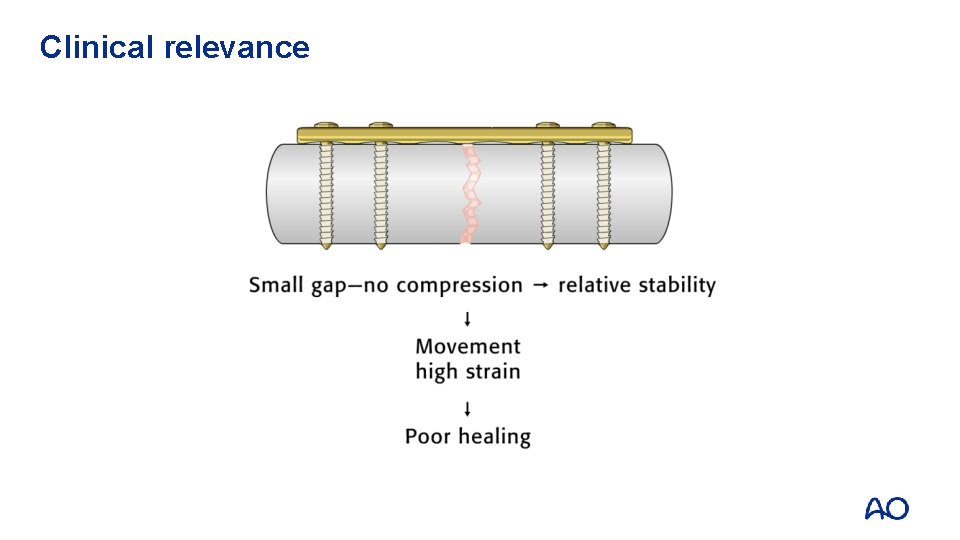
Clinical relevance
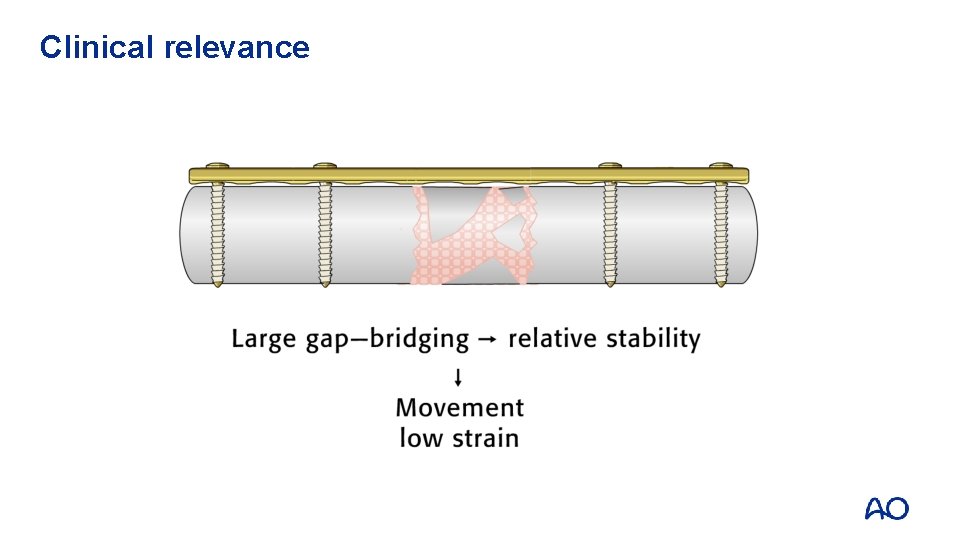
Clinical relevance
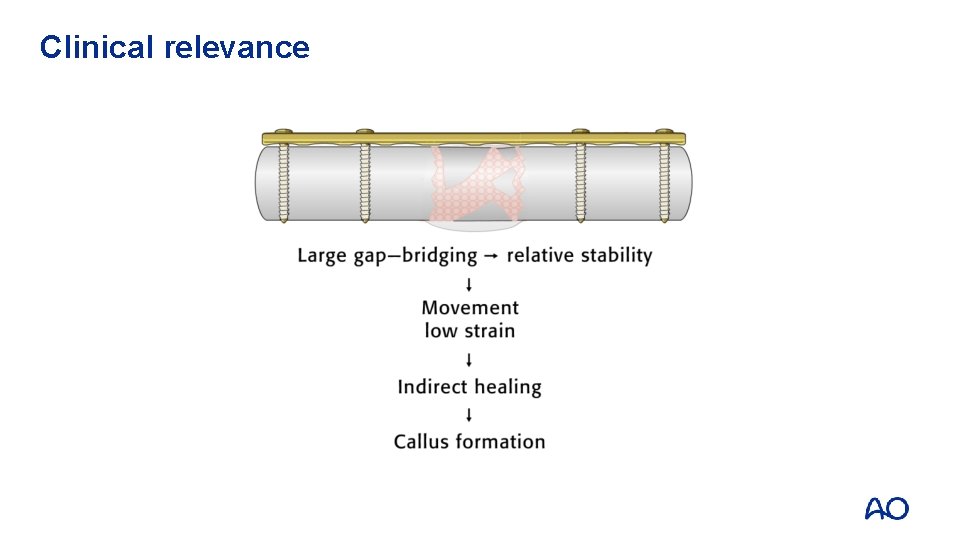
Clinical relevance
Radiology of nonunion • X-rays are blocked by the dense nuclei of metallic atoms • In bony tissue, these are calcium ions • Callus is not radio-opaque until mineralization occurs • Mineralization cannot occur in any zone of a fracture gap until the local strain is 2% or less • Amount and distribution of callus is a radiological marker of the strain environment at the fracture
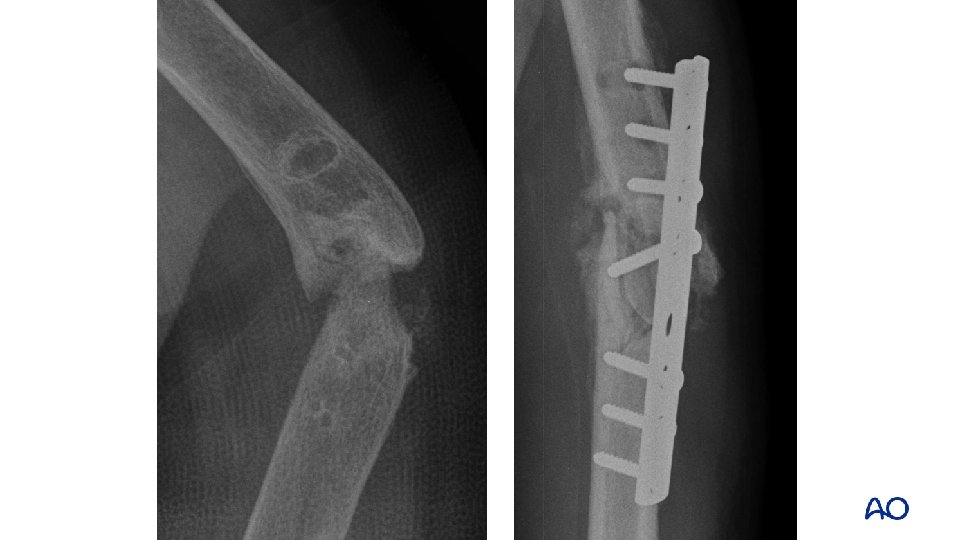

Vascular (hypertrophic) • Major displacement of fracture • Distraction of fragment • Without accurate apposition of the fragment Adequate vascularity / Lack of mechanical stability
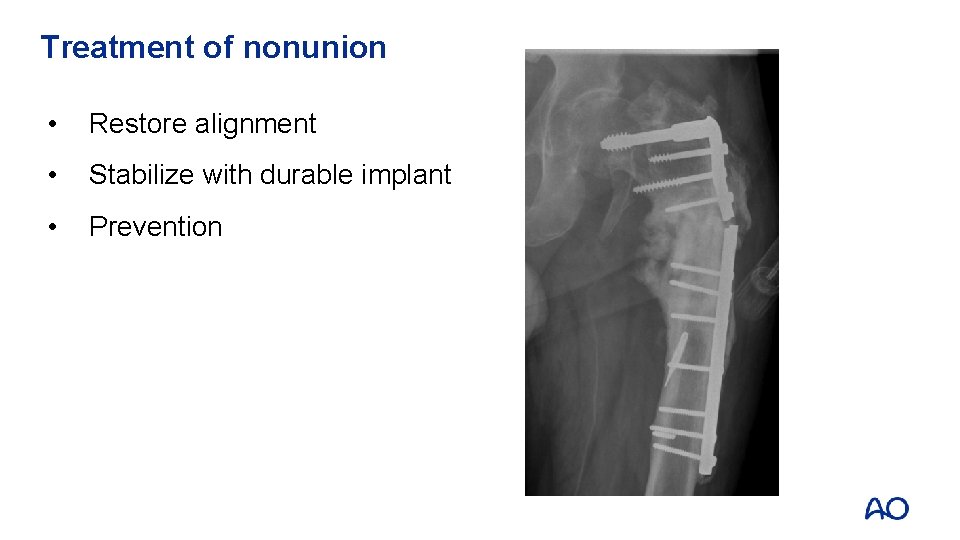
Treatment of nonunion • Restore alignment • Stabilize with durable implant • Prevention
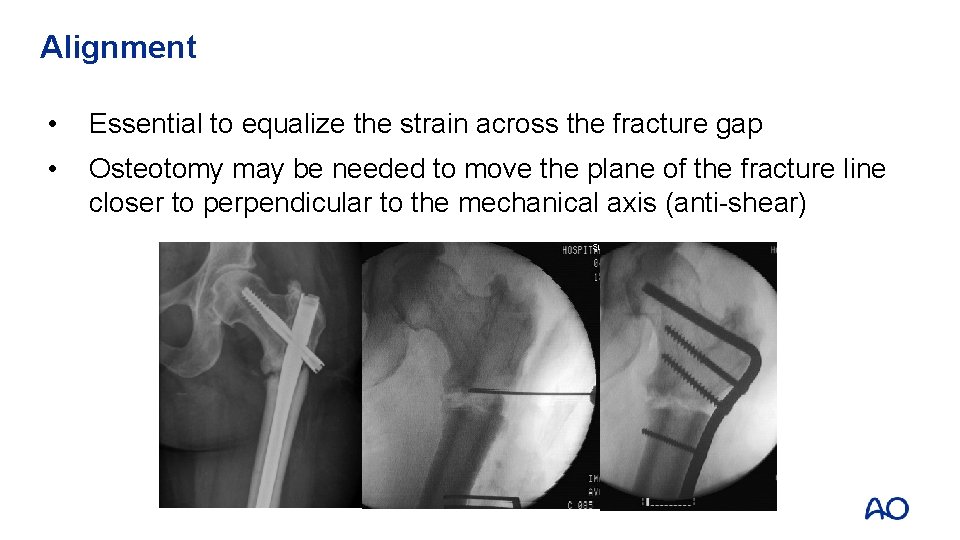
Alignment • Essential to equalize the strain across the fracture gap • Osteotomy may be needed to move the plane of the fracture line closer to perpendicular to the mechanical axis (anti-shear)
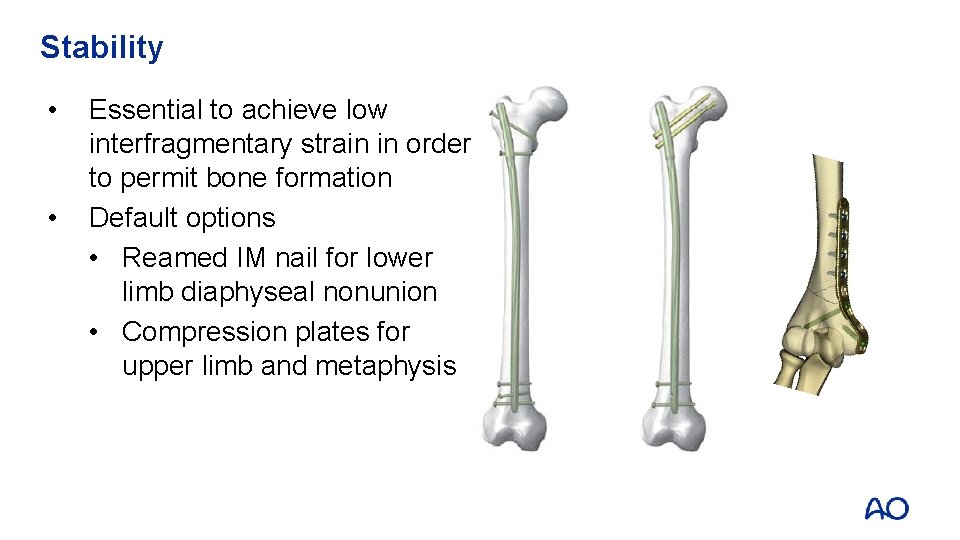
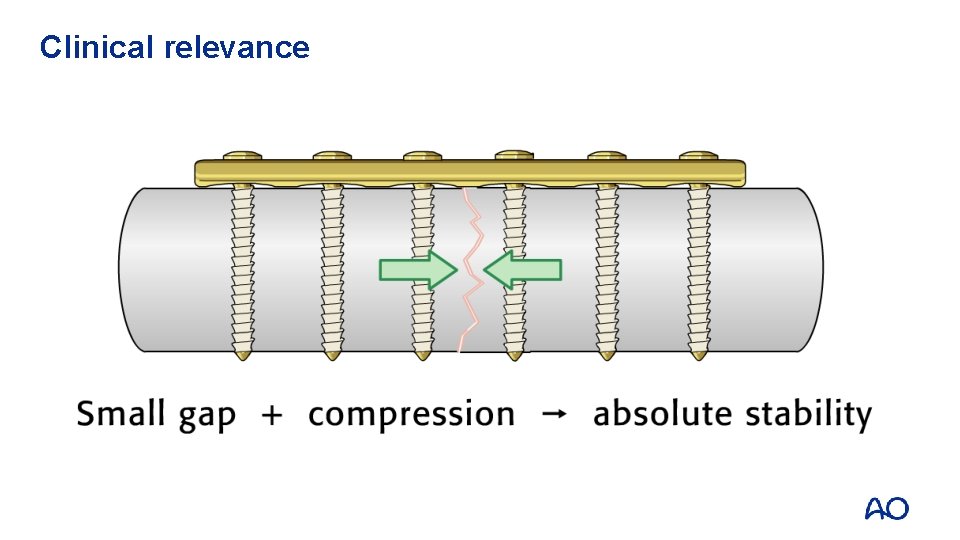
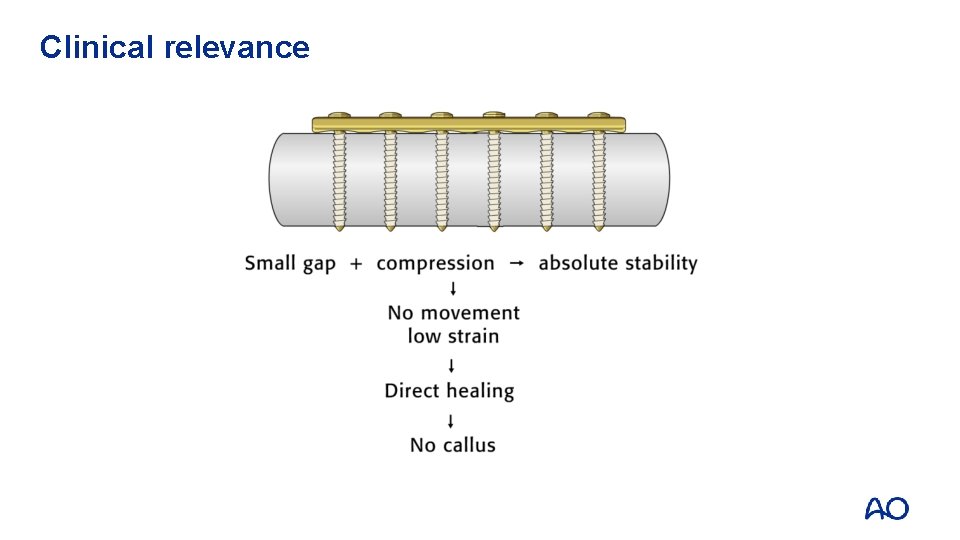
Stability • • Essential to achieve low interfragmentary strain in order to permit bone formation Default options • Reamed IM nail for lower limb diaphyseal nonunion • Compression plates for upper limb and metaphysis
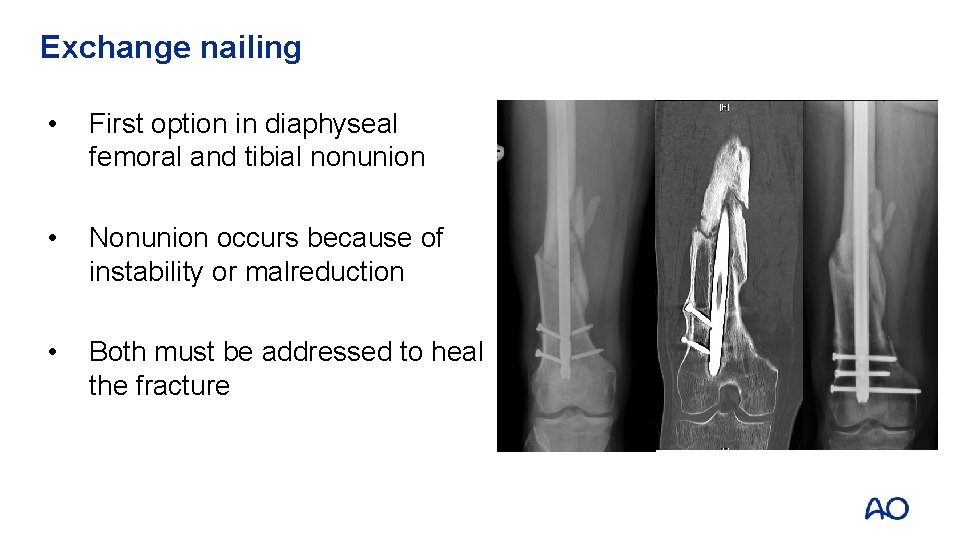
Exchange nailing • First option in diaphyseal femoral and tibial nonunion • Nonunion occurs because of instability or malreduction • Both must be addressed to heal the fracture
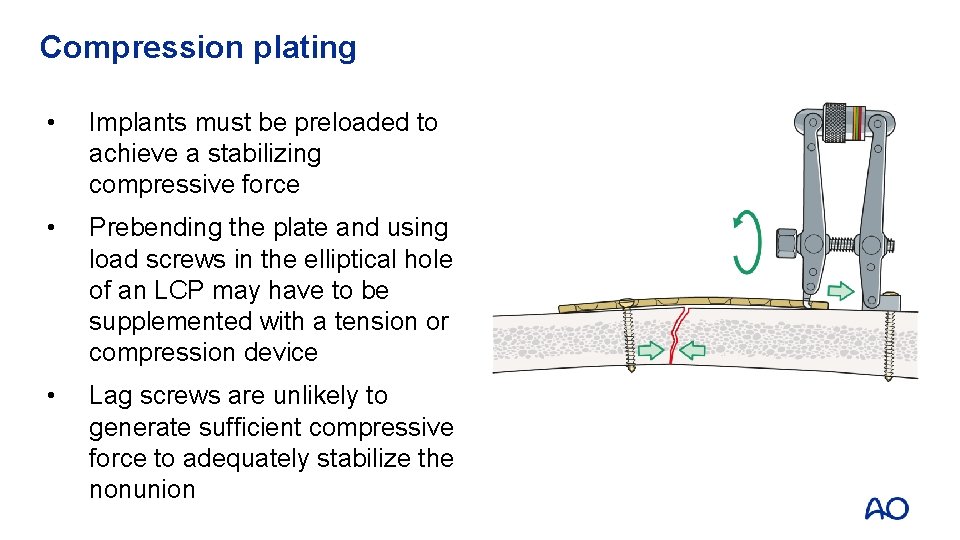
Compression plating • Implants must be preloaded to achieve a stabilizing compressive force • Prebending the plate and using load screws in the elliptical hole of an LCP may have to be supplemented with a tension or compression device • Lag screws are unlikely to generate sufficient compressive force to adequately stabilize the nonunion
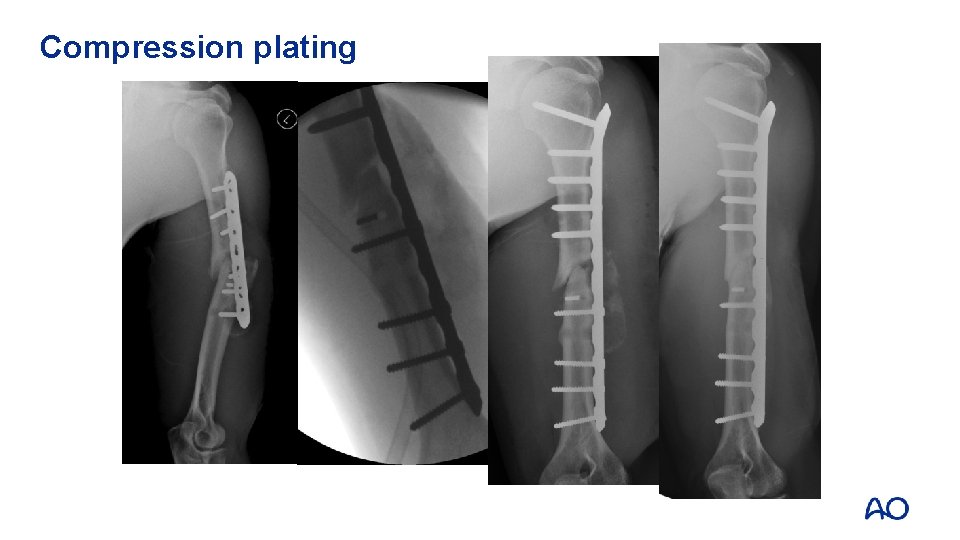
Compression plating
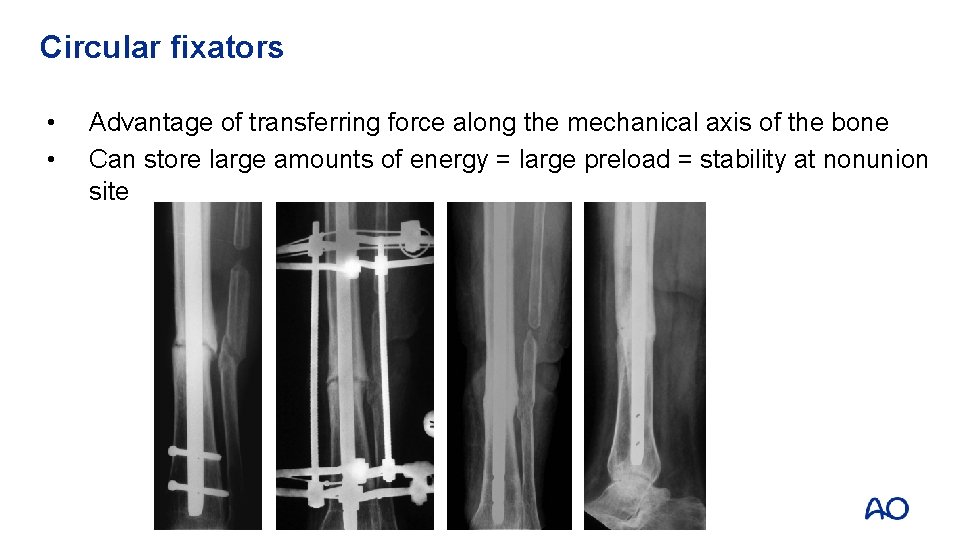
Circular fixators • • Advantage of transferring force along the mechanical axis of the bone Can store large amounts of energy = large preload = stability at nonunion site
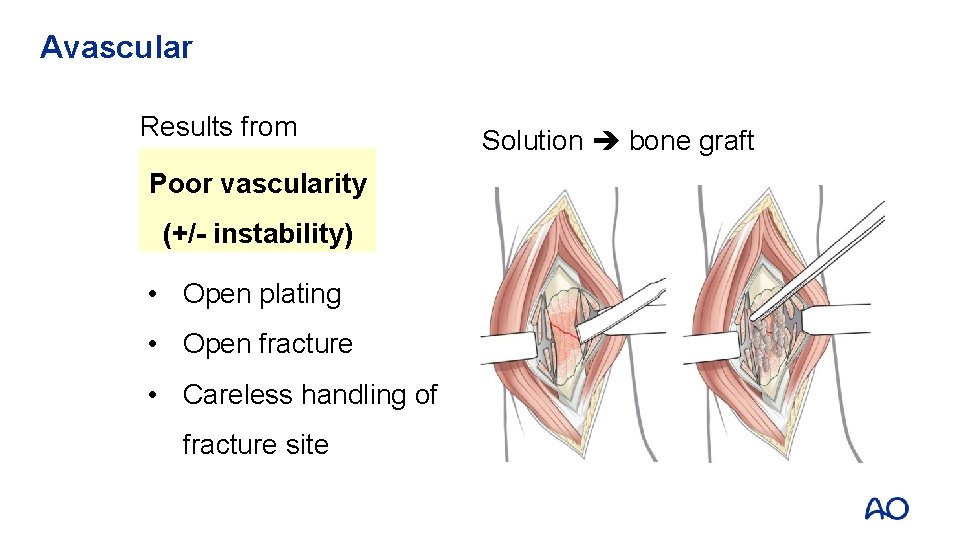
Avascular Results from Poor vascularity (+/- instability) • Open plating • Open fracture • Careless handling of fracture site Solution bone graft
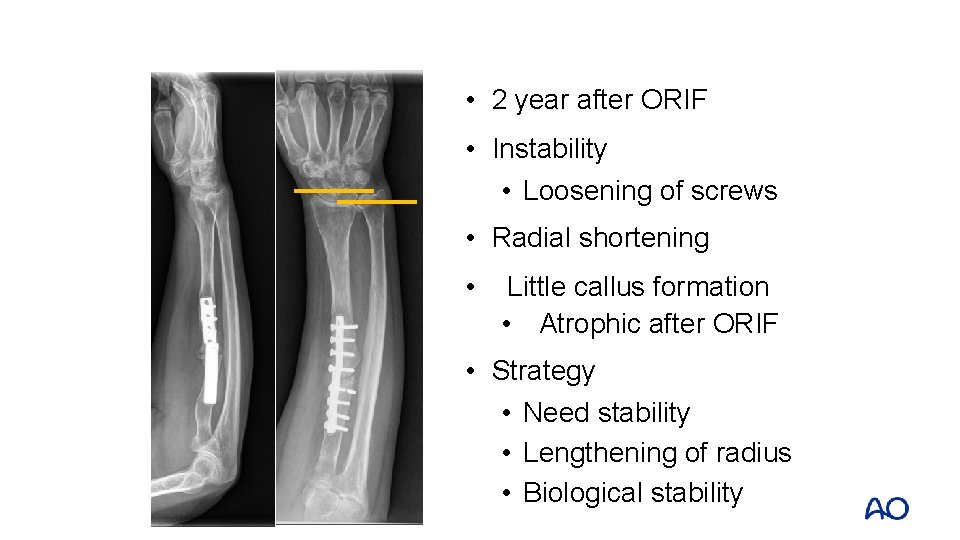
• 2 year after ORIF • Instability • Loosening of screws • Radial shortening • Little callus formation • Atrophic after ORIF • Strategy • Need stability • Lengthening of radius • Biological stability
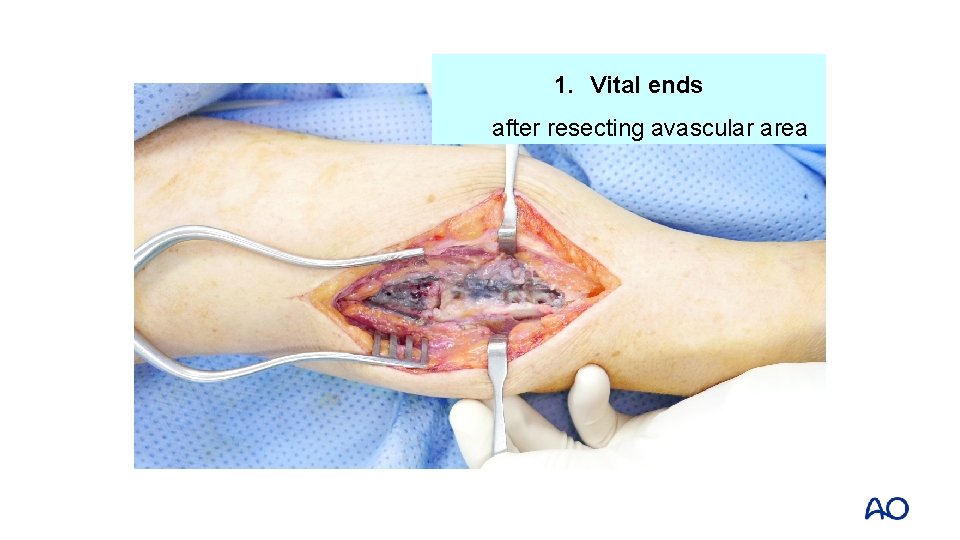
1. Vital ends after resecting avascular area
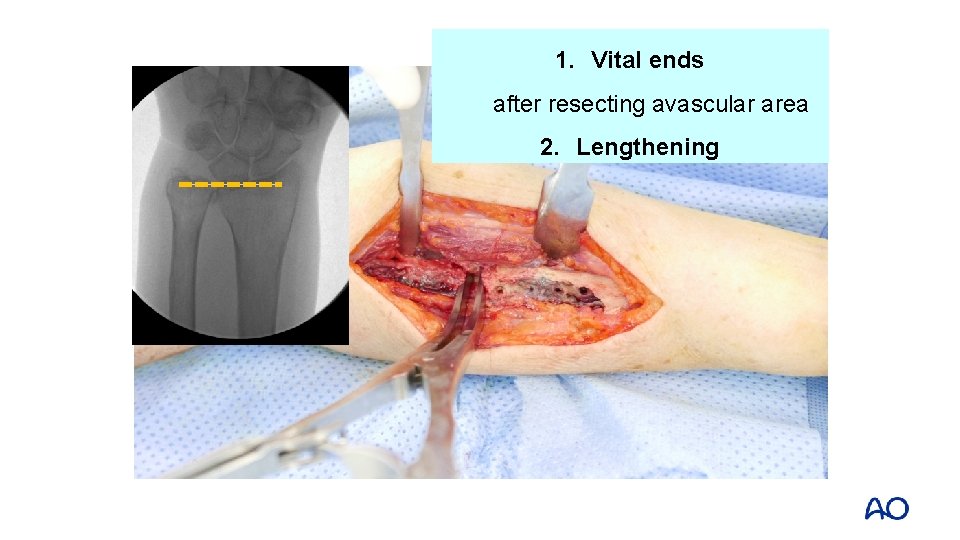
1. Vital ends after resecting avascular area 2. Lengthening
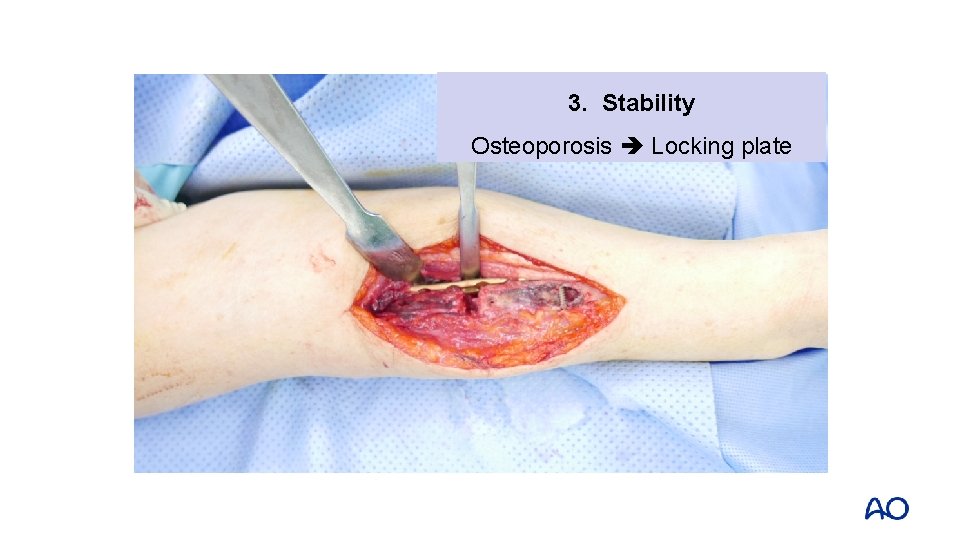
3. Stability Osteoporosis Locking plate
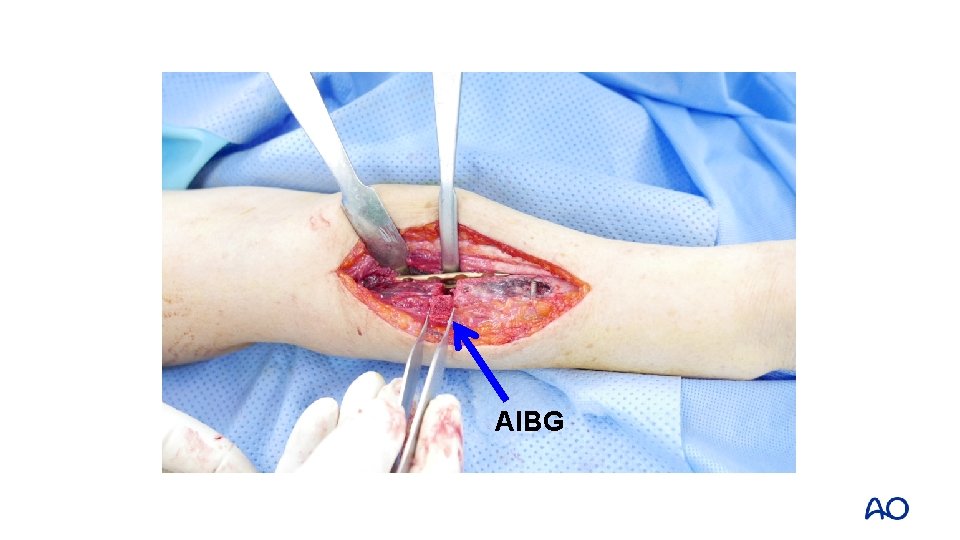
AIBG
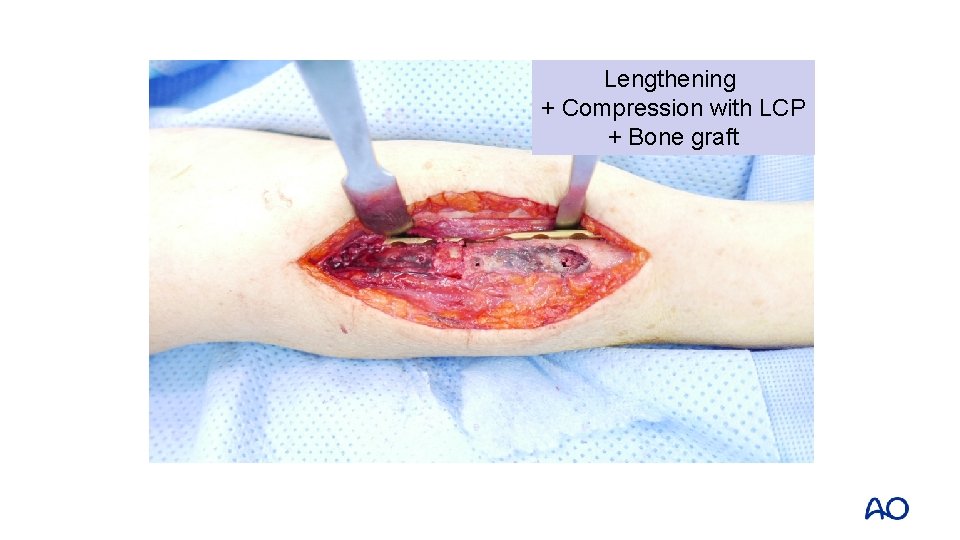
Lengthening + Compression with LCP + Bone graft
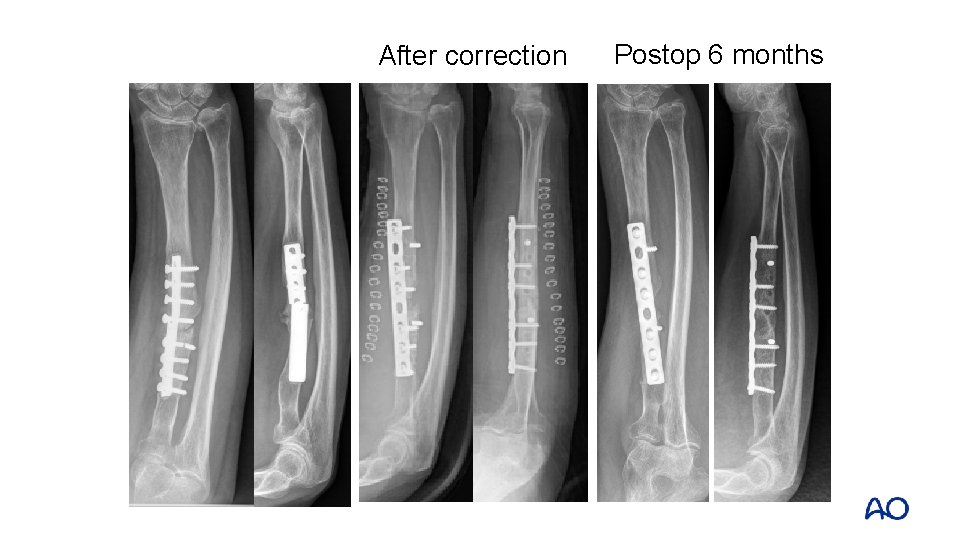
After correction Postop 6 months
What about bone grafting? • Many surgeons no longer use cancellous autograft as an adjunct to surgery • Removing existing implants and restoring alignment lead to the formation of a fresh BHO • Considerable doubt as to whether the benefits outweigh the extra morbidity
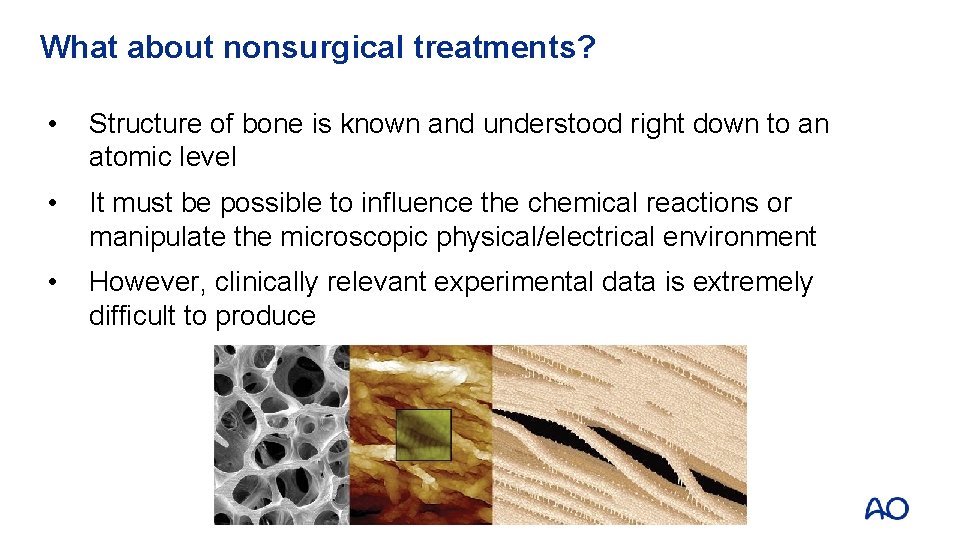
What about nonsurgical treatments? • Structure of bone is known and understood right down to an atomic level • It must be possible to influence the chemical reactions or manipulate the microscopic physical/electrical environment • However, clinically relevant experimental data is extremely difficult to produce
Prevention of nonunion • Attend AO course and faithfully follow the principles learned • Embrace the concept of the BHO • Understand why some fractures heal faster than others and some not at all • Importance of soft-tissue handling • Advantages of indirect reduction and minimal access techniques • Use large diameter IM nails where possible • Do not use an all-locked LCP in simple fracture patterns without a tension or compression device
Take-home messages • Understanding how the local strain environment influences bone formation is crucial • Restoration of alignment and stable fixation with a durable implant • In plate fixation, some energy must be stored (preload) in the construct to confer sufficient stability to allow healing • More research is needed on nonsurgical treatment • Prevention is better than cure
- Slides: 42