
Delayed cord clamping Introduction In the womb the

Delayed cord clamping

Introduction ØIn the womb, the baby's blood flows through the umbilical cord to and from the baby and the placenta bringing oxygen and nutrition to the baby from the mother's blood. Ø If the umbilical cord is left unclamped for a short time after the birth, some of the blood from the placenta passes to the baby (this is called placental transfusion) to increase the baby's blood volume and help the flow of blood to the baby's important organs including the lungs.

Ø For many years now, standard care during the delivery of the placenta has been to clamp the cord immediately at birth. Ø The umbilical cord is physiologically and genetically part of the fetus and, (in humans), normally contains two arteries (the umbilical arteries) and one vein (the umbilical vein), buried within Wharton's jelly. The umbilical vein supplies the fetus with oxygenated, nutrientrich blood from the placenta. Conversely, the fetal heart pumps deoxygenated, nutrient-depleted blood through the umbilical arteries back to the placenta.

Clamping Of The Umbilical Cord Clamping of the umbilical cord Early clamping Delayed clamping In the first 30 sec – 3 min After the pulsation is ceased

Delayed Cord Clamping • Umbilical cord blood is a baby’s life blood until birth. • It contains many wonderfully precious cells like , stem cells, RBCs and WBCs to help fight disease and infection. • It makes sense that delayed cord clamping is a great option for newly born babies.

Definition of Delayed Cord Clamping üumbilical cord is not clamped or cut until after pulsations have ceased ( 3 -5 min after birth ), or until after the placenta is delivered , Unless the mother wishes it to be cut earlier. üAny mild resuscitation of the baby can be done at the site of birth , with the benefit of continued oxygen flow to the baby through the Umbilical Cord.

Advantages of late clamping 1) Normal , healthy blood volume for the transition to life outside the womb (75 -80 ml ). 2) A full count of RBCs , WBCs , stem cells & immune cells. 3) Improves the Iron status of the infant up to 6 month post-birth ( to one year ). 4) Decrease the risk of feto-maternal transfusion. 5) In the mother , prevent complication with delivering the placenta.

Risks of delayed cord clamping Ø Compared to term neonates, preterm neonates are at increased risk of temperature dysregulation, hypotension, and the need for immediate pediatric assessment and for blood transfusion , The timing of delayed umbilical cord clamping ranged from 25 seconds to a maximum of 180 seconds after delivery. Ø term neonates (≥ 37 weeks’ gestation) have significantly lower risks of morbidity and mortality , associated with higher neonatal hemoglobin concentration at 24 to 48 hours of life and lower likelihood of iron deficiency at 3– 6 months,

Contraindication of late clamping Ø Placenta abruption. Ø Multiple gestation , specifically monochorionicgestation. ØIso-immunization & Hyropsfetalis. ØSevere fetal bradycardia , or other indications for need of immediate resuscitation. ØFatal anomalies.

Relative contraindications ٭ Multiple gestation (non-monochorionic ) ٭ Congenital anomalies. ٭ Meconium amniotic fluid.

How to perform late clamping
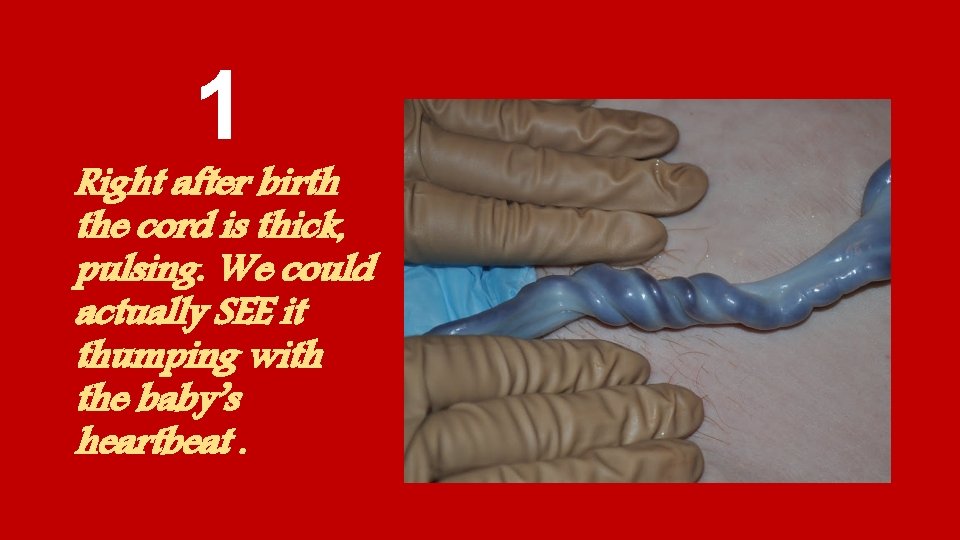
1 Right after birth the cord is thick, pulsing. We could actually SEE it thumping with the baby’s heartbeat.
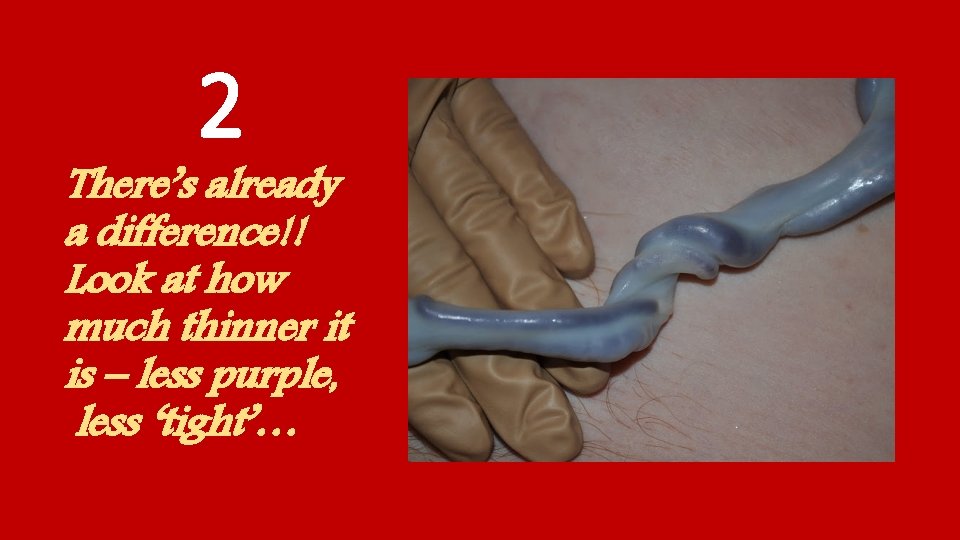
2 There’s already a difference!! Look at how much thinner it is – less purple, less ‘tight’…

3 Less purple , thinner
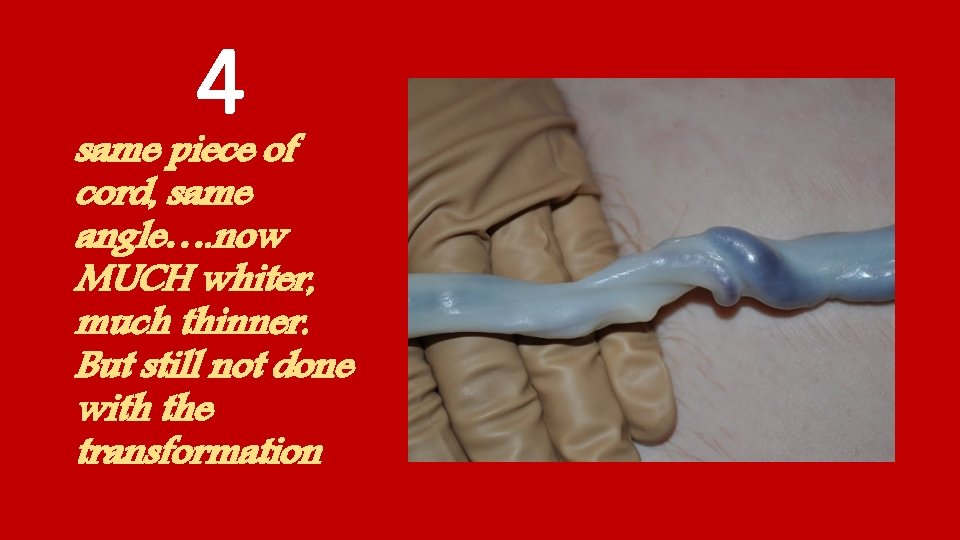
4 same piece of cord, same angle…. now MUCH whiter, much thinner. But still not done with the transformation
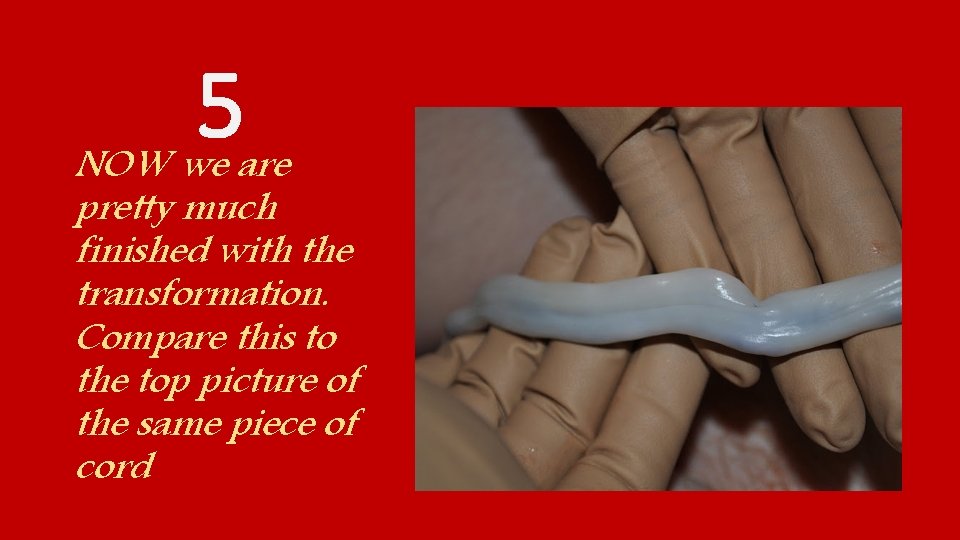
5 NOW we are pretty much finished with the transformation. Compare this to the top picture of the same piece of cord
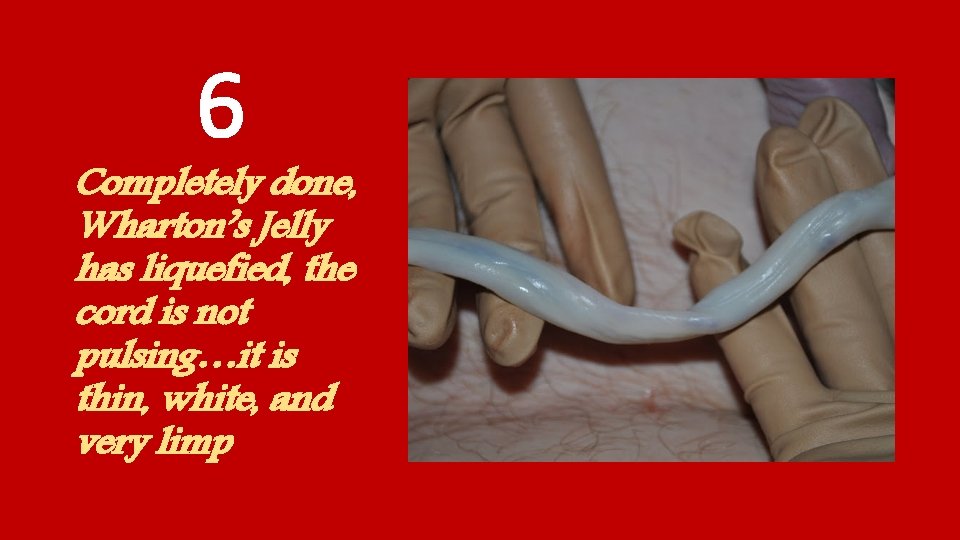
6 Completely done, Wharton’s Jelly has liquefied, the cord is not pulsing…it is thin, white, and very limp
‘milking’ or ‘stripping’ of umbilical cord ØMilking and stripping ; apply to the active practice of squeezing blood down the cord to the baby. ØThe aim : shorten the time from delivery to clamping the umbilical cord while still providing up to 20 m. L of placental blood. ØMilking the umbilical cord is not physiologic and may provide a rapid bolus of blood to the infant. ØOverall, it is not yet clear whether milking or stripping the umbilical cord is equivalent to delayed cord clamping, and further study is necessary.

v. Done By: Sujood El-ghouty. Elham El-ashi. Suzan Al-hamarna. Anwar Salah. Hend Al-zraiee. Rola al-masri. Hala Al-hajar. Nahla kolab. Eman Al-ghalban. Thanks
- Slides: 19