
Delawares Gun Court Chandlee Johnson Kuhn Chief Judge

- Slides: 48
Delaware’s Gun Court Chandlee Johnson Kuhn Chief Judge Delaware Family Court
Every single day in the United States, guns cause the death of 20 children and young adults. Children and young adults constitute over 41% of all firearm deaths and non-fatal injuries. “Gun Violence Statistics, ” Legal Community Against Violence http: //www. lcav. org/statistics-polling/gun_violence_statistics. asp#9.
Why have Gun Court?
The Need �Juvenile “street gun culture” trend � 20% of all perpetrators of Wilmington gun crime in 2008 were juveniles between the ages of 14 and 16 �System complications: �Dual jurisdiction of Family Court & Superior Court �Crowded court calendars �Multiple case delays �No communications between various State agencies �Inadequate data tracking & information sharing �Political bickering
The Solution �Establish a Gun Court � 2009 �Part of Family Court �Exclusively for juveniles �GOAL: �To break the repeating cycle of juvenile gun crime & rehabilitate DE’s youth as quickly & effectively as possible within Constitutional Rights.
Methodology Delaware is looking at each individual juvenile and assessing their unique individual circumstances Emphasizing treatment and education over punishment and alienation has led to a low recidivism rate and judicial and economical efficiency. The collaboration among the Court, Prosecutor’s Office, Defense Counsel and the Division of Youth Rehabilitative Services has made this program successful in Delaware.
The Reasoning Addressing gun violence in juvenile court promotes community safety and rehabilitation Single, streamlined forum to address gun violence Sentences include appropriate treatment, rehabilitation efforts & close court supervision Consistent data tracking for effective resource allocation
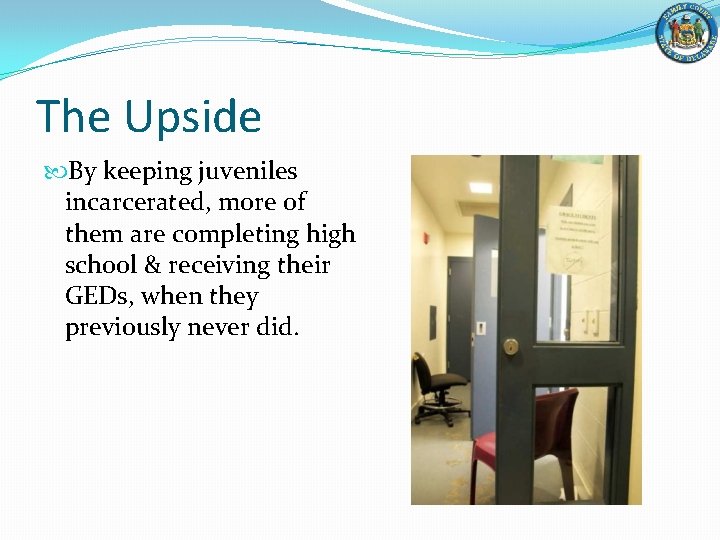
The Upside By keeping juveniles incarcerated, more of them are completing high school & receiving their GEDs, when they previously never did.
The Downside Taking a risk with these youths in terms of giving them another chance after committing very serious offenses Gun Court calendar will eventually be overloaded with non-gun cases since once in Gun Court, juvenile comes back for all subsequent charges.
Dwayne Betts What is the value of a life?
Success Story New Castle County: E. G. Came in with very serious robbery gun charges Went to Project Stay-Free Committed a VOP by failing to check in First 90 days no change Today (6 months later): a New man. Packed the Courtroom with supporters Thankful for the second chance
Delaware Gun Court Statistics
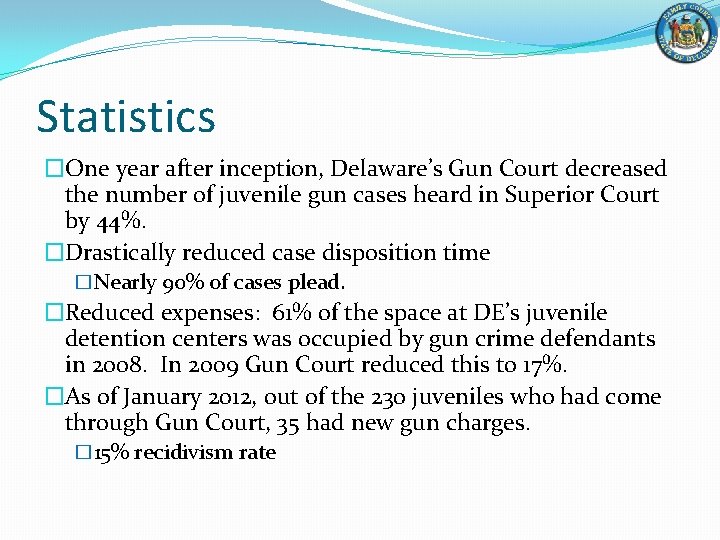
Statistics �One year after inception, Delaware’s Gun Court decreased the number of juvenile gun cases heard in Superior Court by 44%. �Drastically reduced case disposition time �Nearly 90% of cases plead. �Reduced expenses: 61% of the space at DE’s juvenile detention centers was occupied by gun crime defendants in 2008. In 2009 Gun Court reduced this to 17%. �As of January 2012, out of the 230 juveniles who had come through Gun Court, 35 had new gun charges. � 15% recidivism rate
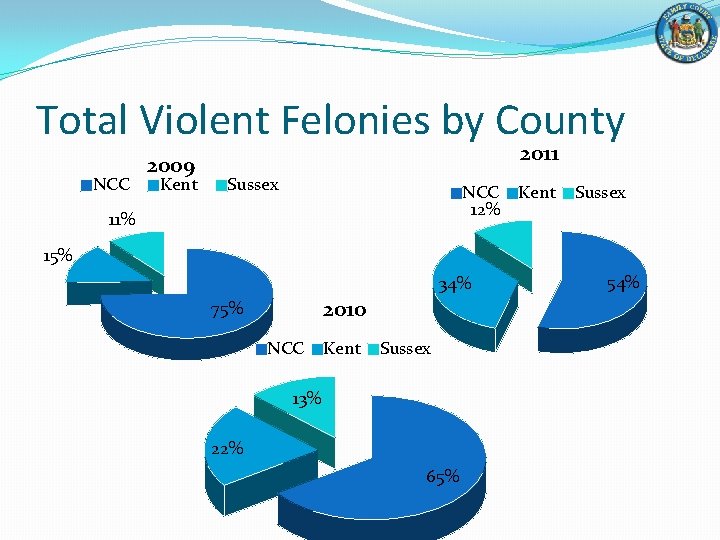
Total Violent Felonies by County NCC 2009 Kent 2011 Sussex NCC Kent 12% 11% Sussex 15% 34% 2010 75% NCC Kent Sussex 13% 22% 65% 54%
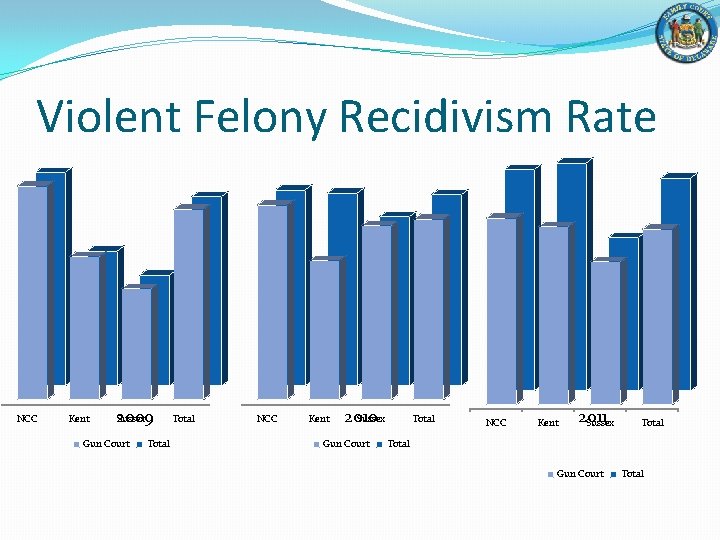
Violent Felony Recidivism Rate NCC Kent Sussex 2009 Gun Court Total NCC Kent Sussex 2010 Gun Court Total NCC Kent 2011 Sussex Total Gun Court Total
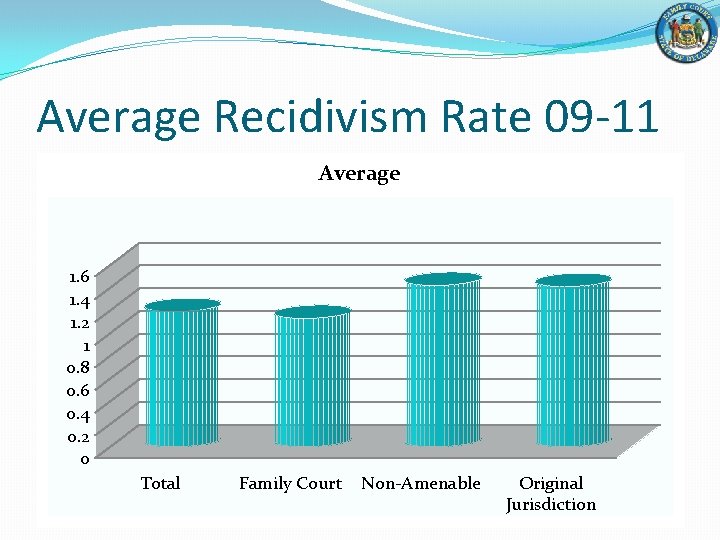
Average Recidivism Rate 09 -11 Average 1. 6 1. 4 1. 2 1 0. 8 0. 6 0. 4 0. 2 0 Total Family Court Non-Amenable Original Jurisdiction
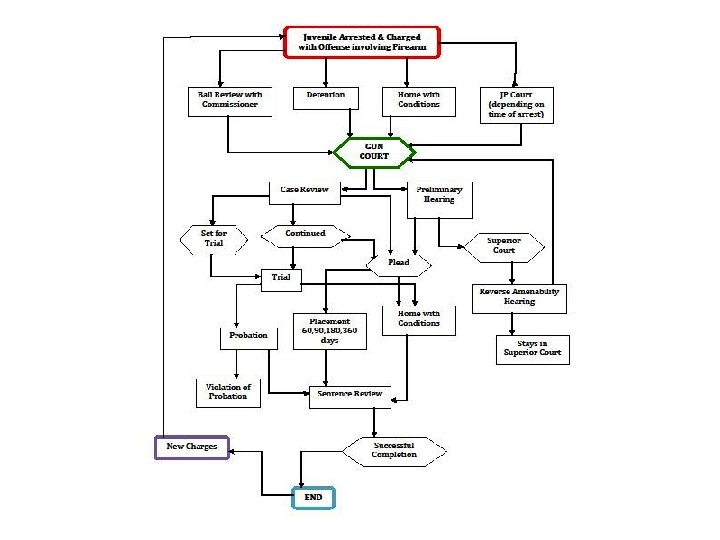
The Gun Court Process From Arrest through Release
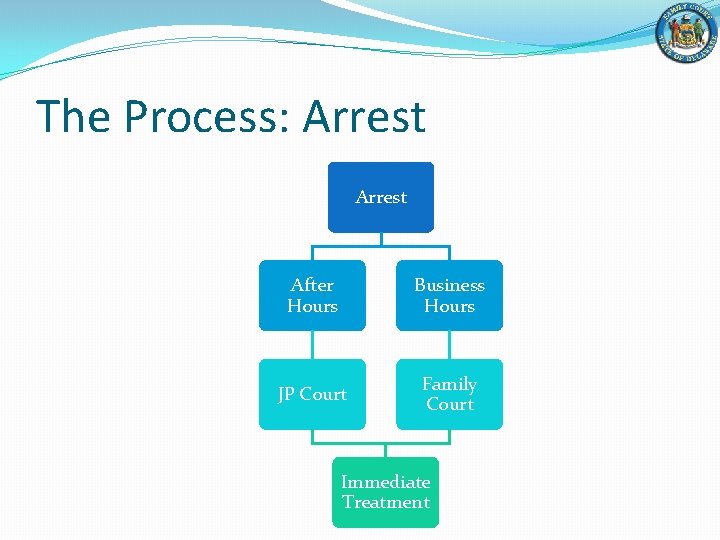
The Process: Arrest After Hours Business Hours JP Court Family Court Immediate Treatment
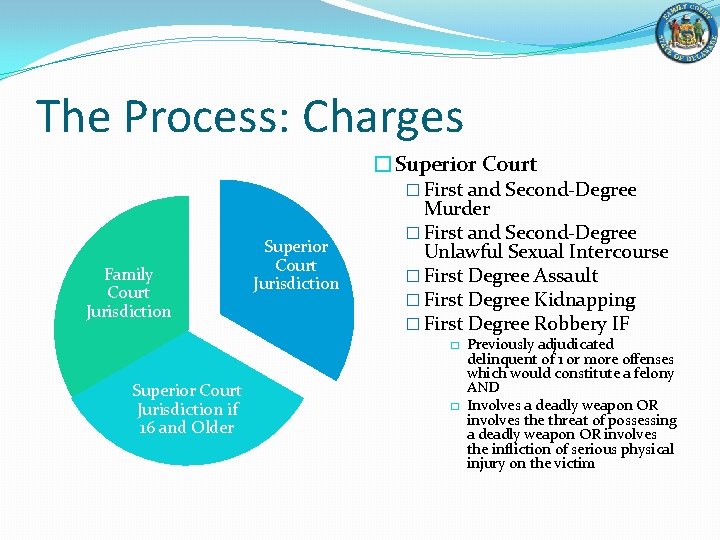
The Process: Charges �Superior Court � First and Second-Degree Family Court Jurisdiction Superior Court Jurisdiction Murder � First and Second-Degree Unlawful Sexual Intercourse � First Degree Assault � First Degree Kidnapping � First Degree Robbery IF � Superior Court Jurisdiction if 16 and Older � Previously adjudicated delinquent of 1 or more offenses which would constitute a felony AND Involves a deadly weapon OR involves the threat of possessing a deadly weapon OR involves the infliction of serious physical injury on the victim
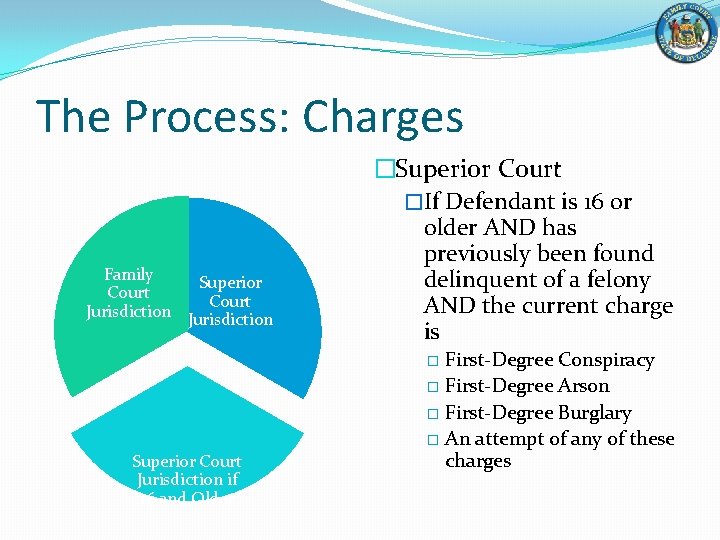
The Process: Charges Family Superior Court Jurisdiction �Superior Court �If Defendant is 16 or older AND has previously been found delinquent of a felony AND the current charge is First-Degree Conspiracy � First-Degree Arson � First-Degree Burglary � An attempt of any of these charges � Superior Court Jurisdiction if 16 and Older
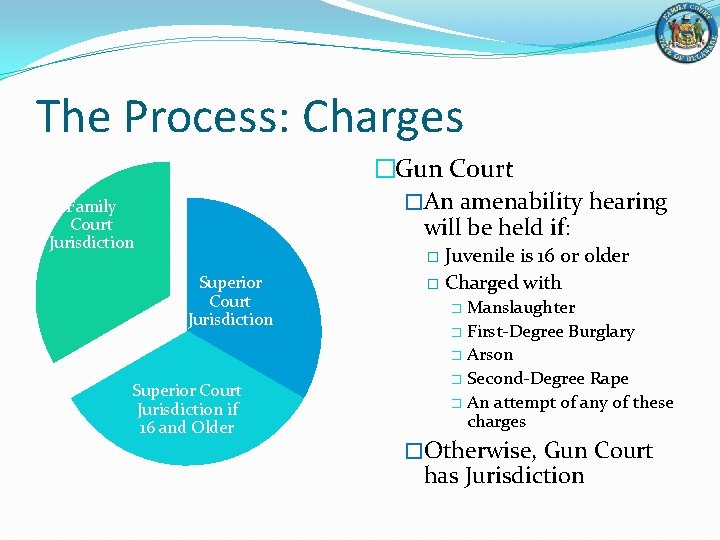
The Process: Charges �Gun Court �An amenability hearing will be held if: Family Court Jurisdiction Juvenile is 16 or older � Charged with � Superior Court Jurisdiction if 16 and Older Manslaughter � First-Degree Burglary � Arson � Second-Degree Rape � An attempt of any of these charges � �Otherwise, Gun Court has Jurisdiction
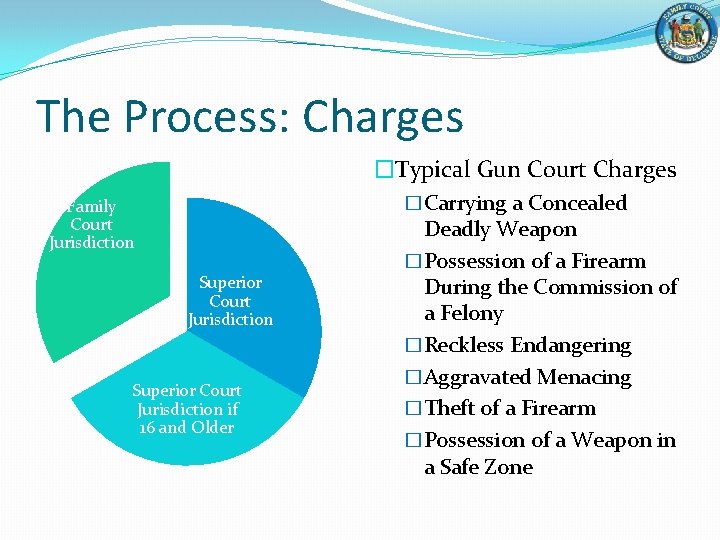
The Process: Charges �Typical Gun Court Charges �Carrying a Concealed Family Court Jurisdiction Superior Court Jurisdiction if 16 and Older Deadly Weapon �Possession of a Firearm During the Commission of a Felony �Reckless Endangering �Aggravated Menacing �Theft of a Firearm �Possession of a Weapon in a Safe Zone
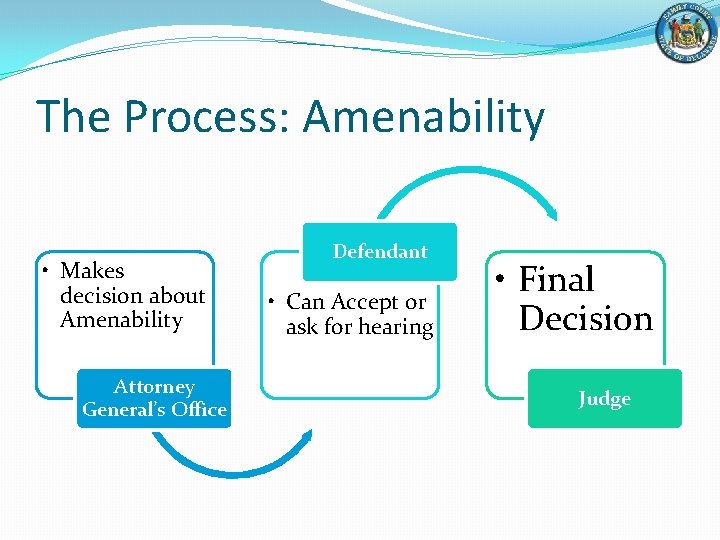
The Process: Amenability • Makes decision about Amenability Attorney General’s Office Defendant • Can Accept or ask for hearing • Final Decision Judge
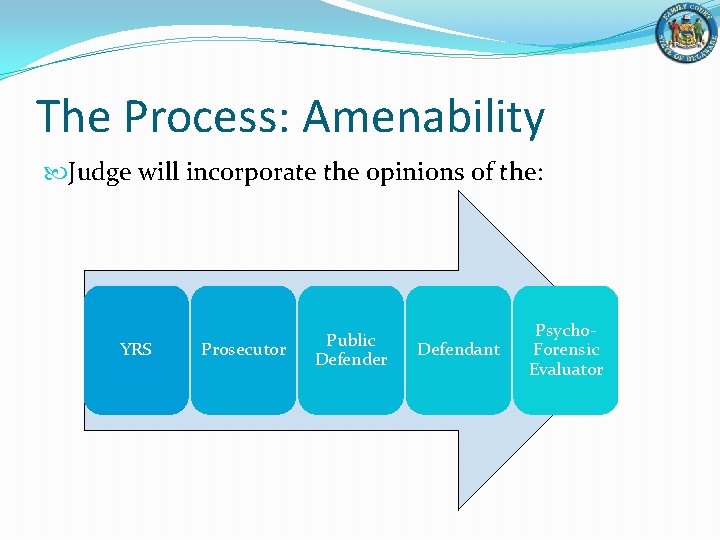
The Process: Amenability Judge will incorporate the opinions of the: YRS Prosecutor Public Defender Defendant Psycho. Forensic Evaluator
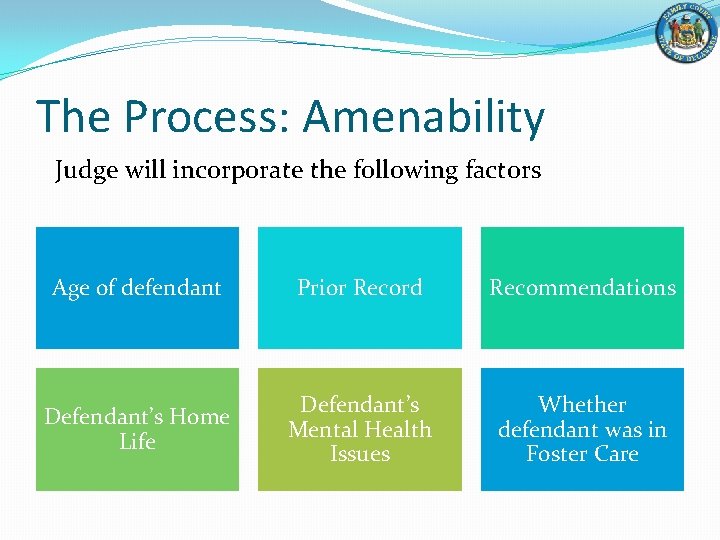
The Process: Amenability Judge will incorporate the following factors Age of defendant Prior Record Recommendations Defendant’s Home Life Defendant’s Mental Health Issues Whether defendant was in Foster Care
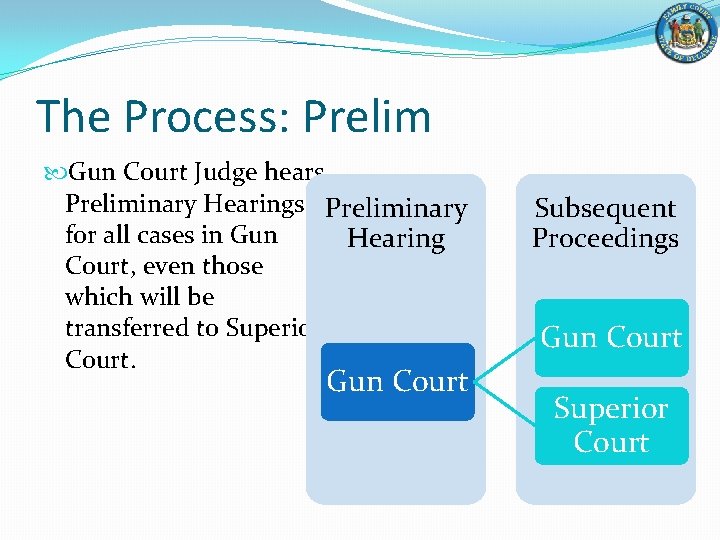
The Process: Prelim Gun Court Judge hears Preliminary Hearings Preliminary for all cases in Gun Hearing Court, even those which will be transferred to Superior Court. Gun Court Subsequent Proceedings Gun Court Superior Court
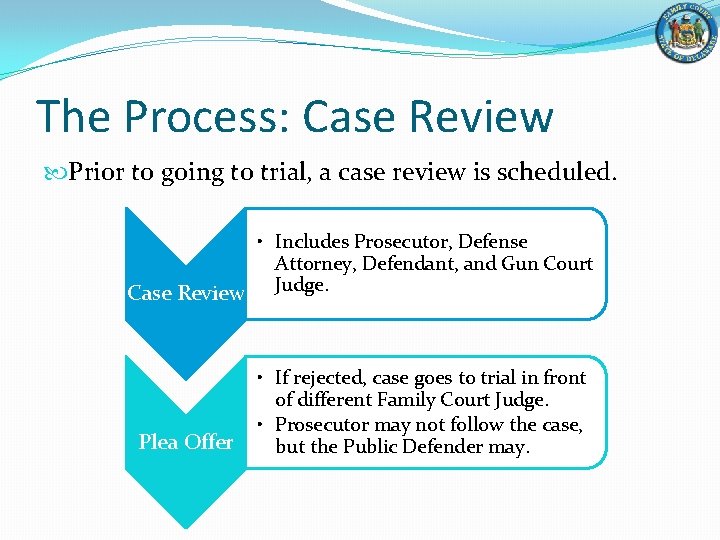
The Process: Case Review Prior to going to trial, a case review is scheduled. • Includes Prosecutor, Defense Attorney, Defendant, and Gun Court Case Review Judge. Plea Offer • If rejected, case goes to trial in front of different Family Court Judge. • Prosecutor may not follow the case, but the Public Defender may.
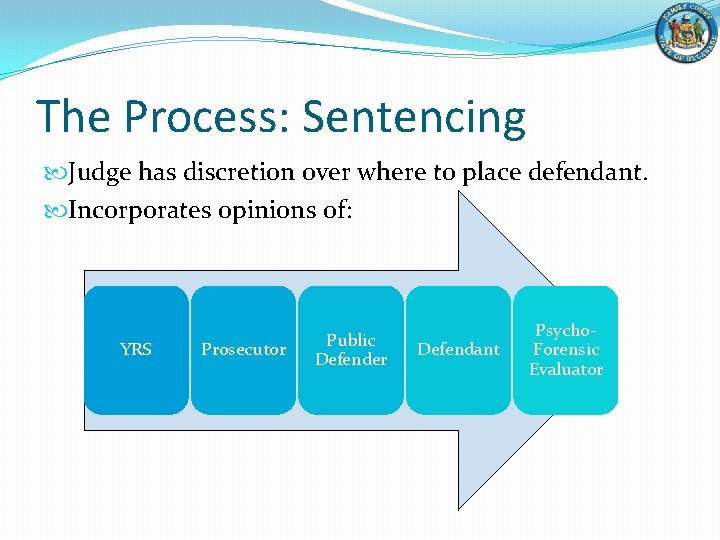
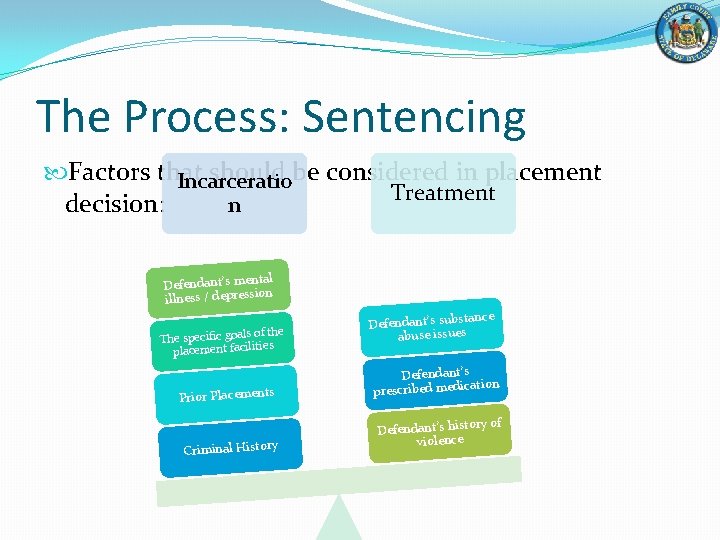
The Process: Sentencing Judge has discretion over where to place defendant. Incorporates opinions of: YRS Prosecutor Public Defender Defendant Psycho. Forensic Evaluator
The Process: Sentencing Factors that should be considered in placement Incarceratio Treatment decision: n tal Defendant’s men n illness / depressio of the The specific goals s ie placement facilit Prior Placements ance Defendant’s subst abuse issues Defendant’s ation prescribed medic ry of Criminal History Defendant’s histo violence
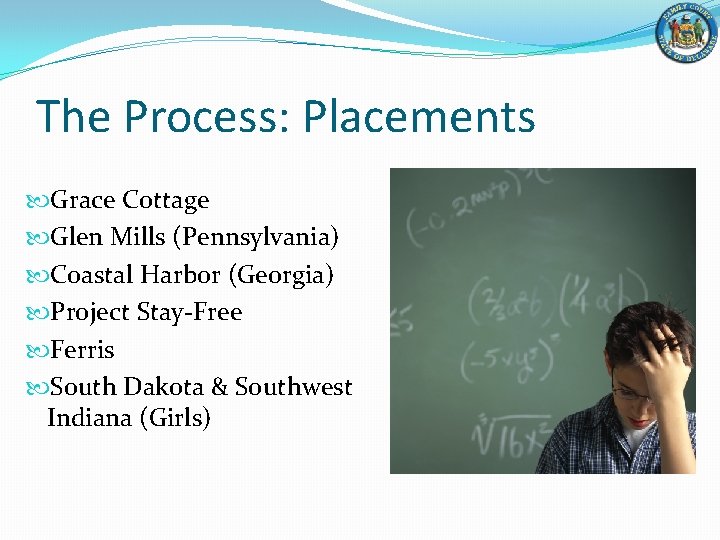
The Process: Placements Grace Cottage Glen Mills (Pennsylvania) Coastal Harbor (Georgia) Project Stay-Free Ferris South Dakota & Southwest Indiana (Girls)
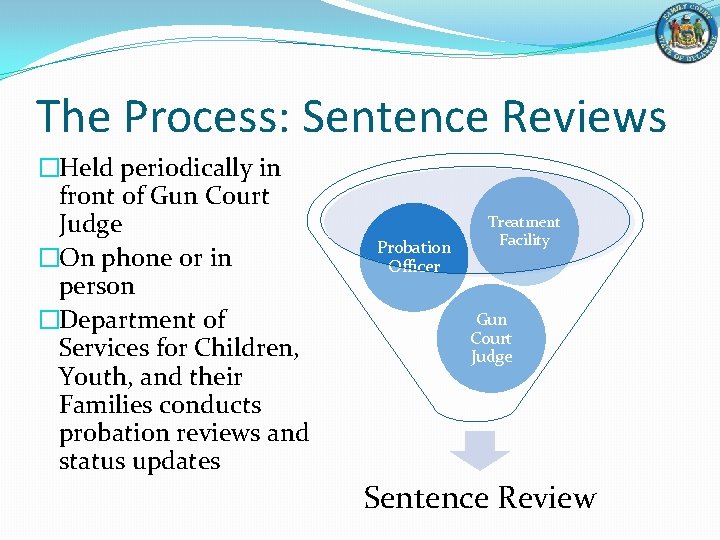
The Process: Sentence Reviews �Held periodically in front of Gun Court Judge �On phone or in person �Department of Services for Children, Youth, and their Families conducts probation reviews and status updates Probation Officer Treatment Facility Gun Court Judge Sentence Review
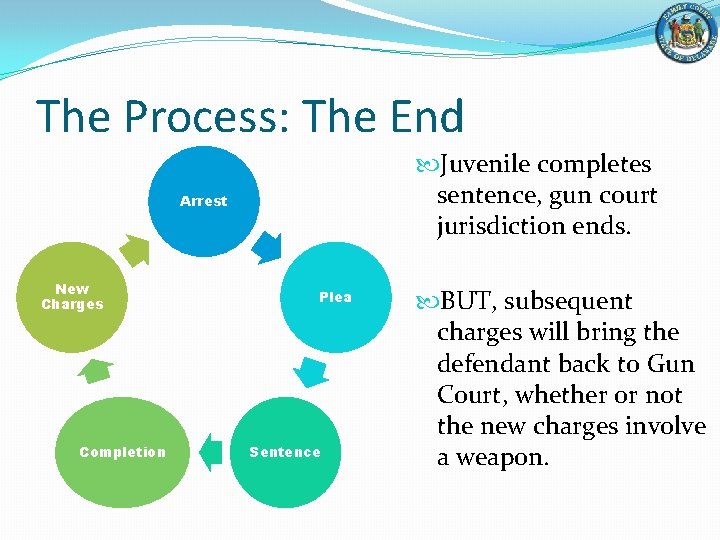
The Process: The End Juvenile completes sentence, gun court jurisdiction ends. Arrest New Charges Completion Plea Sentence BUT, subsequent charges will bring the defendant back to Gun Court, whether or not the new charges involve a weapon.
The Role of Gun Court Players
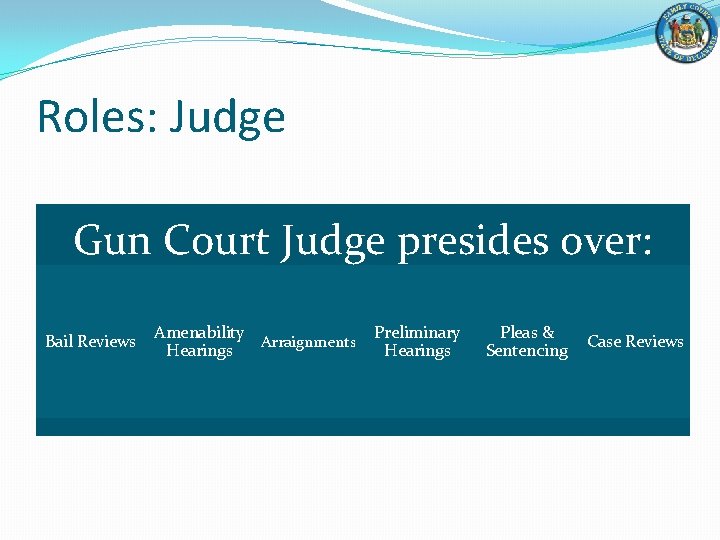
Roles: Judge Gun Court Judge presides over: Bail Reviews Amenability Arraignments Hearings Preliminary Hearings Pleas & Sentencing Case Reviews
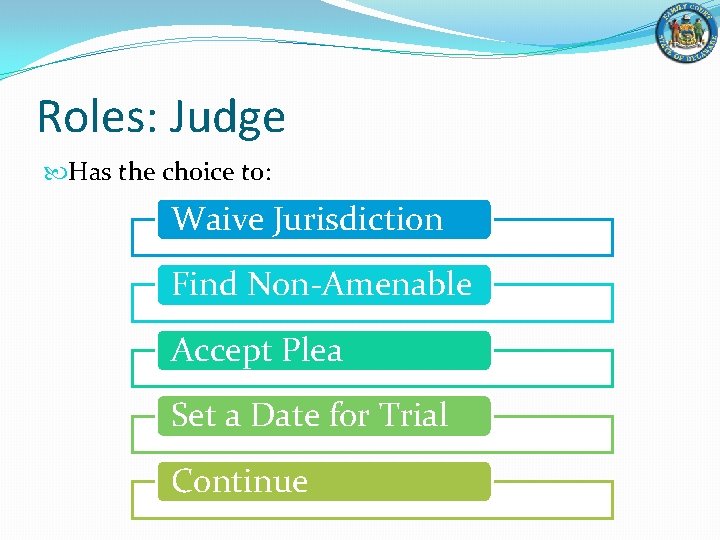
Roles: Judge Has the choice to: Waive Jurisdiction Find Non-Amenable Accept Plea Set a Date for Trial Continue
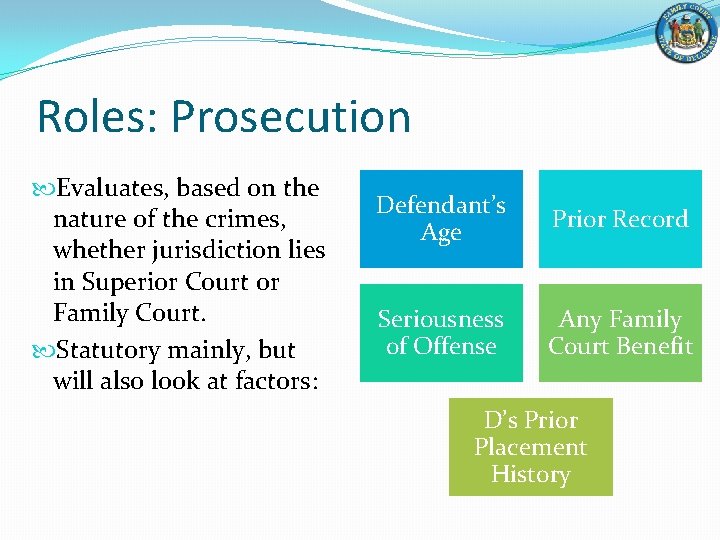
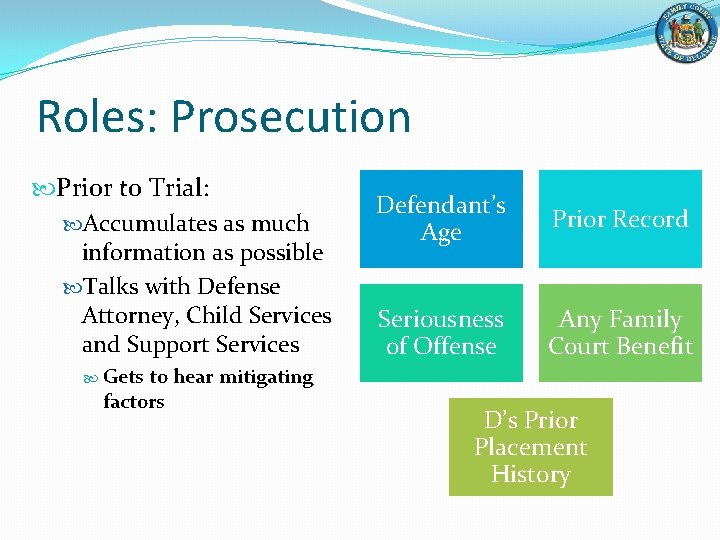
Roles: Prosecution Evaluates, based on the nature of the crimes, whether jurisdiction lies in Superior Court or Family Court. Statutory mainly, but will also look at factors: Defendant’s Age Prior Record Seriousness of Offense Any Family Court Benefit D’s Prior Placement History
Roles: Prosecution Prior to Trial: Accumulates as much information as possible Talks with Defense Attorney, Child Services and Support Services Defendant’s Age Prior Record Seriousness of Offense Any Family Court Benefit Gets to hear mitigating factors D’s Prior Placement History
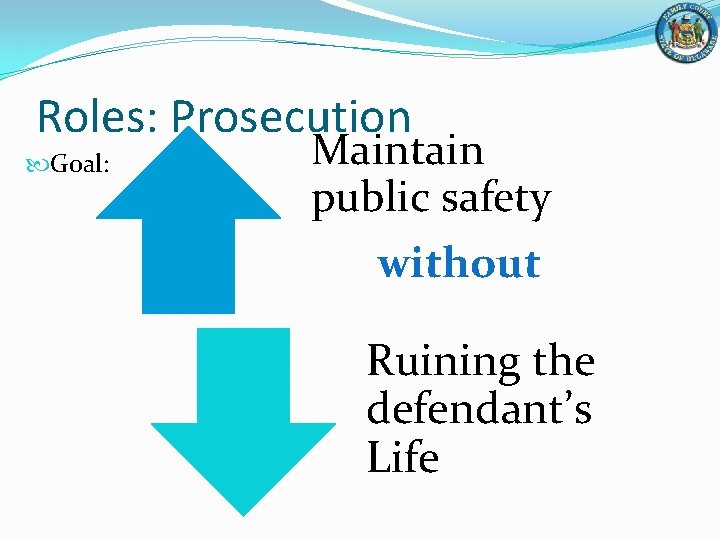
Roles: Prosecution Goal: Maintain public safety without Ruining the defendant’s Life
Roles: Defense Meet with Defendant, PFE, Family Goal: Keep the case in Gun Court, and out of the Superior Court.
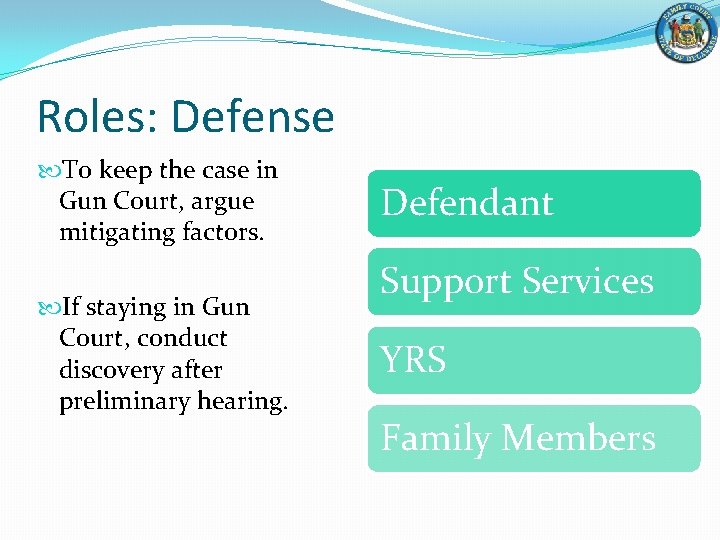
Roles: Defense To keep the case in Gun Court, argue mitigating factors. If staying in Gun Court, conduct discovery after preliminary hearing. Defendant Support Services YRS Family Members
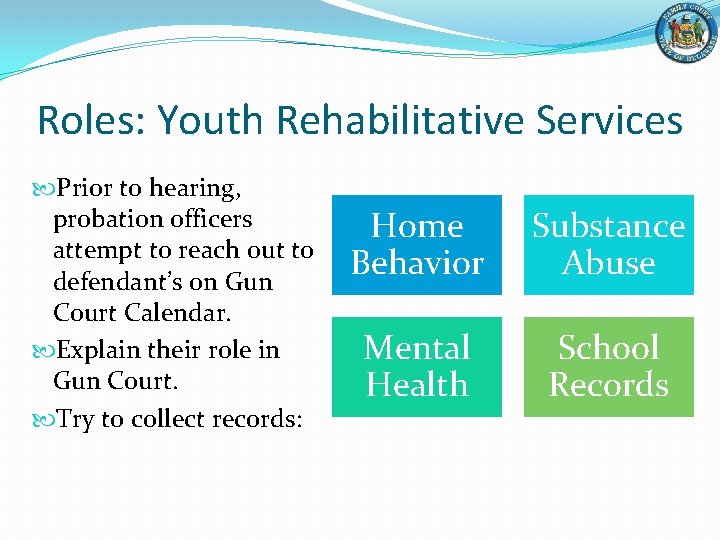
Roles: Youth Rehabilitative Services Prior to hearing, probation officers attempt to reach out to defendant’s on Gun Court Calendar. Explain their role in Gun Court. Try to collect records: Home Behavior Substance Abuse Mental Health School Records
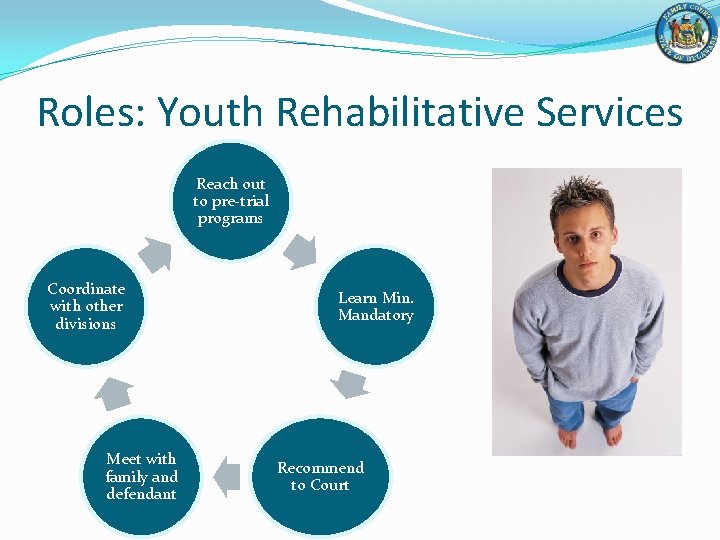
Roles: Youth Rehabilitative Services Reach out to pre-trial programs Coordinate with other divisions Meet with family and defendant Learn Min. Mandatory Recommend to Court
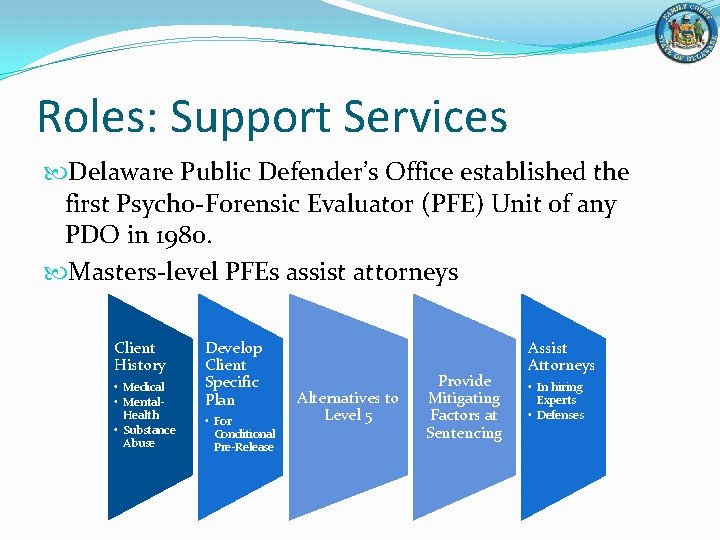
Roles: Support Services Delaware Public Defender’s Office established the first Psycho-Forensic Evaluator (PFE) Unit of any PDO in 1980. Masters-level PFEs assist attorneys Client History • Medical • Mental. Health • Substance Abuse Develop Client Specific Plan • For Conditional Pre-Release Alternatives to Level 5 Provide Mitigating Factors at Sentencing Assist Attorneys • In hiring Experts • Defenses
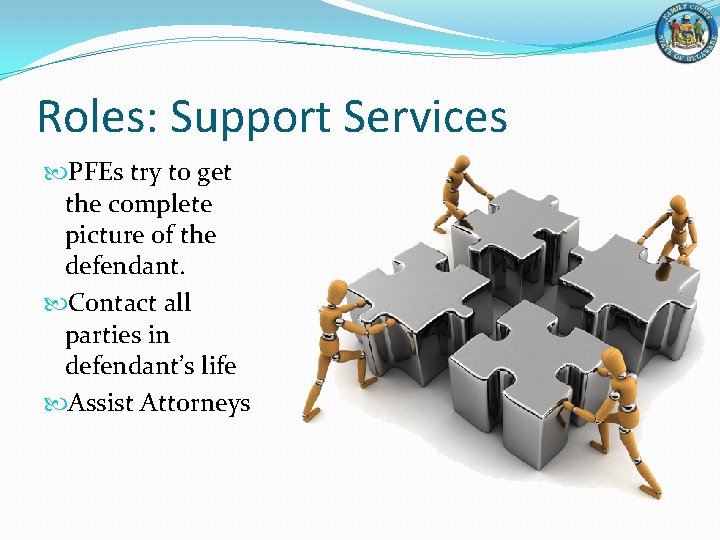
Roles: Support Services PFEs try to get the complete picture of the defendant. Contact all parties in defendant’s life Assist Attorneys
Future Goals Lower recidivism rates. Provide more juvenile’s with access to education/ GED programs. Help juveniles become employed or employable upon completion of rehabilitative treatment. Gain a better understanding of the reasons for youth gun crimes.
Conclusion Gun Court is still a work in progress, but we have seen positive results thus far and we continue to adapt to better serve the citizens of Delaware.
Questions?