
Dehydration joins synthesis reaction monomers by releasing H
�Dehydration �joins synthesis reaction monomers by releasing H 2 O Water is created and given off �requires energy & enzymes

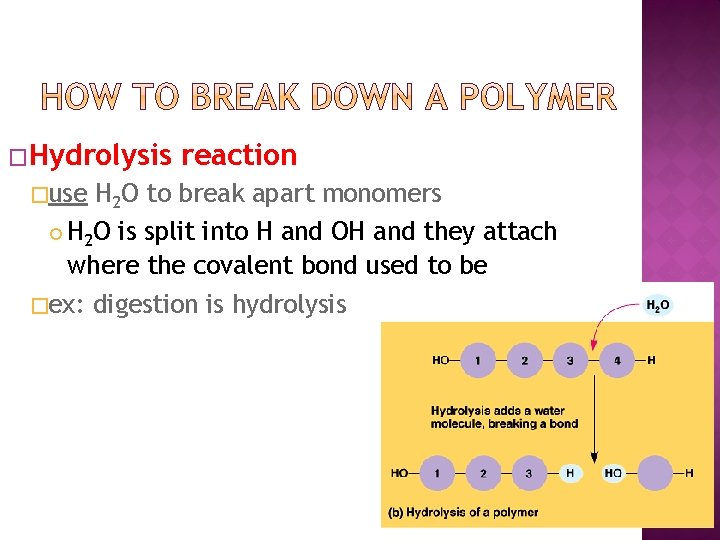
�Hydrolysis reaction �use H 2 O to break apart monomers H 2 O is split into H and OH and they attach where the covalent bond used to be �ex: digestion is hydrolysis
� What type of chemical reaction builds polymers? � What type of chemical reaction breaks down polymers?
� Making (uses energy) and breaking (releases energy) of chemical bonds leading to form new molecules � Reactions cannot create or destroy matter, only rearrange it � 6 CO 2 + 6 H 2 O C 6 H 12 O 6 +6 O 2 � In a chemical reaction the reactant(s) are converted to the product(s) � Reactants Products
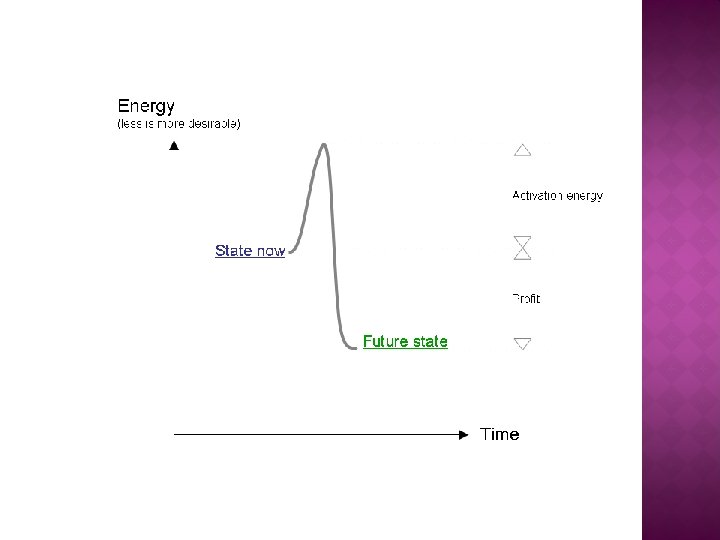
The energy required to start an energyabsorbing reaction. � Which type of reaction would require a larger input of energy – one that makes polymers or one that breaks them down into monomers?
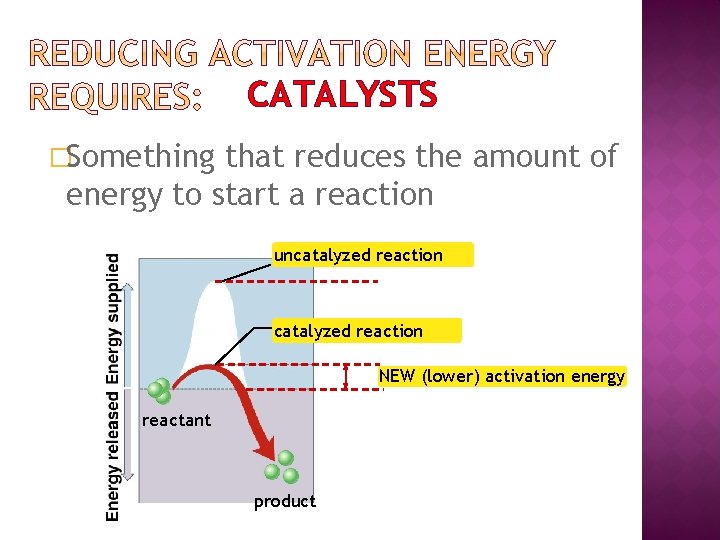
CATALYSTS �Something that reduces the amount of energy to start a reaction uncatalyzed reaction NEW (lower) activation energy reactant product
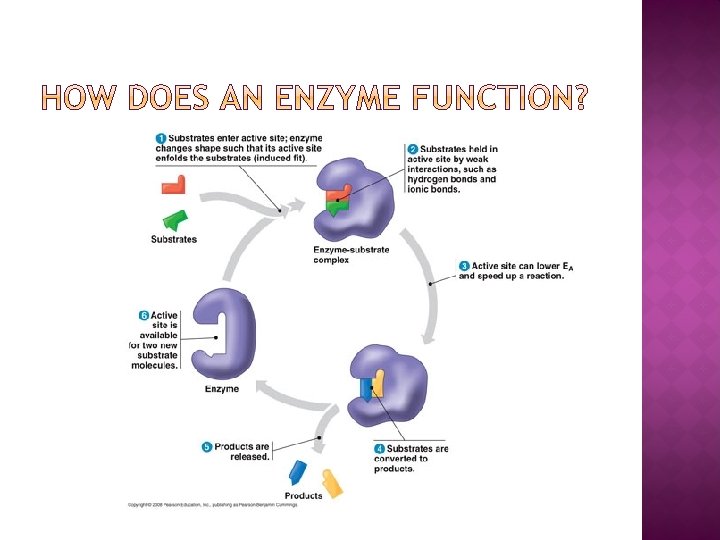
�A biological catalyst (act in living things) �made from protein – 3 D shape is important!!! �Not used up or changed by the reaction – can be used over and over again
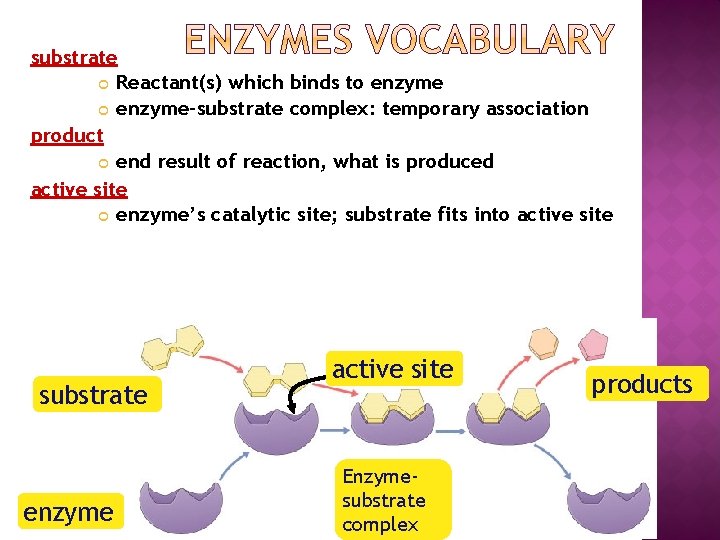
substrate Reactant(s) which binds to enzyme-substrate complex: temporary association product end result of reaction, what is produced active site enzyme’s catalytic site; substrate fits into active site substrate enzyme active site Enzymesubstrate complex products
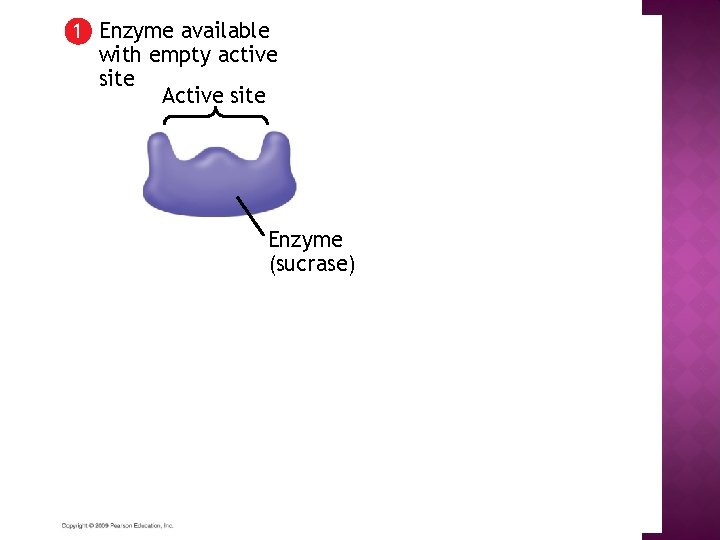
1 Enzyme available with empty active site Active site Enzyme (sucrase)
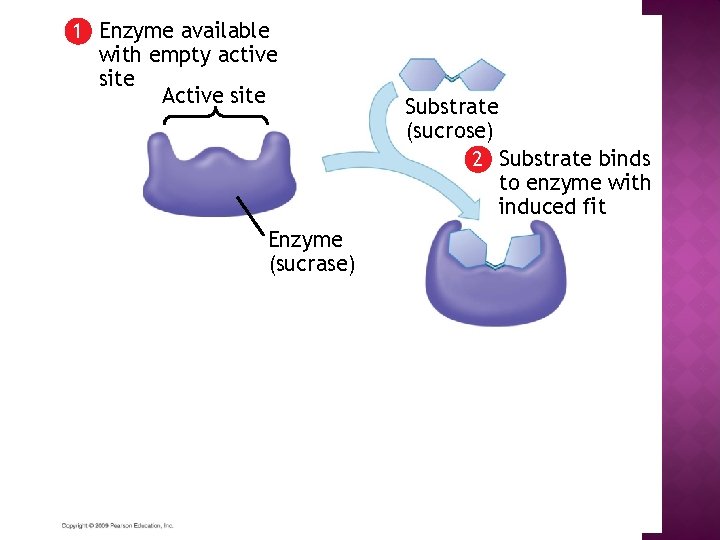
1 Enzyme available with empty active site Active site Enzyme (sucrase) Substrate (sucrose) 2 Substrate binds to enzyme with induced fit
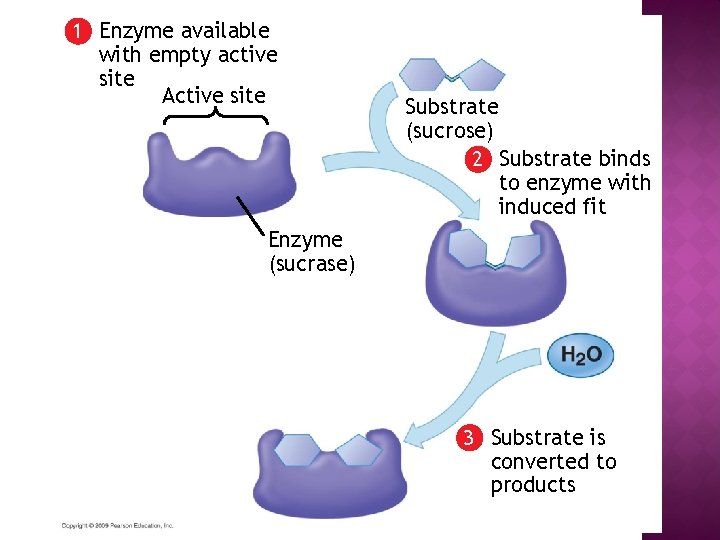
1 Enzyme available with empty active site Active site Substrate (sucrose) 2 Substrate binds to enzyme with induced fit Enzyme (sucrase) 3 Substrate is converted to products
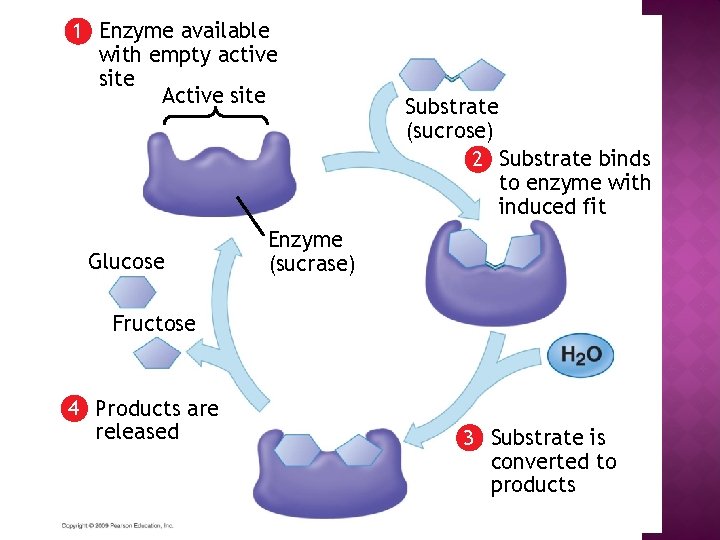
1 Enzyme available with empty active site Active site Glucose Substrate (sucrose) 2 Substrate binds to enzyme with induced fit Enzyme (sucrase) Fructose 4 Products are released 3 Substrate is converted to products
� How do enzymes speed up reactions?
� Enzymes are substrate specific � their active sites are shaped to only fit one type of substrate � Enzymes can only catalyze one type of reaction, just like a key can only open one lock.
� Temperature � p. H � If the environment is too hot or the p. H is too high or too low enzymes will denature � This means that they lose their shape and no longer function or work (the key no longer fits the lock!)
- Slides: 18