
Degraded Modes of Operations in Software Engineering Prof








- Slides: 44
Degraded Modes of Operations in Software Engineering Prof. Chris Johnson, School of Computing Science, University of Glasgow, Scotland. http: //www. dcs. gla. ac. uk/~johnson
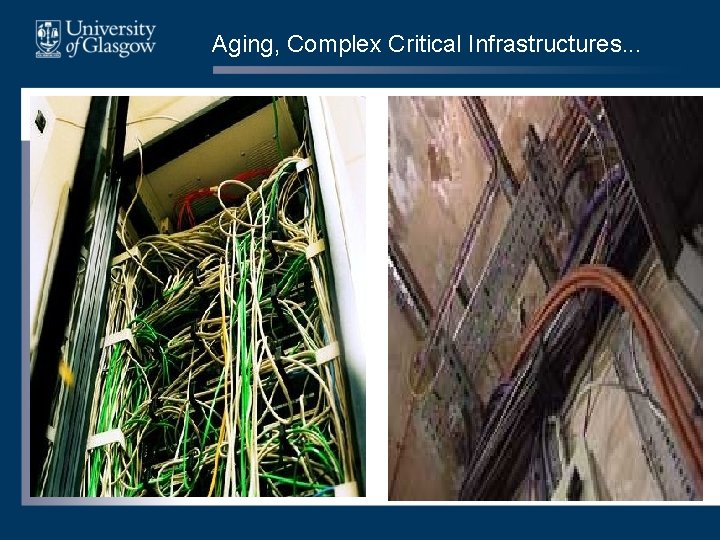
Aging, Complex Critical Infrastructures. . .
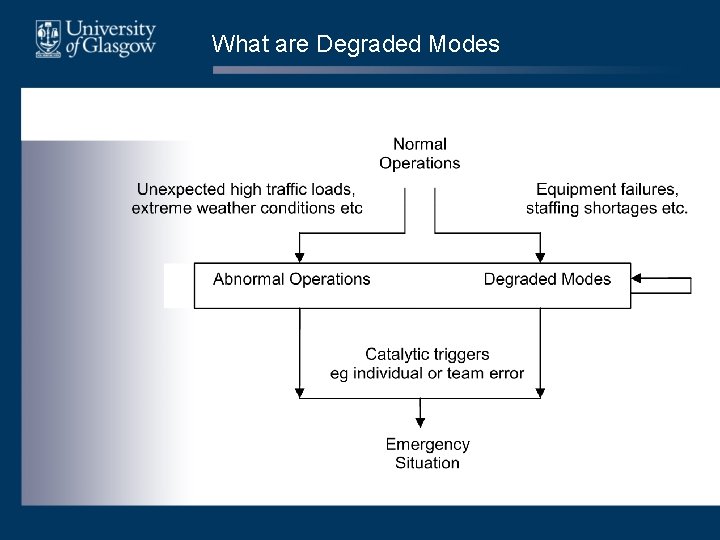
What are Degraded Modes
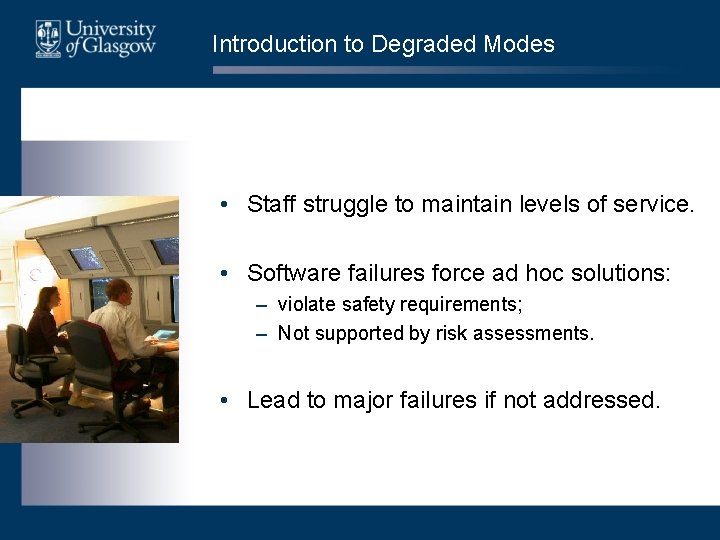
Introduction to Degraded Modes • Staff struggle to maintain levels of service. • Software failures force ad hoc solutions: – violate safety requirements; – Not supported by risk assessments. • Lead to major failures if not addressed.
UPS Case Study • Power Supply Station near ACC: – Transformer and Generator. • PS Switching boxes in ACC. • Equipment installed 30 years ago: – • Procure new kit. Installation affects comms ACC/PS
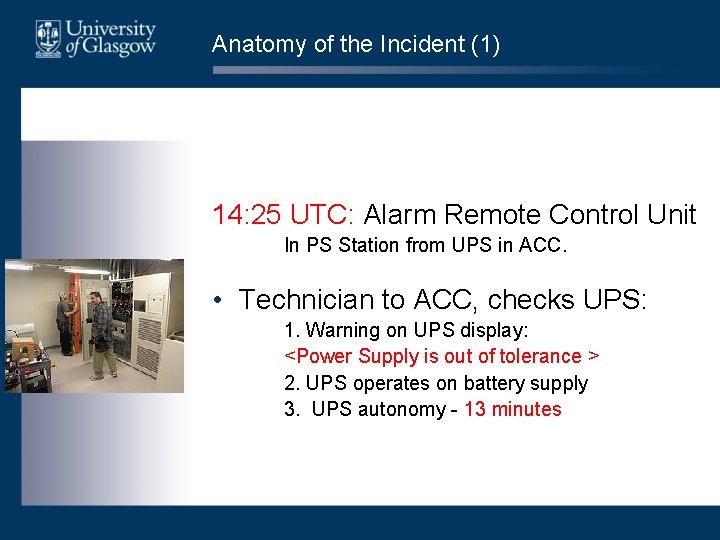
Anatomy of the Incident (1) 14: 25 UTC: Alarm Remote Control Unit In PS Station from UPS in ACC. • Technician to ACC, checks UPS: 1. Warning on UPS display: <Power Supply is out of tolerance > 2. UPS operates on battery supply 3. UPS autonomy - 13 minutes
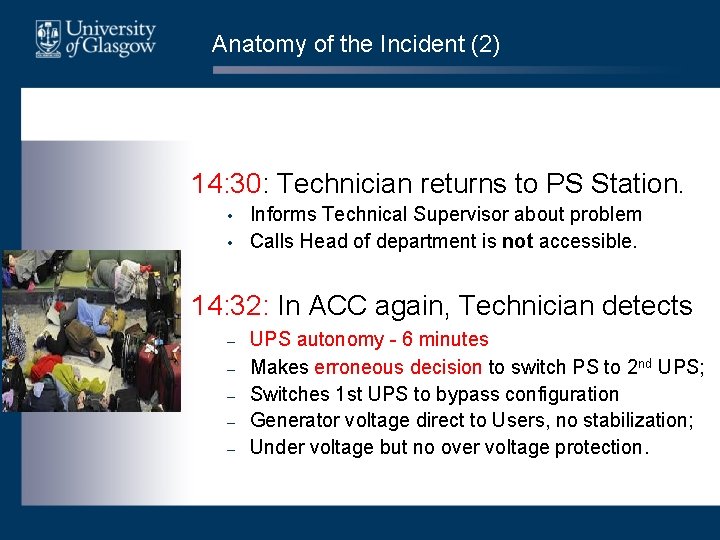
Anatomy of the Incident (2) 14: 30: Technician returns to PS Station. • • Informs Technical Supervisor about problem Calls Head of department is not accessible. 14: 32: In ACC again, Technician detects – – – UPS autonomy - 6 minutes Makes erroneous decision to switch PS to 2 nd UPS; Switches 1 st UPS to bypass configuration Generator voltage direct to Users, no stabilization; Under voltage but no over voltage protection.
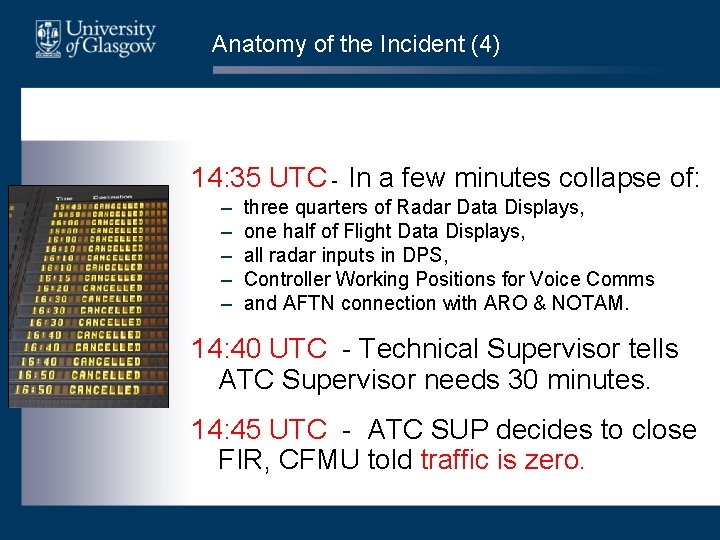
Anatomy of the Incident (4) 14: 35 UTC - In a few minutes collapse of: – – – three quarters of Radar Data Displays, one half of Flight Data Displays, all radar inputs in DPS, Controller Working Positions for Voice Comms and AFTN connection with ARO & NOTAM. 14: 40 UTC - Technical Supervisor tells ATC Supervisor needs 30 minutes. 14: 45 UTC - ATC SUP decides to close FIR, CFMU told traffic is zero.
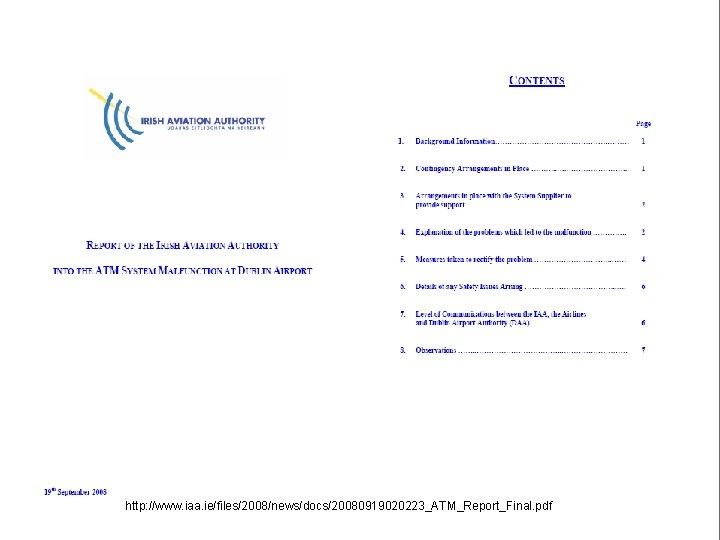
http: //www. iaa. ie/files/2008/news/docs/20080919020223_ATM_Report_Final. pdf
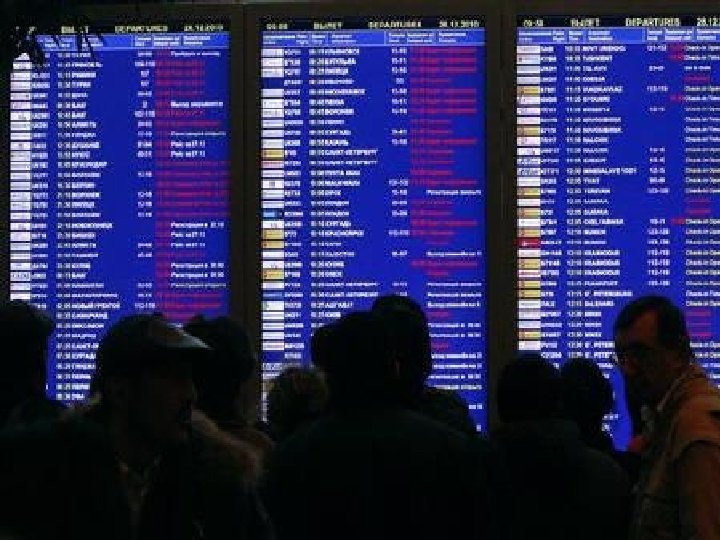
Dublin Airport Overview • Busiest period of the year. • Initial hardware failure: – Poor quality of service from LAN; – Slows flight data processing system. • ATCOs cannot access data on radar targets: – including aircraft identification and type data. • Capacity restrictions for safety reasons.
Dublin Airport - Contracting • ATM system provided by contractor: – maintained under annual service contract; – provide both hardware and software support; – On-site support for diagnosis and debugging. • General question for SESAR? – – ANSPs rely on subcontractors: key areas of technical support ; ‘it will take another 30 minutes…’ Is outsourcing a form of de-risking?
Secondary Response • ANSPs engineering staff correct symptoms; – Cannot identify root causes of the problem. • Problem stemmed from double failure: – triggered by a faulty network interface card; – flooded network with spurious messages. • Symptoms of the fault were masked; – recovery mechanisms in Local Area Network; – hard for engineers to identify component failure.
The Real Impact • "The problem here is that you have an autonomous semi-state monopoly which doesn't care about its customers or the disruption to passengers, " Michael O'Leary, CEO Ryanair
The Real Impact • "The problem here is that you have an autonomous semi-state monopoly which doesn't care about its customers or the disruption to passengers, " • "Send the buggers to Shannon, if it was a commercial company they would have done so, “ Michael O'Leary, CEO Ryanair
The Real Impact Michael O'Leary, CEO Ryanair • "The problem here is that you have an autonomous semi-state monopoly which doesn't care about its customers or the disruption to passengers, " • "Send the buggers to Shannon, if it was a commercial company they would have done so, “ • “They're not on top of the job. We're talking about 25 arrivals and departures per hour. The air traffic controllers should be capable of handling this volume of flights”. http: //www. herald. ie/news/oleary-more-disruption-if-iaa-doesnt-clean-up-act-1431408. html
Europe is Not Alone
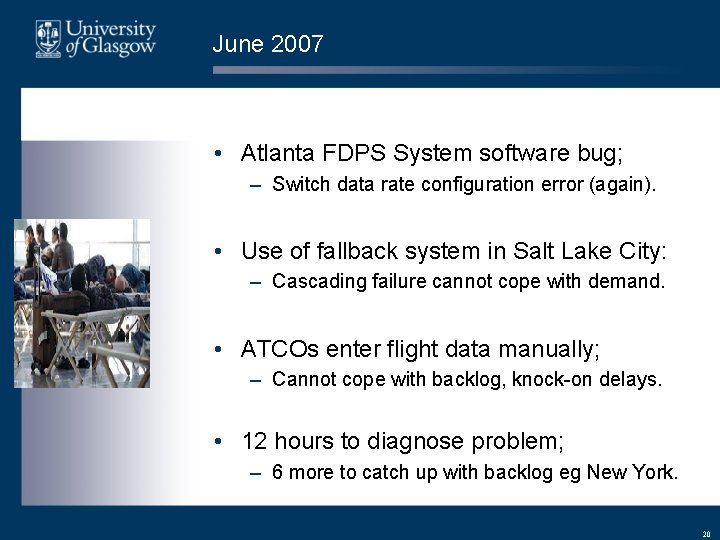
June 2007 • Atlanta FDPS System software bug; – Switch data rate configuration error (again). • Use of fallback system in Salt Lake City: – Cascading failure cannot cope with demand. • ATCOs enter flight data manually; – Cannot cope with backlog, knock-on delays. • 12 hours to diagnose problem; – 6 more to catch up with backlog eg New York. 20
August 2008 and November 2009 • August 2008: – Software failure in Atlanta again. – Processes flight plans for Eastern US. – 566 flight delays+ • Press, media and political outrage…. • GAO reports into ATM service provision. 21
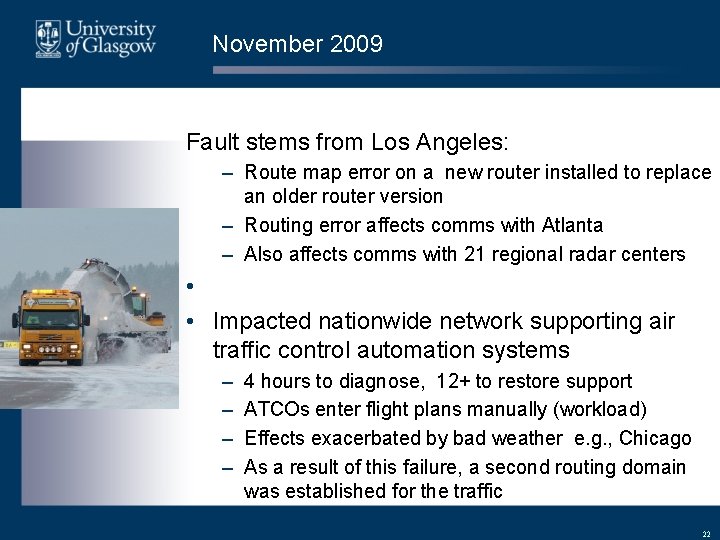
November 2009 Fault stems from Los Angeles: – Route map error on a new router installed to replace an older router version – Routing error affects comms with Atlanta – Also affects comms with 21 regional radar centers • • Impacted nationwide network supporting air traffic control automation systems – – 4 hours to diagnose, 12+ to restore support ATCOs enter flight plans manually (workload) Effects exacerbated by bad weather e. g. , Chicago As a result of this failure, a second routing domain was established for the traffic 22
Media and Politicians • “Sisters Sharon Walker and Sheila James were taking their elderly mother to see their sister in St. Louis. Their 09. 30 flight was delayed until 16: 00. . . ” • “Sen. Charles Schumer said the country’s aviation system is ‘in shambles’. . . ’the FAA needs to upgrade the system, these technical glitches that cause cascading chaos across the country are going to become a very regular occurrence. . . ’” 23
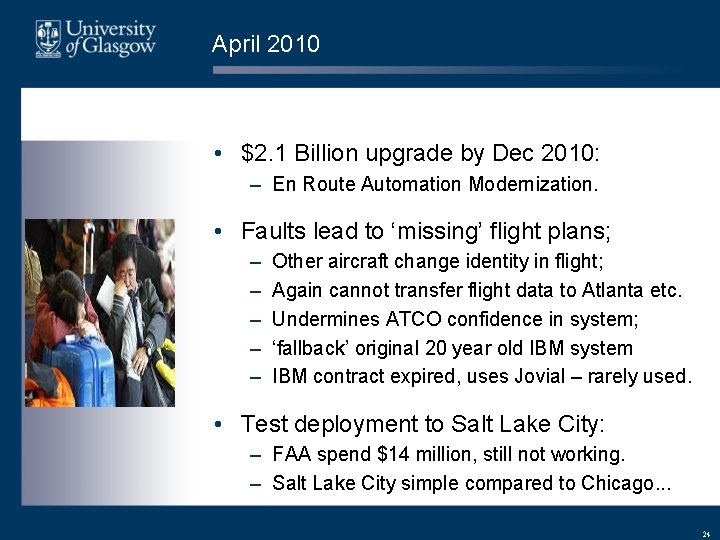
April 2010 • $2. 1 Billion upgrade by Dec 2010: – En Route Automation Modernization. • Faults lead to ‘missing’ flight plans; – – – Other aircraft change identity in flight; Again cannot transfer flight data to Atlanta etc. Undermines ATCO confidence in system; ‘fallback’ original 20 year old IBM system IBM contract expired, uses Jovial – rarely used. • Test deployment to Salt Lake City: – FAA spend $14 million, still not working. – Salt Lake City simple compared to Chicago. . . 24
Potential Solutions?
“The Risk Assessment Blind Spot”
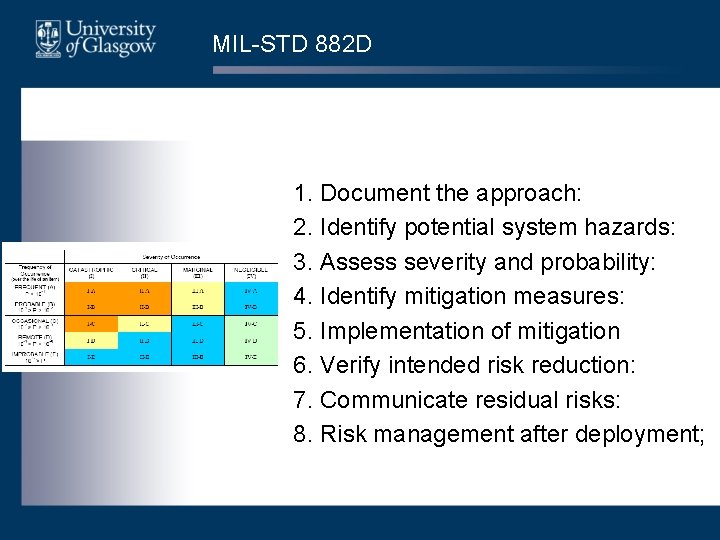
MIL-STD 882 D 1. Document the approach: 2. Identify potential system hazards: 3. Assess severity and probability: 4. Identify mitigation measures: 5. Implementation of mitigation 6. Verify intended risk reduction: 7. Communicate residual risks: 8. Risk management after deployment;
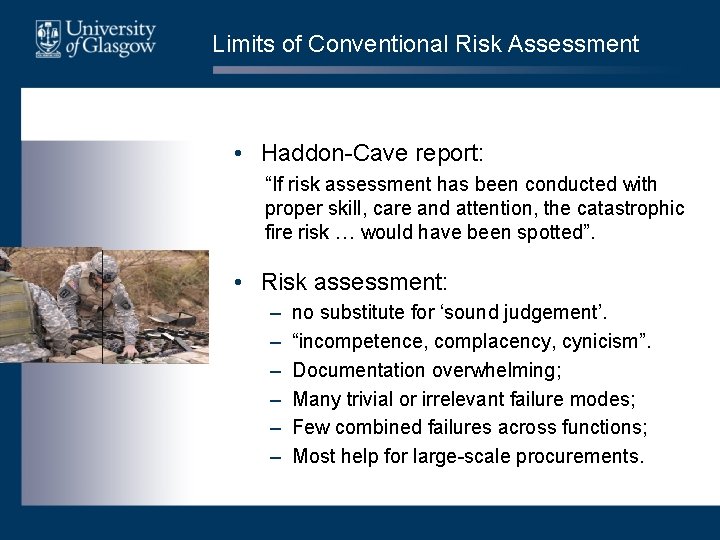
Limits of Conventional Risk Assessment • Haddon-Cave report: “If risk assessment has been conducted with proper skill, care and attention, the catastrophic fire risk … would have been spotted”. • Risk assessment: – – – no substitute for ‘sound judgement’. “incompetence, complacency, cynicism”. Documentation overwhelming; Many trivial or irrelevant failure modes; Few combined failures across functions; Most help for large-scale procurements.
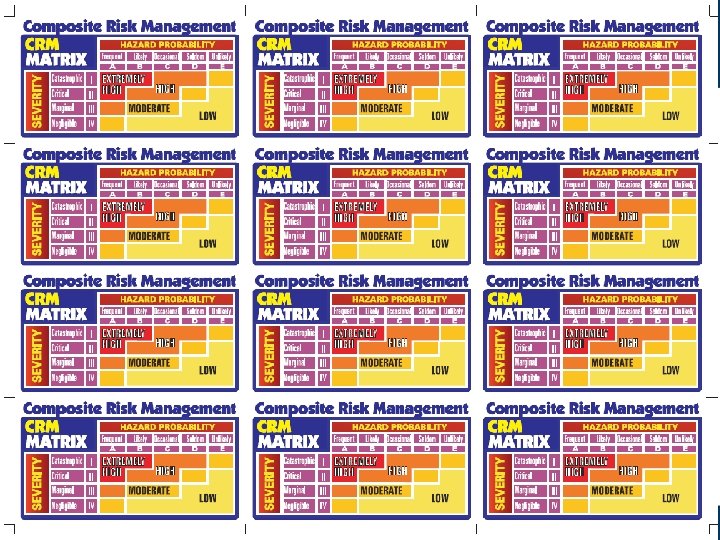
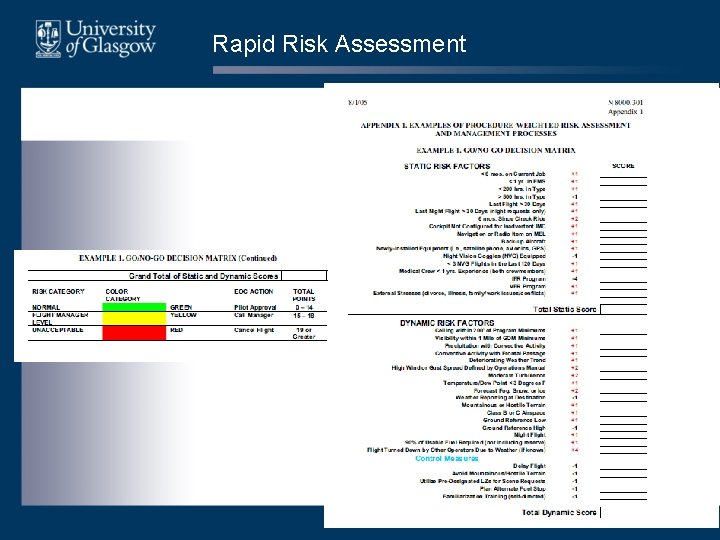
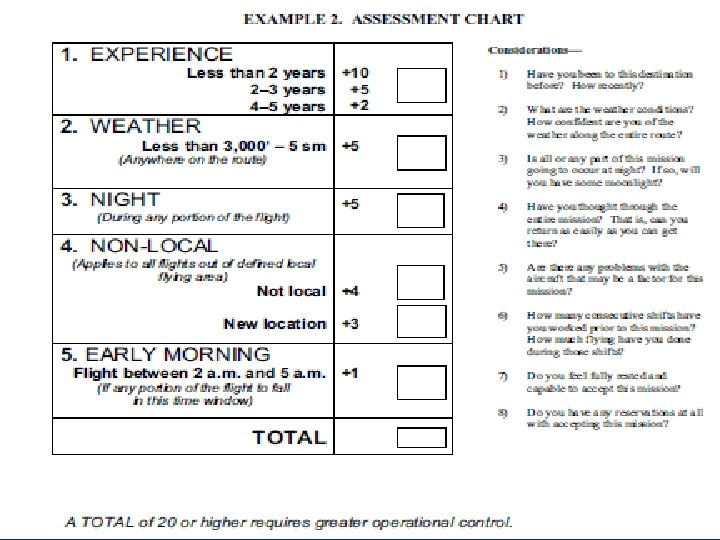
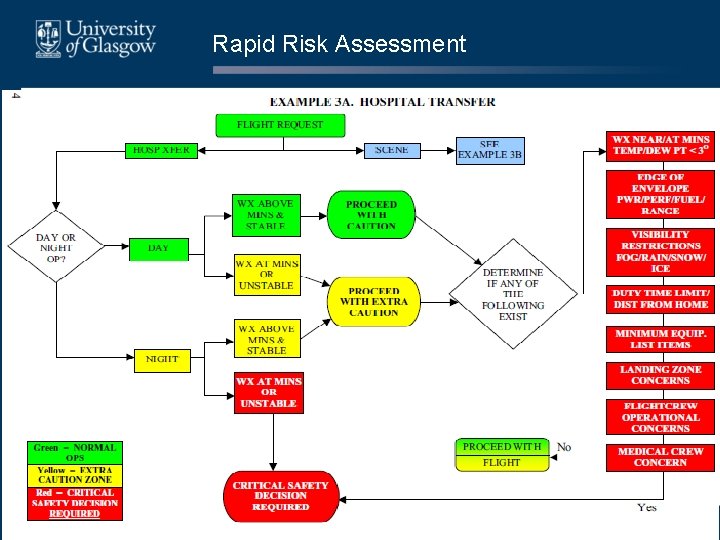
Rapid Risk Assessment Techniques • Techniques to address operational risk: – Low cost, approximations, rules of thumb; – Where necessary should trigger HAZOPS etc. “When engineering analysis and risk assessments are condensed to fit on a standard form or overhead slide, information is inevitably lost”. • On the other hand: – You cannot capture everything… – Limited time, limited training, present threats.
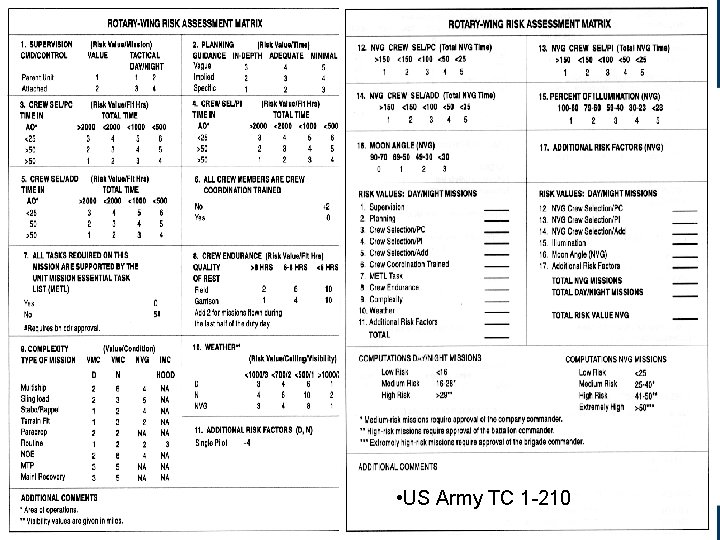
• US Army TC 1 -210
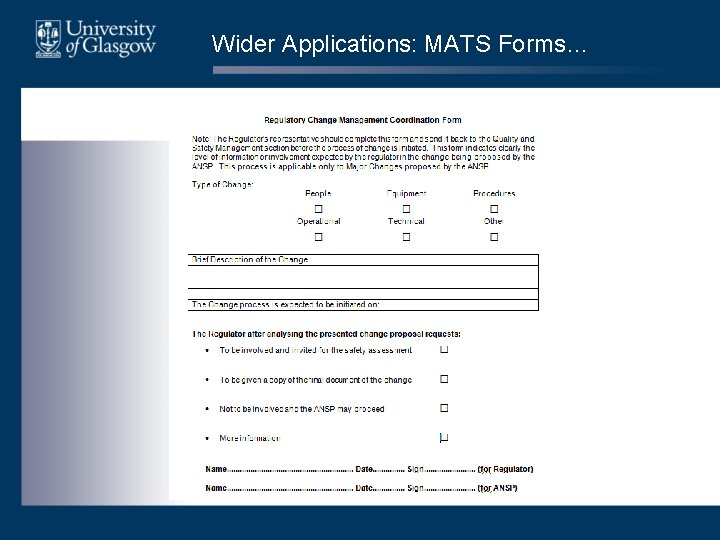
Wider Applications: MATS Forms…
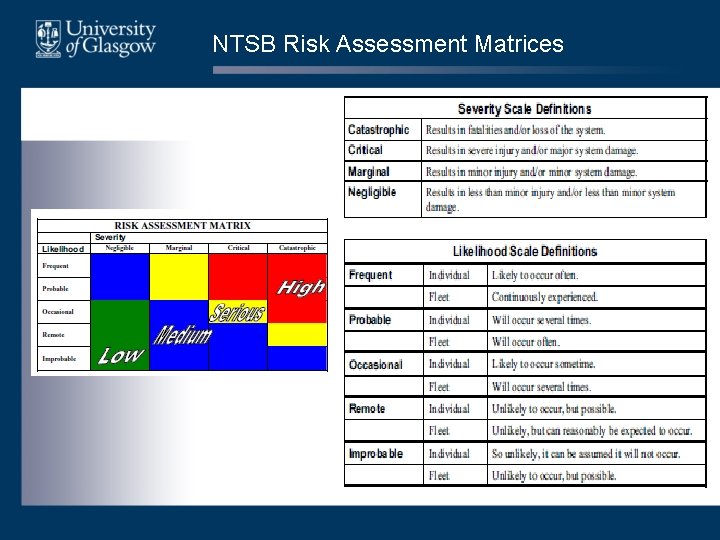
NTSB Risk Assessment Matrices
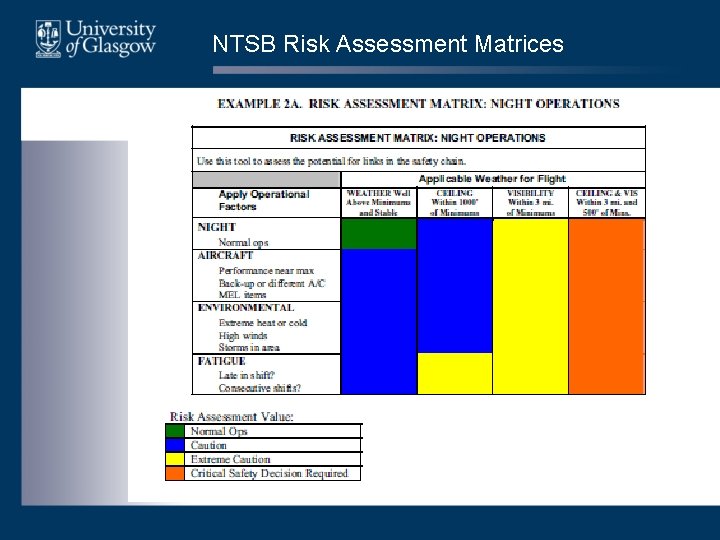
NTSB Risk Assessment Matrices
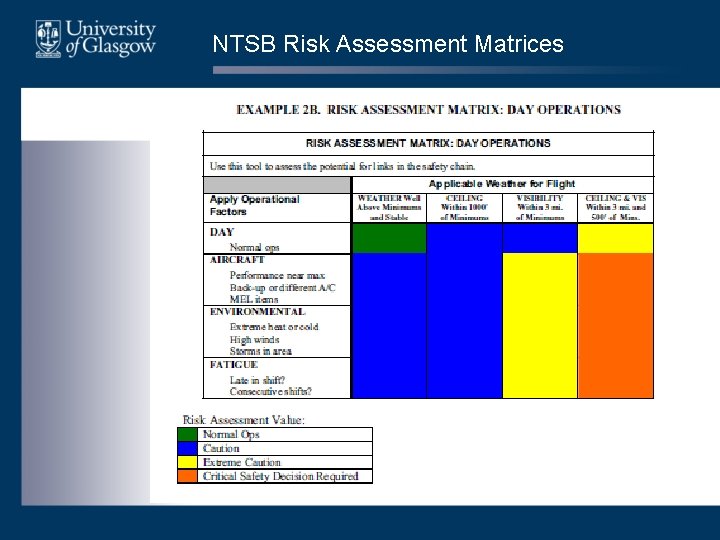
NTSB Risk Assessment Matrices
Rapid Risk Assessment
Rapid Risk Assessment
Any Questions?