
Degenerative Myelopathy Of German Shepherd Dogs A chronic
- Slides: 18
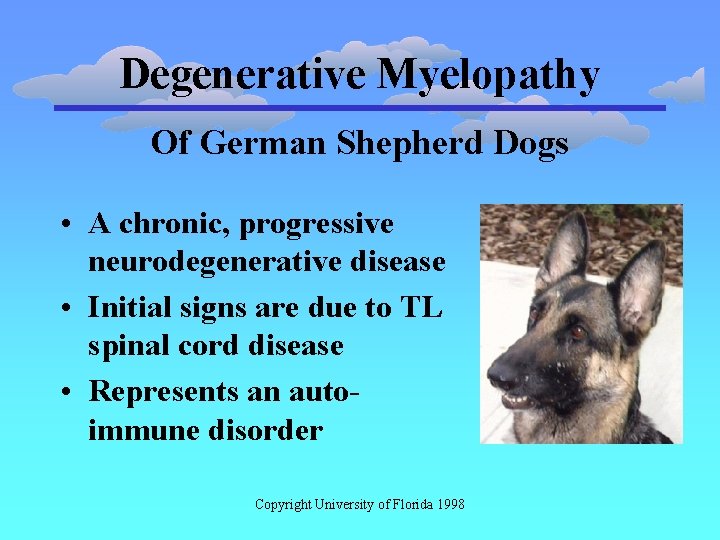
Degenerative Myelopathy Of German Shepherd Dogs • A chronic, progressive neurodegenerative disease • Initial signs are due to TL spinal cord disease • Represents an autoimmune disorder Copyright University of Florida 1998
Degenerative Myelopathy Signalment • Breeds – – – • Sex German Shepherd dogs Belgium Shepherds Old English Sheepdogs Rhodesian Ridgebacks Weimaraner Probably Great Pyrenes • Age – Equal • Onset – 1 month to 1 year • Clinical Course – Paralysis within 3 to 6 month without treatment – > 5 years old (usually 8 -9) Copyright University of Florida 1998
Degenerative Myelopathy Similar Conditions in Human Beings • Multiple Sclerosis – Immune-related demyelinating disorder • Amyotrophic Lateral Sclerosis – Axonal losing disease • Genetic • Free-radical association Copyright University of Florida 1998
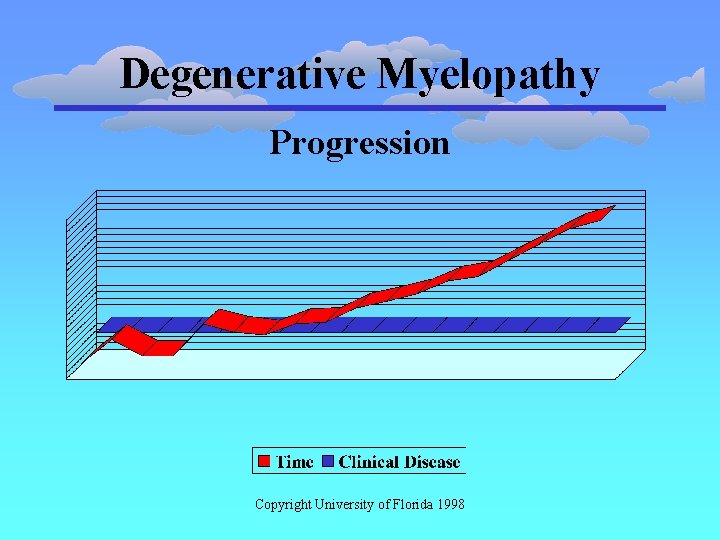
Degenerative Myelopathy Progression Copyright University of Florida 1998
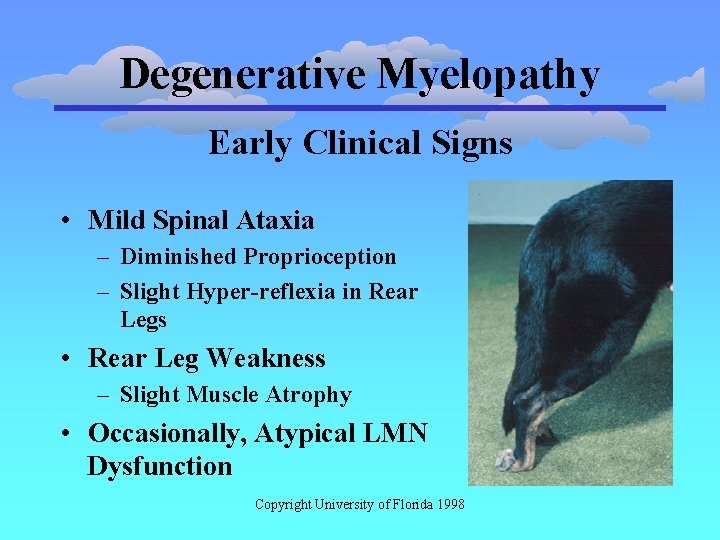
Degenerative Myelopathy Early Clinical Signs • Mild Spinal Ataxia – Diminished Proprioception – Slight Hyper-reflexia in Rear Legs • Rear Leg Weakness – Slight Muscle Atrophy • Occasionally, Atypical LMN Dysfunction Copyright University of Florida 1998
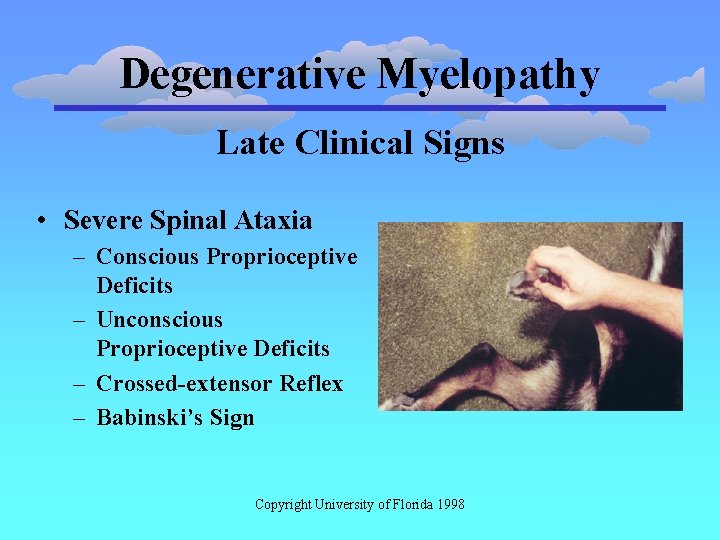
Degenerative Myelopathy Late Clinical Signs • Severe Spinal Ataxia – Conscious Proprioceptive Deficits – Unconscious Proprioceptive Deficits – Crossed-extensor Reflex – Babinski’s Sign Copyright University of Florida 1998
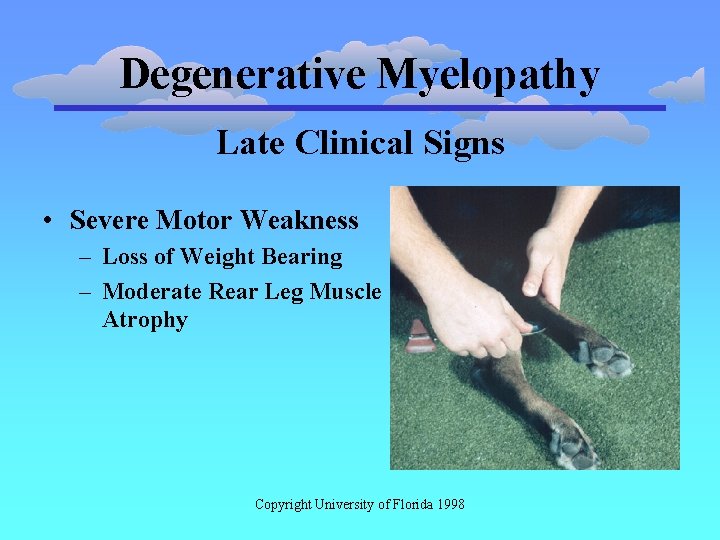
Degenerative Myelopathy Late Clinical Signs • Severe Motor Weakness – Loss of Weight Bearing – Moderate Rear Leg Muscle Atrophy Copyright University of Florida 1998
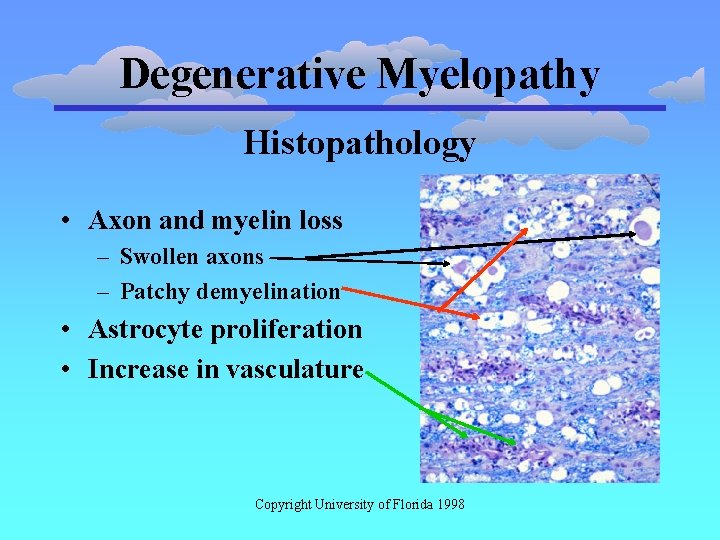
Degenerative Myelopathy Histopathology • Axon and myelin loss – Swollen axons – Patchy demyelination • Astrocyte proliferation • Increase in vasculature Copyright University of Florida 1998
Degenerative Myelopathy Diagnosis • Physical and Neurologic Examination – History of chronic progressive posterior paresis in susceptible breed – TL (non-localized) dysfunction Copyright University of Florida 1998
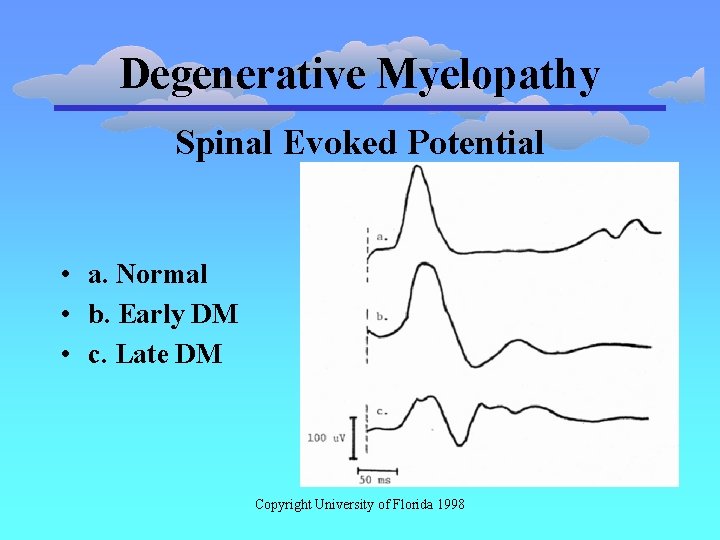
Degenerative Myelopathy Diagnosis • EMG – Needle EMG- -normal – NCV- -normal – Repetitive Nerve Stimulation- -nondecremental – Spinal Evoked Potential- -abnormal Copyright University of Florida 1998
Degenerative Myelopathy Spinal Evoked Potential • a. Normal • b. Early DM • c. Late DM Copyright University of Florida 1998
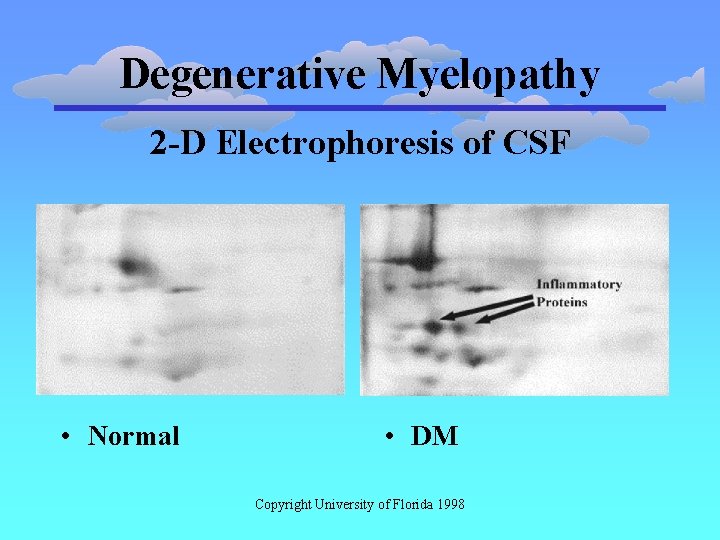
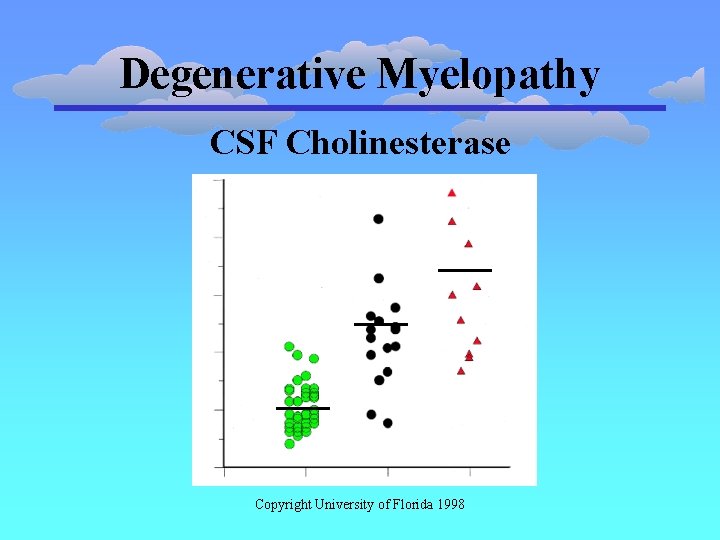
Degenerative Myelopathy Diagnosis • CSF tap (lumbar) – Increased protein with normal cells – Elevated inflammatory proteins – Increased acetylcholinesterase levels (2 X normal) Copyright University of Florida 1998
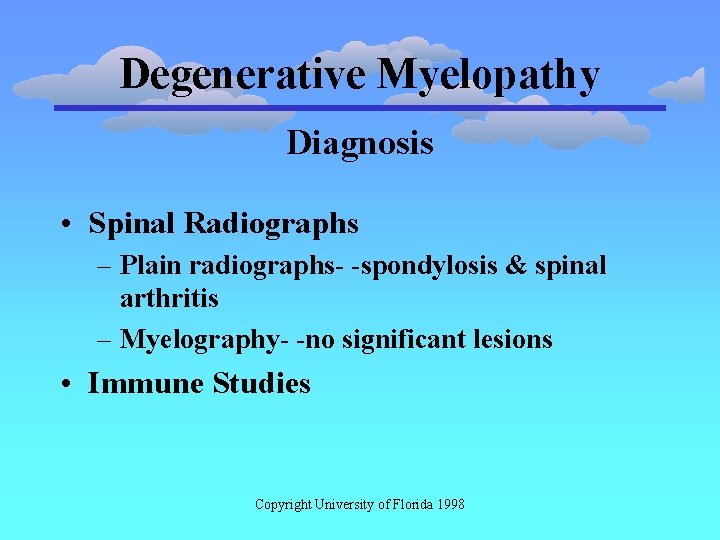
Degenerative Myelopathy Diagnosis • Spinal Radiographs – Plain radiographs- -spondylosis & spinal arthritis – Myelography- -no significant lesions • Immune Studies Copyright University of Florida 1998
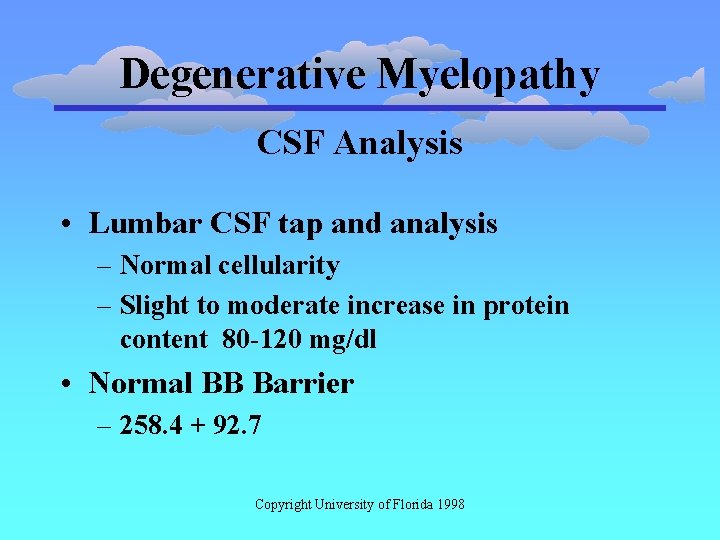
Degenerative Myelopathy CSF Analysis • Lumbar CSF tap and analysis – Normal cellularity – Slight to moderate increase in protein content 80 -120 mg/dl • Normal BB Barrier – 258. 4 + 92. 7 Copyright University of Florida 1998
Degenerative Myelopathy 2 -D Electrophoresis of CSF • Normal • DM Copyright University of Florida 1998
Degenerative Myelopathy CSF Cholinesterase Copyright University of Florida 1998
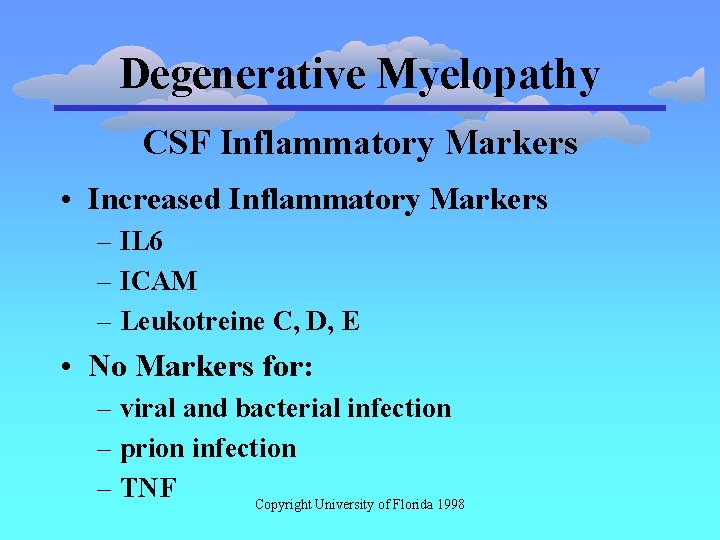
Degenerative Myelopathy CSF Inflammatory Markers • Increased Inflammatory Markers – IL 6 – ICAM – Leukotreine C, D, E • No Markers for: – viral and bacterial infection – prion infection – TNF Copyright University of Florida 1998
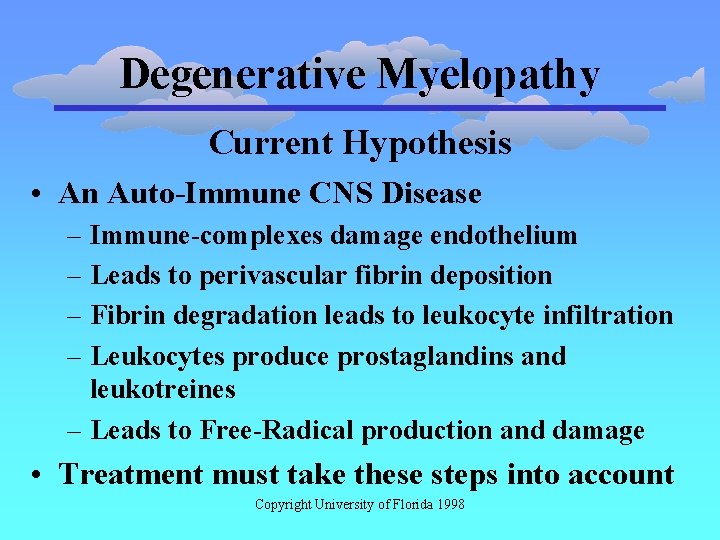
Degenerative Myelopathy Current Hypothesis • An Auto-Immune CNS Disease – Immune-complexes damage endothelium – Leads to perivascular fibrin deposition – Fibrin degradation leads to leukocyte infiltration – Leukocytes produce prostaglandins and leukotreines – Leads to Free-Radical production and damage • Treatment must take these steps into account Copyright University of Florida 1998