
Deformity of Regenerate Bone Following Removal of Circular
Deformity of Regenerate Bone Following Removal of Circular Frame Case for small group discussion: Pin frame management AOTrauma External Fixation
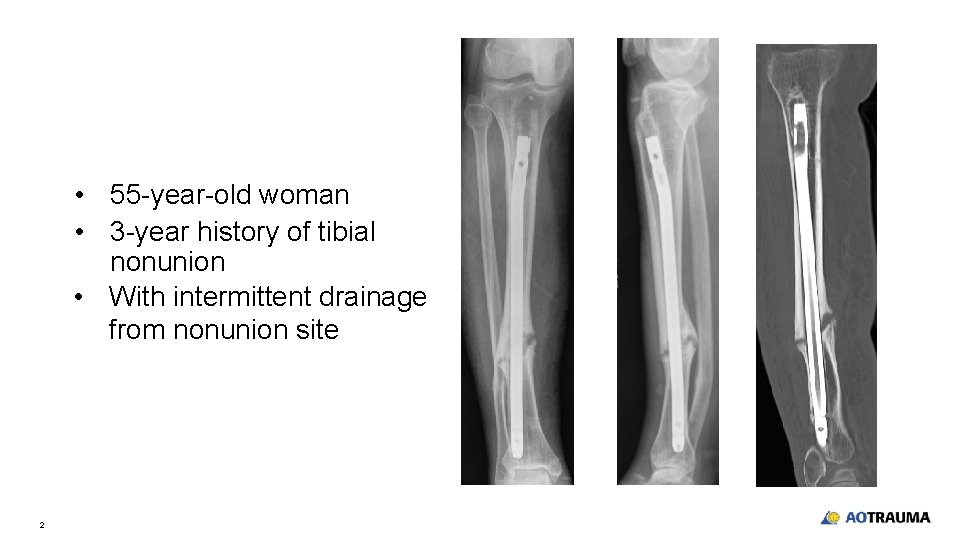
• 55 -year-old woman • 3 -year history of tibial nonunion • With intermittent drainage from nonunion site 2

• A segmental resection and bone transport technique was selected to treat infection and restore bone continuity • 5 cm was removed • Cultures from bone segment and for Staphylococcus aureus Gigli saw osteotomy 3
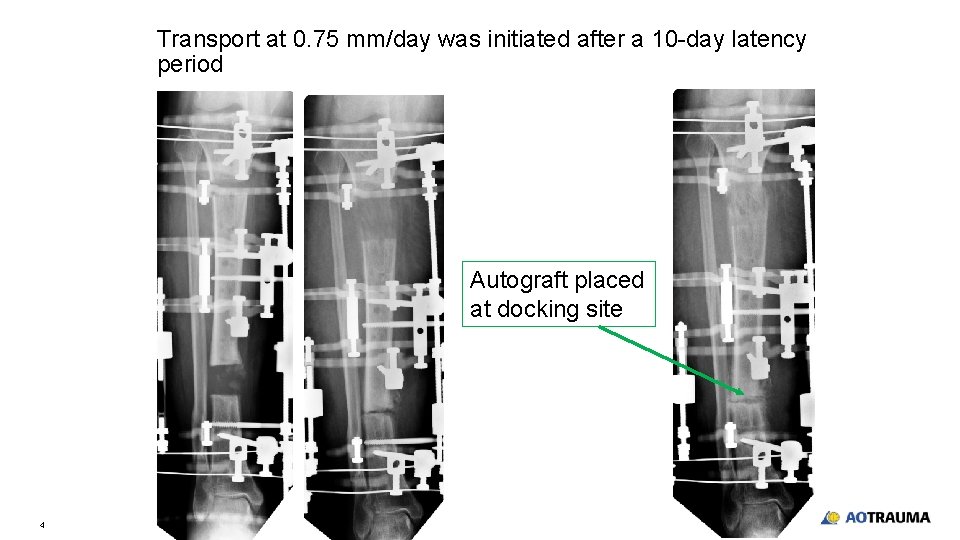
Transport at 0. 75 mm/day was initiated after a 10 -day latency period Autograft placed at docking site 4
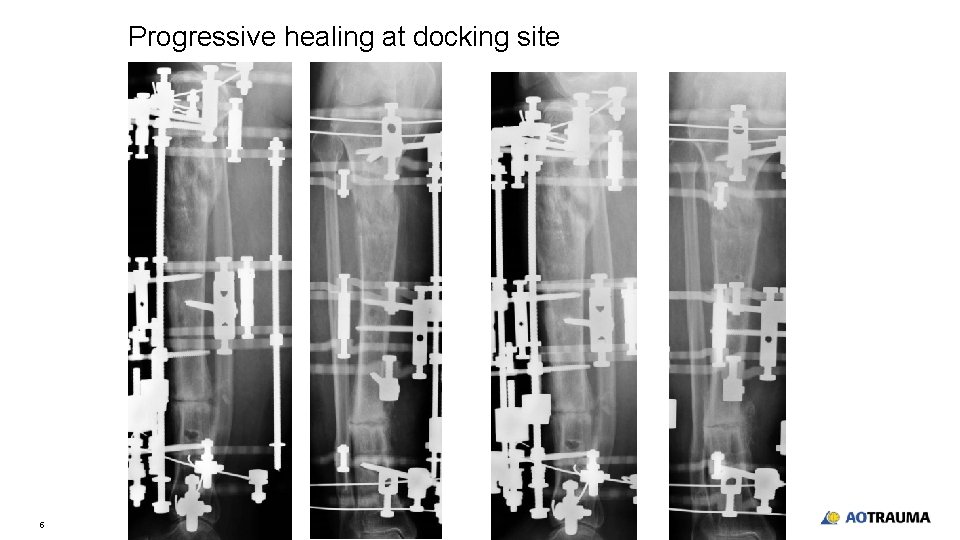
Progressive healing at docking site 5
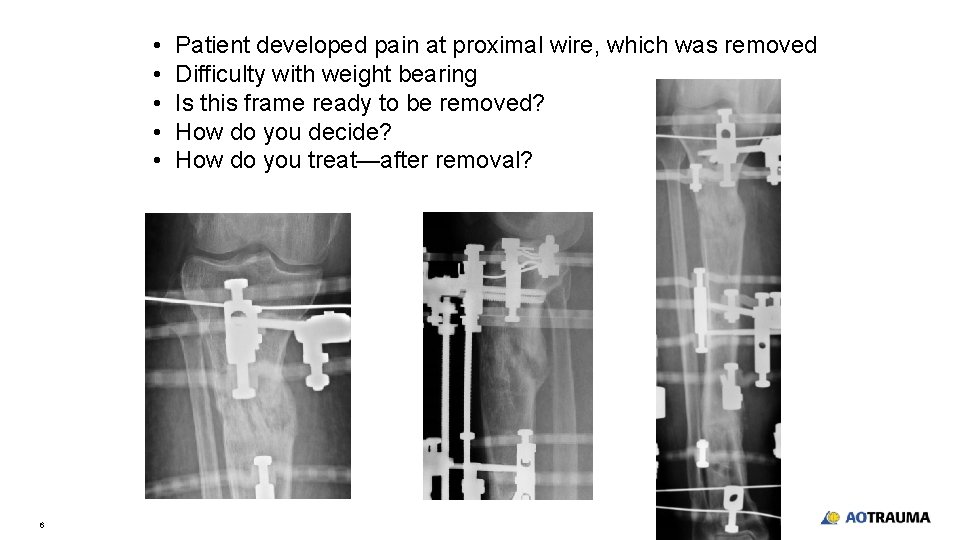
• • • 6 Patient developed pain at proximal wire, which was removed Difficulty with weight bearing Is this frame ready to be removed? How do you decide? How do you treat—after removal?
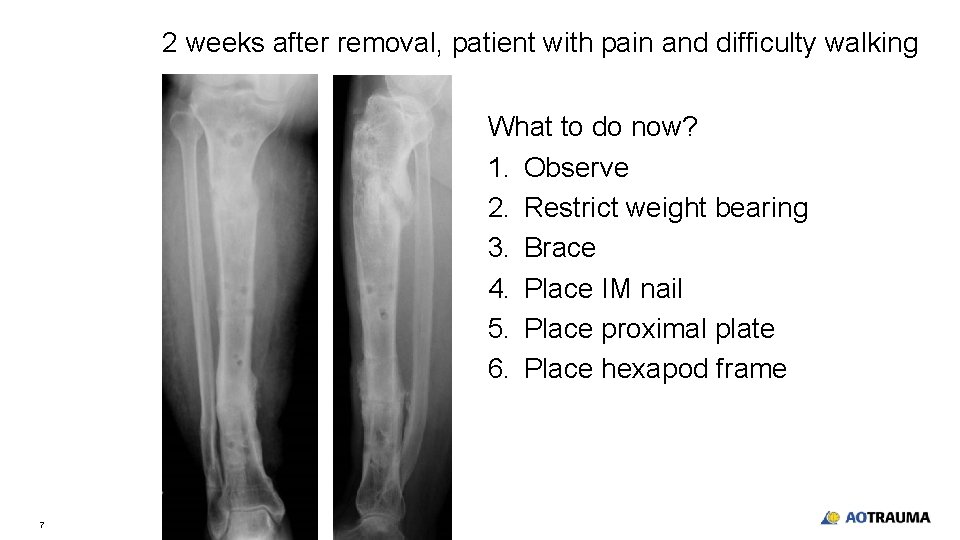
2 weeks after removal, patient with pain and difficulty walking What to do now? 1. Observe 2. Restrict weight bearing 3. Brace 4. Place IM nail 5. Place proximal plate 6. Place hexapod frame 7
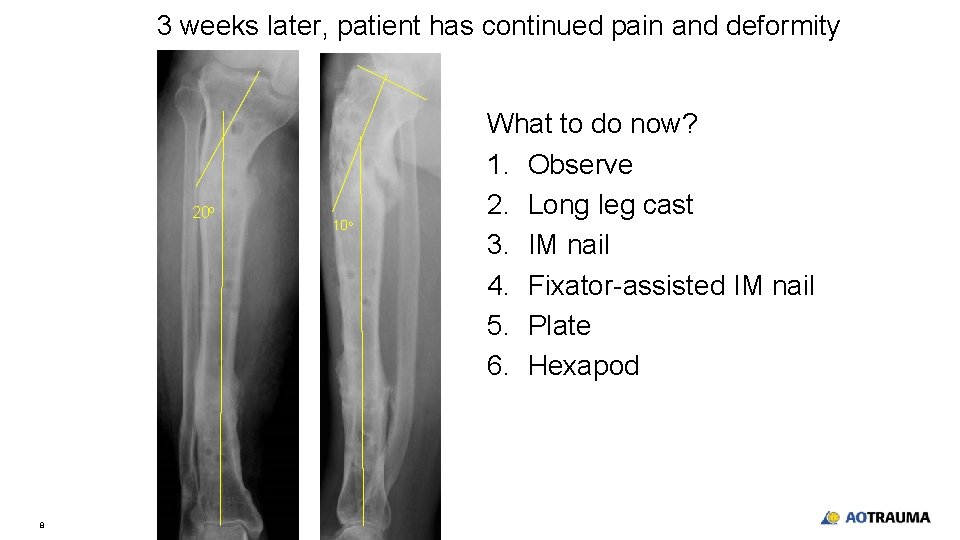
3 weeks later, patient has continued pain and deformity 20 o 8 10 o What to do now? 1. Observe 2. Long leg cast 3. IM nail 4. Fixator-assisted IM nail 5. Plate 6. Hexapod

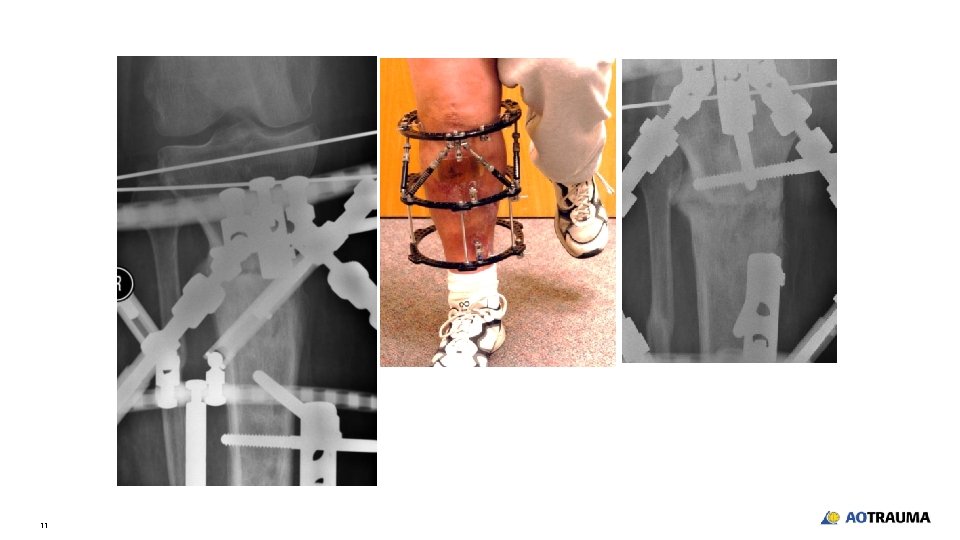
Hexapod frame placed—new corticotomy with Gigli saw through previous regenerate bone 9
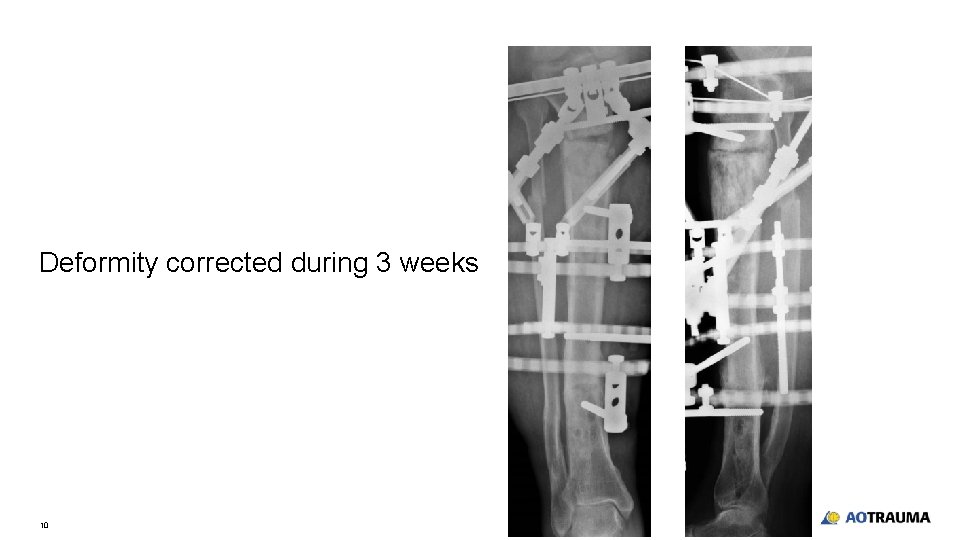
Deformity corrected during 3 weeks 10
11
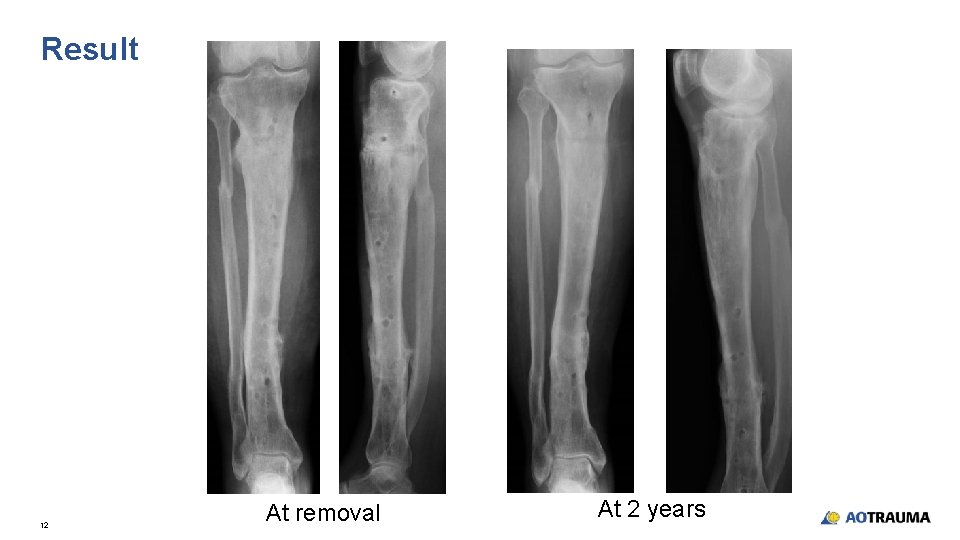
Result 12 At removal At 2 years
Take-home messages • • Difficult to determine when to remove a frame Pain is often an indication of an unstable frame or a nonhealed bone segment and is a very poor reason to remove a frame—consider revising the frame to create more stability Consider dynamization before removal as a test of healing Frames that are ready to remove are usually: • Comfortable with weight bearing • Pins sites look good (minimal motion) • Corticalization on three sides of regenerate 13
- Slides: 13