
Deformation and Strain Earth Structure 2 nd Edition

- Slides: 37
Deformation and Strain Earth Structure (2 nd Edition), 2004 W. W. Norton & Co, New York Slide show by Ben van der Pluijm © WW Norton, unless noted otherwise
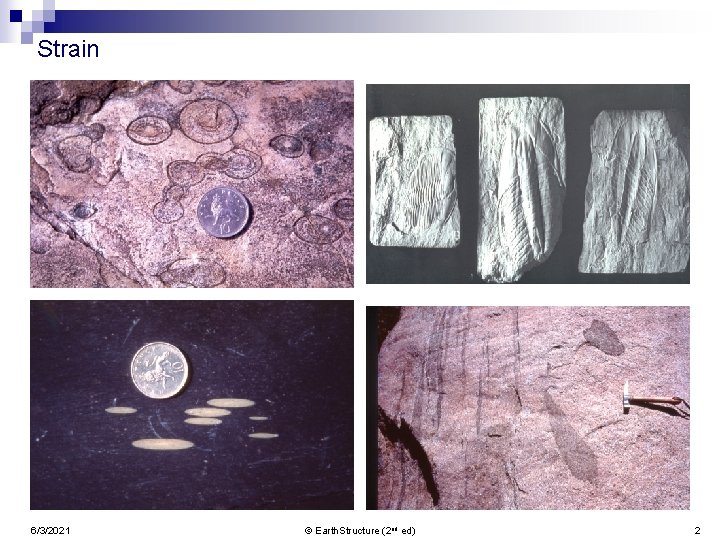
Strain 6/3/2021 © Earth. Structure (2 nd ed) 2
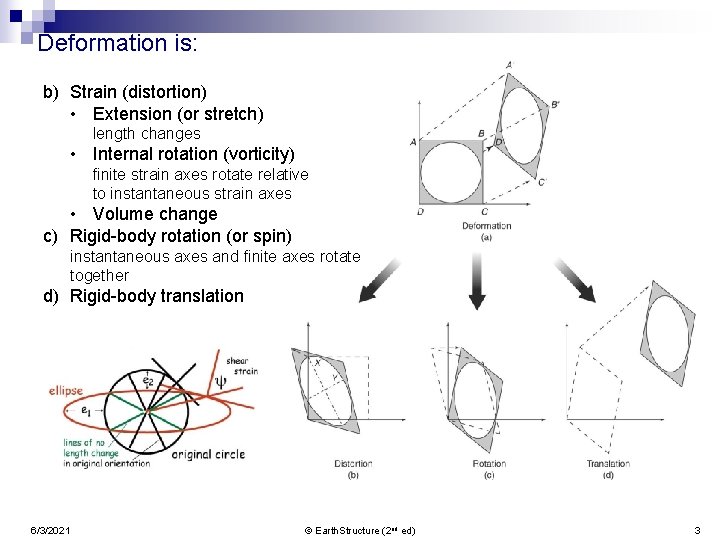
Deformation is: b) Strain (distortion) • Extension (or stretch) length changes • Internal rotation (vorticity) finite strain axes rotate relative to instantaneous strain axes • Volume change c) Rigid-body rotation (or spin) instantaneous axes and finite axes rotate together d) Rigid-body translation 6/3/2021 © Earth. Structure (2 nd ed) 3
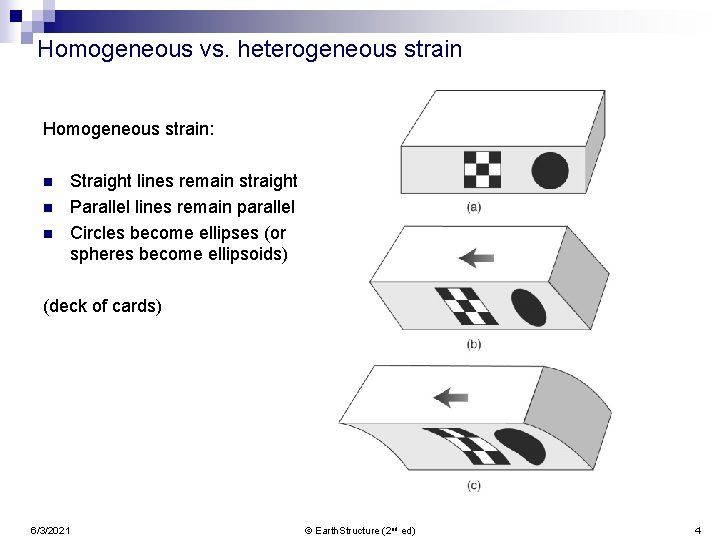
Homogeneous vs. heterogeneous strain Homogeneous strain: n n n Straight lines remain straight Parallel lines remain parallel Circles become ellipses (or spheres become ellipsoids) (deck of cards) 6/3/2021 © Earth. Structure (2 nd ed) 4
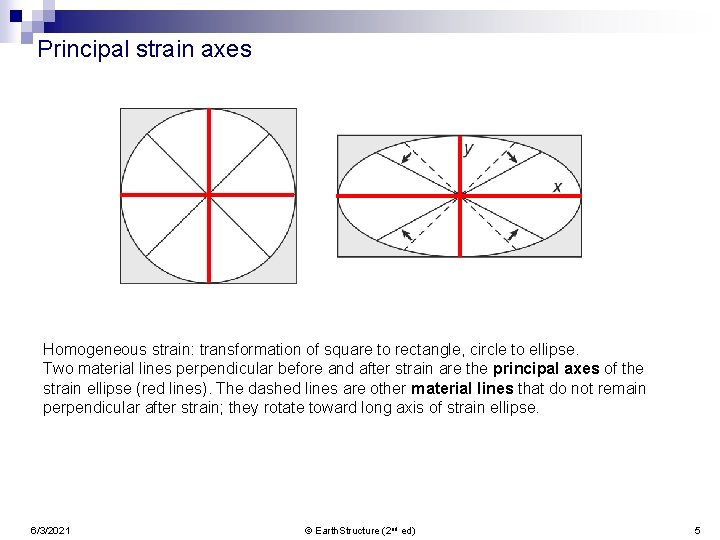
Principal strain axes Homogeneous strain: transformation of square to rectangle, circle to ellipse. Two material lines perpendicular before and after strain are the principal axes of the strain ellipse (red lines). The dashed lines are other material lines that do not remain perpendicular after strain; they rotate toward long axis of strain ellipse. 6/3/2021 © Earth. Structure (2 nd ed) 5
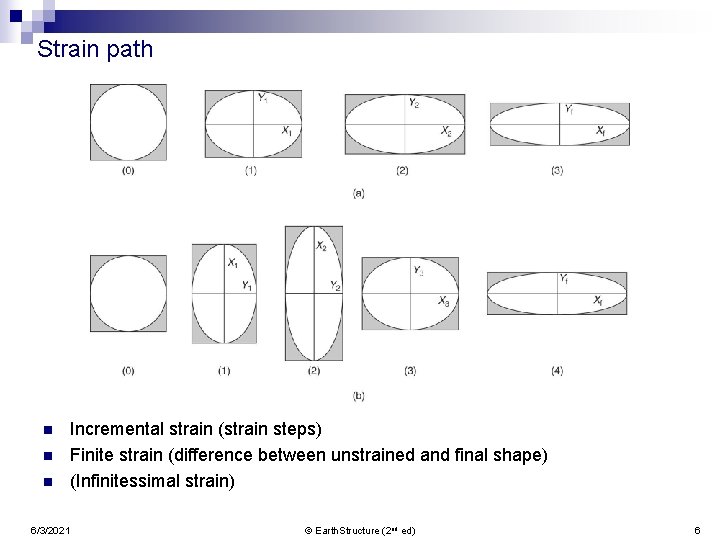
Strain path n n n 6/3/2021 Incremental strain (strain steps) Finite strain (difference between unstrained and final shape) (Infinitessimal strain) © Earth. Structure (2 nd ed) 6
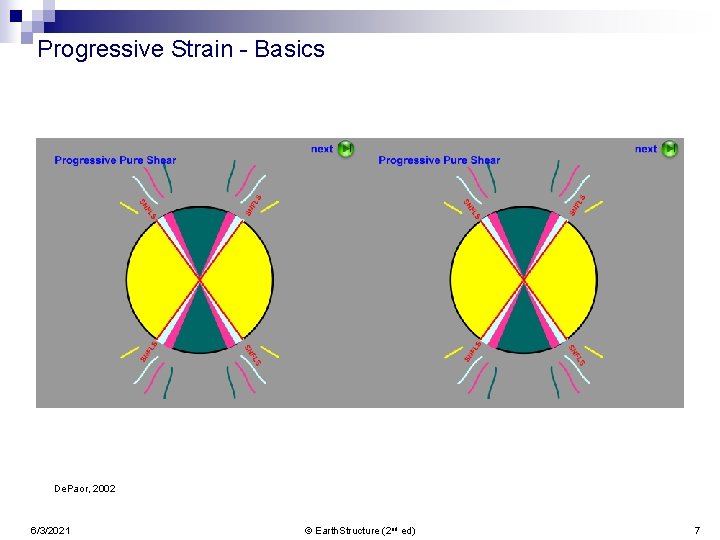
Progressive Strain - Basics De. Paor, 2002 6/3/2021 © Earth. Structure (2 nd ed) 7
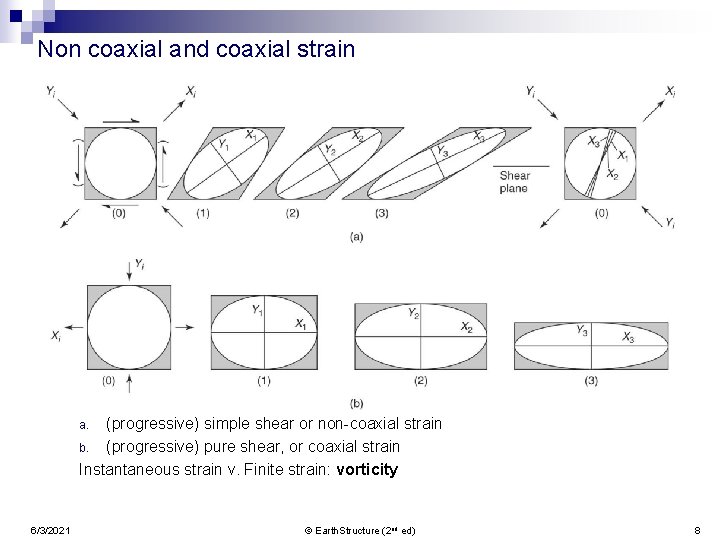
Non coaxial and coaxial strain (progressive) simple shear or non-coaxial strain b. (progressive) pure shear, or coaxial strain Instantaneous strain v. Finite strain: vorticity a. 6/3/2021 © Earth. Structure (2 nd ed) 8
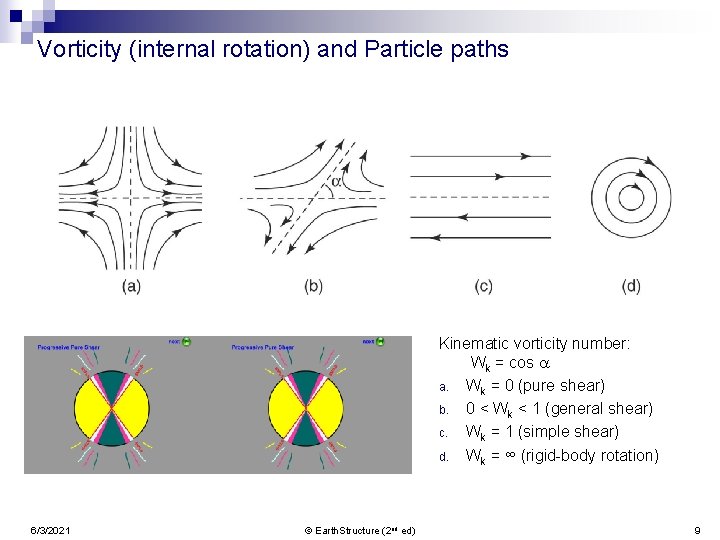
Vorticity (internal rotation) and Particle paths Kinematic vorticity number: Wk = cos a a. Wk = 0 (pure shear) b. 0 < Wk < 1 (general shear) c. Wk = 1 (simple shear) d. Wk = ∞ (rigid-body rotation) 6/3/2021 © Earth. Structure (2 nd ed) 9
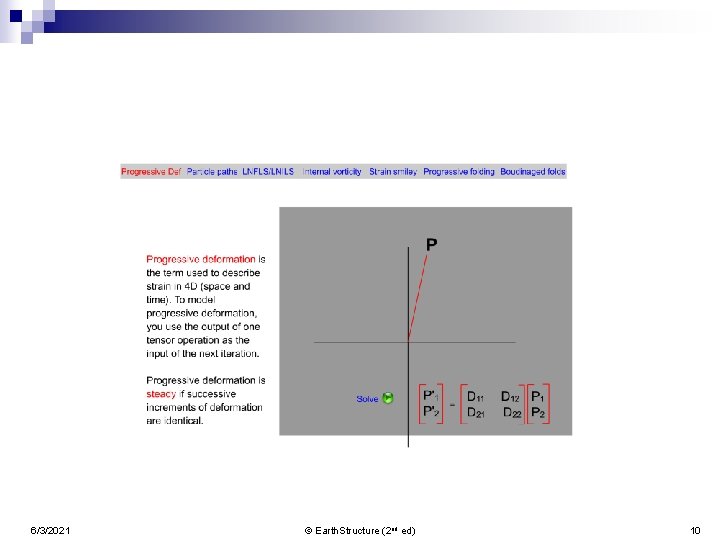
6/3/2021 © Earth. Structure (2 nd ed) 10
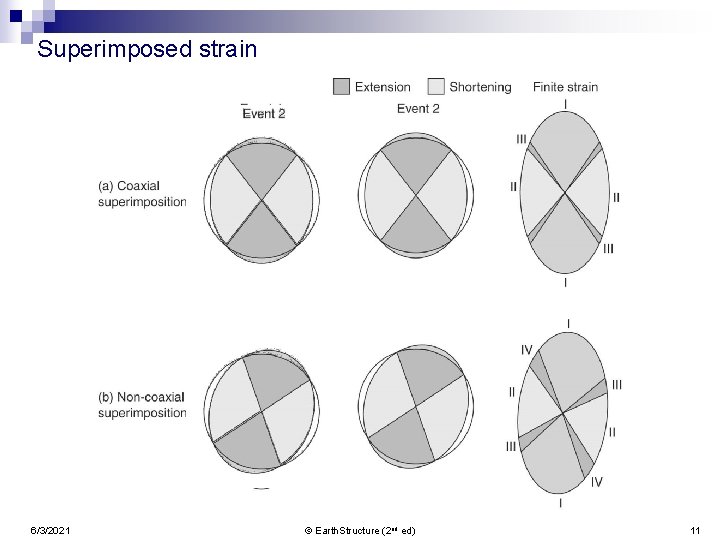
Superimposed strain 6/3/2021 © Earth. Structure (2 nd ed) 11
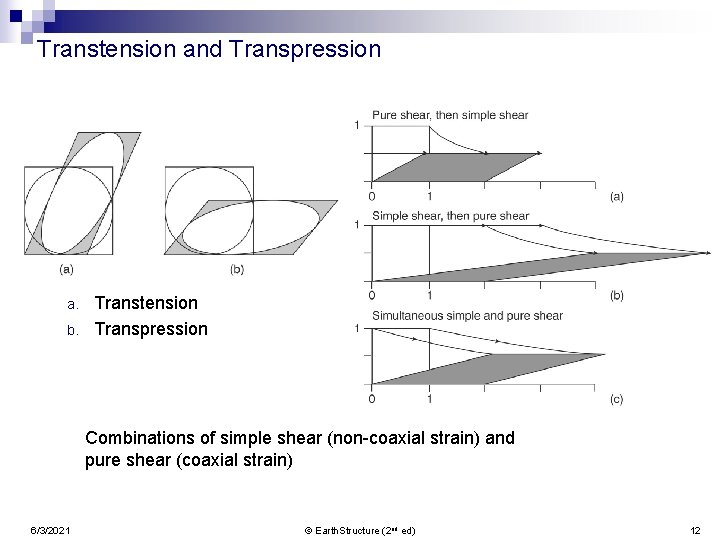
Transtension and Transpression a. b. Transtension Transpression Combinations of simple shear (non-coaxial strain) and pure shear (coaxial strain) 6/3/2021 © Earth. Structure (2 nd ed) 12
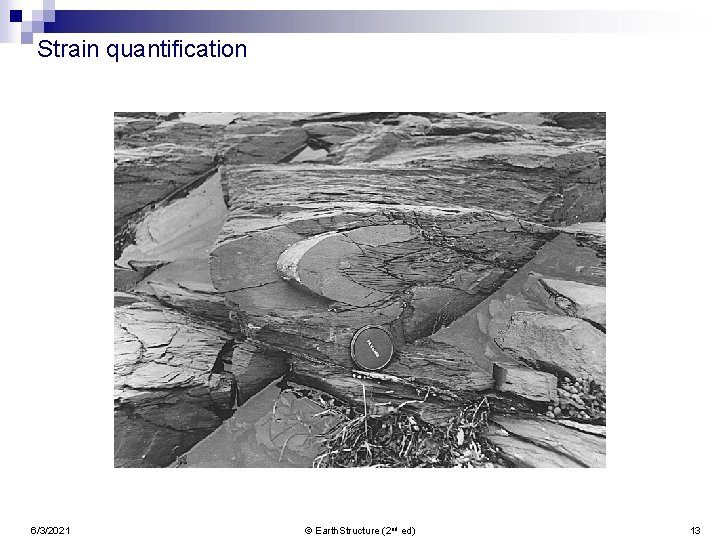
Strain quantification 6/3/2021 © Earth. Structure (2 nd ed) 13
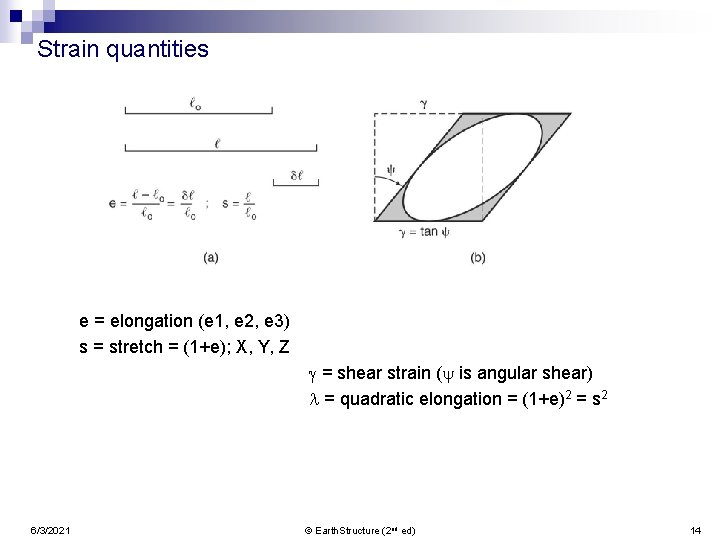
Strain quantities e = elongation (e 1, e 2, e 3) s = stretch = (1+e); X, Y, Z g = shear strain ( is angular shear) l = quadratic elongation = (1+e)2 = s 2 6/3/2021 © Earth. Structure (2 nd ed) 14
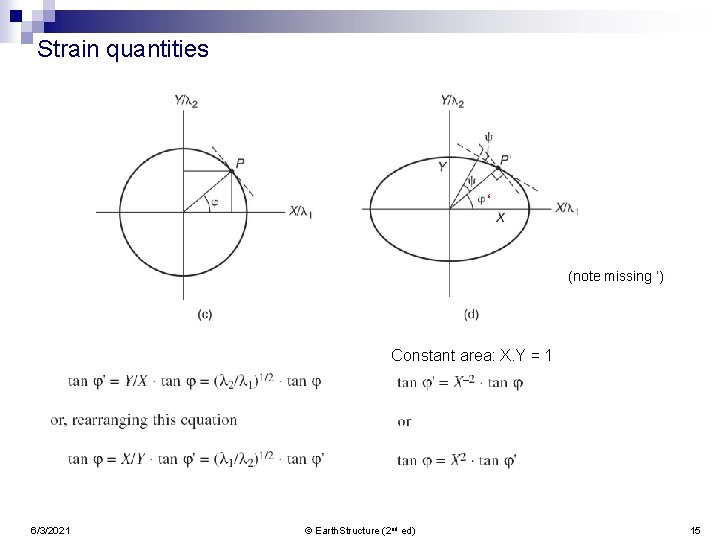
Strain quantities ‘ (note missing ‘) Constant area: X. Y = 1 6/3/2021 © Earth. Structure (2 nd ed) 15
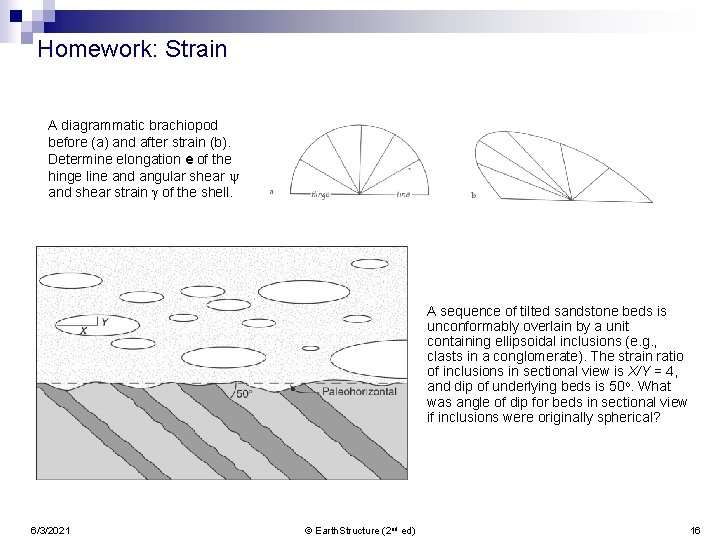
Homework: Strain A diagrammatic brachiopod before (a) and after strain (b). Determine elongation e of the hinge line and angular shear and shear strain g of the shell. A sequence of tilted sandstone beds is unconformably overlain by a unit containing ellipsoidal inclusions (e. g. , clasts in a conglomerate). The strain ratio of inclusions in sectional view is X/Y = 4, and dip of underlying beds is 50 o. What was angle of dip for beds in sectional view if inclusions were originally spherical? 6/3/2021 © Earth. Structure (2 nd ed) 16
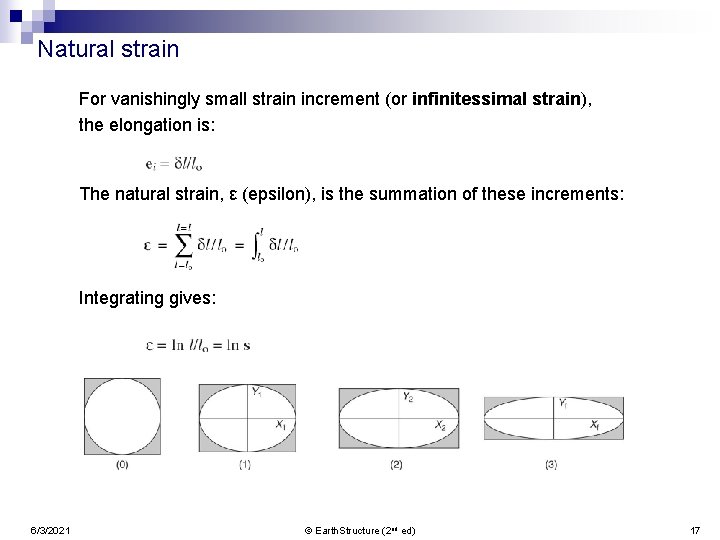
Natural strain For vanishingly small strain increment (or infinitessimal strain), the elongation is: The natural strain, ε (epsilon), is the summation of these increments: Integrating gives: 6/3/2021 © Earth. Structure (2 nd ed) 17
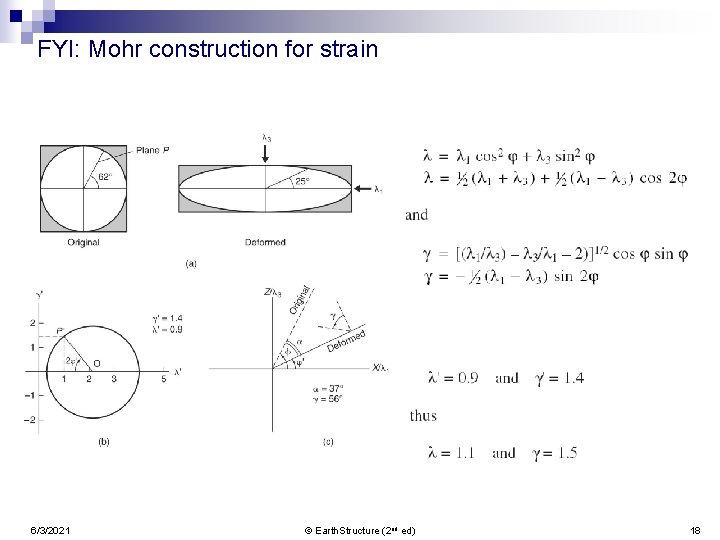
FYI: Mohr construction for strain 6/3/2021 © Earth. Structure (2 nd ed) 18
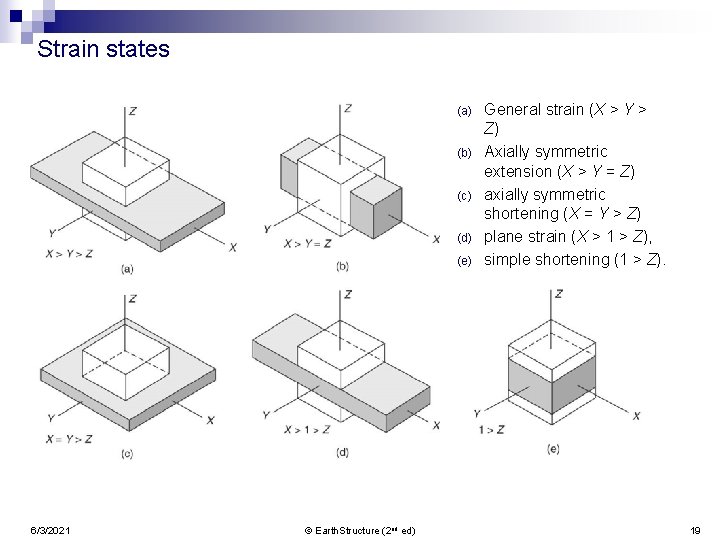
Strain states (a) (b) (c) (d) (e) 6/3/2021 © Earth. Structure (2 nd ed) General strain (X > Y > Z) Axially symmetric extension (X > Y = Z) axially symmetric shortening (X = Y > Z) plane strain (X > 1 > Z), simple shortening (1 > Z). 19
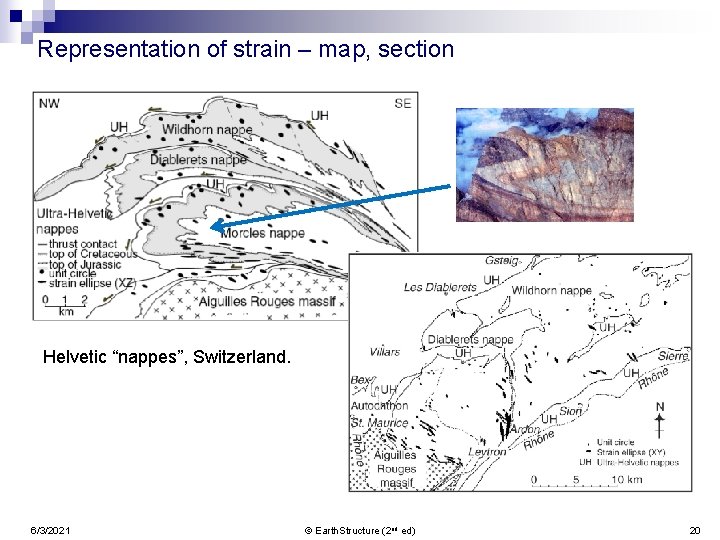
Representation of strain – map, section Helvetic “nappes”, Switzerland. 6/3/2021 © Earth. Structure (2 nd ed) 20
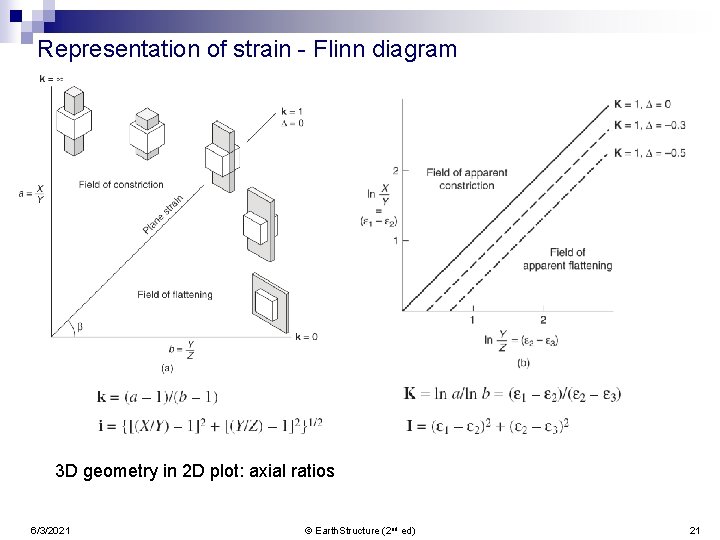
Representation of strain - Flinn diagram 3 D geometry in 2 D plot: axial ratios 6/3/2021 © Earth. Structure (2 nd ed) 21
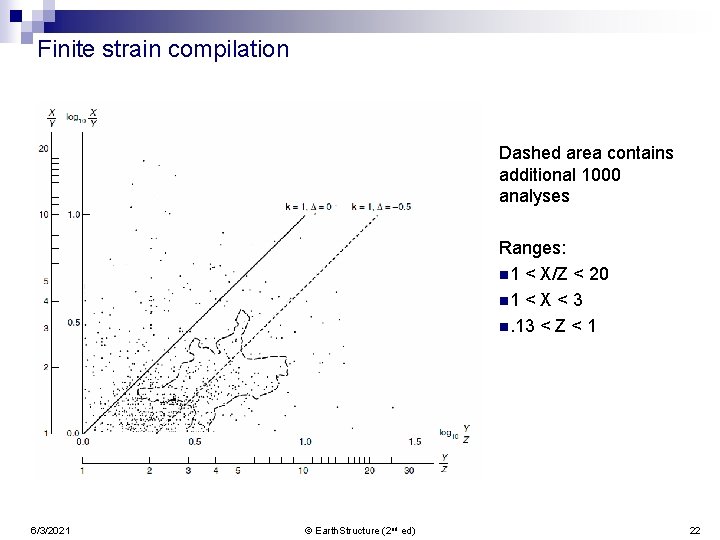
Finite strain compilation Dashed area contains additional 1000 analyses Ranges: n 1 < X/Z < 20 n 1 < X < 3 n. 13 < Z < 1 6/3/2021 © Earth. Structure (2 nd ed) 22
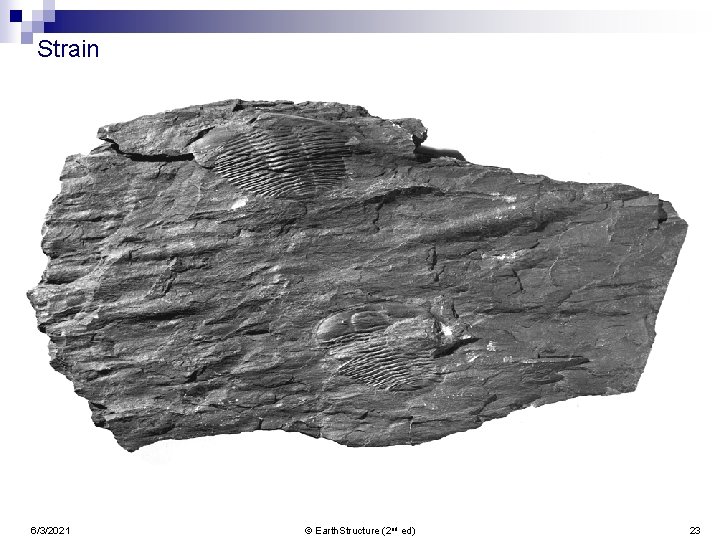
Strain 6/3/2021 © Earth. Structure (2 nd ed) 23
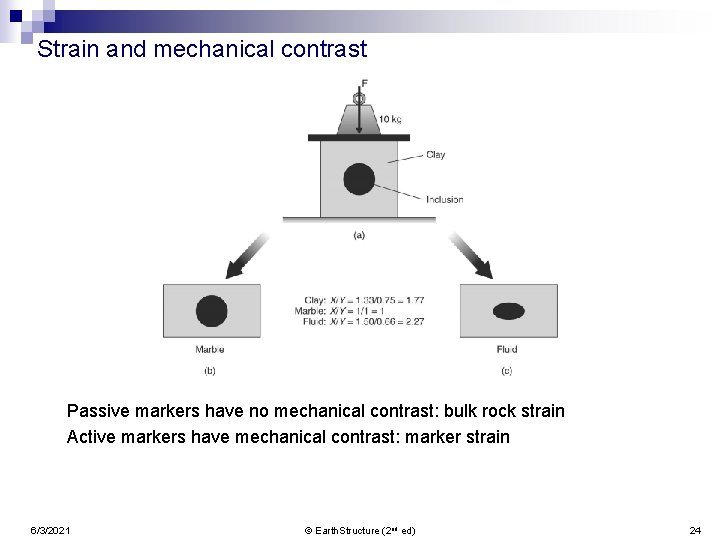
Strain and mechanical contrast Passive markers have no mechanical contrast: bulk rock strain Active markers have mechanical contrast: marker strain 6/3/2021 © Earth. Structure (2 nd ed) 24
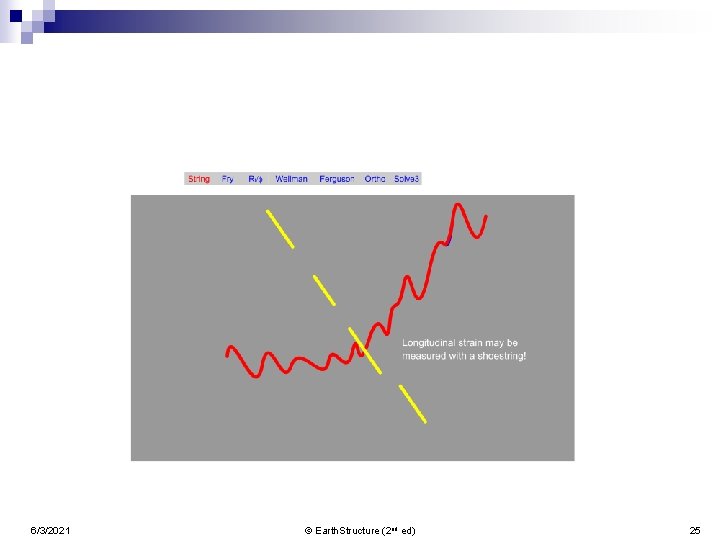
6/3/2021 © Earth. Structure (2 nd ed) 25
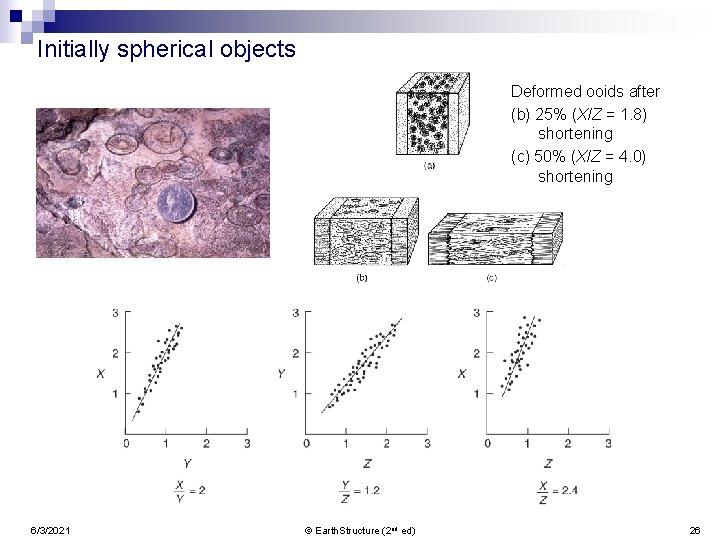
Initially spherical objects Deformed ooids after (b) 25% (X/Z = 1. 8) shortening (c) 50% (X/Z = 4. 0) shortening 6/3/2021 © Earth. Structure (2 nd ed) 26
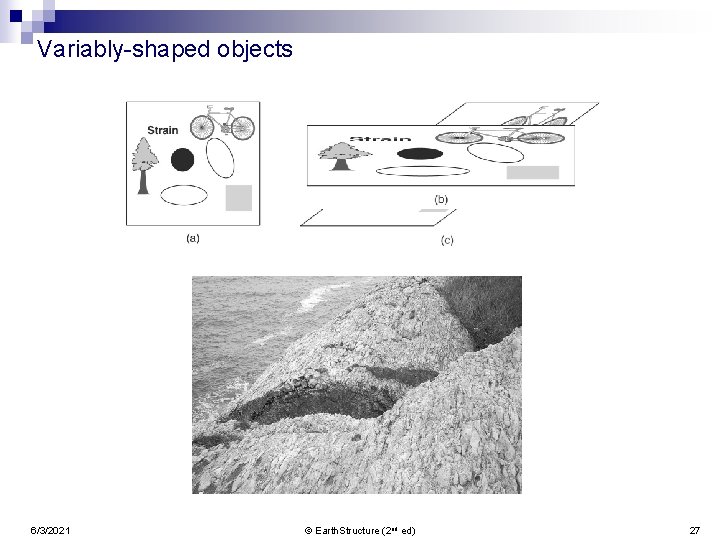
Variably-shaped objects 6/3/2021 © Earth. Structure (2 nd ed) 27
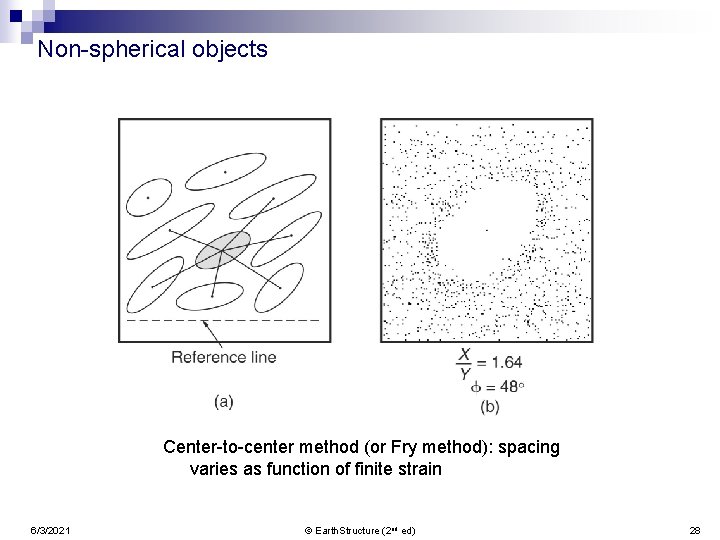
Non-spherical objects Center-to-center method (or Fry method): spacing varies as function of finite strain 6/3/2021 © Earth. Structure (2 nd ed) 28
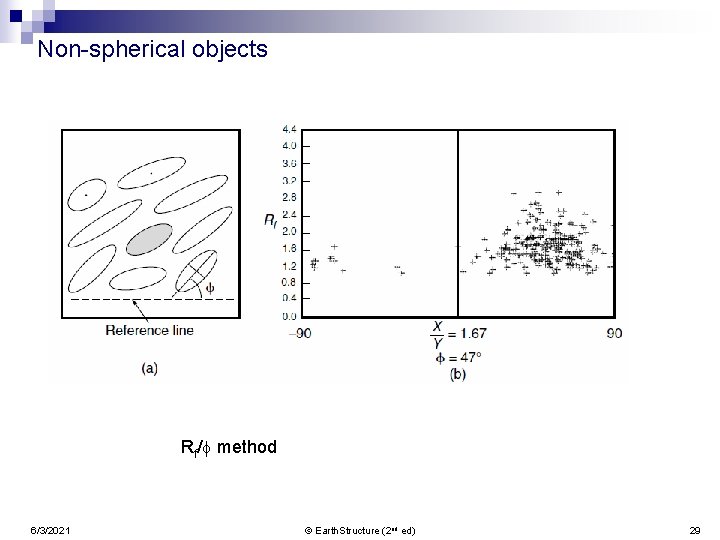
Non-spherical objects Rf/f method 6/3/2021 © Earth. Structure (2 nd ed) 29
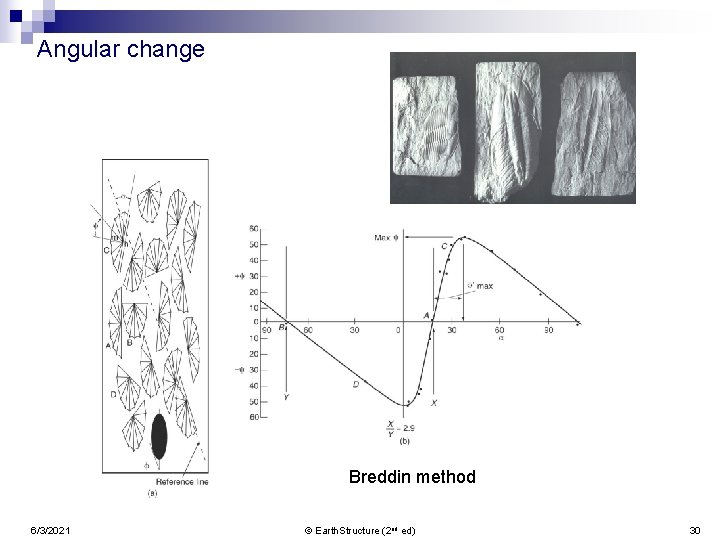
Angular change Breddin method 6/3/2021 © Earth. Structure (2 nd ed) 30
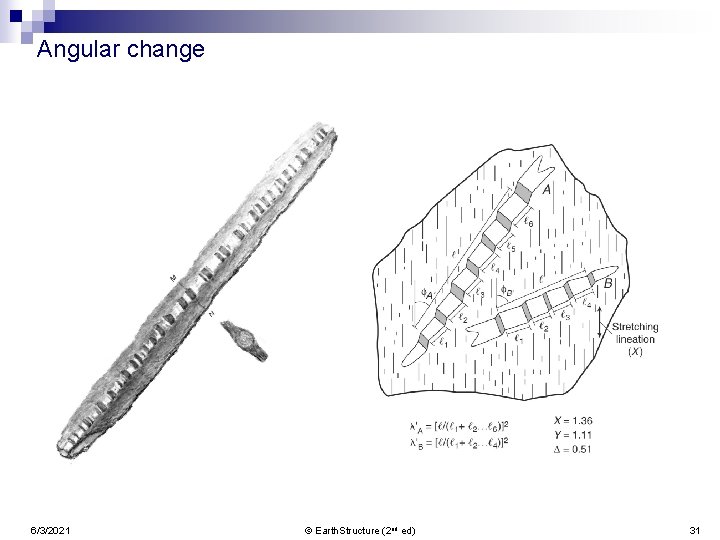
Angular change 6/3/2021 © Earth. Structure (2 nd ed) 31
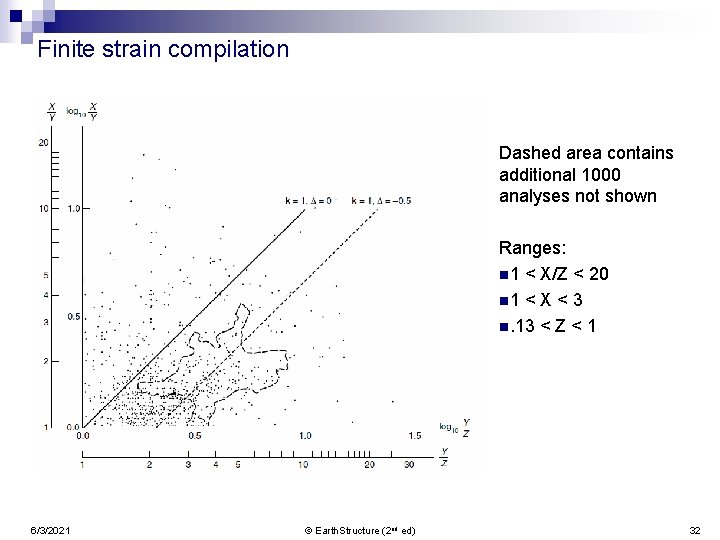
Finite strain compilation Dashed area contains additional 1000 analyses not shown Ranges: n 1 < X/Z < 20 n 1 < X < 3 n. 13 < Z < 1 6/3/2021 © Earth. Structure (2 nd ed) 32
Extra 6/3/2021 © Earth. Structure (2 nd ed) 33
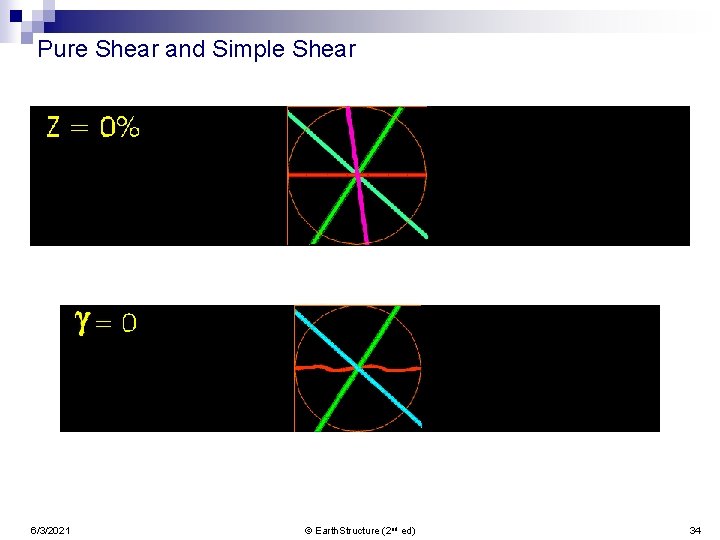
Pure Shear and Simple Shear 6/3/2021 © Earth. Structure (2 nd ed) 34
6/3/2021 © Earth. Structure (2 nd ed) 35
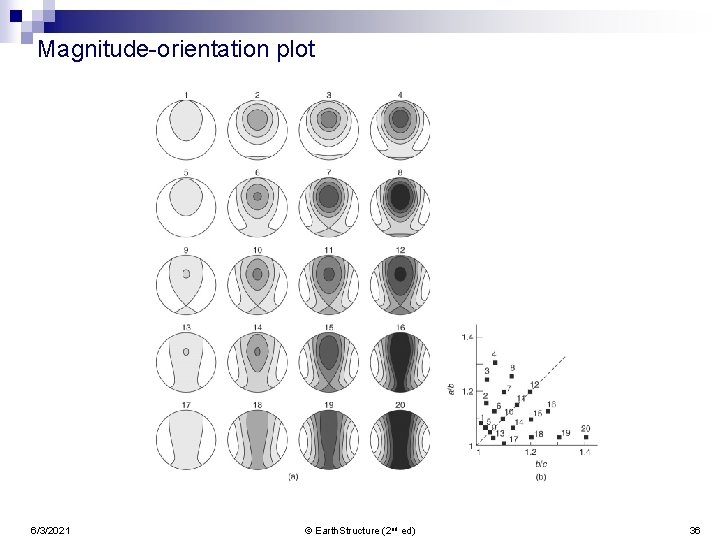
Magnitude-orientation plot 6/3/2021 © Earth. Structure (2 nd ed) 36
6/3/2021 © Earth. Structure (2 nd ed) 37