
DEFINITIONS Mesocycle Matveyev in his classic periodization model



- Slides: 60
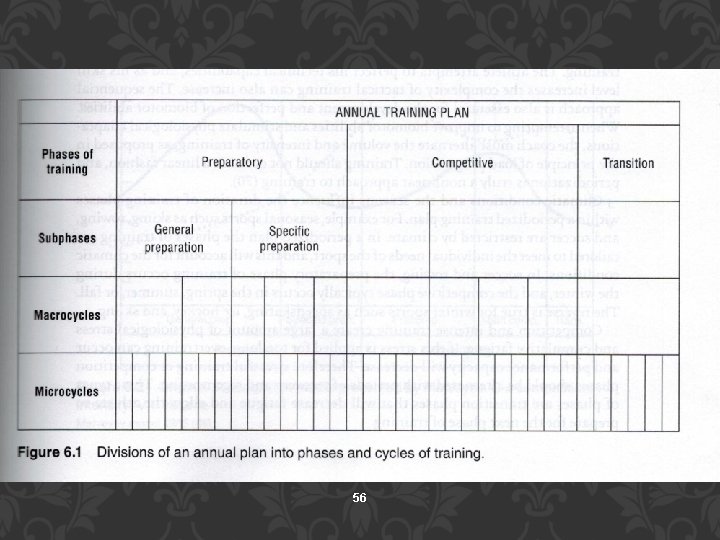
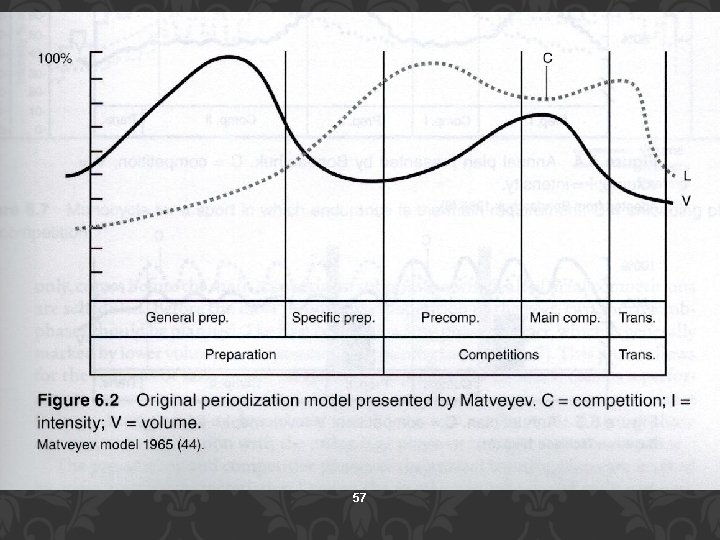
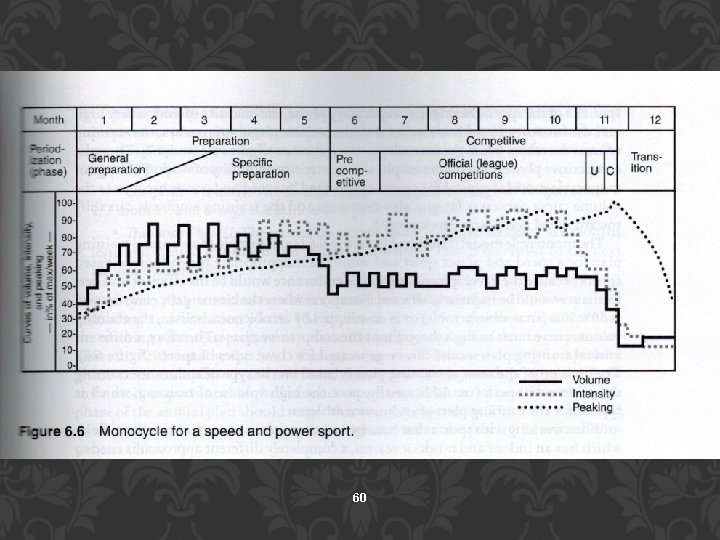
DEFINITIONS Mesocycle: Matveyev, in his classic periodization model, utilized natural monthly bio-0 cycles to construct “meso” or monthly periods of four weeks. Within each mesocycle, intensity and volume are gradually increased creating a summated model until the last microcycle, which decreases load and volume for a restorative or stabilizing effect. 1
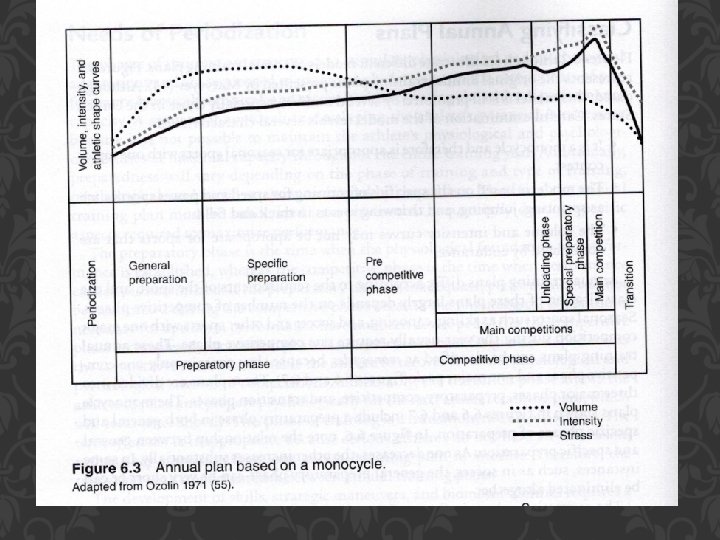
DEFINITIONS OF PERIODIZATION Macrocycle: term used for phases of preparation and competition leading up to a season or series of focal competitions. Often coaches implement a single, double, or tri-cycle model of periodization depending on the number of seasons, or focal competitions the athlete or team has in any given plan or year. 2
DEFINITIONS Microcycle: the building blocks of a mesocycle are the microcycles, normally seven to ten day periods, where load and volume of work are interspersed with recovery. 3
DEFINITIONS Training Session: depending on the demands of the athlete or team, and their training age, the coach may incorporate one of several training sessions into a daily routine. 4
DEFINITIONS Training Unit: the smallest of the periodization units, a unit describes the specific activity prescribed during the training session. It should be noted that sequencing units is important for each session’s effectiveness. Well orchestrated programs utilize continuous warm-ups, specific to sport demands, before progressing to motor skill demanding activities while the body is less fatigued, before initiating endurance activities, culminating with a cool down. 5
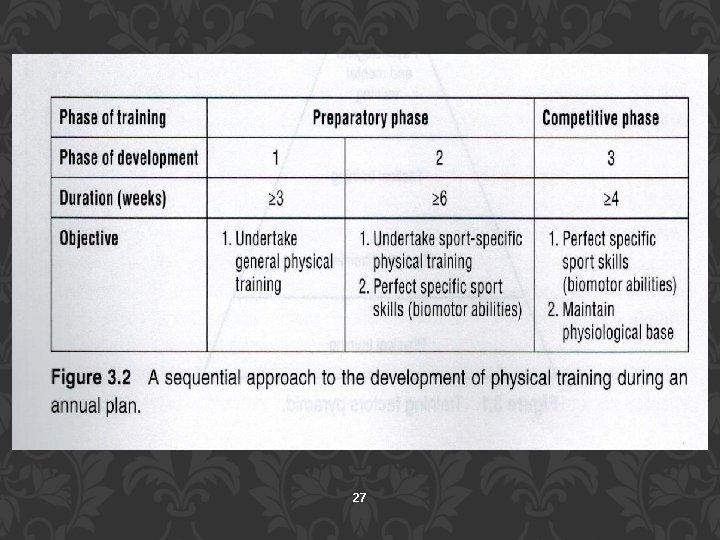
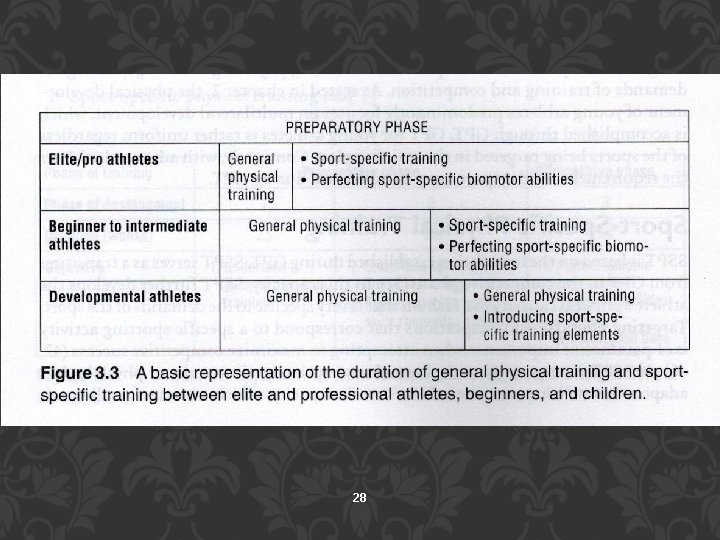
DEFINITION Phases: emphasize thematic or training emphasis. Initial phase is called preparation or conditioning and may last several mesocycles Divided into general and specific phases General-broad multilateral training takes place and then moves into overall strength, flexibility, stamina and coordination. Specific-improvement of sport specific skills is emphasized with high volume and low intensity. 6
DEFINITION Competition Phase: depending on the length and complexity of the season a majority of the competition season is called the competitive phase. The athlete has evolved from the prep phase with stable fitness and the ability to accomplish position and sport specific demands with minimal fatigue. As the phase progresses to its focal point the training volume decreases while intensity increases with sport specific training. The end part of the phase is the taper or peak when all components of the training plan converge to enable optimal performance for a period of time. 7
DEFINITION Transition Phase: this phase lasts one to four weeks beginning after the focal competition and allowing athletes to heal injuries and recover from previous training. The goal of the transition phase is to maintain some level of fitness while allowing the body to recover. 8
EXCERPTS FROM PERIODIZATION THEORY AND METHODOLOGY OF TRAINING Fifth Edition Tudor O. Abompa York University G. Gregory Haff West Virginia University Human Kinetics 2009 9
10
LOADING Standard Loading Resistance stays the same throughout the workout Gains are made only in the early part of the program Plateauing will occur 11
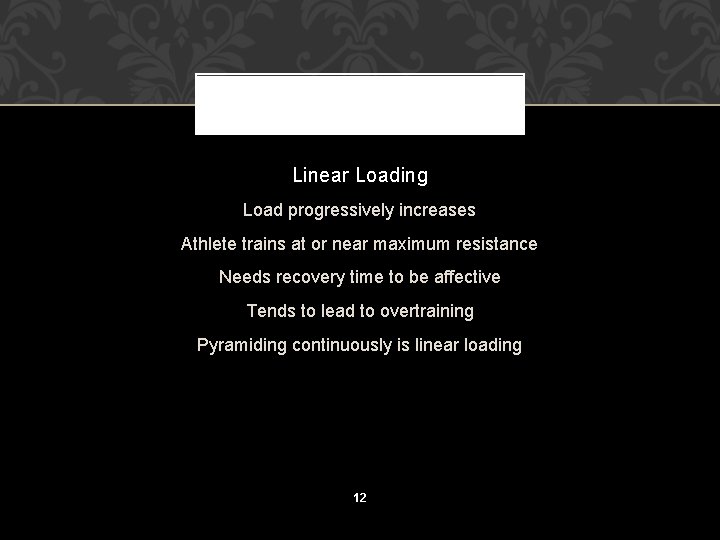
Linear Loading Load progressively increases Athlete trains at or near maximum resistance Needs recovery time to be affective Tends to lead to overtraining Pyramiding continuously is linear loading 12
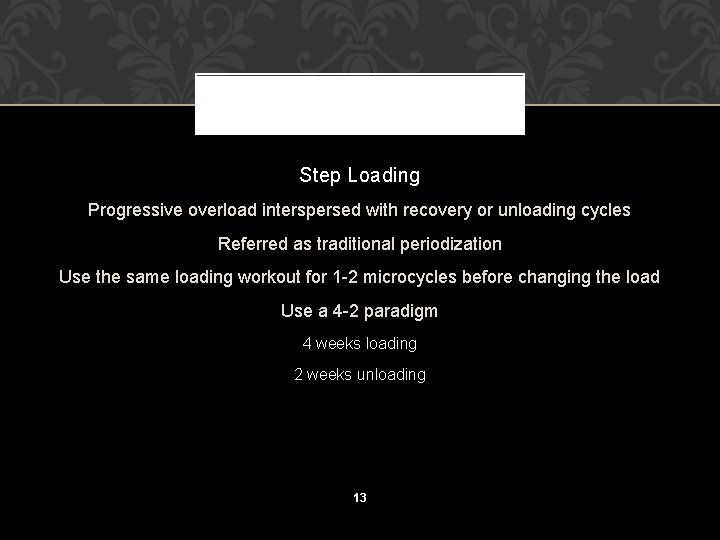
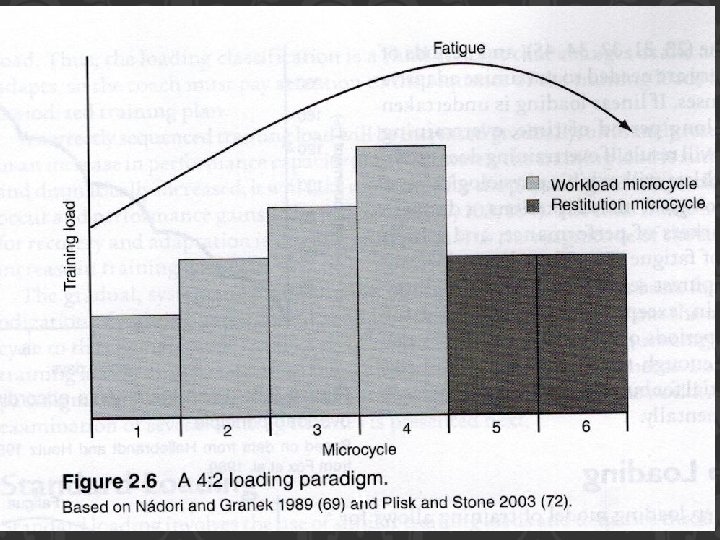
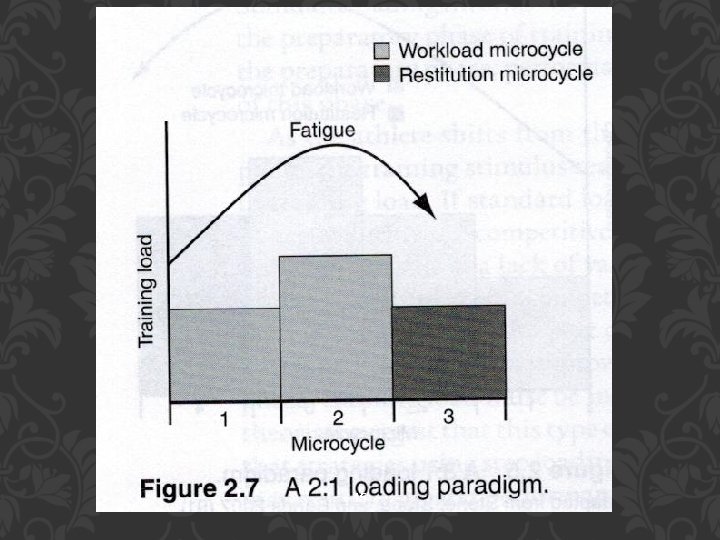
Step Loading Progressive overload interspersed with recovery or unloading cycles Referred as traditional periodization Use the same loading workout for 1 -2 microcycles before changing the load Use a 4 -2 paradigm 4 weeks loading 2 weeks unloading 13
14
15
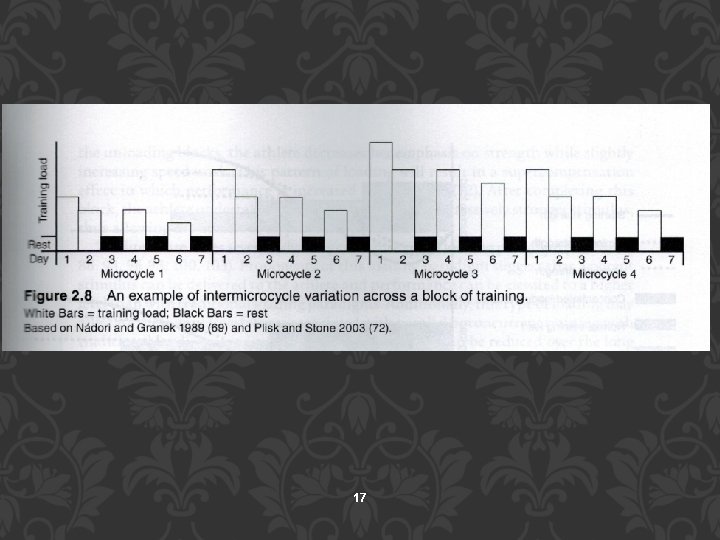
UNDULATING PERIODIZATION The workloads are interspersed with lighter days or unloading days Keeps the body’s adaptive abilities in motion so increased training results occur without overtraining 16
17
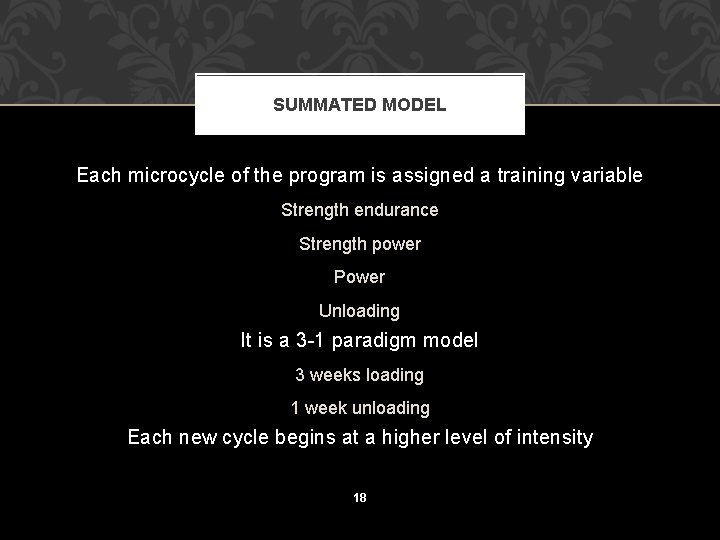
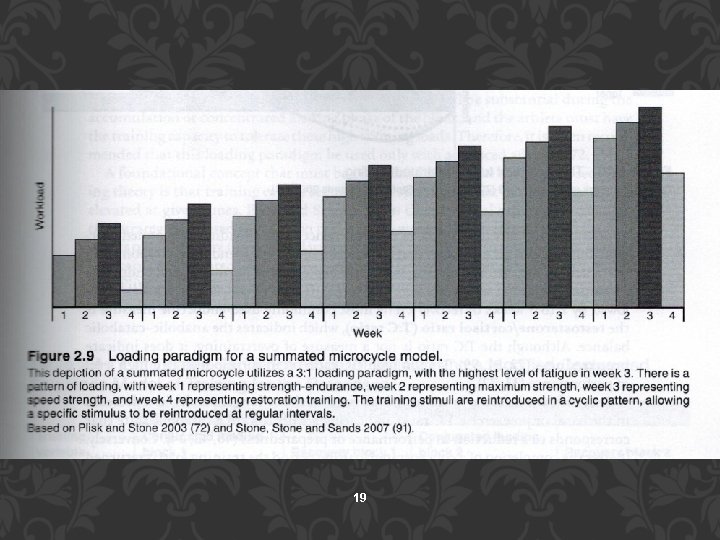
SUMMATED MODEL Each microcycle of the program is assigned a training variable Strength endurance Strength power Power Unloading It is a 3 -1 paradigm model 3 weeks loading 1 week unloading Each new cycle begins at a higher level of intensity 18
19
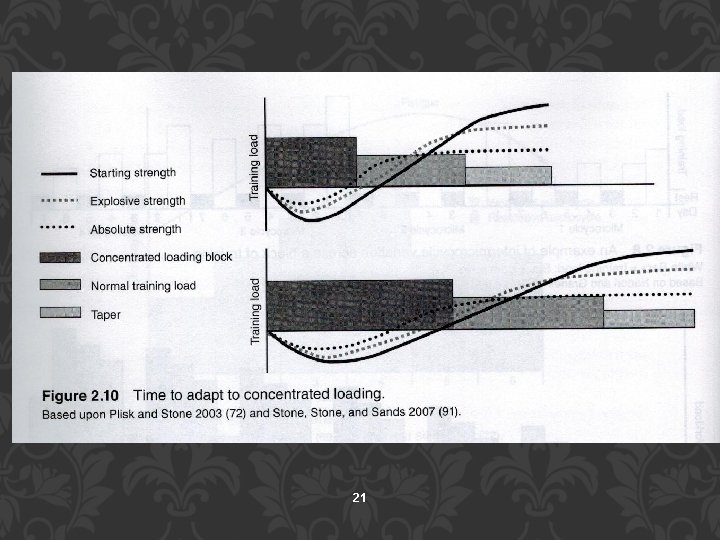
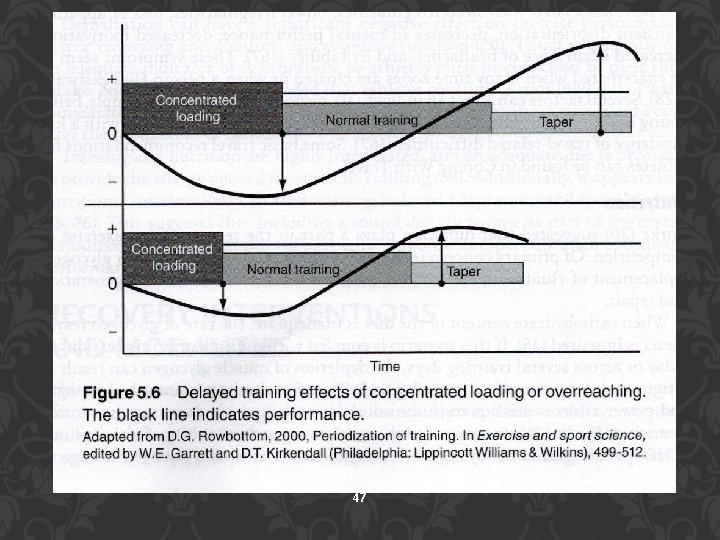
CONCENTRATED LOADING Short term overloading also labeled as “overreaching” The greater the magnitude and duration of the concentrated loading phase, the more time needed to recover from fatigue. Research has suggested that training results might take up to 4 -12 weeks after cessation of the concentrated loading phase 20
21
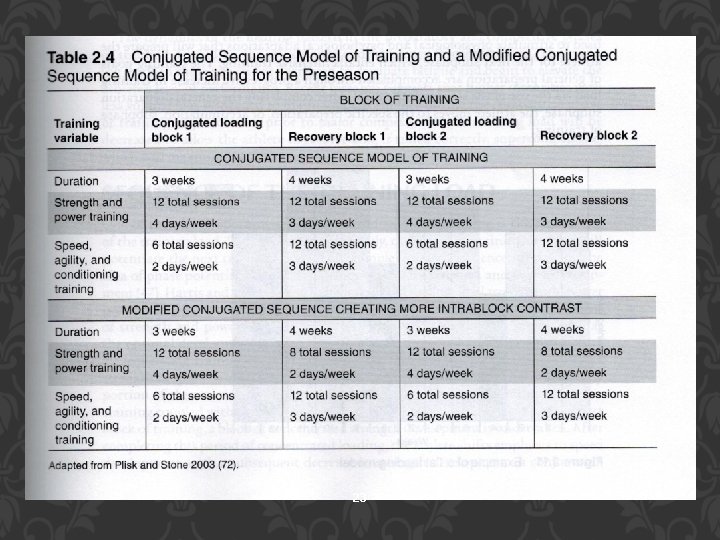
CONJUGATED PARADIGM Concentrated periods of over reaching followed by periods of restitution Use 4 blocks of mirco cycles Intense training Followed by a block of restitution 3 -4 paradigm 3 heavy weeks Followed by 4 weeks of recovery 22
23
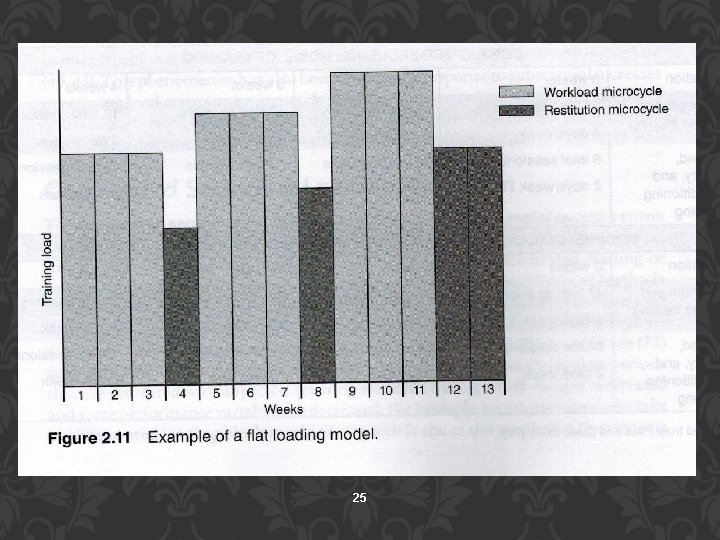
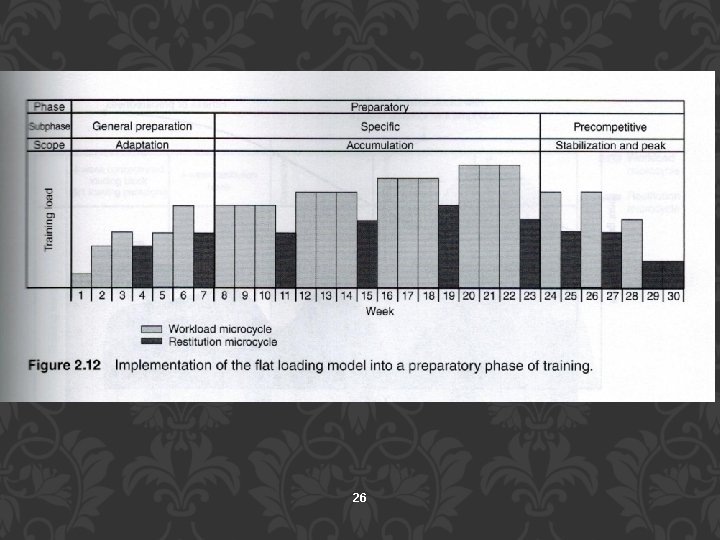
FLAT LOADING Used only with advanced athletes Used only in the middle part of the Prepatory phase of the mesocycle Each step will increase in resistance followed by a restitution microcycle 24
25
26
27
28
29
30
31
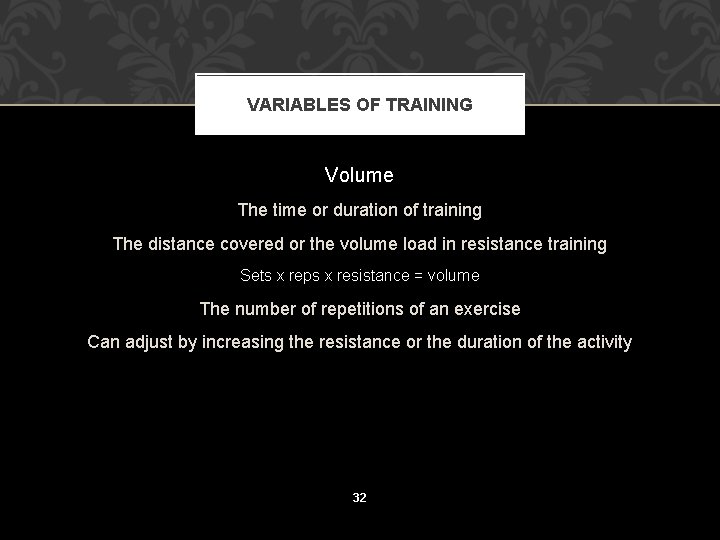
VARIABLES OF TRAINING Volume The time or duration of training The distance covered or the volume load in resistance training Sets x reps x resistance = volume The number of repetitions of an exercise Can adjust by increasing the resistance or the duration of the activity 32
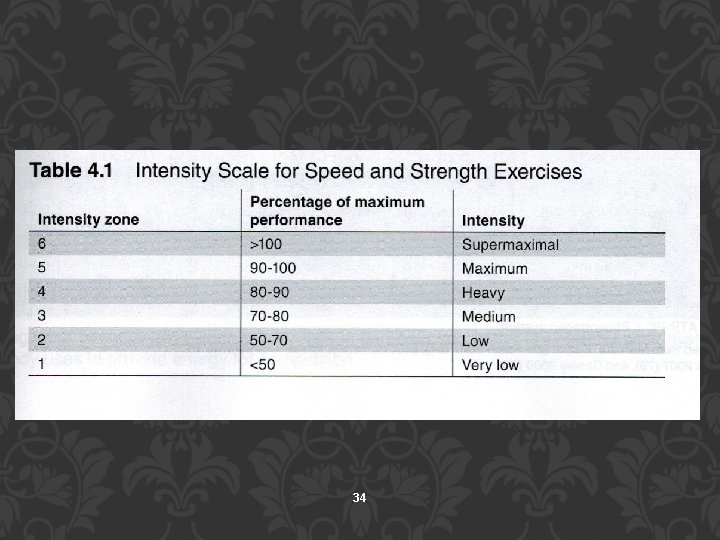
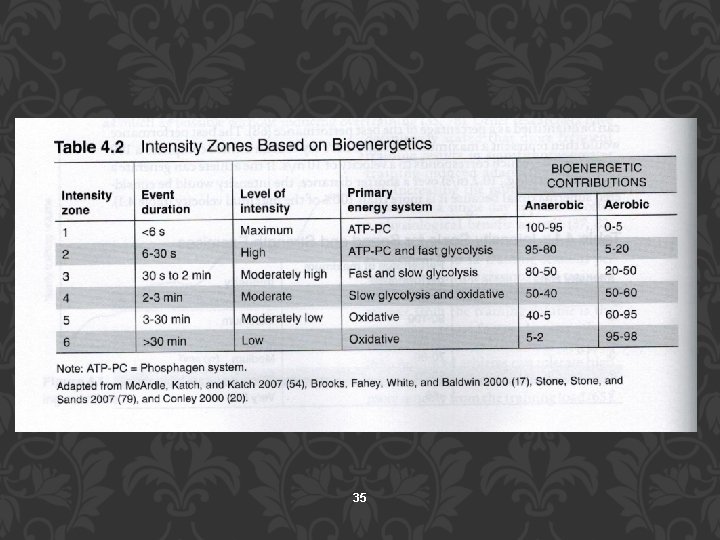
Intensity The qualitative component of work performed The more work performed per unit of time the greater the intensity Intensity should vary within the mesocycle of the program 33
34
35
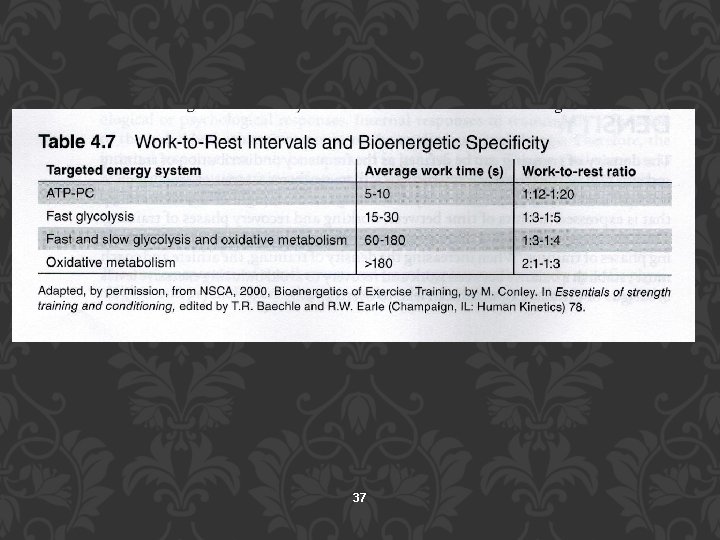
Density The amount of work performed within a time period The greater the workload the denser the workout Shorter recovery times Some coaches used fixed work to rest ratios Others use a recovery heart rate of 65% of their maximum Others use 120 -130 beats per minute as the recovery measurement 36
37
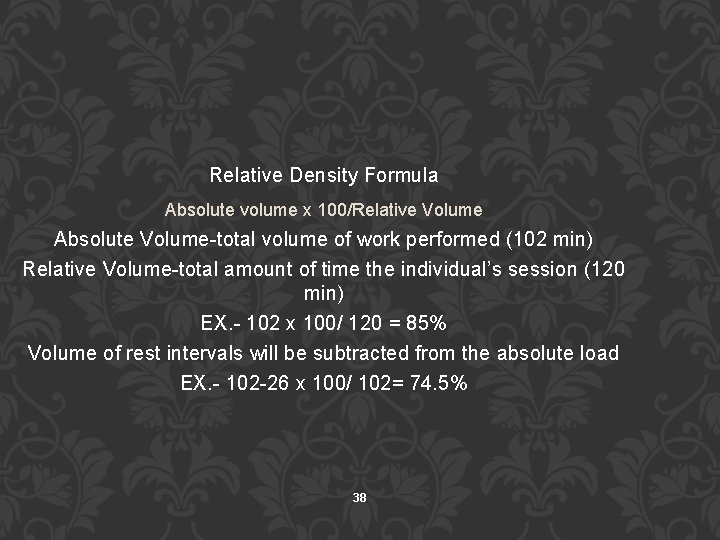
Relative Density Formula Absolute volume x 100/Relative Volume Absolute Volume-total volume of work performed (102 min) Relative Volume-total amount of time the individual’s session (120 min) EX. - 102 x 100/ 120 = 85% Volume of rest intervals will be subtracted from the absolute load EX. - 102 -26 x 100/ 102= 74. 5% 38
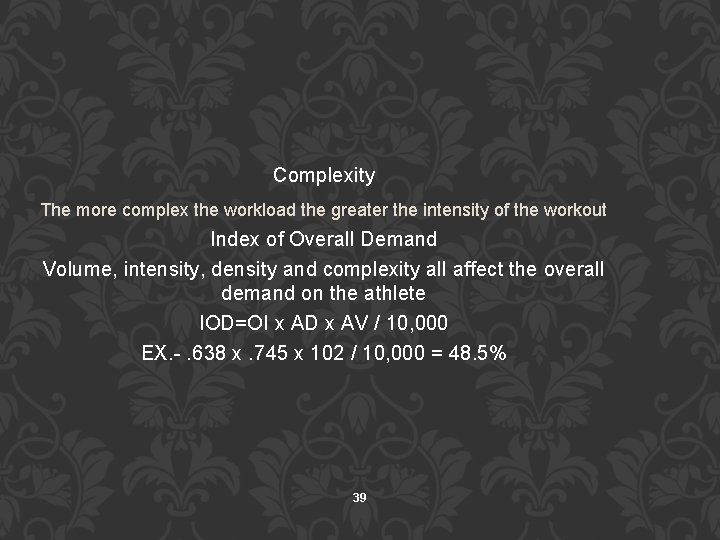
Complexity The more complex the workload the greater the intensity of the workout Index of Overall Demand Volume, intensity, density and complexity all affect the overall demand on the athlete IOD=OI x AD x AV / 10, 000 EX. -. 638 x. 745 x 102 / 10, 000 = 48. 5% 39
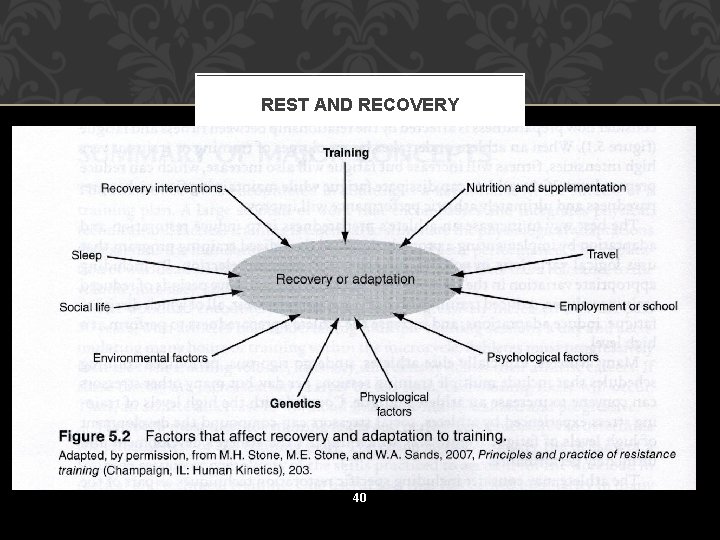
REST AND RECOVERY 40
41
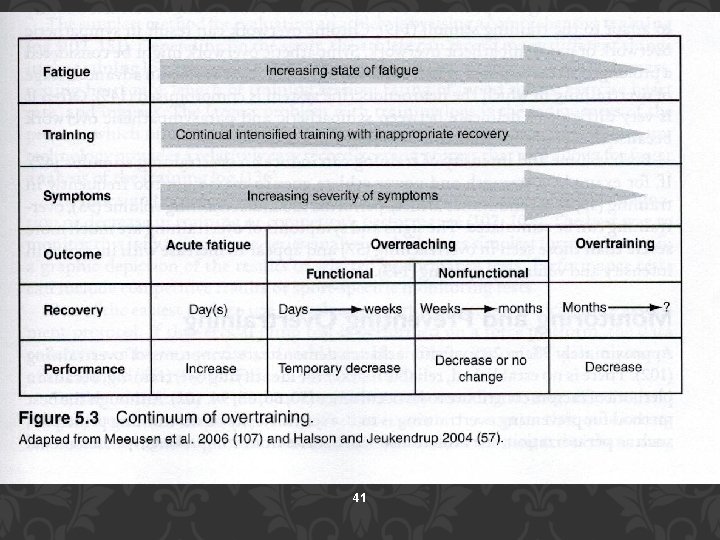
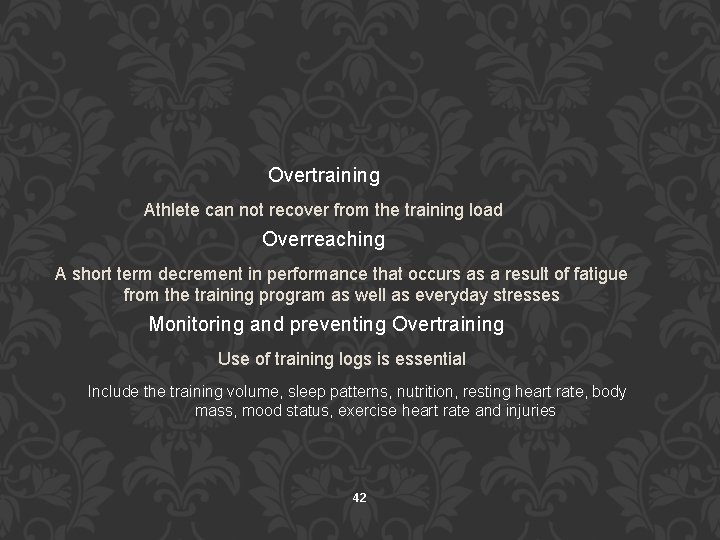
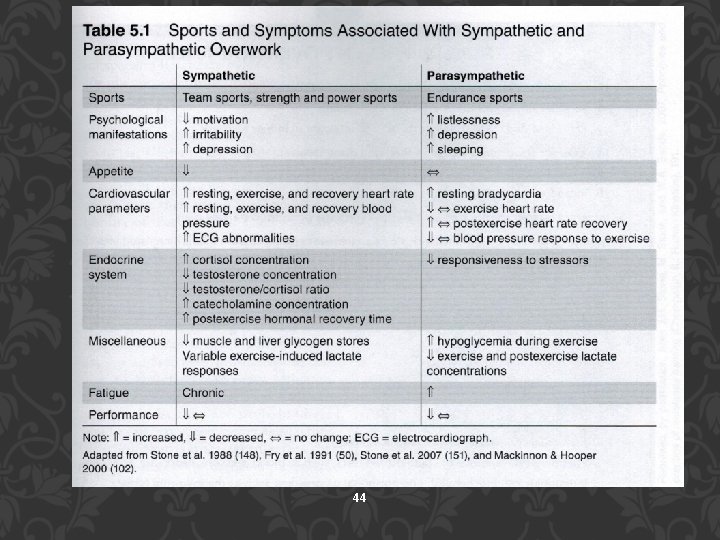
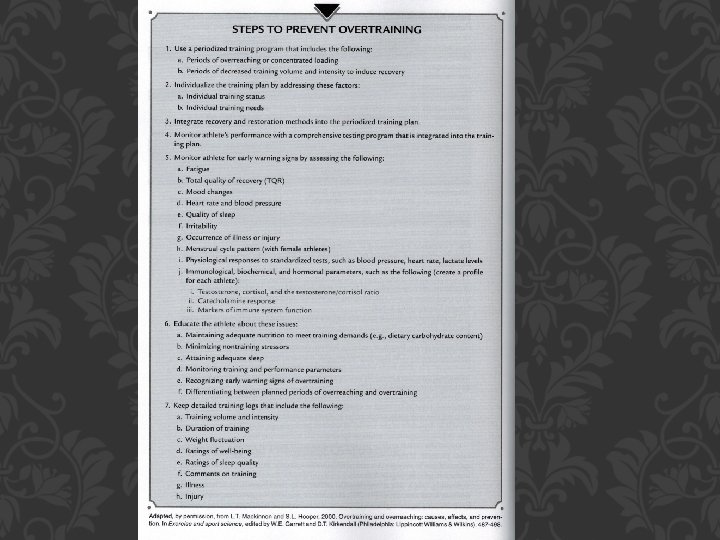
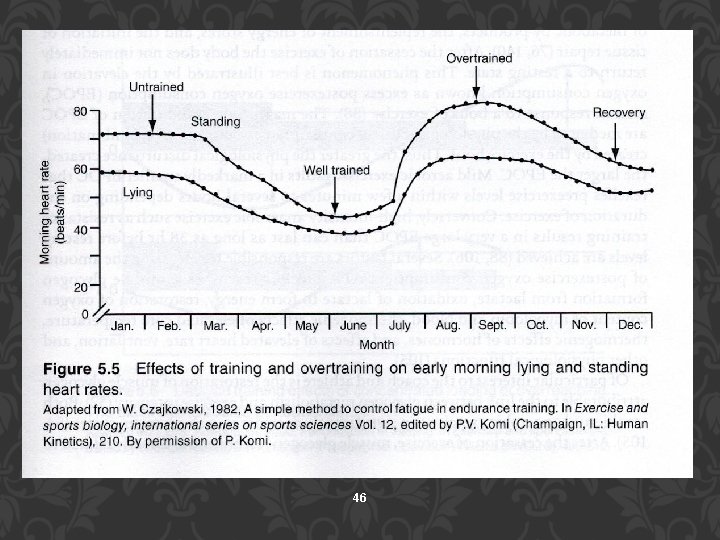
Overtraining Athlete can not recover from the training load Overreaching A short term decrement in performance that occurs as a result of fatigue from the training program as well as everyday stresses Monitoring and preventing Overtraining Use of training logs is essential Include the training volume, sleep patterns, nutrition, resting heart rate, body mass, mood status, exercise heart rate and injuries 42
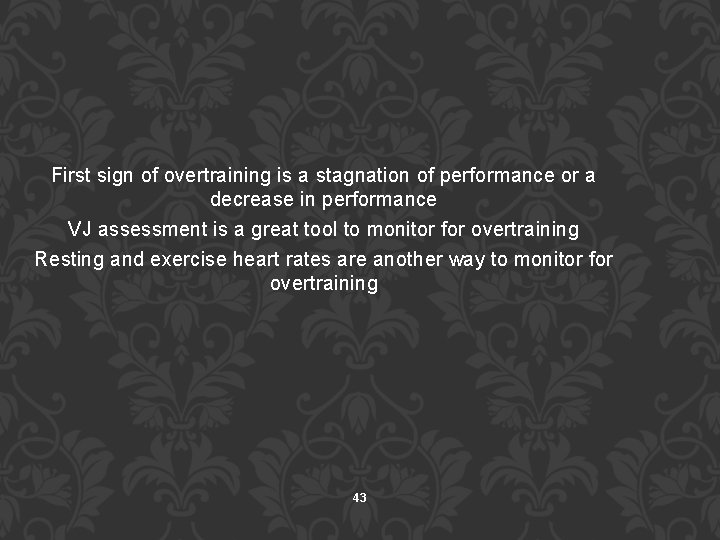
First sign of overtraining is a stagnation of performance or a decrease in performance VJ assessment is a great tool to monitor for overtraining Resting and exercise heart rates are another way to monitor for overtraining 43
44
45
46
47
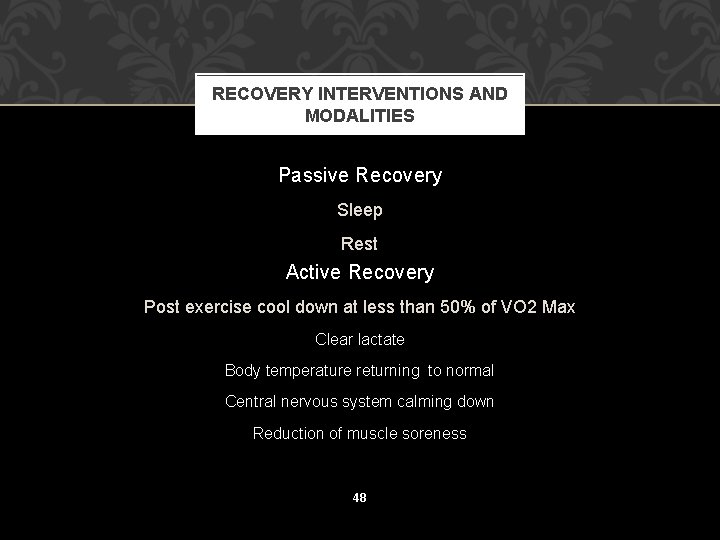
RECOVERY INTERVENTIONS AND MODALITIES Passive Recovery Sleep Rest Active Recovery Post exercise cool down at less than 50% of VO 2 Max Clear lactate Body temperature returning to normal Central nervous system calming down Reduction of muscle soreness 48
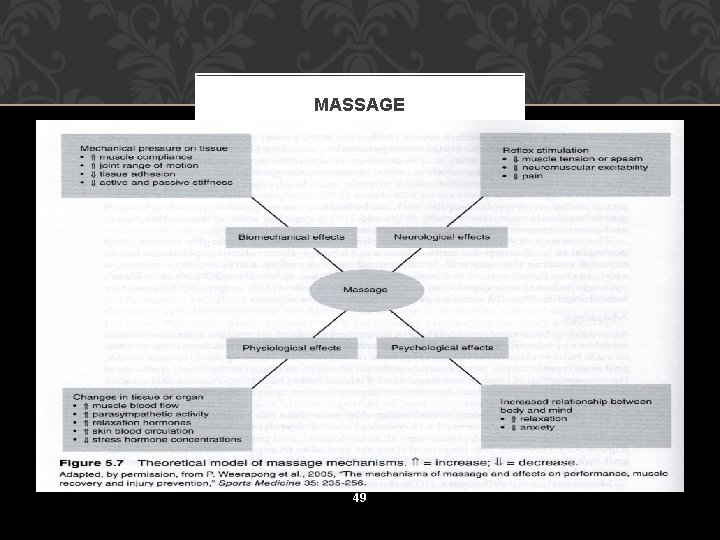
MASSAGE 49
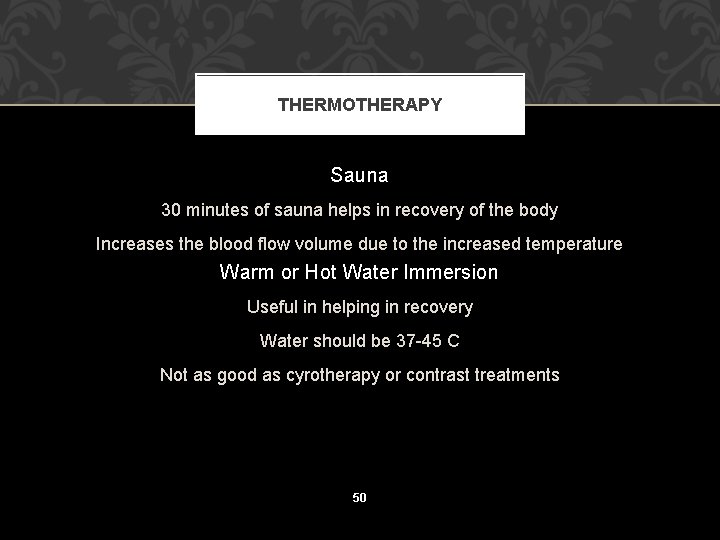
THERMOTHERAPY Sauna 30 minutes of sauna helps in recovery of the body Increases the blood flow volume due to the increased temperature Warm or Hot Water Immersion Useful in helping in recovery Water should be 37 -45 C Not as good as cyrotherapy or contrast treatments 50
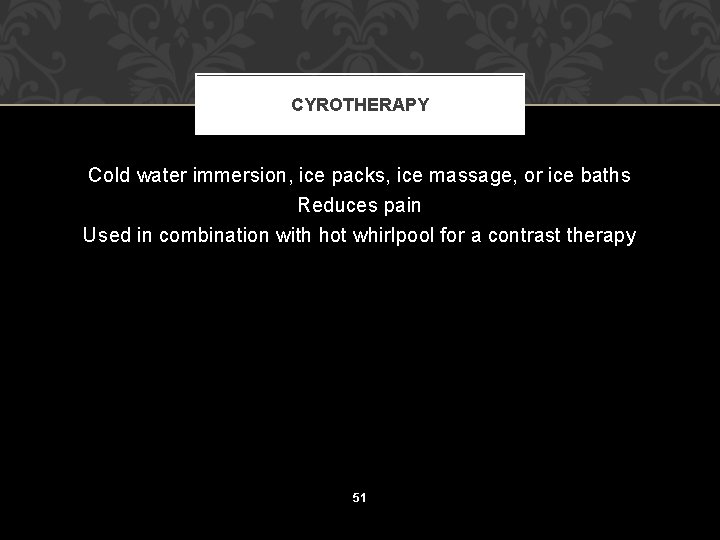
CYROTHERAPY Cold water immersion, ice packs, ice massage, or ice baths Reduces pain Used in combination with hot whirlpool for a contrast therapy 51
WATER IMMERSION Swimming in temperature neutral water helps in increasing cardiac output, clearing of waste products and an increase in recovery of muscular substrates Pressure of the water on the body also helps in the recovery process 52
NONSTEROIDAL ANTIINFLAMMATORY DRUGS NSAIDS Lessons pain Decreases swelling 53
NUTRITIONAL STRATEGIES Pre-exercise supplementation 1 -4 gm of CHO per Kg of body weight 1 -4 hours pre-exercise Supplementation during exercise Carbohydrate and protein supplement within 30 minutes after the start of exercise Increases insulin response and GH response Post-exercise supplementation 1 -1. 85 g of CHO x Kg x body weight. 4 g of protein per Kg of body weight 54
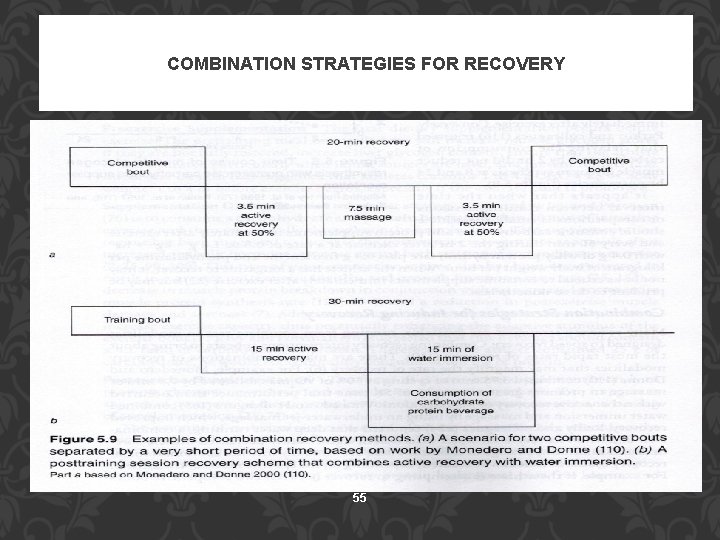
COMBINATION STRATEGIES FOR RECOVERY 55
56
57
58
59
60