
Definition The transfer of pollen grains from the



- Slides: 18
Definition: The transfer of pollen grains from the anther to the stigma of a flower. Pollen grains are immobile. They cannot reach the stigma by themselves. An external agent is required for this. It can be wind, water, animal, gravity or growth contact.
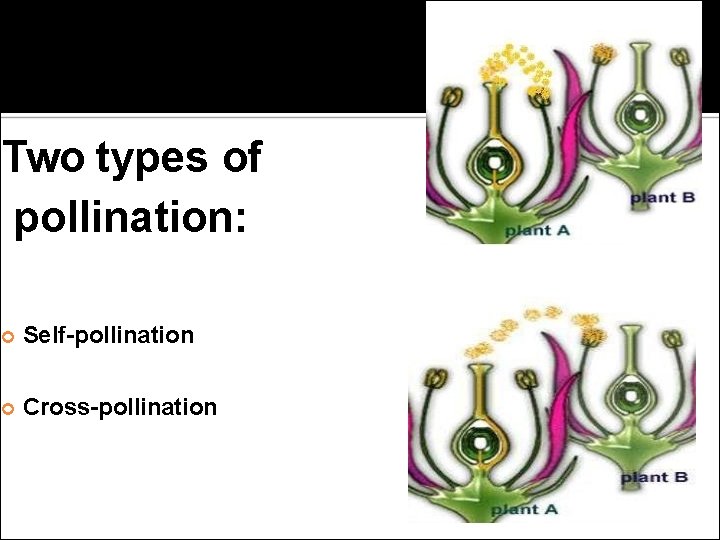
Two types of pollination: Self-pollination Cross-pollination
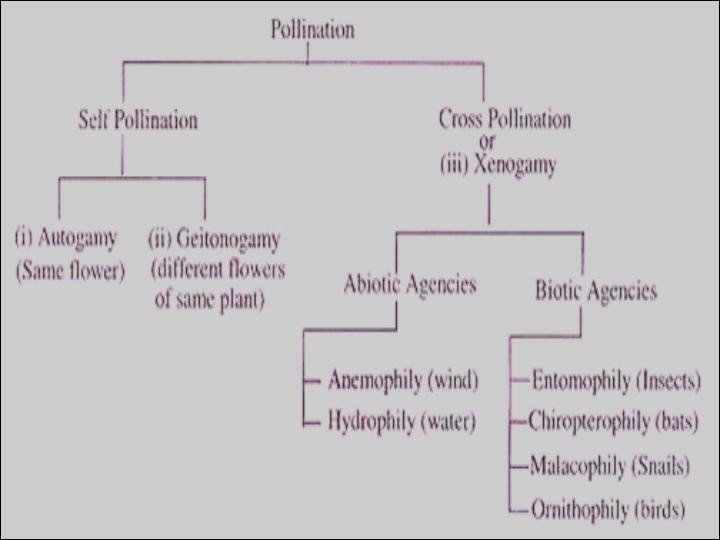
It is the transfer of pollen grains from the anther of a flower to the stigma of either the same or genetically similar flower. Accordingly, self pollination is of two types, autogamy and geitonogamy.
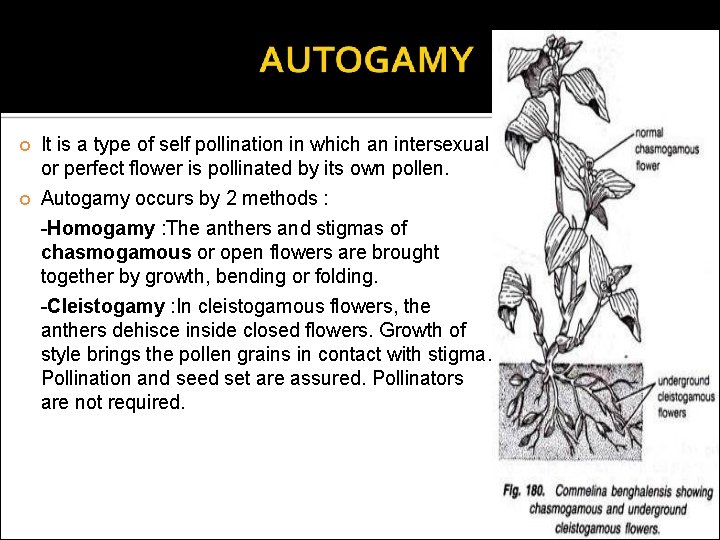
It is a type of self pollination in which an intersexual or perfect flower is pollinated by its own pollen. Autogamy occurs by 2 methods : -Homogamy : The anthers and stigmas of chasmogamous or open flowers are brought together by growth, bending or folding. -Cleistogamy : In cleistogamous flowers, the anthers dehisce inside closed flowers. Growth of style brings the pollen grains in contact with stigma. Pollination and seed set are assured. Pollinators are not required.
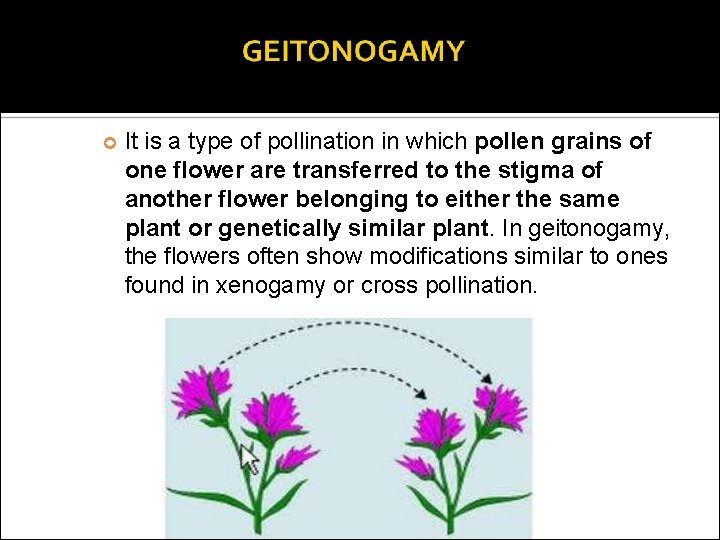
It is a type of pollination in which pollen grains of one flower are transferred to the stigma of another flower belonging to either the same plant or genetically similar plant. In geitonogamy, the flowers often show modifications similar to ones found in xenogamy or cross pollination.
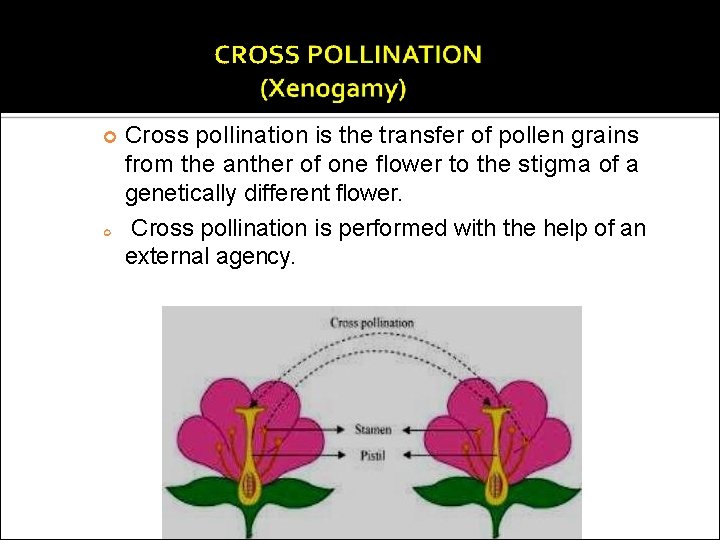
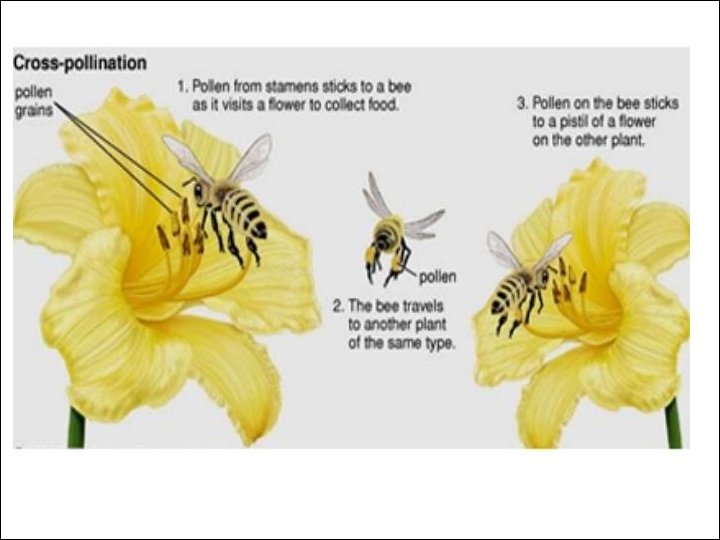
Cross pollination is the transfer of pollen grains from the anther of one flower to the stigma of a genetically different flower. Cross pollination is performed with the help of an external agency.
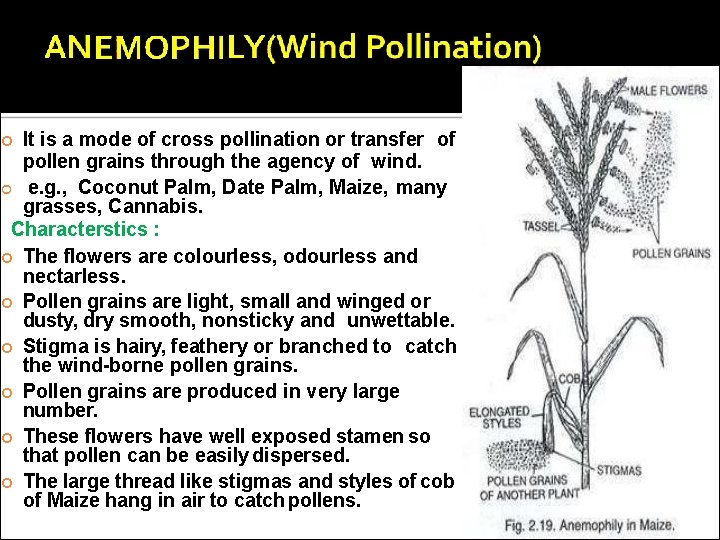
It is a mode of cross pollination or transfer of pollen grains through the agency of wind. e. g. , Coconut Palm, Date Palm, Maize, many grasses, Cannabis. Characterstics : The flowers are colourless, odourless and nectarless. Pollen grains are light, small and winged or dusty, dry smooth, nonsticky and unwettable. Stigma is hairy, feathery or branched to catch the wind-borne pollen grains. Pollen grains are produced in very large number. These flowers have well exposed stamen so that pollen can be easily dispersed. The large thread like stigmas and styles of cob of Maize hang in air to catch pollens.
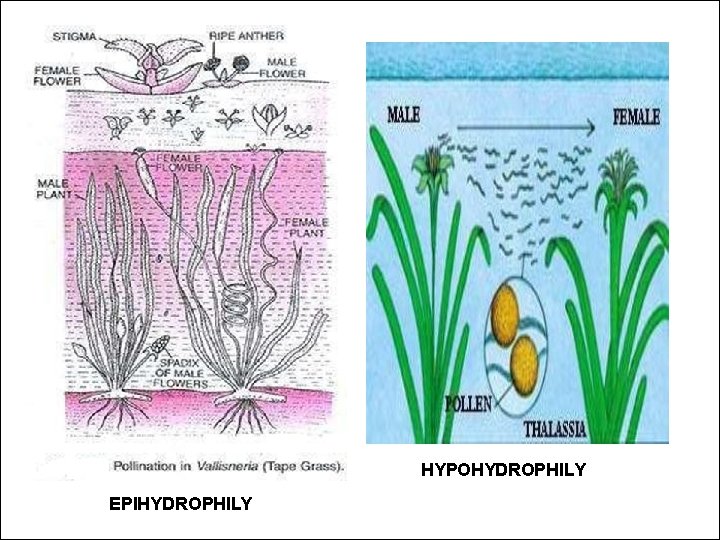
It is the mode of pollination or transfer of pollen grains through the agency of water. Eg. Zoostera , vallisneria, Characters: 1) 2) Flowers are small and inconspicuous. Nectar and odour are absent. Pollen grains are light and unwettable due to presence of mucliage cover. Stigma is long, sticky but unwettable. It is of two types Hypohydrophily-occcur below the surface of water e. g. , Zostera Epihydrophily-occur over the surface of water e. g. , Vallisneria
HYPOHYDROPHILY EPIHYDROPHILY
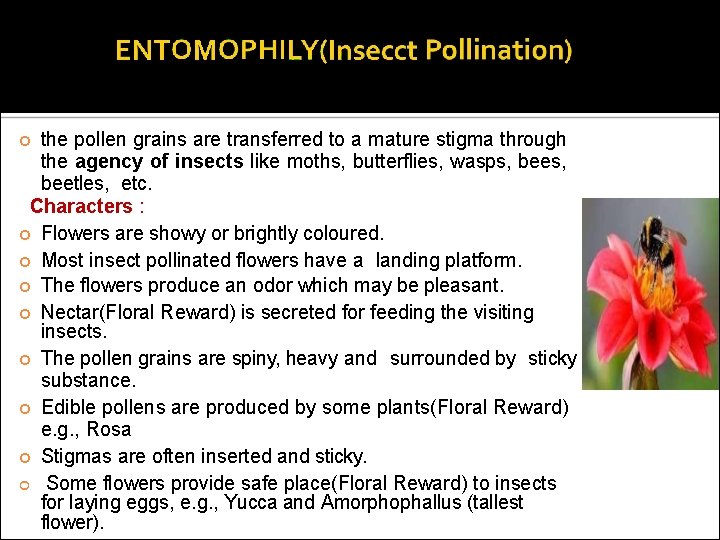
the pollen grains are transferred to a mature stigma through the agency of insects like moths, butterflies, wasps, beetles, etc. Characters : Flowers are showy or brightly coloured. Most insect pollinated flowers have a landing platform. The flowers produce an odor which may be pleasant. Nectar(Floral Reward) is secreted for feeding the visiting insects. The pollen grains are spiny, heavy and surrounded by sticky substance. Edible pollens are produced by some plants(Floral Reward) e. g. , Rosa Stigmas are often inserted and sticky. Some flowers provide safe place(Floral Reward) to insects for laying eggs, e. g. , Yucca and Amorphophallus (tallest flower).
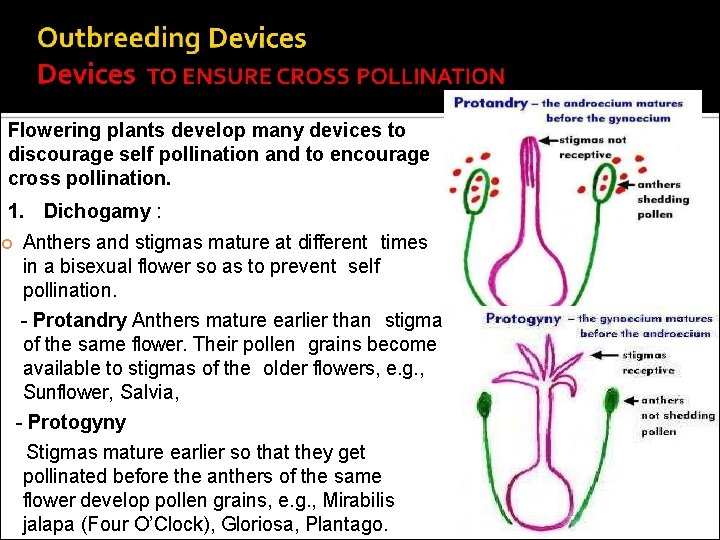
Flowering plants develop many devices to discourage self pollination and to encourage cross pollination. 1. Dichogamy : Anthers and stigmas mature at different times in a bisexual flower so as to prevent self pollination. - Protandry Anthers mature earlier than stigma of the same flower. Their pollen grains become available to stigmas of the older flowers, e. g. , Sunflower, Salvia, - Protogyny Stigmas mature earlier so that they get pollinated before the anthers of the same flower develop pollen grains, e. g. , Mirabilis jalapa (Four O’Clock), Gloriosa, Plantago.
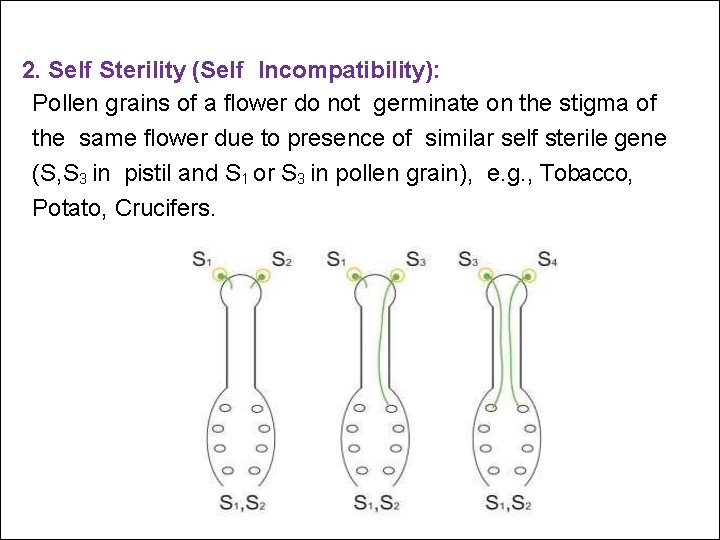
2. Self Sterility (Self Incompatibility): Pollen grains of a flower do not germinate on the stigma of the same flower due to presence of similar self sterile gene (S, S 3 in pistil and S 1 or S 3 in pollen grain), e. g. , Tobacco, Potato, Crucifers.
3. Production of Unisexual flowers prevent self pollination. �If both male and female flowers are present on the same plant it prevents autogamy but not geitonogamy. �When male and female flowers are present on different plant both autogamy and geitonogamy are prevented.
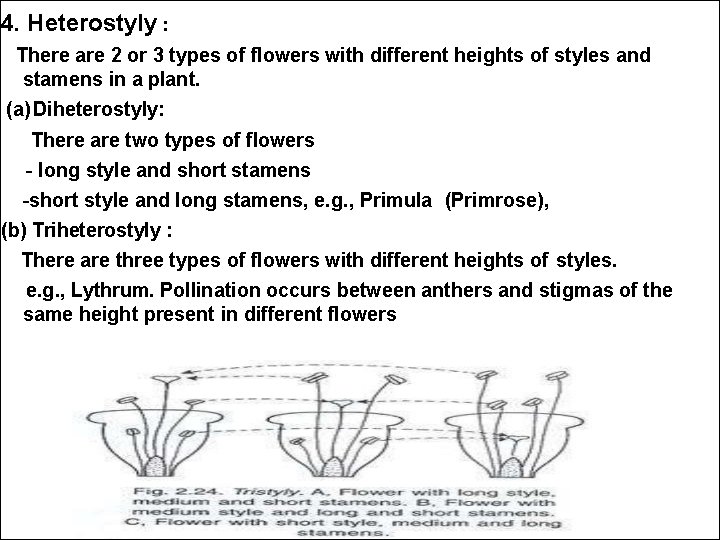
4. Heterostyly : There are 2 or 3 types of flowers with different heights of styles and stamens in a plant. (a) Diheterostyly: There are two types of flowers - long style and short stamens -short style and long stamens, e. g. , Primula (Primrose), (b) Triheterostyly : There are three types of flowers with different heights of styles. e. g. , Lythrum. Pollination occurs between anthers and stigmas of the same height present in different flowers