
Definition Power and politics Contrasting leadership and power

- Slides: 52
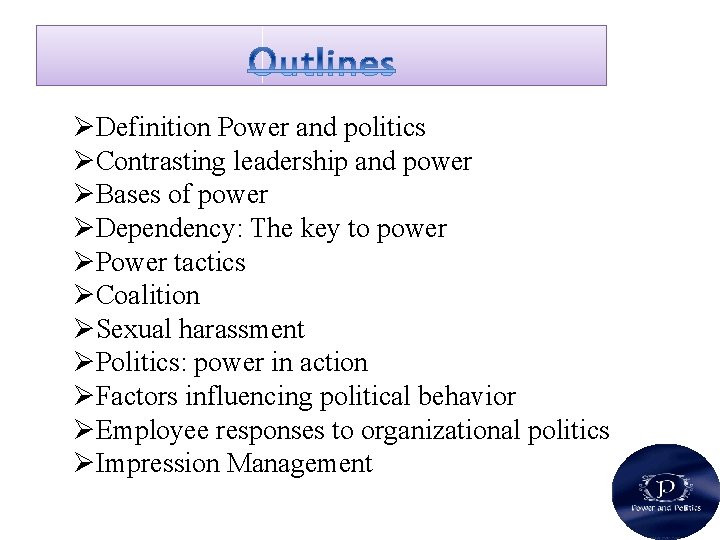
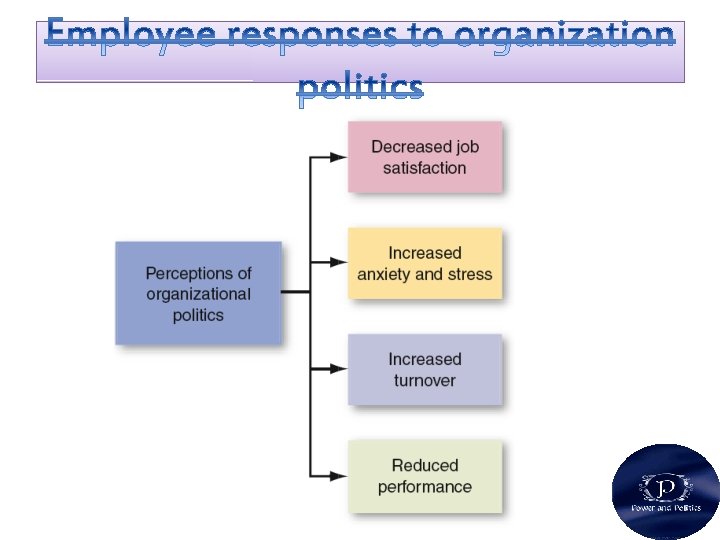
ØDefinition Power and politics ØContrasting leadership and power ØBases of power ØDependency: The key to power ØPower tactics ØCoalition ØSexual harassment ØPolitics: power in action ØFactors influencing political behavior ØEmployee responses to organizational politics ØImpression Management
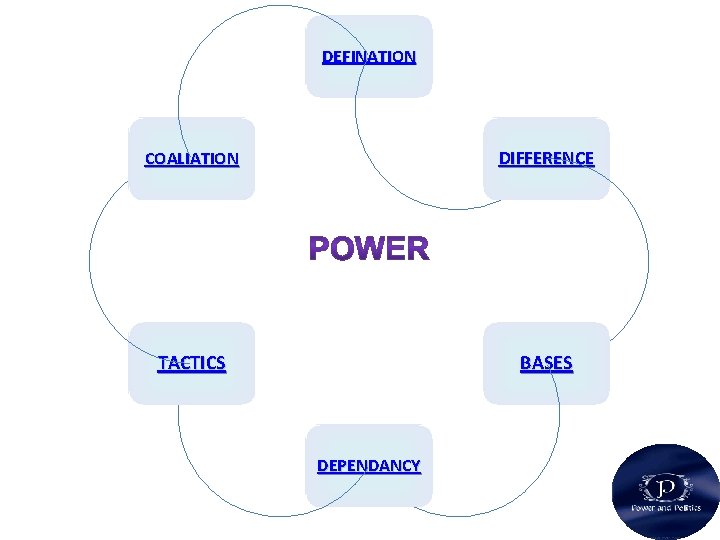
DEFINATION COALIATION DIFFERENCE TACTICS BASES DEPENDANCY
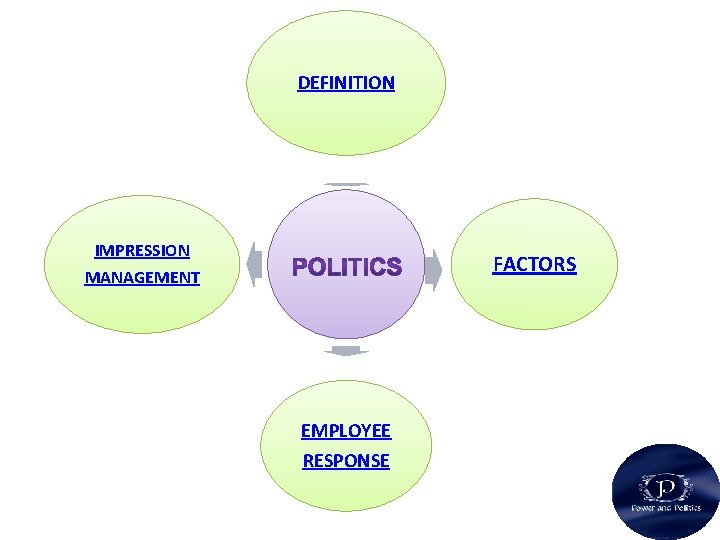
DEFINITION IMPRESSION FACTORS MANAGEMENT EMPLOYEE RESPONSE
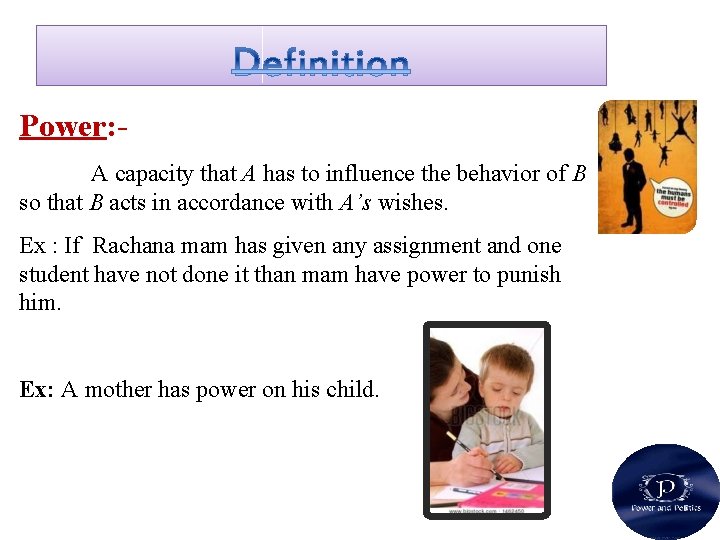
Power: A capacity that A has to influence the behavior of B so that B acts in accordance with A’s wishes. Ex : If Rachana mam has given any assignment and one student have not done it than mam have power to punish him. Ex: A mother has power on his child.
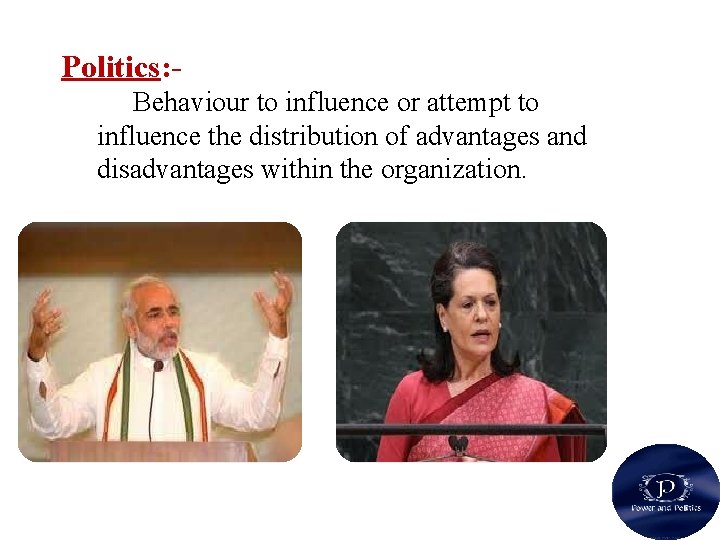
. Politics: Behaviour to influence or attempt to influence the distribution of advantages and disadvantages within the organization.
Power and Politics
Jacques Nasser
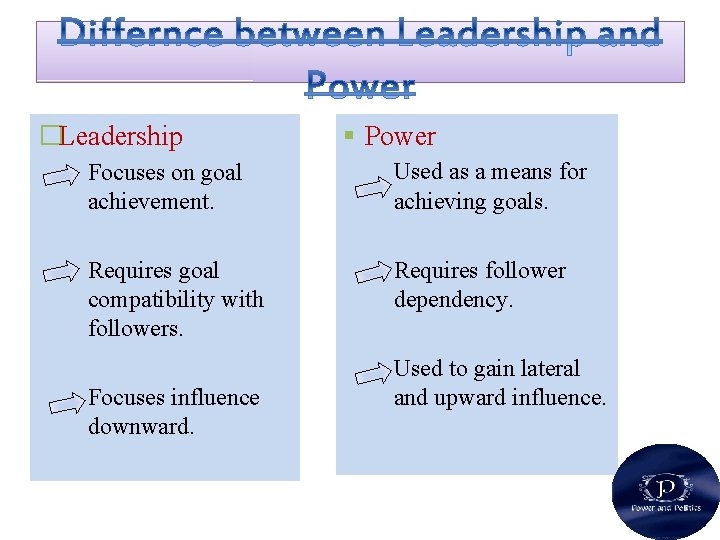
�Leadership § Power Focuses on goal achievement. Used as a means for achieving goals. Requires goal compatibility with followers. Requires follower dependency. Focuses influence downward. Used to gain lateral and upward influence.
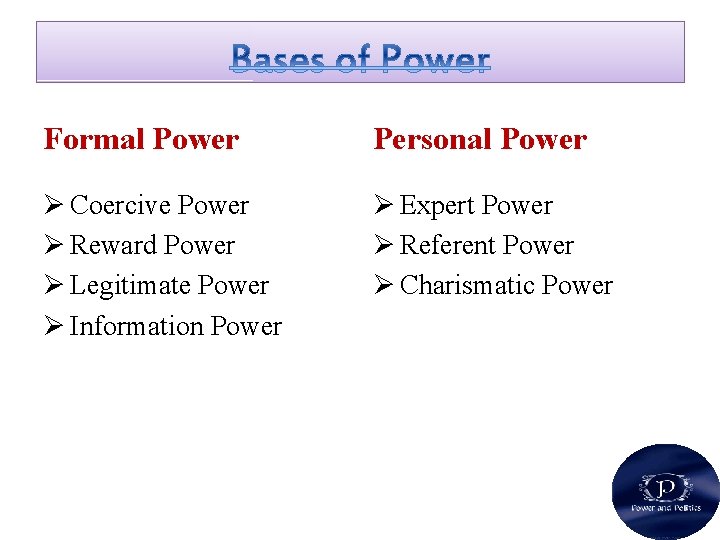
Formal Power Personal Power Ø Coercive Power Ø Reward Power Ø Legitimate Power Ø Information Power Ø Expert Power Ø Referent Power Ø Charismatic Power
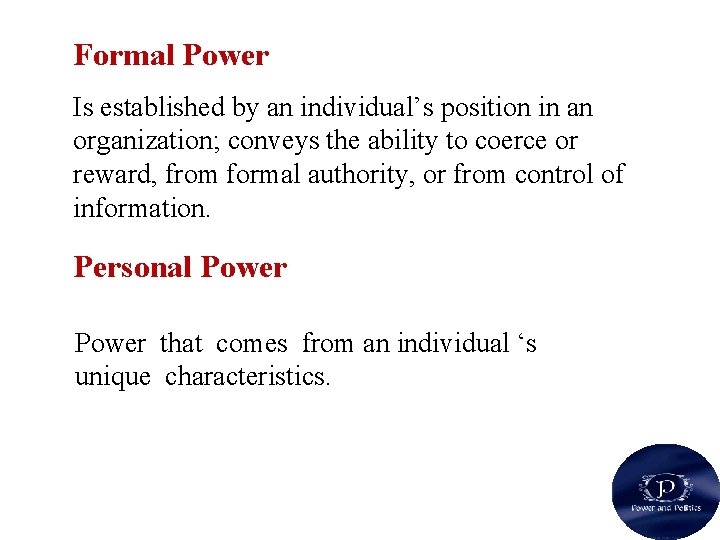
Formal Power Is established by an individual’s position in an organization; conveys the ability to coerce or reward, from formal authority, or from control of information. Personal Power that comes from an individual ‘s unique characteristics.
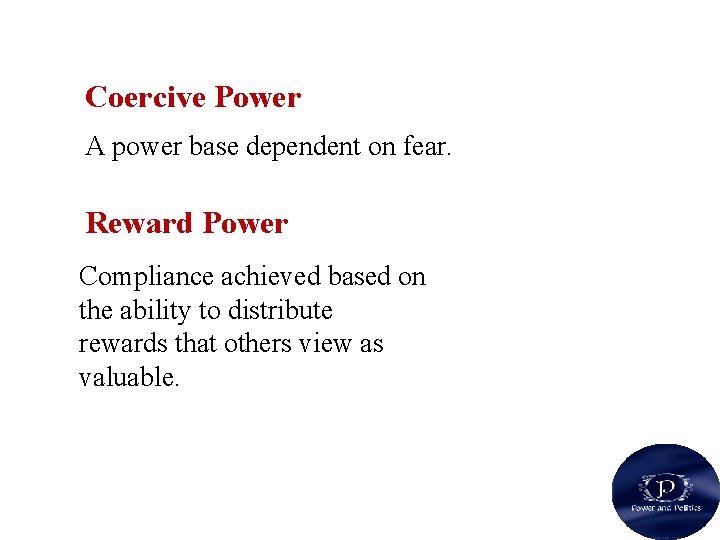
Coercive Power A power base dependent on fear. Reward Power Compliance achieved based on the ability to distribute rewards that others view as valuable.
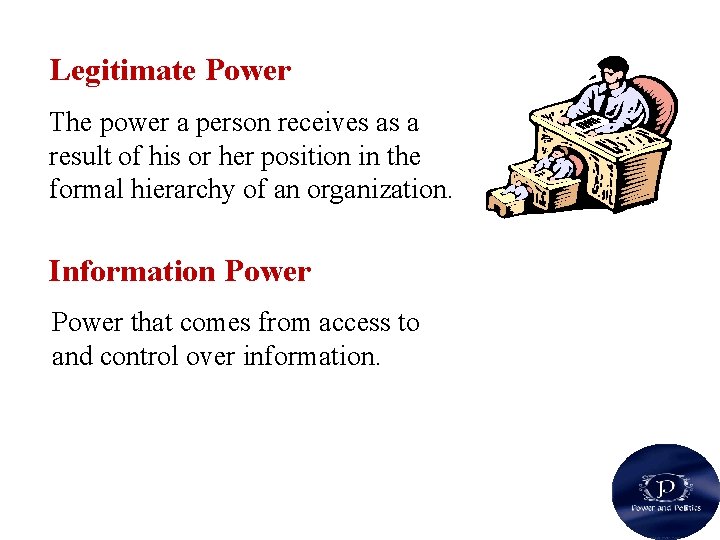
Legitimate Power The power a person receives as a result of his or her position in the formal hierarchy of an organization. Information Power that comes from access to and control over information.
Expert Power Influence based on special skills or knowledge. Referent Power Influence based on possession by an individual of desirable resources or personal traits.
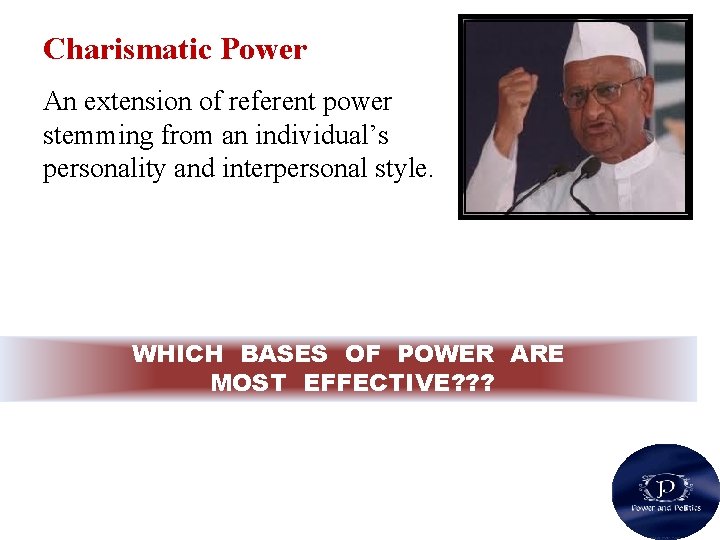
Charismatic Power An extension of referent power stemming from an individual’s personality and interpersonal style. WHICH BASES OF POWER ARE MOST EFFECTIVE? ? ?
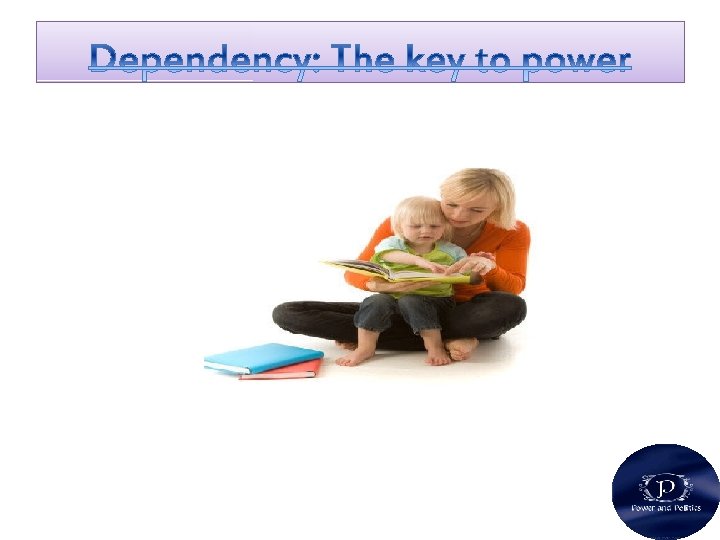
What creates dependency…… ØImportance ØScarcity ØNon-substituability
Importance Ø Existing key members of top management. Corporate movie.
Scarcity Ø If something which is rare than it always have control over others. EXAMPLES Ø Supplier for Resources. Ø Expertise staff for R&D department. Ø Import Advanced technology.
E. g. Poor countries of Africa & Asia who are in need of finance depends on IMF & world bank the key members of which are from European countries.
Non-substituability EXAMPLES • C. A. in accounting Department. • A faculty who has work as an authour of the book are always in demand by the university.
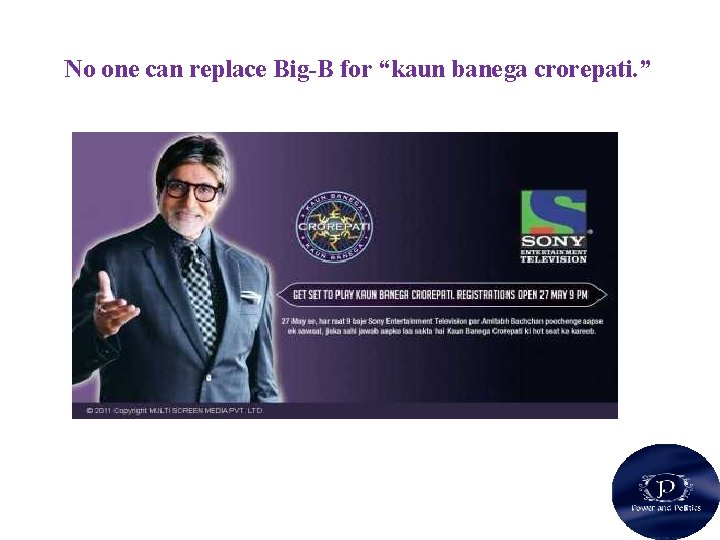
No one can replace Big-B for “kaun banega crorepati. ”
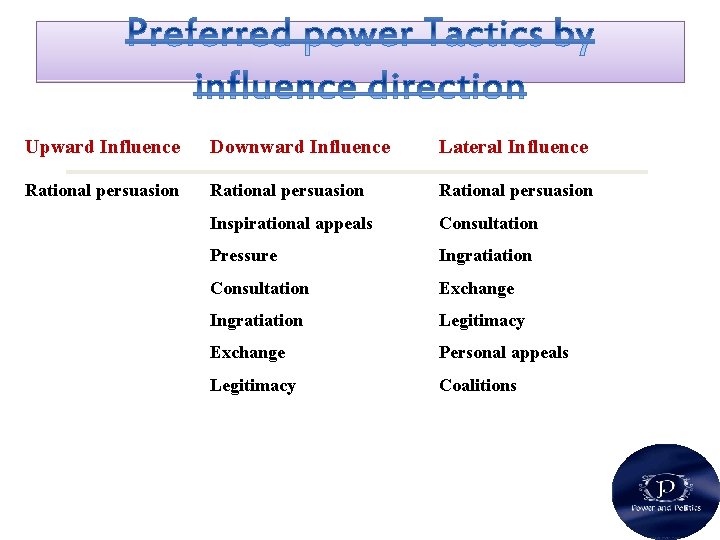
Power Tactics Ways in which individuals translate power bases into specific actions. Influence Tactics • Legitimacy • Rational persuasion • Inspirational appeals • Consultation • Exchange • Personal appeals • Ingratiation • Pressure • Coalitions
Legitimacy Relying on one’s authority possition or stressing that a request is in accordance with organizational policies or rules.
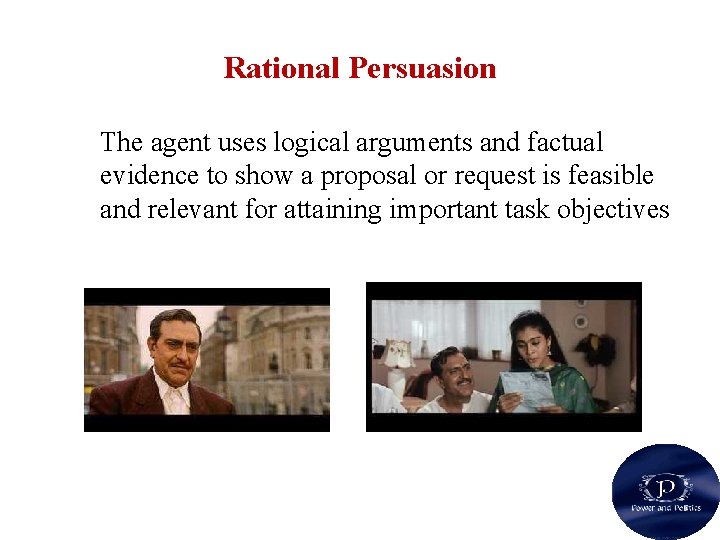
Rational Persuasion The agent uses logical arguments and factual evidence to show a proposal or request is feasible and relevant for attaining important task objectives
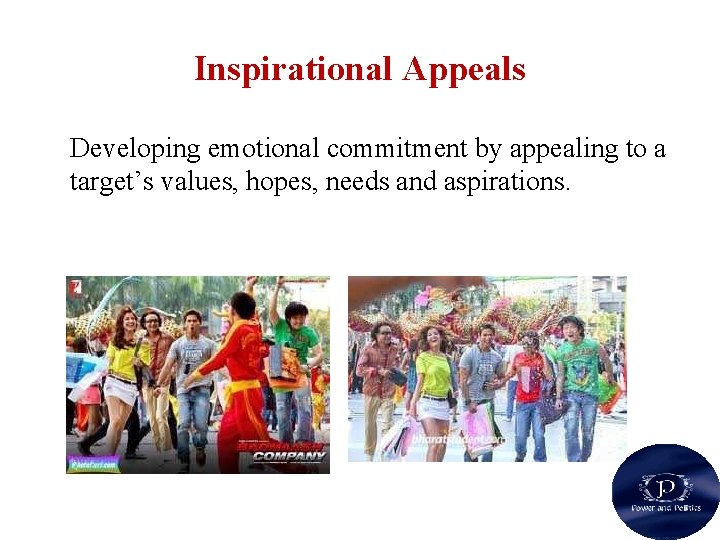
Inspirational Appeals Developing emotional commitment by appealing to a target’s values, hopes, needs and aspirations.
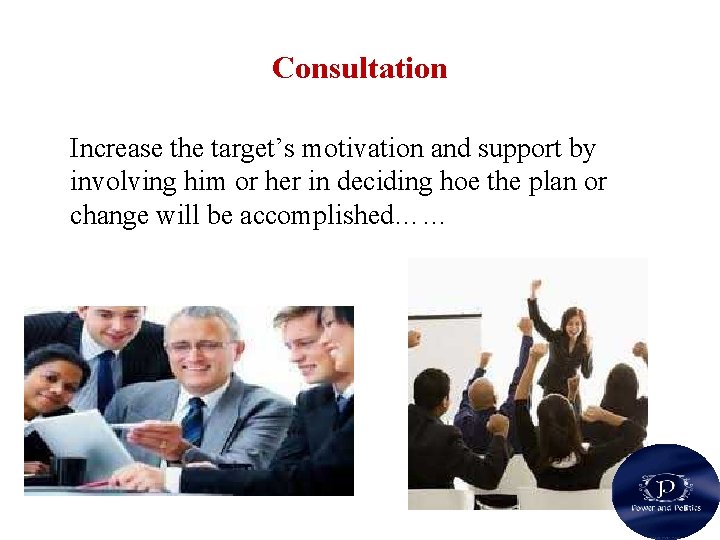
Consultation Increase the target’s motivation and support by involving him or her in deciding hoe the plan or change will be accomplished……
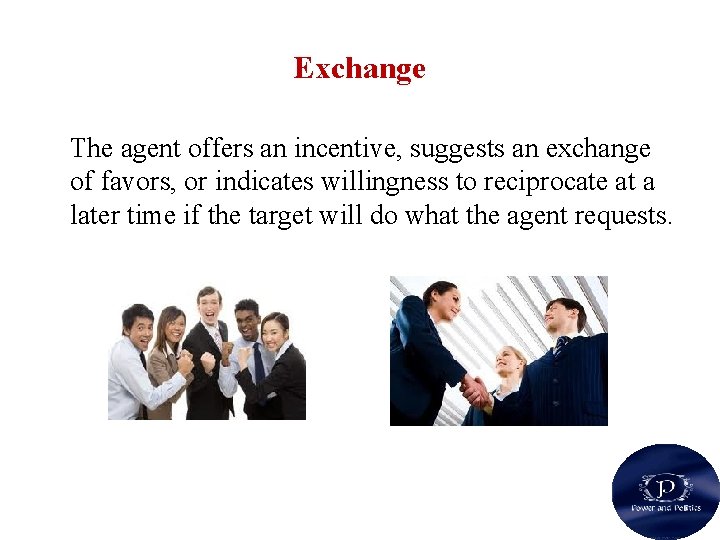
Exchange The agent offers an incentive, suggests an exchange of favors, or indicates willingness to reciprocate at a later time if the target will do what the agent requests.
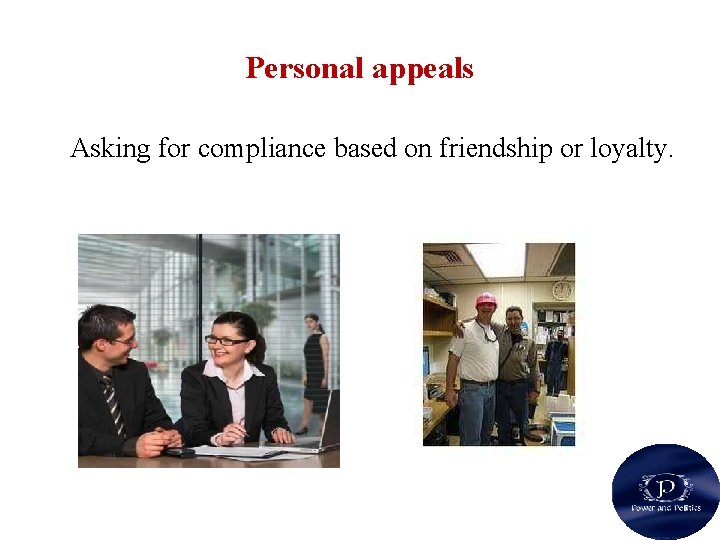
Personal appeals Asking for compliance based on friendship or loyalty.
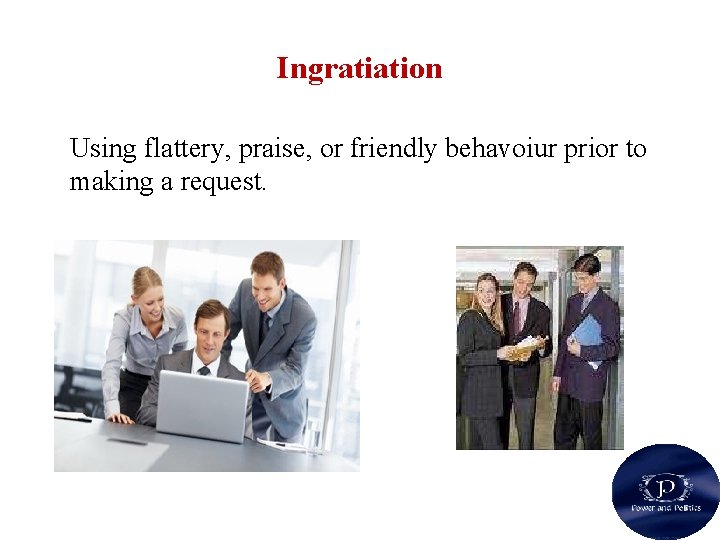
Ingratiation Using flattery, praise, or friendly behavoiur prior to making a request.
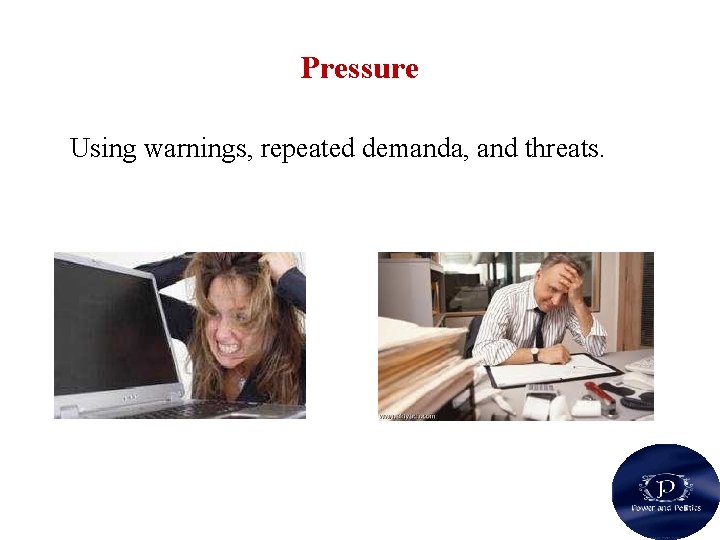
Pressure Using warnings, repeated demanda, and threats.
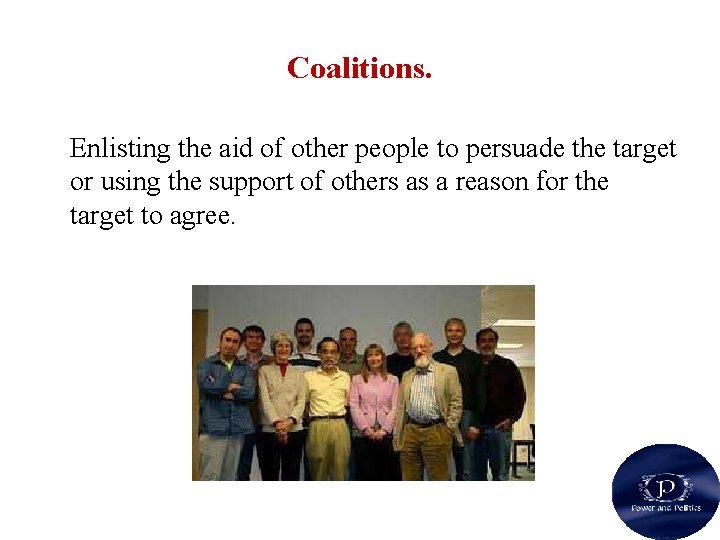
Coalitions. Enlisting the aid of other people to persuade the target or using the support of others as a reason for the target to agree.
Upward Influence Downward Influence Lateral Influence Rational persuasion Inspirational appeals Consultation Pressure Ingratiation Consultation Exchange Ingratiation Legitimacy Exchange Personal appeals Legitimacy Coalitions
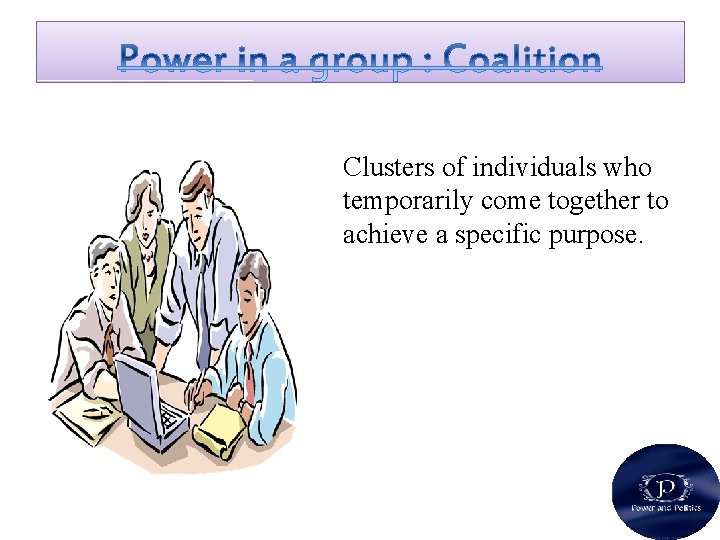
Clusters of individuals who temporarily come together to achieve a specific purpose.
• Seek to maximize their size to attain influence. • Seek a broad and diverse constituency for support of their objectives. • Occur more frequently in organizations with high task and resource interdependencies. • Occur more frequently if tasks are standardized and routine.
EXAMPLES Ø Coalition Government Ø Coalition between countries – U. S. A. and its allies for war in Iraq Ø Coalition between organizations. Dunkin Donuts and Buskin Robbins
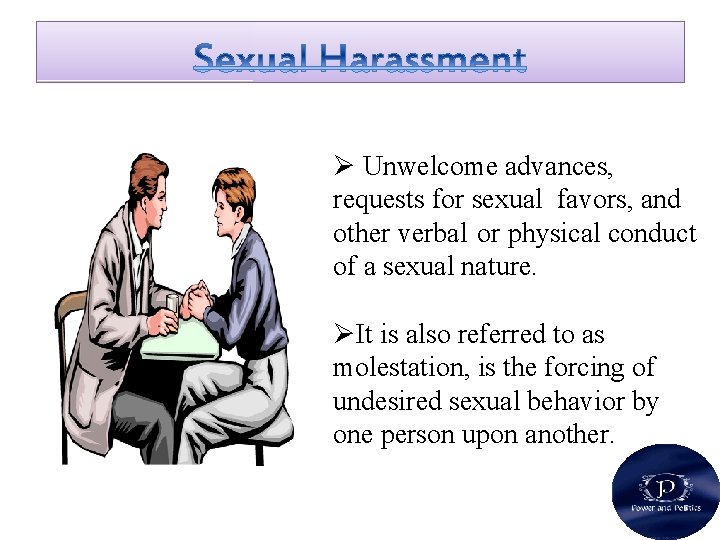
Ø Unwelcome advances, requests for sexual favors, and other verbal or physical conduct of a sexual nature. ØIt is also referred to as molestation, is the forcing of undesired sexual behavior by one person upon another.
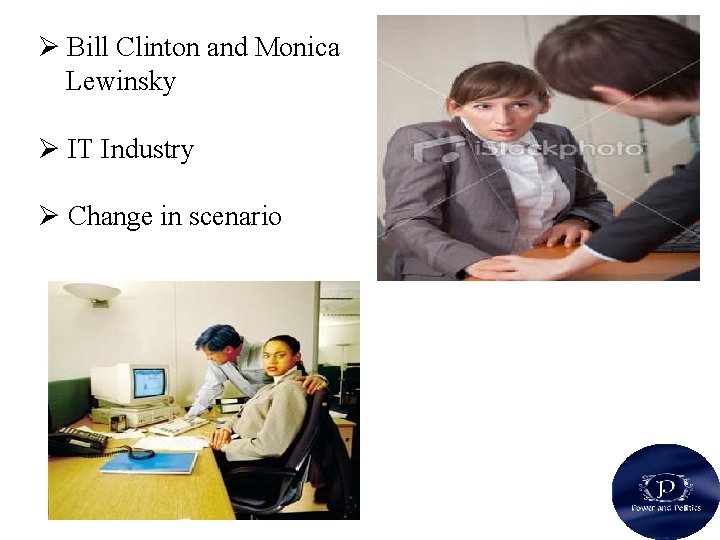
Ø Bill Clinton and Monica Lewinsky Ø IT Industry Ø Change in scenario
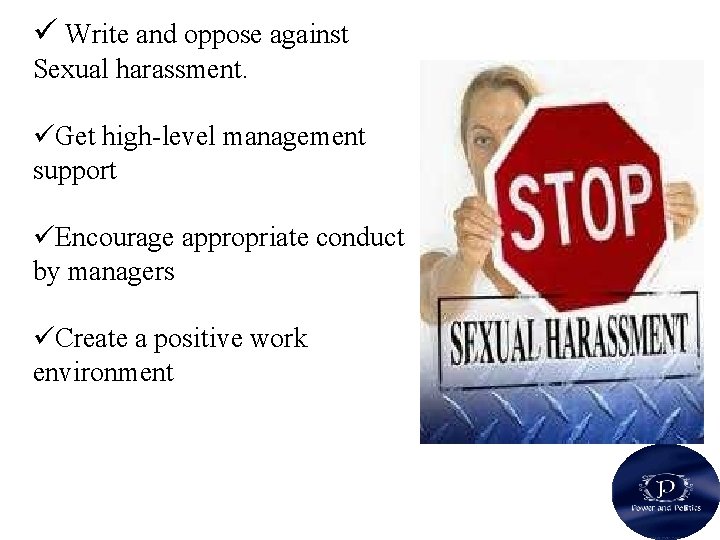
ü Write and oppose against Sexual harassment. üGet high-level management support üEncourage appropriate conduct by managers üCreate a positive work environment
üProvide regular training and information on sexual harassment to all staff and management
Political Behavior Activities that are not required as part of one’s formal role in the organization, but that influence, or attempt to influence, the distribution of advantages or disadvantages within the organization. Ø Legitimate Political Behavior Normal everyday politics. Ø Illegitimate Political Behavior Extreme political behavior that violates the implied rules of the game.
Ø Attempts to influence others using discretionary behaviours to promote personal objectives – Discretionary behaviours — neither explicitly prescribed nor prohibited Ø Politics may be good or bad for the organization
Ø Limited Resources ØConflict over Resources
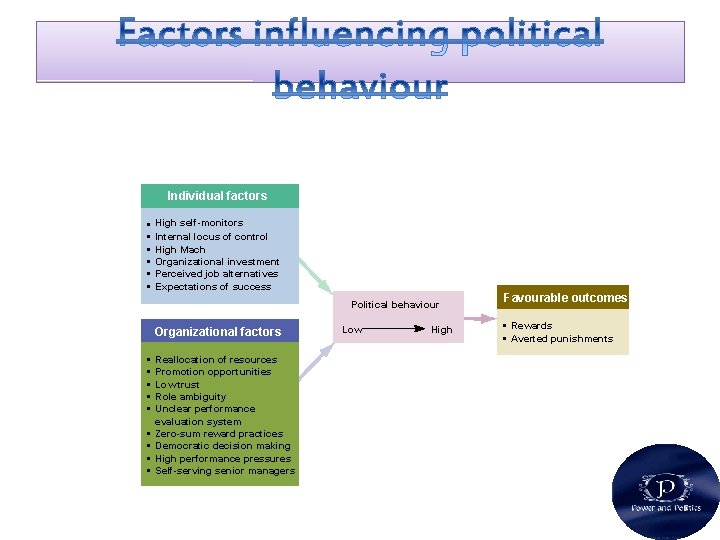
Individual factors • • • High self-monitors Internal locus of control High Mach Organizational investment Perceived job alternatives Expectations of success Political behaviour Organizational factors • • • Reallocation of resources Promotion opportunities Low trust Role ambiguity Unclear performance evaluation system Zero-sum reward practices Democratic decision making High performance pressures Self-serving senior managers Low High Favourable outcomes • Rewards • Averted punishments
-8
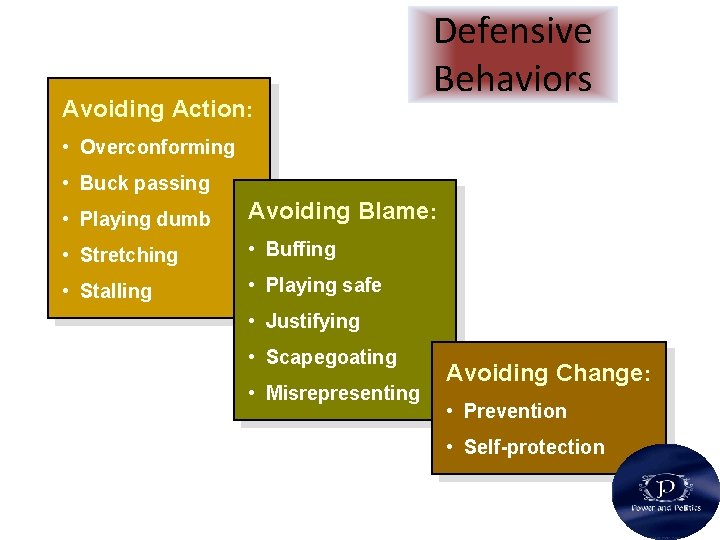
Avoiding Action: Defensive Behaviors • Overconforming • Buck passing • Playing dumb Avoiding Blame: • Stretching • Buffing • Stalling • Playing safe • Justifying • Scapegoating • Misrepresenting Avoiding Change: • Prevention • Self-protection
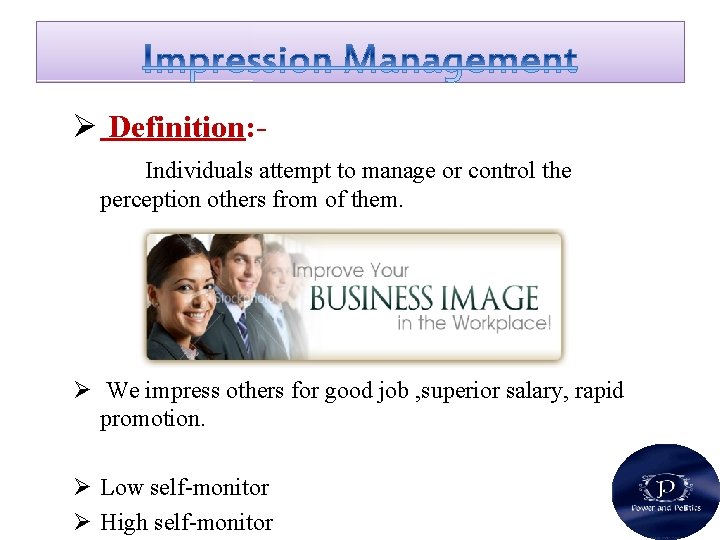
Ø Definition: Individuals attempt to manage or control the perception others from of them. Ø We impress others for good job , superior salary, rapid promotion. Ø Low self-monitor Ø High self-monitor
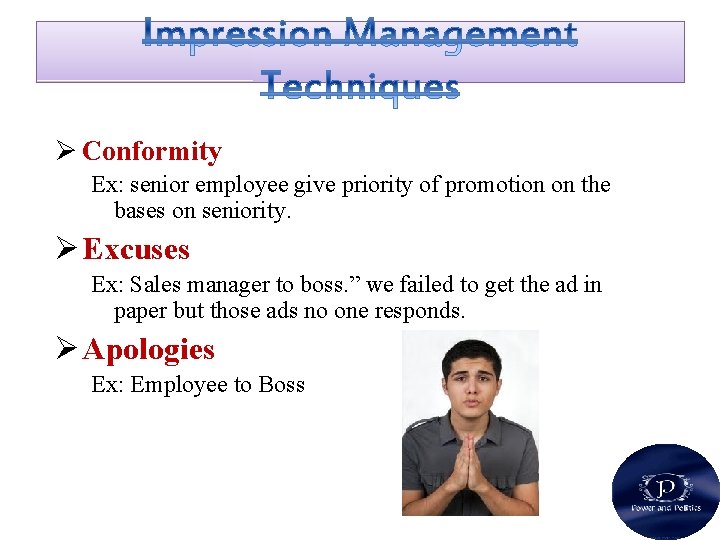
Ø Conformity Ex: senior employee give priority of promotion on the bases on seniority. Ø Excuses Ex: Sales manager to boss. ” we failed to get the ad in paper but those ads no one responds. Ø Apologies Ex: Employee to Boss
Ø Self-promotion Ø Flattery Ex: Conversation between boss and secretary.
Ø Favors Ex: One lady think to bought microwave and she got same microwave plus 3 bowl of glass in same price. Ø Association Ex: A job applicant say to an interviewer, “ what a coincidence. Your and I were together in college.