
Definition of Strategic Management That set of managerial
- Slides: 59
Definition of Strategic Management That set of managerial decisions and actions that determines the long-run performance of a corporation
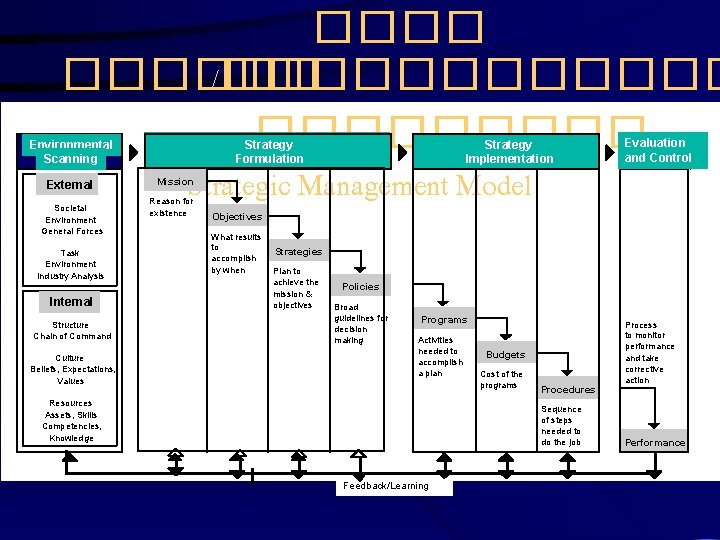
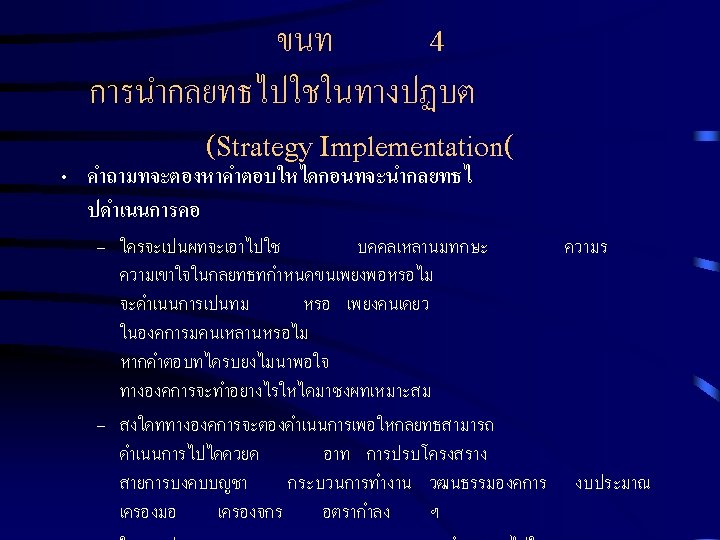
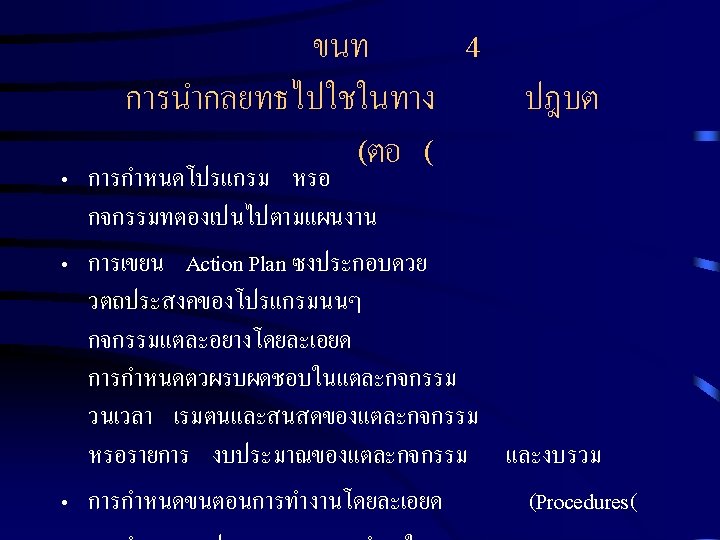
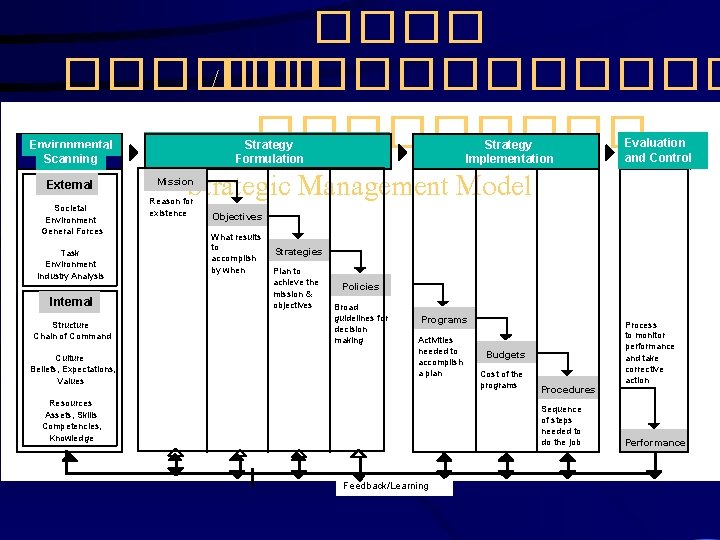
������ /������ Strategic Management Model Environmental Scanning External Societal Environment General Forces Task Environment Industry Analysis Internal Structure Chain of Command Culture Beliefs, Expectations, Values Strategy Formulation Strategy Implementation Evaluation and Control Mission Reason for existence Objectives What results to accomplish by when Strategies Plan to achieve the mission & objectives Policies Broad guidelines for decision making Programs Activities needed to accomplish a plan Resources Assets, Skills Competencies, Knowledge Budgets Cost of the programs Procedures Sequence of steps needed to do the job Feedback/Learning Process to monitor performance and take corrective action Performance
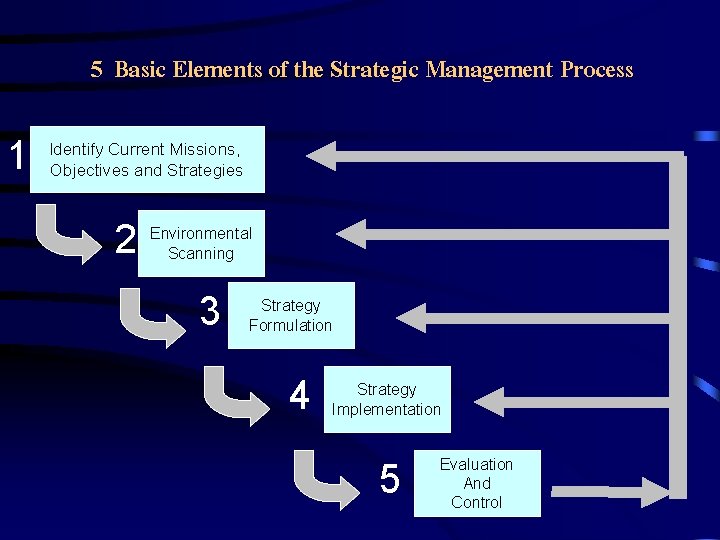
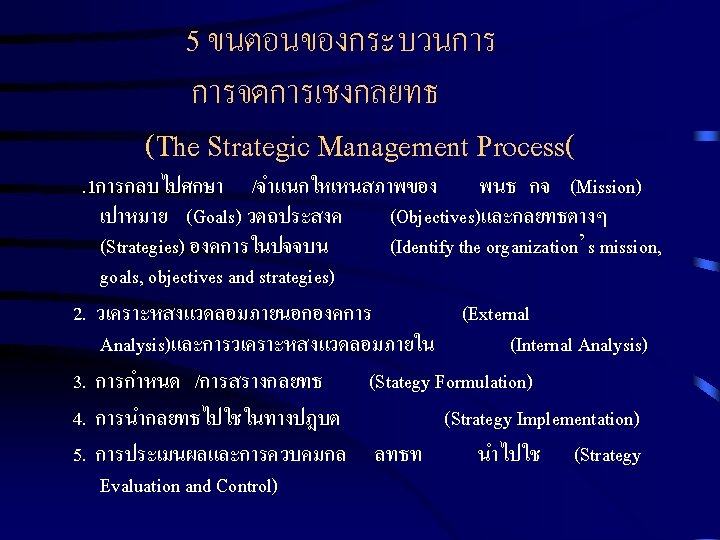
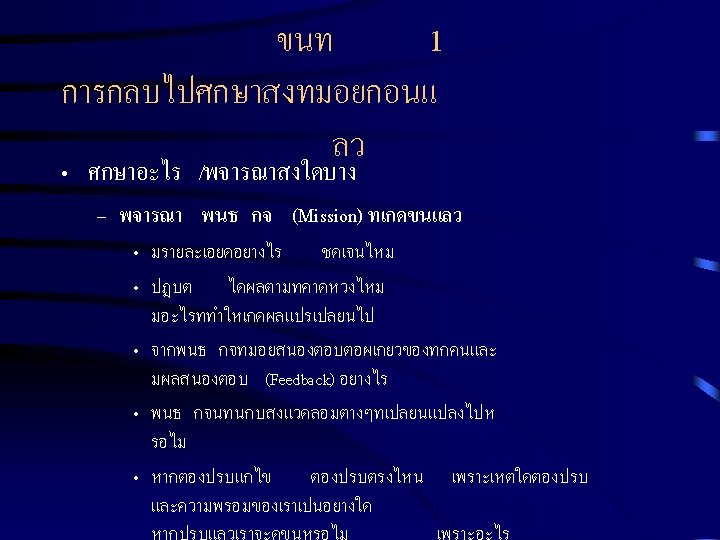
5 Basic Elements of the Strategic Management Process 1 Identify Current Missions, Objectives and Strategies 2 Environmental Scanning 3 Strategy Formulation 4 Strategy Implementation 5 Evaluation And Control
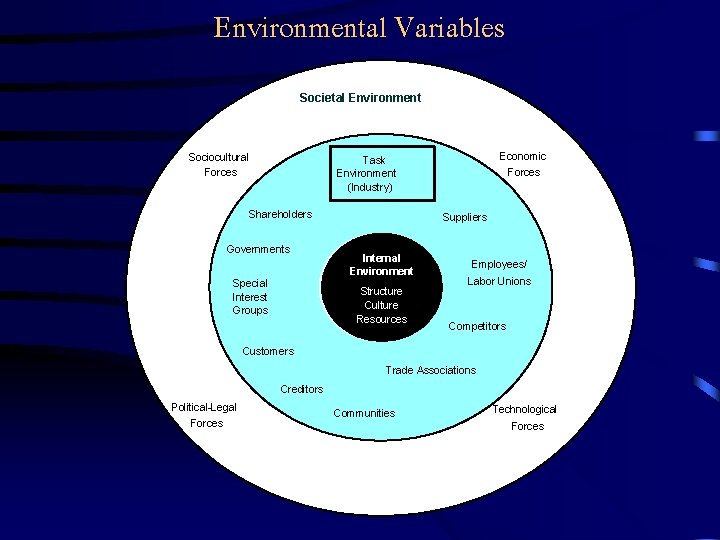
Environmental Variables Societal Environment Sociocultural Forces Economic Forces Task Environment (Industry) Shareholders Governments Special Interest Groups Suppliers Internal Environment Structure Culture Resources Employees/ Labor Unions Competitors Customers Trade Associations Creditors Political-Legal Forces Communities Technological Forces
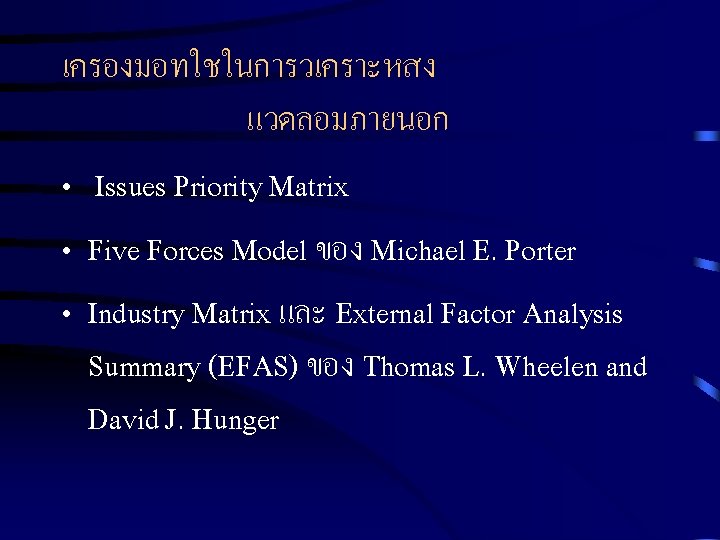
เครองมอทใชในการวเคราะหสง แวดลอมภายนอก • Issues Priority Matrix • Five Forces Model ของ Michael E. Porter • Industry Matrix และ External Factor Analysis Summary (EFAS) ของ Thomas L. Wheelen and David J. Hunger
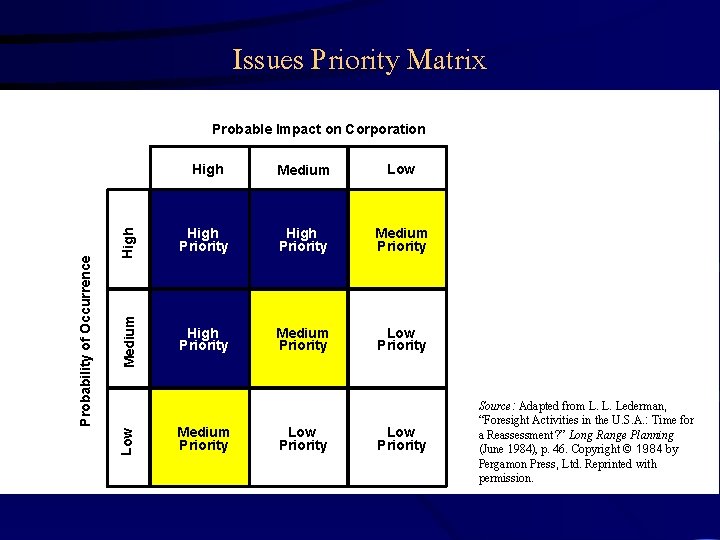
Issues Priority Matrix High Medium Low High Priority Medium High Priority Medium Priority Low Probability of Occurrence Probable Impact on Corporation Medium Priority Low Priority Source: Adapted from L. L. Lederman, “Foresight Activities in the U. S. A. : Time for a Reassessment? ” Long Range Planning (June 1984), p. 46. Copyright © 1984 by Pergamon Press, Ltd. Reprinted with permission.
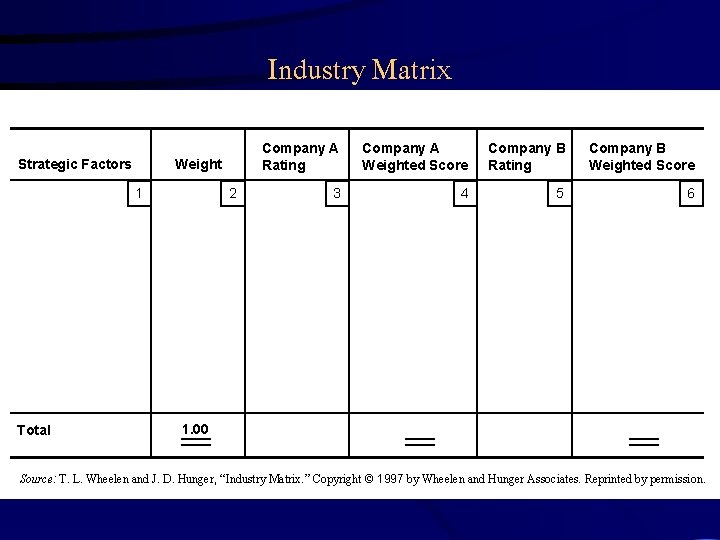
Industry Matrix Strategic Factors Weight 1 Total 2 Company A Rating Company A Weighted Score Company B Rating Company B Weighted Score 3 4 5 6 1. 00 Source: T. L. Wheelen and J. D. Hunger, “Industry Matrix. ” Copyright © 1997 by Wheelen and Hunger Associates. Reprinted by permission.
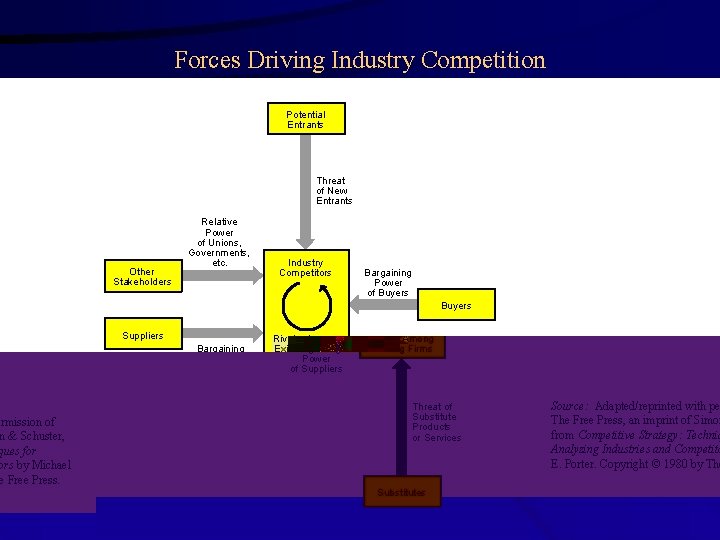
Forces Driving Industry Competition Potential Entrants Threat of New Entrants Other Stakeholders Relative Power of Unions, Governments, etc. Industry Competitors Bargaining Power of Buyers Suppliers Bargaining Power of Suppliers Rivalry Among Existing Firms Threat of Substitute Products or Services Substitutes Source: Adapted/reprinted with permission of The Free Press, an imprint of Simon & Schuster, from Competitive Strategy: Techniques for Analyzing Industries and Competitors by Michael E. Porter. Copyright © 1980 by The Free Press.
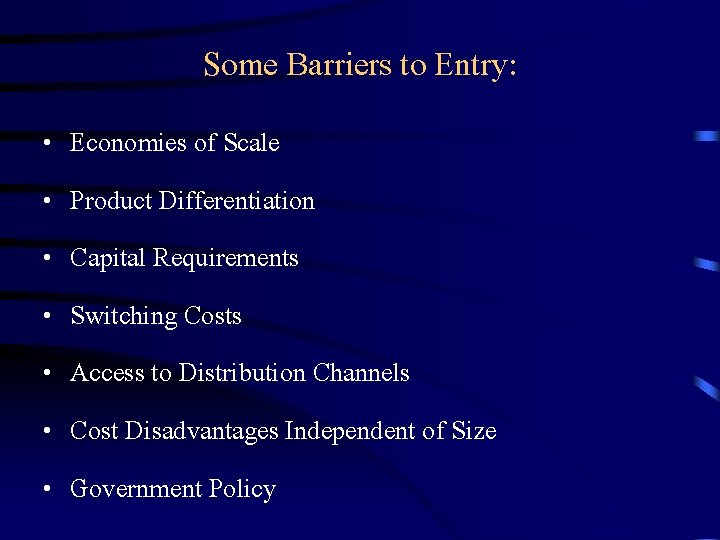
Some Barriers to Entry: • • Economies of Scale Product Differentiation Capital Requirements Switching Costs Access to Distribution Channels Cost Disadvantages Independent of Size Government Policy
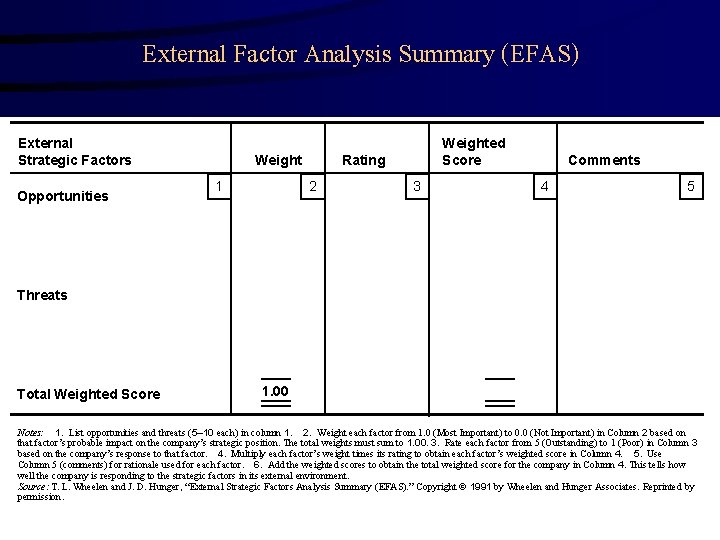
External Factor Analysis Summary (EFAS) External Strategic Factors Opportunities Weight 1 Weighted Score Rating 2 3 Comments 4 5 Threats Total Weighted Score 1. 00 Notes: 1. List opportunities and threats (5– 10 each) in column 1. 2. Weight each factor from 1. 0 (Most Important) to 0. 0 (Not Important) in Column 2 based on that factor’s probable impact on the company’s strategic position. The total weights must sum to 1. 00. 3. Rate each factor from 5 (Outstanding) to 1 (Poor) in Column 3 based on the company’s response to that factor. 4. Multiply each factor’s weight times its rating to obtain each factor’s weighted score in Column 4. 5. Use Column 5 (comments) for rationale used for each factor. 6. Add the weighted scores to obtain the total weighted score for the company in Column 4. This tells how well the company is responding to the strategic factors in its external environment. Source: T. L. Wheelen and J. D. Hunger, “External Strategic Factors Analysis Summary (EFAS). ” Copyright © 1991 by Wheelen and Hunger Associates. Reprinted by permission.
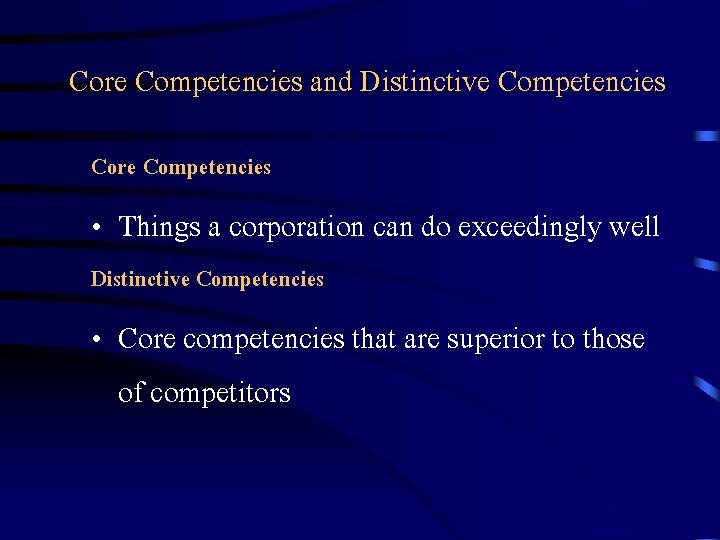
Core Competencies and Distinctive Competencies Core Competencies • Things a corporation can do exceedingly well Distinctive Competencies • Core competencies that are superior to those of competitors
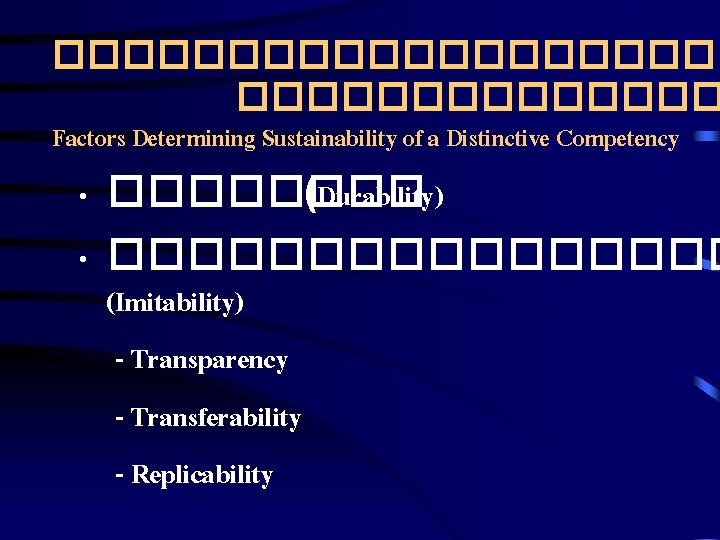
���������� Factors Determining Sustainability of a Distinctive Competency • ���� (Durability) • �������� (Imitability) - Transparency - Transferability - Replicability
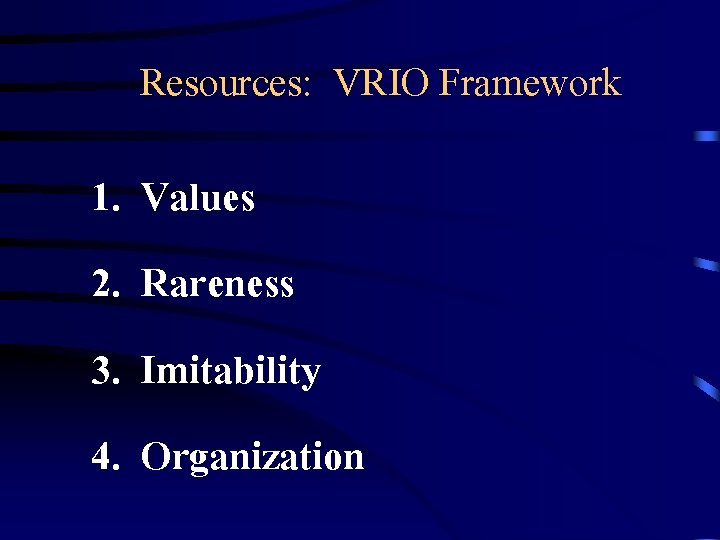
Resources: VRIO Framework 1. 2. 3. 4. Values Rareness Imitability Organization
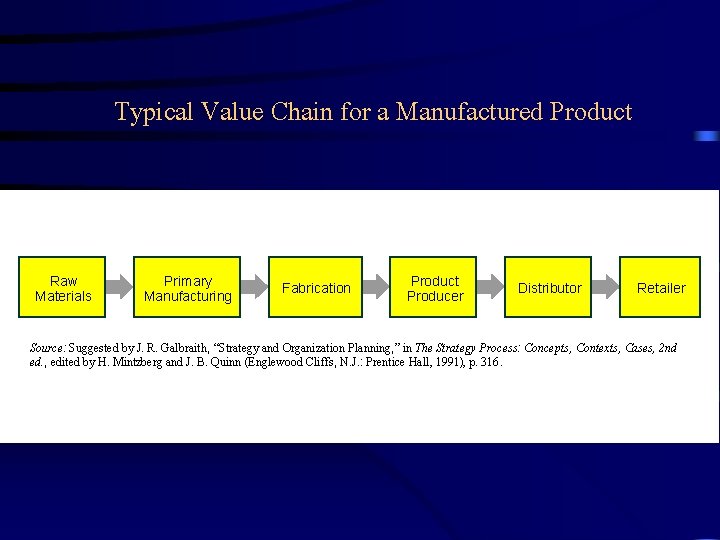
Typical Value Chain for a Manufactured Product Raw Materials Primary Manufacturing Fabrication Product Producer Distributor Retailer Source: Suggested by J. R. Galbraith, “Strategy and Organization Planning, ” in The Strategy Process: Concepts, Contexts, Cases, 2 nd ed. , edited by H. Mintzberg and J. B. Quinn (Englewood Cliffs, N. J. : Prentice Hall, 1991), p. 316.
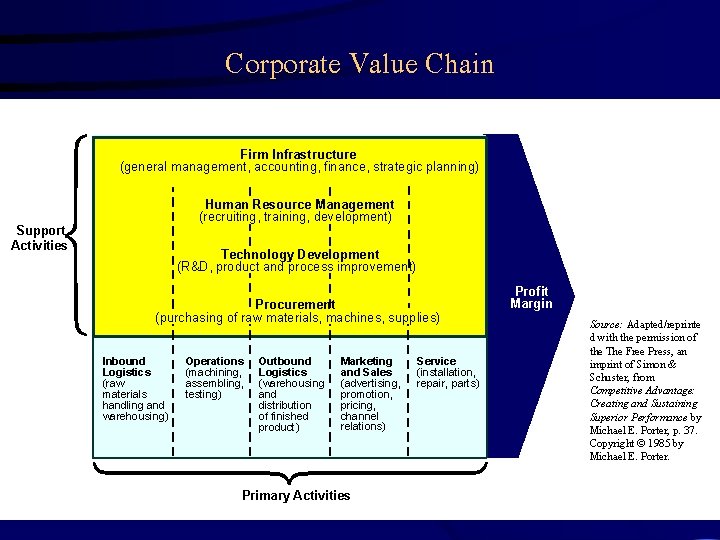
Corporate Value Chain Firm Infrastructure (general management, accounting, finance, strategic planning) Human Resource Management (recruiting, training, development) Support Activities Technology Development (R&D, product and process improvement) Procurement (purchasing of raw materials, machines, supplies) Inbound Logistics (raw materials handling and warehousing) Operations (machining, assembling, testing) Outbound Logistics (warehousing and distribution of finished product) Marketing and Sales (advertising, promotion, pricing, channel relations) Primary Activities Service (installation, repair, parts) Profit Margin Source: Adapted/reprinte d with the permission of the The Free Press, an imprint of Simon & Schuster, from Competitive Advantage: Creating and Sustaining Superior Performance by Michael E. Porter, p. 37. Copyright © 1985 by Michael E. Porter.
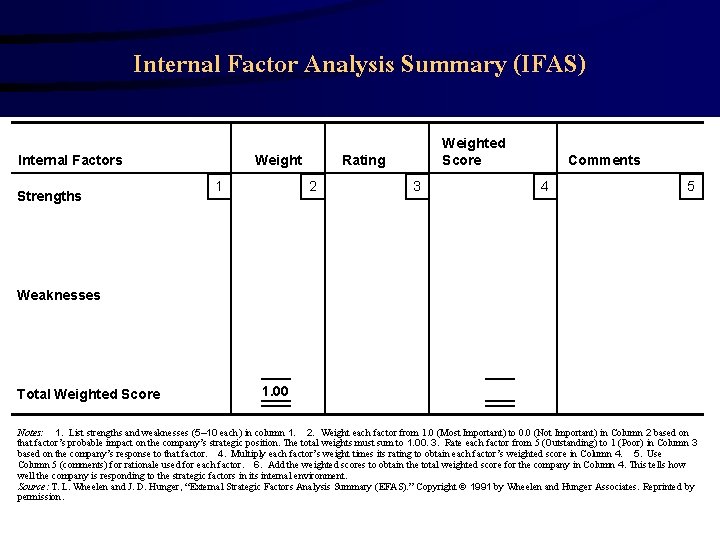
Internal Factor Analysis Summary (IFAS) Weight Internal Factors Strengths 1 Weighted Score Rating 2 3 Comments 4 5 Weaknesses Total Weighted Score 1. 00 Notes: 1. List strengths and weaknesses (5– 10 each) in column 1. 2. Weight each factor from 1. 0 (Most Important) to 0. 0 (Not Important) in Column 2 based on that factor’s probable impact on the company’s strategic position. The total weights must sum to 1. 00. 3. Rate each factor from 5 (Outstanding) to 1 (Poor) in Column 3 based on the company’s response to that factor. 4. Multiply each factor’s weight times its rating to obtain each factor’s weighted score in Column 4. 5. Use Column 5 (comments) for rationale used for each factor. 6. Add the weighted scores to obtain the total weighted score for the company in Column 4. This tells how well the company is responding to the strategic factors in its internal environment. Source: T. L. Wheelen and J. D. Hunger, “External Strategic Factors Analysis Summary (EFAS). ” Copyright © 1991 by Wheelen and Hunger Associates. Reprinted by permission.
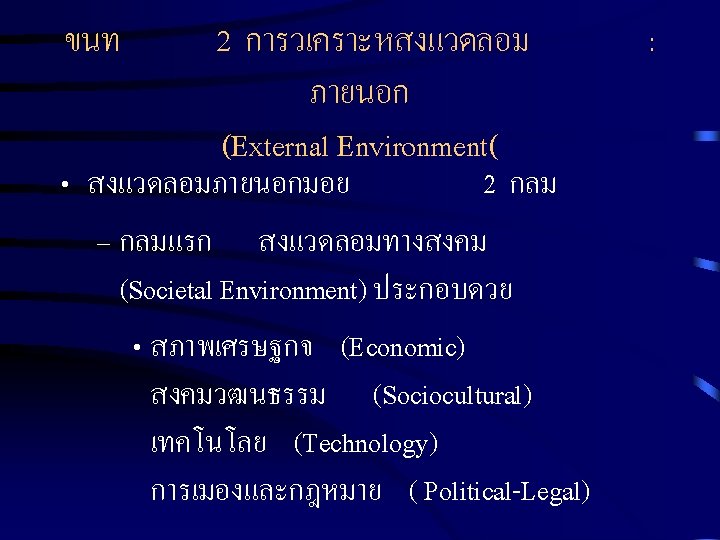
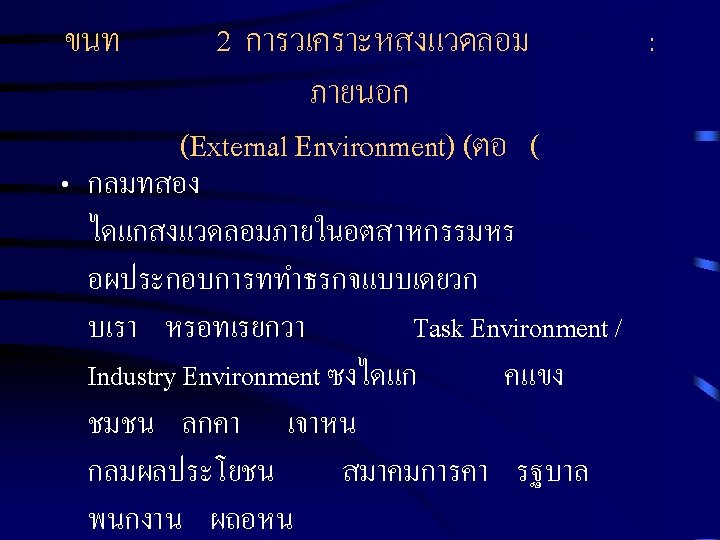
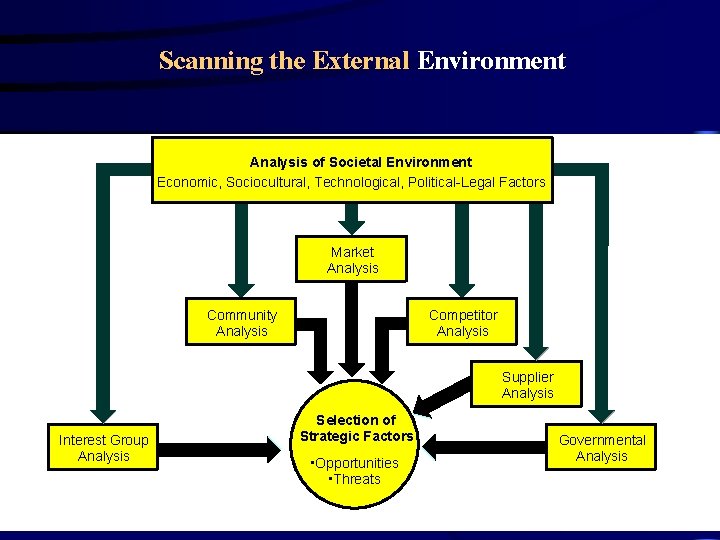
Scanning the External Environment Analysis of Societal Environment Economic, Sociocultural, Technological, Political-Legal Factors Market Analysis Community Analysis Competitor Analysis Supplier Analysis Interest Group Analysis Selection of Strategic Factors • Opportunities • Threats Governmental Analysis
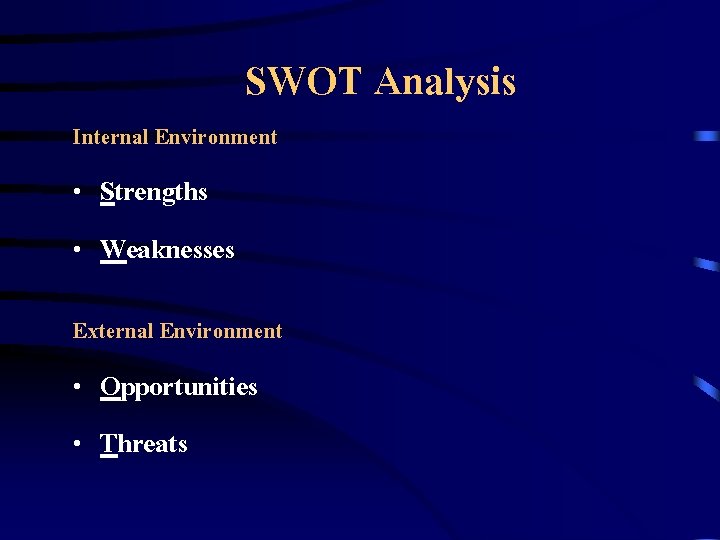
SWOT Analysis Internal Environment • Strengths • Weaknesses External Environment • Opportunities • Threats
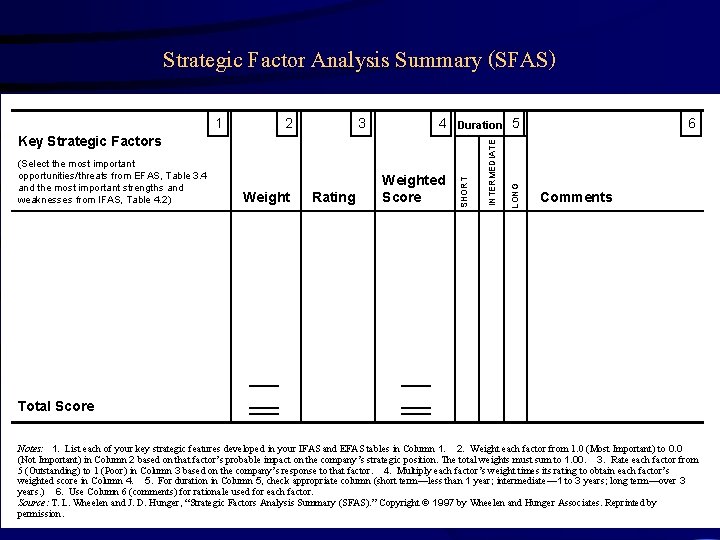
Strategic Factor Analysis Summary (SFAS) 3 4 Duration (Select the most important opportunities/threats from EFAS, Table 3. 4 and the most important strengths and weaknesses from IFAS, Table 4. 2) Weight Rating Weighted Score SHORT Key Strategic Factors 5 LONG 2 INTERMEDIATE 1 6 Comments Total Score Notes: 1. List each of your key strategic features developed in your IFAS and EFAS tables in Column 1. 2. Weight each factor from 1. 0 (Most Important) to 0. 0 (Not Important) in Column 2 based on that factor’s probable impact on the company’s strategic position. The total weights must sum to 1. 00. 3. Rate each factor from 5 (Outstanding) to 1 (Poor) in Column 3 based on the company’s response to that factor. 4. Multiply each factor’s weight times its rating to obtain each factor’s weighted score in Column 4. 5. For duration in Column 5, check appropriate column (short term—less than 1 year; intermediate— 1 to 3 years; long term—over 3 years. ) 6. Use Column 6 (comments) for rationale used for each factor. Source: T. L. Wheelen and J. D. Hunger, “Strategic Factors Analysis Summary (SFAS). ” Copyright © 1997 by Wheelen and Hunger Associates. Reprinted by permission.
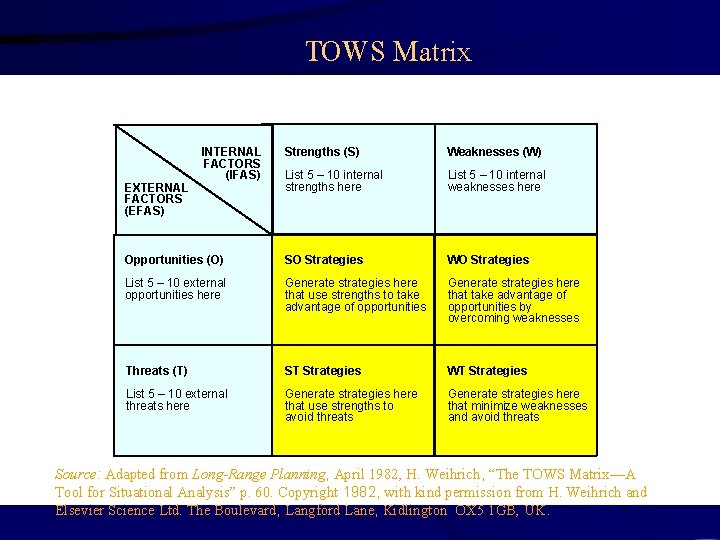
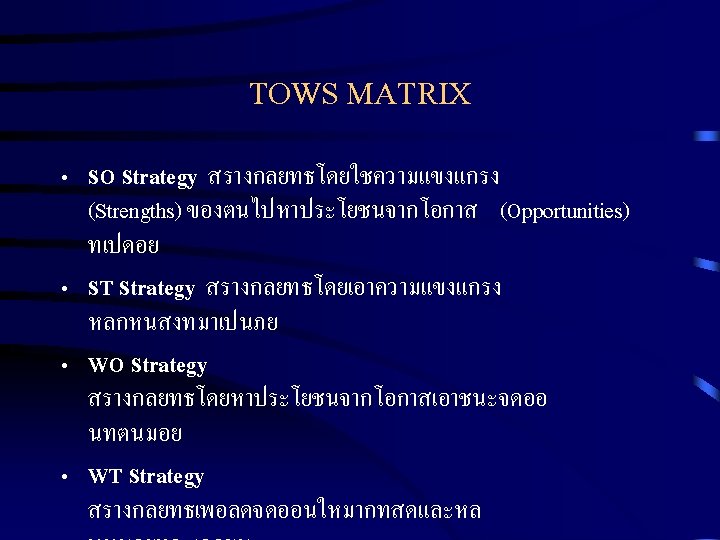
TOWS Matrix Strengths (S) Weaknesses (W) List 5 – 10 internal strengths here List 5 – 10 internal weaknesses here Opportunities (O) SO Strategies WO Strategies List 5 – 10 external opportunities here Generate strategies here that use strengths to take advantage of opportunities Generate strategies here that take advantage of opportunities by overcoming weaknesses Threats (T) ST Strategies WT Strategies List 5 – 10 external threats here Generate strategies here that use strengths to avoid threats Generate strategies here that minimize weaknesses and avoid threats EXTERNAL FACTORS (EFAS) INTERNAL FACTORS (IFAS) Source: Adapted from Long-Range Planning, April 1982, H. Weihrich, “The TOWS Matrix—A Tool for Situational Analysis” p. 60. Copyright 1982, with kind permission from H. Weihrich and Elsevier Science Ltd. The Boulevard, Langford Lane, Kidlington OX 5 1 GB, UK.
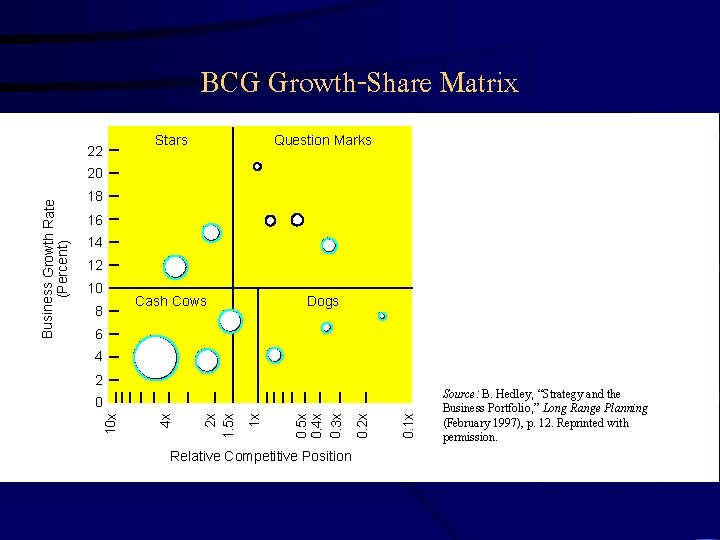
BCG Growth-Share Matrix 22 Stars Question Marks Cash Cows Dogs 18 16 14 12 10 8 6 4 2 Relative Competitive Position 0. 1 x 0. 2 x 0. 5 x 0. 4 x 0. 3 x 1 x 2 x 1. 5 x 4 x 0 10 x Business Growth Rate (Percent) 20 Source: B. Hedley, “Strategy and the Business Portfolio, ” Long Range Planning (February 1997), p. 12. Reprinted with permission.
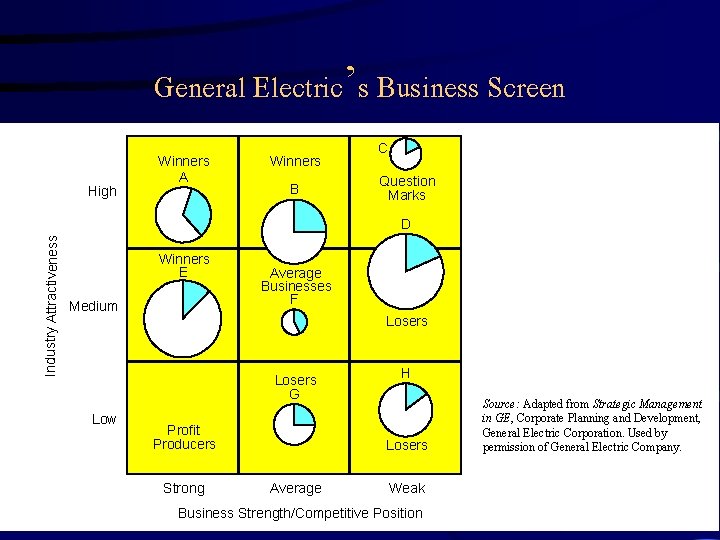
General Electric’s Business Screen High Winners A Winners B C Question Marks Industry Attractiveness D Winners E Medium Average Businesses F Losers G Low Profit Producers Strong H Losers Average Weak Business Strength/Competitive Position Source: Adapted from Strategic Management in GE, Corporate Planning and Development, General Electric Corporation. Used by permission of General Electric Company.
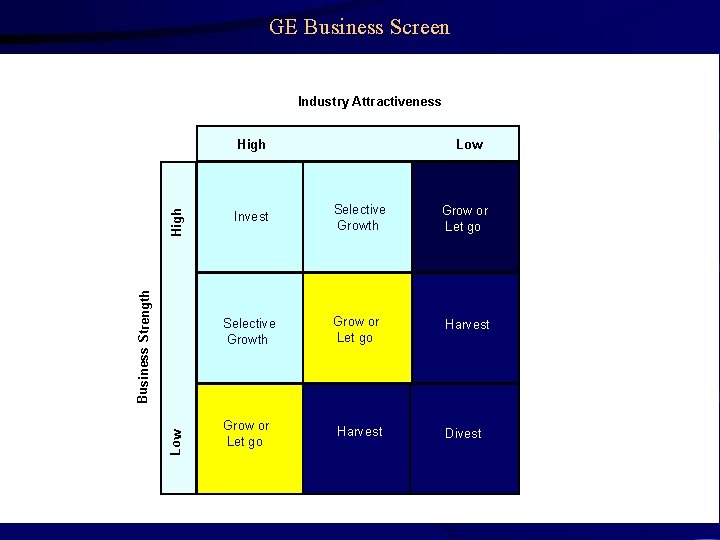
GE Business Screen Industry Attractiveness Low Business Strength High Invest Selective Growth Grow or Let go Harvest Divest
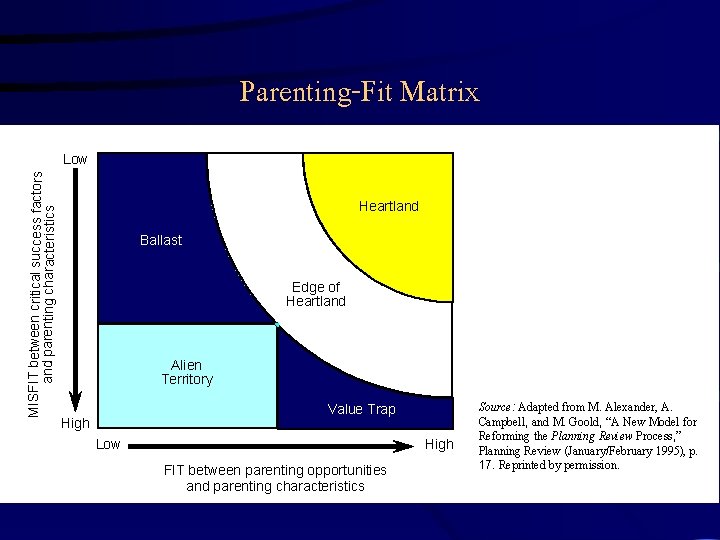
Parenting-Fit Matrix MISFIT between critical success factors and parenting characteristics Low Heartland Ballast Edge of Heartland Alien Territory Value Trap High Low High FIT between parenting opportunities and parenting characteristics Source: Adapted from M. Alexander, A. Campbell, and M. Goold, “A New Model for Reforming the Planning Review Process, ” Planning Review (January/February 1995), p. 17. Reprinted by permission.
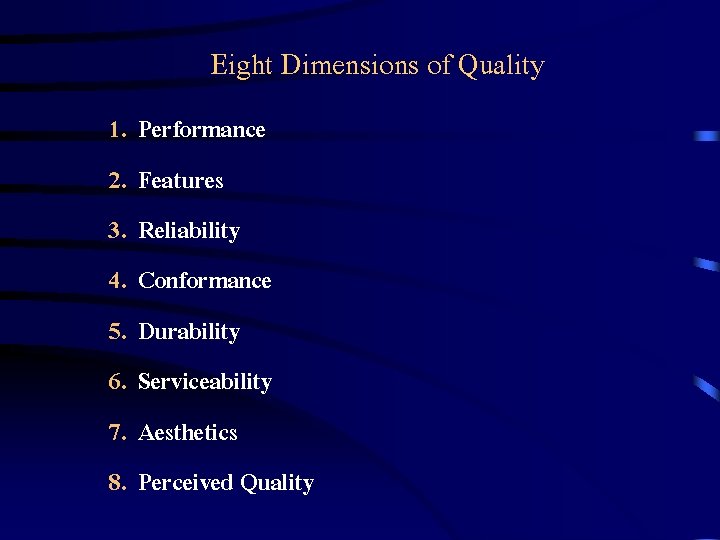
Eight Dimensions of Quality 1. 2. 3. 4. 5. 6. 7. 8. Performance Features Reliability Conformance Durability Serviceability Aesthetics Perceived Quality
������ Cooperative Strategies • Collusion • Strategic alliances
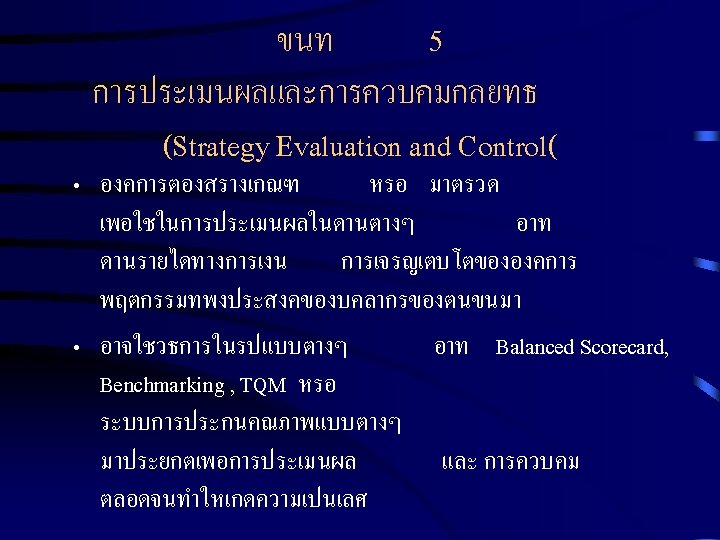
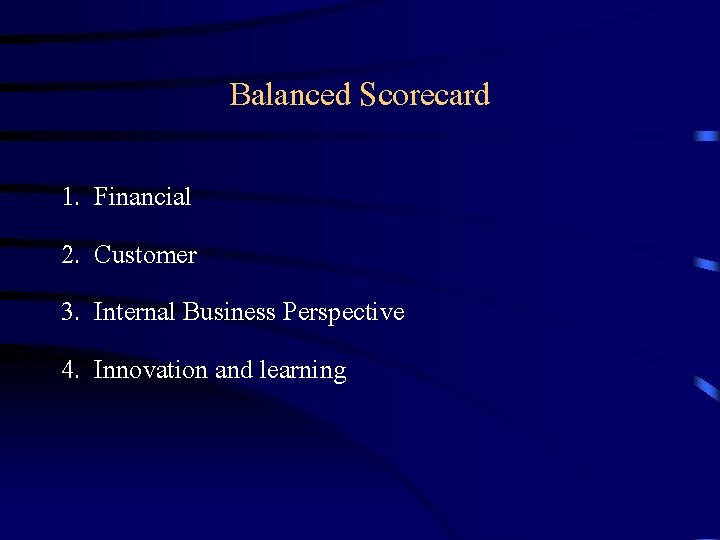
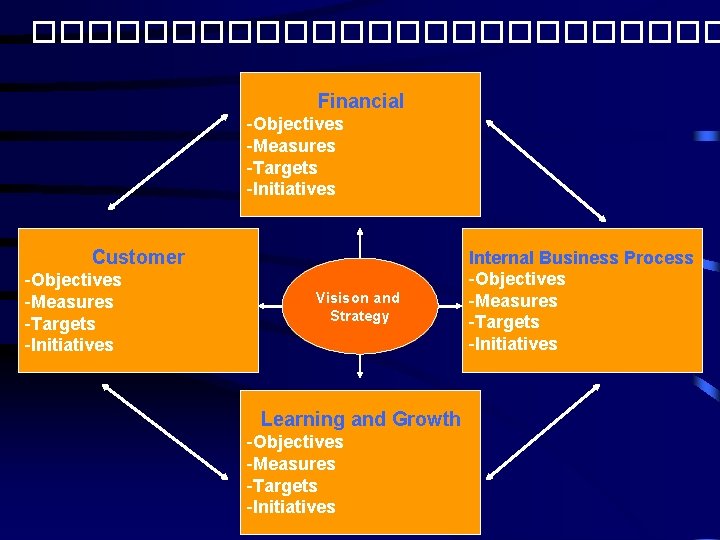
Balanced Scorecard 1. 2. 3. 4. Financial Customer Internal Business Perspective Innovation and learning
������������� Financial -Objectives -Measures -Targets -Initiatives Customer -Objectives -Measures -Targets -Initiatives Visison and Strategy Learning and Growth -Objectives -Measures -Targets -Initiatives Internal Business Process -Objectives -Measures -Targets -Initiatives
������ /������ Strategic Management Model Environmental Scanning External Societal Environment General Forces Task Environment Industry Analysis Internal Structure Chain of Command Culture Beliefs, Expectations, Values Strategy Formulation Strategy Implementation Evaluation and Control Mission Reason for existence Objectives What results to accomplish by when Strategies Plan to achieve the mission & objectives Policies Broad guidelines for decision making Programs Activities needed to accomplish a plan Resources Assets, Skills Competencies, Knowledge Budgets Cost of the programs Procedures Sequence of steps needed to do the job Feedback/Learning Process to monitor performance and take corrective action Performance